Picking “Pickman”

The Hollywood Reporter finds the new and just-released Netflix anthology series uneven, further finding…

[Lovecraft’s] “Pickman’s Model” overlong and over-obvious [while] “Dreams in the Witch House” is the “story of a man (Rupert Grint, not bad at all) trying to reconnect with his long-deceased sister, [and] is the only episode that actually looks cheap.

The only other review I can find is an early one from Pfangirl, who enjoyed “Witch House” as…

over-the-top supernatural fun, though it sadly strips out Lovecraft’s cosmic terror in favour of fairy tale elements

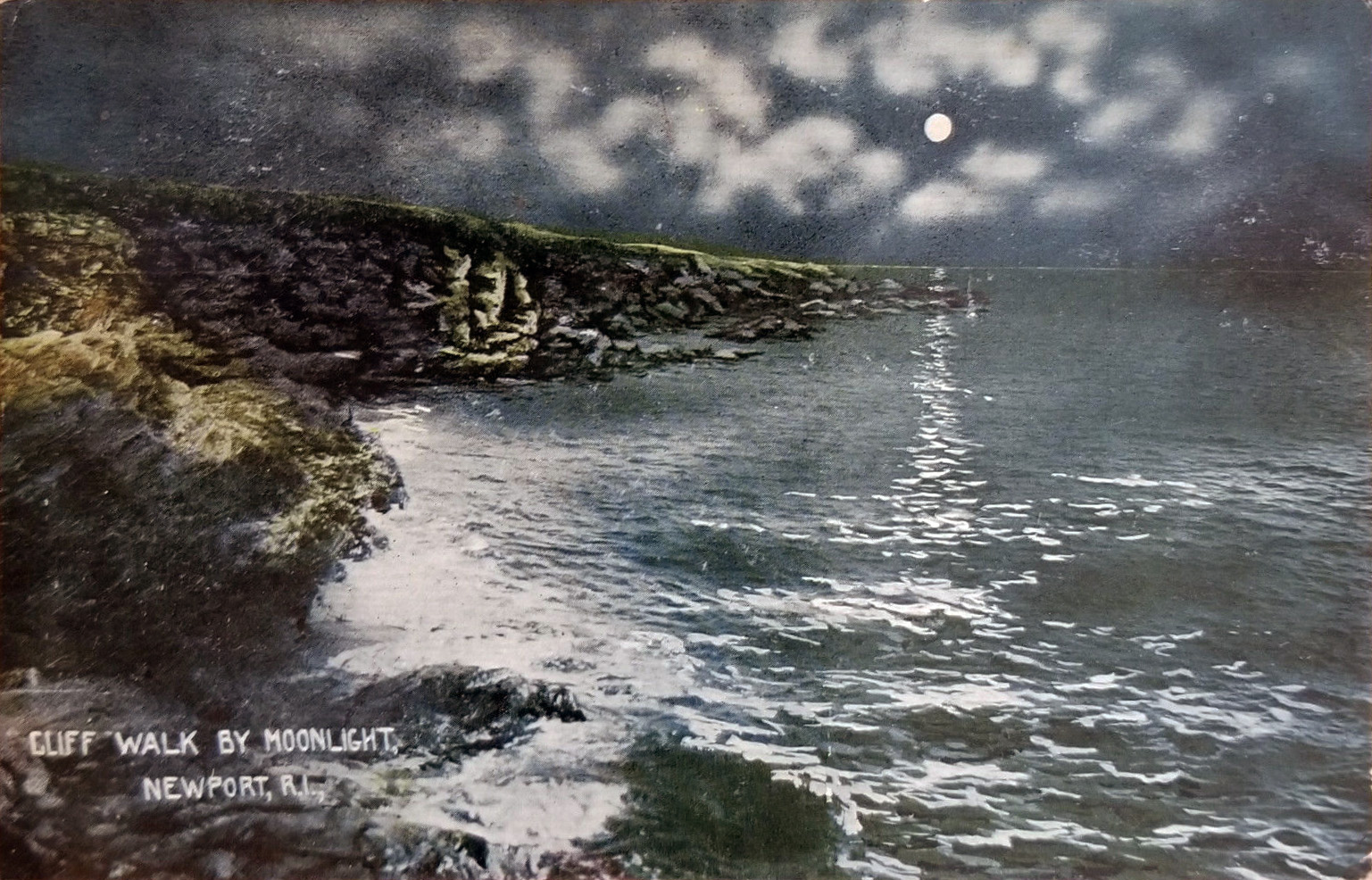
So it sounds like it’s only a ‘very loosely based on’ Lovecraft’ adaptation, despite the name. Still… the lush, “long” and period-costume “Pickman’s Model” might be worth a look, at least judging by a couple of screenshots…

Scriabin and Lovecraft?

Last week The Scriabin Club had a stab at “Connecting Scriabin, Roerich and Lovecraft”….

At the Scriabin Club we also use [Roerich] paintings for the exact reason of philosophical parallels to the spirit of Scriabin.

Roerich I knew, since he was Lovecraft’s favourite contemporary gallery artist. Lovecraft often visited his gallery in New York City, though so far as I know never conversed with the artist.

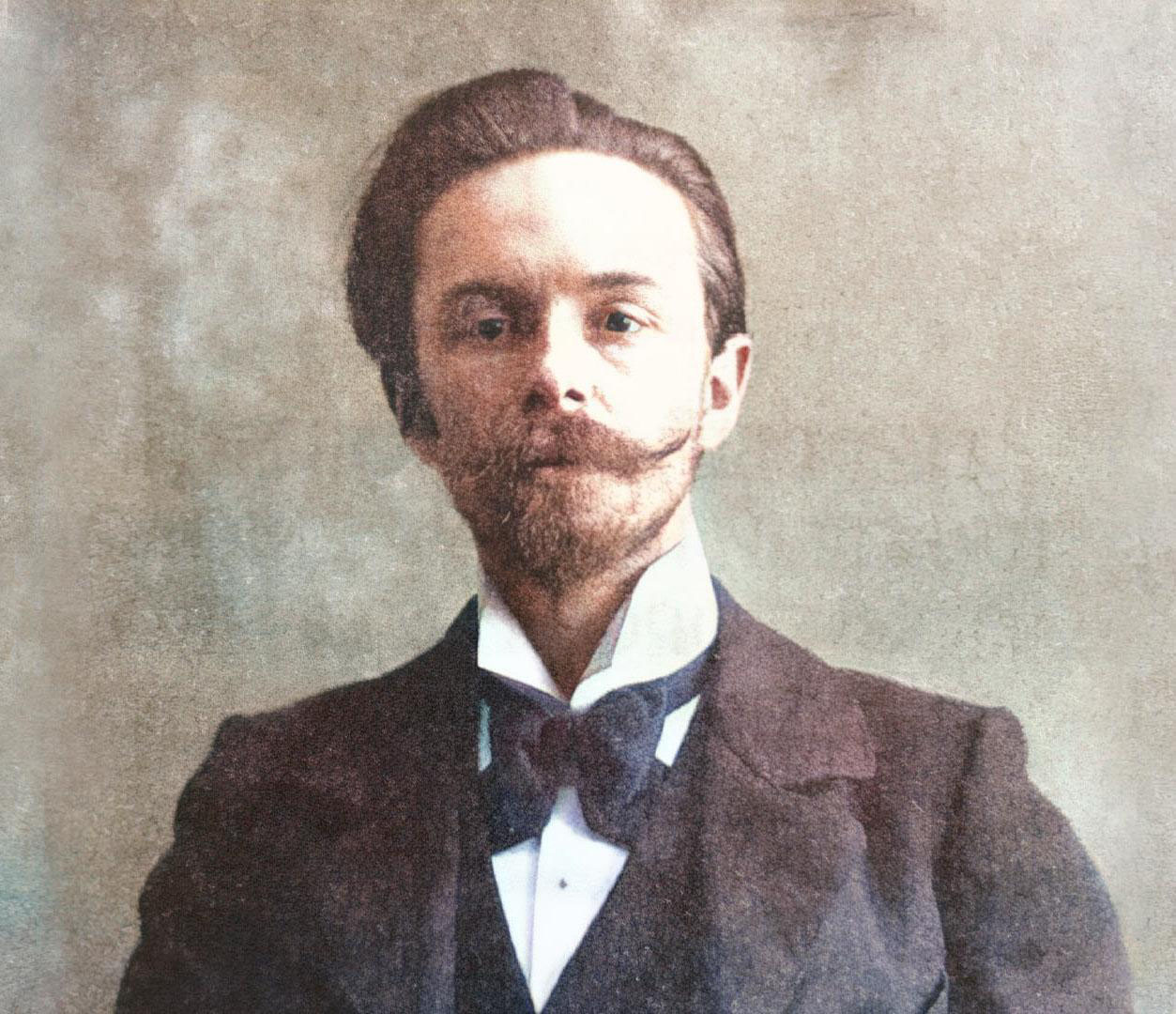
The name Scriabin (1872-1915) was new to me, so I did a bit of research. Turns out he was a pre-communist mystic Russian composer who was enamoured — like Roerich and Lovecraft — with the idea of high and remote mountains and their esoteric denizens.

Relatively famous in his time, he visited the East Coast of America circa 1907. So the seventeen year old Lovecraft might have read press reports of the visit. Perhaps even read of his ideas about synesthetic art. But would not have heard the music, since the first radio symphony broadcasts were then still 15 years away in the USA.

Turns out Scriabin was a pioneer of the synesthetic aesthetic, including performances with a light-projecting ‘colour piano’. He was also influenced by ideas drawn from theosophy. Both of which somewhat align him with Lovecraft. But he’s now equally well remembered for composing darker and darker dissonant music toward the end of his life, including one darkly un-nerving ‘Black Mass’ piece (1912). This was never made public and attempted to enact a sort of effective “musical occultism”. One can encounter musicological writers comparing his late dark works with Lovecraft’s work, though it sounds to me that he was channelling the sordid earth-bound Crowley-esque sex rituals of the era. Rather than cosmic coldness and non-human outside-ness and aloofness.

After the revolution he appears to have been subject to relentless character-assassination by the Soviet communists, to the extent that in the 1925-1945 period many dupes in the West thought that Scriabin had been both insane and deeply depraved. He did run with a satanist and occultist crowd, and was more than eccentric in his old age, which aided the propaganda. His reputation in the West means it’s doubtful Lovecraft heard his music on the U.S. or British radio in the 1930s (he could access some British broadcasts from Providence).

But by the 1960s Scriabin appears to have been rehabilitated by the Soviet regime, and airbrushed to make him seem a harbinger of revolution. Perhaps even (my guess) a herald of Russian cosmicism. Since his “Poem of Ecstasy” music was broadcast as the space pioneer Yuri Gagarin circled the earth in his space capsule. Yes, at the moment of its highest triumph the Evil Empire broadcast… the music of a composer who many in the West still thought of as a satanist.

I’ve found a direct link with Lovecraft, via his young musical friend Galpin. In 1959 Galpin recorded his memories of Lovecraft, including… “of that time we spent in Cleveland” back in August 1922…

At the time, my [musical] tastes could be summed up in a kind of mystical and sensual Wagnerism — I loved the works of Wagner, ‘Tristan and Isolde’, and I appreciated Scriabin also very much…

So it’s then quite possible that Galpin had acquired some Scriabin scores. Though not gramophone recordings of Scriabin, which don’t appear to have existed at that date. There are some apparently rather un-inspiring early piano-rolls, but the earliest popular Scriabin recording I can find is “Prometheus: the poem of fire” / “Poem of Ecstasy” (1932, HMV). By the 1940s there was a cottage-industry in issuing Scriabin recordings in the U.S., and one could get some 50 or more discs. But that was after Lovecraft’s time.

So “Prometheus: the poem of fire” may indicate the sort of thing that Galpin liked in 1922. Though it’s doubtful Lovecraft heard it, except perhaps as some piano-playing from a paper score one night in Cleveland. Even then he would not have been tapping his toe and clicking his fingers to it. Popular ‘show-tunes’ it is not.

So, to conclude. There are broad comparisons to be made (synesthesia, interest in theosophy and the satanist occult, dark and even demonic music, love of remote mountains) and Lovecraft may even have recalled Galpin enthusing about Scriabin when they met back in 1922. But there is no mention of Scriabin in the index of the latest edition of the Galpin letters.

Two new books

From Portugal, the new ebook Lovecraft e as Tradicoes Esotericas: Influencias do Horror Cosmico no Ocultismo (trans: ‘Lovecraft and the Esoteric Traditions: Influences of Cosmic Horror on Occultism’). In Portuguese.

Here’s my translation of the TOC…


Preface (Dennis P. Quinn Ph.D., Professor and Department Chair of Interdisciplinary Studies at Cal Poly Pomona, California)

1. The Cold and Dark Vast of the Cosmos

2. Lovecraft: Posthumous Member of the Counterculture

3. From Abnegation to Cosmic Pessimism

4. The Dark Essence of the Cthulhu Mythos

5. The Occult Tradition and its Marks in Lovecraft

6. Cults of Cthulhu, its Fans and Devotees

7. The Culture of Fans as a Creative Microcosm

8. The Cult Still Lives…

References

Appendix

“The Festival” (annotated)

135 pages, September 2022.


I can’t get the cover-artist name, but it’s nice work. I also like the retro mid-1980s thrift-shop feel it has.

The other book is still forthcoming. Due soon-ish is The Medial Afterlives of H.P. Lovecraft: Comic, Film, Podcast, TV, Games, with Amazon wobbling between late December 2022 / early 2023. It’s one of those academic… now, I was going to say “£80 tomes”. But the standard list-price for such things seems to have now jumped to £120 (roughly $140).

So… it’s one of those invitation-only academic £120 tomes, of the sort that can trap some good academic work in inaccessible volumes.

Discusses a wide array of medial forms, from film and TV to comics, podcasts, and video and board games.

Again. Yawn

Part of the Palgrave Studies in Adaptation and Visual Culture series. Despite the price, the academic salaries involved, and leftist hand-wringing about academic labour… they’ve used a raw and very obviously AI-generated image for the cover.

Stellarium 1.0

After 30 years as a ‘perpetual beta’, the fine and free Stellarium desktop software is now in version 1.0 stable. It’s a little technical and the UI is initially unfamiliar. But it’s perhaps the most accessible balance of power/usability, for casual night-sky watchers who are not part of the telescope crowd. And its time-travel function is especially valuable for historical researchers and historical-fiction authors.

Numbering is a bit confusing. The stable 1.0 is officially 0.22.3 for Windows 7 warriors, and 1.22.3 for other Windows OS versions.

St. Paul’s Chapel, Broadway and Vesey

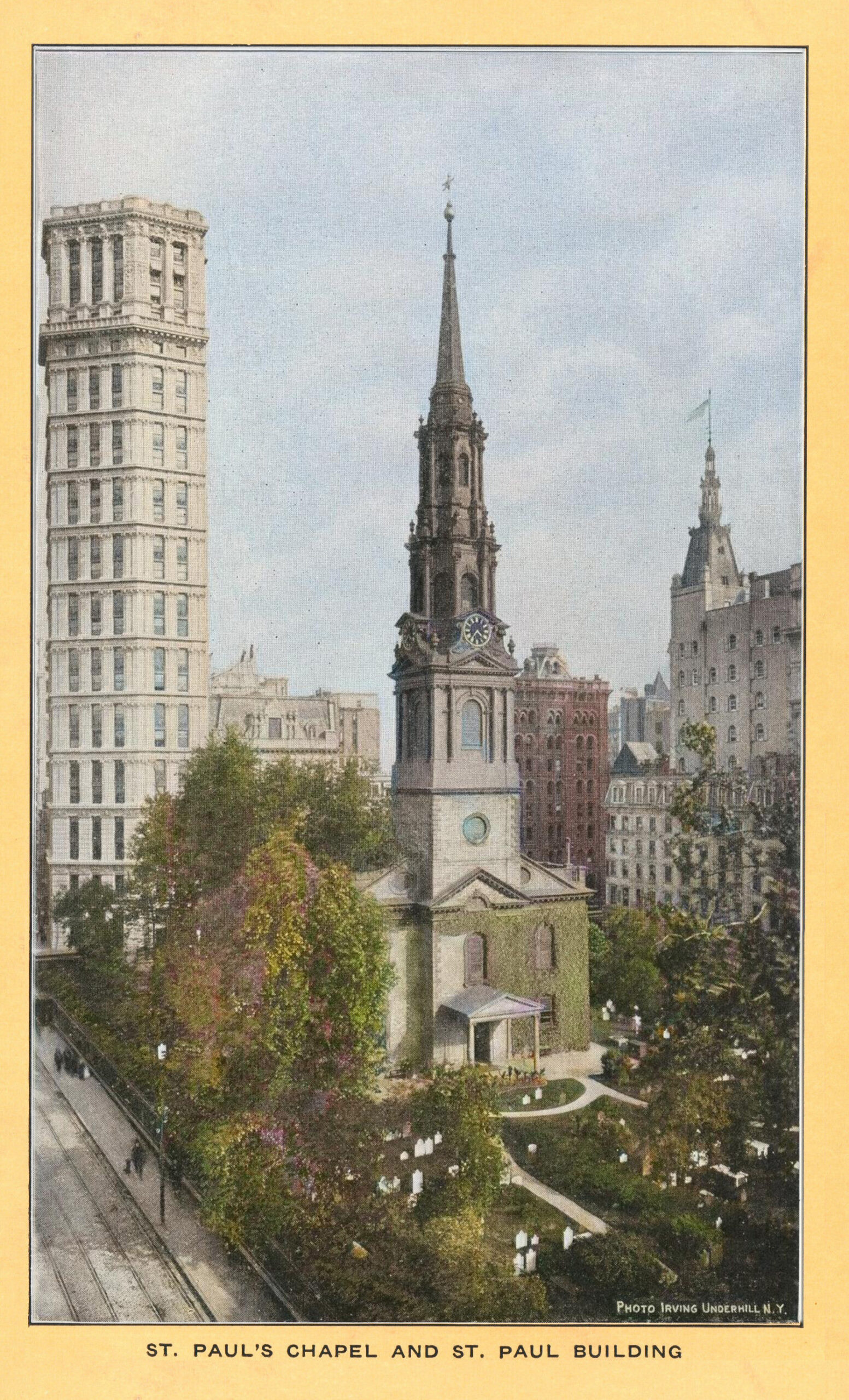
In these unhappy times, a look at a happy moment in Lovecraft’s life. Here are some views of the church chosen for Lovecraft’s wedding on the 3rd March 1924.

As Lovecraft had it…

St. Paul’s Chapel, Broadway and Vesey Streets, built in 1766, and like the Providence 1st Baptist design’d after St. Martin’s-in-the-Fields! [in London] GOD SAVE THE KING!

Neither Lovecraft or Sonia were religious, of course, but in those days a proper olde church it had to be — for a Lovecraft wedding. He appears to have chosen the place not simply for tradition, but also for its Colonial British architecture and family connections. It not only fitted…

most strongly Old Theobald’s traditional and mythological background

… but also echoed (in name only) the St. Paul’s church in Boston where his parents had married.

The cards and photos in this post are a little un-seasonal. March 1924 was famously very dry in New York, with very little early spring rain or snow, and the east coast down to Cheasapeake Bay was “warmer than normal” (Climatological Data for the United States by Sections, March 1924). Despite this and the city’s urban heat-island effect, early in March there would not have been the sort of spring/summer verdancy seen in these churchyard pictures. We might instead imagine a few hints of the very earliest new leaves on the trees, a sparse first flush of new grass after winter, and perhaps a few early un-opened daffodils.

We beat it to the Brooklyn borough hall, and got the [marriage licence] papers with all the coolness and savoir faire of old campaigners [… then ] Eager to put Colonial architecture to all of its possible uses … on Monday, March the Third, [I] seized by the hair of the head the President of the United — S. H. G. — and dragged her to Saint Paul’s Chapel, … where after considerable assorted genuflection, and with the aid of the honest curate, Father George Benson Cox, and of two less betitled ecclesiastical hangers-on [i.e. witnesses], I succeeded in affixing to her series of patronymics the not unpretentious one of Lovecraft.

Here we see the altar, albeit some decades later in time.

There were no friends or relations present…

Having brought no retinue of our own, we avail’d ourselves of the ecclesiastical force for purposes of witnessing — a force represented in this performance by one Joseph Gorman and one Joseph G. Armstrong, who I’ll bet is the old boy’s grandson although I didn’t ask him. With actors thus arrang’ d, the show went off without a hitch. Outside, the antient burying ground and the graceful Wren [designed] steeple; within, the glittering cross and traditional vestments of the priest — colourful legacies of OLD ENGLAND’S gentle legendry and ceremonial expression. The full service was read; and in the aesthetically histrionick spirit of one to whom elder custom, however intellectually empty, is sacred, I went through the various motions with a stately assurance which had the stamp of antiquarian appreciation if not of pious sanctity. Your Grandma, needless to say, did the same — and with an additional grace.

Of course, Lovecraftians now think of it as ‘a doomed marriage’. But perhaps it was not necessarily so. Had Sonia’s ill-advised independent NYC hat-shop been a success (and with the push of ‘the roaring 1920s’ economy behind it), and had her health then not have failed so badly, things might have turned out differently.

New in audio

The latest LibriVox Ghost and Horror Collection brings new public-domain readings of “The Outsider” by Lovecraft, and “The Loved Dead” by Eddy and Lovecraft.

Also in audio, some R.E. Howard readers may be interested in the venerable scholar Tom Shippey on a late September podcast interview. Shippey gives a vivid overview of his new book Beowulf and the North before the Vikings (slipped out with no fanfare in August 2022).

Turns out that the Dark Ages really were dark, at least circa 536-539 A.D. That was when the sun was all but blotted out due to multiple and massive volcanic eruptions. The temperature went down too, and stayed down to 543 A.D. It took some regions a hundred years or more to even start to recover.

The podcast link above has an .MP3 download, and the excellent 40 minute interview starts at 3:10 minutes. Such a pity that the presenter was a stickler for his timing and cut it short, as Shippey was on top form and was evidently willing to talk for perhaps another 30 minutes or so.

He gets one thing wrong, in passing. Jefferson proposed… “Hengist and Horsa, the Saxon chiefs from whom we claim the honour of being descended, and whose political principles and form of government we have assumed” — but it appears they never actually made it to the final Great Seal of America. Incidentally, Lovecraft felt much the same as Jefferson, and tongue-in-cheek declared himself… “a son of Odin and brother to Hengist and Horsa”.

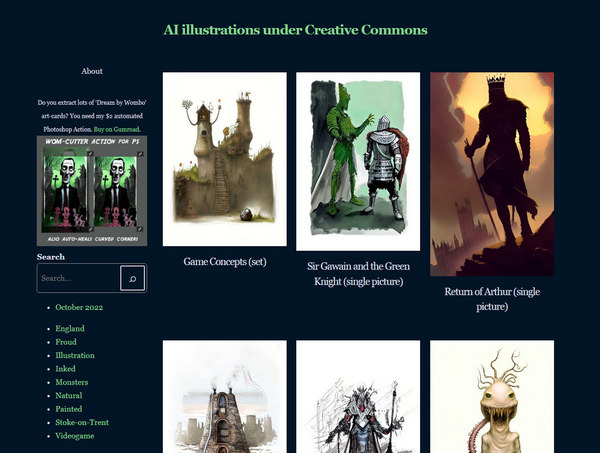
AI illustrations under Creative Commons

Rather than inflict more AI-generated images on readers of my regular blogs, I’ve started a basic new AI illustrations under Creative Commons gallery-blog to serve as a repository, for the best of my experimental sets and occasional one-off images. All images there are under a permissive Creative Commons Attribution Share-alike. I should add that images are never posted “raw”, and they always get a work-over in Photoshop.

Reading the runes

Looks like Tolkien letters are getting to be as costly as substantial Lovecraft letters…

a remarkable letter in which Tolkien explains the development of runes and languages used in The Hobbit, 1943, [has just] sold for $107,100, a world record for a letter by Tolkien.

They’re of course far scarcer, too.

Until Christmas 2022 you can also get runic with Tolkien at the large exhibition J.R.R. Tolkien: The Art of the Manuscript in the unlikely location of Milwaukee, USA.

Tolkien’s design for a physical replica of The Book of Mazarbul.

PDF Index Generator video

I wasn’t aware that PDF Index Generator could also create a back-of-the-book index by…

importing a list of terms from a text file, to index a book using just that list of terms.

Useful. There’s a new video tutorial showing how to do this.

This means that one could manually go through a digital book in an armchair, just jotting down specialist terms or phrases while also proofing. No need to note page numbers. The resulting mini-index could then be merged with the larger automated one.