For Black Friday 2026, three pages of Specials at Hippocampus Press. Lots of volumes of Lovecraft’s letters, at half-price.
Hippocampus Press – Black Friday sale
26 Thursday Nov 2026
Posted in Odd scratchings

26 Thursday Nov 2026
Posted in Odd scratchings
For Black Friday 2026, three pages of Specials at Hippocampus Press. Lots of volumes of Lovecraft’s letters, at half-price.
24 Tuesday Nov 2026
Posted in HPLinks, New discoveries, Scholarly works
HPLinks #110.
* Now on JSTOR, Lovecraft Annual No. 20 (2026). I see the 2025 issue showing up there as-if new, as well.
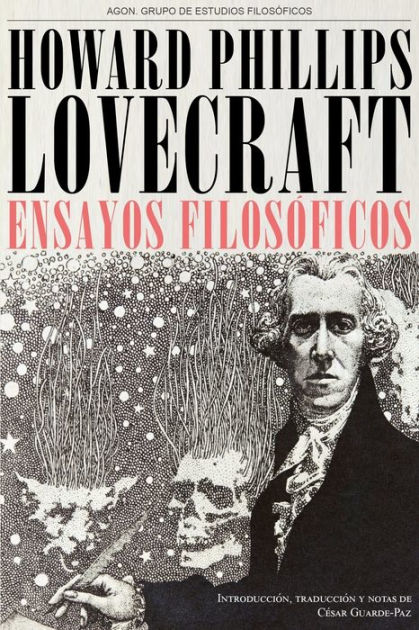
* New to me, all of Lovecraft’s philosophical essays, in Spanish translation.
* Also from Spain, Los Mitos de Cthulhu with an introduction by S.T. Joshi, and illustrations by John Coulthart.

* Apparently out this week, according to Amazon UK, Michael Zigerlig’s The Call of Cthulhu – The 100 Year Anniversary Graphic Novel Edition. An Amazon search suggests it also appeared in 2025, though perhaps that was a speculative listing and it’s been delayed until now?
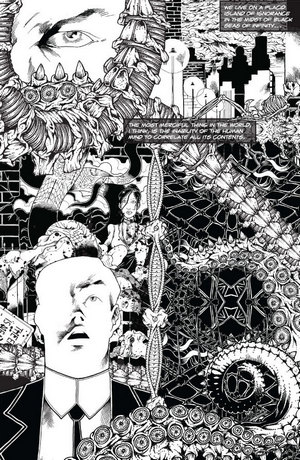
* Deep Cuts considers “Lovecraft & Henry Miller”. I’d add that, like Lovecraft, Miller was a travel writer of the 1930s — as evidenced by Miller’s classic book The Colossus of Maroussi (1941). See also the Lovecraft Annual journal for 2015, which has the article “Six Degrees of Lovecraft: Henry Miller”.
* Tellers of Weird Tales remembers The Vermont Flood of 1927, inspiration for “Whisperer in Darkness”.
* My quick survey of possible items entering the public domain in 2027. It appears that citizens of nations following the ’70 years rule’ will have all of Howard Wandrei’s stories to adapt, since he died in 1956.
* From Hungary in English, the Masters dissertation “The Use of Edmund Burke’s Concept of ‘The Sublime’ in The Works of H.P. Lovecraft” (2024). Freely available online.
* The S.T. Joshi Blog is back online, after several weeks of no response. The latest post has photos of his delightfully American home — now a fine shade of blue. It turns out not to be a gothic mansion flickering with lightning-flashes and circling bats.
* Forgotten New York visits Houdini’s Centennial Grave… “in a little known burial ground in Brooklyn/Queens”, New York City.
* Dark Worlds Quarterly surveys the uses of Giants in the Pulps: 1920-1930s. As in, giant humanoids.
* Broken Frontier reviews Gou Tanabe’s The Dunwich Horror graphic-novel adaptation.
* A video review of the collection Robert E. Howard’s collected Adventures in Science Fantasy (2025).
* The new book A Global History of the Reception of Ancient Egypt has a section briefly surveying “The Egyptian Vampire in Contemporary Popular Culture”. That’s what popped up in search, but I imagine the book may have other survey sections relating to the supernatural uses.
* In English, the movie review “Lovecraftian Spanish horror movie breathes new life into vampire cinema”.
* Another weighty new Innsmouth-based story anthology, Weirder Shadows Over Innsmouth, just published. It follows the earlier Shadows Over Innsmouth and Weird Shadows Over Innsmouth.
* From the Chichester Centre for Fairy Tales, Fantasy and Speculative Fiction, the Winter 2026 issue of their substantial house journal Gramarye. Available in print only.
* Project Gutenberg has been badly hacked and has been down for a few days now. There’s a working mirror at gutenberg.ar.io. Today I find that Librivox (Gutenberg texts read aloud) is also currently offline.
* Those called upon to transcribe noisy or badly recorded audio (convention panel discussions, convention-floor interviews etc) may be interested in Inworld’s new open-source Voice Isolator, which extracts clean speech from noisy environments. This now works locally in the latest ComfyUI Portable via a custom node, is tiny (256Mb) and doesn’t require lots of VRAM even when processing hours of recordings. There are two versions, offline for voice processing, and real-time for streaming from noisy environments. It has an open Apache licence, allowing commercial use.
* A new book on Medieval Cats, which may interest some. Possibly also relevant to Lovecraft’s use of ‘Theobald’ — see my post on Grandpa Tibbles.
* And finally, Forgotten New York seeks out Union Place…
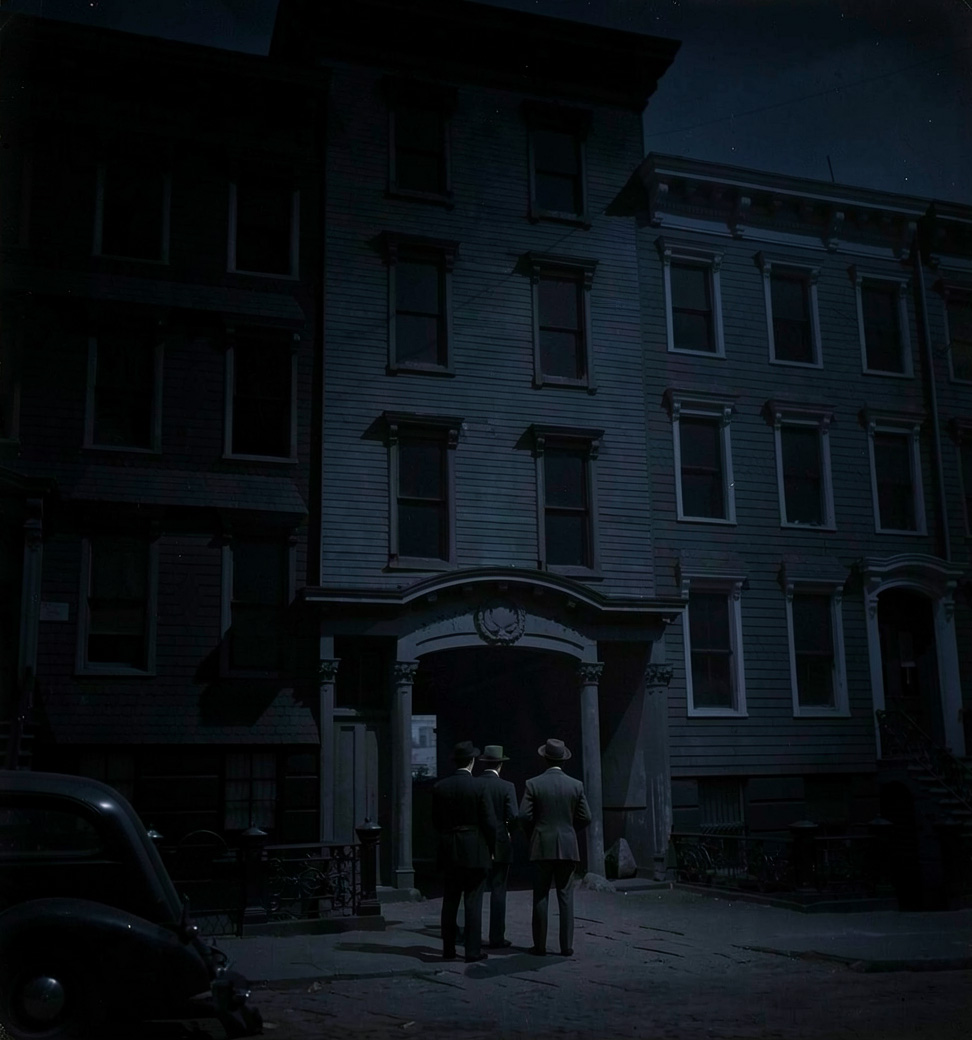
My research reveals that Union Place was a small enclave at #266 Classon Avenue between DeKalb and Willoughby Avenues.
This was explored on a night-walk by Lovecraft, Loveman and Kleiner on 5th September 1925, discovering there… “a brooding backwater of the 1850’s”. I can add that Lovecraft’s 1925 diary has the relevant entry and outlines the Saturday evening’s lead-up to Union Place…
…. call for Loveman — dinner John’s [Italian restaurant in Willoughby Street, presumably with Loveman] — [go back to Loveman’s room] SL’s room — select poems [with Loveman, in his room] — out to walk — Bklyn Br. [Brooklyn Bridge, sunset?] — kittie [Lovecraft encounters a cat, presumably near Brooklyn Bridge] — Italian fiesta in Main St. [another Italian restaurant, or a real street fiesta?] — slums [unknown location] — [they then take the] DeK Ave. [DeKalb Avenue] car [i.e. street tram] to Classon [Avenue] — [and there explore] UNION PLACE ….
Tipped off by Forgotten New York, I found and downloaded the 1940s.nyc tax photo of the entrance they used, in better quality. I’ve here given it a Klein 4B makeover to evoke a night scene in 1925.
— End-quote —
Lovecraft on drugs:
“The eye cost me only 50¢ instead of the expected $3.00. What was in it was a long, thin cinder, & no embedding had taken place — so that it could be removed without the use of cocaine. The oculist [eye doctor] told me that a $3.00 fee is not excessive if cocaine has to be used — as it did have to be last October.” — Lovecraft to Derleth, July 1932. So, Lovecraft took cocaine in October 1931.
“Glad enough was I to fling away tobacco when long trousers & increased inches made my manliness an obvious fact which needed no nicotinical corroboration! Nor have I any literary need of tobacco. When I go in for drugs, I am no ‘tin-horn’, but buckle right down to opium — vide “Dagon”. Since it is not I, but my heroes, who indulge, I do not feel the ill effects.” — Lovecraft to Kleiner, February 1920.
“I shall send you by express a collection of XX Ashtonsmithick paintings which will utterly and absolutely knock you out! GAWD! THOSE COLOURS!! Opium madness unleashed ….” — Lovecraft to Belknap Long, May 1926.
“Poe could, when he wished, give to his prose a richly poetic cast; employing that archaic and Orientalised style with jewelled phrase, quasi-Biblical repetition, and recurrent burthen so successfully used by later writers like Oscar Wilde and Lord Dunsany; and in the cases where he has done this we have an effect of lyrical phantasy almost narcotic in essence — an opium pageant of dream in the language of dream, with every unnatural colour and grotesque image bodied forth in a symphony of corresponding sound.” — Lovecraft, “Supernatural Horror In Literature”.
“All this dreaming comes without the stimulus of cannabis indica. Should I take that drug, who can say what worlds of unreality I might explore?” — Lovecraft to Kleiner, September 1919.
18 Wednesday Nov 2026
Posted in Odd scratchings
Died in 1956, and thus out of copyright under the 70 year rule:
Walter de la Mare (British, ghost and supernatural stories, also new fairy-tales for children and re-tellings of traditional fairy-tales).
Alfred McLelland Burrage (British, said to be “one of the very best writers of ghost stories”).
Archibald Low (British, eccentric scientist, lacklustre children’s SF novel Adrift in the Stratosphere).
Alex Raymond (Flash Gordon comic-strip).
Howard Wandrei (of the Lovecraft circle, 200+ stories).
Fletcher Pratt (U.S. pulp stories and novels, science-fiction and well-regarded fantasy).
Bob Olsen (U.S. science fiction writer for Amazing Stories, early space opera).
Films released in the USA in 1931:
Dracula (Universal).
Frankenstein (Universal).
Dr. Jekyll and Mr. Hyde.
M (Fritz Lang)
Alice in Wonderland.
Dirigible (Frank Capra, South Pole, marginally futuristic for the time – airship carries a plane along with it).
Books or pulp novels published in the USA in 1931:
The Living Shadow (Walter B. Gibson, first pulp magazine novel featuring The Shadow).
Tintin in the Congo (Herge, early graphic novel).
The Face in the Abyss (A. Merritt, Lovecraft considered it “a middling specimen of Merritt-riciousness”).
The Horror from the Hills (Frank Belknap Long, novel published across two issues of Weird Tales).
Tarzan the Invincible (E.R. Burroughs).
The Time Stream (John Taine, time travel).
And several R.E. Howard stories were published in that year. “The Black Stone” is a Mythos tale.
18 Wednesday Nov 2026
Posted in HPLinks, Lovecraftian arts, New books, Podcasts etc., Scholarly works
HPLinks #109.
* The Hippocampus Press website has details of the forthcoming hardcover edition of David E. Schultz’s H.P. Lovecraft’s Commonplace Book and Other Notes: An Annotated Edition. Due at the end of December 2026.
This exhaustively annotated edition, based upon decades of study of both the text and sources of the commonplace book, illuminates the origins of many entries—from events in Lovecraft’s life, books or stories he read, and other sources—while also indicating their use in his fiction, even in cases where the use of the entries is by no means obvious.
* The U.S. Library of Congress ‘Headlines & Heroes’ series this week interviews “David Cercone, Researcher for the H.P. Lovecraft Historical Society”.
* In the latest open-access Journal for Religion, Film and Media, the lead article is “A Virtual Fanfiction Universe: Lovecraftian Religion in the Online Game The Secret World / Secret World Legend”.
* From Thailand, the open-access student journal article “Applying H.P. Lovecraft’s Narrative Style to the Development of Horror Animation Screenplays”. In Thai, with an English abstract. Attempts to distil applicable principles from Lovecraft’s…
literary devices [which might inform] visual, aural, and rhythmic mechanisms at the scene level: the restriction of narrative perception; the gradual disclosure of information; the use of setting and atmosphere as instruments of estrangement; and the reinforcement of human insignificance.
* Boundary2 has a long review of Mark Fisher’s The Weird and the Eerie.
* The R.E. Howard Foundation has another try at a livestream, the last one having been plagued by cable-chewing demons from the nethermost pits.
* New in the open-access journal Medievalia, La impronta vikinga en ‘Conan el Barbaro’ (John Milius, 1982): Construccion cinematografica e iconografica de la barbarie”. Examines the “broader range of historical, archaeological, artistic, and iconographic references” that the movie director drew on to form this early-1980s screen version of Conan.
* The Lost Kind, possibly the first full AI cinema-length movie. Certainly the first such ‘dark fantasy’ movie. How far we’ve come from the 512px gloopiness of just a few years ago. Free on YouTube.
* Also on YouTube, the new student short film Arthur Machen’s “The Inmost Light”.
* Talking of Machen, there’s a newly attributed Arthur Machen publication, the play “The Hidden Sacrament of the Holy Graal”.
* On eBay, Dark Messenger Reader #1 (1975), a Lovecraft/Mythos stories fanzine. Looks a bit scarce to me, so I guess someone may want it.
* The Good Friends of Jackson Elias podcast discusses ‘Occult Detectives’ with Lovecraft scholar Heather Miller.
* The Internet Archive has unveiled the 2027 Public Domain Film Contest. Make a short movie, up to 4 minutes max., using at least one work published in 1931 that will become Public Domain on 1st January 2027. Two big 1931 horror movies will enter the public domain: Dracula, and Frankenstein. Note that the rules say all “AI tools” used must be declared and “explained” — implying a possible unspecified penalty for AI entries.
* Artbook publisher Thames & Hudson is set to do Syd Mead justice in print, with the forthcoming Syd Mead Ultimo artbook. Edited by Mead experts and billed as “a major retrospective”, the book is due in early March 2027. Tentaclii readers in San Francisco can pop down to the city’s Transamerica Pyramid gallery for a sneak-preview, via the gallery exhibition “Syd Mead: Future Pastime” (until 17th December 2026).
* ImagineFX magazine has published its last issue in either print or digital, for Christmas 2026. The loss removes a major fantasy/sci-fi and sometimes-horror title from the public news-stands here in the UK and possibly elsewhere, and means there are no more digital creative magazines (Digital Art Live and 3D World went some years ago). There is some good news though, re: British magazines. “Every Back Issue of Starlog Is Back on the Internet Archive”. Officially, thanks to the title’s new owners.
* A new MOSS-Image LoRA dedicated to emulating Gamebook illustration.
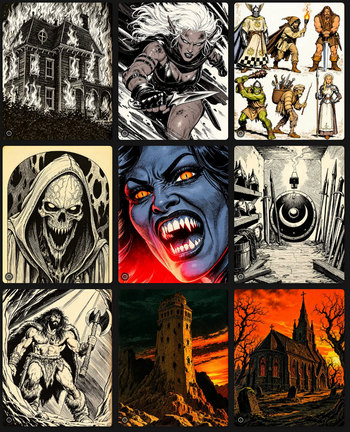
* In Spanish, but auto-dubbed by YouTube, Lovecraft’s Crypto-Botany is a survey which digs deep and plucks seven plant monsters from Lovecraft’s work.
* Propnomicon spots the new Glow in the dark H.P. Lovecraft figure. I had also spotted it in search today, but then I couldn’t get past the Big Bad Toy Store’s robot-blocker. I suppose if one painted very thin translucent paint on him (coloured varnish?), then he’d still glow?

— End-quote —
Luminous Lovecraft…
“… gravity can act as a deflecting agent like refracting and reflecting media. Now the significance is this: if gravity can affect the course of a luminous ray, then light does not consist of ether waves! Think of the significance of this fact, if fact it be: All our basic theories of optics must be revised, and perhaps all our conceptions of radiant energy revolutionised.” — Lovecraft to Galpin, April 1920.
“Another ocular idea which has long fascinated me pertains to the luminous shapes — geometrical & otherwise — seen against a background of blackness when the eyes are closed.” — Lovecraft to Galpin, November 1933.
“I took Loveman there at midnight, & when we got separated among the tombs he couldn’t be quite be sure whether a faint luminosity bobbing above a distant nameless grave was my electric turch or a corpse-light of less describable origin!” — Lovecraft to Helen Sully, October 1933, re: St. John’s churchyard.
“… absolutely marvellous firefly display […] All agree that it was unprecedented, even for Wilbraham. Level fields & woodland aisles were alive with dancing lights, till all the night seemed one restless constellation of nervous witch-fire. They leaped in the meadows, & under the spectral old oaks at the bend of the road. They danced tumultuously in the swampy hollow, & held witches’ sabbaths beneath the gnarled, ancient trees of the orchard”. [Lovecraft went to bed afterwards, intending to dream the fireflies into…] “spectral torches, & about the lean brown marsh-things (invisible to mortal eyes) who wave & brandish them in the gloaming when the unseen nether world awakes”. — Lovecraft’s aunt Lillian, July 1928. Wilbraham was the inspiration for “The Dunwich Horror”.
11 Wednesday Nov 2026
Posted in HPLinks, Lovecraftian arts, New books
HPLinks #108.
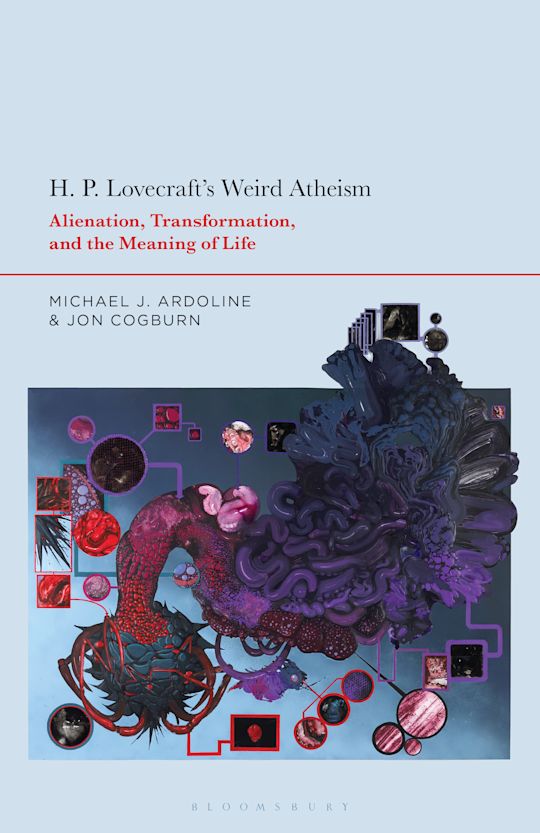
* The publisher Bloomsbury now has a cover and date for the forthcoming book H.P. Lovecraft’s Weird Atheism: Alienation, Transformation, and the Meaning of Life (2027). Due at the end of April 2027, 256 pages in hardback and ebook.
Michael J. Ardoline and Jon Cogburn puts Lovecraft’s work into conversation with both contemporary and central historical philosophical issues […] including the meaning and value of humanity in a hostile cosmos, the role of aesthetics in the good life, and the fear and allure of monstrosity [and conclude by discussing] how one might live a meaningful life in a cosmos hostile to the very possibility.
* A Masters dissertation is now available as the budget ebook The Specificity of Lovecraftian Gothic Poetics (2026).
* New on YouTube, a new S.T. Joshi interview, via the public library at Bridgeport in the USA.
* Wisconsin Public Radio (WPR) on “How Wisconsin shaped a horror legend” in the shape of Robert Bloch. Via a new interview with his biographer, the author of Psycho Century: Robert Bloch, American Horror Master.
* The House of Shadows & Ink podcast has an Interview with Sean Branney of the Lovecraft Historical Society.
* New on YouTube, Gates of Imagination reads “The Empire of the Necromancers” by Clark Ashton Smith.
* The REH Foundation has good news. “Project PRIDE Awarded $50,000 Preservation Grant for the Robert E. Howard House”.
* The two most recent issues of The Fossil: Official Publication of The Fossils are freely available. July has Ken Faig, Jr. on “The EOD and I” (‘Esoteric Order of Dagon’, a paper/mail-based APA, 1973-), and David Goudsward on “Sea Serpents and Lovecraft Letters”. The latest October 2026 issue surveys existing “Fannish APAs” in the field of pulp, and has a short review of the book The Complete Acolyte (collection of a famous early Lovecraft/Howard fanzine)…
The Complete Acolyte republishes the entire series, and adds additional historical and biographical material on the creators and the history of the ‘zine.
* Adam Alonzi on “H.P. Lovecraft, Weird Tales Magazine, and the World’s First Message Board”, discussing…
… in this condition of perpetual insolvency, the magazine [Weird Tales] invented, or at least midwifed, cosmic horror, sword-and-sorcery, and a substantial fraction of American genre fiction. Although the enterprise was an unbroken commercial disaster, its cultural yield is almost incalculable: thirty years of penury laid the foundations for blockbuster after blockbuster. But how it did this is rarely discussed.
The opening states that Lovecraft… “was terrified of the Slavs and Italians immigrating to Brooklyn” while in NYC. It’s news to me. I can find no mention of Slavs on searching my large personal Lovecraft archives, beyond a passing mention of distant Slavs in connection with Dracula, Germany and the Russian revolution. As for Italians, when in NYC he happily supped in Italian cafes and ate regularly in Italian-owned spaghetti joints.
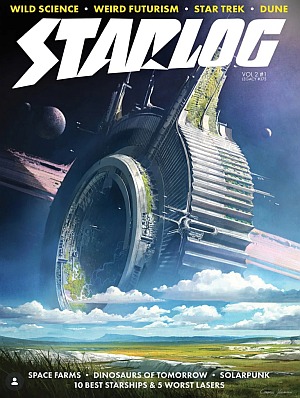
* It’s always good to see a worthy British magazine resurrected. STARLOG: The Magazine, Vol. 2 #1 (Pre-order). “The sci-fi magazine that ran from 1976 to 2009, back in print”. Albeit as a print annual initially, rather than a quarterly.
* Taskerland traces the history of weird underground zine Yuggothic Delusions Ogdo…
I was drawn to this magazine by the promise of a piece on Lovecraft and Lloigor Selavy’s piece is definitely substantial. Selavy argues that those who see Lovecraft’s work as the] quasi-existentialism of the alienated materialist [are] dependent upon a willingness to focus on a very narrow range of stories at the expense of many others. He proposes pushing a different and broader range of works to the foreground of Lovecraft’s literary reputation in an effort to re-position him as an author who was less concerned with the horrors of ‘cosmicism’ than madness and the desire for ontological escape. I’m not sure that I agree with this reading of Lovecraft, but I certainly salute the ambition of wanting to develop an understanding of Lovecraft that foregrounds “Through the Gates of the Silver Key” rather than At the Mountains of Madness.
* Taskerland also considers the Lovecraft fragment “The Book”.
* Lovecraft’s Gats i Gossos (2023) a Catalan translation of his “Cats and Dogs”.
* In Cagliari, Italy, Unica Radio profiles a forthcoming interactive promenade theatre show “Lovecraft: Cultists of Cthulhu”. Set in Providence, the show’s… “plot has its roots in ‘The Call of Cthulhu'”. The show will have a run of… “six days and five reruns a day”, so they’re obviously expecting a hit.
* The H.P. Lovecraft Film Festival Streaming Edition (2026), set for 4th – 11th December 2026. Tickets now available.
* Some Internet Archive backups saved from the now-defunct Tapas webcomics site: The Innsmouth Girl, Across the Dreamlands in 31 Days, At the Mountains of Madness: The Second Expedition, Dagon (adaptation) and What the Moon Brings (adaptation). Useful tip: it appears that The Internet Archive can only be accessed via a VPN if the chosen VPN node is in the USA.
* And finally, a card from eBay that may interest some readers and perhaps especially to those in need of visual props for an RPG. It shows an olde chest from ye towne of Dunwich. I assume from the other Dunwich, the large English town that sank beneath the waves of the North Sea.
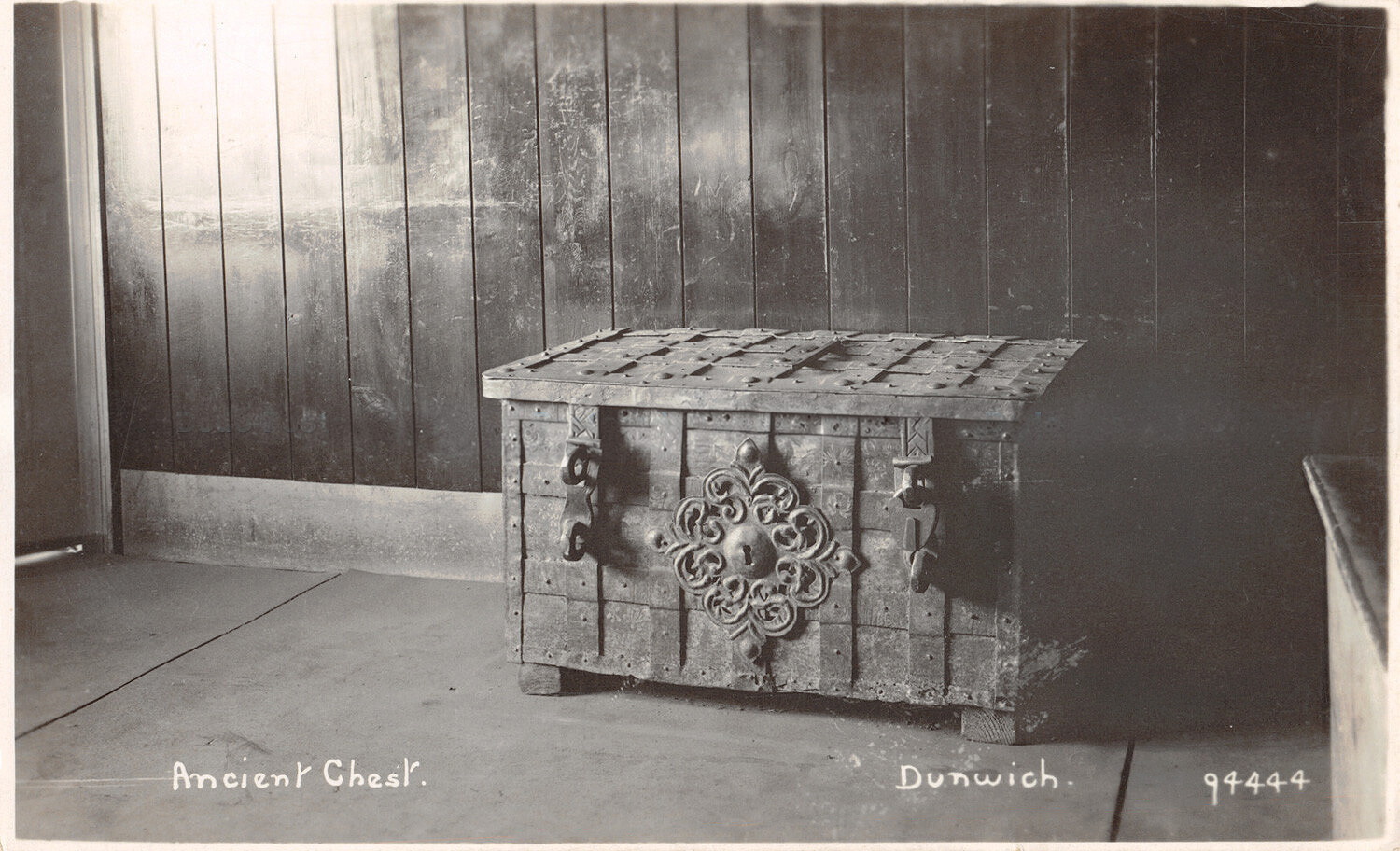
And here’s a link to a 1912 survey of “Dunwich in Literature”, as published in The English Illustrated Magazine, which may yield ideas / texts for an ‘other Dunwich’ Lovecraftian RPG (has anyone ever done one, yet?).
— End-quotes —
“My ancestry was immediately rural on the maternal side — with the spacious valleys & antient ways of western Rhode Island behind it, & with the country echoed & reechoed in the tales of my grandfather & mother — & on the paternal side, behind two generations of New York State urbanism, there was the immemorial tradition of the Old English countryside.” — Lovecraft to Frank Belknap Long, February 1933.
“I have never seen Old England, & I do not know whether it will ever be financially possible for me to do so. […] I long to see the great-boled oaks I dream about, & the grassy ridges that were once Roman roads stretching through the twilight of deep forests.” — Lovecraft to Jonquil Leiber, November 1936.
[I am a man who has…] “a healthy appreciation of his native soil-things [as will also] to be found in three-quarters of the rural squires of Old England” — To Frank Belknap Long, May 1926.
[Lovecraft had hacked and cut a new path to Barlow’s cabin in Florida, which…] “is ideally located in a picturesque oak grove – not the live-oak of the south, but the old-fashioned, traditional oak of the north & of Old England. On this account I am tentatively calling the place Druid Grove” — Lovecraft to Miss Toldridge, July 1935.
“As a boy I twisted all reality to conform to what I had been reading – often making Old England’s gnarled oaks out of New England’s maples, and so on.” — Lovecraft to Hoffman Price, February 1933.
[Today, 1915] “…the East Side child [in Providence], might as well be in the heart of Old England” ‐ Lovecraft to Kleiner, December 1915.
“This oldest of all New-England houses, made familiar to the public by many popular pictures, wood-carvings, and clay bas-reliefs, is built of massive timbers from Old England; probably parts of a ship dismantled in Boston Harbour. Stout British oak, destined to endure thro’ uncounted millennia, and typifying the staunch fibre of the peerless race that made New-England what it is. GOD SAVE THE KING!” — Lovecraft, “An Account of a Trip …”, August 1929.
“OLD ENGLAND! Honestly, if I once saw its venerable oaks and abbeys, manor-houses and rose gardens, lanes and hedges, meadows and mediaeval villages, I could never return to America. The only reason that I don’t save like hell to get in on Dench’s tour is that I simply couldn’t come back, once I saw the ancient glories and monuments of my race. I would jump in the Thames, the Cam, or the Isis; the Usk, the Ouse, or the Severn, first. When I see Old England at last, it must be as a son returning to his fathers, and I must be in a position to settle there for ever in peace and archaic dignity.” — Lovecraft to Morton, 1923.
03 Tuesday Nov 2026
Posted in HPLinks, Lovecraftian arts, Maps, New books
HPLinks #107.
* A new scholarly book, due in a few weeks in German, H.P. Lovecraft und die dunkle Seite der klassischen Antike: Asthetizismus, historische Identitat und Fiktion (‘H.P. Lovecraft and the Dark Side of Classical Antiquity: Aestheticism, historical identity, and fiction’). A hefty 347 pages, and a hefty price of 99 euros.

… his intensive engagement with classical antiquity has received little attention. Based on extensive source material, Lovecraft emerges as an outstanding example of the non-academic reception of antiquity in the United States around 1900. His methodological approach to antiquity, as well as its significance for his identity and worldview, can be traced in detail. The analysis of selected stories [also] reveals how Lovecraft adapted classical content for his fiction.
* An academic book Lovecraft in the New Millennium (2026) has just been published. A £25 paperback book of chapters by different authors, it appears to be largely a survey of ‘Lovecraftian’ media since the year 2000 — plus some introductory biographical chapters. From what I can glean by search, one or two of the chapters appear to have originated as graduate-student conference papers.
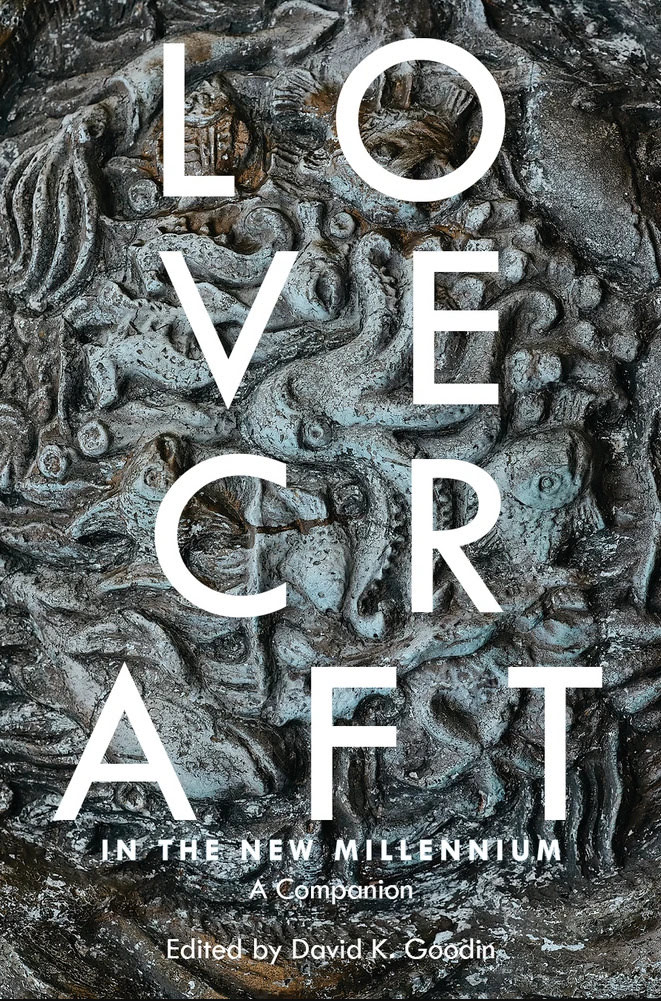
chapters on Lovecraft himself, his intellectual formation and marriage, [and] adaptations of his classic works in musicals, operas, indie rock, videogames, and more, as well as homages to Lovecraft in film, [TV], novels, and even comics.
* The lead article in the latest issue of the open-access journal North Carolina Libraries is a welcome addition to the small literature on librarians and information specialists in imaginative genre fiction. “Guardians of Lore: Knowledge-Keepers, Libraries, and the Moral Work of Information in Genre Fiction” (2026) is freely available online. “Genre” here = “fantasy, science fiction, horror, dystopian, and historical traditions”.
* Imagining the Impossible: International Journal for the Fantastic in Contemporary Media has a call-for-papers for a special issue on “Immersion and Emergence in the Fantastic”.
* A new academic book on the major British fantasy author, Alan Garner and the work of time (2026).
* On YouTube, “Tolkien and Lovecraft: How Nodens Transformed From a Forgotten Roman God Into a Cosmic Hunter”. Tolkien relates to the widely disseminated news of the 1928-29 excavations of the Temple of Nodens at Lydney in Gloucestershire, published in book form in 1932. Lovecraft’s “High House” was written in 1926, two years before the dig, and his Nodens came from Machen.
* The fossil blog Paleonerdish’s ‘Letters from Gondwana’ has a “Halloween Special XIV: The fossils that haunted Lovecraft”.
* A Lovecraft Halloween post from the Civitas Institute at the University of Texas, “H.P. Lovecraft’s Scientific Horror”.
* An R.E. Howard Halloween post from DMR, “Robert E. Howard: Songs of Death and Images of Night”.
* Mete’s Personal Blog ponders “The Paradox of Thomas Ligotti: Why Pessimistic Philosophy is Spiritually Comforting”.
* PorPor Books Blog reviews the Darrell Schweitzer edited anthology Cthulhu’s Reign.
* The latest issue of The Incredible Nineteenth Century: Science Fiction, Fantasy, and Fairy Tale is a review special on Guillermo del Toro’s Frankenstein (2025).
* New on Archive.org, Startling Stories Vol 16 Number 3 [January 1948]. The lengthy letters pages section (‘The Ether Vibrates’) printed a number of examples of the ‘we love/hate Lovecraft’ fan tussle that continued long after his death. e.g. “I’ve noticed that the Editor gnashes his teeth, tears his hair, etc. every time someone praises Lovecraft. Tell me, Editor, ol boy, just what do you have against the late H.P.?”
* In videogames, an obscure Japanese Lovecraftian RPG finally has an English fan-translation…
Released exclusively in Japan more than 26 years ago, Ningyo no Rakuin is a Lovecraft-inspired tactical RPG that most Western players have never experienced. A dedicated group of fan translators is finally changing that, with an entirely human-made English patch arriving just in time for Halloween.
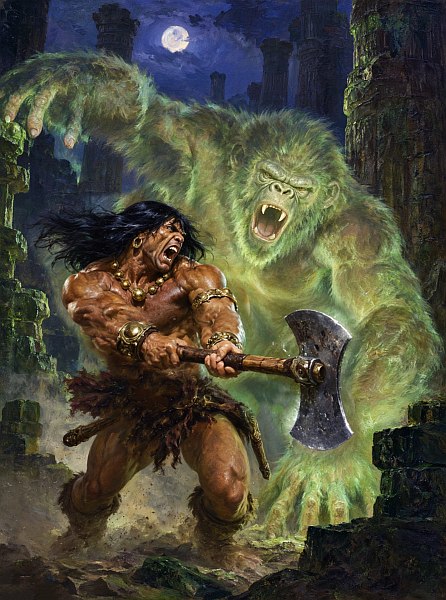
* The new and open MOSS-Image local model is the first to be almost flawless at rendering text, and it now has a free LoRA trained on eight northern European handwriting samples from the 17th to the 19th century. This is possibly of interest re: using ComfyUI and Photoshop to cook up ‘Necronomicon pages’ or printed RPG game items such as letters and lists. For images, it might be combined with the Moss Medieval Illuminations LoRA for MOSS-Image. Also, a demo of its amazing image-making capabilities, featuring a hypothetical paperback cover-painting of Conan in the “Maze of the Wizard-Beasts”.
* The organisers of PulpFest have a call to contribute to The Pulpster 36, the publication of the 2027 event. It sounds to me like they’d especially welcome articles which discuss pulp characters in the context of broadcast radio, and possibly also any vintage spoken-word recordings which may have appeared in the 1950s-1970s?
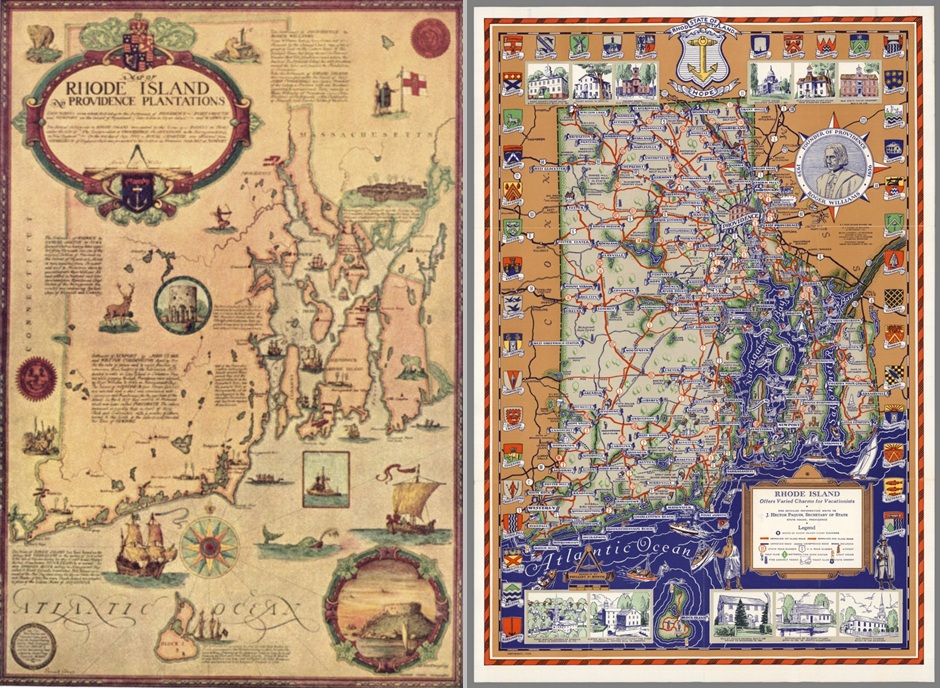
* And finally, I don’t recall seeing these two maps before. On Archive.org, a Lovecraft-era Map of Rhode Island and Providence Plantations (1925), and Rhode Island Offers Varied Charms for Vacationists (1939).
— End-quotes —
From eBay, an evocative postcard view of the rural East Greenwich Academy, which had been attended by Lovecraft’s grandfather Whipple Van Buren Phillips (1833–1904) back when it was called the Providence Conference Seminary.
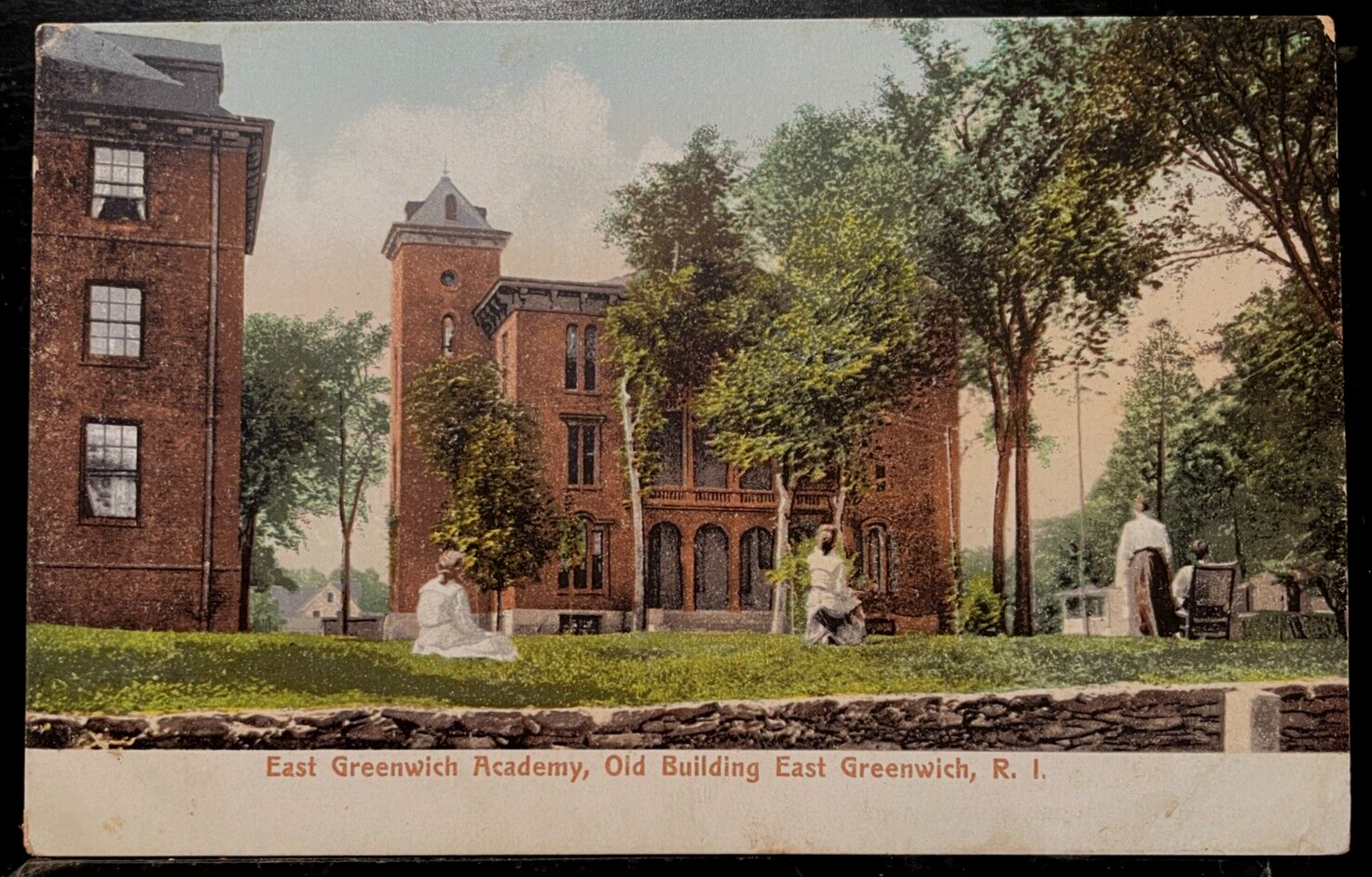
From what Lovecraft says of an old book he found in the attic as a boy, the same place had also educated his great-great-grandfather…
“I had always had an ear for rhythm, and had very early got hold of an old book on “Composition, Rhetorick, and Poetick Numbers” printed in 1797 and used by my great-great-grandfather at the East Greenwich Academy about 1805.”
So the attic books were not simply the older items in his grandfather’s library, but included books far older which his grandfather and other family members had inherited.
“I discovered the very ancient books of the family library in a dark attic room, I read them more than any others. That is how I came to be so familiar with the different sorts of old-fashioned typography. Everything mysterious & fantastic also impressed me — I loved to hear fairy-tales & ghost & witch stories — which latter my grandfather used to tell me.” — Lovecraft to Lee Baldwin, February 1934.
“I never heard oral weird tales except from my grandfather — who, observing my tastes in reading, used to devise all sorts of impromptu original yarns about black woods, unfathomed caves, winged horrors … old witches with sinister cauldrons, and ‘deep, low moaning sounds….’ He was the only other person I knew — young or old — who cared for macabre and horrific fiction.” — Lovecraft to J. Vernon Shea, February 1934.
“In infancy I was afraid of the dark. which I peopled with all sorts of things; but my grandfather cured me of that by daring me to walk through certain dark parts of the house when I was 3 or 4 years old. After that, dark places held a certain fascination for me.” — Lovecraft to Harry O. Fischer, February 1937.