
HPLinks #110.
* Now on JSTOR, Lovecraft Annual No. 20 (2026). I see the 2025 issue showing up there as-if new, as well.
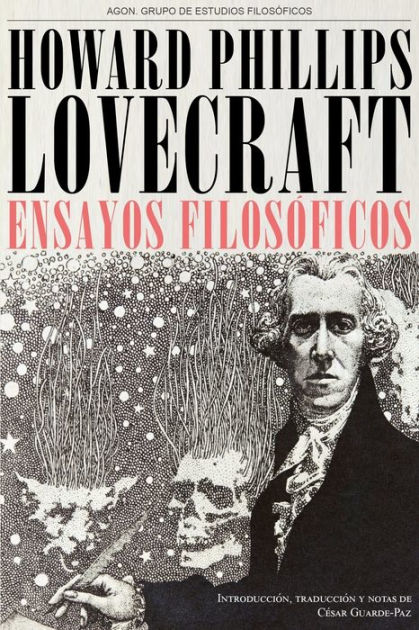
* New to me, all of Lovecraft’s philosophical essays, in Spanish translation.
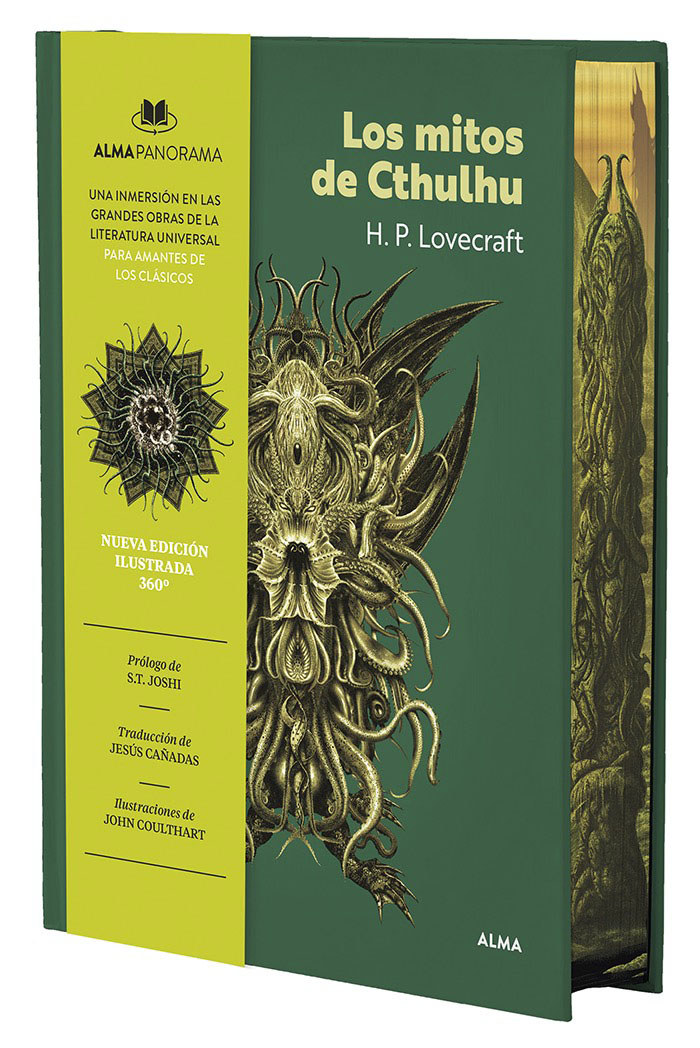
* Also from Spain, Los Mitos de Cthulhu with an introduction by S.T. Joshi, and illustrations by John Coulthart.
* Apparently out this week, according to Amazon UK, Michael Zigerlig’s The Call of Cthulhu – The 100 Year Anniversary Graphic Novel Edition. An Amazon search suggests it also appeared in 2025, though perhaps that was a speculative listing and it’s been delayed until now?
* Deep Cuts considers “Lovecraft & Henry Miller”. I’d add that, like Lovecraft, Miller was a travel writer of the 1930s — as evidenced by Miller’s classic book The Colossus of Maroussi (1941). See also the Lovecraft Annual journal for 2015, which has the article “Six Degrees of Lovecraft: Henry Miller”.
* Tellers of Weird Tales remembers The Vermont Flood of 1927, inspiration for “Whisperer in Darkness”.
* My quick survey of possible items entering the public domain in 2027. It appears that citizens of nations following the ’70 years rule’ will have all of Howard Wandrei’s stories to adapt, since he died in 1956.
* From Hungary in English, the Masters dissertation “The Use of Edmund Burke’s Concept of ‘The Sublime’ in The Works of H.P. Lovecraft” (2024). Freely available online.
* The S.T. Joshi Blog is back online, after several weeks of no response. The latest post has photos of his delightfully American home — now a fine shade of blue. It turns out not to be a gothic mansion flickering with lightning-flashes and circling bats.
* Forgotten New York visits Houdini’s Centennial Grave… “in a little known burial ground in Brooklyn/Queens”, New York City.
* Dark Worlds Quarterly surveys the uses of Giants in the Pulps: 1920-1930s. As in, giant humanoids.
* Broken Frontier reviews Gou Tanabe’s The Dunwich Horror graphic-novel adaptation.
* A video review of the collection Robert E. Howard’s collected Adventures in Science Fantasy (2025).
* The new book A Global History of the Reception of Ancient Egypt has a section briefly surveying “The Egyptian Vampire in Contemporary Popular Culture”. That’s what popped up in search, but I imagine the book may have other survey sections relating to the supernatural uses.
* In English, the movie review “Lovecraftian Spanish horror movie breathes new life into vampire cinema”.
* Another weighty new Innsmouth-based story anthology, Weirder Shadows Over Innsmouth, just published. It follows the earlier Shadows Over Innsmouth and Weird Shadows Over Innsmouth.
* From the Chichester Centre for Fairy Tales, Fantasy and Speculative Fiction, the Winter 2026 issue of their substantial house journal Gramarye. Available in print only.
* Project Gutenberg has been badly hacked and has been down for a few days now. There’s a working mirror at gutenberg.ar.io. Today I find that Librivox (Gutenberg texts read aloud) is also currently offline.
* Those called upon to transcribe noisy or badly recorded audio (convention panel discussions, convention-floor interviews etc) may be interested in Inworld’s new open-source Voice Isolator, which extracts clean speech from noisy environments. This now works locally in the latest ComfyUI Portable via a custom node, is tiny (256Mb) and doesn’t require lots of VRAM even when processing hours of recordings. There are two versions, offline for voice processing, and real-time for streaming from noisy environments. It has an open Apache licence, allowing commercial use.
* A new book on Medieval Cats, which may interest some. Possibly also relevant to Lovecraft’s use of ‘Theobald’ — see my post on Grandpa Tibbles.
* And finally, Forgotten New York seeks out Union Place…
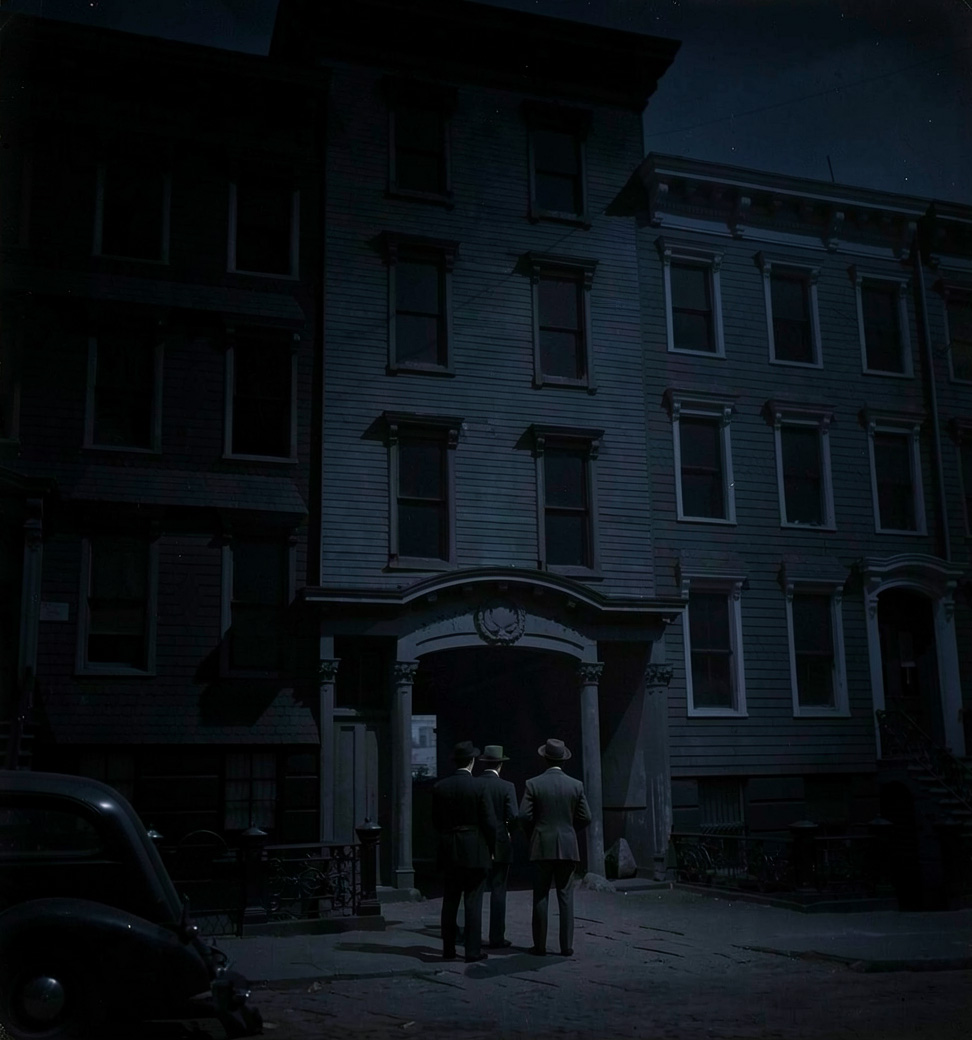
My research reveals that Union Place was a small enclave at #266 Classon Avenue between DeKalb and Willoughby Avenues.
This was explored on a night-walk by Lovecraft, Loveman and Kleiner on 5th September 1925, discovering there… “a brooding backwater of the 1850’s”. I can add that Lovecraft’s 1925 diary has the relevant entry and outlines the Saturday evening’s lead-up to Union Place…
…. call for Loveman — dinner John’s [Italian restaurant in Willoughby Street, presumably with Loveman] — [go back to Loveman’s room] SL’s room — select poems [with Loveman, in his room] — out to walk — Bklyn Br. [Brooklyn Bridge, sunset?] — kittie [Lovecraft encounters a cat, presumably near Brooklyn Bridge] — Italian fiesta in Main St. [another Italian restaurant, or a real street fiesta?] — slums [unknown location] — [they then take the] DeK Ave. [DeKalb Avenue] car [i.e. street tram] to Classon [Avenue] — [and there explore] UNION PLACE ….
Tipped off by Forgotten New York, I found and downloaded the 1940s.nyc tax photo of the entrance they used, in better quality. I’ve here given it a Klein 4B makeover to evoke a night scene in 1925.
— End-quote —
Lovecraft on drugs:
“The eye cost me only 50¢ instead of the expected $3.00. What was in it was a long, thin cinder, & no embedding had taken place — so that it could be removed without the use of cocaine. The oculist [eye doctor] told me that a $3.00 fee is not excessive if cocaine has to be used — as it did have to be last October.” — Lovecraft to Derleth, July 1932. So, Lovecraft took cocaine in October 1931.
“Glad enough was I to fling away tobacco when long trousers & increased inches made my manliness an obvious fact which needed no nicotinical corroboration! Nor have I any literary need of tobacco. When I go in for drugs, I am no ‘tin-horn’, but buckle right down to opium — vide “Dagon”. Since it is not I, but my heroes, who indulge, I do not feel the ill effects.” — Lovecraft to Kleiner, February 1920.
“I shall send you by express a collection of XX Ashtonsmithick paintings which will utterly and absolutely knock you out! GAWD! THOSE COLOURS!! Opium madness unleashed ….” — Lovecraft to Belknap Long, May 1926.
“Poe could, when he wished, give to his prose a richly poetic cast; employing that archaic and Orientalised style with jewelled phrase, quasi-Biblical repetition, and recurrent burthen so successfully used by later writers like Oscar Wilde and Lord Dunsany; and in the cases where he has done this we have an effect of lyrical phantasy almost narcotic in essence — an opium pageant of dream in the language of dream, with every unnatural colour and grotesque image bodied forth in a symphony of corresponding sound.” — Lovecraft, “Supernatural Horror In Literature”.
“All this dreaming comes without the stimulus of cannabis indica. Should I take that drug, who can say what worlds of unreality I might explore?” — Lovecraft to Kleiner, September 1919.