November on Tentaclii

The snow lies crisp around Tentaclii Towers. But, wrapped up in warm layers, I’ve still managed to keep up with the daily blogging. In my weekly ‘Picture Postals’ posts at Tentaclii I looked into De Leon Springs, the local attraction near the Barlow’s Florida homestead; at Lovecraft and soda-fountains; at the Providence Woolworth’s store where the low prices of genial Mr. Woolworth helped Lovecraft out in depths of the Great Depression: and finally I considered if prehistoric flying pterodactyls might have been one of the origins of Lovecraft’s childhood ‘night-gaunts’. They were mostly likely not, but it was worth looking into the possibility.

I also looked into the likely pre-America whereabouts of Helen Allgood (1820–1881), Lovecraft’s paternal grandmother (married 1839). It was she and her husband who gave him the (apparently now-unproveable) Northumberland connection in the north of England. As I’ve shown in one of my earlier essays, this connection strongly influenced the topography and details of “The Rats in the Walls”. I made a quick survey of Lovecraft and his Epicurean enjoyment of Thanksgiving. I was spurred (by The Living Age journal coming onto Archive.org) to look briefly at Lovecraft’s curious non-reading of Haggard in 1920, at a time when several correspondents were strongly urging it.

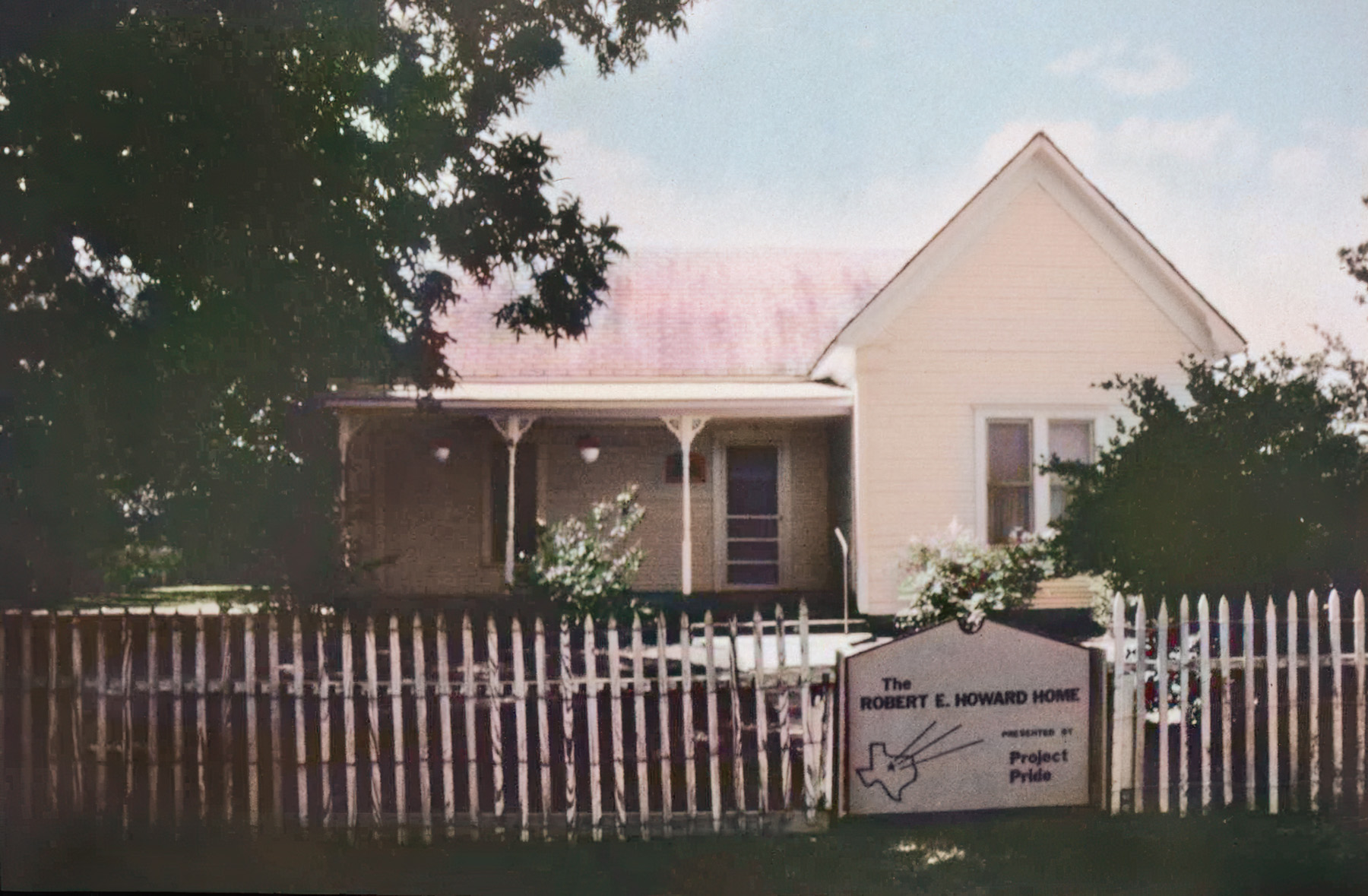
November brought a surprisingly good crop of books, when you might have expected most to have been out by Halloween. S.T. Joshi released the new The Recognition of H. P. Lovecraft; the scholarly booklet Copyright Questions and the Stories of H.P. Lovecraft appeared; there was news of a new uniform set called the Robert H. Waugh Library of Lovecraftian Criticism, including a wholly new third book of essays by Waugh; two substantial new non-fiction items on R. E. Howard; a festschrift of essays in Italian for the major Italian scholar and Lovecraftian anthologist Gianfranco de Turris, and the apparent arrival of the long-awaited book Tour de Lovecraft: The Destinations.

There was nothing in academic journals this month, as the academic year is now in full pelt. Thankfully I’m no longer a part of all that, except remotely via JURN. But there was news of the forthcoming scholarly journal Wormwood #37. The ‘Gothic’ edition of the free Digital Art Live magazine was also circulating this month, in which I paid suitable attention to Lovecraft. The Christmas issue of Digital Art Live will be a bumper tribute to the comics artist ‘Moebius’.

November saw Sonia’s amateur journalism The Rainbow, Vol. 2 No. II (1922) arrive on Archive.org, an important Lovecraft document in an excellent scan. Also the stencil-duplicated book-a-zine Henry Kuttner: A Memorial Symposium.

I linked the call for the work for the book Felis Futura: An Anthology of Future Cats, and noted the forthcoming symposium ‘The Inklings and Horror: Fantasy’s Dark Corners’ which may interest some and eventually result in a publication. I even found some sparse details of an academic mapping project titled ‘Visualizing Lovecraft’s Providence’.

It was a good month for open scholarly archives, I noticed that the Hevelin Fanzines collection scans are now 100% transcribed, including a number of key early Lovecraft ‘zines. I saw that the Keith-Albee Collection of Lovecraft-era Providence vaudeville theatre is now fully transcribed and publicly searchable online. Also newly freed from microfilm are Munsey’s Magazine, 1891-1929 and the Illustrated London News 1842-2003. These Archive.org runs may be of use to researchers on Lovecraft and his Circle.

Not much in podcasts this month, but I noted a one-hour one with S.T. Joshi on Arthur Machen. With the release of the new AIMP 5.0 software audio player, I also puzzled out its new audiobook bookmarking arrangements. And at last worked out how to make the BBC’s 1973 adaptation of Asimov’s Foundation series listenable on headphones, without being deafened by the music.

In the arts I noted there is a video-essay survey of “Weird Swords and Sandals” lurking on a new DVD, with a focus on obscure European cinema in the 1950-70s. Various bits of Lovecraftian visual art were of course noted here, as well as eBay sale pictures of the 1980 Necronomicon Press “Lovecraft Paper Cut-Outs” packet.

Various ‘Black Friday’ sales of likely use to scholars were noted and linked. At Chaosium I spotted deep discounts on three warehouse-clearance Robert E. Price anthologies of various cycles in the Mythos.

I’m still hoping that someone may be able to supply a zipped local folder of the missing Tentaclii images, which they may have acquired by spidering the blog to create a local archive. I’m fairly sure I had one, but the ill-timed hard-disk crash some months back likely took it.

My thanks to my patrons who have stuck with me during the abrupt Web address swop-over, and/or who have been able to increase or to begin their Patreon support this month. I’ve also for the first time ever made the same direct appeal to people who read my various other projects. I have not yet looked at the resulting current total (due in on the 5th), but I still have hopes of Patreon building to an increasingly-vital $100 or more a month. Tentaclii readers who want to help me out can also buy my books or the poster set, or just send a one-off PayPal donation. Many thanks.

Visualizing Lovecraft’s Providence

“Visualizing Lovecraft’s Providence”, a project apparently underway at the Duke Digital Art History and Visual Culture Research Lab since 2019…

Drawing from detailed descriptions of city streets, vanished and current architectures, spooky interiors, urban denizens, and otherworldly intruders, Lovecraft creates a multi-layered, evocative, and at times disturbing imagined world of the city. By highlighting the spatial features of his writing, and the ways in which expressionist landscapes evoke an apprehensive appreciation of his world view, we are examining the potential of spatial media for a new kind of literary criticism and interpretive adaptation. Our first example will focus on The Case of Charles Dexter Ward, which combines early 18th-century action with early 20th-century scenes closer to Lovecraft’s own experience of the city.

The only other mention of the project notes the initial taking of…

a scientific approach to visualizing Lovecraft’s Providence from documents and data, but [we] are also thinking about what it means to fill the gaps when we don’t know, or have room for interpretation.

Ask the Lovecraftian scholars who know, perhaps?

Hevelin Fanzines collection now 100% transcribed

Hevelin Fanzines online library now has…

11285 OF 11285 PAGES TRANSCRIBED

A hearty congratulations to whoever slogged through all those the inky stencil-duplicated pages and (presumably manually) transcribed them all. They can now be comprehensively searched by keywords and names, though the results get mixed up with a half-dozen other unrelated digital collections at Iowa University.

Audiobook: Fearsome Creatures of the Lumberwoods (1910)

New on LibriVox, a free reading of the short survey Fearsome Creatures of the Lumberwoods: With a Few Desert and Mountain Beasts (1910)…

A limbless reptilian monster that propels itself through the swamps with a propeller-tipped tail? A creature so ashamed of its monstrous appearance that it dissolves into tears when captured? Learn about the Snoligoster, the Squonk and many other ‘fearsome critters’ in this field guide written and illustrated by two North American foresters who know them well. Listeners who suspect that these creatures are the stuff of tall tales, will nevertheless do well to look out for Slide-rock Bolters when vacationing in the Colorado mountains!

So far as I’m aware Lovecraft never mentioned it. But it may have been the sort of item that the Lovecraft correspondent Bernard Austin Dwyer, logging forester and weird tales enthusiast, was aware of.

Wormwood #37

The scholarly journal Wormwood #37 has its cover and table-of-contents. Has at least three articles of interest to me…

* John Howard on the many dimensions of Fritz Leiber. (Presumably surveying his work beyond the usual Mouser tales)

* Adrian Eckerseley with a new view of Machen’s The Hill of Dreams.

* Mark Valentine on the figure of [King] Arthur in the 1970s.

Appears to have been delayed from the Autumn, presumably by the paper shortages and shipping problems.

The Price is right…

66.6% off older Chaosium paperback titles that are lingering in the warehouse. Including Robert M. Price’s anthology The Necronomicon: Selected Stories and Essays Concerning the Blasphemous Tome of the Mad Arab (2nd edition); his The Yith Cycle: Lovecraftian Tales of the Great Race and Time Travel; and his Antarktos Cycle: Horror and Wonder at the Ends of the Earth.

Plus get an additional 10% off your order site-wide until Nov 30th with the BLACKFRI21 coupon code.

‘Picture Postals’ from Lovecraft: Pterodactyls

British Museum, possibly 1920s.

In this week’s ‘Picture Postals’ post…

A dark and monstrous lizard-shape that glides
Along the waters of the inland tides

These are the concluding lines from a Weird Tales poem by Frank Belknap Long, later quoted by Lovecraft in corresponding with Long about dinosaurs in 1930. The master had been kindly sent a dinosaur bone from California. (Incidentally, Long’s original poem had “Upon”, not the improving “Along”. So this might count as a little expert Lovecraft micro-revision).

Given the visual appearance of young Lovecraft’s nightmarish ‘Night-gaunts’ one has to wonder what part an early exposure to the imagery of the pterodactyl might have unconsciously had on a very young H.P. Lovecraft. First, what are the dates for this? Well, he began to have nightmares about them at five and a half, so a visual influence from print would have to have been before 1896.

It is of course possible that the black crepe and mourning silks worn by the family on the death of ‘Rhoby’ partly inspired the night-gaunts. Lovecraft was born August 1890, and therefore would have been five and a half in February 1896. ‘Rhoby’ (about whom more next Friday) died 26th January 1896, and the mourning presumably continued until the springtime. Thus the dates fit remarkably well, if one assumes a direct reaction in the boy’s nightmares after a few weeks. However, it must be asked what prior template he might have had. A leathery flying form onto which the family’s sombre rusting black crepe could have been ‘pinned’ at the moment of inception, so-to-speak.

Lovecraft much later, in 1916, speculated that the night-gaunts might have been influenced by the ‘man-devils’ of Dore…

I used to draw them after waking (perhaps the idea of these figures came from an edition de luxe of Paradise Lost with illustrations by Dore [1866], which I discovered one day in the east parlor).

But it is at least worth considering if he might have had a template elsewhere. In popular pterodactyl imagery, and thus had an earlier and forgotten impression of them, for what young boy is not fascinated by such things. Could he have seen them at that time? Yes. Judging by the book Extinct Monsters: A Popular Account (1893) the creatures were quite well known the late Victorians, and a science timeline shows that the first complete scientific description being given in 1891. Presumably this ‘flying dragon’ arousing a certain interest among the public, and among boys in particular. So the timing is perfect there, if they were indeed transmuted into night-gaunts by Lovecraft’s nightmares.

Indeed they had been visualised in living flight (wrongly, but somewhat zoog-like) as early as 1843, as here by Newman…

Thus by the early-mid 1890s they would have been included in most general encyclopedias (as Pterosaur, Pterodactylus, Pteranodon, Pterodactyl, etc), and we know that Lovecraft was poring over at least one of those a little later…

With the insatiable curiosity of early childhood [circa age 8], I used to spend hours poring over the pictures in the back of Webster’s Unabridged Dictionary — absorbing a miscellaneous variety of ideas. After familiarising myself with antiquities, mediaeval dress & armour, birds, animals, reptiles, fishes, flags of all nations, heraldry, &c., &c.,

They also feature briefly in Verne’s novel A Journey to the Centre of the Earth (1871), illustrated and seen during the raft voyage chapter…

the Pterodactyl, with the winged hand, [was seen] gliding or rather sailing through the dense and compressed air like a huge bat.

Joshi’s “I Am Providence” notes of the boy storyteller…

Lovecraft admits to being a “Verne enthusiast” and that “many of my [earliest] tales showed the literary influence of the immortal Jules”.

It is thus not impossible that he was at an early age at least browsing ‘the monster-pictures’ in the family edition of Verne, if not actually reading them yet.

The other possibility is that a museum in Boston might have had a life-size reconstruction or vivid diorama circa 1894. But I can find no trace of such in Popular Exhibitions, Science and Showmanship, 1840–1910, and Richard Fallon’s new Reimagining Dinosaurs in Late Victorian and Edwardian Literature (2021) indicates a general 1900 start for major modern museum dinosaur shows in East Coast America, while also lamenting that…

The significance of dinosaurs for general audiences during the late nineteenth century, when dinosaurs were morphing from British lizards to multiform American monsters, however, has hardly been studied. … The lack of detailed attention to dinosaurs in the literary culture of the turn-of-the-century period, and especially the 1890s, is surprising, given that these were the decades in which the word ‘dinosaur’ first became meaningful to general audiences.

So my suggestion is possible on the dates, but cannot now be proven. There is indeed further negative evidence. If this night-gaunt -like creature did make an early and vivid impression in Lovecraft’s very early childhood, then it does not surface later — at least in the original form. Since Lovecraft only makes two fleeting explicit mentions of the creature in fiction…

This was my first word of the discovery, and it told of the identification of early shells, bones of ganoids and placoderms, … dinosaur vertebrae and armour-plates, pterodactyl teeth and wing-bones …” (from “At the Mountains of Madness”)

I fancied I could vaguely recognise lesser, archaic prototypes of many forms — dinosaurs, pterodactyls, ichthyosaurs,” (from “The Shadow Out of Time”)

The pterodactyl does however make a brief and central appearance early in the earlier long essay (“Cats and Dogs”)…

“I have no active dislike for dogs, any more than I have for monkeys, human beings … or pterodactyls.”


Neave Parker postcard for the British Museum, probably early 1950s.

“The door of the Marsh retail office was open…”

A few discounts of likely interest to the books-and-publishing crowd…

* The latest PDF Index Generator, for making back-of-the-book indexes, 30% off with the BF30 coupon code. The best such budget-priced indexer, in my view.

* Serif currently has 30% off everything in its budget-priced Affinity range of software. Including their DTP software. I’ve never used it, knowing instead InDesign and Microsoft Publisher, but it gets good reviews.

* DxO Viewpoint 3 is deeply discounted. If you’re a researcher who makes lots of architectural photos on trips, it automatically straightens verticals and horizontals. Far more than just another ‘lens distortion fixer’ plugin, and recommended.

* Topaz GigaPixel AI can currently be had for $75 (25% off), for up-scaling pictures. It can’t work miracles all the time, but most of the time it does.

No discounts yet on Docfetcher Pro (full-text desktop search), or Booksorber (quickly digitize books).

Happy Thanksgiving

Happy Thanksgiving to American readers of Tentaclii.

For some reason S.T. Joshi does not index ‘Thanksgiving’, this lack possibly being an indexer’s convention. But I’ve picked out a few examples in which Lovecraft mentions it. First, here again is Lovecraft’s celebration of a Thanksgiving meal made by Sonia in New York City…

Enchanted soup — apotheosised roast turkey with dressing of chestnuts & all the rare spices & savoury herbs that camel-caravans with tinkling bells bring secretly from forgotten orients of eternal spring across the deserts beyond the Oxus — cauliflower with cryptical creaming — cranberry sauce with the soul of Rhode Island bogs in it — salads that emperors have dreamed into reality — sweet potatoes with visions of pillar’d Virginia plantation-houses — gravy for which Apicius strove & Lucullus sigh’d in vain — plum pudding such as Irving never tasted at Bracebridge Hall — & to crown the feast, a gorgeous mince pie fairly articulate with memories of New-England fireplaces & cold-cellars. All the glory of earth sublimated in one transcendent repast — one divides one’s life into periods of before & after having consumed — or even smelled or dream’d of — such a meal!

Later, as if to celebrate 18 months of safe ensconcement in Providence following his New York nightmare, Lovecraft feasted mightily in November 1927. As he wrote to Donald Wandrei…

To parallel your Morphean [Morpheus, god of sleep] achievement of last Sunday, I can cite my own performance of last night – when, gorged with a Thanksgiving feast of the utmost peril to my 140-lb standard, I was overcome by drowsiness at 5p.m … & continu’d in a somnolent state till ten this morning! My dreams occasionally approach’d the phantastical in character. tho’ falling somewhat short of coherence.

In an April 1928 letter to Talman (presumably begun in 1927 and then added to slowly) he revealed…

our whole family had a Thanksgiving dinner with the Brennans this year

… by which he presumably refers to November 1927, so the blow-out must have been there. They appear, from his following accent in the letter, to have been of Irish descent. At a guess they may have been childhood friends from the Blackstone Band days, or neighbours. They don’t appear in the index of Letters to Family.

In November 1932 he told Robert E. Howard…

My really favourite meal is the regular old New England turkey dinner, with highly seasoned dressing, cranberry sauce, onions, etc., and mince pie for dessert.

And in 1934 he achieved a long-held Thanksgiving hope, though he doesn’t say exactly where or with whom…

[This] Thanksgiving I did something I have been wanting to do all my life — consumed the traditional feast on this historic soil of ancient Plymouth (less than 40 miles from here), where the whole custom started 312 years ago.

So far as I know he knew no writer or relations in Plymouth, but it’s not impossible that he had fallen into conversation with antiquarians while exploring the place, had expressed his wish and been invited.