• About
  • Directory
  • Free stuff
  • Lovecraft for beginners
  • My Books
  • Open Lovecraft
  • Reviews
  • Travel Posters
  • SALTES

Tentaclii

~ News & scholarship on H.P. Lovecraft

Tentaclii

Category Archives: Scholarly works

Notes on ‘Letters with Donald and Howard Wandrei’, part two

11 Sunday Sep 2022

Posted by asdjfdlkf in Lovecraft as character, Scholarly works

≈ Leave a comment

More notes on the volume of Lovecraft letters, Letters with Donald and Howard Wandrei.

We open in late 1927.

p. 172. Loveman recommended to Lovecraft a “young vagabond Frenchman, Jean Recois” who Loveman had picked up in New York. Lovecraft in turn suggested him to Wandrei.

p. 180. Lovecraft enjoyed the big-budget movie The Thief of Baghdad. This would have been a re-run of the 1924 Douglas Fairbanks version, probably as part of a double-bill of two similar older movies.

p. 185. After hearing a public lecture at Brown on the subject, Lovecraft was delighted to learn that Greece was still somewhat pagan. At least in placid watered-down outward forms, as observed first-hand by an expert on the matter. He writes… “The peasants worship their old gods at their old shrines, under saint’s names.”

p. 188. Until late 1927, Belknap Long and family were living at 323 West End Ave., New York City. They then had to move. I can find no picture of the site, but it would have been here that Lovecraft visited in the mid 1920s while living in the city.

p. 195. On the visionary artist John Martin. By late 1927, Lovecraft had seen… “excellent collections of his engravings on two occasions”.

p. 198. Wandrei met and liked Lovecraft’s aunts, and wished in a letter that he could have the same life. He appears to imply that they had been left ‘provided for’ in terms of an income that supplied a genteel lifestyle, and that they did not need to work.

p. 198. Lovecraft read “a fine study of hallucinations by Henri Beraud” sometime in the winter of 1927/28. By the mid 1920s Beraud was one of France’s best-selling literary novelists, also a magazine editor. S.T. Joshi has edited his novel Lazarus (1924) in English, but there appears to be no “study of hallucinations” among Beraud’s books… unless that novel encompasses such things? Apparently it is the melodramatic story of a lost memory and double-personality, akin in broad idea to “The Shadow Out of Time”. If that novel is not the “study of hallucinations” meant, then perhaps Lovecraft had encountered a long translated newspaper article or book chapter on the topic? I can find no-one referring to such, though there are hints Beraud influenced the surrealists. His vivid travel writing book Ce que j’ai vu a Rome (‘What I saw in Rome’), “based on his newspaper articles”, would have appealed to Lovecraft. It… “captures the atmosphere that characterized Italy, in particular Rome, in the late 1920s.” This book is apparently the source of the French intellectual phrase “hallucination historique”, originated by Beraud. But the book was not published until October 1929, and anyway appears to have never had a translation.

p. 199. He recalled, many decades later, that as a fifteen year-old he had enjoyed “The Barge of Haunted Lives” in the proto-pulp All-Story magazine in 1905. Published in book form in 1923. A contemporary review doesn’t hold out much hope that it’s a lost classic…

p. 199 and 202. He expressed a desire to meet Prof. Voss of Heidelberg, whom be believed to be the real and substantive creative force behind the contested English translation of The Monk and the Hangman’s Daughter, and true appreciator of the dense dark Bavarian forests. Possibly a hook on which a Mythos writer might hang a tale or two?

p. 211. The novelist Everett McNeil is… “getting to be a first-rate correspondent”. Sadly the McNeil-Lovecraft correspondence has been lost.

p. 217-19. Wandrei ended up living in the notorious Red Hook, New York City, for a time. By September 1928 the lad has had enough and was planning to leave.

p. 220. In September 1928 Lovecraft was practising a proto-psychogeography in Providence… “Have also made many Machen-like voyages of discovery through strange Providence streets — including whole neighbourhoods whose very existence I had never suspected … It is astonishing how many obscure and labyrinthine nooks and corners … unknown to even lifetime inhabitants until chance or deliberate exploration brings them to light.” The word “chance” appears to suggest he consciously undertook a dérive-like wandering, inspired by Machen.

p. 220. He read the “French and Asquith” ghost anthologies in November 1928. The former was an anthologist whom Lovecraft had met in person, at least once, at Eddy’s book shop in Providence. A “peppery-voiced” old man.

p. 223. Lovecraft definitely saw the Henry Peck exhibition of local drawings in Providence in November 1928.

p. 225. There was what he called a “prevailing pandemic” in January 1929, though he states he suffered only a “typical cold”. But with Loveman’s aid he still managed to get to Marblehead in winter, and there they enjoyed the lack of tourists. Presumably the “pandemic” had reduced these even further.

p. 230. There is a hint that Lovecraft’s Hell’s Kitchen novelist friend Everett McNeil was a war veteran. That much is known (see my biography of McNeil). But here we have a hint that he had once been connected with the Navy. Since in his old age he was able to be treated at the Naval Hospital.

p. 232. In Providence, Jake’s was located… “down by the Great Bridge”.

p. 241. Lovecraft briefly corresponded with the author of Pilgrims Through Space and Time: Trends and Patterns in Scientific and Utopian Fiction (1947), the first well-known and substantial survey by an academic of the pre-history and early history of science fiction. It is currently online in a 1972 reprint. Oddly enough there was also a dissertation written in Providence at Brown, surveying the German side of the proto-SF field, which apparently pre-dated Pilgrims. But only an extract was ever published, and this pioneering German study was unknown to later German writers on the same topic.

p. 249. Of young Derleth… “he actually believes in the supernatural”. Lovecraft modifies this in a late letter to Petaja, to be found in the same book. There… “Derleth believes in telepathy but not the supernatural.” Lovecraft, again writing to Petaja, thought telepathy “not outside the realm of possibility” in the mid 1930s. Though he notes the lack of support from men of authority, and the current lack of plausible evidence.

p. 250. Lovecraft’s story “Whisperer” sold for a handsome $350, on first submission. Unusually it was written in May and on a warm trip to the south, “piecemeal between snatches of revisory work”. Quite unlike his normal winter-working practices, then. This perhaps helps explain some of my thoughts and mis-givings about it, following my recent re-hearing in audiobook. It was, I now suspect, something of an experiment.

p. 252, 253, 265. Various extended musing on his ‘ancestral’ memories of deep woods, forests, inc. “vast-boled, low-branching, palaeogean forests”. One for some future article appreciating his writings about gardens, dream-gardens, flower-shops, conservatories, verdant tended landscapes, his pastorals and the like.

p. 253. “Goat Rock” was a favourite sitting spot in Quinsnicket. This is still there apparently, or at least a rock of that name. Some of “his” rocks in the park were moved or removed by WPA work in the 1930s, I seem to recall. But Goat Rock was “west of Table Rock Road” according to a WPA guidebook of the period. There was an “Old Quarry behind Goat Rock” according to a modern guide, which may interest Mythos writers.

p. 255. The popular serving-man “Domingo” at Jake’s was Portuguese.

p. 253, 256. Lovecraft had never seen the aurora (‘northern lights’), though he was sometimes told by others that it had been sighted in Providence. But always too late to see it himself.

p. 257. [one of two of] “my own most terrifying memory-phantoms are traceable to … an illustration in Robinson Crusoe.” Presumably this is to be found in an edition circa 1875-1900, although today it would probably take a Crusoe expert and collector to identify the exact edition and most likely illustrations.

The letters move into 1931:

p. 161. Lovecraft found a new bakery, the Lonsdale Bakery, which at the point of writing had been patronised since Autumn/Fall 1930. Google Books suggests this was a budget chain expanding out of nearby Saylesville where it had been established by the early 1920s. Occasionally he ate out at “The Plymouth” in Providence, and later he found an even cheaper place which served a good three-course meal for 25-cents. His budget for food seems to be going downhill at this point.

p. 265. There is another mention of the novel that Long was writing and which was based on memories of “the gang” in New York City in the mid 1920s. This is rather vaguely described by Lovecraft as “psychological or aesthetic” in approach, but at least that tells us that it was not a monster-shocker pulp mystery.

p. 271, 273. Only in September 1931 was pumped “steam heat” installed at Lovecraft’s home in Barnes St. Formerly there had been a winter “hot-air furnace” (presumably convection) which only heated part of the house, and the third floor was left unheated.

p. 285. He gives the impression of bearing up under the weight of the Great Depression, but by the third winter the general mood and dim prospects are obviously starting to get to him. He talks of his own severe “nervous depression”, lingering on into March 1932. The young psychiatric nurse Brobst arrives in the Wandrei letters this point, and (p. 286) Lovecraft is fascinated with the lad’s background in the ‘Hex’ region of Pennsylvania, apparently settled by superstitious witch-haunted German peasants.

p. 295. Lovecraft starts “eating out of cans” at home, and a short while later we hear “canned beans a heavy staple” (p. 333) on his trips.

p. 307. He takes Helen Sulley to Jake’s, but doesn’t comment on the effect her beauty might have had there. One can imagine, though.

p. 312. In Quebec he finds a… “near-Jake’s, a Chinaman with a counter-joint who caters to hard-boiled English-speakers. Not as tough as Jake’s bunch, though.”

Half the book, still to go. More later.
Howard Days 2023 – dates and theme

10 Saturday Sep 2022

Posted by asdjfdlkf in Odd scratchings, REH, Scholarly works

≈ Leave a comment

The 2023 R.E. Howard ‘Howard Days’ event has dates, 28th & 29th April 2023. This should mean somewhat cooler weather than Texas in a baking June…

Moving the event to late April will provide everyone with a more inviting environment and make the outdoor activities more pleasant.

Elsewhere I read the general state-weather summary…

The temperatures in Texas in April are comfortable with low of 55°F and and high up to 73°F. You can expect about 3 to 8 days of rain.

Sounds super, I wish I could be there. Book early, as I’m guessing this change will cause others to think likewise and lead to a big jump in attendance. Also because the April weather will make it easier to get “big name” Guests, and more than one. The better weather might even entice a band or two of costumed re-enactors?

They also have the 2023 theme announced, “100 Years of Weird Tales”, celebrating the founding of the unique magazine in 1923.

Hamilton and Kipling

08 Thursday Sep 2022

Posted by asdjfdlkf in Historical context, Kipling, Podcasts etc., Scholarly works

≈ Leave a comment

If you want a taste of what Weird Tales readers found so alluring about ‘star’ author Edmond Hamilton, his “The Metal Giants” (Weird Tales, December 1926) is now a new one-hour reading on Librivox.

Lovecraft called the crowd-pleasing formula writer “indefatigable & repetitious” and he assured a correspondent that, if he were to enter the field of ‘interplanetary fiction’… “you may depend upon it that I shall not choose Edmond Hamilton [as a model]”. That said, in 1926 Lovecraft did admire his “The Monster-God of Mamurth” tale, and I recall that they met at some point and got on well. He was also surprised to find he liked the Hamilton tale “Child of the Winds” in the May 1936 Weird Tales (“Hamilton(!!)” he exclaimed in a letter).

While searching for the name, I found more evidence for the influence of Kipling’s seminal “With The Night Mail” on science-fiction…

“… an article in the February 1922 Science and Invention, ‘10,000 Years Hence’. Howard Brown provided a stunning illustration of floating health cities (like huge health farms) kept aloft in the upper atmosphere by power rays drawing their energy from the sun. Gernsback described how these cities could be directed to move around the Earth [keeping pace with the sun], a concept one might believe inspired two later noted works of science fiction, Edmond Hamilton’s “Cities in the Air” (1929) and James Blish’s Earthman, Come Home (1955), were it not that neither author knew of the article.”

The above is from the pulp/early SF survey book The Time Machines, Liverpool University Press, which does not mention Kipling even once.

Ah, but these authors would have known of Kipling, the obvious source for such ideas. The direct inspiration being drawn from “With The Night Mail” will be obvious to anyone who has read it. Kipling’s cloud-breakers + permanently aloft sun-powered airships = “Cities in the Air”. Kipling’s giant and ascending ‘consumptive’ hospital airships = hospital cities in the upper atmosphere.

Since the article and Hamilton’s “Cities in the Air” (much enjoyed by pulp readers of the time, it seems) are now public domain, they might even be overhauled and retro-fitted to fit with Kipling’s “With the Night Mail” / Aerial Board of Control universe. In fact, much else that was published in the 11 issues of Gernsback’s short-lived Air-Wonder Stories seems on the face of it to be fair game for such a thing.

Lovecraft was right, part 796

02 Friday Sep 2022

Posted by asdjfdlkf in Historical context, Odd scratchings, Scholarly works

≈ 3 Comments

Or, at least, he might not have been wrong when he held to the idea…

That the human race started on some plateau in central Asia is almost certain” (Selected Letters III, p. 412)

Lovecraft was not alone in this. I note that in the 1920s Roy Chapman Andrews (the model for Indiana Jones) took an expedition to Mongolia, intending to find there the first traces of the human race. Also, the discovery of proto Indo-European (c. 4000 B.C.) had put the origins of the European languages mostly in a massive ancient migration to the Caucasus from the western Eurasian steppe, which would then place Mongolia as a theoretical lost origin-point further east. Apparently some linguists still see evidence for a distant Mongolian relationship for proto Indo-European, circa 12,000 B.C. So by the standards of his time, Lovecraft seems to have been thinking along the right lines.

Somewhere in the bleak steppes of Mongolia, under vast layers of sand & earth & other fossils, we shall probably find in the future the skeletal vestiges of the immensely remoter dawn-men who really were our lineal forbears.” — Lovecraft to Toldridge, July 1929.

But after Lovecraft’s death the consensus on human origins later shifted to Africa, based on the new post-war fossils, even though “consensus” should be a dirty word in rational science. Now comes a hint from this week’s New Scientist magazine (“The Search for Ancestor X”) that ideas may be changing based on new evidence…

The problem is that we appear to have fundamentally misunderstood the way human evolution works. “The idea humans originated from a small region [of Africa] doesn’t make much sense,” says Lounes Chikhi at the University of Toulouse, France. Chikhi says the genetic signals in living humans imply that H. sapiens emerged as a “metapopulation” spread over a wide geographical area where several “subpopulations” were interconnected by genetic exchange [presumably by early trade?]. Each of these subpopulations was characterised by a subtly distinct genetic signature — and potentially a subtly distinct look. [The article concludes that, on present evidence,] Ancestor X could have lived almost anywhere within a truly vast geographical region. … “it could have been in west Asia. It could even have been in east Asia. We just don’t know yet.” [the latter quote is from Chris Stringer at the Natural History Museum in London].

News from France

01 Thursday Sep 2022

Posted by asdjfdlkf in Lovecraft as character, Lovecraftian arts, New books, Scholarly works

≈ Leave a comment

My thanks to Gregory for letting me know that the French magazine Actuality: The Universe of Books has a new article “Lovecraft, Cthulhu and the Old Ones enter the Pleiades”. Here “Pleiades” is a play on the name of the famous French publishing house, Bibliotheque de la Pleiade. Who have now revealed (I translate)…

We are currently preparing an edition of the works of H.P. Lovecraft”, confirms La Pleiade. … “The work is in progress”.

This is not to be confused with the sumptious Mnemos multi-volume edition of Lovecraft now emerging…

Mnemos will soon publish the 4th volume of a gigantic translation, at the end of September [2022] … accompanied by the required scholarly apparatus.

The final third of the article turns into a short interview with the main translator for Mnemos, David Pathe-Camus…

I challenge you to read a text such as “Nyarlathotep” and not think about our own time. It reads like it was written just for us. Lovecraft had a keen awareness of the human condition. [In a way, his work] foreshadows the currents that will come after it — such as existentialism or the absurd.

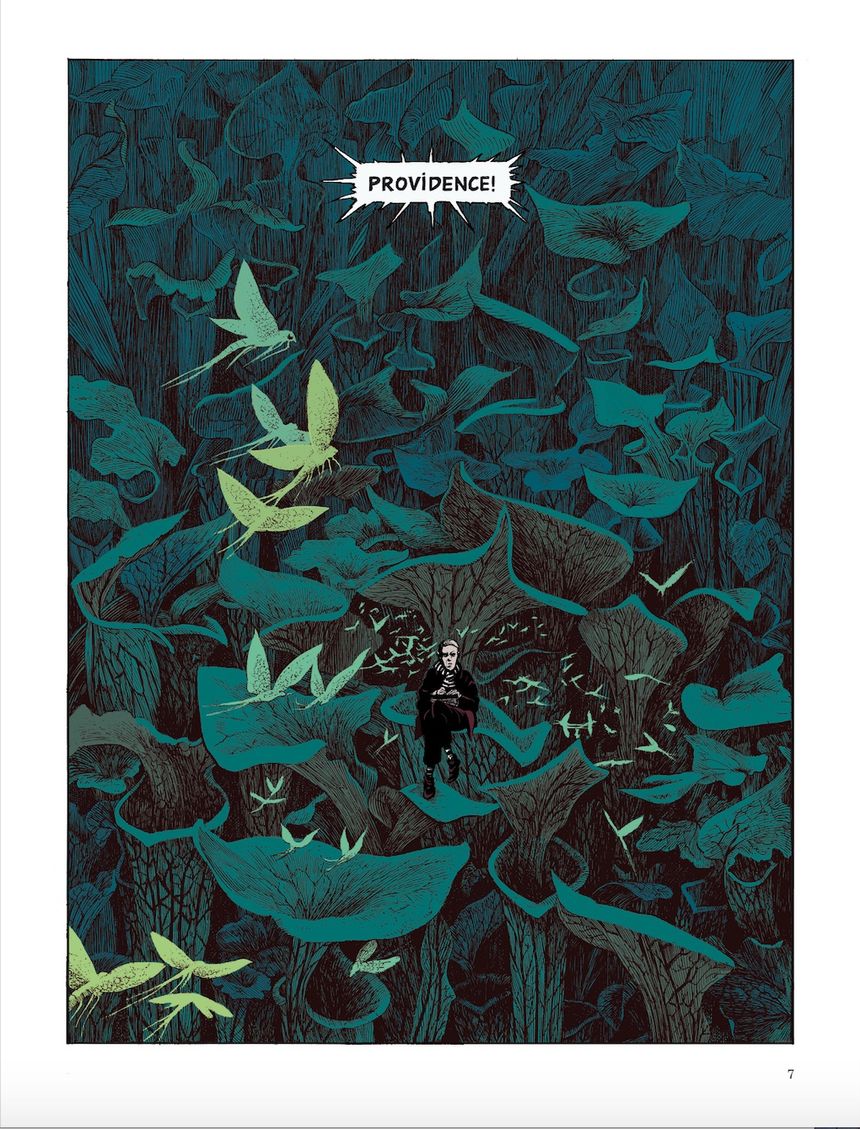
The same article also notes A Bestiary of the Twilight (Le Bestiaire du Crepuscule, June 2022), a French ‘BD’ (i.e. oversized graphic novel, often in hardcover) which…

takes HPL as the main character

Update: Le Bestiaire du Crepuscule has been re-titled as The Monstrous Dreams of Mr. Providence for the English edition, and since summer 2022 can now be enjoyed by English readers.

August on Tentaclii

31 Wednesday Aug 2022

Posted by asdjfdlkf in Odd scratchings, Scholarly works

≈ Leave a comment

The nice summer weather continues here, for now.

However, I find I am increasingly likely to be in need of a regular $300+ income a month, and within the next two months. If anyone can use my talents in a reliably paid way, please contact me. I’m very accomplished in information — discovering, evaluating, comparing, and packaging it into a readable form. Along with suitably sourced pictures. Elsewhere I’m currently a part-time magazine editor-writer. If you’ve always wanted a monthly magazine or substantial newsletter for your own special niche interest, or you need a researcher for a historical book or project, then now’s the time to shout. Please also mention me to others, such as editors, who might have some regular paid home-work to offer.

In August Tentaclii did not have a great deal of activity, because I was off the ‘daily posting’ schedule. But I did manage the first part of my “Notes on the Wandrei letters”. For which I found and colorised two good vintage photos of the Roman sculpture gallery at the New York Met, a place so enjoyed by Lovecraft and Loveman. Lovecraft’s comment on this place also seemed to indicate he was aware of Loveman’s homosexuality, which was quite a find. Also found in these letters were new names for Lovecraft’s favoured Providence book shops, “Gregory’s, Tyson’s”.

In scholarship, I released my copiously annotated and corrected edition of Kipling’s seminal science-fiction story “With The Night Mail”. Also a PDF with the Letters of E. Hoffman Price to H.P. Lovecraft, for HPL’s Birthday — though the latter was far more about simple image-processing and assemblage than scholarship. I also looked into an interesting question from my Patreon patron, “Did HPL read Sherlock Holmes?” and assembled the relevant facts for him here at Tentaclii.

My ‘Open Lovecraft’ page had a little updating this month, linking to open-access scholarship. I reviewed The Lovecraft Annual 2021 at length, and along the way made many new discoveries about Lovecraft’s Red Hook house-mate (I almost typed mouse-mate) Alexander D. Messayeh. I discovered he hailed from Babylon, and made a living dealing in the rarest antiquities of the ancient world. Make of that what you will, Mythos writers.

Two big summer conventions, the Pulpfest and NecronomiCon, came and went. In journals, the annual Pulpster #31 journal was released at Pulpfest. Possibly the Lovecraft Annual also shipped in time for the Armitage Symposium wing of the NecronomiCon to discuss over breakfast. But I’m not yet aware of any convention report from that side of NecronomiCon which might mention that. If I’d been there you’d have a 15,000-word report by now.

New books this month included H.P. Lovecraft: An Introduction to His Life and Writings; and Pulp Power: The Shadow, Doc Savage, and the Art of the Street & Smith Universe. I was pleased to find I can now access the Hippocampus Press website from the UK, without needing a VPN.

In Lovecraftian arts, I was delighted to feature the incredible “Welcome to Arkham — the (HO) Model City”, a labour-of-love in miniature. There is also much Lovecraftian art activity over in the red-hot new ‘industry’ of art-generating AIs.

In screen media, S.T. Joshi’s blog brought news of a forthcoming Dunsany documentary, being made in Providence no less. Guillermo del Toro’s forthcoming horror TV show Cabinet of Curiosities revealed which Lovecraft tales had been filmed. In 3D, I gave a makeover to the old Meshbox 3D HPL figure, which is used in the Poser software. There was the usual level of activity in videogames and RPGs, but those are rarely noted on Tentaclii.

Elsewhere, a “Battle” issue of Digital Art Live magazine has been finished, which should appeal to the Conan crowd when it appears in a few days. And yes, I noted the calls at Howard Days, to help promote the new Image Books Conan (now that Marvel are done with him).

I also updated my book of a few years ago, on Sir Gawain and the Green Knight and North Staffordshire, and released it as a temporary holiday-reading freebie (until 28th August).

That’s it for August. As always, please consider becoming my Patreon patron if you’re not already. Even a dollar or two helps in the current precarious circumstances.

Forthcoming Dunsany documentary

29 Monday Aug 2022

Posted by asdjfdlkf in Lovecraftian arts, Scholarly works

≈ Leave a comment

S.T. Joshi’s blog has updated. He’s been doing a lot of travelling, and eventually reached Providence where he reports that in a studio there…

Christopher Nightingale, a young Englishman is working on what promises to be a superb documentary on Lord Dunsany

S.T. spent three hours there being interviewed on Dunsany. If this is the same “Christopher Nightingale”, the award-winning “Composer, Orchestrator & Musical Supervisor”, then the film’s music should be a treat.

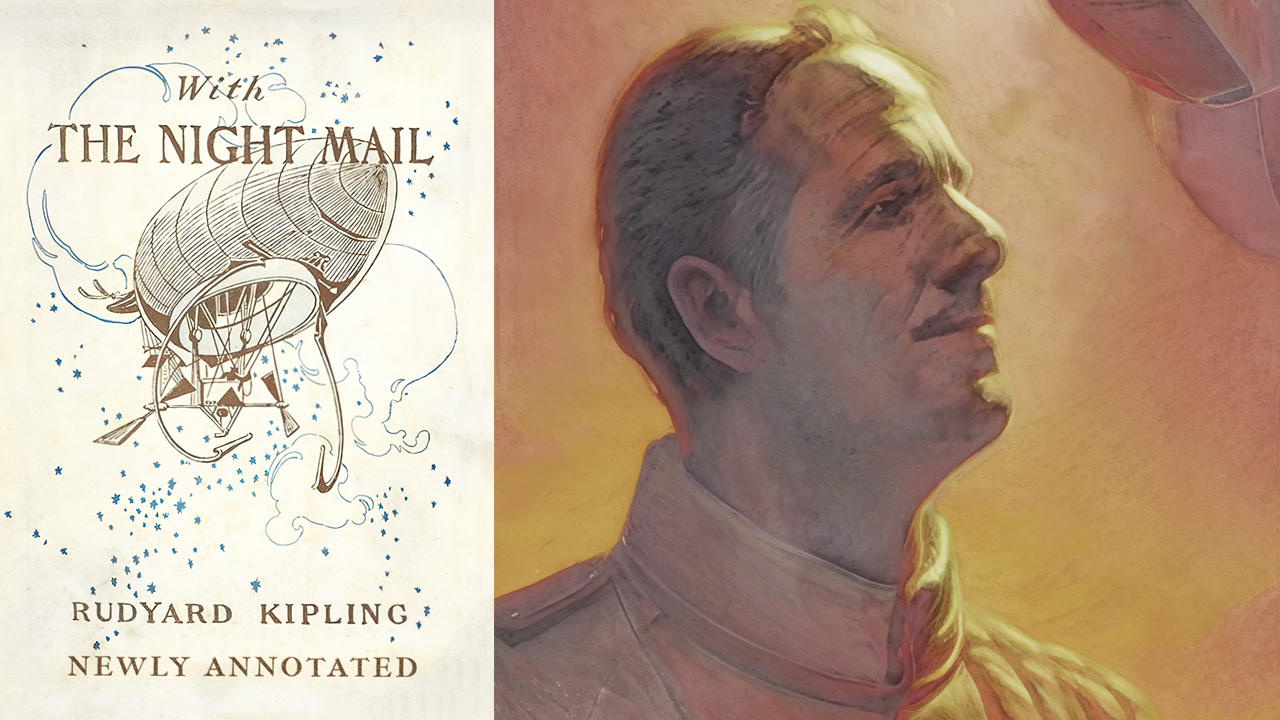
New book: Copiously annotated and corrected edition of “With The Night Mail”

28 Sunday Aug 2022

Posted by asdjfdlkf in Kipling, New books, New discoveries, Scholarly works

≈ 4 Comments

Newly published, my labour-of-love “With the Night Mail”, annotated edition. Available now as a .PDF file. $2 on Gumroad, but the first 30 Tentaclii readers can get it free by using coupon-code tentaclii at the checkout. Or if you’ve feeling generous, you can pay the $2 and skip the coupon. I’m hoping that this Gumroad ‘formula’ may eventually start to produce a much-needed bit of extra income.

Blurb:

This is the best version of Kipling’s famous “With The Night Mail” (1905), the first ‘hard’ science-fiction story. Still a fabulous steampunk read, today.

Here newly and fully annotated with 4,600 words of precise scholarly annotations. Several important new discoveries are made, including the identity of “little Ada” — she was a real pilot! All four earliest versions have been checked and cross-referenced, and the modern corrupted text has been carefully cleaned. Differences between editions are noted in the footnotes.

There are 145 footnotes, explaining the technology, lingo, and places. One footnote even discovers a long ‘new’ section of dialogue about the risk of plague, unseen since the first publications in 1905 — and never reprinted until now!

This .PDF is thus as close as we will get to a definitive version of the seminal story that launched the entire genre of hard science-fiction, and which opened the highly influential Gollancz yellow-jacket survey anthology One Hundred Years of Science Fiction (1969).

As a bonus, there are four new full-page colour illustrations including one of “George”. This labour-of-love e-book is 28 pages in total, delivered to you as a .PDF file. It may interest RPG gamers, as well as scholars and readers.

As you can tell, I’ve at last been able to see all four of the earliest editions. And my gosh… many differences! And with errors in places, in some modern editions, even including a handful in the free version on the site of The Kipling Society. Anyway, regular Tentaclii readers know my approach… copious attention to detail, deep historical research, resulting in many fascinating footnotes. Enjoy.

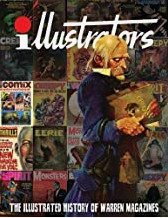
New book: The Illustrated History of Warren Comics

23 Tuesday Aug 2022

Posted by asdjfdlkf in Lovecraftian arts, New books, Scholarly works

≈ 3 Comments

Illustrators Quarterly Special #14: The Illustrated History of Warren Comics. 144 pages.

A searcher for “Illustrators Quarterly” special would get results indicating that Amazon UK doesn’t carry the “Special” versions, other than #1. But it is there, awkwardly titled as “The Illustrated History of Warren Magazines: illustrators Special 14″. On Amazon the Specials go under the title of “illustrators Special” for some reason.

What a wonder a Euro companion volume might be: The Illustrated History of the Toutain Magazines, though obviously far more difficult to research.

New book: Letters of E. Hoffmann Price to H. P. Lovecraft

20 Saturday Aug 2022

Posted by asdjfdlkf in Historical context, New books, Scholarly works

≈ 2 Comments

Happy 132nd Birthday, H.P. Lovecraft.

For 2022 my birthday present is a readable edition of the previously uncollected letters of E. Hoffmann Price to H.P. Lovecraft. This 350-page book complements the recently-published edited volume of the letters from Lovecraft to Price.

Download: Get the .PDF free on Gumroad. For the most stable download I’ve put it on Gumroad, which may also help you send it over to your 10″ Kindle.

These letters and many postcards were sent by veteran pulpster Price between 1932 and 1937. Brown has some 15Gb of scans of these… but they needed to be collected as single magazine-sized .PDF ebook. Don’t worry, the scans have been crunched down to just 65Mb total for the book. Please note that my assemblage is intended for convenient reading from a 10″ digital tablet, rather than as a scholarly edited edition.

To discover the archival scan number of a letter or card, download and then extract the PDF with the Windows freeware PDF Image Extractor. The images should still have their filenames, and these will give you the required scan numbers at the Brown Repository. By this same method you can also determine what new pictures I’ve added, as these have no Brown repository numbers. A few layout gaps, caused by the many two-to-the-page postcards, have been occasionally filled by me with new vintage pictures.

My thanks to all those who have been involved in preserving these and making the scans freely available.

Those with the cash to do so could use a service (Lulu, MagCloud, etc) to print-on-demand at a 12″ magazine size, then mark the good bits at leisure in an armchair, and then pass the result to a transcriber to create a less repetitive and more enjoyable “Extracts from…” text book.

“Oh, by George!”

19 Friday Aug 2022

Posted by asdjfdlkf in Historical context, Scholarly works

≈ Leave a comment

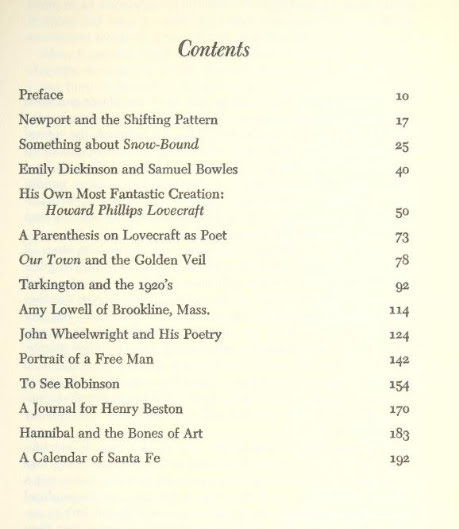
The Christian Science Monitor (1961-09-07) review of a book of essays by Lovecraft’s early biographer-researcher. The reviewer notes the book also muses on a “George Lovecraft”.

The book under review is currently on Archive.org to borrow.

Unlock the TOCs

17 Wednesday Aug 2022

Posted by asdjfdlkf in Scholarly works

≈ Leave a comment

S.T. Joshi has posted a new list of remaining titles which each require a table-of-contents. This is to do with his forthcoming Horror Fiction Index of single-author collections. He still has around 25 titles that are proving recalcitrant.

← Older posts
Newer posts →


Please become my patron at www.patreon.com/davehaden to help this blog survive and thrive.

Or donate via PayPal — any amount is welcome! Donations total at Easter 2025, since 2015: $390.

Archives

  • April 2026
  • March 2026
  • February 2026
  • January 2026
  • December 2025
  • November 2025
  • October 2025
  • September 2025
  • August 2025
  • July 2025
  • June 2025
  • May 2025
  • April 2025
  • March 2025
  • February 2025
  • January 2025
  • December 2024
  • November 2024
  • October 2024
  • September 2024
  • August 2024
  • July 2024
  • June 2024
  • May 2024
  • April 2024
  • March 2024
  • February 2024
  • January 2024
  • December 2023
  • November 2023
  • October 2023
  • September 2023
  • August 2023
  • July 2023
  • June 2023
  • May 2023
  • April 2023
  • March 2023
  • February 2023
  • January 2023
  • December 2022
  • November 2022
  • October 2022
  • September 2022
  • August 2022
  • July 2022
  • June 2022
  • May 2022
  • April 2022
  • March 2022
  • February 2022
  • January 2022
  • December 2021
  • November 2021
  • October 2021
  • September 2021
  • August 2021
  • July 2021
  • June 2021
  • May 2021
  • April 2021
  • March 2021
  • February 2021
  • January 2021
  • December 2020
  • November 2020
  • October 2020
  • September 2020
  • August 2020
  • July 2020
  • June 2020
  • May 2020
  • April 2020
  • March 2020
  • February 2020
  • January 2020
  • December 2019
  • November 2019
  • October 2019
  • September 2019
  • August 2019
  • July 2019
  • June 2019
  • May 2019
  • April 2019
  • March 2019
  • February 2019
  • January 2019
  • December 2018
  • November 2018
  • October 2018
  • September 2018
  • August 2018
  • August 2015
  • July 2015
  • April 2015
  • March 2015
  • February 2015
  • January 2015
  • December 2014
  • November 2014
  • October 2014
  • September 2014
  • August 2014
  • July 2014
  • June 2014
  • May 2014
  • March 2014
  • February 2014
  • January 2014
  • December 2013
  • November 2013
  • October 2013
  • September 2013
  • August 2013
  • July 2013
  • June 2013
  • May 2013
  • April 2013
  • March 2013
  • February 2013
  • January 2013
  • December 2012
  • November 2012
  • October 2012
  • September 2012
  • August 2012
  • July 2012
  • June 2012
  • May 2012
  • April 2012
  • March 2012
  • February 2012
  • January 2012
  • December 2011
  • November 2011
  • October 2011
  • September 2011
  • August 2011
  • July 2011
  • June 2011
  • May 2011
  • April 2011
  • March 2011
  • February 2011
  • January 2011
  • December 2010
  • November 2010
  • October 2010
  • September 2010
  • August 2010
  • July 2010

Categories

  • 3D (14)
  • AI (72)
  • Astronomy (70)
  • Censorship (14)
  • de Camp (7)
  • Doyle (7)
  • Films & trailers (101)
  • Fonts (9)
  • Guest posts (2)
  • Historical context (1,096)
  • Housekeeping (91)
  • HPLinks (79)
  • Kipling (11)
  • Kittee Tuesday (92)
  • Lovecraft as character (58)
  • Lovecraftian arts (1,630)
  • Lovecraftian places (19)
  • Maps (70)
  • NecronomiCon 2013 (40)
  • NecronomiCon 2015 (22)
  • New books (967)
  • New discoveries (165)
  • Night in Providence (17)
  • Odd scratchings (984)
  • Picture postals (276)
  • Podcasts etc. (431)
  • REH (185)
  • Scholarly works (1,472)
  • Summer School (31)
  • Unnamable (87)

Get this blog in your newsreader:
 
RSS Feed — Posts
RSS Feed — Comments

H.P. Lovecraft's Poster Collection - 17 retro travel posters for $18. Print ready, and available to buy — the proceeds help to support the work of Tentaclii.

Proudly powered by WordPress Theme: Chateau by Ignacio Ricci.