• About
  • Directory
  • Free stuff
  • Lovecraft for beginners
  • My Books
  • Open Lovecraft
  • Reviews
  • Travel Posters
  • SALTES

Tentaclii

~ News & scholarship on H.P. Lovecraft

Tentaclii

Category Archives: Picture postals

‘Picture postals’ from Lovecraft – Chatham

15 Friday Jul 2022

Posted by asdjfdlkf in Historical context, New discoveries, Picture postals

≈ Leave a comment

In Selected Letters Vol. V we encounter Lovecraft writing a late letter to Kleiner. Lovecraft recalls a “Chatham” as a key landmark from early in his New York City years…

the quaint familiar landmarks (Scotch Bakery – Chatham – 78 Columbia Heights, etc.)

This is not footnoted in the first edition of the Kleiner letters. No other reference to a “Chatham” occurs in Letters I have access to.

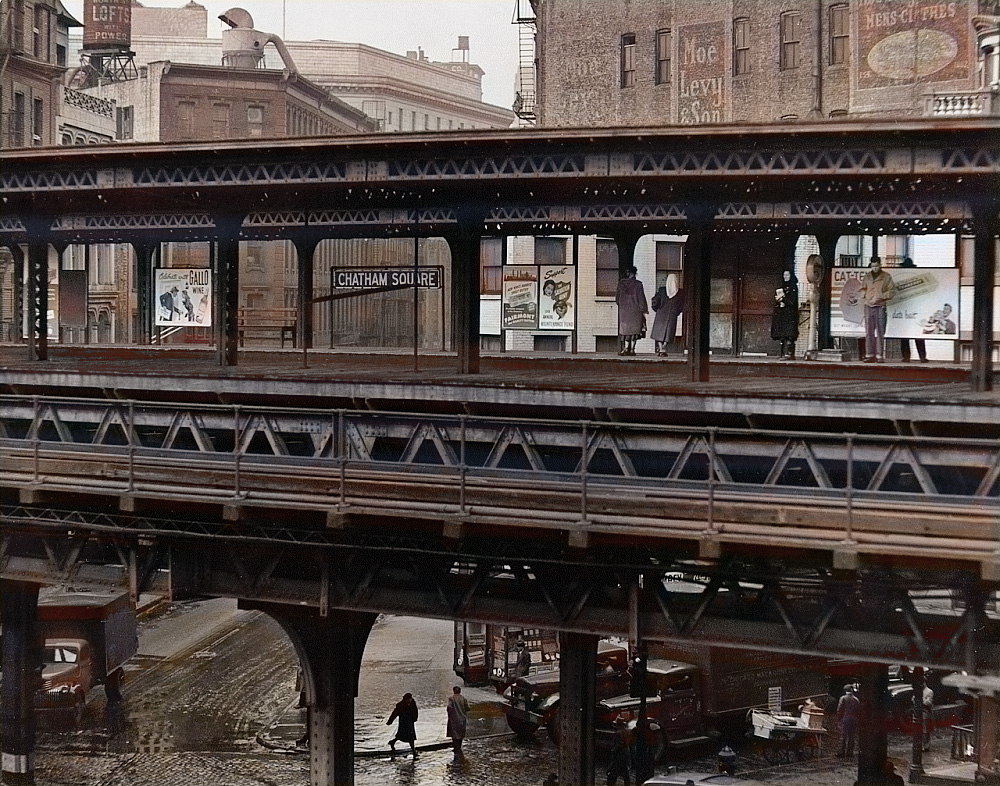
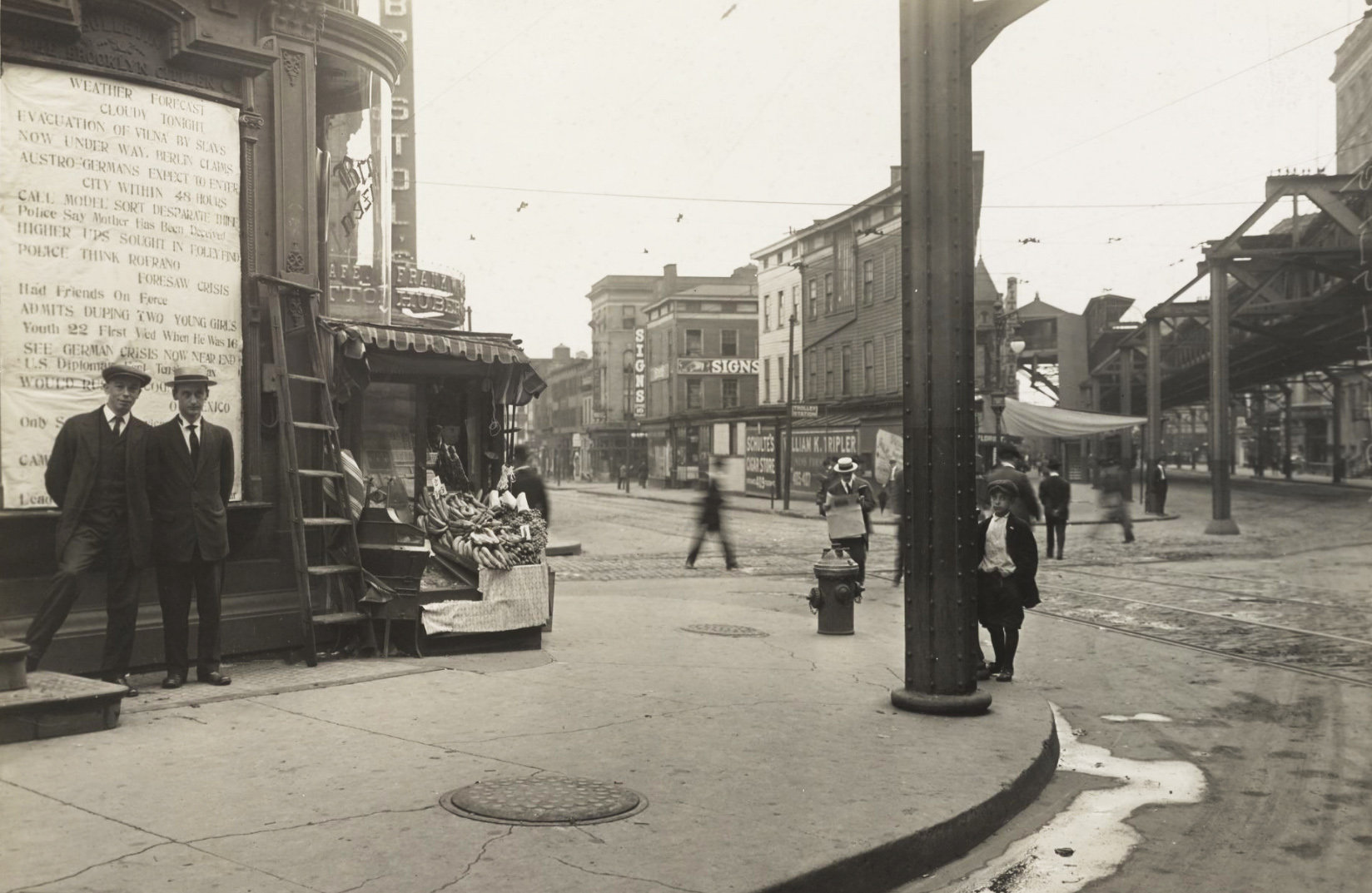
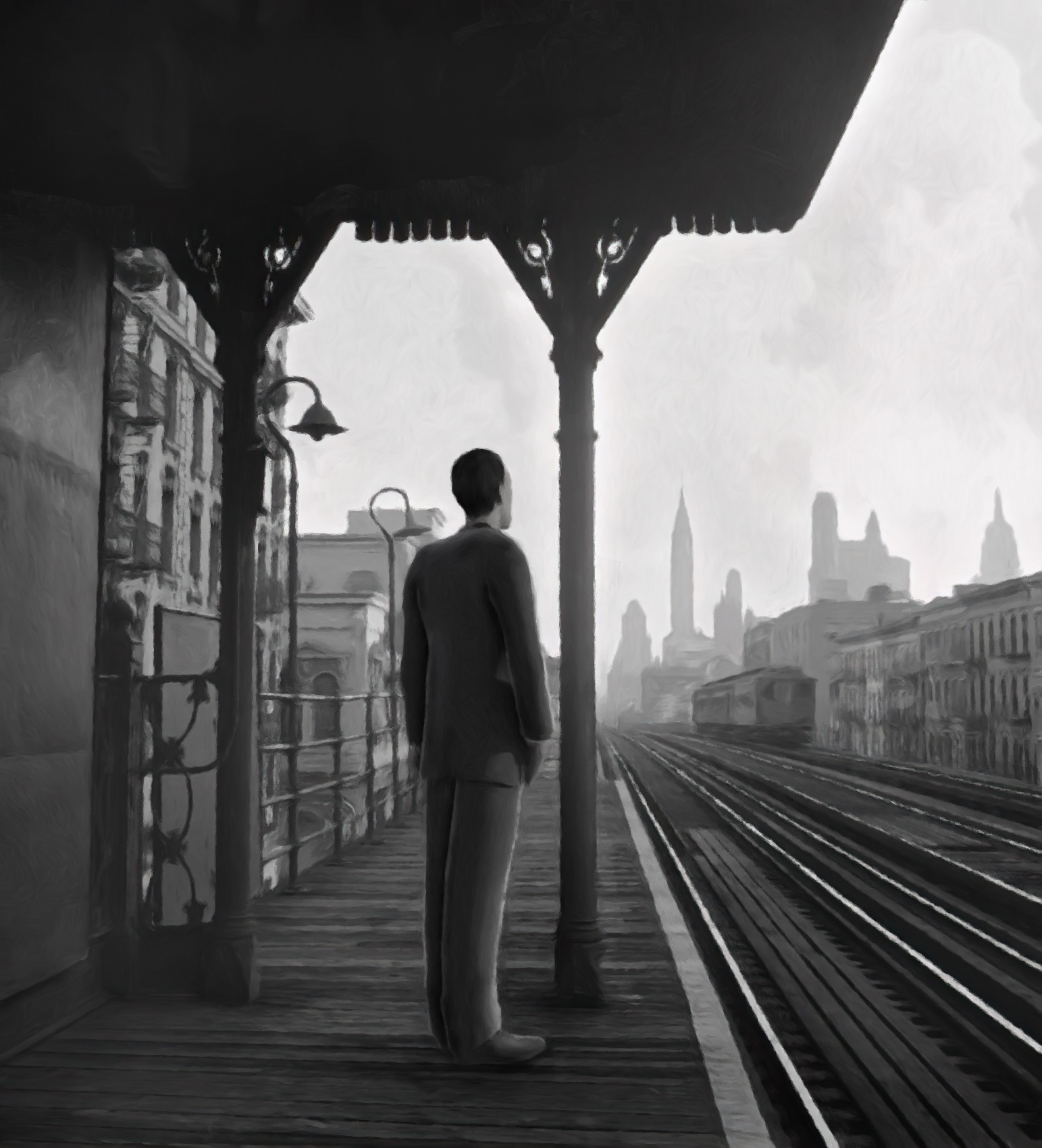
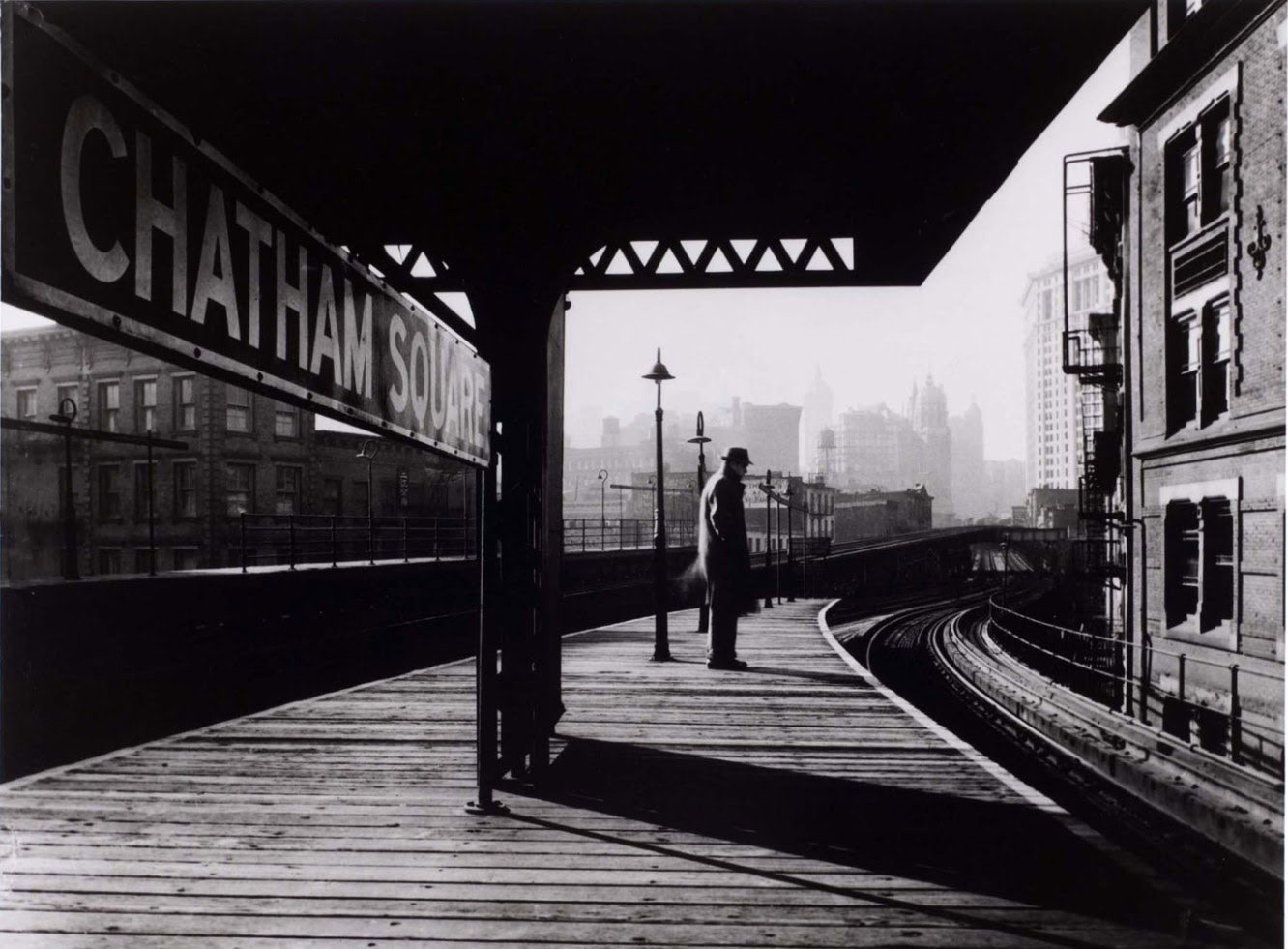
However the 1925 Diary comes to the rescue with… “Ph. Sug. Ho. Chatham Sq.” and one other mention of “Chatham”. The mention of “Sq.” led me to Chatham Square. This was a very major NYC transport intersection, with the Elevated railway there having fine views of the city skyline… along with less welcome chilly gusts.

Here we see one platform of the Chatham Square’s Elevated twin-platform station in the 1930s, as superbly photographed by Arnold Eagle. Presumably “Chatham” was where Lovecraft frequently met up with some of his Circle who were coming in on the Elevated, before they headed elsewhere.

And here we see a Chatham Square platform in the 1940s, and some of the rainy street below.

‘Picture postals’ from Lovecraft – the view from Columbia Heights

08 Friday Jul 2022

Posted by asdjfdlkf in Picture postals

≈ 2 Comments

A return to New York City for this week’s ‘Picture Postals’. To Columbia Heights, and the view of the river and city from there.

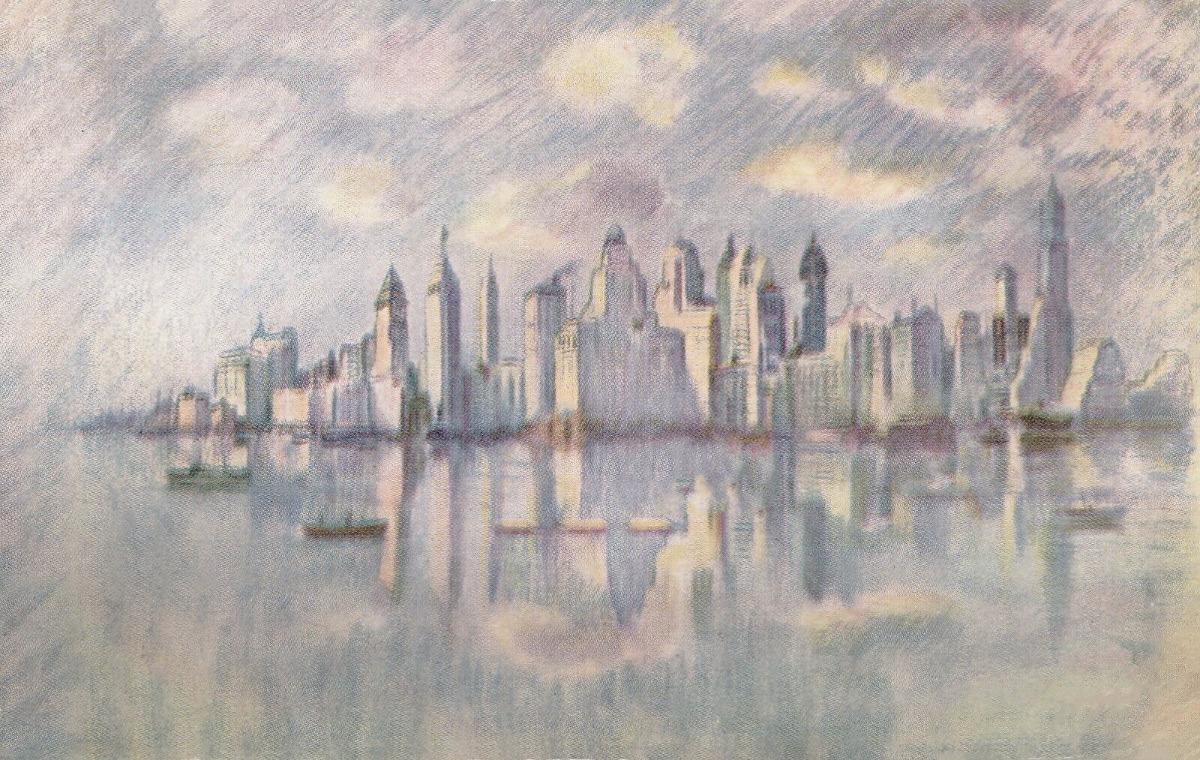
Here we see a preliminary study in oils of New York Bay from the rooftops of Columbia Heights, 1923. The artist is unknown. Samuel Loveman was living at 78 Columbia Heights from 1924, near Hart Crane who had then been at 110 Columbia Heights for some years. It was from the latter address, on his first visit, that Lovecraft had…

my first sight of the illuminated Manhattan skyline [being] from its roof!

Thus this picture gives some notion of what that view might have been like, albeit in the daytime and looking away from the city towers and from the famous Brooklyn Bridge.

We get a feel for the other side of the view from this rooftop picture of the poet Hart Crane at No. 110.

Those wishing to track down a really good glass-plate early-1920s view at night should be able to triangulate from this. To see how close the Brooklyn Bridge view is to the elevation and distance seen here. The above painting should also help with location. For a view featuring one of the most photographed bridges in history, the chances seem good of finding a large panorama picture made in the early evening circa 1916-1926.

Over time Columbia Heights was the site of one of several evening ‘dream-visions’ of the city towers, ethereal and faery in the river-mists at dusk with the lights coming up. Lovecraft at first found the city…

delightful to visit on account of its faery pinnacles & wealth of museums & the like

The Woolworth Tower, seen here at night in 1923 perhaps exemplifies the spirit of Lovecraft’s views, if not the actual initial view of massed towers across the water as seen from Columbia Heights. Though Lovecraft did also ascend this tower, then the highest skyscraper yet built in the city, and would have had many ground-level and Elevated railway views of it in the dusk from various angles.

Despite his later sentiments about the city, Lovecraft still sighed in 1933 when he recalled his old response to such sights…

I shall never find another Dunsanian city of wonder as utterly unreal & linked with incredible cloud-mysteries as the exotic & unexplored labyrinth of sea-born towers that was the dim, half-fabulous Manhattan of 1922.

Of course his later experiences of living in the city year-round gave him quite another view of the place, and it became for him “the pest zone”. The experience left with him with…

the abiding terror of him who comes to New-York as to a faery bower of stone & marble, yet finds only a verminous corpse — a dead city of squinting alienage

Again, an old postcard helps evokes this sentiment — Luna Park (Coney Island) at night with gargoyle-dragons…

‘Picture Postals’ from Lovecraft: back to the old house…

01 Friday Jul 2022

Posted by asdjfdlkf in Historical context, Picture postals

≈ 2 Comments

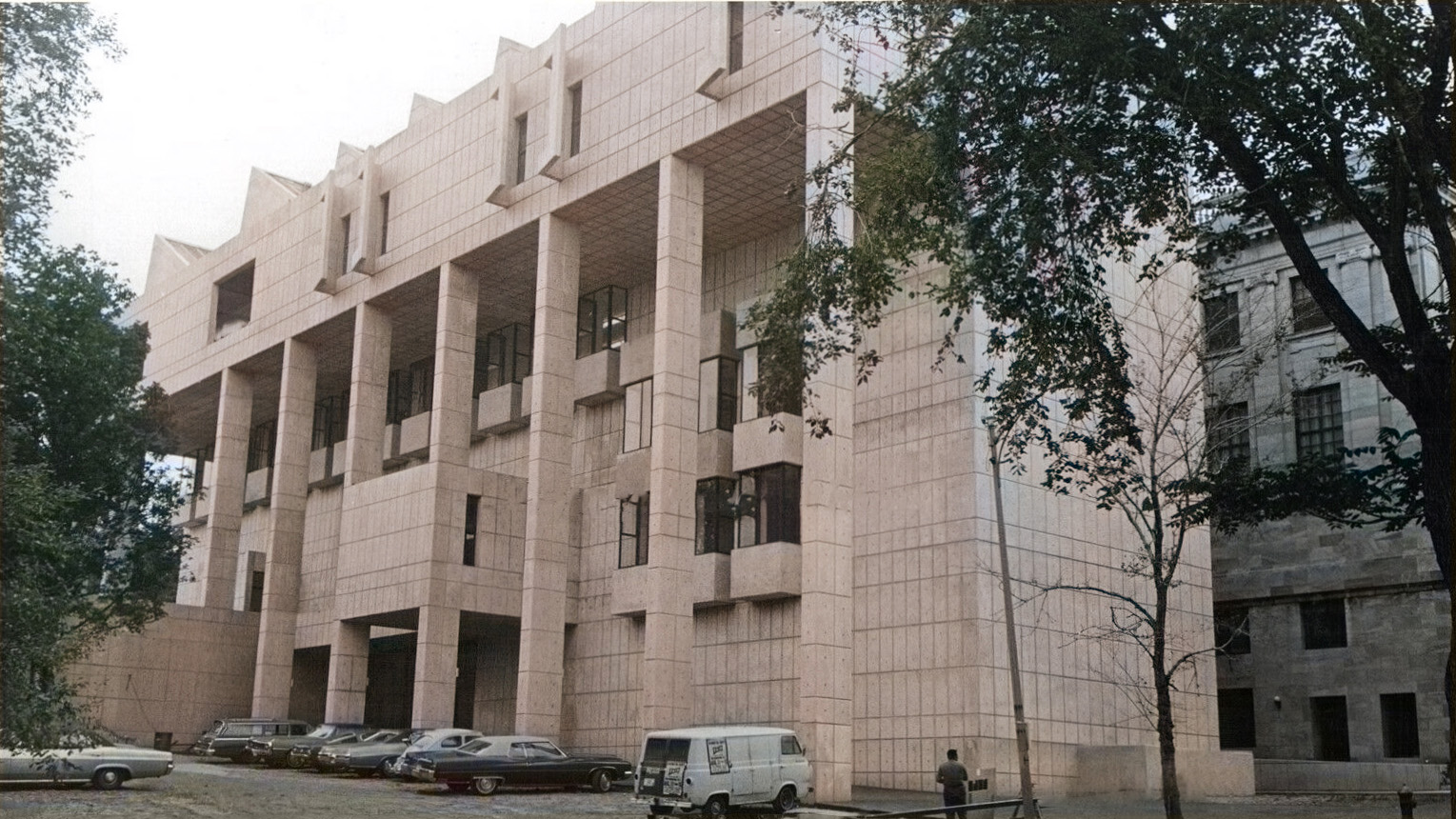
This week on ‘Picture Postals’, back to the city of Providence from New York. A restored and colourised 1971 picture of the sad fate of the site of Lovecraft’s final home, the house at 66 College Street. The roadway is just off-camera to the right.

Though it should be said that his house was at least moved and not destroyed, being slowly rolled through the streets of his city like a ominous rumbling monster. And at least the brutalist late-modernist block (the ‘List Building’ aka ‘List Art Building’, ’64 College Street’) seen here was to be used as an Art History building with an incorporated Gallery and studios. The worthy British art historian Kenneth Clark (Civilization) gave the opening address for the building, another factor Lovecraft might have approved of. Further, the building’s elevation and windows serve to preserve something of Lovecraft’s views across Providence to the west when the leaves are off the trees.

On the right one can see the back of the John Hay Library at Brown, with its back-terrace invisible from this angle. Today this holds Lovecraft’s letters and the Lovecraft Collection.

Lovecraft’s house stood about where the central elevated small block is, as seen here. With a back wing (not seen here) going further back…

As can be seen, by 1971 the quiet 1930s courtyard garden is now a two-part car-park divided by a central wall, but some of the trees and large shrubs on the left may have been retained. They may have once formed a border along which the K.A.T. roamed.

The building’s hilltop position, limited $3m budget and narrow plot required compromises. A page on the Brown website now observes that much of the building often has a dark and haunted feel, which seems most suitable for the site of H.P. Lovecraft’s house. It was largely designed for its incongruous external ‘look’, and was presumably deliberately intended to damage the coherence of the sense-of-place on College Hill. As a consequence…

“Room divisions are awkward and classrooms often artificially-lit … Long empty corridors feel abandoned and ghostly…”

Though a dark and spectral feel is perhaps a good thing. University managements have a tendency to turf out friendless and un-trendy humanities subjects like Art History from fine buildings — especially ones surrounded by leafy and westward hilltop views — for re-use as their own office space. I’ve seen it happen myself, at Birmingham. Monstrosity, gloom and strange angles have their uses, as H.P. Lovecraft could have told the current Art History Dept.

‘Picture postals’ from Lovecraft: a mixed bag from Brookyn

24 Friday Jun 2022

Posted by asdjfdlkf in Maps, New discoveries, Picture postals

≈ Leave a comment

This week in my ‘Picture Postals’ series of posts, more follow-on from my recent successful search for Lovecraft’s “John’s” in Brooklyn.

1) Here are two Photoshop-combined sections of Sanborn’s 1904 Brooklyn Atlas, showing 7 Willoughby Street (John’s) in plan and context.

We can see here that No. 7 (“John’s”) had a large isolated yard and sheds out back. This is possibly of relevance re: it being a suitable-looking site for prohibition hooch-brewing in the back yard, something which we know went on regularly at the main branch of John’s. Note the adjacent cigar making, carpet cleaning and gas-fitting. Alcohol fumes from the stills might have been well cloaked by the neighbouring pongs. Possibly there was also a back-entrance to the yard, for small trucks using the insalubrious Union Lane. Looks to me like a perfect site for prohibition brewers in 1925.


2) In my recent search for Lovecraft’s Clinton St. grocery, I can now discount the store on the ‘bank’ corner of Atlantic Avenue – Clinton Street. You’ll recall there was a savings bank on one of the four possible corners, a bank that had departed the area in 1922. A 1927 picture shows that a corner store there, visible on that corner in the early 1940s, was not yet in existence at 1927. This discovery further confirms that Lovecraft’s grocery store was at 156 Atlantic Avenue, on the corner with Clinton.

In the same set of pictures there is a 1935 picture of 156 Atlantic Avenue. This is in one of the same set of Sperr pictures, Brooklyn: Clinton Street – State Street. But this picture has been confusingly titled. Its title implies that it shows State Street but it does not, as the label on the back indicates. It is merely “south from State Street”, i.e. made at a point south ‘on the map’, but with State St. behind the cameraman. To someone who knows what they’re looking at, this April 1935 picture shows Lovecraft’s Clinton – Atlantic Avenue corner, as seen from the waste-ground of the demolished Fougera apartments. Thus Lovecraft’s grocery is partly visible behind parked cars, on the very far right of the picture…

Regrettably this is one of the Sperr pictures that the NYPL hold hostage for their expensive “fine art prints” racket.


3) Also in the Sperr pictures, I found a better angle in a picture that looks down Clinton Street. Brooklyn: Clinton Street – Atlantic Avenue, early June 1927. A date which was little more than a year after Lovecraft had returned to Providence. The druggist (chemist) is on the corner with its awnings up against the sun, and Lovecraft’s Clinton St. is falling away at the left of the picture, as seen below. Lovecraft’s room at No. 169 is on the far corner, slightly obscured by a nearer lamp-post. Sperr’s label on the back has a description and the “June 1927” date. I think this may be the first time this particular picture has been identified with No. 169, and it’s very close in time.
Sadly it’s another of the Sperr pictures that the NYPL hold hostage for their “fine art prints”. Online it is very low-res, but apparently the NYPL do have larger as a very expensive “art print” — and seemingly with no actual guarantee that the image quality will be any better. You might end up with a $150 blur.

However, discovering that the corner building had once been the “Brooklyn Atheneum” aka “Athenaeum” opened doors to new data, and I found more or less the same view on a Brooklyn Eagle postcard…

Late 1890s. The Brooklyn Historical Society hold the plate.

We can see “Heyder[eich?]” the druggist was there on the corner in the late 1890s, as he was in the 1935 and 1940 pictures of the same corner. He appears to have been there all the way through, circa 1890s-1940.

What of the Atheneum? The Atheneum had once been a large concert hall, assembly rooms and then a private mercantile subscription library, and there was indeed a druggist on the corner (a chemist shop, as I had suspected). Its heyday as a modern venue was the 1850s-70s, and later as a theatre and lantern-projectionist forum in the 1880s. Nothing is heard of it after that as a regular cultural venue. But there was an attempted mass-meeting of East Coast anarchists there in 1901, as a result of which… “police closed down the Athenaeum”. The building was then swiftly leased by the New York Court of Special Sessions (of the Second Division, meaning Brooklyn, Queens and Richmond). “The Second Division the Court of Special Sessions is now held at the corner of Atlantic avenue and Clinton street” at “171 Atlantic Avenue”. Rather too swiftly occupied, since the officers complained for several years about the badly leaking roof, until the place was eventually refurbished. The Court’s lease was renewed in 1922, the year when the building was sold to a new owner by what a real-estate trade-paper called the “old” Athenaeum. The new owner appears to have been making a long-term investment on the corner site rather than the creaky old building — it was listed for demolition as part of “slum clearance” and abruptly demolished in 1942.

When Lovecraft was living at No. 169 this corner of Clinton and Atlantic was thus a court for the trying of petty crimes. Crime that merited either a fine, or some days in jail or a youth reformatory. It may not have sat as a court every day, but its presence would often have ‘flavoured’ the surrounding sidewalks with a seedy and anxious atmosphere.

The Athenaeum’s final days are seen here, photographed circa 1941-42 by Irving Kaufman, with the demolition placard on the front…
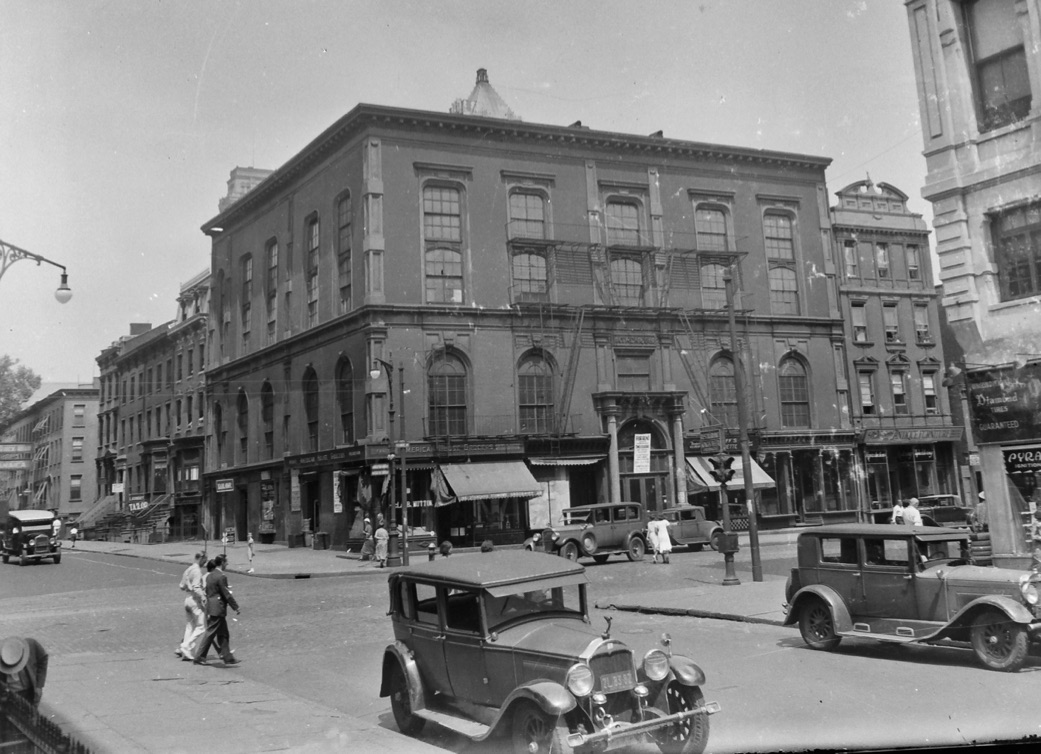
Old Brooklyn Athenaeum / Second Division of the Court of Special Sessions, before demolition. Also Clinton Street and No. 169. Photo by Irving Kaufman (1910–1982). Kaufman’s son Phil Kaufman was until a few years ago able to provide prints. But Phil Kaufman’s website has now gone, and at the time he posted these prints he did not know where they had been photographed. Just that they showed large Brooklyn buildings that were declared for demolition.

Here the old corner druggist has gone at last and the store has become an opportunistic grocer, “American **st Grocers(?)”, for a year or so before demolition. But this is long after Lovecraft’s time there. Still, it gives us another new picture looking down toward No. 169 Clinton St. and we get a feel for Lovecraft’s walk up to his Syrian tailor’s and to the corner, before crossing Atlantic to reach his usual grocery store.

In a further Irving Kaufman picture we can also see the immense ‘Fouguera’ apartments building that loomed opposite Lovecraft in Clinton St. This picture shows the other side of the street, and a distinctive corner of the druggist’s frontage can be seen in the bottom-right (it has a ‘pig snout’ moulding that can’t be mistaken). Comparing the styling of this frontage, just visible enough, with the 1935 and circa 1940 pictures to show that it it not yet the grocer’s seen in the circa 1941 picture. In that latter picture the grocer has re-tooled the signage boards somewhat. This ‘Fouguera’ photo must be earlier than circa 1941. Indeed, it must be circa 1934-35 because 1934 was when the ‘slum clearance’ demolition boards went up on the building, as noted by the Brooklyn Eagle. These boards can be clearly seen on the building.

We can also more clearly see the nature of the corner shop at the ‘Fouguera’. It was a furniture store with what seems to be an antique bric-a-brac wing with a show-window on the corner.

To summarise, my search for Lovecraft’s grocery has found the store, and has also established several other useful facts along the way. Lovecraft would have walked toward the grocers on Clinton/Atlantic through a ‘canyon’ like street, with the immense ‘Fouguera’ on one side, and the old Brooklyn Athenaeum on the other. If he walked from his room into this canyon during the day he might have encountered many people going to or from the Second Division the Court of Special Sessions, Brooklyn’s court for petty crime that was held in that building. Such anxious or hard faces cannot have raised his general assessment of the immediate area. Culture and thrift was fading away. The old Athenaeum had gone, the Saving Bank on its opposite corner across Atlantic had departed in 1922 (and seemingly also the artists who had some sort of informal studio colony above it). The once proud ‘Fouguera’ was (in the eyes of the city) now becoming the slum that would condemn it in 1934 and with a seedy-looking furniture store and a seedy cafe below. The old druggist on the Athenaeum corner, “Heyder[eich?]”, kept up the tone. The grocery at No. 156 Atlantic Avenue was worth patronising and affordable, and presumably friendly. But the area was obviously going downhill despite a superficial aura of fading quality, as Lovecraft’s letters also evidence.
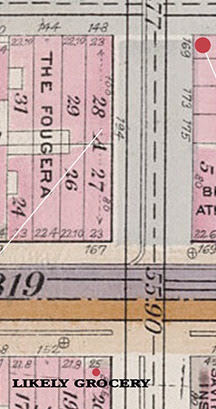
Map showing Lovecraft’s room at 169 and the four corners of Clinton/Atlantic. Clockwise: ‘Fouguera’ and bric-a-brac shop; Athenaeum (now the petty-crimes court for Brooklyn) and Druggist; the old Savings Bank (lower part not a store until after 1927); and then the grocery at 156 Atlantic.

‘Picture Postals’ from Lovecraft: Lovecraft at the Automat

17 Friday Jun 2022

Posted by asdjfdlkf in Historical context, Picture postals

≈ Leave a comment

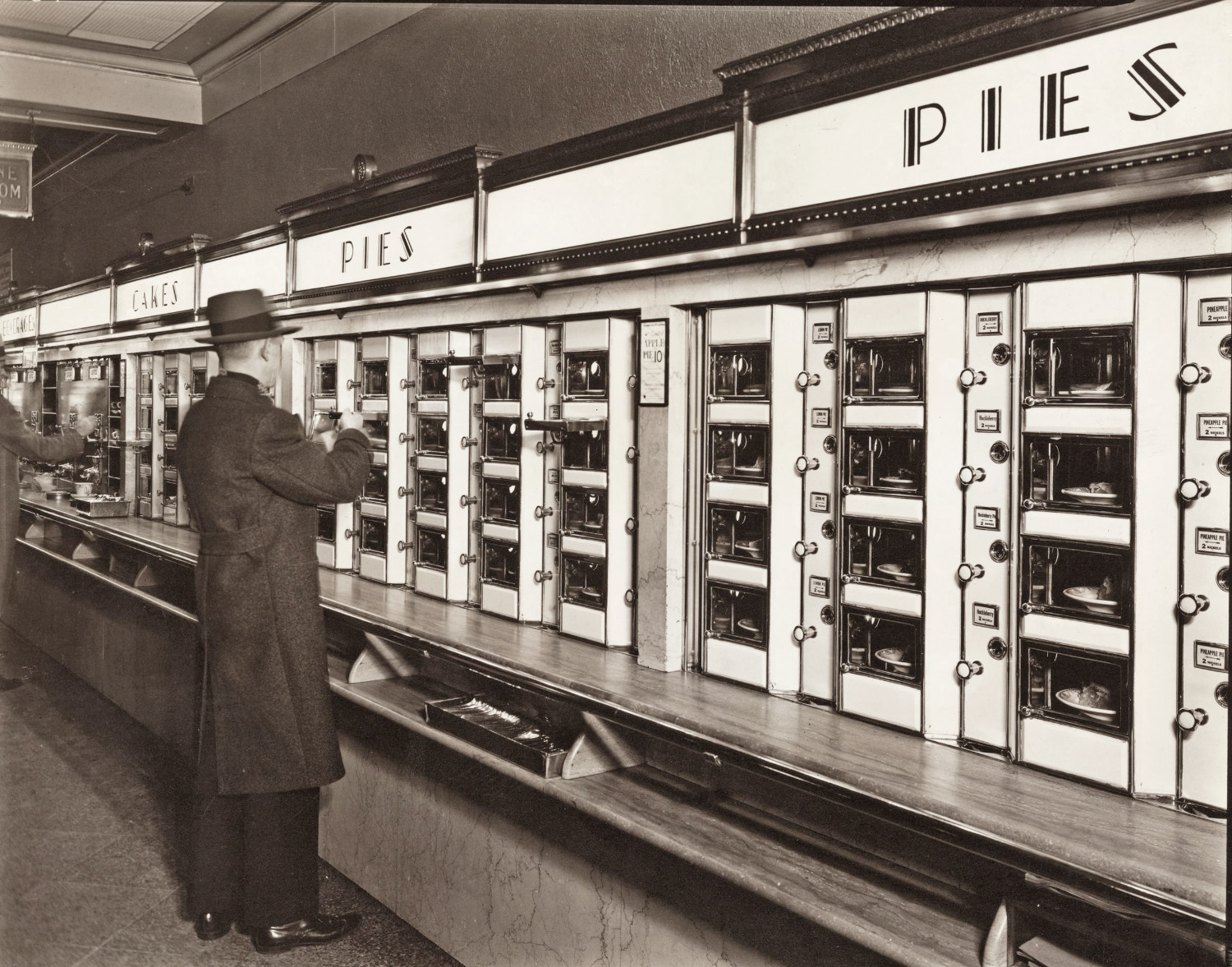
This week on my Friday ‘Picture Postals’, back to Brooklyn and to another type of food “filling station” frequented by Lovecraft. Thanks to the wonders of the Interwebz we can actually go inside the very Automat that was fitted into the space of the former Bristol’s at 3-5 Willoughby Street.

You’ll recall that Lovecraft’s favourite restaurant of “John’s” was next door to this, at No. 7. This Automat wasn’t constructed until after Lovecraft left New York City. The available evidence suggests this Automat arrived in 1933 and lasted until about 1954. This is what it looked like inside and it was fairly typical of the type…

Its big plate-glass windows usefully show us what was on the other side of Willoughby and thus was opposite “John’s”, albeit about a decade later than the 1925-1930 period in which John’s existed at No. 7. The cigar store seen on the Transit Authority glass-plates of 1916 is still there, but by this date has rather incongruously added “Luncheons”. Perhaps there was a demand for places to eat lunch where one could also smoke a cigar? Across the road in the far distance we see the other entrance to the platform on the Elevated railway line…

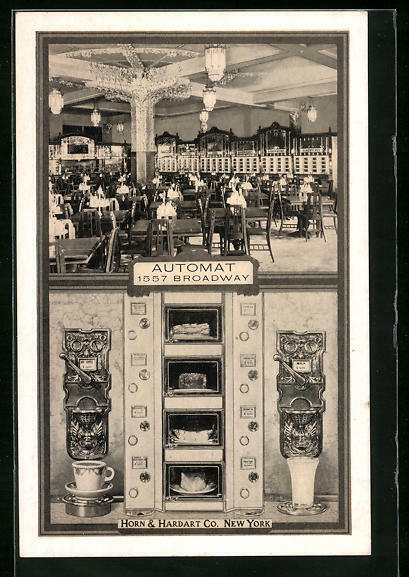
Lovecraft may not have used this automat, but he patronised plenty of the earlier mid-1920s automats while living in and visiting New York City. Also in the various large cities visited on his travels. This particular automat was part of a chain which had over 150 branches in New York and Philadelphia by the mid 1920s. Here is the card for their Broadway branch, which has the chain information on the back…

Evidently before the vogue for Art Deco they were rather more Gothic in feel. Thus, it would be wrong to imagine an Art Deco background for a meeting of Lovecraft and Loveman at an automat in 1925. A combination of glitzy fairground Wurlitzer and a wall of dispensers resembling a Gothic church organ seems to be ‘the look’.

‘Wurlitzer’ 1910s and 20s

‘Deco’ 1930s

Frank Gruber’s pulp-writer’s memoir The Pulp Jungle explains how they worked…

The Automat restaurants, which are peculiar to the East [of the USA], are just what the name implies. You get a flock of nickels from the cashier, then go down the battery of little cubicles, inside of which repose the articles of food that appeal to you. Pie, sandwiches, whatnot. In 1934 a sandwich was ten cents. You put two nickels into a slot, turned a knob and you were then able to open the little door and take out the sandwich. There were a few things the inventors of the Automat were not able to lick, such as coffee. You put a nickel into a slot, held a cup under a nozzle and got a cupful of black coffee. Sugar and cream, however, had to be on the table.

Lovecraft’s 1925 Diary is peppered with instances of automat meals, especially when meeting Samuel Loveman. I was also pleased to find one of these Diary instances reveals he did visit the Botanic Garden in Brooklyn, a place which was the subject of a Tentaclii ‘Picture Postals’ post a few weeks ago…

April 16. Out early — Mc[Crory?] — meet JR, [at] Zoolog. Park — Botanic Garden — down to Boat — explore &c. — Automat.

For Lovecraft, unlike many others, an automat was also an opportunity for a cash-saving takeout. For ten cents extra at one of these places he could also pocket..

my breakfast supply of cheese and peanut butter sandwiches

Such just-in-time delivery was often useful in terms of preventing “rodent marauders” from visiting his room. In many cheap places Lovecraft stayed, there might really be rats in the walls. Many New York City automats were 24-hour places, so could be visited after a long night-walk through the city. Probably they were also 24-hour in Philadelphia and elsewhere.

Another automat favourite was the Hot Chocolate “potion”, as he called it. He found that it and cocoa were unavailable at regular restaurants.

In the above picture of the Willoughby Street interior you can also see the upper balcony on the left. Such places became a haunt of the earliest science-fiction fans, possibly attracted by the Art Deco futurist vibes. Charles Hornig recalls, of the time he was writing to Lovecraft, that…

We had a series of impromptu meetings, mostly on the balconies of automat restaurants, where we would spend hours discussing our favorite topic [science fiction], until we were thrown out by the management.

‘Picture Postals’ from Lovecraft: Looking down Clinton Street

10 Friday Jun 2022

Posted by asdjfdlkf in Historical context, New discoveries, Picture postals

≈ 1 Comment

Following on from yesterday’s notes, the final post for Selected Letters II.

Page 259: Here Lovecraft is giving advice to young Talman, who by January 1929 had moved to Red Hook. Lovecraft recalls that when living at Clinton Street he had patronised… “the grocer on the corner of Atlantic” as he put it. Thus Clinton Street and Atlantic Avenue, very near his room. He seems to imply there was only one such possible corner with a grocer on it.

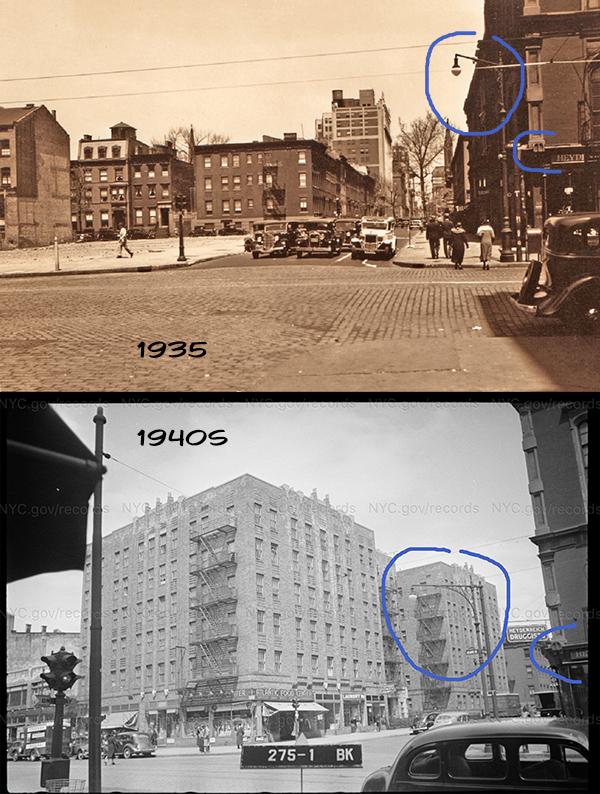
Now it can’t be the “Atlantic Food Centre” seen on 1940s.nyc, because that corner was gone by 1934 and the “Food Center” only appeared there after Lovecraft’s time. Before that it was the Fougera apartments. They had stores beneath the apartments, but the larger of these appears to have been a liquor store.

Although on 1940s.nyc the lower picture may be earlier, as the “Druggist” corner on the right of the picture was also demolished in 1942.

We know what the Fougera corner looked like in 1922, before demolition and the later “Atlantic Food Centre”, thanks to pictures in an article on The Fougera by New York historian Brownstoner. It does not look like a grocery store…

The picture of the demolished Fougera site does however give us a peep down the street to Lovecraft’s famous No. 169 Clinton address, albeit in 1935 and thus ten years after his time there…

Lovecraft says elsewhere that he patronised the Syrian “tailor in the same block”, and here we can indeed see a large sign for “Tailor”. Also a glimpse of the corner store on the right (“Heyd…” something). We know from Lovecraft’s “Red Hook” story that there were relic Norwegians in the area, so my guess on the name would be Scandinavian. There are plenty of Heyde and Heyder surnames in Norway. A later picture shows a drugstore/chemists there, and this earlier incarnation does have the visual feel of a chemists’ shop. Not a grocery then.


But what of Lovecraft’s grocer? It’s not the Fougera corner and it’s not the drugstore corner. So it should be one of two possibilities that are behind the above-seen cameraman.

Ok, the 1940s.nyc site now lets me ‘turn the camera around’ and give readers a look at those two possible grocery stores.

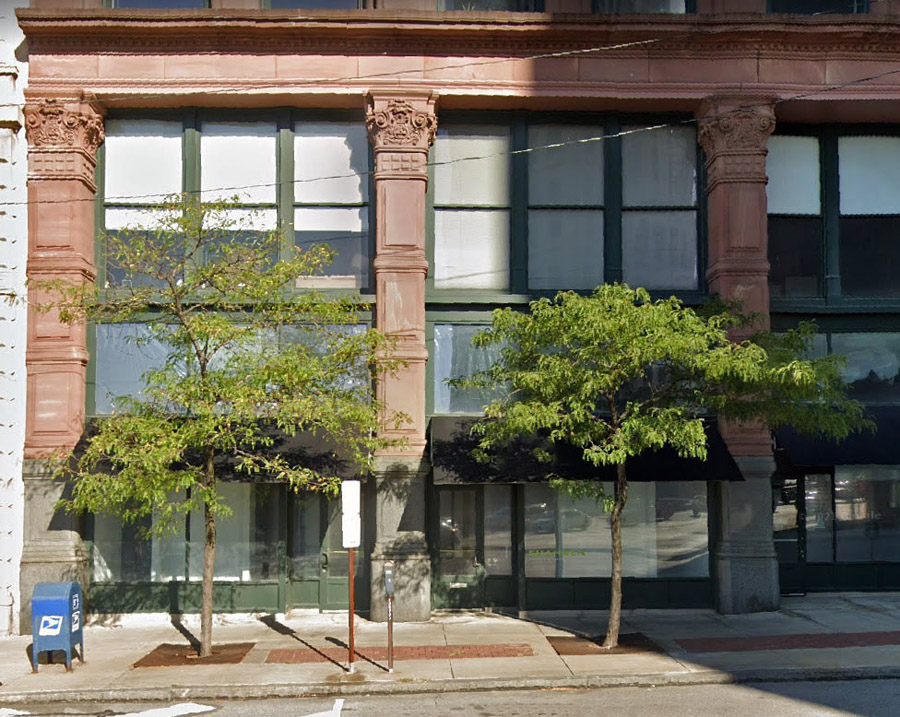
The bottom and slicker-looking one was built as a savings bank, which moved out in 1922. Google Street View has the building’s Clinton side as “191 Clinton” and the shorter Atlantic side of the same building is “160 Atlantic Avenue”. The same numbering applied in the 1920s. In 1922 American Art News announces…

Nicolas Macsoud [a painter of the Orient and miniaturist, 1884-1972] has returned to his studio, 191 Clinton Street, Brooklyn.

Although that may indicate the rooms above. The large apartments above the bank were home to several artists circa 1890s-1910s, and circa the 1900s-1910s the address pops up frequently on art show catalogues now on Archive.org. In 1921 it was still the address of the Brooklyn Society of Miniature Painters, though that may be because of the miniaturist Nicolas Macsoud. Nothing much is heard of art there after 1922. That may be due to the copyright cut-off. Or it could be that the artists departed with the bank in 1922, as the area went rapidly downhill.

But my feeling is that a lush marble-lined savings bank of 1922 would not suddenly become home to a cheap grocers the very next year. This reinforces my feeling that 160 Atlantic Avenue / 191 Clinton Street was not Lovecraft’s corner grocery, if it even was a grocery circa 1923-27. To me it feels, peering through the fuzz, like a fancy bread and cakes shop. Or perhaps a fruitier.

Update: I can now discount the store on this ‘bank’ corner of Atlantic Avenue – Clinton Street. A 1927 picture shows that a corner store was not yet there at that time.

That leaves one option. The top of the two pictures is the final possible corner, at 156 Atlantic Avenue. In this circa 1940 picture the address feels the cheaper of the two possible stores. It has what might be ‘delicatessen’ sign-writing on the windows. On the balance of probabilities, I’d say that Lovecraft’s Red Hook grocery store was at No. 156.

Today the area has obviously gentrified and 156 is the affluent hipster’s ‘Swallow Cafe’, though its facade still keeps the old name ‘Tripoli’ (the well-reviewed middle-eastern and “seafood specialities” restaurant that was there 1982-2010s). Pictures of the side of the building today show it goes quite far back, far enough to allow for a large grocery store in the 1920s, and this is confirmed by a similar early 1940s view of the place…

Mythos writers may then be interested to learn that No. 156 also goes down quite deep…

156 Atlantic Avenue: this particular building has three sub-basements, the lowest of which lines up with track level inside the [subway] tunnel. (The World’s Oldest Subway, 2015, page 22)

Thus Lovecraft’s Red Hook corner grocery had deep basements that went down and down until they reached the level of the city’s oldest subway. And was later home to a “seafood specialities” restaurant. Hmmm….

‘Picture Postals’ from Lovecraft: Fulton Street

03 Friday Jun 2022

Posted by asdjfdlkf in Historical context, Picture postals

≈ Leave a comment

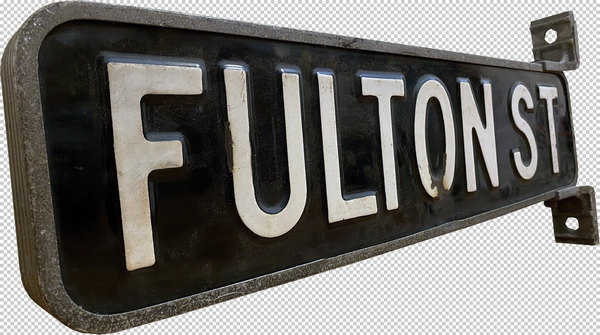
This week on ‘picture postals’, a hunk o’ the actual place. Fulton Street, Brooklyn, to be exact. Or as good as, in the form of a .PNG cutout (i.e. on transparency) for Tentaclii readers.

This follows on from last week’s discovery of the location of Lovecraft’s fave restaurant at 7 Willoughby Street, just around the corner from Fulton.

Preview:

Download: fulton-st-cutout.png


Also, a couple of Willoughby Street ‘out-takes’ from my recent posts on John’s. These are ten years before Lovecraft’s New York sojourn, and are from the 1915-16 pictures made to forestall any damages litigation before the subway was dug.

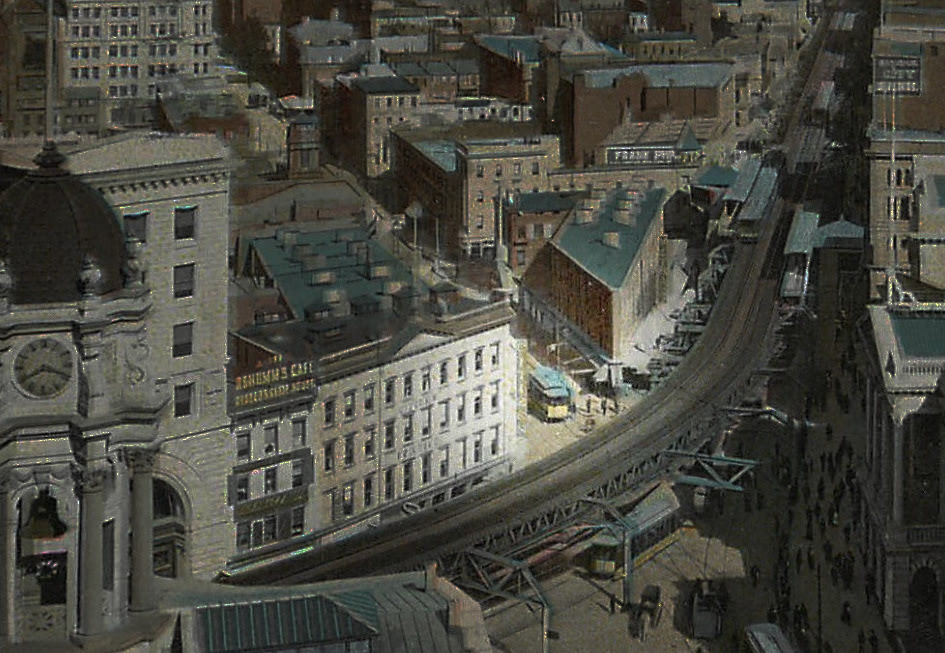
Here we look along Willoughby Street, in 1915, from what is now No. 15 down to No. 1. The theatre (by then a cinema) is still on the corner at that point, but by Lovecraft’s time in the city would have become the Edison Electric Co. office building that still stands today as No. 15. The Elevated railway can be seen in the distance, as it swings around the Brooklyn Citizen newspaper building and heads down Fulton. The second barber pole seen here about marks the site of 7 Willoughby Street, later John’s, and part of its “Hungarian Restaurant” sign can be seen.

Here we look across the foot of Willoughby Street at that same point in time. The spot is seen on the bird’s-eye view.

The Brooklyn Citizen newspaper building is in the immediate foreground on the left, and their hoarding gives the news headlines. It looks like three newspaper hawkers are waiting for the early-morning newspaper bundles to land on the sidewalks. Behind the edge of the Citizen we can just see the signs that indicate the start of Willoughby Street, including Bristol’s restaurant at No. 3. The middle-distance of the picture shows roughly the stores that would have been opposite John’s. Note that the run of stores directly opposite are neatly boarded up, presumably in advance of the subway work, and (as seen on other pictures) their frontages tell people to use an entrance around on Fulton.

The Elevated railway on the right of the picture heads down into Fulton, but we see a passenger stop and the steep stairs up to the platform. Perhaps this was a frequent station for Lovecraft and friends, when John’s was the “spaghetti headquarters”… though of course the trains it served may have been headed the wrong way for some of the ‘gang’. The bird’s-eye postcard view, however, also reveals a station platform opposite and going the other way.

“Sunday morning elevated”, Lovecraft on the platform of the Elevated.

‘Picture postals’ from Lovecraft: Bickford’s, Brooklyn

27 Friday May 2022

Posted by asdjfdlkf in Historical context, New discoveries, Picture postals

≈ 1 Comment

This week, another try at finding H.P. Lovecraft’s New York City cafes and eateries. Today Bickford’s, tomorrow… John’s.

H.P. Lovecraft mentions that a favoured eatery in Brooklyn was “Bickford’s” near Borough Hall. The place was found early during his New York City sojourn. He had abandoned the Tiffany, whose wood-panelled decor he favoured, after he discovered that the clients just could not be ignored in favour of the decor…

the clientele was past enduring … young toughs and gangsters … I got all my stomach could stand after three or four months and thereafter switched to Bickford’s – near Borough Hall.” (Selected Letters II, page 259).

The early switch is confirmed by his 1925 Diary, which notes “Bickford’s”.

In the early 1920s Bickford’s was part of a small but growing chain, with the owner Samuel L. Bickford known for his work with and fund-raising for the Boys Club in Brooklyn. He had also run the New England Waldorf’s Lunch chain in the 1910s, and since these were one of Lovecraft’s favourites he could have been familiar with Bickford’s name in that way. In New York Mr. Bickford offered the unbeatable combination of good cheap food, fast service, and long hours. His chain was a success and in the 1920s branched out into even faster service with self-service automats, it seems, if the New York City branches listed in directories as ‘Bickford’s Lunch System’ are anything to go by. He ended up with a large successful chain.

The Chain Store Age trade magazine tells us that a Bickford’s branch wasn’t located at 425 Fulton Street until 1927. Thus the 58 Court Street branch must have been Lovecraft’s haunt in the Red Hook years, and it is indeed very “near Borough Hall” being just a few steps away down Court St. He calls this branch of Bickford’s a “one-arm”, meaning both cheap and that it had ‘side-arm’ tables just wide enough to hold your plate of food.

In its better days 58 Court Street had been the home to Mr. Edward Greaf, first-class dealer and importer of wines and also the Curator of Entomology at the Brooklyn Institute. But by the 1940s it was the Concord Cafeteria, with a Chop Suey hall above…

As can be seen here in the late 1930s. The former Bickford’s is now the Concord cafeteria and is partly seen on the left. The 25-cent Chop Suey restaurant is above…

Today Street View shows the site as a seedy “Dunkin’ Donuts” hole-in-the-wall next to a failed “General Nutrition” health-food store. However, most of the pleasing stonework and a classic Brooklyn metal fire-escape remain above, evoking a touch of the past.

The above 1940s picture is the nearest in time and place to the 1920s I can get. Not quite as Lovecraft would have known it some 15 years earlier, but I note that since 1917 Bickford’s branches all had the same classy architect and designer, one F. Russell Stuckert. Thus the Court Street branch would probably not be too different from the following frontage in design and logo and perhaps also the use of stained glass. Here we see his design work in the post-1927 frontage for the nearby 425 Fulton Street branch, located a little to the west of Borough Hall…

“Hot Turkey” on the menu. The frontage is deceptive as to the size, since inside it was vast and went back and back and back again — as I’ll explain in another post. The smartness of this 1927 branch, seen here in the late 1930s, may not quite reflect that of the earlier and more worn Court Street branch circa 1925.

David W. Dunlap wrote about the cultural aura of the Bickford’s chain in 2000 in The New York Times, then a reputable newspaper of record. He noted that in the 1950s Ginsberg’s Howl beat generation… “sank all night in submarine light of Bickford’s” (Howl, Ginsberg), and that the great Woody Allen later revered the chain… “I got no money. I’ll go sit in Bickford’s.” (Getting Even, 1971, his breakthrough book collection). Other New York creatives also mentioned it over the years. But Dunlap didn’t pick up on the fact that one H.P. Lovecraft had, as usual, got there first.

‘Picture Postals’ from Lovecraft, 9 Canal St., Providence

13 Friday May 2022

Posted by asdjfdlkf in Historical context, New discoveries, Picture postals

≈ 1 Comment

Hurrah, persistence pays off. Friday the 13th might be unlucky for some, but it’s lucky for Lovecraftians. Because here at last is a picture of Lovecraft’s favourite Jacques Lunch, and at the 9 Canal Street address too. Aka “Jake’s”.

From the budget bundle-o’-local-photos book Rhode Island: Unforgettable Vintage Images of the Ocean State, published 2000 and now long out of print. Here cleaned, rectified and colorised.

The date is uncertain. The caption has it that Hugues Jacques and Pierre ‘Leo’ Jacques are seen behind the counter, and we know from Ken Faig Jr. that they took over the former bar in 1923. So it is probably at about that date or a little later. One can see a docks-worker and probably at least one docks foreman or truck-driver eating at the counter. As well as several old gents who might be of limited means, perhaps the “Salvation Army derelicts” as Lovecraft once referred to them in a letter. A certain ‘Domingo’, not seen, also regularly served behind the counter…

Toward Domingo, an olive-skinned, behind-the-counter servitor at Jacques’, his favorite eating place in Providence, he was as affable as a courtier in a drawing room.” (Talman, on Lovecraft)

Lovecraft had discovered this cheap and abundantly sustaining eatery via Talman in 1926, and from then on he regularly enjoyed its man-sized portions of cheap food. He does not appear to have been a daily or even a weekly customer, but he dropped in and was well known to the place and its people — especially in the summer “visiting season”. The place seems to have slowly slid downmarket over the years. From late summer 1933, and as the Great Depression deepened, Jake’s began to tolerate what Lovecraft called “extremes in the matter of clientele”. He sought out other nearby options, and came to patronise a nearby Al’s Lunch. However, perhaps the “clientele” situation eased. Since Ken Faig Jr. has established he was still eating at Jake’s in August 1934 and March 1935. One day in mid September 1935 Lovecraft found Jacques abruptly closed, the business having failed at last. Lovecraft looked forlornly in the windows again at various times, but found it always “still vacant”.

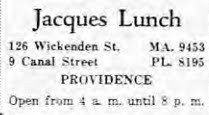
Also newly discovered, as seen in my earlier post, the opening times as they stood in April 1933…

‘Picture Postals’ from Lovecraft: Brooklyn Botanical Gardens – part two

06 Friday May 2022

Posted by asdjfdlkf in Historical context, Picture postals

≈ 1 Comment

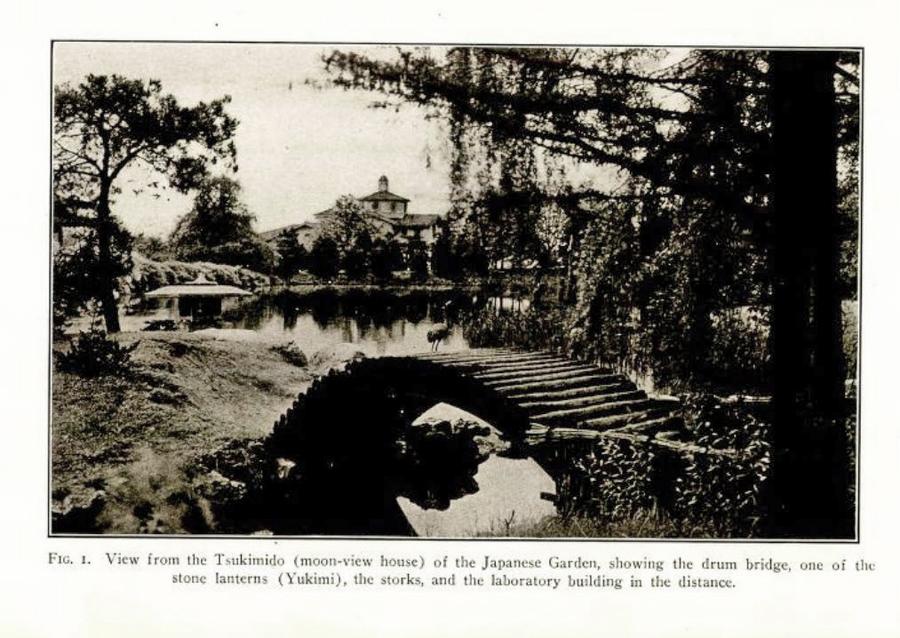
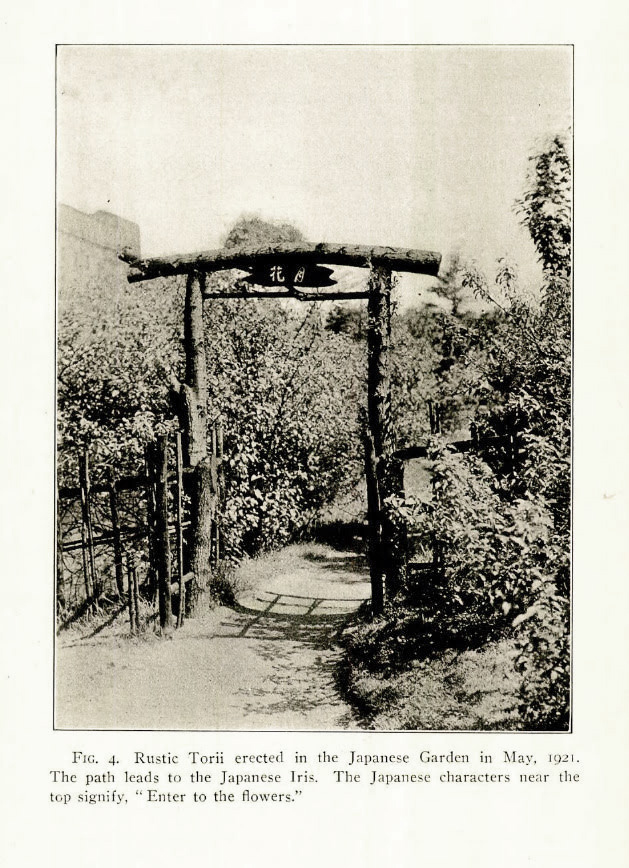
This post follows on from ‘Picture Postals’ from Lovecraft: Brooklyn Botanical Gardens – part one. This week I take a look at the Japanese Gardens, a favourite of Lovecraft when in New York City.

Reading Lovecraft’s letters, one might imagine these gardens were perhaps something rather small and oblong. Picturesque but, in a busy city, rather ‘crammed in’ alongside the overshadowing museum. In reality they were effectively a large and highly landscaped park, some way from the museum building and maturing nicely by the mid 1920s. They formed just the corner of an even larger park. This larger park had many features, including a run of gigantic tropical conservatories that in the 1920s were said to be some of the most extensive and well-stocked in the world. In the view seen below the Museum is located in the top right, with the Japanese ‘hill and pond’ garden park below it.

Here we see one of the Japanese garden’s small shrines in the Lovecraft period, newly colourised by me. The artist seen painting was actually one of the staff, and thus was very lucky. Because the institution’s journal for the period shows that artists and photographers were strictly forbidden from bringing any kind of tripod, stand, easel, seat or sitting device. Thankfully dogs were also banned, which must have pleased Lovecraft.

The rest of the pictures are rather poor quality, but are from the Lovecraft period. As such they indicate what he would have enjoyed in one of his favourite places.

The White memorial, for the philanthropist — importer by trade — who made the vast gardens possible. He died shortly before Lovecraft came to New York.

The Japanese rock garden seen in 1917, with the planting around the boulders still maturing.

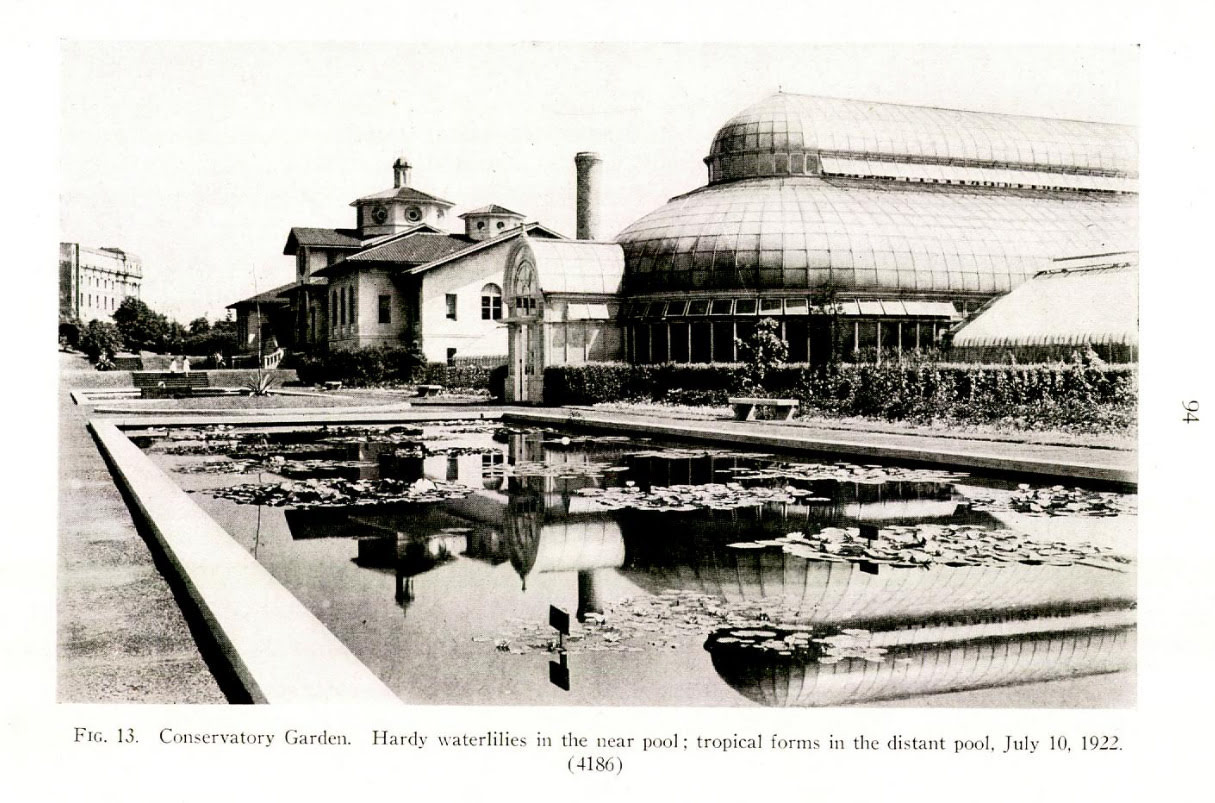
The Lily Pools outside the Conservatories were obviously meant to ease the landscapes of the Japanese Garden into the long terraces that ran alongside the Conservatories.

One of the Conservatories seen in 1936.

The omnipresent gardens were almost terrifying in their strangeness, with bizarre and unfamiliar forms of vegetation nodding over broad paths lined with curiously carven monoliths. Abnormally vast fern-like growths predominated; some green, and some of a ghastly, fungoid pallor. Among them rose great spectral things resembling calamites, whose bamboo-like trunks towered to fabulous heights. Then there were tufted forms like fabulous cycads, and grotesque dark-green shrubs and trees of coniferous aspect. Flowers were small, colourless, and unrecognisable, blooming in geometrical beds and at large among the greenery. … Fungi of inconceivable size, outlines, and colours speckled the scene in patterns bespeaking some unknown but well-established horticultural tradition.”

— from The Shadow out of Time.

‘Picture Postals’ from Lovecraft: Brooklyn Botanical Gardens – part one

29 Friday Apr 2022

Posted by asdjfdlkf in Historical context, Picture postals

≈ 2 Comments

This week on ‘Picture Postals’, part one of a look at the Brooklyn Botanical Gardens. The Japanese Gardens alongside the Brooklyn Museum became one of H.P. Lovecraft’s favourite places in New York City, his…

favourite Japanese garden beside the Brooklyn Museum

One can see the arrangement here. The Museum building is seen at the top of the picture, the run of conservatories are below, and the Japanese ‘hill and pond’ garden sits between them.

Sadly, as you can see, the quality of these pictures is not great. The Museum does have some of its public domain glass-plate pictures online (at rather pointless sizes), but those are only some of the pictures to be seen in old books and journals. But you get the idea from the pictures below.

Inside would be exotic steam-heat, which Lovecraft enjoyed, and which he might have especially welcomed if he had visited on a chilly Christmas / New Year visit. Also to be seen would be strange plants and sinister pods.

Interestingly in the mid 1920s there were film shows there that might have entertained him. This example is from 1923…

So far as I’m aware, however, he does not mention visiting the hothouse after the Japanese Gardens. But it would seem unusual if he had never set foot in the place, when he made many visits to its next-door neighbours. It’s also known that he enjoyed other hothouses on his various antiquarian trips. I’d welcome any references to where he might mention the Brooklyn hothouses.

If they didn’t influence Lovecraft, it seems difficult to imagine them not influencing his good friend and Brooklyn native Frank Belknap Long. In the war years of the 1940s Long produced a series of pulp stories of exotic alien plants which go under the general title of John Carstairs, Curator of the Interplanetary Botanical Gardens.

‘Picture Postals’ from Lovecraft: Cleveland, August 1922

22 Friday Apr 2022

Posted by asdjfdlkf in Historical context, New discoveries, Picture postals

≈ 1 Comment

This week’s ‘Picture Postals’ is part four of four, of a few notes on the new expanded edition of the Galpin letters. On page 293 Lovecraft usefully recalls the exact locations enjoyed during his 1922 visit to Cleveland. This was a very happy time for him as he was effectively released from his long hermitage. The addresses are…

1537 E. 93rd St. [Loveman’s family home], 9231 Birchdale [Avenue, Galpin’s family home, quite near to Loveman], Wade Park, Clark’s Lunch [north side of Euclid Av.], Taylor’s Arcade [south side of Euclid Av.], Eglin’s [bookshop]


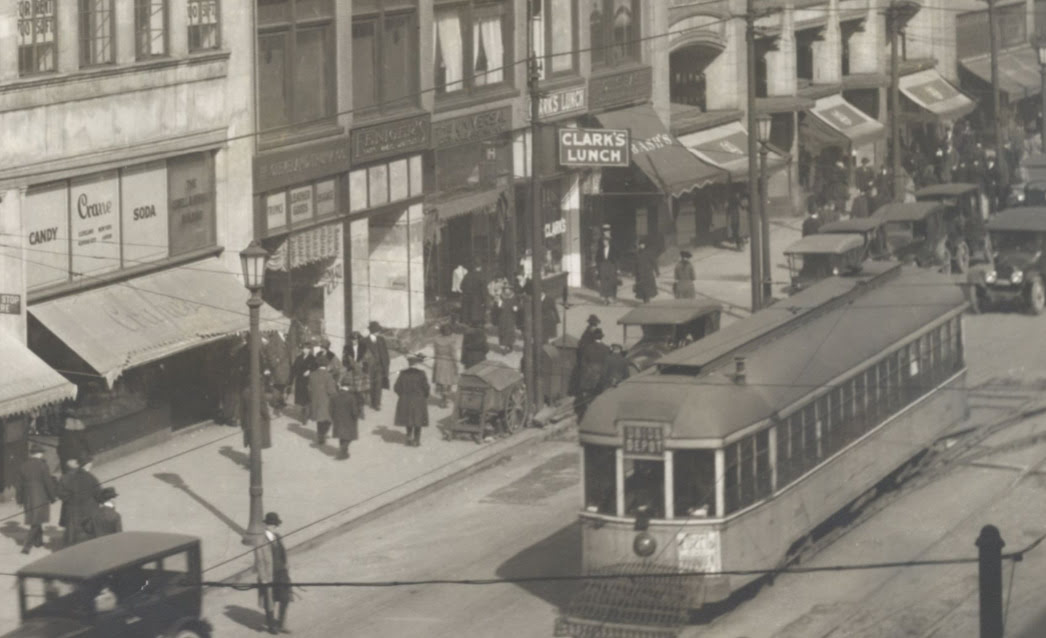
I found a good picture of a Clark’s Lunch on the central street called Euclid Avenue, and dated 1922…

Galpin met Lovecraft at the railway station and immediately took him to eat at a Clark’s Lunch, before they then went back to Galpin’s family home. This same Lunch was where he and the boys mostly ate their ‘meals out’ after that, as Lovecraft told his aunt in a letter.

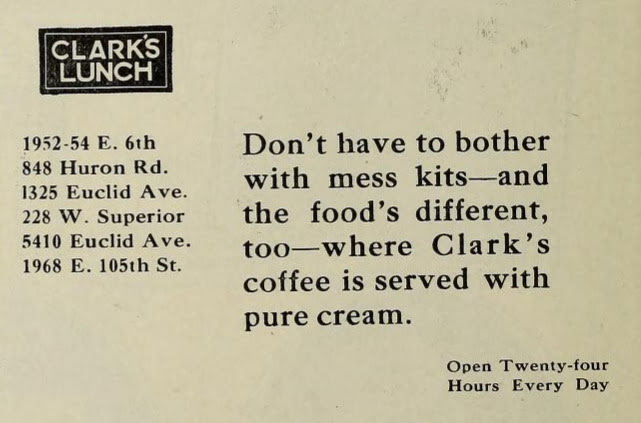
It’s pleasing to get a photo of the exact date, although the heavy coats and hats in the picture suggests a bright-but-chill springtime rather than the early August heat of Lovecraft’s extended and fatefully cheering visit. However, is this the Clark’s Lunch? The people look rather too upmarket and the hole-in-the-wall too small. Were there other branches? There were. The 1920 American Legion Convention booklet usefully yields the list of the city’s branches…

So, there were two Lunch’s on Euclid. And we now know that the branches were open 24 hours.

But which Lunch is shown? The one at 1325 Euclid or at 5410 Euclid? Enough of the surrounding architecture of one remains to be seen today on Google Street View, and thus the above picture can be confirmed as the central Lunch at 1325 Euclid.

However I’m still not entirely certain, as there were evidently other branches. Indeed there were 15 branches in the city by the 1950s. So let’s look more closely at the place of arrival and see if that helps. Lovecraft was on the Lake Shore overnight sleeper train from New York to Cleveland, seeing the Catskills in the distance as he travelled along the Hudson Valley (he would later that year set “The Lurking Fear” in the same mountains). In 1922 the Lake Shore sleeper drew in to Cleveland at the old and decrepit New Union Depot. This had been renovated in earlier decades, but was still then blighted by “years of accumulated soot and ash which had made the building into a dirty eyesore” according to the railway historians. In 1922 it was all-but defunct. The city’s long-planned gleaming station was still just bare cleared-ground at that time, and would only open in 1930. Thus we can be sure that Lovecraft arrived in the city at the old and decrepit New Union Depot. The question is then, which was the nearest Clark’s Lunch branch for the station?

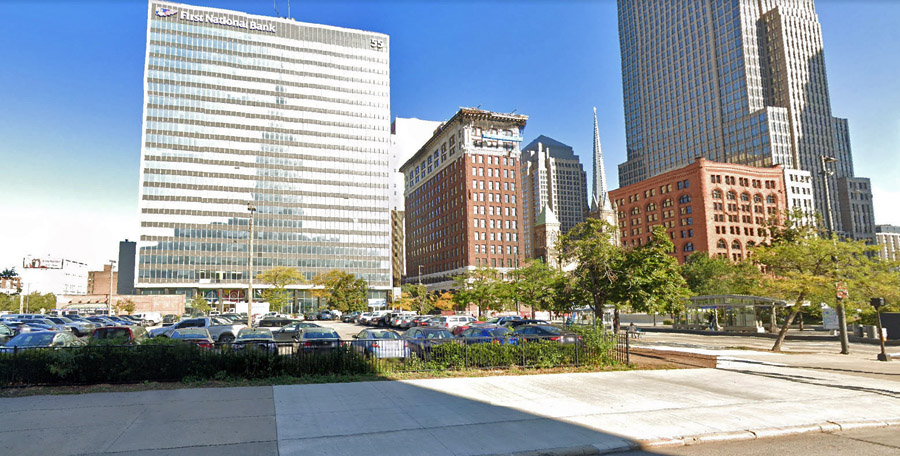
Sadly, it’s not the one seen above at 1325 Euclid. Pity, but the situation did look rather too posh. The nearest to this station would have been the branch at 228 West Superior, on the west side of Cleveland Public Square and about a quarter mile walk from the New Union Depot. There was a large business college at 236 West Superior, and an athletics store at 226, with together suggest a student-ish atmosphere for the Lunch. The food appears to confirm this student-y supposition. The food there was found to be “humble” and “inexpensive”, as Lovecraft told his aunt (Selected Letters Vol. 1., p. 191).

Unfortunately there don’t appear to be vintage pictures of that stretch of West Superior, and this row has since been cleared. It has long been a parking lot called Jacob’s Lot…

But the local press report that by 2024 the car park will be gone. From the site of Lovecraft’s Lunch will soar a new Sherwin-Williams Corp. mega-tower skyscraper. Suitably enough, for a place where artists and writers such as H.P. Lovecraft and Hart Crane once met, the company is ‘America’s Paint Company’ and makes paints.


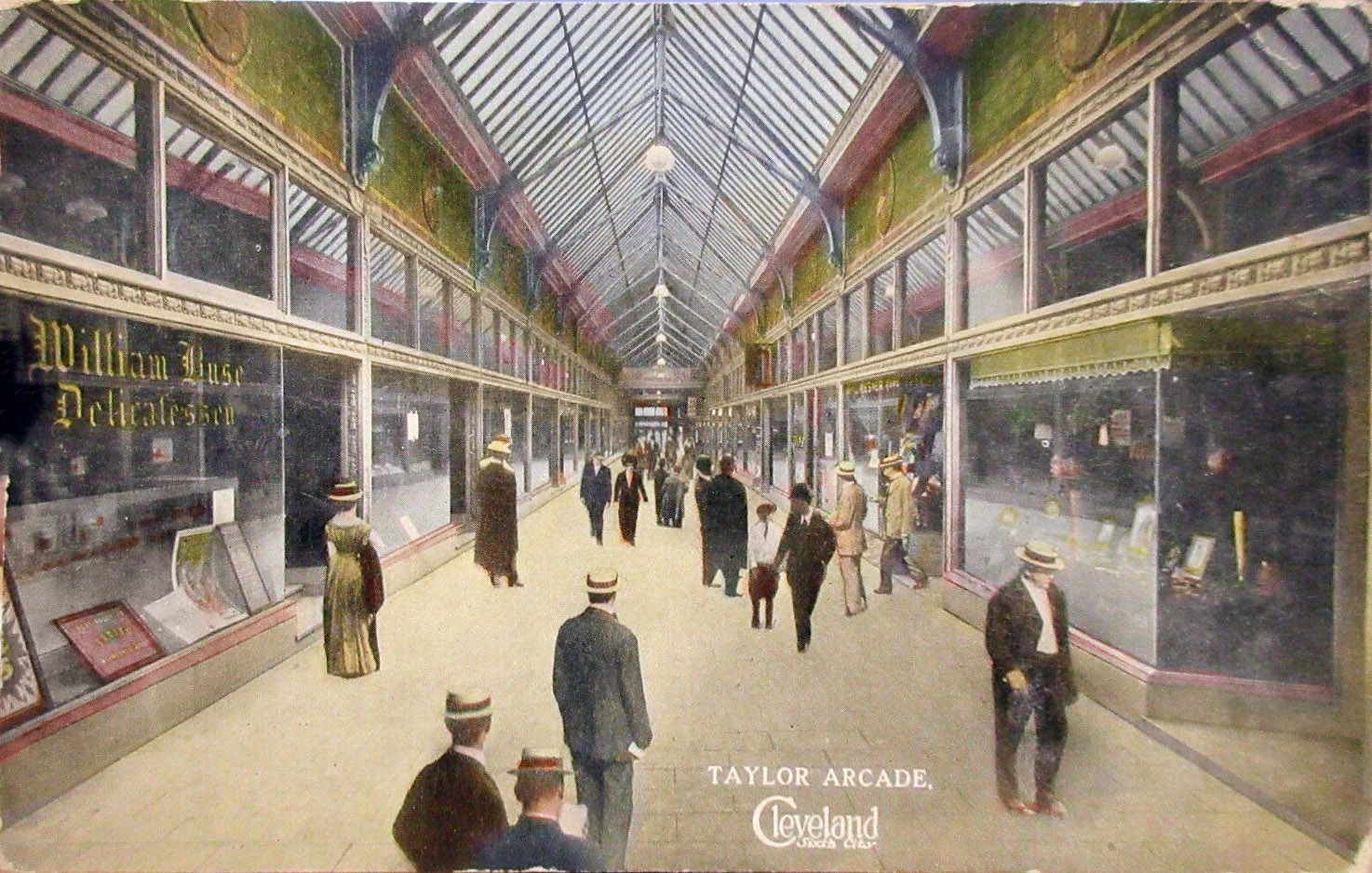
What of Taylor’s Arcade? This was on the south side of Euclid Avenue in its central run, and is here seen perhaps circa 1912-ish? A decade before. Not to be confused with another and far grander wrought-iron arcade in the same city, which still exists.


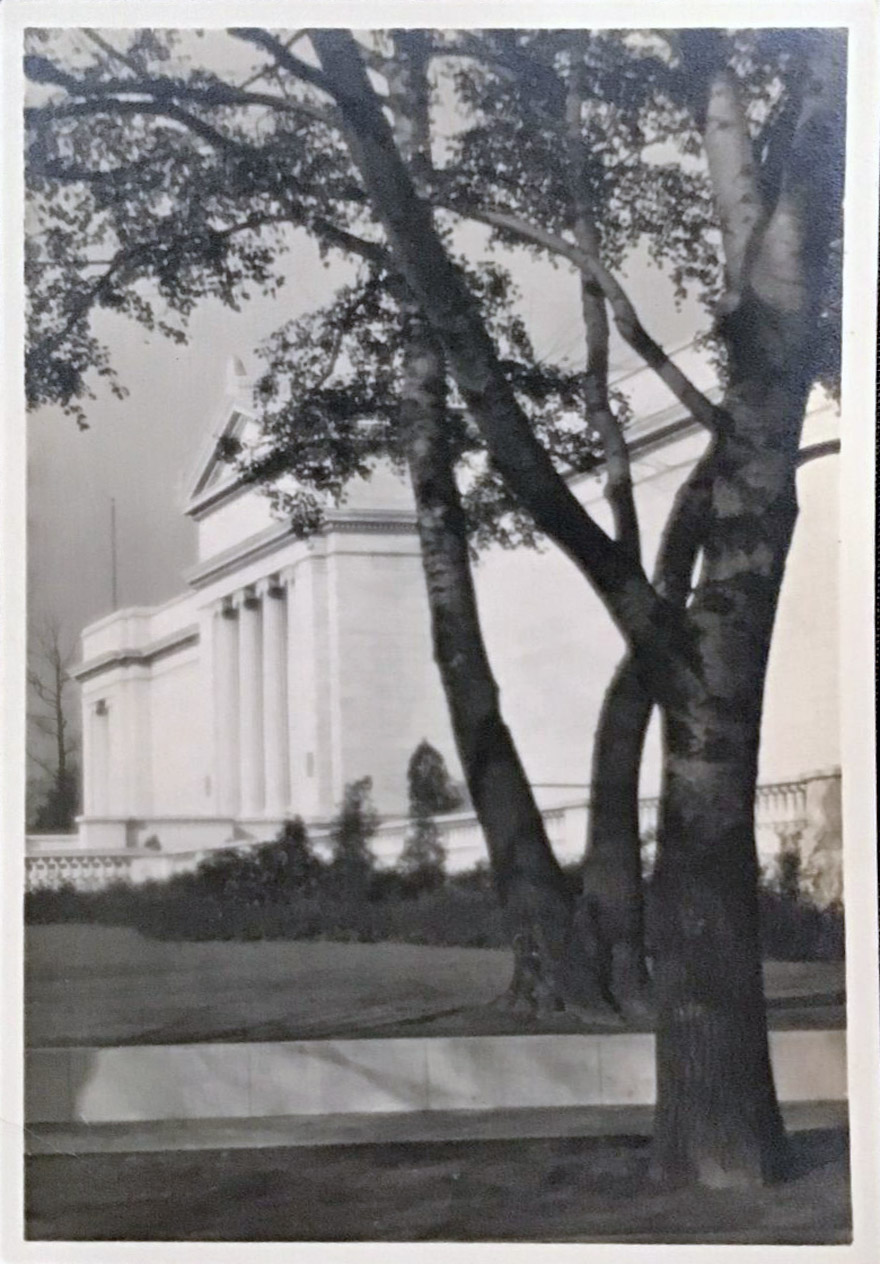
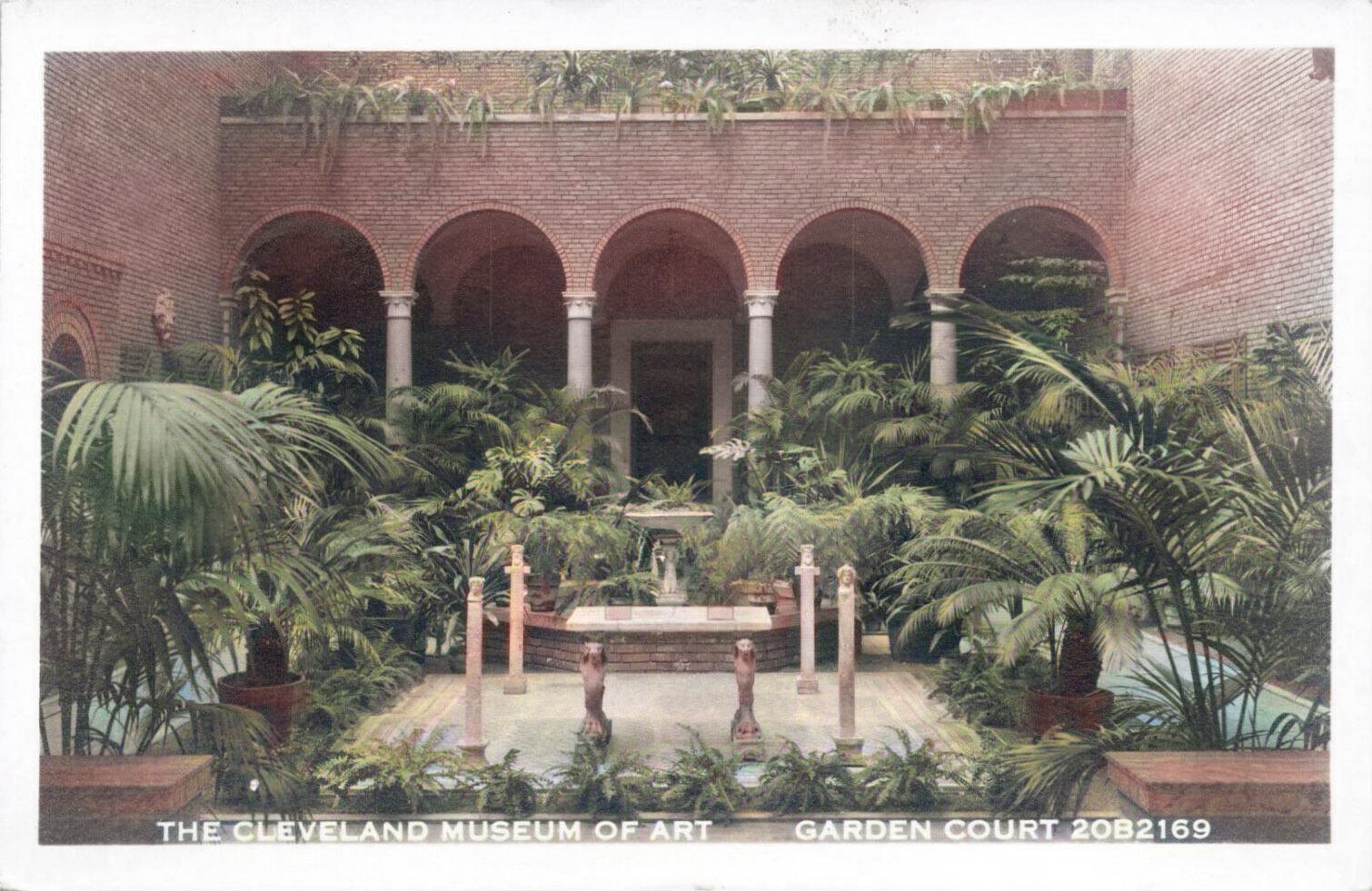
What of Wade Park? This had a large zoo with lions and polar bears and suchlike, and an art museum, as well as fine and expansive parkland with lakes. Lovecraft tells his aunt that he toured the “Cleveland Art Museum” there. Aka the Cleveland Museum of Art. This was housed in a long low classical building.

The museum displayed fine art and crafts from all eras and Lovecraft would have seen full armoured and mounted medieval knights, “Carthage” by the famous British artist Turner, Japanese porcelain, French paintings, and far more. Also the following approximate emulation of a Moorish-style courtyard garden, which appears (from another companion card) to have had a further small garden in a more eastern style with a central Buddha.

The heat of early-mid August 1922 was very heavy, and thus no doubt much to the liking of both the garden and Lovecraft. Strong heat always pepped him up. He also found that he needed to blend in more with the boys and thus he divested himself of his usual hat and stiff collar…

Can you picture me vestless [i.e. without a waistcoat], hatless, soft-collared, and belted, ambling about with a boy of twenty, as if I were no older? … One can be free and easy in a provincial city … What I need in order to be cheerful is the constant company of youthful and congenial literary persons. (Selected Letters Vol. 1, p. 293)


As for the bookshop, “Eglin’s” is the form elsewhere in Selected Letters which confirms the spelling. Also confirmed is that some of the shop’s after-hours reading events were quietly rather gay at that time (as the confirming spelling occurs in the context of Lovecraft’s comments on Gordon Hatfield and Loveman). The journal Phantasmus for 1924 then gives the address “Eglin’s Book Store, 824 Superior Ave.” and the 1925 American Book Trade Directory confirms. By March 1930 the sales-outlets list of The Rosicrucian mystical magazine shows it had moved down the Avenue to 806. Today its old site at No. 824 is a 4,000 sq. ft. modern art gallery, seemingly shelled from the original building and with some of the old frontage still intact.

No. 824 is about a quarter-mile west of the Clark’s Lunch branch at 228 West Superior (see above). This helps to very strongly confirm the likely branch at which Lovecraft, Loveman, Galpin and the Eglin’s crowd ate in 1922. Given the “humble” and “inexpensive” fare, from the branch of a growing and reliable 24-hour chain, it would have been the natural choice as a local eatery.

Loveman would later work at Eglin’s as a bookshop assistant, but when he lost the position he followed the poet and his sometime-lover Hart Crane to New York City. Lovecraft later followed Loveman to New York, and the rest is history.

← Older posts
Newer posts →


Please become my patron at www.patreon.com/davehaden to help this blog survive and thrive.

Or donate via PayPal — any amount is welcome! Donations total at Easter 2025, since 2015: $390.

Archives

  • February 2026
  • January 2026
  • December 2025
  • November 2025
  • October 2025
  • September 2025
  • August 2025
  • July 2025
  • June 2025
  • May 2025
  • April 2025
  • March 2025
  • February 2025
  • January 2025
  • December 2024
  • November 2024
  • October 2024
  • September 2024
  • August 2024
  • July 2024
  • June 2024
  • May 2024
  • April 2024
  • March 2024
  • February 2024
  • January 2024
  • December 2023
  • November 2023
  • October 2023
  • September 2023
  • August 2023
  • July 2023
  • June 2023
  • May 2023
  • April 2023
  • March 2023
  • February 2023
  • January 2023
  • December 2022
  • November 2022
  • October 2022
  • September 2022
  • August 2022
  • July 2022
  • June 2022
  • May 2022
  • April 2022
  • March 2022
  • February 2022
  • January 2022
  • December 2021
  • November 2021
  • October 2021
  • September 2021
  • August 2021
  • July 2021
  • June 2021
  • May 2021
  • April 2021
  • March 2021
  • February 2021
  • January 2021
  • December 2020
  • November 2020
  • October 2020
  • September 2020
  • August 2020
  • July 2020
  • June 2020
  • May 2020
  • April 2020
  • March 2020
  • February 2020
  • January 2020
  • December 2019
  • November 2019
  • October 2019
  • September 2019
  • August 2019
  • July 2019
  • June 2019
  • May 2019
  • April 2019
  • March 2019
  • February 2019
  • January 2019
  • December 2018
  • November 2018
  • October 2018
  • September 2018
  • August 2018
  • August 2015
  • July 2015
  • April 2015
  • March 2015
  • February 2015
  • January 2015
  • December 2014
  • November 2014
  • October 2014
  • September 2014
  • August 2014
  • July 2014
  • June 2014
  • May 2014
  • March 2014
  • February 2014
  • January 2014
  • December 2013
  • November 2013
  • October 2013
  • September 2013
  • August 2013
  • July 2013
  • June 2013
  • May 2013
  • April 2013
  • March 2013
  • February 2013
  • January 2013
  • December 2012
  • November 2012
  • October 2012
  • September 2012
  • August 2012
  • July 2012
  • June 2012
  • May 2012
  • April 2012
  • March 2012
  • February 2012
  • January 2012
  • December 2011
  • November 2011
  • October 2011
  • September 2011
  • August 2011
  • July 2011
  • June 2011
  • May 2011
  • April 2011
  • March 2011
  • February 2011
  • January 2011
  • December 2010
  • November 2010
  • October 2010
  • September 2010
  • August 2010
  • July 2010

Categories

  • 3D (14)
  • AI (70)
  • Astronomy (70)
  • Censorship (14)
  • de Camp (7)
  • Doyle (7)
  • Films & trailers (101)
  • Fonts (9)
  • Guest posts (2)
  • Historical context (1,095)
  • Housekeeping (91)
  • HPLinks (74)
  • Kipling (11)
  • Kittee Tuesday (92)
  • Lovecraft as character (58)
  • Lovecraftian arts (1,626)
  • Lovecraftian places (19)
  • Maps (70)
  • NecronomiCon 2013 (40)
  • NecronomiCon 2015 (22)
  • New books (966)
  • New discoveries (165)
  • Night in Providence (17)
  • Odd scratchings (984)
  • Picture postals (276)
  • Podcasts etc. (431)
  • REH (184)
  • Scholarly works (1,469)
  • Summer School (31)
  • Unnamable (87)

Get this blog in your newsreader:
 
RSS Feed — Posts
RSS Feed — Comments

H.P. Lovecraft's Poster Collection - 17 retro travel posters for $18. Print ready, and available to buy — the proceeds help to support the work of Tentaclii.

Proudly powered by WordPress Theme: Chateau by Ignacio Ricci.