For Lovecraft’s Birthday, my little enhanced audiobook of his “Vermont – A First Impression” (1927), with music and sound FX in 12 minutes. So far as I’m aware, this is the first free audiobook version. Enjoy.


20 Sunday Aug 2023
Posted in Odd scratchings, Podcasts etc.
For Lovecraft’s Birthday, my little enhanced audiobook of his “Vermont – A First Impression” (1927), with music and sound FX in 12 minutes. So far as I’m aware, this is the first free audiobook version. Enjoy.
19 Saturday Aug 2023
Posted in Scholarly works
Now available, my free PDF Tolkien Gleanings, issue 6 (2023) for Tolkien scholars and academics. At just 56 pages this is not as large and magazine-like as the previous issue 5. This new issue just collects and proof-reads my Gleanings blog-posts from June to August, and also has a gallery which surveys ‘walking trees’ in Edwardian arts and literature.
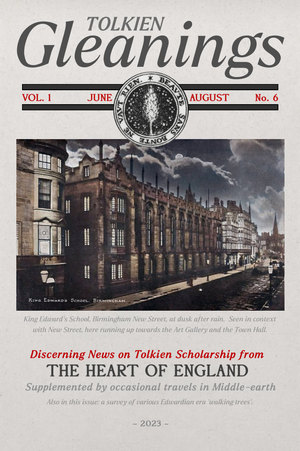
To get clickable Web links, you need the PDF rather than the Archive.org flipbook preview.
19 Saturday Aug 2023
Posted in REH
Howard Days 2024 date change…

19 Saturday Aug 2023
Posted in New books
A review in German, of the new Fungi from Yuggoth German edition…
The German versions of the poems are not literal translations, but adaptations that author, actor and theatre director Frank Dukowski put together over many years of work. Here it was particularly important for Dukowski to maintain the form of the respective poem [and] Dukowski’s interpretations are closer to the original work than a literal translation ever could be. […] The Lovecraftian poetry is loosened up and framed at the same time by black-and-white illustrations by Jorg Kleudgen.
18 Friday Aug 2023
Posted in Scholarly works
Shund (beta), a searchable database of Yiddish ‘pulp’ stories 1902 to 1935. See also the search advice blog post. AI OCR of Yiddish characters is planned for the future, making it easier to categorise and group.
18 Friday Aug 2023
Posted in New discoveries, Picture postals
At the risk of boring regular readers of Tentaclii, here are four more glimpses of the ‘Uncle Eddy’ bookshop on Weybosset in Providence. Readers of the Lovecraft Annual 2022 will recall my detailed article which revealed the bookselling uncle of Eddy Jr., a firm “favorite” for the book collectors in Lovecraft’s circle whenever they visited Providence. The largest used bookshop in Providence, for many years. In the article I was only able to furnish a bit of a poor picture-postcard…

I’ve since found four more glimpses of the site. Though only glimpses, not a straight-on picture of the doorway to the cellar bookstore.
First, an early image of the site (here outlined in red) from the archives of the Providence Public Library. Two distinctive domes are clearly seen. The nearer one on the far-left, and in the distance the old Beneficent Congregational ‘Round Top’ Church. These provide useful orientation.

Next a detail from another Public Library picture. Here we look the other way, and see only the distinctive domed building on the corner. Again, the doorway is outlined in red.

Next we again look toward the Round Top church. The bookstore entrance, or what would later be a bookstore, is obscured by a street fountain.

Here we look toward the Crown Hotel, and can just see the same distinctive dome on the corner building. The entrance is again obscured, by what might be a short telegraph pole.

While looking for pictures I did however stumble on a rare good front-view of a Providence ‘news-stand’ store, and in what might be the early 1920s. The Narraganset Smoke Shop, probably in Dorrance Street since an adjacent/above sign (seen on the wider picture) for “T.H. D’Arcy, Engraver” leads me to 86 Dorrance Street. Just around the corner from Weybosset Street. This hole-in-the-wall magazine, tobacco and candy store looks a likely prospect for a fellow wanting to bag a copy of the curious new magazine called ‘Weird Tales’. Here newly colourised.

17 Thursday Aug 2023
Posted in Odd scratchings
The UK’s Heath Robinson Museum has an “Illustrating the Grotesque” exhibition, 23rd September to 10th December 2023. Focussing on his illustrations for The Works of Rabelais (1904, 2 vols., not on Archive.org), but probably also drawing on his earlier Poe work and others. The museum is in Pinner, about 12 miles north of central London.
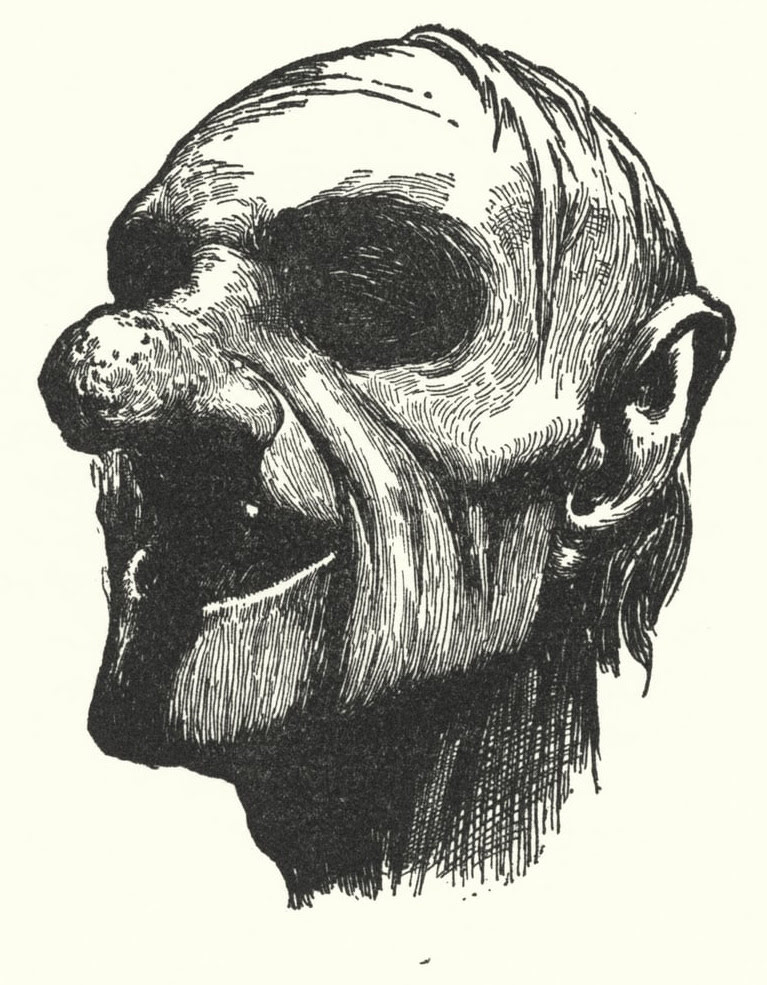
Currently the Museum has an exhibition of Robinson, one the UK’s best-loved illustrators, “Illustrating Andersen & Perrault”.
16 Wednesday Aug 2023
Posted in New books, Scholarly works
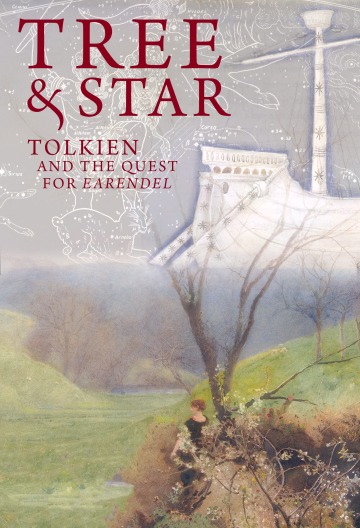
Paper-sniffers rejoice. My big scholarly Tolkien book Tree & Star (2022) can now be purchased in paperback from the U.S. Lulu.com store. Formatted as a standard 6″ x 9″ American ‘trade’ paperback. I chose the slightly better quality of b&w printing, since the book has many illustrations.
15 Tuesday Aug 2023
Posted in New books, Scholarly works
A quick scatter-gun round-up of some new British journals.
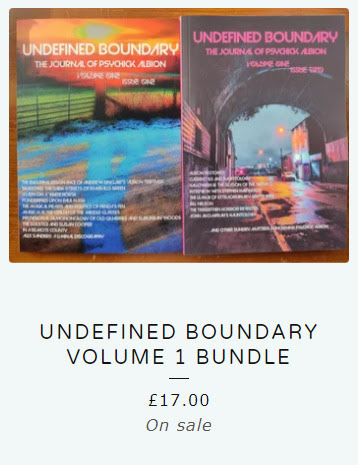
Undefined Boundary: The Journal of Psychick Albion has produced a second issue. Including a Bill Nelson interview. Both issues can currently be had as a bundle.
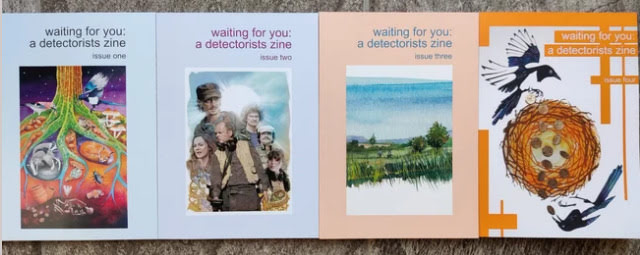
Wow, and what’s this… yes, it’s a Detectorists fanzine: Detectorists Bundle, Issues 1 – 4 from the same folk as Psychick Albion.
There’s also Strange Attractor Journal Five (Spring 2023), returning after a seven year break. Some of the contents are mentioned in the page for the London launch event.
And finally the Bacon Review has its first issue out. Not the ‘sizzling piggy’ type of bacon. The artist Francis Bacon, painter of the ‘Screaming Pope’ painting and all that.
14 Monday Aug 2023
Posted in Lovecraftian arts
A Lovecraft Telegram Sticker set. Some better than others, but pleasingly done. Telegram being a moderately successful Twitter competitor, keen on free speech. Perhaps I should try it, but it’s yet another service that doesn’t seem very friendly to users of desktop PCs. Presumably because mobile devices allow much more data-leeching than PCs? /Adopts clueless old man pose, scratches head…/ Anyway, nice stickers. Which I assume are used like ye olde emojis.


I don’t see any other Lovecraft sets, just this large one.
13 Sunday Aug 2023
Posted in Odd scratchings
The Irish fantasy writer Rosa Mulholland’s vivid fantasy for children The Walking Trees, now freely available in PDF at last. This is not the later handsome illustrated edition, which I find is utterly available except physically in a few Irish libraries. So my new assemblage from the original magazine serial will have to do for now. You’re welcome.
Also in ‘choice obscurities’, new on Archive.org is The Armchair Detective for July 1972, which considered “A. Merritt’s Mysteries”. Merritt being a Lovecraft fave. On the novel Creep, Shadow! (Argosy, August 1934) the author of the article writes…
The themes of the book — reincarnation, sympathetic magic through shadows, and the re-enactment of an ancient myth of Brittany — are methodically laid out and examined intellectually before the author proceeds to the action. There are flashes of the old poetic imagery, and some of Merritt’s finest writing is in the “shadowland” sequence. This book, which I consider to be one of Merritt’s finest works, is unusual in its pace and plot when compared to his other novels.
12 Saturday Aug 2023
Posted in New books
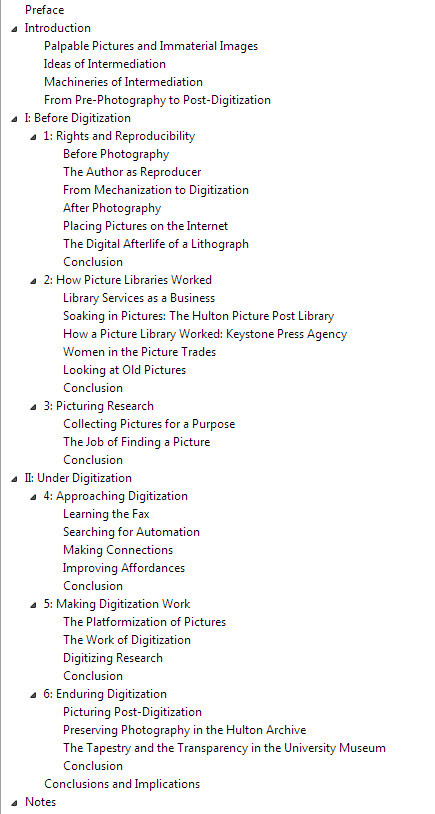
A 2023 open-access book details the history of the technologies of the picture for print. Half the book looks at the pre-digital days when there was effectively nothing but print, and no scanners and hard-drives either. The other half looks at the change-over period.
This new digital culture arrived surprisingly late in time for some. In my university department we had around 20 filing cabinets in a ‘slide room’ aka Picture Library, each cabinet stuffed with rack-sliders and hangers containing slide transparencies of fine art and fine-art and some documentary photography. I think the date of change-over was about 2005 (roughly the date of the arrival of fast home broadband in the UK) when we got a new hot and young ‘slide room guy’. In short order we had a consignment of new digital projectors and people started getting their own laptops or mini laptops (the EEEs, which could run Windows XP quite happily and had standard VGA output).
The screen-projected quality on a wall wasn’t as good as slides on a proper slide-screen, and the digital + laptops classroom wrangling of the equipment was often as painful as setting up the slides and a screen. But it was kind of easier, because lecturers had started using Powerpoint rather than the blackboard (yes, our purpose-built department had fine blackboards and we used them) and photocopied handouts. So unless you printed the Powerpoint on acetates for an overhead projector, or on photocopies… and assuming you could find an overhead projector or a photocopier still working… well, you see some of the many ramifying problems.
And all this assumes you could get into what was often a locked room in the early morning, 30 minutes prior, to do all the needed setup, tidy the desks and air the room. An all-in-one digital solution just made things somewhat easier, though the visual quality of the projection was only about two-thirds that of a crisp and well-focused 35mm slide in a darkened room.
I cringe today when (finding pictures to illustrate local creative industries news) I occasionally see contemporary pictures of dedicated ‘art appreciation’ lessons inside middle school classrooms. The projector is often being used in daylight under strip-lights, and the kids are supposed to be ‘experiencing art’ through a really crappy washed-out image. Which I suspect is often also of a picture just ‘grabbed from the Internet’ without realising how colour-shifted and cropped the picture has become. One often has to really hunt to track down the best available and most faithful/largest version of a famous picture, and of course busy teachers don’t have the time or discovery skills for that. Even if they did, the picture would look poor when projected. I guess the ideal is that new-build schools should have their own cinema-like ‘dark room’ for quality projection, linked to online access to a quality-approved picture library.
Anyway, I thought that those readers of Tentaclii who are editors, publishers and artists might be interested in the new free book. Especially those who have lived through the change from print to digital…
from the pre-photographic 1830s to the post-digitized 2010s [the book examines] range of research skills, reproduction machinery, and communication infrastructures needed to make pictures available to a public before digitization.