Some notes on the Cole letters

I’ve finished reading the Cole letters, which front the new expanded volume of Lovecraft-Galpin letters. Here are some notes.

Galpin wrote a detective novel, now presumably lost (p. 19).

By the mid 1930s Lovecraft had access to the latest Encyclopedia Britannica at the Public Library (p. 34) and slightly later purchased a Modern Encyclopedia (p. 110) that brought him right up-to-date with entries that had… “all the dope on neutrons, Nazis and the N.R.A.”.

The cut-price Newport passenger / cattle-boat boat was the Sagamore (p. 62). No postcards are to be immediately found.

He describes the layout of No. 66 (p. 65).

The origin of his “andwhere” phrase is given (p. 67).

He bemoans the “new synthetick highway” from Providence-Boston, this presumably being some sort of early motorway inter-state road which the express passenger coaches soon used. (pp. 82, 132). This was fast, but very dull in terms of scenery and architecture. Lovecraft then discovered an old-school bus-line that was still taking the ‘through the towns’ route, and booked a ticket for Boston. Later he had Loveman bring him back from Boston by the old route.

Various friends and acquaintances were being injured or killed by the new fast cars. Munn’s father was killed, for instance (p. 87).

Cook was writing a werewolf novel, presumably either left unfinished or lost (p. 105).

Lovecraft reveals his talent for purring like a cat, loudly and well. He teaches several kittens to purr in this way (p. 122 and elsewhere).

The Red Rooster and New Times (Babcock) for May 1935 had two 1920s photos of Lovecraft and “numerous photos of other amateurs” (p. 127 and footnote). This doesn’t appear to be online.

Mrs Miniter very early depicted ‘Lovecraft as character’. Of her “novelette of 1923” titled The Village Green, Lovecraft stated “I am recognisably depicted!” (p. 143). In fact that was her second try. Her short “Falco Ossifracus” (1921) was a Lovecraft parody by her, published in her journal The Muffin Man and in which Lovecraft was the supposed first-person narrator of a “Statement of Randolph Carter”-like tale. So she beat Belknap Long to it by a decade. Lovecraft noted Long was writing a novel of the Kalems in 1931 (Letters to Wandrei, page 265) but it never appeared.

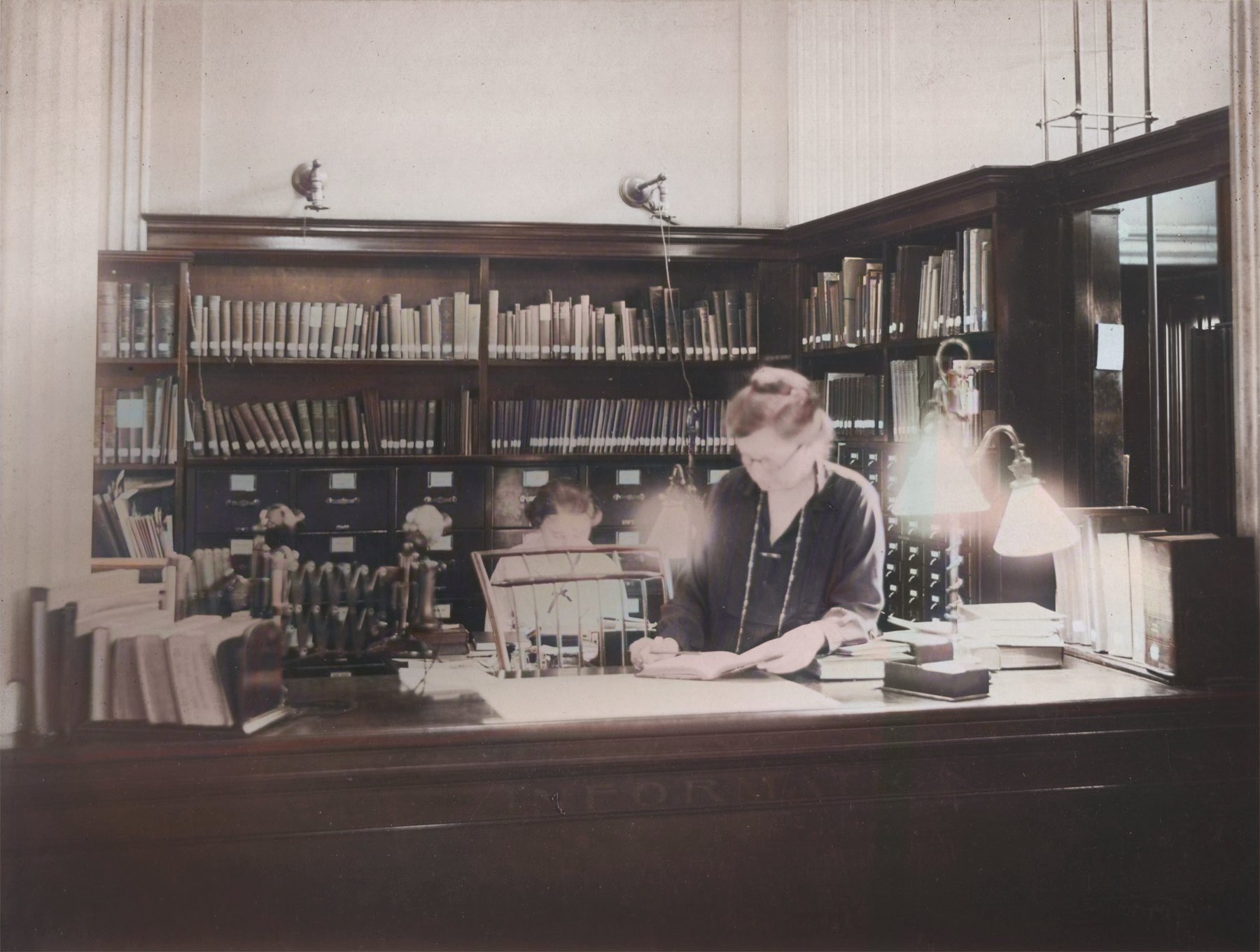
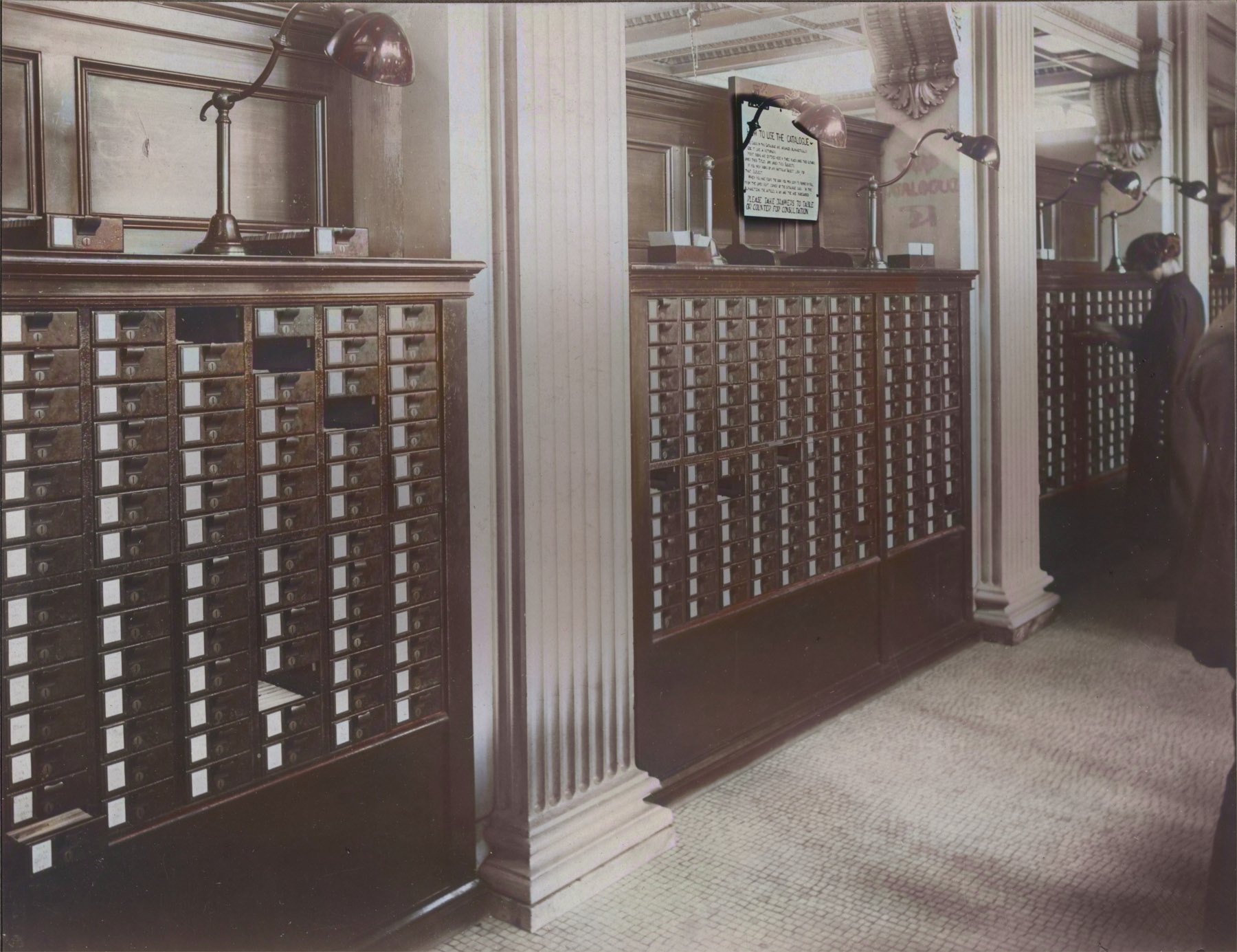
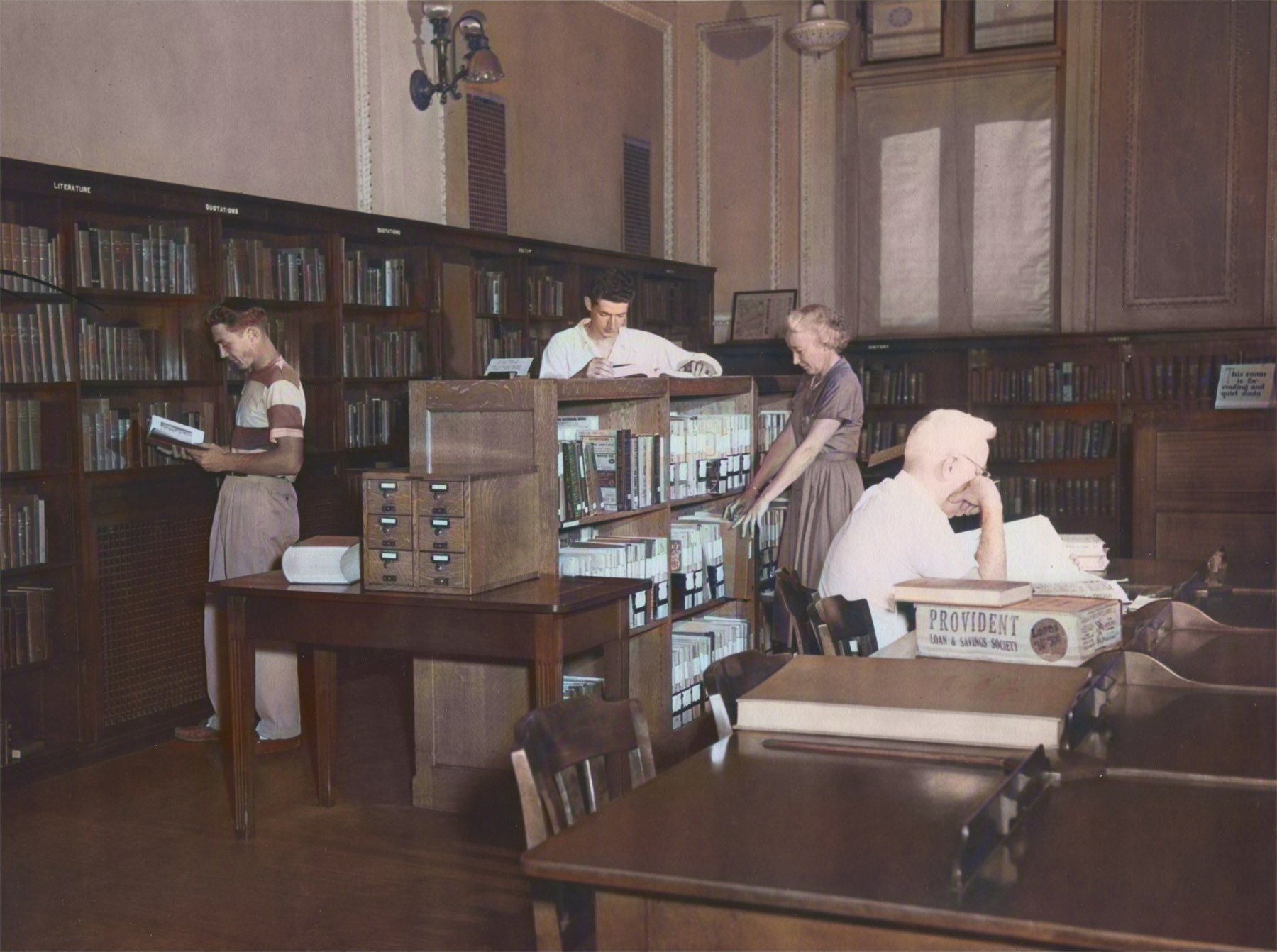
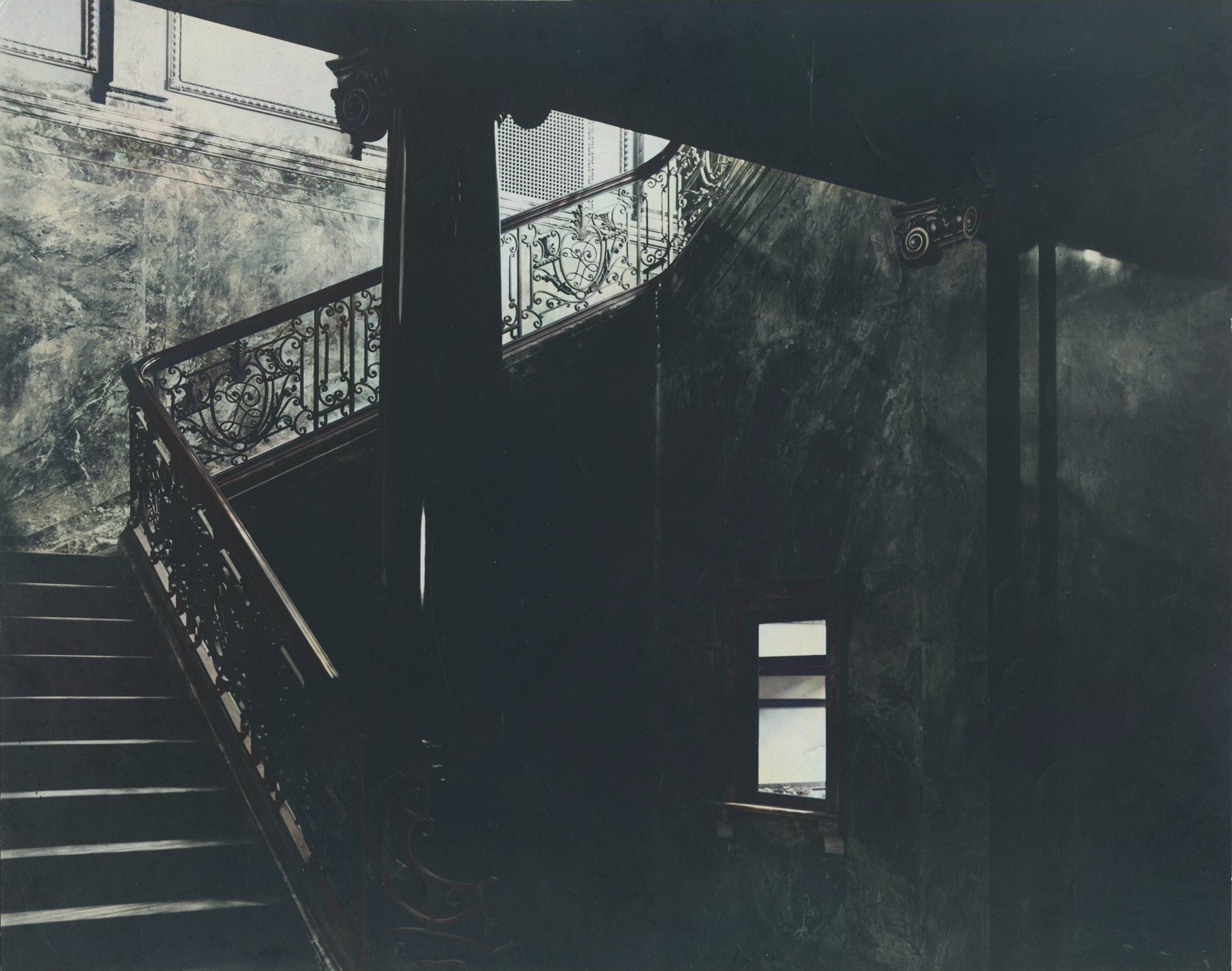
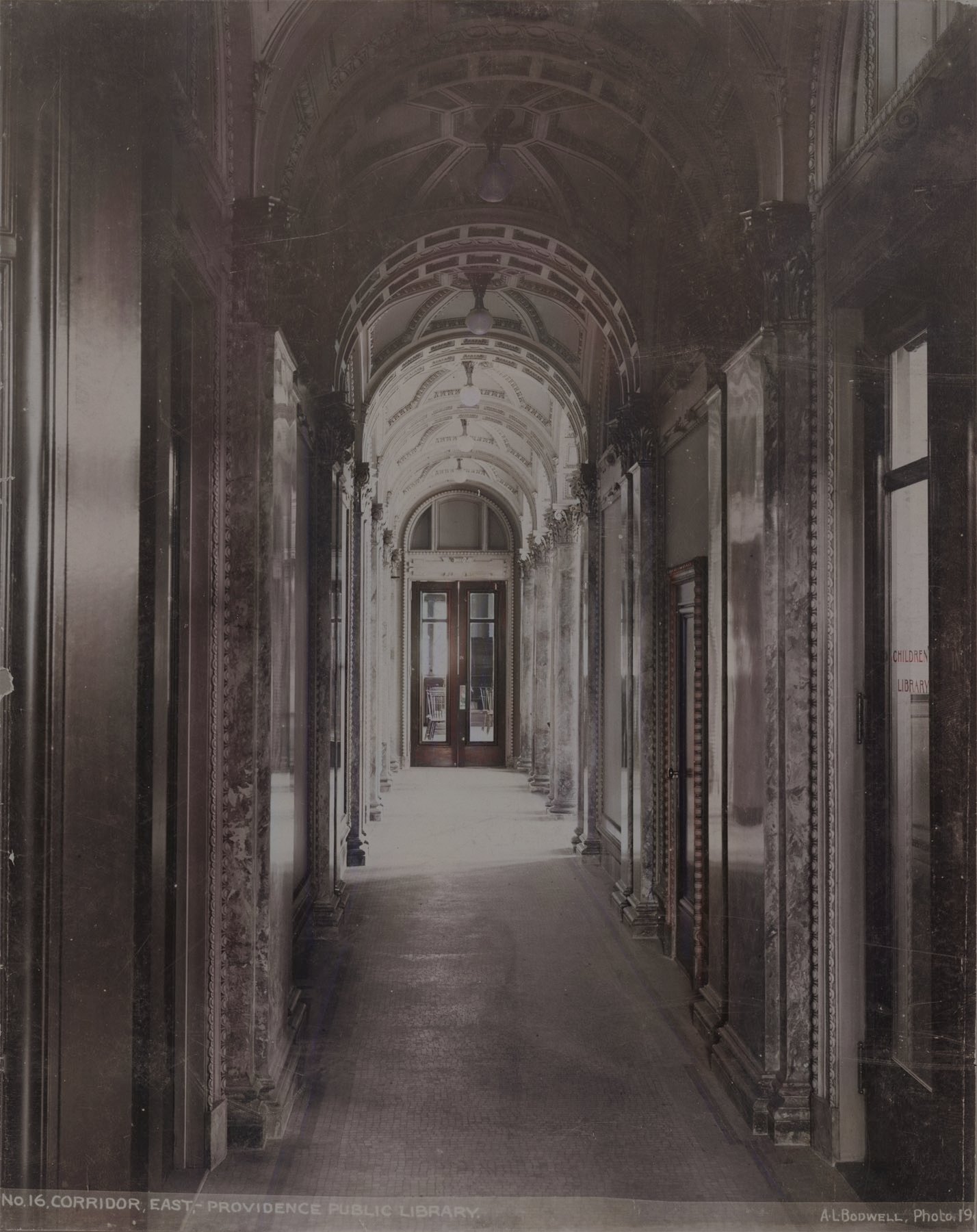
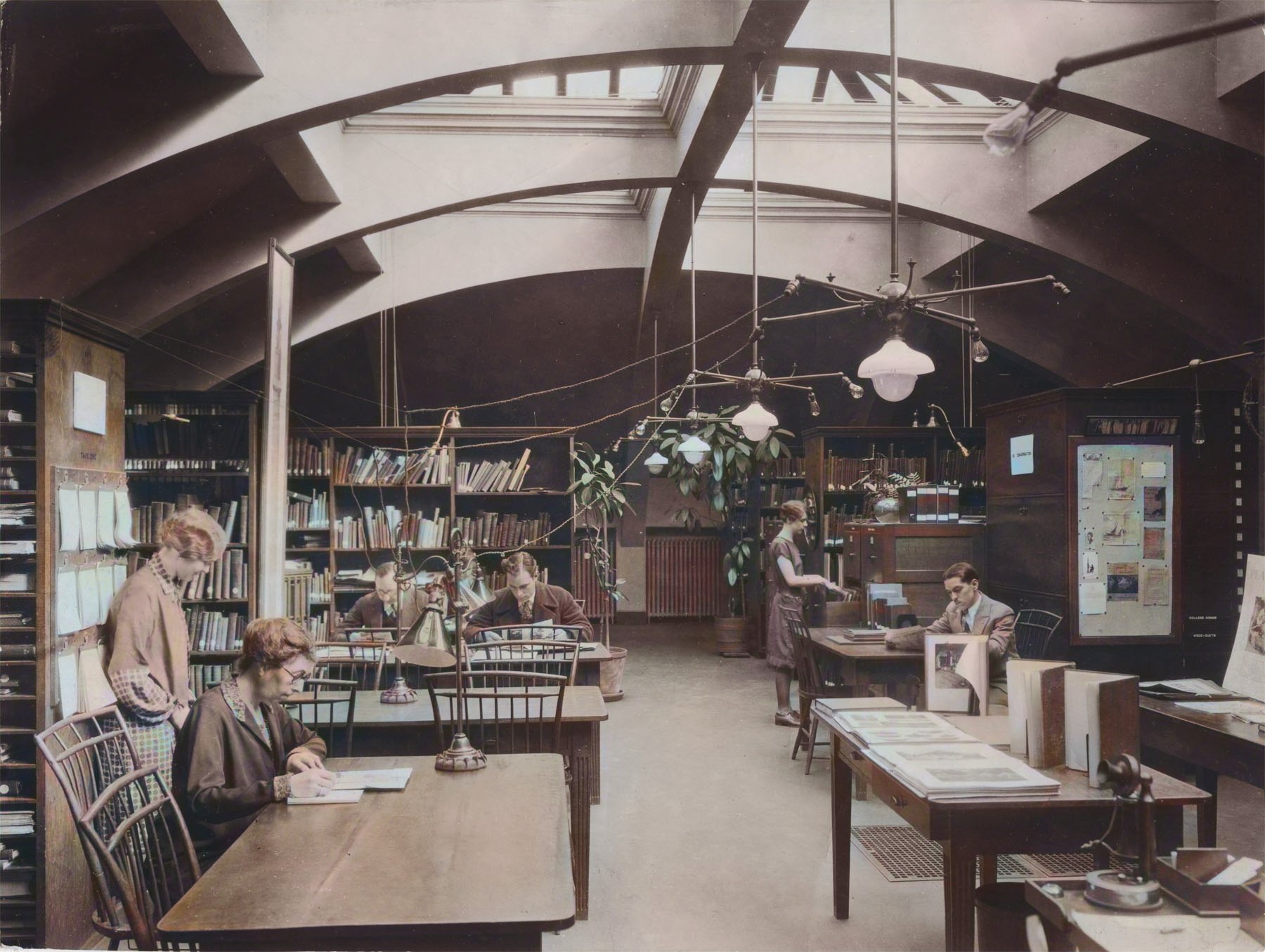
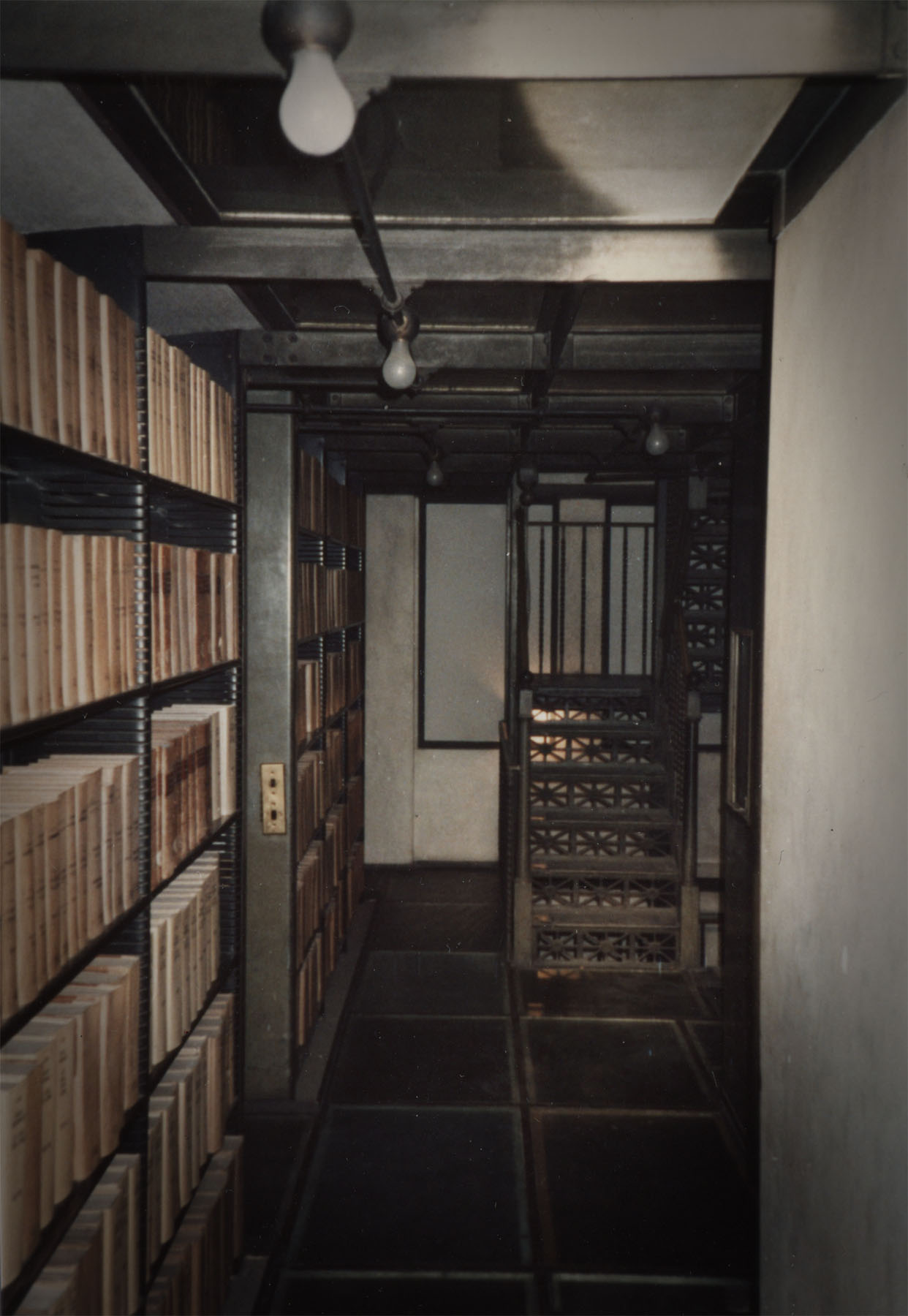
‘Picture postals’ from Lovecraft: a tour of the library

This week, a tour of the library. Not Lovecraft’s own and very large home Library, sadly. But rather the Providence Public Library which he had regularly visited and used since childhood. The following pictures of the Library are from somewhat disparate dates, and the library departments were moved around somewhat over time. But this is basically as he knew the building and its various service desks and rooms.

The entrance steps.

The information desk.

The card-index catalogue system, a primitive paper search-engine for book titles and topics.

Delivery desk, at which one might wait for a book that was not on the open shelves.

Trade and other local directories.

Reference reading room.

A reading room with newspapers.

A magazines and periodicals room, later — perhaps even the 1950s?

A dark staircase, with a watching window.

An upper corridor. Ahead may be the lecture room, while to the right we see a label painted on the glass door for “Children’s Library”.

Children’s rooms. A Lovecraft-alike boy is second from the right, at the front.

Lecture room.

A quiet study room.

The art room and skylights.

Meanwhile, down in the basement… ‘the stacks’. Lovecraft had a special ‘stacks’ library card and appears to have been permitted to descend. This picture may be much later, perhaps the late 1950s or 60s.

All from the Providence Public Library collection, with all but the final picture newly colourised.

Ripped and torn

At the foot of the Brown repository letter in which Eddy recalls a “Poe Street” encounter on a walk with Lovecraft (see this post for details) is Winfield Scott’s additional and almost indecipherable pencil note…

Dana – says HPL would buy pulps in [?] [?] then tore off the [?] sexy-lurid covers because [“under neath counter”?]

Dana’s was the local bookshop which took the remainder of Lovecraft’s Library shortly after his death. We have no evidence of the cover-tearing in Lovecraft’s extant set of Weird Tales, as I understand it. But perhaps Dana encountered runs of other pulps in his posthumous consignment of the less desirable items. As a more upmarket book-seller, unfamiliar with New York news-stand practices with pulps, he may not have realised what could have happened to these magazines.

News-stand sellers of pulps, and later the cheap paperbacks in the 1950s-70s, were supposed to send unsold copies back to the publishers to be pulped. But that was impractical. The actual practice was to mail sheafs of the ripped-off colour covers, as proof of the unsold and supposedly un-sellable copies. Thus would the magazines be ‘returned’ for credit.

Was this practice present in New York as far back as the 1930s? Perhaps a pulp history expert can fill me in on that. But in the meantime, here is a tantalising Google Books snippet from The New Yorker, Vol. 12 1936…

So it does seem that flea-market re-sale of coverless copies was going on, at least in New York City. And on a scale large enough to make it profitable for the junk-men to invent machines to rectify the magazines. The process for lesser pulps sounds like it would have been…

1. Covers returned for credit on the next order.
2. Coverless copies locally given away to junk-men as worthless ‘pulp’.
3. The junk-men quietly pass these into the New York flea-markets.
4. The magazines spend a few weeks on the stalls at ‘three for a nickel’.
5. The junk-men return to the stalls, take away the bundles of the unwanted dregs as pulp. They may even have become ballast on ships to England.

That could help explain why Lovecraft evidently had coverless pulps among the lesser parts of his collection, as disposed of to the Dana bookshop. He and his circle could have been acquiring them in this way in New York City.

Fungi From Yuggoth review

Neale Monks reviews the new Fungi From Yuggoth — An Annotated Edition, for SFcrowsnest. The new paperback…

represents astonishing value. There’s tons here to appeal to even the most casual Lovecraft fan, let alone the more serious student of weird fiction or 20th century poetry. ‘Fungi From Yuggoth’ is an astonishingly beautiful sonnet cycle and Schultz has done a stellar job here providing its complete context. … Highly recommended.

I was going to promote it for the latest ‘Plants’ issue of Digital Art Live, but sadly it got crowded out by a game I found at the last minute (Strange Horticulture).

Fish city

This post follows on from yesterday’s post on the Voluminous podcast (a new partly-unpublished letter, in which Lovecraft visits the Italian quarter of Providence). Also from my recent ‘Picture Postals’ post (Lovecraft and the farmers market)

I see that the Online Review of Rhode Island History has a new first-hand memoir of “Growing Up Italian in Providence in the 1940s”, in which Dr. Ed Iannuccilli’s evokes his everyday experiences of the city as a boy. Especially the fish-man. Friday was then still a big traditional fish-eating day, and it was brought up from the harbour and sold on carts…

Streetlights were suspended from the middle of the poles, with circular, scalloped metal “hats” covering the bulbs. When the lights were lit, a yellow haze emanated and created dancing shadows on the street below. They were our summer-evening clocks. […] The Grocery Man might be making deliveries from his huge truck, a traveling store, followed closely by the fruit peddler. On Fridays, the Fish Man appeared, blasting his mouth horn with the message that his truck was filled with a new catch. […] He stopped his dark green panel truck in the middle of Wealth Avenue. Laden with dead fish covered in ice, it had open sides with canvas rolled to the top and tied with thick rope, a Fish Man’s knot, I guess. Firm fish of all kinds were on display, neatly arranged, right side up, eyes open, in wooden sections fitted to the bed of the truck, a roof above protecting the catch from the hot sun. Fillets, shellfish and lobsters were stacked separately. A scale, secured with a chain, hung from a hook screwed into the top rear “two by four.” There was dried blood along the sides of the truck. Melting ice water dripped from the tailgate. The tires were low, burdened with a packed catch. And there was the aroma, fishy the only way to describe it… musty, damp and salty also.

One then vaguely imagines that the fish-detesting Lovecraft might not have been out much on Fridays, if the streets of his own section also had fish-peddlars. Not even if these had a retinue of local cats pattering along behind.

Also, I wonder if Providence had a wholesale fish-market? I’ve never heard of one, but I imagine a growing sea-port city that size must have had one. And again, I imagine Lovecraft stayed well away from it. Which would give Lovecraftians a negative data point, in terms of ‘Lovecraft was unlikely to have gone there, or half a mile around it in summer’.

Anyway, I see that Dr. Ed Iannuccilli has a complete new book of such 1940s city memories. Which may interested those who want to learn more about the everyday patina of the city as it might have been encountered, more or less, in Lovecraft’s final decade of the 1930s.

Doorways to Lovecraft’s world

The latest Voluminous podcast reveals part of a Lovecraft letter formerly only partly published, and now part of the “recently acquired letters from HPL to Frank Belknap Long”. These are now being prepared for annotated print publication.

The scan being beautifully read on the podcast mentions “the Mason collection of Rhode-Island Colonial Doorways” which numbered in the “thousands”. Thankfully the collection has not perished and, in the Voluminous show notes, we find that…

Somehow the Providence Public Library came into possession of the George Mason photograph collection

This is now online under Creative Commons, albeit with only 509 items rather than the “thousands” Lovecraft observed. Possibly the collection ranged more widely than Rhode Island, though, and others survive but are not scanned because not local. Lovecraft seemed to imply the collection had such a breadth, when he remarked how it made him aware of the unseen colonial treasures of Philadelphia. Perhaps the various relevant parts of the collection were disparate to other local collections, and Providence only kept their pictures.
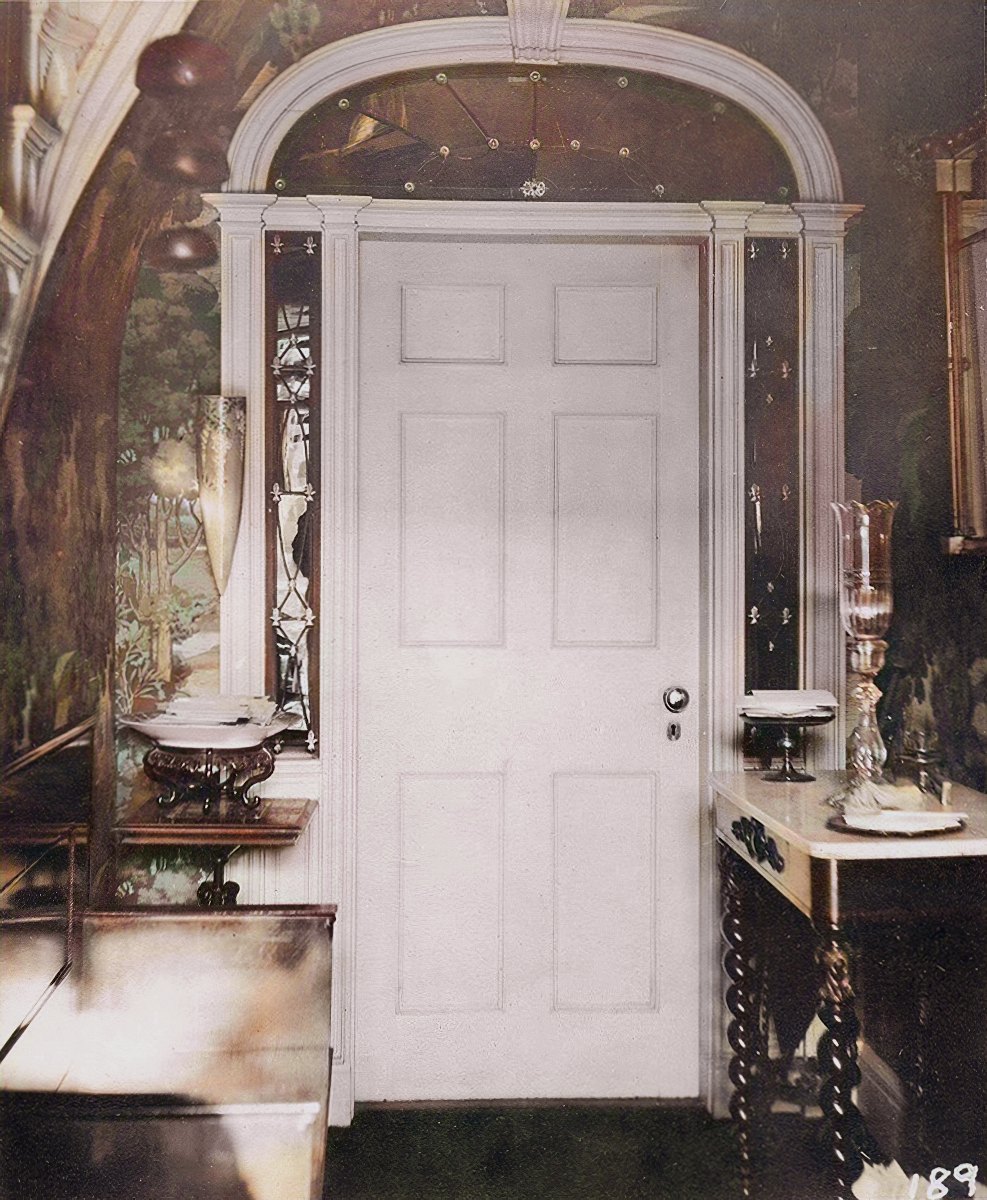
1233 Westminster Street, Providence.

The Voluminous letter also has vivid accounts of two urban explorations of the city with Eddy, in search of more decrepit colonial relics. One of these walks is known from Selected Letters Vol. 1, and is in the Morton letters in almost identical form. Possibly also the Moe letters, as I recall. But the letter’s account of a slightly later visit to the Italian quarter seems less familiar. This also has a remark from Lovecraft which indicates that, though he may well have been taking night-walks before late 1923, these had not ventured down into the industrial slums of the south-west waterfront or up into the Federal Hill area of the city. The latter was somewhat dangerous for a non-Italian to enter, especially in the bootlegging era.

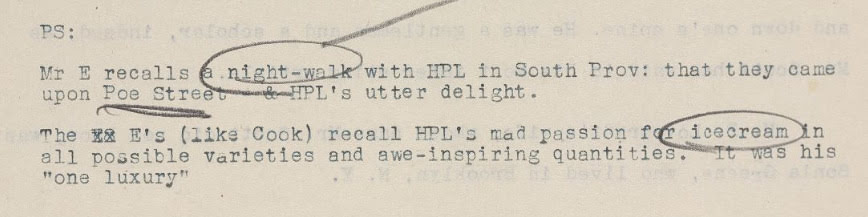
There is a letter in the Brown Digital Repository which adds just a touch more to the Voluminous letter. In 1943 Muriel Eddy states that her husband recalled a “Poe Street” being encountered on these walks.
The new Voluminous letter shows Lovecraft enthusing over a “Gould’s Court” there, which he imagined in its “gnawing hideousness” as “Ghoul’s Court”.

But he does not mention Poe, which one might have expected him too if he and Eddy had got down that far on that walk — as there is indeed a waterfront Poe Street far down on the west side. But probably there were multiple Lovecraft-Eddy expeditions that pushed down into that area, and Poe Street was likely encountered after the first visit and the initial enthusing letters to Long and Morton. Hence, no mention of Poe. This supposition can be confirmed by showing that in the 1970s city native Henry Beckwith recalled that “Ghoul’s Court” was…

on Gould Street, just northwest of Pine Street between Claverick and Chestnut Streets

This is the site of the current Beneficent House complex, and quite a way away from Poe Street. It thus puts the “Ghoul’s Court” spot directly back from the bookshop of ‘Uncle Eddy’ and just a little south. I’ve just had a Lovecraft Annual essay on ‘Uncle Eddy’ accepted (for 2022 or 2023, not sure which yet). At one point in this I briefly follow Lovecraft into this area, and so I’m glad of this additional confirmation on location.

‘Picture Postals’ from Lovecraft: Blackstone Park

This week, not postcards but more postcard-like gems from the collection of the Boston Public Library. Here we see Providence’s imminent Blackstone Park, circa the early 1860s. The pictures were in a brochure proposing the establishment of the shore-front park. Blackstone Park was indeed established in 1866, but 40 years later it had become a delight for small boys — since the city had allowed it to fall badly… “into disuse and neglect by the early 1900s”. This was when the young free-range Lovecraft knew the place as a boy, and thought he glimpsed flute-playing fauns in its dappled depths.

I’ve colourised the picture. We have to imagine another 40 years of growth added to this, and trees consequently much larger above the grassy rides and rills. Perhaps some of these watery “brooklets”, as Lovecraft called them, were by then dried up in summer. Since drainage of College Hill and the adjacent shore-line was changed, as the city developed and the local ravines were filled in or blocked.

Here is Lovecraft on the Park, writing in 1918…

Scarce a stone’s throw from the house lie the nearest parts of that beautiful rustick reservation known as “Blackstone Park” — wherein I have been wont to wander some twenty or more years. Here Nature unadorn’d displays a multi-plicity of agreeable phases; ravines, groves, brooklets, thickets, & Arcadian stretches of river-bank — for the park borders on the wide & salty [river] Seekonk. … How beauteous indeed is untainted Nature as beheld in so idyllick a spot as Blackstone Park! … I think this park would explain why such a born & bred town man shou’d possess such a taste for rural musings & Arcadian themes!

Lovecraft occasionally took favoured friends there. Here he is in 1927…

the next day we [he and Cook and Munn] lounged about the Blackstone Park woods beside the Seekonk — agrestick haunt of my earliest infancy, and true genesis of my pastoral soul.

And in the mid 1930s he was sitting on the banks of the Seekonk… “Almost every warm summer afternoon” or else he took a short trip up in the “the fields & woods north of Providence”.

Below we see, from the same Boston collection, Blackstone Park’s grassy water-meadow. Most likely this is the “meadow” marked on one map as being roughly in the middle of the park, and located back across the road from the Boat Club house.

Above we also see the edge of the “meadow” area in winter flood, in the context of the Boat House and the shore road. The river Seekonk often flooded over, and thus the meadow would have been seasonally a boggy salt-meadow in its lowest section. It’s quite possible that this Boat House was the point from which the young Lovecraft set off on his solo rowing expeditions on the Seekonk. It was then a difficult and somewhat dangerous river to be out on in a small boat. Yet he became skilled enough with his boat and the river currents to land on the mud-squelching “Dagon”-like ‘Twin Islands’, so rarely shown on maps. Here is an exception.

This was the landscape of water and mud and washed-in sea-things which stirred his early nightmares of a drained Seekonk, and to which the genesis of his “Dagon” can be traced.

Modern seekers can note the boathouse and the site’s current drainage channel here on the right of the current map. It’s my recent composite of a 1972 bird’s-eye picture I found and a modern outline map of the Park. By 1972 the trees were crowding in. If the river’s salty winter over-wash has since been kept out, then I’m guessing they may have now fully colonised the old meadow.

Book bits

Some books bits that don’t seem to justify a post on their own.

The European Conservative journal has a free review-article on the “Afterlife of an American Pulpster”

Two recent American novels feature not the vivid characters who were products of R.E. Howard’s imaginative pen, but fictionalized versions of the man himself. Teel James Glenn’s A Cowboy in Carpathia was published in 2020 by Pro Se Press. David Pinault’s Providence Blue appeared in 2021 from Ignatius Press.

hplovecraft.com now has the table-of-contents for the third book in The Robert H. Waugh Library of Lovecraftian Criticism. Looks tasty. The entire three-volume set will weigh in at 900 pages.

Taskerland reviews, as a Lovecraft newbie daunted by I Am Providence, the shorter H.P Lovecraft: A Short Biography. This being S.T. Joshi’s 100-page whistle-stop abridgement.

S.T. Joshi’s Miscellaneous Writings and his 1980s Journals have been published.