‘Picture Postals’ from Lovecraft: Cleveland, August 1922

This week’s ‘Picture Postals’ is part four of four, of a few notes on the new expanded edition of the Galpin letters. On page 293 Lovecraft usefully recalls the exact locations enjoyed during his 1922 visit to Cleveland. This was a very happy time for him as he was effectively released from his long hermitage. The addresses are…

1537 E. 93rd St. [Loveman’s family home], 9231 Birchdale [Avenue, Galpin’s family home, quite near to Loveman], Wade Park, Clark’s Lunch [north side of Euclid Av.], Taylor’s Arcade [south side of Euclid Av.], Eglin’s [bookshop]


I found a good picture of a Clark’s Lunch on the central street called Euclid Avenue, and dated 1922…
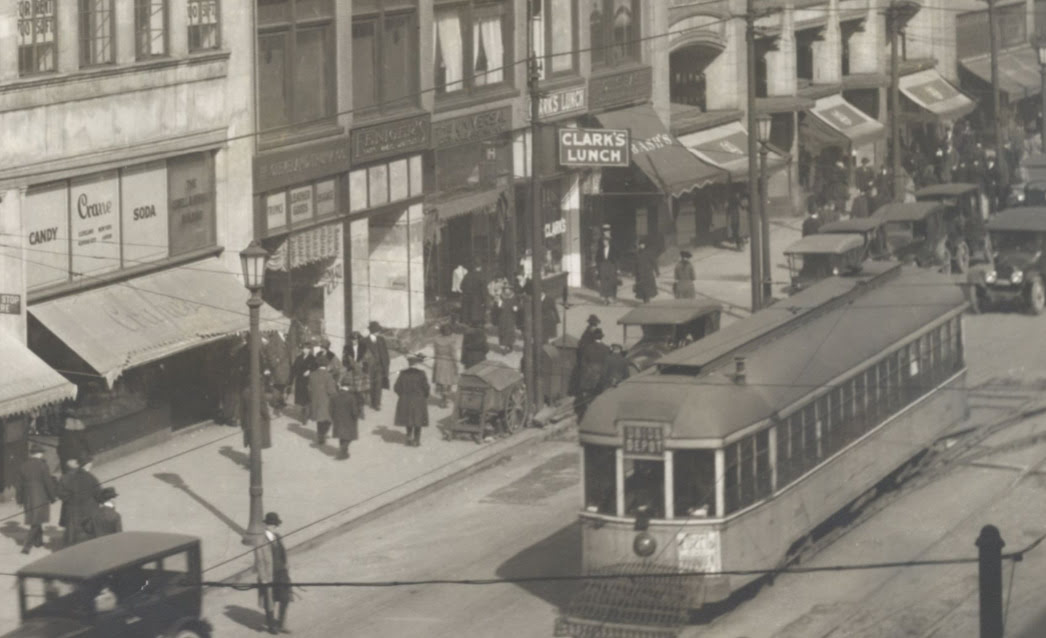
Galpin met Lovecraft at the railway station and immediately took him to eat at a Clark’s Lunch, before they then went back to Galpin’s family home. This same Lunch was where he and the boys mostly ate their ‘meals out’ after that, as Lovecraft told his aunt in a letter.

It’s pleasing to get a photo of the exact date, although the heavy coats and hats in the picture suggests a bright-but-chill springtime rather than the early August heat of Lovecraft’s extended and fatefully cheering visit. However, is this the Clark’s Lunch? The people look rather too upmarket and the hole-in-the-wall too small. Were there other branches? There were. The 1920 American Legion Convention booklet usefully yields the list of the city’s branches…
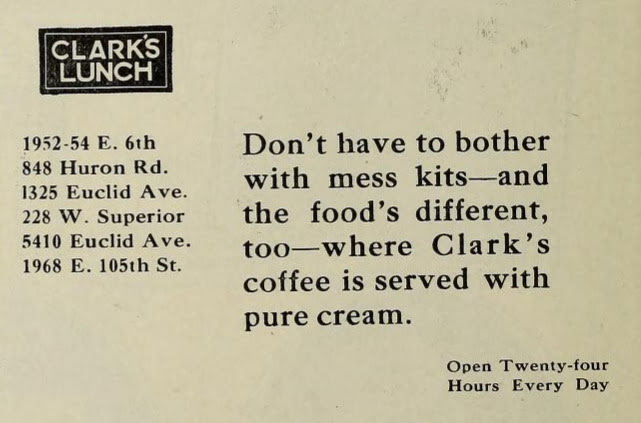
So, there were two Lunch’s on Euclid. And we now know that the branches were open 24 hours.

But which Lunch is shown? The one at 1325 Euclid or at 5410 Euclid? Enough of the surrounding architecture of one remains to be seen today on Google Street View, and thus the above picture can be confirmed as the central Lunch at 1325 Euclid.

However I’m still not entirely certain, as there were evidently other branches. Indeed there were 15 branches in the city by the 1950s. So let’s look more closely at the place of arrival and see if that helps. Lovecraft was on the Lake Shore overnight sleeper train from New York to Cleveland, seeing the Catskills in the distance as he travelled along the Hudson Valley (he would later that year set “The Lurking Fear” in the same mountains). In 1922 the Lake Shore sleeper drew in to Cleveland at the old and decrepit New Union Depot. This had been renovated in earlier decades, but was still then blighted by “years of accumulated soot and ash which had made the building into a dirty eyesore” according to the railway historians. In 1922 it was all-but defunct. The city’s long-planned gleaming station was still just bare cleared-ground at that time, and would only open in 1930. Thus we can be sure that Lovecraft arrived in the city at the old and decrepit New Union Depot. The question is then, which was the nearest Clark’s Lunch branch for the station?

Sadly, it’s not the one seen above at 1325 Euclid. Pity, but the situation did look rather too posh. The nearest to this station would have been the branch at 228 West Superior, on the west side of Cleveland Public Square and about a quarter mile walk from the New Union Depot. There was a large business college at 236 West Superior, and an athletics store at 226, with together suggest a student-ish atmosphere for the Lunch. The food appears to confirm this student-y supposition. The food there was found to be “humble” and “inexpensive”, as Lovecraft told his aunt (Selected Letters Vol. 1., p. 191).

Unfortunately there don’t appear to be vintage pictures of that stretch of West Superior, and this row has since been cleared. It has long been a parking lot called Jacob’s Lot…
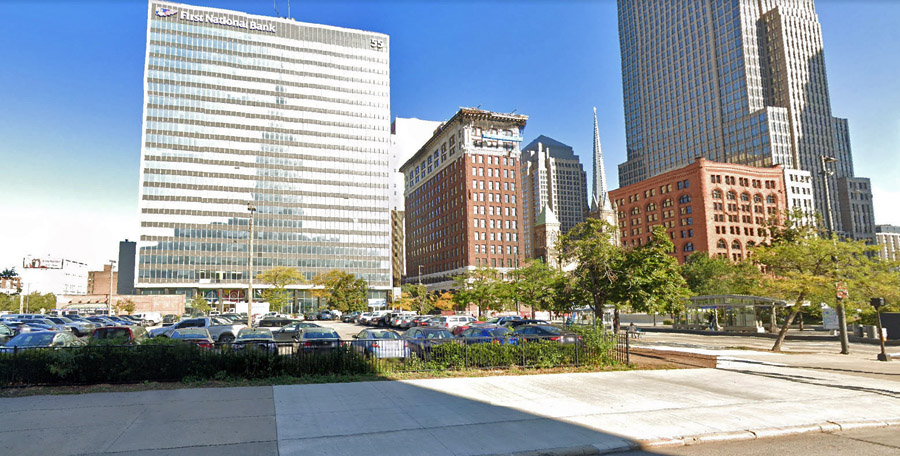
But the local press report that by 2024 the car park will be gone. From the site of Lovecraft’s Lunch will soar a new Sherwin-Williams Corp. mega-tower skyscraper. Suitably enough, for a place where artists and writers such as H.P. Lovecraft and Hart Crane once met, the company is ‘America’s Paint Company’ and makes paints.


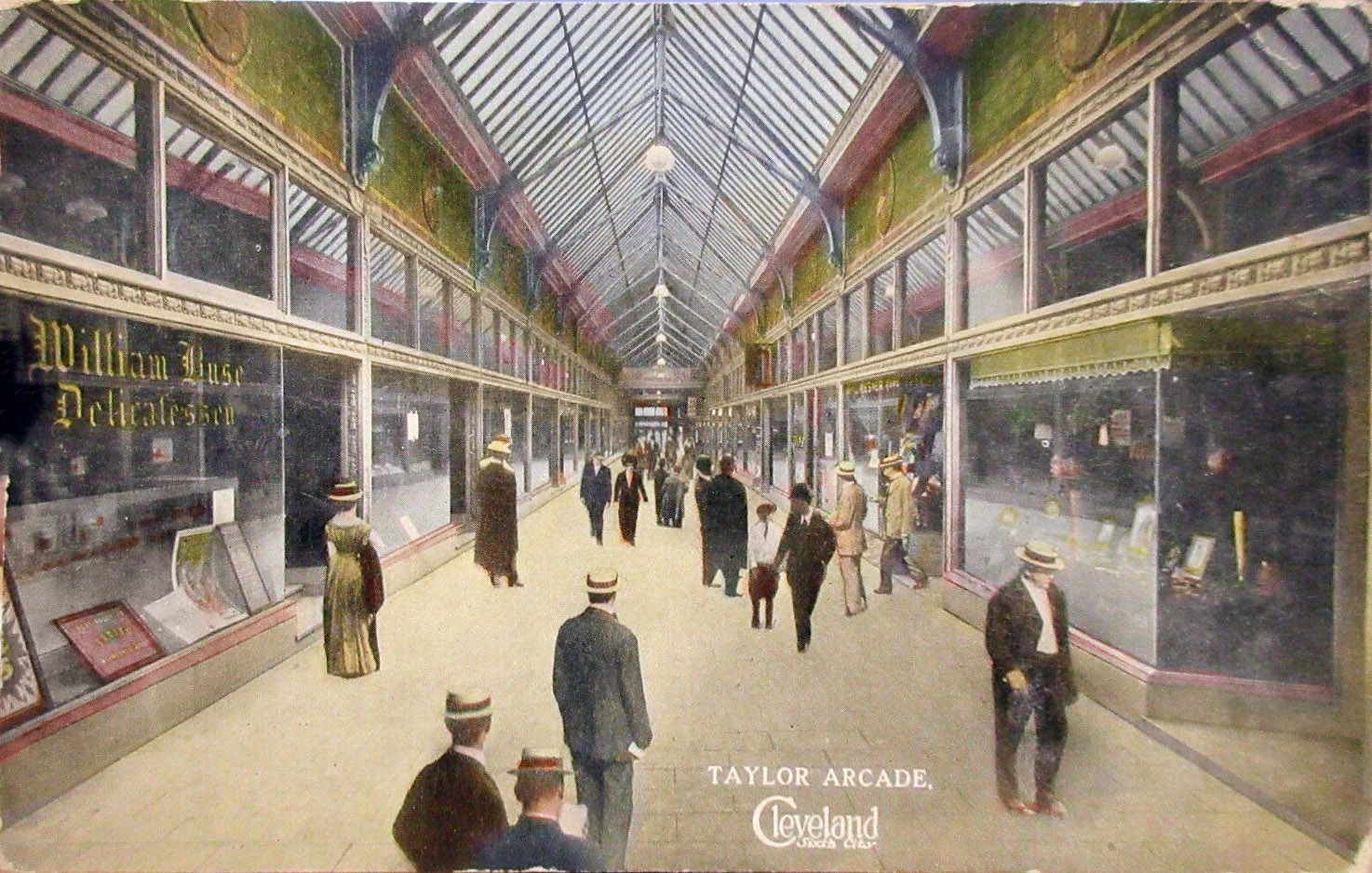
What of Taylor’s Arcade? This was on the south side of Euclid Avenue in its central run, and is here seen perhaps circa 1912-ish? A decade before. Not to be confused with another and far grander wrought-iron arcade in the same city, which still exists.

What of Wade Park? This had a large zoo with lions and polar bears and suchlike, and an art museum, as well as fine and expansive parkland with lakes. Lovecraft tells his aunt that he toured the “Cleveland Art Museum” there. Aka the Cleveland Museum of Art. This was housed in a long low classical building.
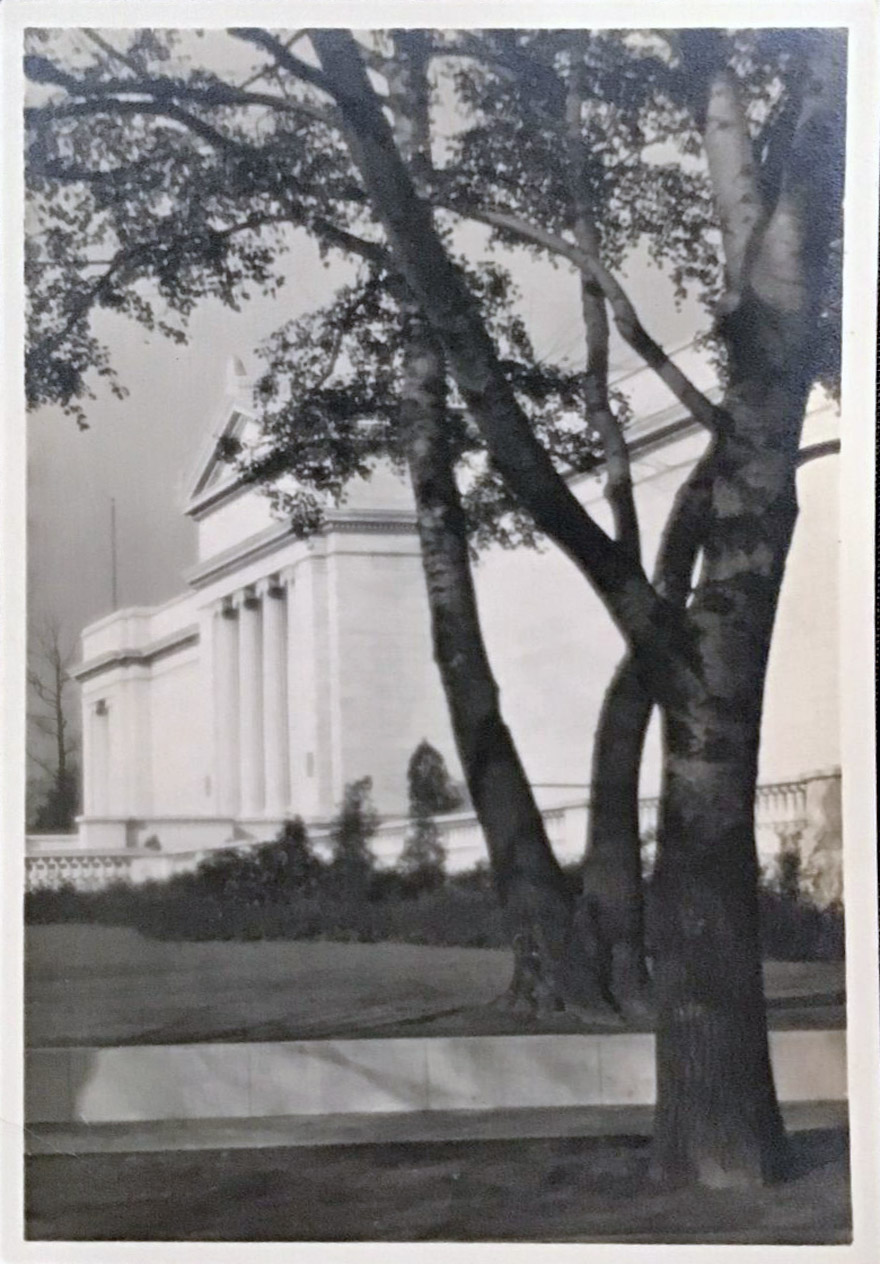
The museum displayed fine art and crafts from all eras and Lovecraft would have seen full armoured and mounted medieval knights, “Carthage” by the famous British artist Turner, Japanese porcelain, French paintings, and far more. Also the following approximate emulation of a Moorish-style courtyard garden, which appears (from another companion card) to have had a further small garden in a more eastern style with a central Buddha.
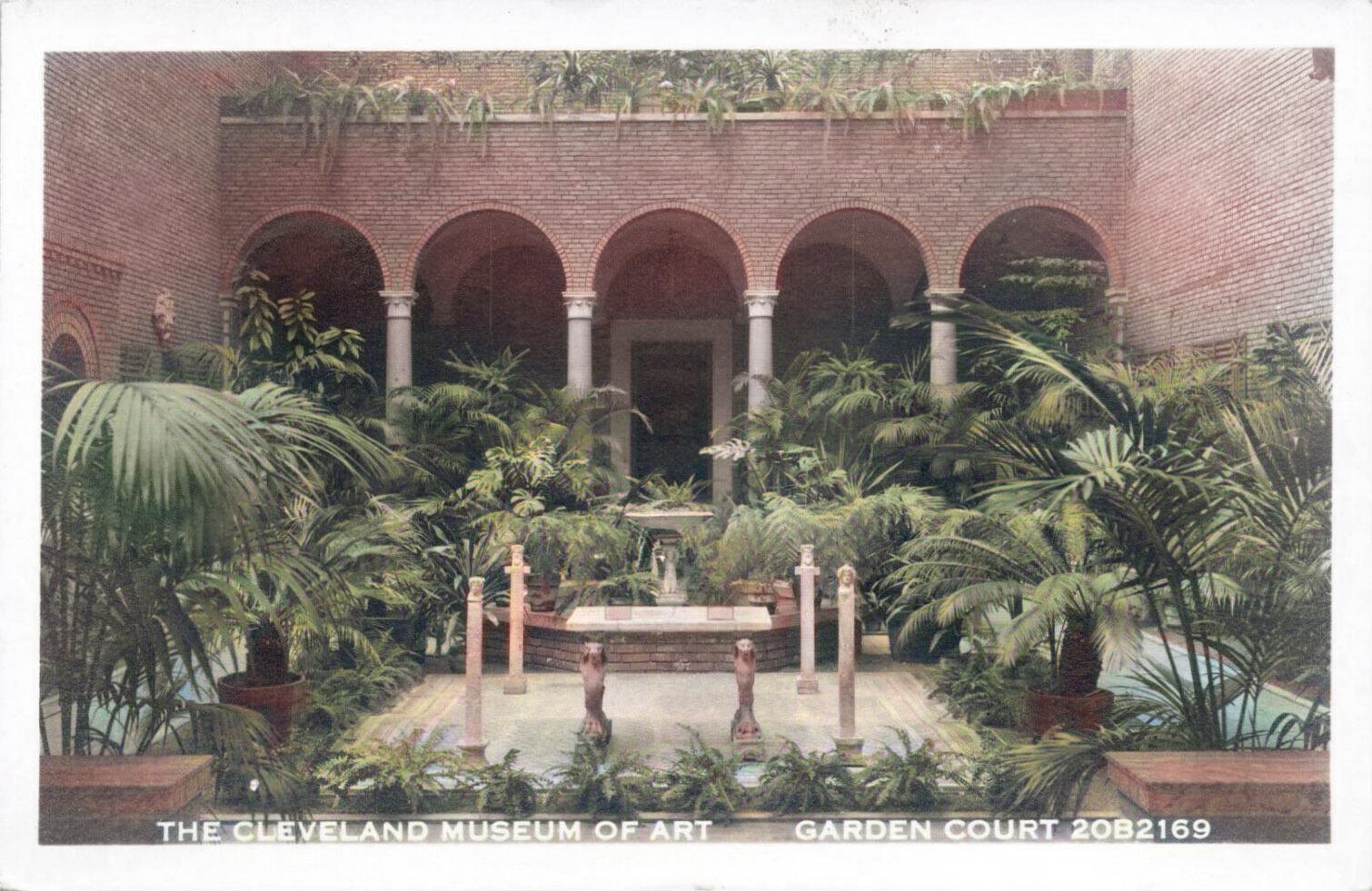
The heat of early-mid August 1922 was very heavy, and thus no doubt much to the liking of both the garden and Lovecraft. Strong heat always pepped him up. He also found that he needed to blend in more with the boys and thus he divested himself of his usual hat and stiff collar…

Can you picture me vestless [i.e. without a waistcoat], hatless, soft-collared, and belted, ambling about with a boy of twenty, as if I were no older? … One can be free and easy in a provincial city … What I need in order to be cheerful is the constant company of youthful and congenial literary persons. (Selected Letters Vol. 1, p. 293)


As for the bookshop, “Eglin’s” is the form elsewhere in Selected Letters which confirms the spelling. Also confirmed is that some of the shop’s after-hours reading events were quietly rather gay at that time (as the confirming spelling occurs in the context of Lovecraft’s comments on Gordon Hatfield and Loveman). The journal Phantasmus for 1924 then gives the address “Eglin’s Book Store, 824 Superior Ave.” and the 1925 American Book Trade Directory confirms. By March 1930 the sales-outlets list of The Rosicrucian mystical magazine shows it had moved down the Avenue to 806. Today its old site at No. 824 is a 4,000 sq. ft. modern art gallery, seemingly shelled from the original building and with some of the old frontage still intact.
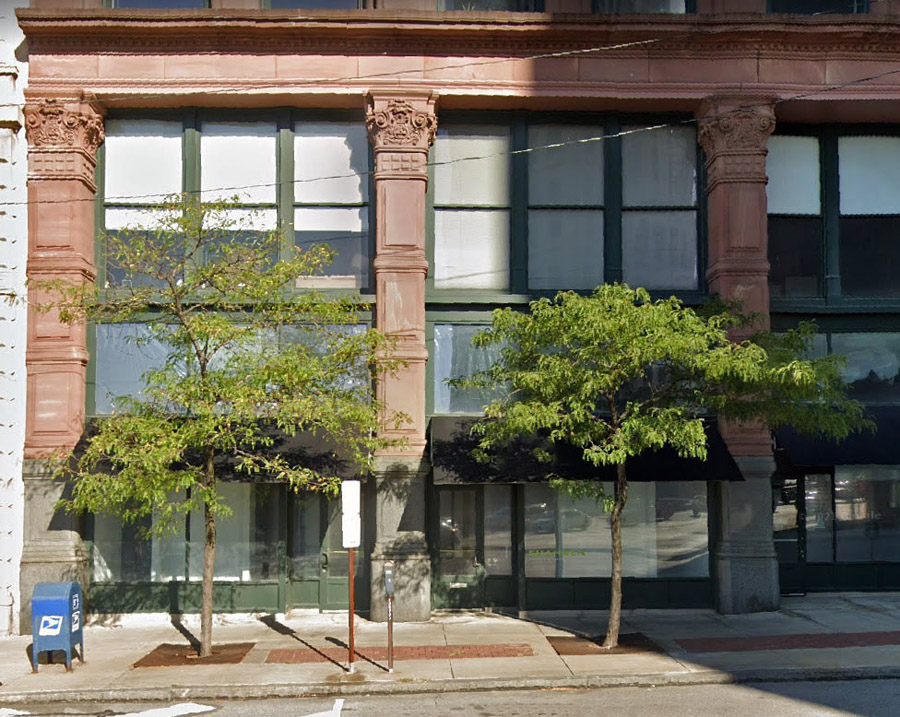
No. 824 is about a quarter-mile west of the Clark’s Lunch branch at 228 West Superior (see above). This helps to very strongly confirm the likely branch at which Lovecraft, Loveman, Galpin and the Eglin’s crowd ate in 1922. Given the “humble” and “inexpensive” fare, from the branch of a growing and reliable 24-hour chain, it would have been the natural choice as a local eatery.

Loveman would later work at Eglin’s as a bookshop assistant, but when he lost the position he followed the poet and his sometime-lover Hart Crane to New York City. Lovecraft later followed Loveman to New York, and the rest is history.

Industrial Trust revived

The Providence Architecture Here and There blog reports on the possibility of “New life for Industrial Trust building?”. This iconic central building having been vacant for a while now. Sadly it now looks set to become apartments, rather than the towering multi-floor H.P. Lovecraft & Mythos Madness Museum that the city should have enjoyed for the last thirty years.

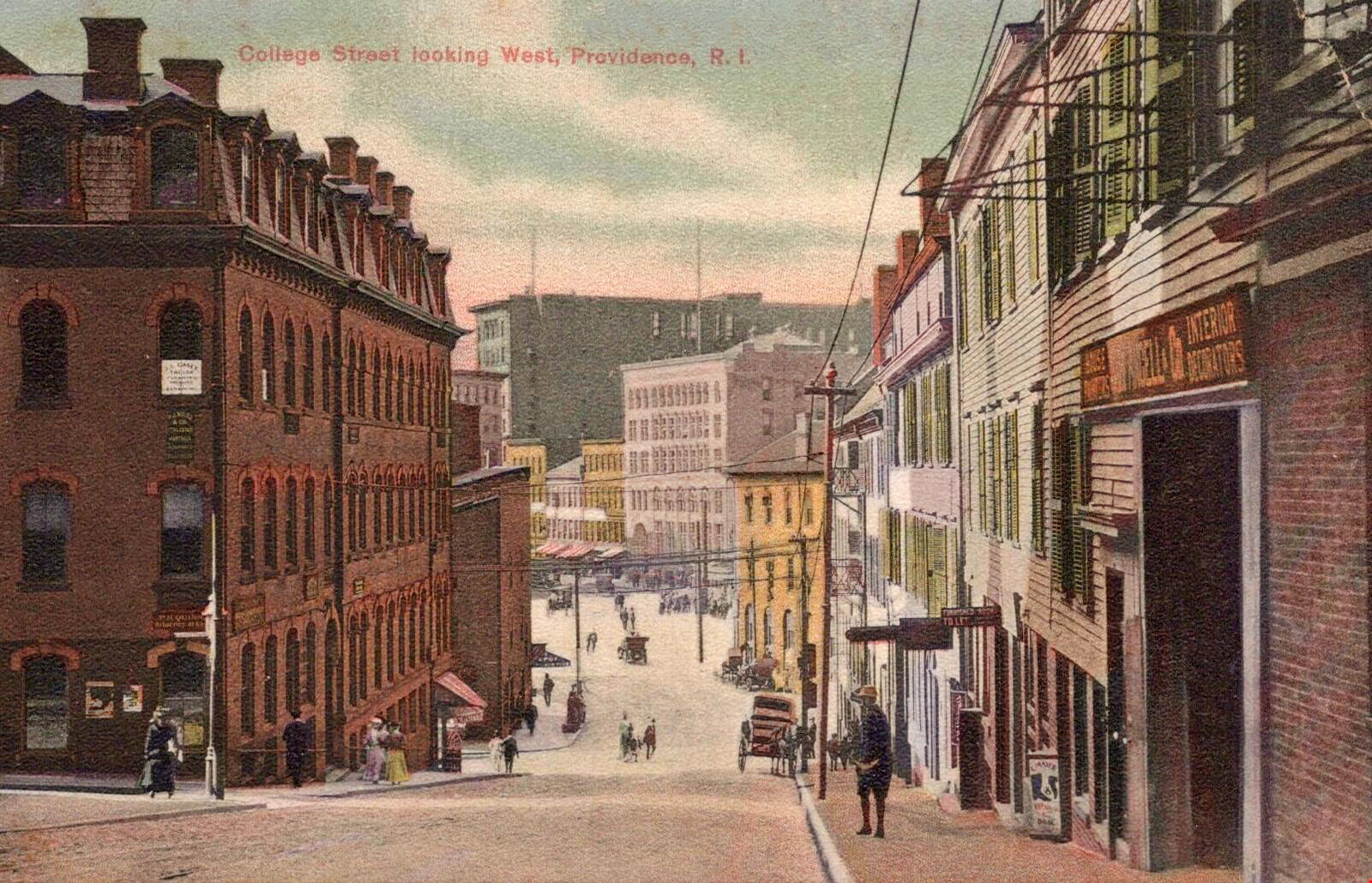
The article includes much local insight into the political machinations (of the sort that always seem to have dogged Providence), but also a very nice tip-off on an old Providence Journal photo of the building under construction in 1927 as seen from the foot of College Street. This inset picture quickly led me to the full picture, another ‘foot of Lovecraft’s College Street’ picture I had never seen before. I’ve here colourised it…

Compare with the same scene some 20 years earlier, as seen in another newly-found picture.

Final Reckonings with Bloch

On SF Crows Nest, Eamonn Murphy has a new long review of Final Reckonings: The Complete Stories Of Robert Bloch (Volume 1)

This first volume of ‘The Complete Stories’ is widely available for about £10 or less on various sites and that’s a bargain. For some reason, the next two volumes are rarer and much more expensive.

Also, over at The Silver Key a new review of the new Robert E. Howard Changed My Life.

‘Lovecraftian People and Places’ now on Amazon UK

I’m pleased to see that Ken Faig Jr.’s new book Lovecraftian People and Places is now listed on Amazon UK and dated there “12th April 2022”. Over at Hippocampus the page for the book usefully notes that… “All essays have been revised for publication in this collection.”

Incidentally I see that Lovecraft Annual No. 15 (2021) is currently half-price at Amazon UK. It’s still waiting for my review here. I read ‘a few essays in’ last autumn and then put it down. My interest in Lovecraft tends to be somewhat seasonal, strongest in May-September. I’ll have to re-start the 2021 Annual reading sometime before the summer of 2022 comes to an end. I’m pleased to say that editor Joshi has accepted an item by me for a future Annual, and another for his Penumbra journal.

Shots Around Providence

With thanks to Ken Faig Jr., a link to the new Shots Around Providence (1930s-1940) on YouTube. Via the Historical Society, which has kindly placed the amateur film online.

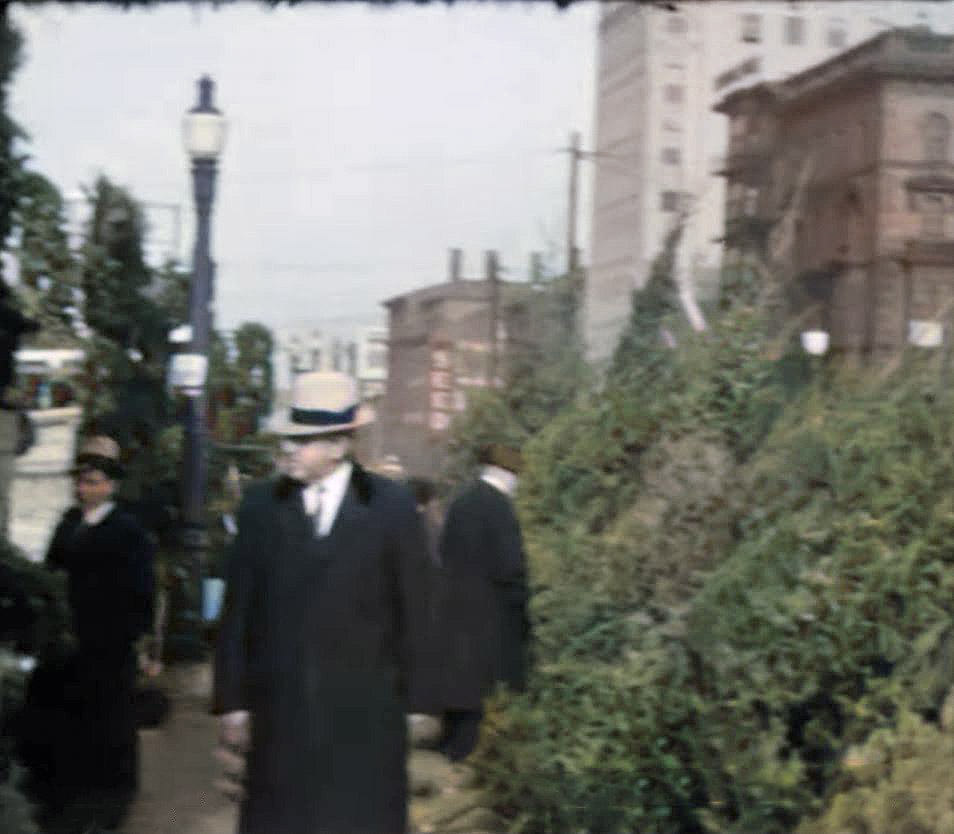
In one scene we see a Lovecraft-alike man shopping for a Christmas tree. These being stacked around the city’s Market Place fruit-market site on the waterfront in November/December 1934. I’ve lifted the shadows in Photoshop, which are always too dark on such things. I’ve also added a basic colourisation. Contact the Society if you want to give the film a thorough work-over and stabilisation.

I seem to recall that 1934 was the year that Lovecraft — having moved into 66 College St. — surprised his aunt by installing a Christmas tree and then merrily decking it and the halls. A family tradition that had long been in abeyance if I recall rightly. If it wasn’t that year, it was likely the next.

Notes on the Galpin letters – part three

Part three of four, of a few notes on the new expanded edition of the Galpin letters:

* Lovecraft’s childhood barn was “razed” in 1931 (p. 272) having become rotten and fungus ridden. He puts an age-date on the period in which it formed his playhouse, age 10. Which puts the disposal of the carriage-horses at or before 1900. (p. 272).

* The 1932 eclipse of the sun is described in detail on page 274, with some comparative reference to the eclipse of 1925.

* He cogently summarises his attitude to emotions and his ‘what the heck’ approach, in paragraphs at the foot of pages 278 and 279.

* He notes the “mild winters” in 1932/32 (p. 283), 1932/33 (p. 288), at a time when he had not yet moved into 66 College Street. The move to the new house may well have saved his life, since 1933/34 was a very cold winter and was sometimes at “seventeen below” zero (p. 305). But by then he thankfully had the 24-hour steam-heat from the neighbouring Library boiler. At No. 66 he also enjoyed the “symphony of chimes” from the various nearby clock and church towers (p. 291).

* Lovecraft found a “surprisingly vast audience” attendant on a public visit to Brown by the T.S. Eliot to Providence. He notes that Eliot was newly British Royalist / Anglo-Catholic.

* At the end of March 1933 he was about to launch into the revision of an 88,000 word novel, which it appears he completed and for which he was paid $100. “This novel has not been identified” says a footnote.

* He notes various Cleveland locations in August 1922. More on those, with new pictures, in a near-future ‘Picture Postals’ post at Tentaclii.

* He tells Galpin in 1933 that he had twice been mistaken by Canadian strangers as a British man (p. 296). The non-French Canadians presumably being, at that time, more familiar with the British upper-class accent than today.

* He talks of a booklet issued by the city “school department” circa 1933, which presumably formed a guide to College Hill. Since he was pleased that the bird’s eye view on the cover showed #66 and its garden court. (p. 300) Elsewhere he talks of the magnifying glass he used to closely scrutinise such things, and also picture postcards and photographs.

* He gives a long synopsis of a never-written story of his, in a lengthy paragraph (p. 303, also footnote on p. 305 which references Commonplace Book #157). This would have been about the animated ‘Kirby krackle’ that happens behind the eyes when they are tightly scrunched shut.

“It would amuse me if some writer were to build upon my work & achieve a fabric infinitely surpassing the original!” (p. 301). Indeed.

* He did extensive research on the topography and sights of Paris in early 1933, as he had earlier done for olde London (p. 304).

* Belknap Long was a strongly doctrinaire communist by June 1934, but by October had learned to tone it down a bit when writing to Lovecraft (p. 312, p. 322).

* “Had an interesting view of Peltier’s Comet…” late in his life at Ladd. He then still had his own “small glass” [i.e. his telescope], but evidently he has not set it up on the monitor roof at No. 66. He had a fine westward view, and even a door onto the roof. But the general view of the northern sky had an “obstructed nature” as he put it (p. 336).

* Galpin’s lost novel is named, being Murder in Monparnasse (p. 336).

* The de Castro letters are at the end of the book of Galpin letters. Spurred by de Castro’s wayward pursuit of various New Testament figures via ancient Gaul, Lovecraft engages in discussion about the historicity of Christ and the value of Christianity in the modern world (pp. 366-367).

* He recalls he read a biography of Baudelaire circa 1922. The book’s notes suggest there were then two good choices for such (p. 375).

* His phone number at No. 66 was Providence 2044. Which is the title of a future Lovecraftian sci-fi graphic novel, if ever I heard one (p. 375).

* Despite Lovecraft’s reputation for being supposedly unreadable, a Galpin review hails his style in “Arthur Jermyn” story and the Dreamlands tales… “He certainly excels Lord Dunsany in the directness of narration” and has a “beauty of style” (p. 426).

British sci-fi convention programme-books

A big collection of British sci-fi convention programme-books and accompanying advance progress-report booklets, now being uploaded to Archive.org. 134 freely available, so far and the uploading is obviously in progress. Some covers, such as the one for the notorious Novacon 13, have some truly hideous early 80s Rotring line-art. Which spotty young oik could possibly have perpetrated such ‘art’ in this case? Hem, hem… 🙂

‘Picture Postals’ from Lovecraft: Inside the Providence Opera House

I need to get my DAZ/Poser 3D artistry blog back online, so there’s no time today for a long involved ‘Picture Postals’ post this Friday.

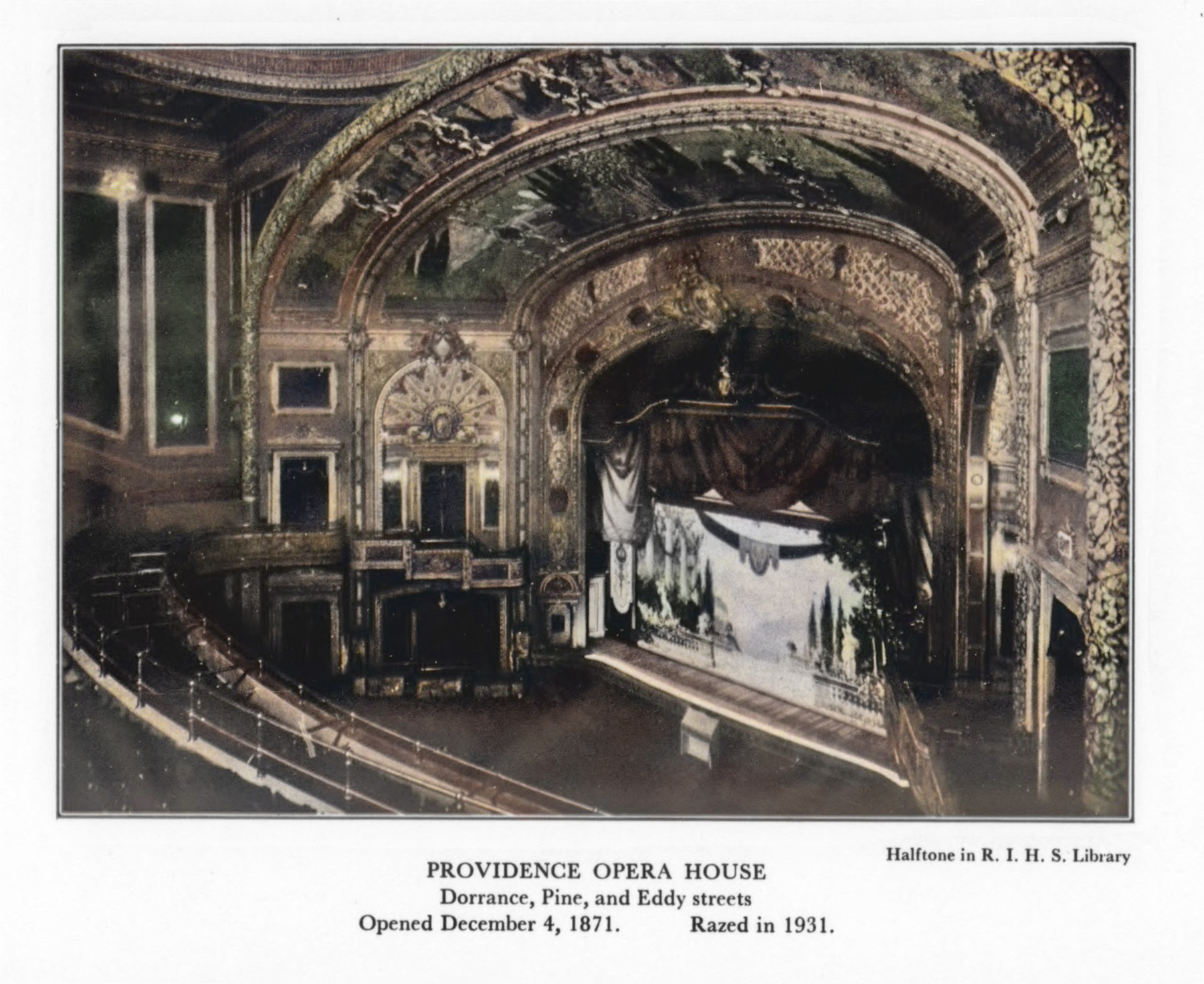
Rhode Island History 1942-2011 is now online at Archive.org from microfilm, with ‘dark but large’ pictures. Here one has been extracted and rectified and given a touch of colour by myself, a rare (perhaps the only) picture of the audience’s view, showing the stage. Presumably made in the late 1920s when the place was under threat of demolition.

This is a rare interior picture (it doesn’t appear to have survived into the current era, to be scanned) of the place which Lovecraft called his second home and the stage from which he “slung” Shakespeare as a youth.

The 1,500 seater was experienced early…

… we were acquainted with Mr. Morrow [Robert Morrow], the lessee & manager of Providence’s chief theatre — The Providence Opera House — (he lived directly across the street) so that it was not thought too shocking to let my aunt take me to see something [on the stage, when a young boy in 1896]” — H. P. Lovecraft, letter to Kleiner dated 16th November 1916.

He later recalled (Letters to Family)…

What a second home the old Opera House used to be to me!

Evidently this was not restricted to boyhood, as he also recalled that he had “slung from the stage” of the Opera House great slabs of a Shakespearean tragedy, given with “vigorous, orotund delivery”. Indeed the full quote, in a letter to Bonner in 1936 (Selected Letters Vol. 5) reveals he had once been out and about at many theatres in the city…

I used to sling from the stage of Forbes’ Theatre, Smarts Hall, Harrington’s Opera House, and the Providence Opera House

That doesn’t sound like a school theatre group ‘show for the parents’. Was he once quietly an actual ‘turn’ on the boards, one wonders?

This is also somewhat strange given his performance at the Boston amateur journalism conference in February 1922 (Selected Letters Vol. 1, pp. 123-24). There he decided to give his banquet speech impromptu rather than from his prepared script, and was thus rapturously recieved as “a born public speaker”. On which he commented…

All of which was rather amusing to me, since I am a hermit who has never before addressed a banquet

He did however note in his letter that he used at least one theatre trick during the speech, with some stock lines delivered and these being…

borrowed from the manner of vaudeville monologue artists

So what are we to make of this? He “slung from the stage” from several theatres, and one has to assume this was to an audience rather than an empty hall. Yet later he appears surprised at his facility with public speaking. I suppose the distinction he may have been making in his mind was between i) large theatre recital of lines from Shakespeare and ii) impromptu after-dinner public speaking with off-the-cuff remarks and tangents. These things, despite having a similar bodily stance, hand-gestures and vocal projections, are probably rightly considered to be different from one another.


Incidentally, I have now started in on a re-reading of the Selected Letters, skipping those I already have in later per-correspondent volumes, and I’ll be posting notes on these volumes as and when. I did think of asking Joshi if I could update his Index to the Selected Letters (second edition), but it would be a huge task and the full mega-index for all volumes of the Letters is anyway said to be forthcoming from someone else in the next few years. I assume this work will also expand the index for the Selected Letters a bit. I was spurred to my passing notion by the very first mention of Venus (the planet, in connection with Develan’s Comet) in Selected Letters Vol. 1 (p. 5), when I found that the planet had no entry in the Index.

News from Germany and Hungary

The March report from the main German Lovecraftian group states… “320 active members in the association”. Compared to the few dozen who met in the early days. They have an annual meeting coming up on 24th April, and a residential ‘Miskatonic University’ in mid August 2022 in Duderstadt. Their open FHTAGN RPG continued to develop and “work on the English translation is also ongoing”. Their CthulhuWiki Writing Season saw a major revision of their Arthur Machen article in German, among others. They’re also making a Dreamlands film, with location filming due… “at the end of May in the Black Forest and near Nuremberg”.

Meanwhile, over in nearby Hungary, the new Aether #12 podcast from the Hungarian Lovecraftians. They’re reading Horkheimer (good luck) but also the Lovecraft Annual #2 (“Knowledge in the Void: Anomaly, Observation, and the Incomplete Paradigm Shift in H. P. Lovecraft’s Fiction”); and S.T. Joshi’s A Subtler Magick: The Writings and Philosophy of H.P. Lovecraft.

Brooklyn Botanic Garden Record

Further to my recent post on Lovecraft favourite New York garden, the Brooklyn Botanic Garden Record archives are now online 1912-1944, and may have pictures. I haven’t had time to look, as yet. The Gardens included Lovecraft’s cherished Japan-inspired public gardens.

Most of these are on the Internet Archive, which should mean the pictures have been auto-extracted and placed on Flickr. Only… Flickr has just cancelled and deleted the Internet Archive’s public-domain illustrations channel. Durn.

Update: Yes, there are pictures. The Record archive is also available over on the BHL, but although the scans are larger there the bad contrast is the same. The Gardens website has a few of the same Record pictures online from glass plate scans, but at a uselessly tiny size.