Brooklyn and the world (1983)

Here’s a curiosity, newly on Archive.org, Brooklyn and the world (1983). An anthology with literary autobiography and memoirs about Brooklyn, and at the back a comprehensive annotated bibliography including film. Though the short stories set in Brooklyn are not annotated, and nor do we get a list of them by first date of publication. Lovecraft is thus consigned to “1965” via an Arkham House edition, though I’m fairly sure that Lovecraft was the first to enshrine Red Hook in memorable fiction.

Lovecraft in Estonian

Lovecraft now available in Estonian

The Viking publishing house published the “The Call of Cthulhu” and other stories in Estonian five years ago, in an award-winning translation. This newest [Nov 2022] translated collection builds on that and continues readers’ journeys through Lovecraft’s landscapes, principally in and around the fictional Massachusetts town of Arkham and the Miskatonic river. Though also taking the reader on trips to other worlds, alien dimensions and distant planets.

Lovecraft was right, part 459

There’s a small error on a point of economic history, found in the most recent episode of the podcast Voluminous. This is re: Lovecraft’s 1930 forecast that…

The workman’s place in this ultimate order [i.e. he seems to imply the emerging form of advanced technological capitalism] will not be at all bad, and may conceivably be so good — with so much leisure — that it will help to solve the problem of the impecunious man of cultivation.”

In the podcast this is said to be wrong. Based on the assumption, presumably, that nothing much has changed for a “workman” since Marx first peered through the grimy windows of an early Lancastrian cotton-mill.

Yet, as usual, Lovecraft was right. In the year he was born, the average U.S. adult worked a week of 61 hours. For a factory worker or farm-hand it could often be 100 hours. By 2021 the average U.S. full-time working week was down to 38.7 hours. The well-documented post-war boom in leisure-time happened, just as Lovecraft predicted. For adults the reduced hours were largely the result of employers competing for skilled labour, allied with their capital investment in machines and better productivity.

Lovecraft’s “problem of the impecunious man of cultivation” has also been somewhat solved, at least for cheese-paring bachelors, by another relatively new phenomenon. The rise of part-time but regular jobs — giving earnings on which it is possible to live something of a writer’s life. Many labour-saving devices (fast-boil kettles, etc) services (food delivery, fast-food etc) and tools (word-processors, Internet research etc) make such a life more viable by freeing up a few more hours. Not only do we have more leisure hours to spare, but we can do more with them (so long as we choose not to waste 24 hours a week being zombified by TV). We also have far more choice.

Such 20th century change looks even better if you work out the ‘disposable percentage of a lifetime’ spent at work, given that our lifespans have greatly increased since the time of Lovecraft’s parents. We now spend only around 10-20 percent of our entire waking lives at work, depending on how you calculate such things (amount of time spent in education, % of each day spent in the workplace, actual life-span, age of retirement etc). One can also add that for most people the age 67-82 (15 years) period of retirement is now a far more healthy and active part of one’s life than it was in Lovecraft’s time. 75% of those aged 65-74 in the U.S. have no disabilities at all.

“Industry, highly mechanised, demanded but little time from each citizen; and the abundant leisure was filled with intellectual and aesthetic activities of various sorts” (The Shadow out of Time)

Lovecraft may yet be proved right twice over. Once we get through the current bumpiness then the world will be at least 350-450% richer by 2099, according to the best U.N. forecasts. With a consequent rise in leisure time and opportunities. That may even entail the rise of a sort of ‘aristocracy of the cultured’ that Lovecraft envisaged for a future leisure society.

Voluminous: ‘Long and Love-Kraft’

A new 90 minute Voluminous: ‘Long and Love-Kraft’. This letter features a long discussion of the fave Lovecraft nibble… cheese! See also 2020’s Voluminous: Cats, Cheese and Hawaiians episode for more nibbles at the topic.

From another letter on the topic…

A decade ago I was greatly interested in tracking down some of the idioms I encountered in New York. For example – the phrase “store cheese” – which my palate preferences caused me to run up against continually. In southern New England the expression is – or at least was in 1924 – unknown. Our principal cheeses are the large traditional sort – about a foot thick and two feet in diameter – and the modern tinfoil package or process cheeses run second. Thus the word “cheese” without any trimmings suggests to our mind one of the large ordinary old-fashioned sort. When we allude to the new sort we usually say “process cheese”, “package cheese”, or (in the case of the long tinfoiled loaf) “loaf cheese”. Well – in New York it is just the other way around. The word “cheese” in itself suggests to New Yorkers the modern tin-foil brands, and if you ask for “a pound of mild white cheese” a Manhattan grocer will begin to chop you off a section of a Kraft tin-foiled loaf. These process cheeses (they are artificially cured and not aged) are the principal kinds used in the metropolis, and in many shops no others are obtainable. And where they do keep the standard old-fashioned sort, they call them “store cheeses”. Thus when I was in Brooklyn I used to have to ask for “medium white store cheese” if expected to get my usual kind.

And this was probably a Tom & Jerry-style ‘mousetrap’ wedge, cut from a wheel with a wire and wrapped in grease-proof paper, rather than the rectangular and vacuum-packed plastic block of today…

large wheels of cheddar cheese — often called simply “store cheese” — were kept under glass and sliced into one- or two- pound wedges for customers.” (New England)

Lovecraft’s friend Vrest Orton built an enduring mini-industry in Vermont around such things, which was perhaps even partly inspired by Lovecraft’s antiquarianism and tastes…

I wanted to revive an authentic, old-fashioned, rural operating store [‘The Vermont Country Store’, with] the same merchandise: New England foods, store cheese and crackers, bolts of calico cloth, kitchen knives and cooking forks

Orton even kept alive a certain old British traditions in cheese, something Lovecraft would surely have approved of…

one of the better sage cheeses I have eaten is sold by Vrest Orton, a Vermonter famous for his efforts to preserve the verities of his native state. Mr. Orton does not hesitate to tell his customers that the shipments he makes are “simply our good aged Cheddar with leaves of real sage for flavor.” Among British food lovers for hundreds of years this kind of sage cheese has been a traditional part of the Christmas celebration all over England.” (The World of Cheese)

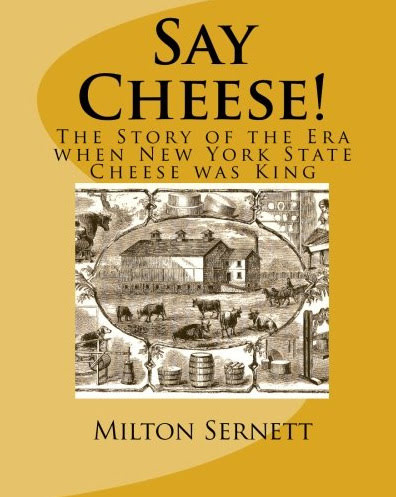
In the Voluminous letter “York State Medium” is stated as being Lovecraft’s favoured cheese-board staple in 1930. This can be found in recipes as “York State cheese” into the 1970s, a full-fat cheese. But perhaps he was abbreviating for ‘New York State Cheese’, in which case it turns out there’s a complete book on the topic…

The Voluminous letter, as read, was previously abridged in Selected Letters III. This episode of Voluminous also gives an account of the process of acquisition of the Long letters for Brown.

The podcast has a small factual error, which I’ve corrected in my post Lovecraft was right, part 459.

Collected Letters of Robert E. Howard / Dark Man journal

WARNING: A printing problem has been discovered, and the publisher now advises… “Please do not purchase the book until the problem is investigated and fixed.”


The Collected Letters of Robert E. Howard, Volume 3 (1932-1936). According to Amazon this is now published. Which means the Robert E. Howard Foundation Press is to be heartily congratulated, as it now has all three volumes published as affordable paperbacks.

I see there was also a new issue of The Dark Man: Journal of Robert E. Howard and Pulp Studies (12.2), dated December 2021 and available March 2022 on Amazon. Among other items, an article on “Howard and Strange Tales” and a review of the expanded book The Weird Tales Story.

Views of Providence

This week in ‘Picture Postals’, part of The Beth Murray collection of Providence photographs. My thanks to the Providence Public Library, which has large scans of the screened postcard version of these Providence postcards, postcards once issued as sets by the city’s Book Shop. I’ve selected the views and places more relevant to Lovecraft.

Benefit Street, Providence.

Thomas Street, Providence. Appears in “The Call of Cthulhu”.

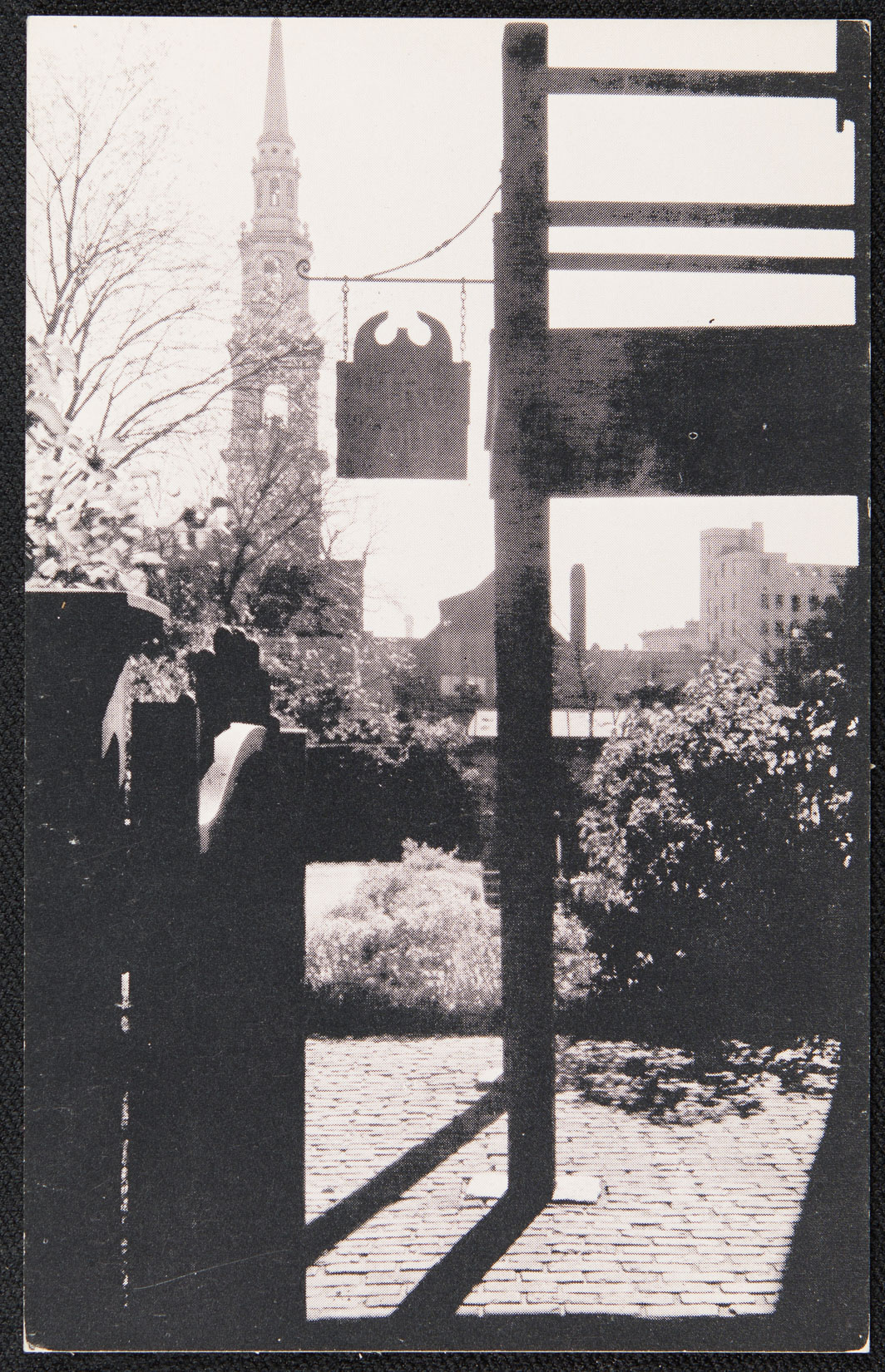
The view from the garden of the Shakespeare’s Head.

“John Carter … His old shop & office, the Sign of Shakespeare’s Head, in Gaol-Lane” (Lovecraft, speaking of Providence)

The John Carter house on Benefit Street.

Along the River Seekonk, Providence. On the way to one of Lovecraft’s favourite places, the wooded bluff above York Pond. The spot is around the corner in the distance. The young Lovecraft used to row on this river, most likely hiring a boat from the boat-house rather than Red Bridge, and would land on the Twin Islands in the river’s stream.

George Street, Providence. City centre and the then-new Industrial Trust building in the distance.

Looking up College Hill toward’s Lovecraft’s last home. The olde left side swept away for new RSID buildings, though somewhat sympathetically done with an old courtyard archway retained.

The Handicraft Club half-way up College Hill. Lovecraft’s aunt lived here for a while.

Another view of the Handicraft Club half-way up College Hill.

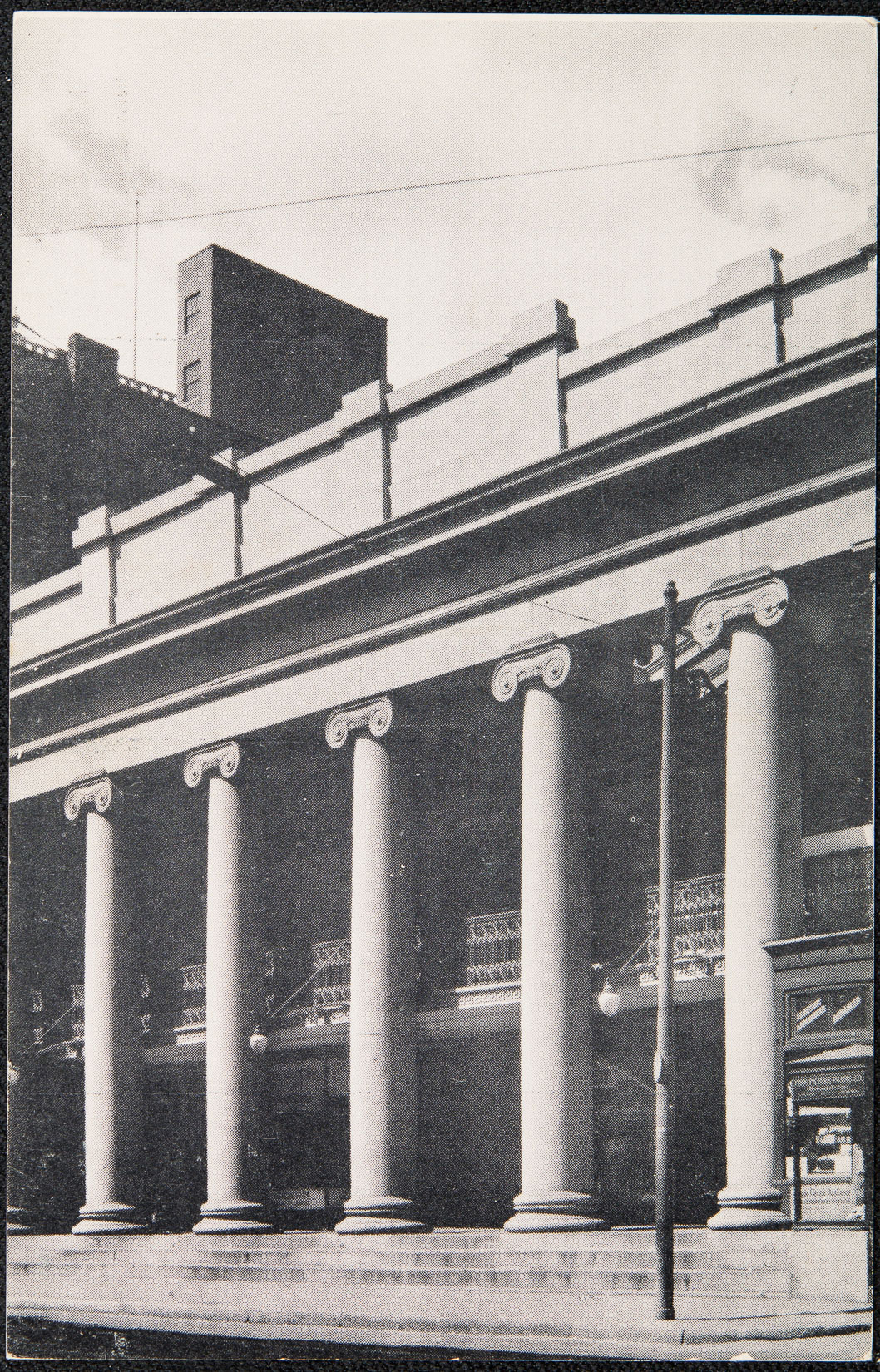
One of the entrances to the covered shopping Arcade, Providence. A favourite childhood haunt of the young Lovecraft.

View across to the new State House.

Another State House view.

Street market in the Italian quarter, Federal Hill. Setting of the late story “The Haunter of the Dark”.

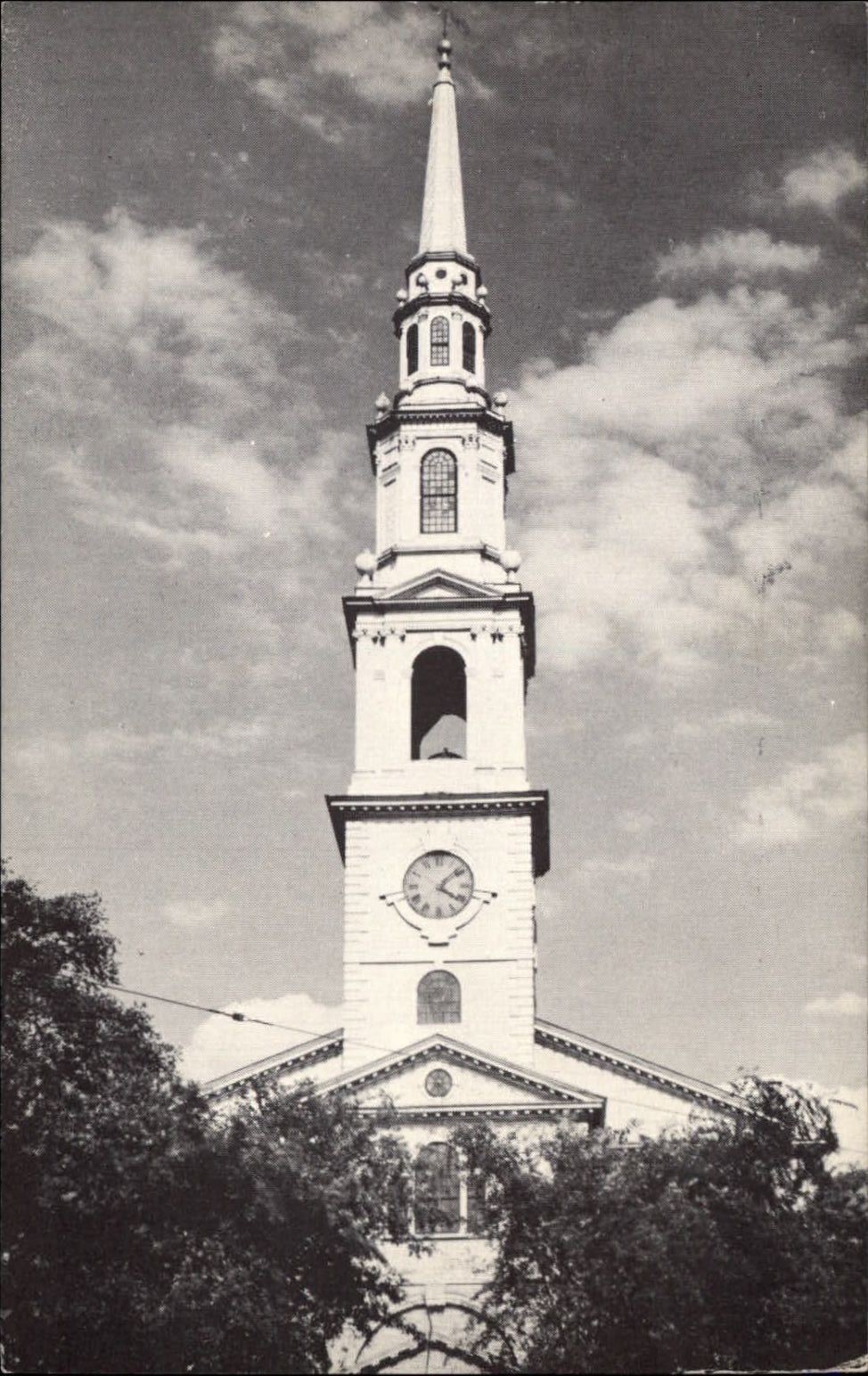
The Baptist church, where Lovecraft tried to play “Yes, We Have No Bananas” on the organ.

I haven’t tried to foist colourising on them, since most of them are too contrasty (which doesn’t take colour well). There are more pictures to be found at the Library’s website and even more if you root around and hang around on eBay. Usually noted there as a “Book Shop” card…

I’ve found that Murray (1913-?) also issued a 34-page photobook for Lovecraft’s favourite local day-tip location, This is Newport: A book of photographs (1948).

Therefore she was also photographing in the mid-late 1940s. Interestingly she also issued the presumably similar title This is Providence: Photographs (1947). These dates suggest the dates of her pictures may well be earlier than the circa 1960 dates of the Book Shop’s postcard-set. We may be looking at Providence circa the mid 1940s, less than a decade after Lovecraft died. This earlier date would explain the somewhat rough ‘immediate post-war’ feel re: the b&w quality of the prints. At that time she would have been limited in materials and camera, and was likely printing them up for cheap reproduction in her books rather than as big art-prints.

There is no trace of either of her books on Archive.org. It’s possible there may be better quality / more pictures in the books, and possibly even some biography. There appears to be no institutional archive with her negatives, from which better prints might now be made.

Horror Tales from Mnemos

The sumptuous Mnemos edition of Lovecraft’s Horror Tales is soon to publish in France. Amazon lists it as 25th November 2022.

It appears this will complete their new multi-volume translation of the main fiction. Still to come is ‘Essays, correspondence, poetry, revisions’ and finally ‘About Lovecraft’ (although that may be a mis-translation for ‘The Lovecraft Circle’?).

Grandpa Tibbles

Lovecraft derived his pseudonym ‘Lewis Theobald Jr.’, later ‘Grandpa Theobald’ and variants, from the pioneering but much put-upon Shakespeare scholar Lewis Theobald (1688-1744). I’ve now discovered a curious thing relating to this choice.

The discovery occurred this way. I was looking at the early medieval talking-fox cycle Reynard the Fox as a source for Tolkien. Part of the evidence is found in one early version of Tolkien’s “The Tale of Tinuviel”, in which the hero is enslaved by the evil Melko’s lieutenant (“he was in Melko’s constant following”) who is a demon cat called Tiberth, Prince of Cats (“whom the Gnomes have called Tiberth”). This name is very similar to the central tom-cat character in the long and often ribald Flemish tale of Reynard the FoxTibert (Flemish). In Dutch Tybert; Old French Tibert; English Gilbert via Chaucer and his translation of the French Tibert; and then the name roots back via philological methods to the Germanic Theobald.

Skeat has… “I take Tybalt to be a shorter form of Theobald, which again is short for Theodbald … The A.S. [Anglo-Saxon] form is Theodbald, which occurs in Beda, [Bede] Hist. Eccl, book. i. c. 34.” (Skeat, Notes on English etymology). The American Century dictionary concurs with… “Thibault, a form of Theobald“.

So, these words were once the common descriptor for a male cat, most likely a dominant and bold one with a long tail. Now, I wonder if Grandpa Theobald knew that?

We can be certain that Lovecraft knew his Pope, and indeed he had minutely studied The Dunciad. He would then have been well aware of the character of Tibbald, the dunce poet in Pope’s Dunciad. We see him in the lines…

    in Tibbald’s monster-breeding breast,
sees gods with demons in strange league engage

That sounds very suitable then, for a Lovecraft pseudonym, on these lines alone. The lines are explicated with the pointed footnote… “Lewis Tibbald (as pronounced) or “Theobald (as written) … He was Author of some forgotten Plays, Translations, and other pieces.” The poem’s lines continued on, describing Tibbalt sitting without any supper but surrounded by his library of books and unable to pawn them. He is thus at that very moment selected by a goddess as the most suitable earthly candidate for the ‘Throne of Dullness’, and he ascends to the throne after being initiated by her. Nothing is said by Pope of the connection of the name with cats, and apparently Reynard the Fox was something of a forgotten wonder-of-literature in England until a grand popular revival in the 1850s. In Pope’s time Gilbert or gib-cat was the English name for a male cat, also starting to have the implication of castrated (as society became less rural and thus randy tom-cats became less welcome, in terms of keeping up the local cat population in order to remove mice and rats). Thus if Pope did know the connection of the name with Reynard’s tom-cat, he doesn’t say.

So there’s no evidence there that Lovecraft knew Theobald was the root of a name for a cat. However Lovecraft wrote once to his friend Moe as “Grandpaw Tibbald”, suggesting he was well aware of the TibbaldTheobald crossover in Pope. He evidently expected Moe to see the allusion, and perhaps even groan at the cat-pun in paw.

Though Lovecraft would also have known that in Shakespeare the character Tybalt is jokingly called ‘Prince of Cats’, ‘good King of Cats’ and ‘rat-catcher’ in Romeo and Juliet. One might then assume he had seen some footnote that explained this obvious allusion and connected it to the variant cat names. According to Lovecraft’s Library (3rd Ed.) Lovecraft owned three Shakespeare editions: Halliwell, 1860; Richard Grant White, 1883-84; William J. Rolfe, 1898. Could any of these have explained things in a note? Halliwell does not note the phrases, and nor does White. Rolfe does, with…

Prince of cats: Tybert is the name of the cat in Reynard the Fox. Steevens quotes Dekker, Satiromastix, 1602: “tho’ you were Tybert, the long-tail’d prince of cats;” and Have with You, etc.: “not Tibalt, prince of cats.” As St. notes, Tibert, Tybert, and Tybalt are forms of the ancient name Thibault.”

Close, but not quite. We still have to assume that Lovecraft knew Thibault = Theobald. This seems likely, but I can find no firmer evidence that he did. Possibly he just associated Theobald with the common old English personal name, which meant people|bold, shorthand for something akin to ‘prince who boldly defends his people’.

The cat-name survives today in the form of the affectionate name Tibbles, and we can thank Pope for pointing out that this (as Tibbald) was once the correct English pronunciation of Theobald. Thus a suitably historical, and also rather mellifluous, name for a Lovecraftian cat today would be ‘Theobald Tibble’. The ‘s’ being omitted because modern, and also because cats do not care to hear ‘s’ sounds.