Well it’s 1st May, and our Great and Glorious Charlie III has still unaccountably failed to send me an invite to his Coronation bash in London. Oh well. I’m just glad to say that Tentaclii has survived another bout with Covid and another Stoke-on-Trent winter, and that with the heater off for all but a few days of the coldest weather. I always knew there was a good use for that tin-foil hat. It keeps the heat in, as well as warding off the emanations from R’lyeh.
This month my ‘Pictures Postal’ posts looked at: the Moses Brown School in Providence which briefly features in Lovecraft’s Dexter Ward; Lovecraft’s own gravestone (and along the way I found a new vintage view of his bit of the Seekonk River); then a sale listing for a 1975 “MinnConn” paper flyer led me to the sea-cliffs of Magnolia and a newly-expanded picture of Lovecraft; and to the John Carter Brown Library, where I was rather pleased to find Cthulhu lurking on the doorstep. There you are, you see… even the most apparently mundane ‘Picture Postals’ posts can sometimes discover monsters.
Talking of monsters, in an out-of-band ‘picture post’ I was also pleased to find that Lovecraft’s dad’s Gorham Co. silver factory produced stylised silver toads. Indeed, an item which would not look out of place in an Innsmouth museum. Really. This find was due to my perusing the online holdings of the Smithsonian, a rich resource now standing at 4.5 million images. More such Smithsonian finds are coming next week on Tentaclii.
Adding to my own scholarly musings, I posted another of my occasional “Notes on The Conservative” series. In which I combed through Lovecraft’s issue for October 1915. It was interesting to note how closely the world of a 1915 Conservative issue maps onto today’s world. So far as I know I’m the first to translate the heading quotations used in The Conservative. In other scholarly work, I’m about to start reading the Lovecraft Annual 2022 for a summer 2023 review.
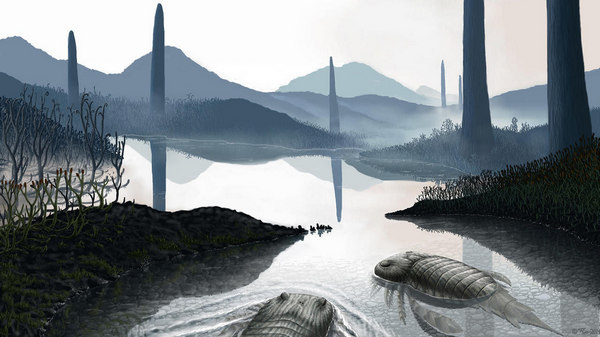
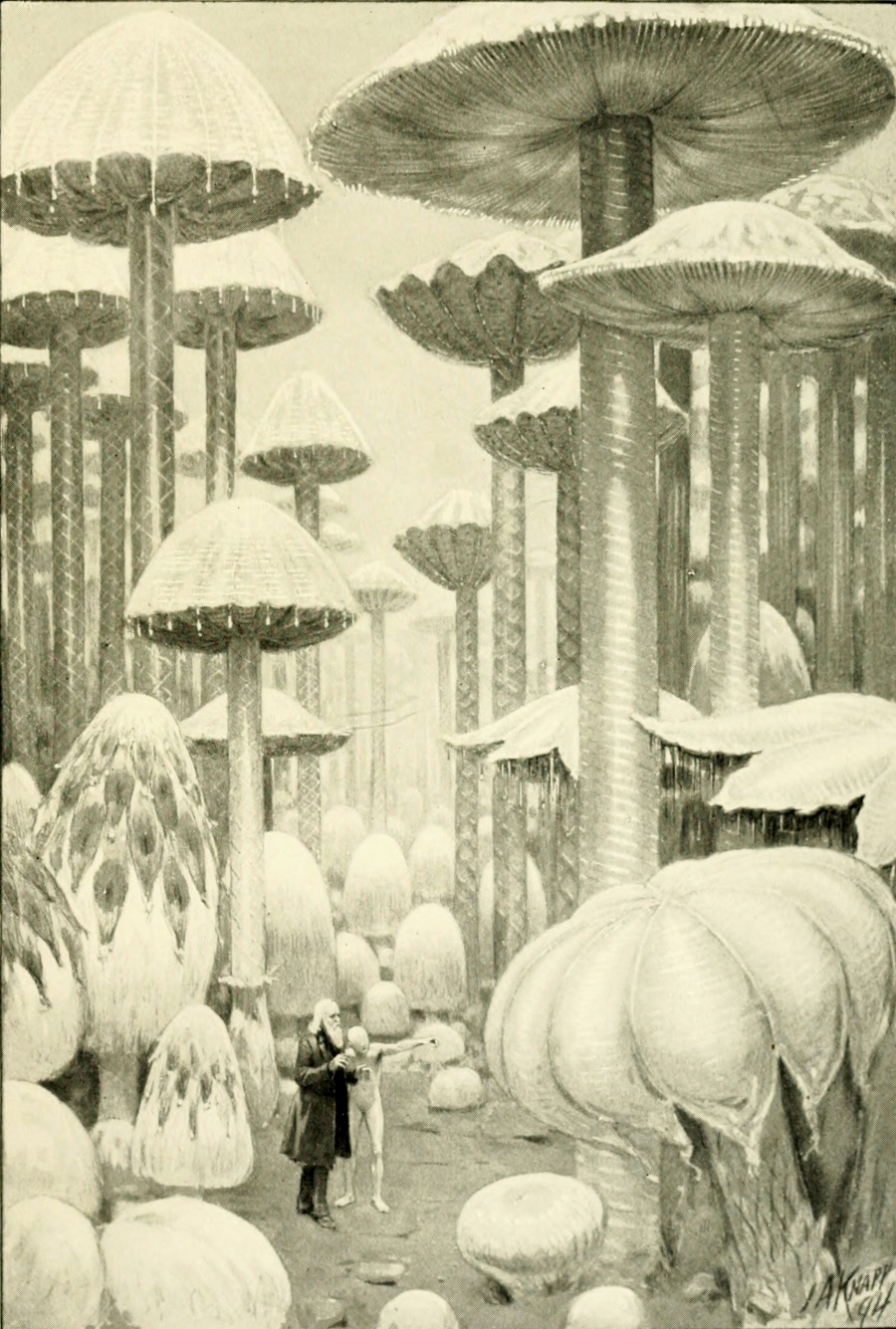
I was pleased to find that Lovecraft was correct in surmising there were giant above-ground fungi in the Palaeozoic (“The Shadow out of Time”), as has now been proven by the latest science. The ‘Vikings in North America’ debate, which stretches back to Lovecraft’s time, has also finally been put to rest with an apparently incontrovertible new wood-source analysis. The Vikings were there, and the ‘cranks’ were right. Although, probably not right about Vikings being present so far south as Lovecraft’s own coastal stomping grounds. The climate was a lot warmer back then, and there was no need for them to venture that far south for timber.
Talking of dead trees, it was a ‘no show’ month for new Lovecraft books or journals this month. But a new hardback edition of The Spirit of Revision: Lovecraft’s Letters to Zealia Brown Reed Bishop is due later in May. In new book formats, I spotted that Ken Faig’s Lovecraftian People and Places (April 2022) now has a Kindle ebook edition. In journal articles I noted an interesting new French study of the various posthumous diagnoses Lovecraft had received from armchair psychoanalysts. Sadly it’s behind a paywall.
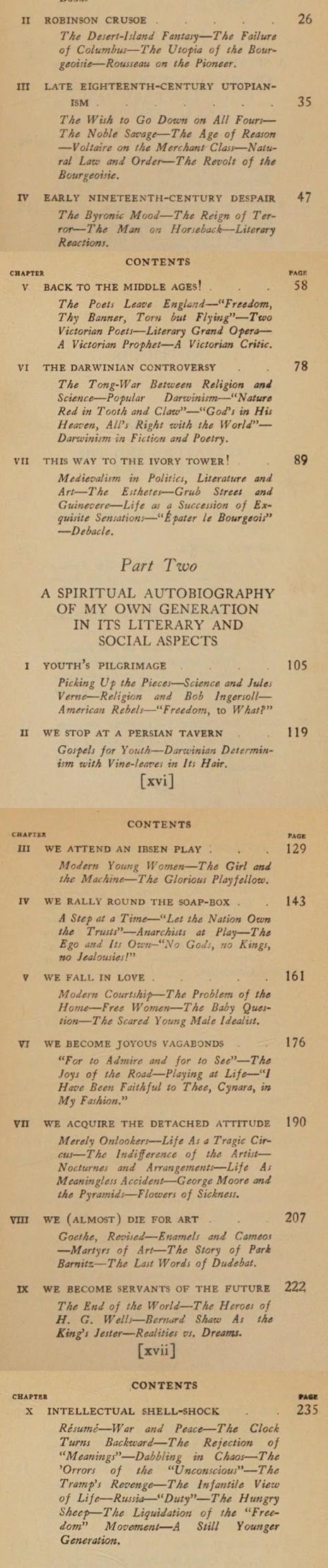
Another book Lovecraft enjoyed has turned up on Archive.org, The Story of Saxon and Norman Britain Told in Pictures (1935). Intellectual Vagabondage (1925) is also a fascinating and brisk layman’s survey of Lovecraft’s intellectual hinterland, sans Lovecraft himself. It’s also new and free on Archive.org.
Talking of bargain books, I see all the great Amazon Warehouse sub-£10 deals have dried up for books of Lovecraft’s letters. I’m guessing that Lightning Source, the POD printer for these books, has switched to a new post-Covid printer. One that is more efficient, and thus makes no ‘slightly damaged’ books. The volumes of Letters I want are all up around £30+ these days. There’s still no sign of the new Long letters arriving on the public-facing Brown University repository.
In crowdfunders, congratulations to both the Lovecraft Arts & Sciences and to the team for the new REH / HPL letters translation into French. They both struck gold this month with their funding calls.
Nothing much in audio this month, but I was pleased to find a 70-minute public-domain audio reading of “The Call from Beyond” by Clifford D. Simak. This being Simak’s SF sort-of tribute to Lovecraft. Not a great tale, but interesting to see one master creatively responding to the ideas of another.
In music, there was just the release of Music from the H.P. Lovecraft Literary Podcast – Volume Three (2023).
On the big screen, news of a new Lovecraft movie A Suitable Flesh seems to be getting horror-movie fans excited. This will premiere at the Tribeca Film Festival in June 2023. Based on Lovecraft’s “The Thing on The Doorstep”, according to the up-and-coming director. Over on the theatre stage, the stage-play “Lovecraft, mon amour” had another three new performances in France.
Nothing in comics, but the concluding issue of the big Kadath adaptation is imminent if not already released. The collected trade-paperback volume lands in a few weeks, as Unknown Kadath. Ignore the “Volume One” label on this. It’s just an annoying comics-trade naming convention, one that is very off-putting to readers who just want a competed tale in one volume.
In the visual arts, I’ve been playing around with AI art and text generators. Only the free ones, since I can’t afford monthly subscriptions. And I’m not showing too many of the results here, as I know it annoys some people. But it’s important to keep up with such things, as they’re here to stay now and AI will only get better and faster. We may even resurrect Lovecraft via AI, in a few years. I’ve suggested a panel discussion on that for the next NecronomiCon convention…
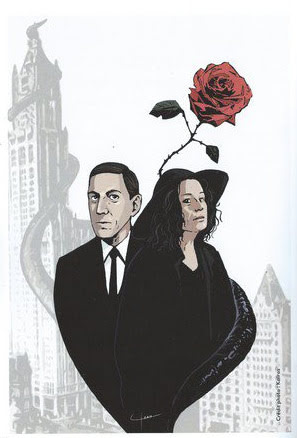
Should we resurrect Lovecraft? H.P. Lovecraft as the ideal candidate for a near-complete AI-powered personality and memory resurrection.
On the back of this new interest Tentaclii had a new “AI” post tag, to collect any AI-related posts in one place. This even includes my own ‘AI Lovecraft’ story from way back in 2011. If you want more on accessible and free AI image-making, go here. Yes, all the artists in the new-on-Archive.org Science Fiction And Fantasy Artists Of The Twentieth Century: A Biographical Dictionary would surely frown and tut, I know. But like I said, it’s in the wild and here to stay — whatever the EU says. We may as well roll with it.
I still hope to release a new voluntary-work issue of Digital Art Live for the community by the high summer, though it will necessarily have a new name. It will probably be somewhat AI focused. Suggestions for email interviews are welcomed, as are books and other products you’d like to see blurbed in the ‘Imaginarium’ section.
Over in the land of the Tolkien scholars, I released the third issue of my free Tolkien Gleanings PDF ‘zine. The fourth is now well underway and it’s looking like another 48-pages. The reviews slot is currently empty. Surprisingly I don’t actually have a lot left that I want to read and haven’t yet read. Tolkien Dogmatics; The Road Goes Ever On and On; and The Gallant Edith Bratt (still languishing in a £10 paperback) and that’s about it… other than various ‘unobtainable’ old journal articles and the last two paywalled “The Year’s Work in Tolkien” articles in the journal Tolkien Studies. The nice things about Tolkien studies is there are no swathes of expensively out-of-reach volumes, and only one volume of the Letters.
That’s it for this month. As always, Patreon donations, Amazon vouchers, and offers of regular paid work are always welcome please.