Lower Manhattan from Brooklyn Heights

This week on “‘Picture Postals’ from Lovecraft”, I have another try at finding his first grand sweeping view of New York City. Specifically the elevated view he saw at night of the New York City sky line.

As readers will recall, Lovecraft’s short New York story “He” opens with this vision of…

Coming for the first time upon the town, I had seen it in the sunset from a bridge, majestic above its waters, its incredible peaks and pyramids rising flower-like and delicate from pools of violet mist to play with the flaming golden clouds and the first stars of evening. Then it had lighted up window by window above the shimmering tides where lanterns nodded and glided and deep horns bayed weird harmonies, and itself become a starry firmament of dream, redolent of faery music, and one with the marvels of Carcassonne and Samarcand and El Dorado and all glorious and half-fabulous cities.

Later, as his deep disillusion set in, the vision became one of…

… Cyclopean modern towers and pinnacles that rise blackly Babylonian under waning moons” […] “a hellish black city of giant stone terraces with impious pyramids flung savagely to the moon, and devil-lights burning from unnumbered windows.

In his letters Lovecraft records several initial real-life “faery” views of the city, seen with either his friend Loveman or the poet Hart Crane or both. His key early view was from the roof above Hart Crane’s rooms at 110 Columbia Heights (the same rooms that had once been those of the crippled creator of the great Brooklyn Bridge). These gave a fine view both of the famous Bridge, the river and the Lower Manhattan sky-line. The building, a “brownstone” as New Yorkers called them, is now apparently demolished. But his key view was from the roof rather than the windows…

my first sight of the illuminated Manhattan skyline [being] from its roof!”

I looked at Crane’s the exact location in last summer’s ‘Picture postals’ from Lovecraft – the view from Columbia Heights. Of the view from his windows, I’ve since found that Crane wrote in a letter…

Just imagine looking out your window directly on the East River with nothing intervening between your view of the Statue of Liberty, way down the harbour, and the marvellous beauty of Brooklyn Bridge close above you on your right! All of the great new skyscrapers of lower Manhattan are marshalled directly across from you, and there is a constant stream of tugs, liners, sail boats, etc in procession before you on the river! It’s really a magnificent place to live.

Charles Graham’s illustrator’s view. Said to be 1896, but the Statue of Liberty is missing?

Judging by Internet searches there appear to have been various early attempts to picture the scene at night, though with limited success in photography due to the limitations of the era. Early masters like Alfred Stieglitz don’t appear to have tried to picture this particular view at night. Or if they did try, then the results are not online. Nor can any suitable b&w ‘nocturne’ lithograph of the view be found.

But some postcard creators, and their expert over-painters, did try.

But first some orientation. I’d say my arrow, seen on this Oilette card, about indicates the direction of view from Crane’s place.

Here we see the view of the towers of Lower Manhattan sketched in profile in the 1930s, after the Empire State building had arisen in 1930-31.

And a 1930s side view in fine photography.

Now a 1933 night dock-side view of Lower Manhattan. Close to what Lovecraft saw, but from too low an angle and probably too built-up compared to the 1920s. Those were the days before bamboozling bureaucrats and nay-sayers, when it might only take a year to build a New York City skyscraper. Some things about the skyline would have changed by 1933.

Here we see two early attempts at elevated-view over-painted night pictures, possibly from the 1900s-1910s. The sky line was then much lower. Crude pictures by the standards of our time, but not by theirs. And you have to admire the expertise of the over-painters who could turn day into night.

Some vintage night cards show the bridge itself at night, or pedestrians crossing it on the elevated ‘seagull level’ footway. Presumably the footway is what Lovecraft alludes to in the opening of “He”, when he writes… “I had seen it [the city sky line] in the sunset from a bridge”.

But painters rather than photographers did far better at depicting something of Lovecraft’s initial “faery” view of the towers from the bridge, as in this sunset view from the end of the bridge by T.F. Simon in 1927. This comes somewhat close I think, to the opening lines of “He”.

A fine picture, but I’m still hoping to find a really good ‘Lower Manhattan from Columbia Heights’ early/mid 1920s photographic view at night.


Incidentally, I found a “night over-paint” of the view down Fulton Street. A key Lovecraft stamping-ground is in the first part of the road that runs into the upper-left of the card.

Want to edit the Lovecrafter and Lovecraft Online?

The German Lovecraftians seek an editor for their annual bumper double-issue Lovecrafter magazine. Specifically the ‘PLAY’ half of the magazine. The 2023 edition is said to be done and should be appearing soon, so this role will be from September 2023 for the late summer 2024 issue…

The Lovecrafter is looking for a new editor-in-chief for the PLAY section from September. Andre will resign with a heavy heart after the upcoming double-issue, in order to devote himself to other creative projects.

They need a gamer who can write and revise, manage proofreaders and other volunteer assistants, and who has the editorial talent to produce a balanced and well-sequenced magazine to a firm deadline. You won’t also be doing layout and copy-fitting, since Andre stays as “layout artist”. I assume the role is unpaid, and of course your German would need to be impeccable.

Also note that the German Lovecraft Society’s online magazine…

Lovecrafter Online is looking for a new editor with immediate effect.

New on Tentaclii in June/July

As an increasingly swamp-like summer ‘rainy season’ washes drearily against the mossy walls of Tentaclii Towers, I finally get around to posting a new monthly update. Two monthly updates in fact, since the last was for May. I skipped a month. Lovecraft related news became noticeably more sparse as we headed into the quieter end-of-term and summer silly-season, but Tentaclii’s tentacles have entangled enough to continue daily posting. Thus there’s a bit to get through. Here are just the highlights for June/July…

My regular ‘picture postals’ posts returned to Dunwich and to Innsmouth (Newburyport). At Dunwich I was pleased to find two cards suggesting a dead-ringer for ‘Cold Spring Glen’, located just behind what was most likely Mrs Miniter’s old school. At Newburyport, an excellent new picture of the bus that served the wide coastal marshlands just to the south — surely the spitting image of the bus which features in the Innsmouth story if not the actual bus Lovecraft rode on. Among other ‘picture postals’ places I looked at Dunedin, Florida, and Lovecraft’s Quebec with the aid of newly colorised pictures. I had another dig at Lovecraft’s among the postcards at the Brown University repository. Where I realised, in conjunction with my reading of the Talman letters, that this Brown collection must be just a very slim fragment of what was once a vast postcard collection owned by Lovecraft by the mid 1930s. Presumably all his un-used cards were thought to be of no literary value and were sold to a bookshop to be disposed of per-card. But what a record of his travels it would have let us piece together today. Oh well.

Talking of travels, I had a look at the possibility that Lovecraft once visited his friend Walter J. Coates at home. It seems not, as the fellow was just to far into the backwood mountains even for Lovecraft. Coates even over-wintered there, evidenced by one comment from Lovecraft to Talman. The actual Coates address eluded my researches, but along the way I dug up what may be the only vintage postcard of what passed for the centre of his North Montpelier. I also had a brief post on Lovecraft and tobacco.

The 600-page book H.P. Lovecraft: Letters to Hyman Bradofsky and Others appeared for pre-order on Hippocampus (Amazon UK says shipping from 18th July). While you’re waiting for that, the old Miscellaneous Writings has popped up on Archive.org to borrow. Useful for those checking old references in Lovecraft Studies etc.

Hippocampus Press also has a page for the new book For the Outsider: Poems Inspired by H.P. Lovecraft. A fine idea for a book. I was pleased to hear that Gary Myers’s Dreamlands tales had a new 2022 ebook edition. S.T. Joshi has collected the best of Anthony M. Rud, in Ooze and Others. In contemporary fiction I spotted that there’s to be a large post-lockdowns ‘Innsmouth Literary Festival’ meetup for UK Mythos writers in September 2023.

In scholarly work, I noticed the first review I’d seen of the new book After Engulfment: Cosmicism and Neocosmicism in H.P. Lovecraft. The Lovecraft-adjacent book Victorian Alchemy: Science, magic and ancient Egypt was released for free. I also spotted Loremasters and Libraries in Fantasy and Science Fiction, and was pleased to find an affordable ebook version. The book Pulp fiction of the ’20s and ’30s turned up on archive.org, thus making freely available good solid overviews of the work of Henry Kuttner and Frank Belknap Long.

In journals I noted the newly discovered Insolita (in Portuguese, mostly scholarship on horror) and LIJ Ibero (Spanish, scholarship on juvenile fiction), and a new edition of The Fossil in English. On Archive.org, a new scan of “The Necronomicon Mythos according to HPL” popped up in an old Grey Lodge Occult Review. My 10,000 word article was rejected from The Lovecraft Annual, but only because the journal is full and I’m too late for this year. S.T. Joshi will now consider it for 2024. He advises “May” as a rough Annual deadline in future.

My notes on Letters to Wilfred B. Talman has so far produced three long blog posts. Among other things it’s led me to discover a new ‘Everett McNeil as character’ story by Talman, aided by a newly-online run of his journal the Texaco Star. A sumptuous 1930s trade magazine which also ran an R.E. Howard article. In the Talman letters I found that Lovecraft did after all read his friend Everett McNeil’s fantasy / weird work. This month I also found another two newspaper/magazine texts by Everett McNeil, one of which illuminated ‘the tipping problem’ in restaurants that likely also affected Lovecraft.

Also found in the Talman letters was that Lovecraft did know (and cherished) “the lane back of the Athenaeum”, a hint of which was spotted in one of my ‘Picture Postals’ recently. He at least once visited the Eddys at their new 1930s address (which I dug up recently on a letter to Ghost Stories) — it’s nice to be able to add a new small dot on ‘the Lovecraft map of Providence’, a dot that still exists today as a fine-looking wooden house.

I found Lin Carter’s Beyond The Gate Of Dream on Archive.org, with his poignant memoir of his boyhood among the pulps and comics. Also in nostalgia I looked up some 2024 anniversaries, and also gave advance notice of Lovecraft’s Birthday (20th August, the 133rd).

In audio, the Italians released what sounds like a very sumptuous Lovecraft heavy-metal album and book, The Dream and the Nightmare. If you can’t afford it or it’s sold out already, I also linked to a 14-hour ‘Lovecraftian Metal Madness’ playlist on Spotify.

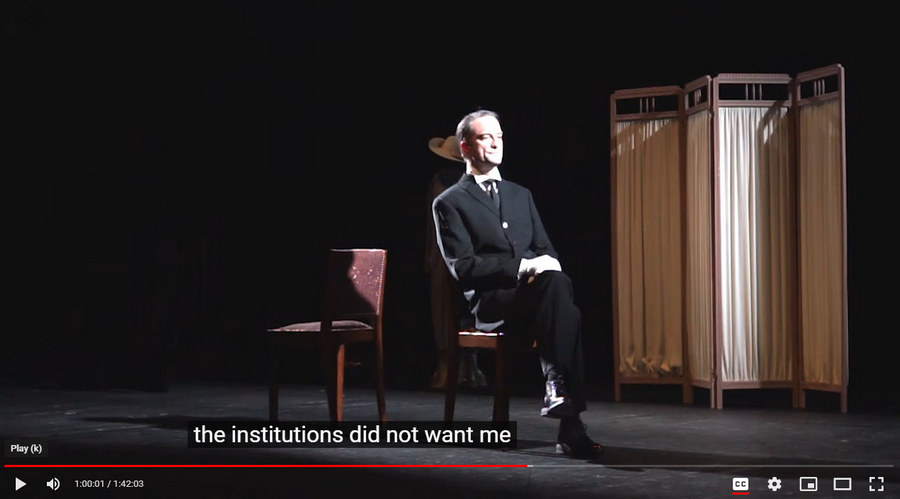
In movies, I found the well-made film Out Of Mind: The Stories of H.P. Lovecraft (1998), now in full on YouTube at 720px. New to me. And a well-known horror movie maker was heard in the horror trade-press saying he’d like to have a go at “The Call of Cthulhu”.

The Dark Adventure Radio Theatre’s olde time radio adaptation of “The Shunned House” is now available on CD or download. In Hamburg, Germany, the city had a ‘Summer of Lovecraft’ with outdoor theatre. A little earlier in the summer the German city of Bonn had a number of performances of “The Shadow over Innsmouth”.

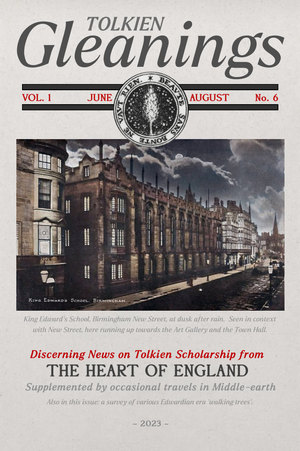
In my own releases I published the #5 PDF ‘zine version of my Tolkien Gleanings. An ‘Evil in the Landscape’ special, with a number of scholarly essays and reviews added to the news Gleanings. Though it will be the last one with essays, since no-one seems very interested judging by the hits and downloads. Zero donations, for a bumper issue. Thus future PDF issues will just be handy anthology bundles of the Gleanings blog-posts, rather than being a full free 80-page magazine like #5.

As usual please consider dropping few dollars in my Patreon bowl, or buying one of my books. Amazon voucher-codes are also very welcome. Many thanks!

Two new ebooks

Wormwoodiana takes a look at Gary Myers’s Dreamlands tales in their original 1975 form. Said elsewhere to be typo-ridden in its 1975 edition, but the problem is not mentioned here.

It’s noted that the more recent book was a “corrected edition” as well as expanded, and Wormwoodiana usefully draws my attention to a further “2022” edition which had escaped me.

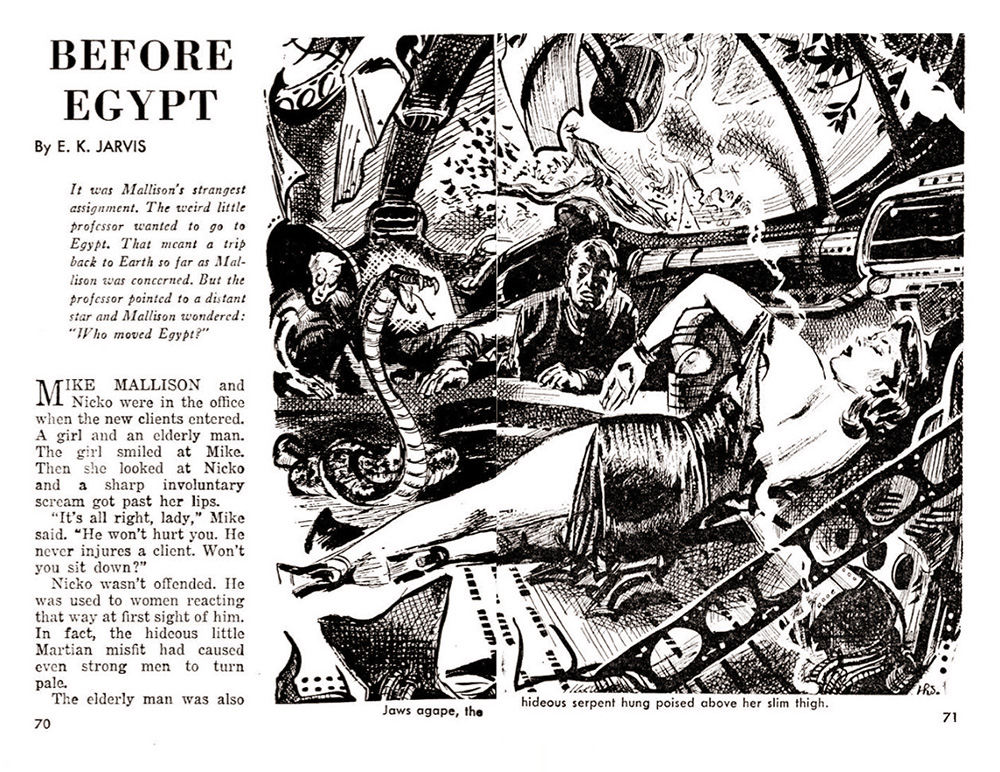
Also new in affordable ebook, S.T. Joshi’s compilation Ooze and Others (2023), being the best pulp shockers of Anthony M. Rud. Rud was an influence on Lovecraft, since the otherwise lacklustre March 1923 issue of the fledgling Weird Tales featured his tales of the Alabama swamplands…

“a striking novelette, “Ooze” by Anthony M. Rud, which Lovecraft enjoyed” (Joshi, I Am Providence)

Available in Kindle ebook…

New S&S

Spiral Tower on “The Glut of New Sword and Sorcery”

[it’s] increasingly feeling like a claustrophobic, crowded field [in novels, but in a good and ‘too much quality to read’ way]. I don’t think the glut of new sword and sorcery literature is a problem. But I do think this acknowledging this new phase in indie S&S might be helpful for writers, readers, and publishers.

Sounds good. I knew the “New Pulp” was a thing, and I’d kind of felt the wider cultural sea-change ‘bubbling under’. But the “New S&S” in novels is… new. I’m spreading the word here. See Spiral Tower’s post for various author names and titles of novels.

So it sounds to me like the new Conan publisher will be bringing their items to market at the right time. There’s a new novel series (though the first book had so-so reviews, I recall) and a new non-Marvel comics series (un-connected to the new novels, according to a recent interview I read). Both are apparently more REH-aligned than the mega-corp Marvel/Disney could have made them.

What’s probably needed then is more outreach, to build young audiences for these “new S&S” novels and anthologies, rather than simply curation and book-reviews for old hands. The old hands probably know enough to detect the good stuff by osmosis, and are canny enough to be able to winnow the good stuff into a pile of the really good stuff. But the process for young people probably goes: hear about the novels -> are there audiobooks -> are there full-cast and music unabridged audiobooks? I’m assuming that the age 13-23 market for reading multiple 600-page manly S&S novels on paper is limited these days, amidst the many time-sucking demands of videogames, anime, manga, YouTube, AI image-making, movies, drugs and booze, sports, part-time jobs, college, online eBay side-hustles and whatever the latest social-media app craze is.

On the other hand, the failing Marvel Comics thinks there’s a market for their new line of “crime novels”… so who knows? Maybe a hybrid highly-illustrated form of novel? But that’s been tried before, with not a great deal of success.

So… yes… a really high-quality crowdfunded audiobooks of the very best of this “New S&S” glut would be my starting suggestion, accompanied by a really good free magazine to curate and signpost the stuff each month. Indeed, one might bundle the magazine back-issues free with each audiobook. Such a thing, modestly priced, would be a big draw and a ‘sub-genre taster’ for many.

Audio would also mean that the old hands could cram in even more reading each month. Just slap on a pair of 300ft RF wireless headphones (not the infernal Bluetooth type), and ‘read’ while doing other things.

I’d also emphasise to young readers (probably male) the courage, pride, honour, what Lovecraft calls the barbarian virtue of “unbrokenness”, etc. Just look at how immensely popular Wilbur Smith’s manly books still are. Of course, a bit of sex never hurt either, something lacking in REH due to the constraints of his time. And perhaps a catchy new youth-friendly marketing formula, alongside the somewhat tired old “S&S”? How about MMM! — manliness, magic and maidens. Sounds like a catchy short title for the free magazine that might curate the “New S&S”.

Against Religion

An unusual item from Germany…

Against Religion by H. P. Lovecraft, Festa. Only 250 copies were published and there will be no reprints and no e-book. The selection includes his most important essays and letters on religion, atheism and related subjects. The structure of the book includes topics such as religion and science, religion and society, as well as general reflections on God and religion and much more.

I assume this is the best atheist-related essays from the Collected Essays, translated? Appears to be new. I’m guessing this may be the result of a Kickstarter or IndieGoGo campaign, perhaps?

Found on Brown

This week on my regular ‘picture postals’ post, a short tour of the Brown University repository in which I point out few of the more remarkable ‘picture postals’ from Lovecraft. These and many more can be found, free online at the Repository.

First, one that’s not actually in the Lovecraft collection, but is in the Repository. It shows a view of the Wickle gates I’ve never seen before, a view which puts them in visual context with the Brown clock tower in the corner of the campus. The gates were just a stone’s throw from Lovecraft’s last home at 66 College St., and he could see the clock tower through the trees. I’d never realised that one would have such a ‘Roman’ feel here, due to the columned building in the background. Something Lovecraft would surely have appreciated.

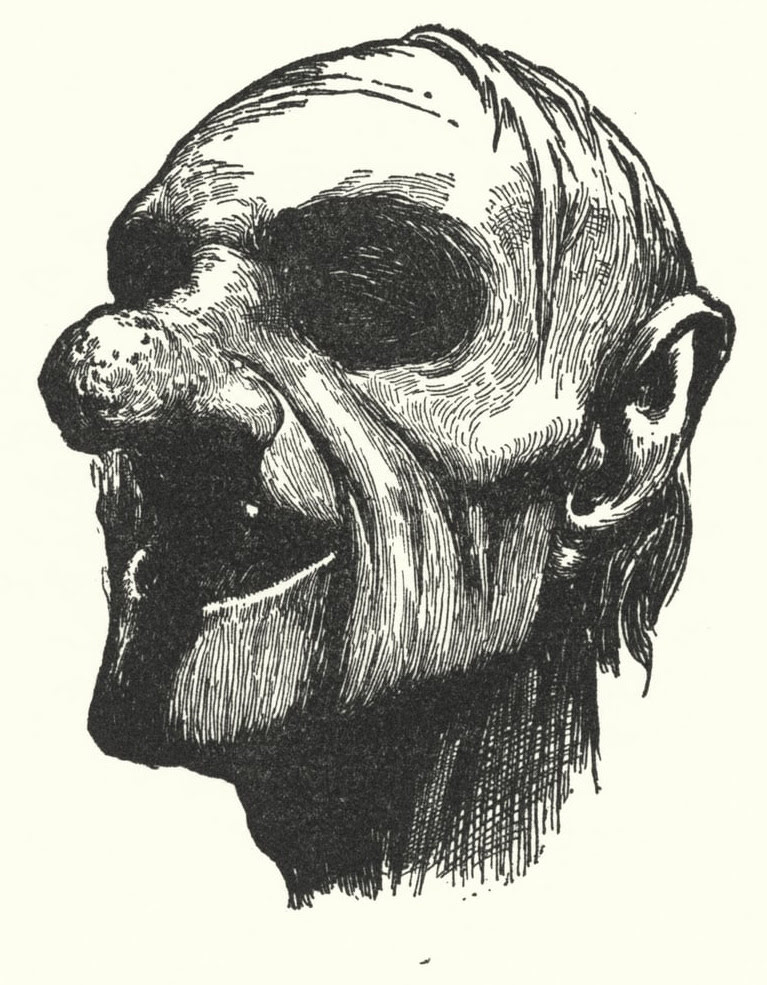
An early one from 1923, showing that the “old man” head was not modelled (with a bit of help by human wedge and sledgehammer) on the older Lovecraft.

Three additions to my recent post on Lovecraft in Dunedin, Florida.

Another evocative card from Florida, which is said to have physically gone missing from the collection. Though the scan remains.

The Woolworth Tower, New York City. If I remember rightly this was the tallest of the towers when Lovecraft first visited the city. One of his first acts was to ascend to the top and survey the city. He later thought fondly of Mr. Woolworth, who became very rich by providing people with reliable items at affordable prices in his stores.

In New York Lovecraft would pick up cards from the many museums. Here we see the phases of prehistoric man reconstructed from skulls. I don’t want to spend an hour reading up on the history of early anthropology, so I’ll just say that I seem to recall that ‘Piltdown Man’ was later discredited. And that the implied direct evolution of man from Neanderthal is also discredited, though we probably picked up some Neanderthal genes. I could be wrong on that though, since the scientific understanding may have changed again. Suffice it to say that much has changed since Lovecraft’s time.

Also a card showing “King Senusert III as a Sphinx” from Ancient Egypt, which appears to have been enclosed with a letter, to an unknown correspondent who was about to visit NYC.

The interior of Julius’ bar, NYC. Lovecraft stayed in a room above this bar for several weeks in 1935. It was later a famous gay bar in the 1950s-70s, though its status in 1935 is unknown.

The Japanese gardens at Maymont. Lovecraft went into raptures about these, thinking them even better than the similar Japanese garden in Brooklyn.

A view up College Hill. At his last home Lovecraft lived just in front of the distant white building with the long white windows — the John Hay Library at Brown, where his papers are now a prize collection.

Here we see a similar view, not in the Brown collection. It’s possible that Lovecraft’s house can be glimpsed, in a little courtyard garden back of the street-facing houses.

The Akley house, one of the inspirations for “The Whisperer in Darkness”.

On the Mississippi. Lovecraft travelled as far west as the Mississippi, and even crossed over for a short time.

The old Spite House, at his beloved Marblehead.

The re-created Pioneer Village at Salem.

Many more can be found, often alongside writing by Lovecraft, at the Brown University repository. High-res versions can also be found (look for the .JP2 files).