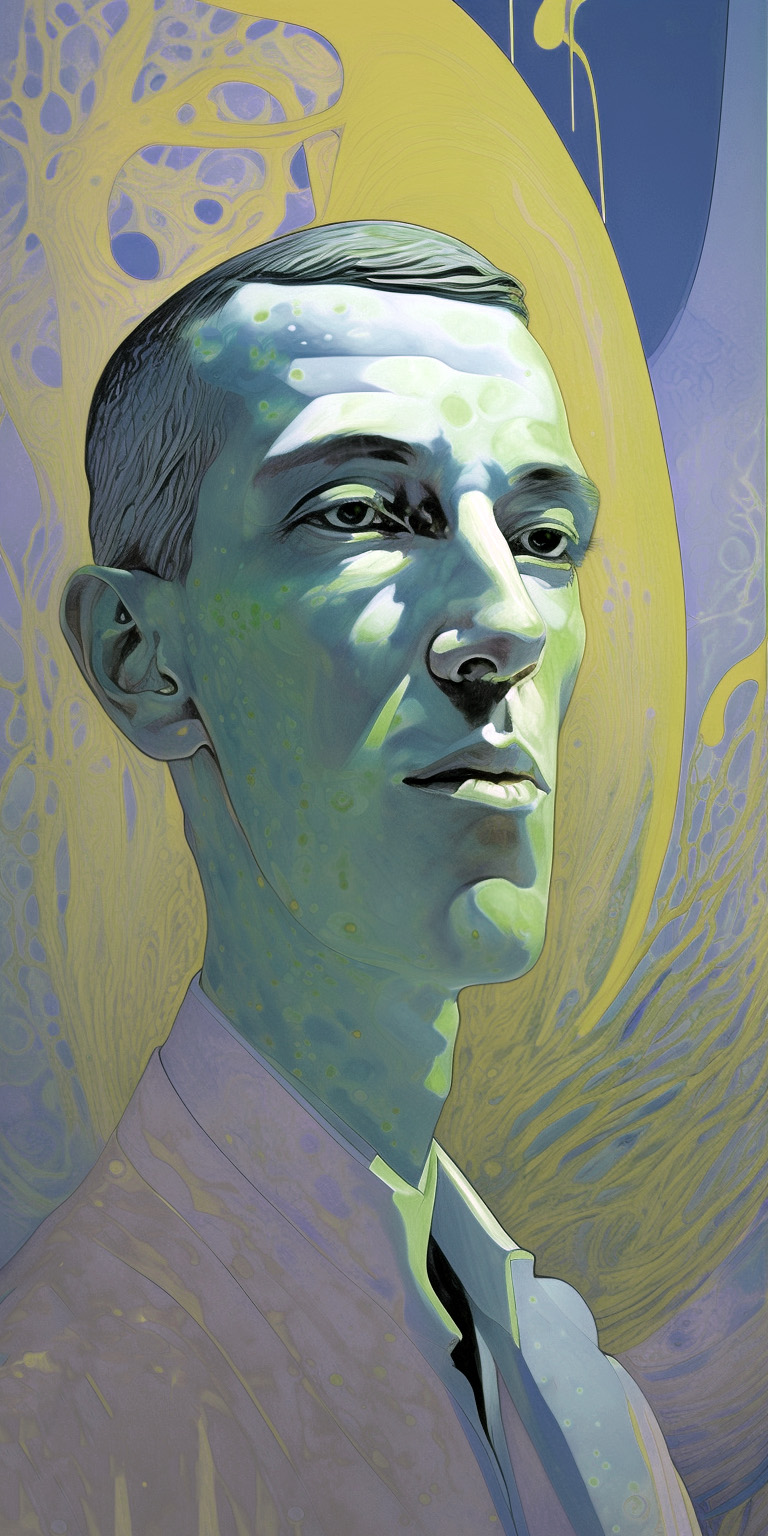
Brian Stableford as editor and scholar

The venerable British SF author Brian Stableford has passed away. I can’t speak to his fiction, though I recall reading his SF books in the early 1980s and I know his range later included Lovecraftian Mythos tales (The Innsmouth Heritage and Other Sequels, etc al), fantasy tales (collected in Fables & Fantasies from Necronomicon Press) and acclaimed genre pastiche and mash-ups (Sherlock Holmes and others). Here I try to piece together a very basic overview of his scholarly works. Others will doubtless do a far better job in time, for one of the most prolific British writers. One hopes they’ll also say a word or two about the fine cover-artists he must have enjoyed having from time to time…

In 1979 he made his name as a critic with a study of the works of fellow SF author James Blish, A Clash of Symbols: The Triumph of James Blish. So far as I can tell, he never wrote on Lovecraft but a taste of his wide range of interest can be found in the contents list for his Slaves of the Death Spiders and Other Essays on Fantastic Literature (2017). With essays on H.G Wells and Dracula, SF of the 1980s, and also the infamous British 1990s censorship case of Lord Horror, plus his musings on the modern profession of science-fiction writing as a profession. He wrote at length on the latter topic in Writing Fantasy and Science Fiction. Several other essay collections on the craft, and DIY guides to writing SF, can also be found.

He was most interested in the deep roots of science-fiction, and became the authority of seminal but forgotten figures in the early ‘scientific romance’ such as Birmingham’s Sydney Fowler Wright (Deluge, The World Below and others), writing introductions to new editions, collecting and publishing S. Fowler Wright’s Short Stories, and editing books with a wider scope such as Scientific Romance: An International Anthology of Pioneering Science Fiction, the multi-volume scholarly book-series Scientific Romance in Britain 1890-1950; plus the later New Atlantis: a narrative history of the scientific romance.

He was also interested in the intersections with decadence, with historical collections such as Decadence and Symbolism: A Showcase Anthology, and at least two volumes of the Dedalus Book of Decadence. Exemplary early drug literature he collected in Snuggly Tales of Hashish and Opium. Recently he produced the representative collection Weird Fiction in France, and The Dedalus Book of British Fantasy (19th century).

He collected sea tales of alluring sirens in The Snuggly Sirenicon and Fays of the Sea, made an anthology of early femme-fatalle stories, and in Tales of Enchantment and Disenchantment wrote a history of faerie as a lead-in to “exemplary anthology” of such early tales and with a focus on the female ‘fay’.

In his later years he produced anthologies of proto-science fiction such as News from the Moon, and volumes of translations of early French science fiction such as Nemoville. His translations of early French imaginative authors would fill a small library, and his The Plurality of Imaginary Worlds: The Evolution of French Roman Scientifique provides the guide-book. Side-interests included early proto-robots, evidenced by the book Automata which collected stories from the 19th century featuring such ‘automata’ devices.

I see he had bibliographic articles published in the Book & Magazine Collector, introducing collectors to the likes of R.E. Howard and M.P. Shiel.

One can also find his name as editor (and probably also writer) on volumes such as The A to Z of Fantasy Literature; Science Fact and Science Fiction: An Encyclopedia; the Historical Dictionary of Science Fiction Literature; Dictionary of Science Fiction Places, and others.

Being British he was also interested in our own SF history, as seen in pieces such as “A Brief Economic History of British SF magazines” (in Space, Time, and Infinity: Essays on Fantastic Literature, 2007). Possibly there are more such out there.

That’s it for a brief survey. Doubtless I’ve missed a lot, but hopefully I’ve also given others some clusters to build on. Or just titles to read. He wrote a lot, but was not publicised a lot — and so you may well find titles above that you had no idea existed.

All wet

A paywalled chapter in the new book Hydrology and Its Discontents, “A Psychoanalysis of Wet Dreams”. Academia is still peddling Freud, Jung and Lacan into the 21st century, I see. But what’s this…

To chart a course through these hydrologic horrors, we invoke the spirit of H.P. Lovecraft, master of cosmic horror.

Well that’s a start, I suppose. I wonder if the author is aware of a Lovecraft ditty on the topic?

“(Wet) Dream Song”, a parody of a poet of amateur journalism called E.A. Edkins and “signed” by him in inverted commas, though definitely by Lovecraft…

“Oyster stew” here presumably being a euphemism for male masturbation. Which perhaps reveals an underlying reason for Lovecraft’s detestation of sea-food?

The “clamour of flowers / drove one quite frantic” on the beach is probably also a euphemism for bathing youth. One recalls Camus, evoking the beach of Oran in Algeria…

Oran also has its deserts of sand: its beaches. [ covered with flowers in winter, and girls in summer…] the sharp blue of the sky, everything makes one fancy summer — the golden youth then covering the beach, the long hours on the sand and the sudden softness of evening. Each year on these shores there is a new harvest of girls in flower. Apparently they have but one season. The following year, other cordial blossoms take their place […] (Personal Writings)

On the reverse of the card, presumably included with a letter and thus the correspondent is lost, Lovecraft writes… “I will illustrate the kind of [amateur pseudo-decadent] bilge I have in mind by by composing a parody here and now, currente Corona (*) and without apologies to any possible original or originals.” Which seems to imply that he was familar enough with Edkins’ work to parody it impromptu. The various dates, however, indicate that Lovecraft would not have gained his familiarity with Edkins’ work by revising it.

* meaning, with the current of ink still flowing from his Corona pen nib?

1920s Corona nib.

Lovecraft’s correspondent would likely have been attuned enough to see the subtle wit is his picking the word currente for a poem on the topic, in relation to a flowing pen-nib.

Forthcoming: Letters to R. H. Barlow

S.T. Joshi’s blog is back online and has updated. Among the news is a forthcoming (2025)…

volume of Letters to R.H. Barlow. Barlow was in correspondence with a fascinating array of individuals, both in and out of the weird/fantasy/science fiction field, including H. G. Wells, A. Merritt, George Allan England, C. L. Moore, Ernest A. Edkins, August Derleth, and many others. But, aside from his letters to Derleth and to Donald and Howard Wandrei, not many of his own letters survive. The letters he received — many of which are found on a set of three microfilm reels made after his death by his literary executor, George T. Smisor — are full of interesting matter, especially relating to events following Lovecraft’s death in 1937.

Also news of a new two-hour Lovecraft screen documentary from the French, which has so far been seen at “several French festivals”. Apparently an English subtitles version is being prepared. Joshi shows the pleasing promotional poster for the new film.

Call: an oral history of bookselling in America

Bookstore Chronicles. Being an oral history of bookselling in America, as told by the nation’s own booksellers. The call for participants is still active and they appear to want audio only. One option there is to… “record a self-interview and upload your audio file”. Or if you know an old bookseller you think should be interviewed, pop over with an audio recorder for an afternoon’s chat.

Completely Weird

Now on eBay, a “COMPLETE SET of Weird Tales. Yours for a mere £118,310 (about $150,000).

Some nice cover scans are to be found on the listing, including this one which I don’t recall seeing before…

Archive.org can only provide one abysmal and one very-poor cover scan for this issue. Despite the alluring cover, this was an issue from before the ‘golden age of WT’ run started. Lovecraft would not appear in his own right until February 1924, and even then it was the over-the-top self-parody “The Hound”. But March 1924 saw his “The Rats in the Walls” and the bumper May–June–July 1924 issue had his “Hypnos”.

More LORAs

A couple more recent free LORAs, of possible interest to artists and/or RPG makers. A LORA is a ‘style plugin’ used for AI image generation with the free Stable Diffusion 1.5, which is run in free desktop software such as InvokeAI 3.x.

Paper Background makes drawings and plans on vintage paper, of obvious use for emulating field notes or dusty diagrams of dastardly devices. The demo images suggest diagrams, but it can obviously do far more. Might also be used at lower power in combination with the Bestiarum LORA, for making ‘naturalist field notebook’ type monster-spotting guides.

More sci-fi is UFOMaker, now also newly for SD 1.5. Not just your classic 1960s frisbee UFO, but “all types of UFOs and spaceships”.

Also, there’s new Python-based AI freeware that auto-translates comics other than Japanese manga. Such as Euro BDs.

The Poem

Lovecraft’s long and earliest ‘cosmic’ poem “The Poe-et’s Nightmare” (1916), as an AI generated video adaptation. The project…

aims to decode the poem’s innate symbolic space and to project it into a coherent visual realm with a surreal aesthetics of a graphic antique manuscript, abstracting away from the described events. Eventually, what we observe is a dialogue between the written unseen and the unspeakable evident. The collection consists of 304 unique pieces, one per verse line. Each piece is a 23-second video loop with sound.

Fulton Street in earlier times

Not much time this week for a long and research-heavy ‘Picture Postals’ post. But here’s a picture that continues last week’s theme of the view from Brooklyn of Manhattan. An early colonist looks across at the growing city, from the Brooklyn side of what would become Fulton Street. The crossing would long be served by a ferry, the ‘Fulton Street Ferry’. The ferry service seems to have been discontinued by the mid 1920s, thus severing the two streets in favour of the Brooklyn Bridge.

Possibly the flat-wide craft in the centre of the channel indicates the steam-powered ferry?

Lovecraft was fond of this sort of view for his own ‘early Providence’, and he would likely have appreciated this similar view from Brooklyn. The picture also reminds one of Lovecraft’s tale of the development of “The Street” from early times to 1919.

The men, busy with labour, waxed prosperous and as happy as they knew how to be. And the children grew up comfortably, and more families came from the Mother Land to dwell on The Street. And the children’s children, and the newcomers’ children, grew up. The town was now a city, and one by one the cabins gave place to houses; simple, beautiful houses of brick and wood, with stone steps and iron railings and fanlights over the doors.

Which might seem all quaint and antiquarian, but this is Lovecraft… so the horror creeps in more and more. Although the final horror is ultimately given only a superficial supernatural gloss, being a horror the inhabitants have made for themselves.