A pictorial RPG scenario: The Assemblage of Dr. Arnold Astrall

The Assemblage of Dr. Arnold Astrall

Following my reading of the 2018 Cthulhu/Lovecraft RPGs survey I thought I would have ‘a first-time try’ at making an outline RPG scenario, or something that I imagine is like one, through picture-researching and making a new creative assemblage of vintage pictures.

The result takes the form of a ‘curated scrapbook’. This can be filled with your own words, to accompany your own detailed RPG game scenario story. This scrapbook is imagined as having been made by a U.S. museum curator. It contains all that is known about a strange and evidently dangerous upland area in the Near East, and this book serves as his briefing document for your own intended expedition to the location.

The 130Mb printable bundle for this is available for all my $5+ Patreon patrons in a .ZIP download, with 24 book pages at full size. They should print adequately at 10″ x 8″, if you require print, and then trimmed and hole-punched. Pages are laid out with photos but not with explanatory caption-cards, for which blanks are provided and you add them to match your developed game scenario. Matching paste-in cards, the telegrams, and paper scraps are thus provided for you in the bundle, together with additional blank book pages and a suitable typewriter font in .TTF format. There is also a PDF with the following suggested story/scenario details…


THE BOOK:

To assist you before you leave on your expedition the museum curator has assembled this 24-page book, drawing on the museum archives and correspondence folders. It tells of three previous expeditions to the region. The curator stresses that the book must be kept secret, since he does not wish to entice other western expeditions into the dangerous area.
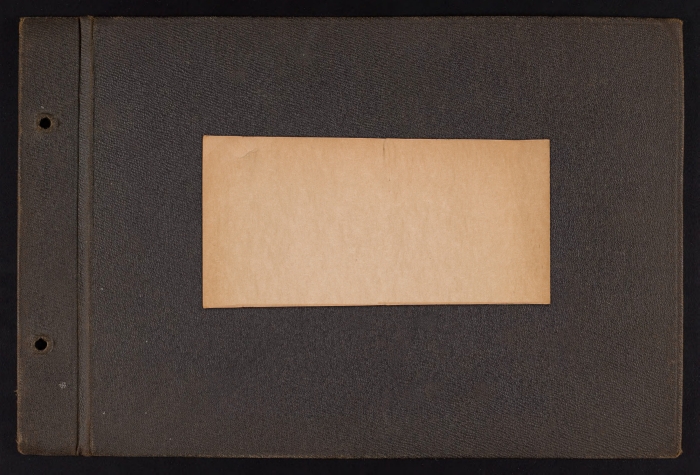

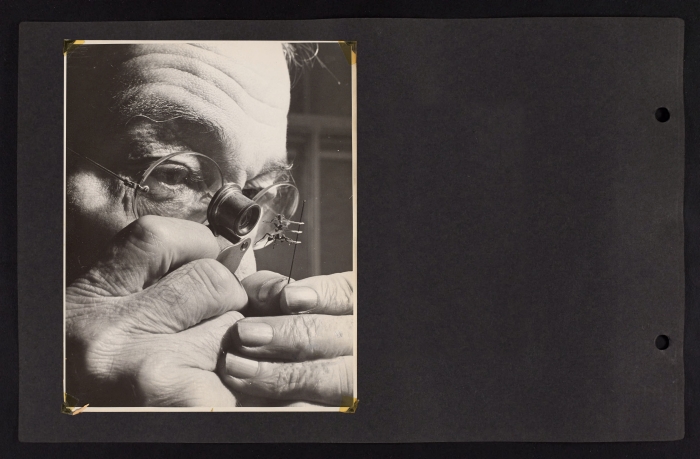
The curator (pictured) first provides you with a paste-in of the telegram. This recently alerted him to the need to send you and your team to the area. (What it says is up to you to add. The same is true of explanatory typed cards for each page, for which space has been left in the layout).

First expedition: The book tells briefly of the first expedition. A Victorian explorer — the museum curator’s father — was visiting the antiquities as an antiquarian tourist when he had cause to venture out to a remote Trading Post. Possibly he went there in search of curious carved items. At the Post he heard tell of a mysteriously shunned fertile belt in the desert uplands. In search of adventure he hired three guides, at some cost, and penetrated toward it for some days. He found an extended oasis of jungle-like ravines that ‘should not have been there’, according to any Army map that he had seen of the area.

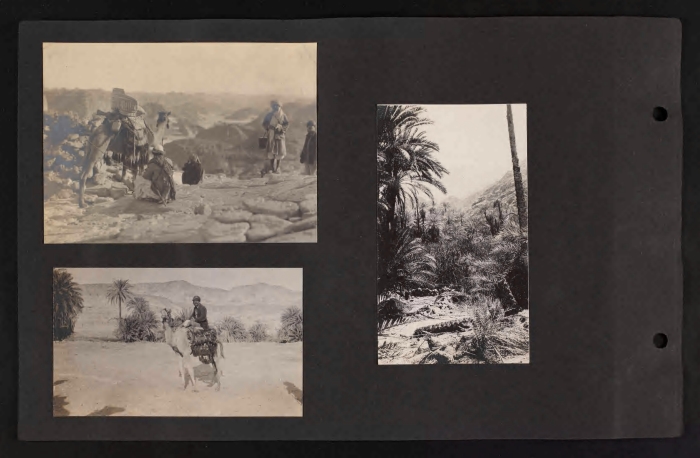
Beyond these fertile ravines, the uplands returned to rocky dry land where he encountered a high ruined cliff city. An ancient and eerie track led him up behind this city, to what from the manner of their stone-work seemed impossibly ancient ruins sited on the clifftop above. Both the city and its fore-runner were unknown to the guides, who had known only of the fringes of the fertile area. The explorer never returned from this trip into the interior, but one haggard guide later traded the explorer’s saddle bag — with its notebook fragments and camera plates — at the trading post. These were thus recovered by the authorities and sent back to the museum. His notebook has a scribbled note about what can be glimpsed in the uplands beyond the clifftop.

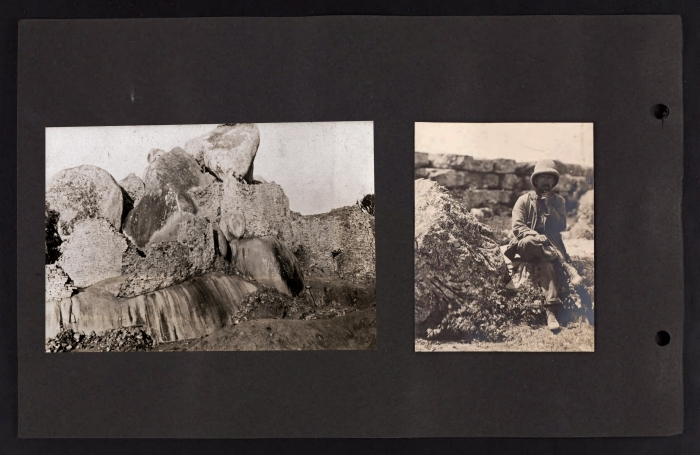
Some years later there was some missionary exploration which penetrated as far as the fringes of the fertile ravines, seeking hypothetical converts. But at its edge it was found to have been recently subject to immense earthquakes and earth-rifts, causing the sparse local population to fear it intensely and making further exploration as far as the supposed city impossible.
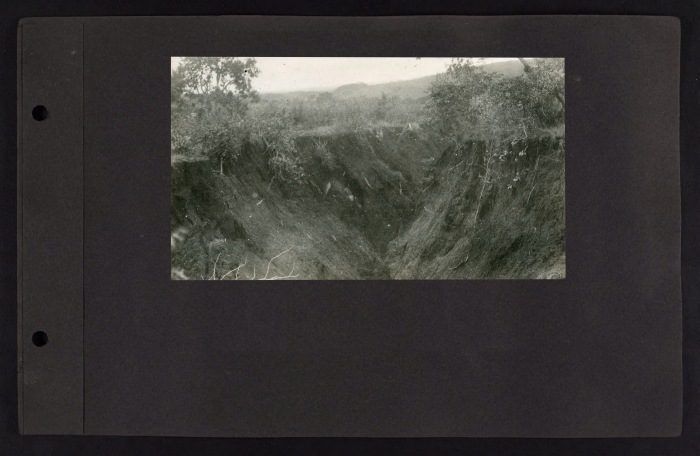
Second expedition: This was formed of two botanists from the curator’s own Museum. Having become interested in the area due to his father’s disappearance there, Dr. Astall had discovered that bizarre fossil plants could be had from the region. He set this father and son team to work on these at the Museum, and quite a collection was formed. The two men later went to the district itself in search of more such fossils. They were also tasked with finding any further details of Dr. Astrall’s lost father.

In the lobby of their port hotel there suddenly appeared a recently harvested living specimen of the supposedly ‘fossil’ plants. The two botanists met with an eccentric snake-charming plant collector, their local correspondent, who suggested it may have come from the mysterious and shunned fertile belt.

The pair travel out and get just past the first really deep rift of the mysteriously fertile belt. There they discover the flies that feed on the living plants to be deadly (and in a rather curious and alarming manner). Of the pair, only the father returned to America. The father continues at the Museum, and he studies the dead flies intensely, as well as the fossil plant collection. He is curiously reticent about what he has discovered, if anything.
Third expedition: A rich young man had come, only a few years ago, to Dr. Arnold Astrall at the Museum. He enquired of the fragmentary notebook made by the Victorian explorer, Astral’s father. These pages were shown to the young man. Dr. Astral noticed the young man became somewhat agitated when he saw the faded map in the notebook. He then abruptly left the Museum.

A short while after this visit Dr. Astrall received an excited telegram from the young man — he had a route to the lost city, firepower on his hip, fly-repellent grenades at the ready, and a fully mechanised base-camp at his disposal! No damn death-bugs would get him! There was surely gold in that city, and he meant to get it! The Museum would generously get 10% of the treasure found, as thanks for its help.
Yet… that was the last the world heard of the young man. Three photographs were to be the only relics of his lost expedition, the film reel being recovered from a drunken guide known to have visited the Trading Post. These pictures are presumed to be of the uplands somewhat beyond the mysterious cliff-city.
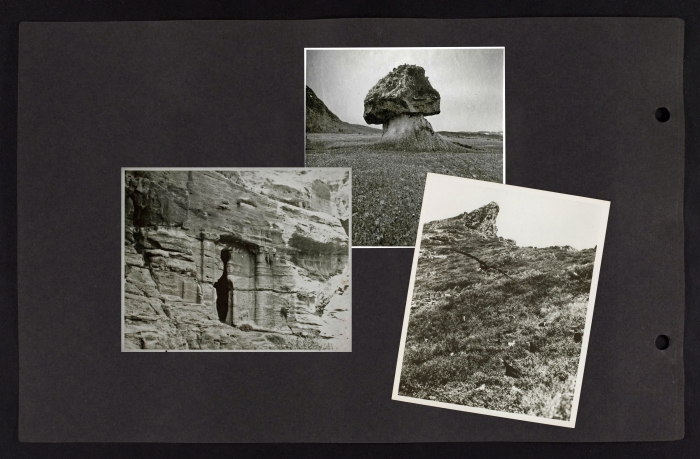
By pasting in picture-corners, the curator has indicated to you a mysterious missing photo from the third expedition. It is said to have been seen at the Trading Post by a missionary…

Possibly it was a closer picture of the Mysterious Winged Thing seen swooping toward the camera in the last photo.

The curator has added some final pages of notes and advice…

You are to form the fourth expedition. Good luck and bon voyage!


Settings, in order:

1. THE MUSEUM and its archives. What can be learned here about the fossil plants and their two researchers? About Dr. Arnold Astrall’s father? About Dr. Arnold Astrall himself?

2. THE PORT HOTEL. What can be learned about the district from afar? Can the eccentric local-plant collector be recruited to the expedition?

3. THE TRADING POST. Rumour and local lore. Obtaining the missing photo(s). Persuading local guides to go.

4. THE FERTILE BELT. Its dangerous plant-flies and earth-rifts. Other dangerous plants may lurk. Or walk…

5. THE ANCIENT CITY. Are there relics to be found here of the rich young man’s mechanised expedition? Of Dr. Arnold Astrall’s father? What was the lure of the uplands, that apparently drew the young man away from the city?

6. THE WEIRD UPLANDS BEYOND THE CITY.


Suggested H.P. Lovecraft works for use as inspirational touchstones:

* The opening part of “Under the Pyramids”.

* “The Outpost” (poem).

* “Winged Death”.

* “The Evil Clergyman” (fragment).

* “The Nameless City” and “The Transition of Juan Romero”.

* Lovecraft’s plot details for “The House of the Worm”, re : flies.

* Lovecraft’s letter to his aunt Lillian, 1st July 1928…

“absolutely marvellous firefly display […] All agree that it was unprecedented, even for Wilbraham. Level fields & woodland aisles were alive with dancing lights, till all the night seemed one restless constellation of nervous witch-fire. They leaped in the meadows, & under the spectral old oaks at the bend of the road. They danced tumultuously in the swampy hollow, & held witches’ sabbaths beneath the gnarled, ancient trees of the orchard”. [Lovecraft went to bed afterwards, intending to dream the fireflies into…] “spectral torches, & about the lean brown marsh-things (invisible to mortal eyes) who wave & brandish them in the gloaming when the unseen nether world awakes”.

Lovecraft had already prefigured these “lean brown marsh-things” as “fauns” in a summer 1915 poem…

So wink the fireflies in the humid brake;
While Fancy traces in the fitful light
The torches of the fauns that dance by night.


That’s it. My $5+ Patreon patrons get the 130Mb printable bundle for this! .ZIP file links have been sent via the Patreon message service to all my $5 or more Patrons. Links will also be sent to anyone signing up at or above that level, and making their first monthly payment.

Caza and Lovecraft

A fine new cover by Phillipe Caza, for a new French RPG apparently to be played with the Cthulhu Hack system. He only did the cover, according to the book’s interior credits.

I see that Caza is interviewed in a chunky 460-page book recently published in French, Lovecraft : Au coeur du cauchemar (Lovecraft: Heart of the Nightmare, 2017)…

“Lovecraft en image…” (“Lovecraft and image …”) Interview with Philippe Caza.


Complete table-of-contents for Lovecraft : Au coeur du cauchemar, in English translation. Items of possible special interest to scholars are noted in bold.

Introduction.

THE MAN

“H.P. Lovecraft, between myth and facts”, by Bertrand Bonnet.
“Lovecraft and his prejudices…”, Christophe Thill interview.

Interview with S.T. Joshi.

“Places and Lovecraft”, by Mathilde Manchon.
“In the footsteps of Lovecraft in Providence”, interview with François Bon.
“H.P. Lovecraft and Robert E. Howard: Friendship, Controversies and Influences”, by Bertrand Bonnet.
“Robert E. Howard and Howard Phillips Lovecraft, Selected Correspondence”, by Patrice Louinet.
“Lovecraft and revisions: the doctor of weird fiction”, by Todd Spaulding.

WORK

“H.P. Lovecraft in press: brief history (and prehistory) editorial of the writings of Lovecraft”, by Christophe Thill.
“Cthulhu, the myth”, by Emmanuel Mamosa.
“The myth of Cthulhu”, interview with Raphael Granier de Cassagnac.
“Lovecraft in twenty-five essential works”, by Bertrand Bonnet.
“The work of Lovecraft”, interview by Christophe Thill.
“Lovecraft and the Lost Generation”, by Florent Montaclair.
“Lovecraft and science”, by Elisa Gorusuk.
“The anti-heroic fantasy of H.P. Lovecraft”, by Christophe Thill.
“The invitation to travel”, by David Camus. [On the travel writing?]
“French translations of Lovecraft: from introduction to tradition”, by Marie Perrier.
“Lovecraft Translator”, by David Camus.
“The poetry of Lovecraft”, interview with Michel Chevalier.

THE EXTENDED UNIVERSE

“Lovecraft Heroes of Fiction”, interview of Patrick Marcel.
“Cthulhu from 7 to 77 eons, or Lovecraft in comics”, by Alex Nikolavitch.
“Adapting Lovecraft to a video game …” interview with Jean-Marc Gueney.
“For a handful of tentacles … HP Lovecraft at the movies”, by Sam Azulys.
“Lovecraft in images…”, interview of Francois Baranger.
“Lovecraft in images…”, interview of Nicolas Fructus.
“Lovecraft in images…”, interview of Philippe Caza.

“Role play: Lovecraft and the world of gaming”, interview of Editions Sans-Detour.
“Role play: Lovecraft and the world of the game”, interview with Cédric Ferrand.
“Lovecraft and them”.

New book: Lovecraft e il Giappone: Letteratura, cinema, manga, anime

I found a new newspaper book-review in the Italian newspaper Il Giornale, which reviewed an Italian book on Lovecraft’s reception and reputation in Japan. Yes, in Italy the mainstream newspapers review obscure Lovecraftian scholarship.

This new collection of essays edited by Gianluca Di Fratta appeared in May 2018 in Italian, and appeared under the title Lovecraft e il Giappone: Letteratura, cinema, manga, anime. The core of the newspaper review, approximately translated and polished for clarity…

Japan, thanks to its distinctive historic culture and its glowing re-use of its own mythology, has been a particularly fertile ground for the spread of Lovecraft’s cosmology. His obscure, ancestral and evil deities, recall on one hand Japan’s Shinto pantheon, and on the other hand they fit perfectly into the popular virtual universe of video games and comics that glow from Japan’s ubiquitous screen-culture.

American troops stationed in Japan after 1945 spread the pocket-book and free Army editions of the Lovecraft stories that had been printed for the U.S. military. This sparked an interest in ‘HPL’, as he is known by many fans, and this interest has been growing exponentially. He has inspired countless film productions or virtual games, even if the literary remains the field of choice of many. As demonstrated, for example, by the admiration expressed by a great writer like Haruki Murakami, to whom… “Lovecraft has opened up his personal abyss of [cosmic] indifference and pushed us all in”, and for which “the existence of Lovecraft represents an ideal” for a writer, an ideal explicitly cited in Murakami’s well-known trilogy.

Despite the title, the new book does not deal exclusively with the influence of Lovecraft in the country of the Rising Sun [Japan], but also delves into “high” literary themes (provided that the stale division between “high” and “low” culture still holds), such as example, the unsuspected similarity between T.S. Eliot and H.P. Lovecraft that was traced by the gothic [specialist?] Gino Scatasta in his “Lovecraft and tradition”. Reference is also made to the influence exercised by Lovecraft on European and American cinema, a theme developed by writer and screenwriter Antonio Tentori. His essay shows how the posthumous fame of HPL has now surely delivered him into the ranks of the eternal writers.

There appears to be no “Look inside” or tables-of-contents which can be easily found for the book, but a short Barbadillo review in Italian usefully added more details and itemised the chapters…

The book was born from the collection of the proceedings of a conference of the same name – provides an extensive account of his strange process of cultural assimilation in Japan, analysing all the manifestations in the most disparate fields, from the narrative to the essay exegetical, from the cinema to the comic, to the animated film, to the publicity, up to the most extravagant forms typical of that people, such as the morbid eroticism or, at the other extreme, the total ‘cute’ Lovecraftian monsters such as nice puppets in the Pokemon style. The preface is by Gianfranco de Turris who frames the essays. Gianluca Di Fratta provides a historical introduction, a chapter on the influence on comics, and two concluding chapters on the Lovecraftian imaginary in Japan. Giacomo Calorio surveys the influence on Japanese contemporary cinema, and Riccardo Rosati looks at anime [Japanese animation] intended for cinema screens.

Friday “Picture Postals” from Lovecraft: in the John Hay Library

Inside the John Hay Library, Brown University.

Lovecraft writes to Morton in April 1933 of his new quarters, that it…

lies in a delightfully grassy, secluded, and and-whereish court off College Street on the crest of the antient hill behind the John Hay Library. It is owned by the college, and heated by steam piped from the library.

“and-whereish”, assuming it is not a mis-transcription for ‘any-whereish’, seems at first glance to indicate that the shared garden between his new house and the adjacent boarding house was the sort of nook that was difficult to find for the first time. Which it was, as one can see here…

But a little research suggests that Lovecraft may have been implying a land-locked ‘little kingdom’? What appears to be a story in The Virginia Reel (1925) records… “the land-locked kingdom of Whereish”, presumably a sort of Gulliverian land? However, I can find no other similar uses.

The Atlantic Monthly (1953) links it more nebulously with the idea of a house… “The notion of a house, as one single definite particular and unique place to come into, from the anywhereish and every-whereish world outside — that notion must strike you as fantastic. You have been brought up to believe that a house…”.

Haunted School House

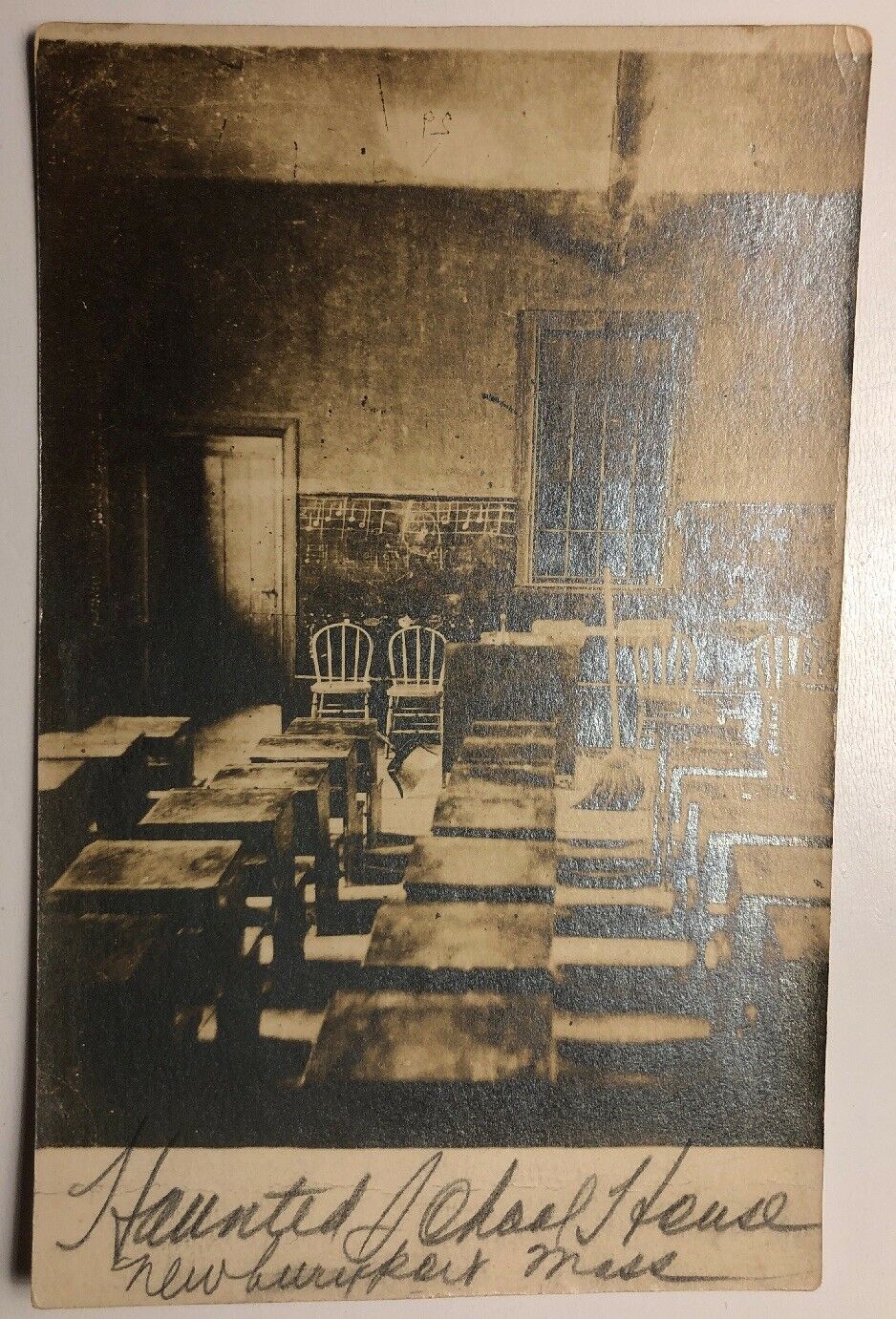
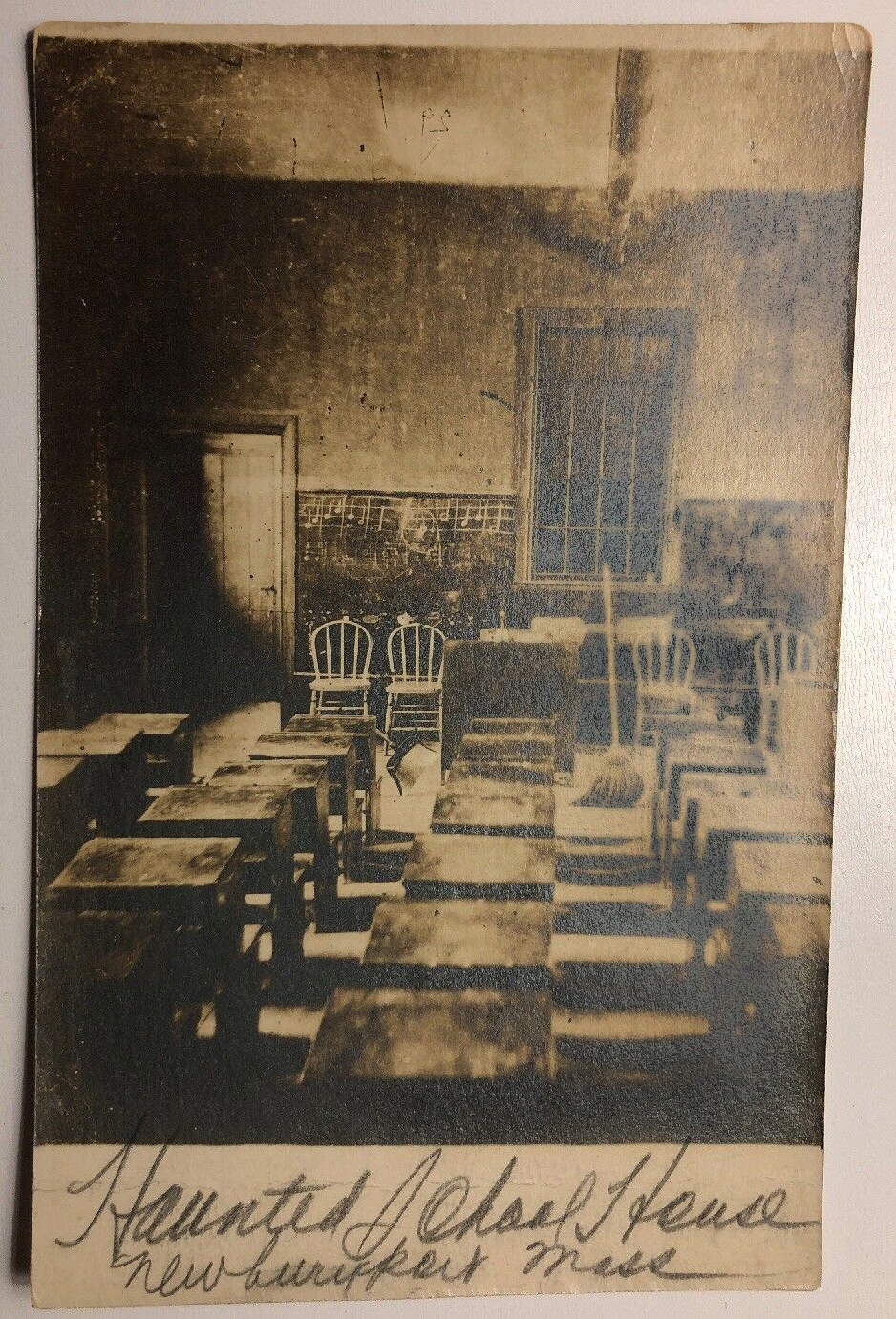
A double-dose of postcarding goodness, this Friday. As well as the usual Friday ‘Picture Postal’, here’s a curious public domain postcard currently on eBay (not from me). It’s a macabre item from Newburyport, Mass., the real decaying shoreline town that was Lovecraft’s general model for Innsmouth. Of possible interest to role-players as a story-element in a scenario, as well as being a choice bit of Americana.

Regrettable it’s flashed on the right side. But here’s my Photoshop fix for that…

Camera flash-bounce / reflection-speckling on eBay vintage pictures can be covered up, if not entirely fixed, in Photoshop:

1. Make a layer copy, invert.

2. On the copy, loosely select the flash-speckled area with the Lasso tool. Feather selection by 33. Invert and delete unwanted area.

3. On this sort of image you can now use a knockout plugin (such as Primatte) to remove more or less everything except the flash-speckle (which is now very dark).

4. Experiment with the layer overlay mode to see what works best for your picture, in blending the dark speckles back over the top of the flash-speckled area.

5. Merge. Make a few light dabs with the Burn tool, to assist with the blending.

Coffee Canon

This week the Coffee Canon coffee history podcast visits The Double R Coffee House in New York City, a New York hangout for H.P. Lovecraft and the Kalem Club.

A promotional card for the new branch at Lexington Av., which wasn’t Lovecraft’s preferred branch at 112 West Forty-fourth Street.

I had another look for information about Lovecraft’s branch. The Soda Fountain trade journal for 1921 ran a profile when it moved from 108 West Forty-fourth Street to 112. I can’t get more than a snippet or two of that, but the article noted…

It is directly across the street from Belasco’s theater, at 112 West Forty-fourth street.

That it was opposite a theatre is new to me, and would help to further explain the ‘theatrical’ aspect to its clientele — further confirming the information in the letter from Kirk. Another snippet of the same trade-journal article notes that board games such as dominoes, checkers and chess were available to drinkers. Pure “Sugar Cane Juice”, apparently a Brazilian drink, was available — which might have suited Lovecraft’s sweet tooth.

Deathbed conversions

A further 1937 edition of the Amateur Correspondent has appeared on Archive.org. I had previously noted two others from 1937. This was, of course, the period of time in which news of Lovecraft’s death was slowly percolating through a fandom that was still decades away from being connected at hyper-speed by digital technologies. Amateur Correspondent, September-October 1937 has a page by R.W Sherman. He talks of the commentators who had formerly derided and shunned Lovecraft while alive — and yet on the master’s death seemed to have suddenly converted themselves into admirers.

Exhibition: Richard Corben – Donner Corps a L’Imaginaire

On now near Bordeaux, France, the exhibition “Richard Corben – Donner Corps a L’Imaginaire”. This is a major retrospective exhibition for the acclaimed comics artist Richard Corben, partly known for his Lovecraft work, and has reportedly been assembled from the best of many Corben collections. The 250-item show… “constitutes the most complete retrospective on Richard Corben, author considered by the profession as one of the most fascinating draftsmen of his generation.”

It’s at the Musee d’Angouleme (alongside the Angouleme Cathedral, about 30 miles north of the Atlantic coastal city of Bordeaux). It forms the flagship exhibition of the annual comics festival there, and runs until 10th March 2019. As such, it may not travel on to museums and I’m guessing that this may be the only chance to see the show.

Poster:

The Miskatonic Scholarship 2019

“The Miskatonic Scholarship is awarded each year to a promising writer of Lovecraftian cosmic horror”. It enables an author to attend… “The Odyssey Writing Workshop … an acclaimed, six-week program for writers of fantasy, science fiction, and horror held each summer in New Hampshire [on the east coast of the USA].”

“Contact Odyssey Director Jeanne Cavelos (email jcavelos@odysseyworkshop.org with ‘Miskatonic Scholarship Application’ in mail header-line) for the Miskatonic application form, which is due 1st April 2019.”

Applicants must demonstrate financial need in a separate application.

New book: H. P. Lovecraft: Vida y Obra Ilustradas

New from Spain, some sort of illustrated life of Lovecraft. H. P. Lovecraft: Vida y Obra Ilustradas weighs in at 280 pages but doesn’t appear to be a graphic novel. It seems to be a heavily illustrated book, pitched at the Spanish-reading comics-buying / young adults market…

This book offers an illustrated journey through the life and work of the dark Providence Solitary, from his precocious and strange early fictions to the abominable masterpieces of his maturity.

That sounds like the stories, as well as the life, are being illustrated. The book is also on Amazon UK, without a “Look Inside…” flash.

10,000-word survey of Lovecraft RPG publishing in 2018

The Cthulhu Reborn blog has completed a handy and succinct “helicopter” overview of all the Cthulhu/Lovecraft-related RPG releases of 2018. Including pointers to some rather polished new gaming magazines. The survey is now complete, and will thus move on to review individual titles. My Tentaclii blog doesn’t cover such game-books, unless they’re also of use as reference works for writers. But I’m pleased to find someone who does, and who provides a highly informed annual overview which helps non-gamers to keep a finger on trends and sensitivities over in the publishing gamer-verse…

Cthulhu in 2018: A Retrospective, part 1

Cthulhu in 2018: A Retrospective, part 2

Cthulhu in 2018: A Retrospective, part 3

Cthulhu in 2018: A Retrospective, part 4

Fine work. I ported all four parts into Word (a simple copy-paste to Word also auto-imports the pictures) and got a 10,000-word PDF for sending to my Kindle.

For those short of time, the three most interesting points for non-gamers are:

1) the new full-colour magazine, whose cover is seen above, which may well interest artists and writers as well as gamers.

2) there’s now a full-cast high-quality audio production of the all-time role-playing gaming classic Masks of Nyarlathotep, so that non-gamers can now enjoy it too. Select the “MP3’s only” option in the easily-overlooked dropdown box, which has a £27 download option for the six episodes.

3) there’s now (finally, after more than thirty years) a £20 introductory starter-pack for total newcomers to the Call of Cthulhu RPG game, with a rule-book of a mere 24 pages and various other starter bits and pieces.