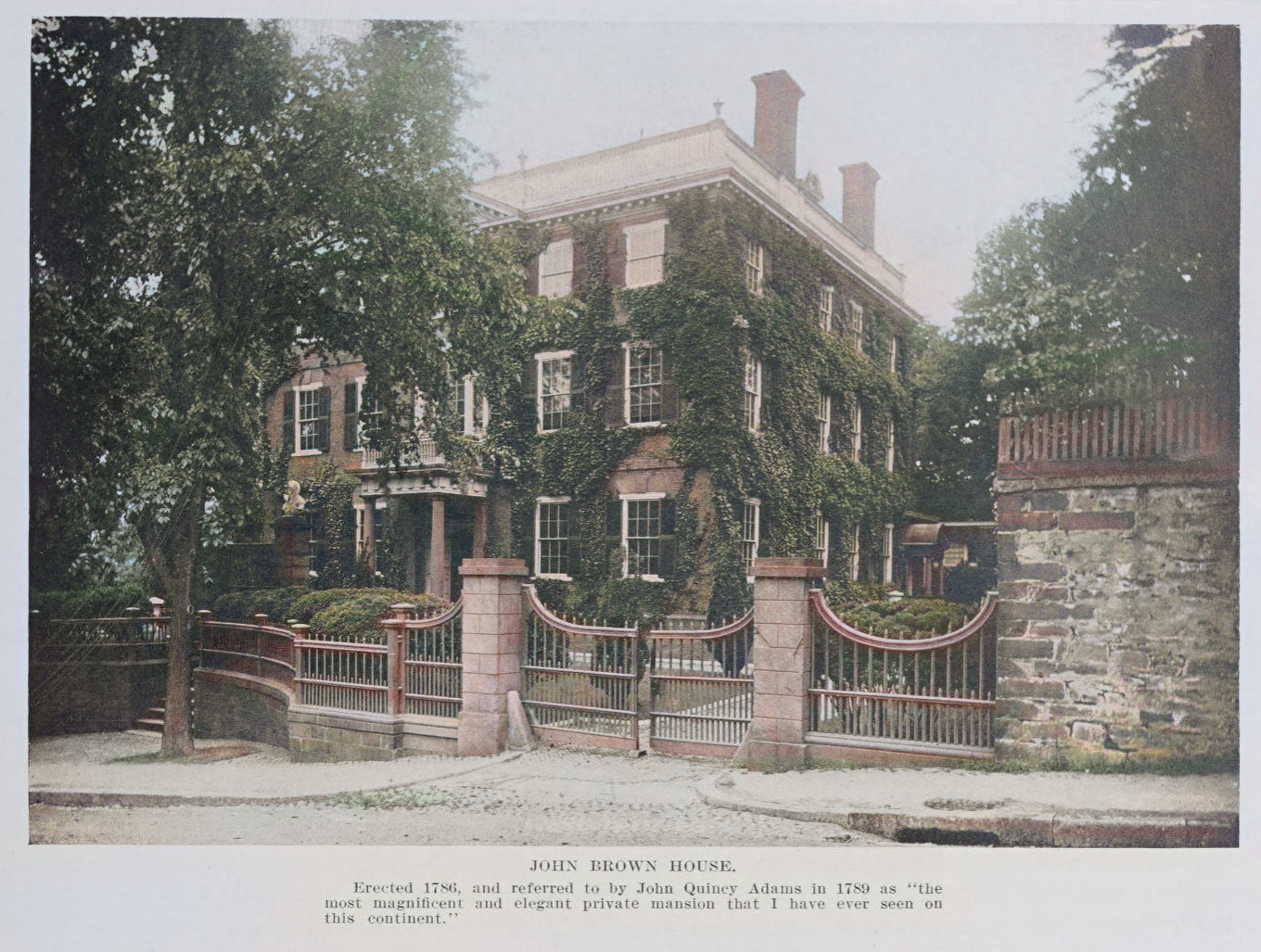
Added to my post on The John Brown house, a photograph from 1914…
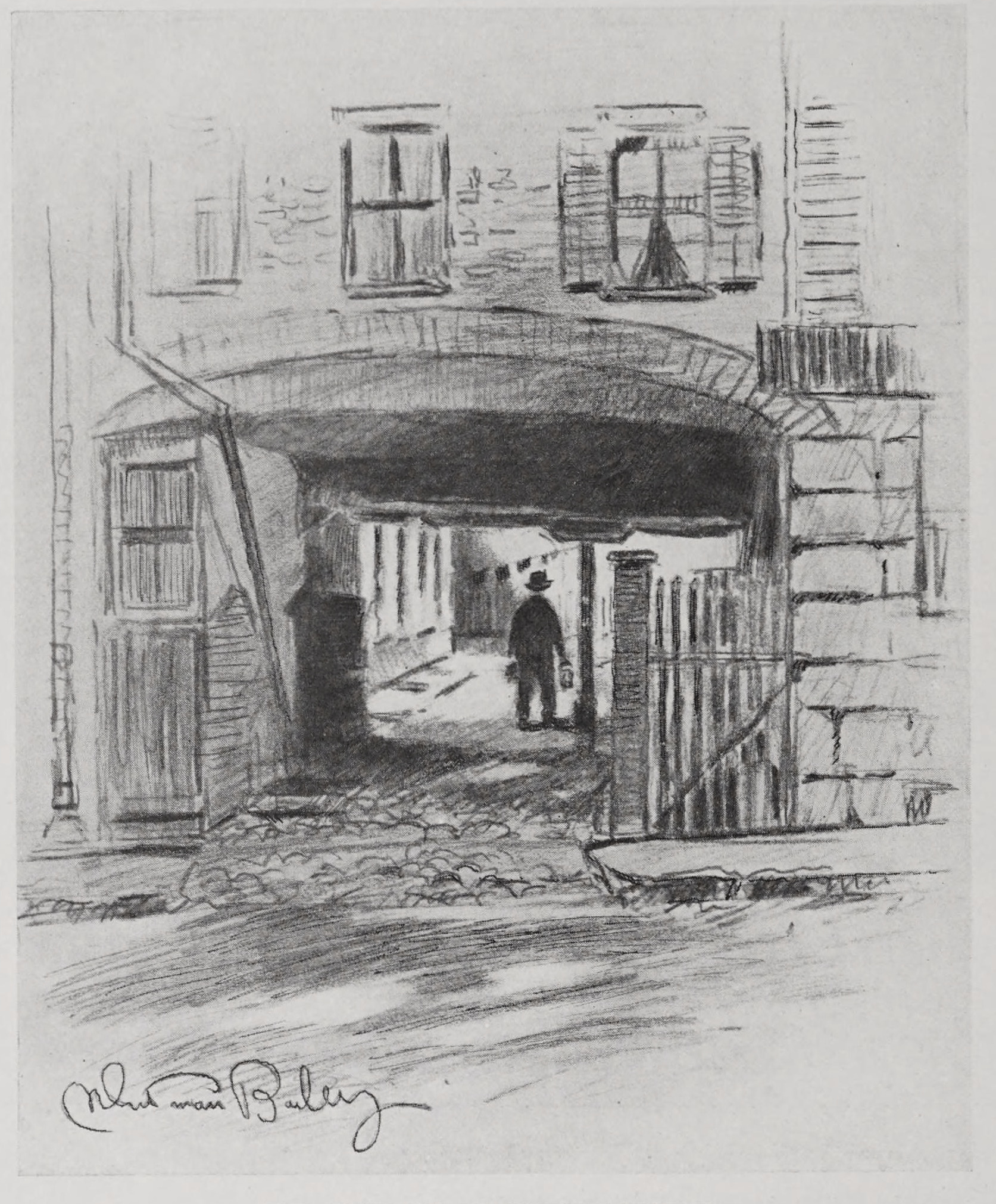
In 1927 Lovecraft sat inside one of the doorways and, in his untrained manner, sketched a Providence scene of the colonial period as it might have been viewed from there.
21 Wednesday Oct 2020
Posted in Odd scratchings
Added to my post on The John Brown house, a photograph from 1914…
In 1927 Lovecraft sat inside one of the doorways and, in his untrained manner, sketched a Providence scene of the colonial period as it might have been viewed from there.
21 Wednesday Oct 2020
Posted in Podcasts etc.
As part of a Japanese film festival, “H.P. Lovecraft & Cthulhu Mythos: The Origin of Cosmic Horror”, an online talk in which Japanese Lovecraftians discuss Lovecraft and the mythos.
Online 31st October 2020, in Japanese only (though if it gets to YouTube, they’ll auto-caption it, and then it can be run through Translate to get the gist of it).
20 Tuesday Oct 2020
Posted in Kittee Tuesday
Do rats, mind-controlled by weird invisible brain-parasites, launch themselves to their doom in the jaws of hungry cats? This faintly Lovecraftian claim has been made, sometimes with seeming authority, and then hugely amplified by the media and by the follow-on percolation of the notion into folk-belief. With the implication that kitty, having unaccountably turned up her nose at her Chicken Chunks ConCarne and instead chewed on a smelly rat, might then pass on the brain-controlling parasite to her humans.
Turns out, it’s something of a media myth, according to the new Royal Society paper “When fiction becomes fact: exaggerating host manipulation by parasites”…
… there is no sound evidence that the behavioural changes in infected rodents increase the transmission of T. gondii to felids [i.e. cats …] The evidence surrounding the ‘fatal feline attraction’ is inconsistent and contradictory at best (as it is for all the impacts of T. gondii on human and non-human behaviours).
Which doesn’t mean that this is impossible, just so far un-tested in a firm manner. If such a causal transmission and chain-of-effect were eventually to be found, the paper points out, it may be far more subtle and complex than we think. Of course, everyone who has a cat knows they can do thought-control of humans (“feed me… feeed me… feeeed meee…”), and cause them to head rapidly toward the kitchen. But the lurid ‘rat parasite’ claim is of a different order. It’s no doubt been a very handy excuse for cat-haters, over the last 20 years or so, along the lines of: “Oh no, we don’t let little Timmy anywhere near cats, they could give him a mind-warping brain-parasite…”
This also rather throws cold water on the possibility that H.P. Lovecraft, through his frequent heavy-petting encounters with just about every stray cat in the unsavoury parts of Providence, Boston, and New York City, “must” have had his mind turned toward weirdness by brain-parasites.

19 Monday Oct 2020
Posted in Historical context, Podcasts etc.
The quality Stuff To Blow Your Mind podcast has a new three-parter on the famous Minotaur and its Cretan labyrinth.
Lovecraft would, like most children before the early 1980s, have early become familiar with Greek myth and with the Minotaur story. He found it early in his boyhood, and in vivid form, in Hawthorne’s Tanglewood Tales for Boys and Girls (1853). Despite the book’s misleadingly rustic title — from which one might expect only cosy mid-Victorian woodland cottages and merrily skipping milk-maids — Hawthorne actually recounts powerful Ancient Greek myth… “the stories of the Minotaur, the Pygmies, the Dragon’s Teeth, Circe’s Palace, the Pomegranate Seeds, and the Golden Fleece” (S.T. Joshi, I Am Providence). Sadly, libraries in the U.S. are now pulling Hawthorne from the shelves. Apparently he offends some perpetually-offended politically-correct sect or other. Laughably, Upton Sinclair, once the golden boy of the left and about whom Lovecraft was sniffy, is being swept away along with Hawthorne.
19 Monday Oct 2020
Posted in Odd scratchings
I’ve updated the Web links on my 2019 post Machen’s autobiography – all three volumes now online and I had also linked there to Strange Roads.
Two of the 2019 links went only to Hathi, which wasn’t ideal since they don’t let you download the entire book. Hathi can also be slow, and can stop working if it thinks you’re trying to ‘pirate’ the book by reading too many pages. The new links are to The London Adventure and Strange Roads, which are now free and openly public on Archive.org with downloads. This leaves only Things Near and Far as the lone Hathi-only title.
If you want them all in printed-paper as good texts and with the S.T. Joshi stamp-of-approval, there’s also the new book Autobiographical Writings by Arthur Machen which I’m told will ship in November 2020.
18 Sunday Oct 2020
Posted in New books, Scholarly works
The S.T. Joshi-edited collected Autobiographical Writings by Arthur Machen appears to be ordering, for November shipping.
17 Saturday Oct 2020
Posted in Lovecraftian arts, New books
A Portuguese translated Tales collection from Lovecraft, to be published from Martin Claret, 28th October 2020. It’s one of three such volumes but their page for these is broken, which doesn’t inspire confidence. Still, a very pleasing and clever cover for the first such book.
The bicycle is there because the young Lovecraft was a keen cyclist to about 1908, then it most likely became sporadic, and he marks 1913 as the terminal date for his giving up cycling altogether. For adults to cycle in Providence was not the “done thing” at that time.
16 Friday Oct 2020
Posted in Picture postals
This week, a postcard to accompany the recent Voluminous podcast reading of “I Am Home”. The letter being Lovecraft’s ecstatic recounting of his returning to Providence by rail, from what he had come to think of as the ‘pest-zone’ of New York City. As the train sped through Westerly he finally felt he was coming home…
Then at last a still subtler magick fill’d the air — nobler roofs and steeples, with the train rushing airily above them on its lofty viaduct — Westerly — in His Majesty’s Providence of RHODE-ISLAND & PROVIDENCE-PLANTATIONS! GOD SAVE THE KING!!
Interestingly there was a “Wolf’s Den” at or near Westerly (often mis-named as “Westerely”), though he may never have visited it.
The best is can get is …
We’ll have to investigate Chauncey. Westerly coaches pass through Hope Valley (so do the New York Greyhounds), but the fare is probably rather formidable.” — letter to Morton, January 1933.
But perhaps he never made it there. Poverty led him to write to Morton in June 1930 that…
I fear desperately that I can’t quite make the Westerly jaunt.
There seems no other evidence he visited. Perhaps Westerly remained always a tantalising stop on the train line to Providence, at which he never alighted? A local place that, like Block Island, he should have visited but didn’t?
15 Thursday Oct 2020
Posted in Lovecraftian arts, New books, Scholarly works
A new book, seemingly coming from an occultist perspective, Dark Magic: H.P. Lovecraft, Starry Wisdom and the Contagion of Fear…
explores the contagious qualities of Lovecraft’s tales, with their embedded sense of dread and their dismantling of human reason, and how they have propagated in the near century after his death … the infectious qualities of Lovecraft’s ideas are seen to parallel virology, mass infection, and the fraying state of the human psyche during times of pandemic.
Which blurb leads me to coin the new word “cultifectious”:— the quality had by a certain type of culture that is highly infectious and communicable, but not mere mass-market pop-fluff or some passing propaganda of-the-moment. It carries within it a complex nexus of elements that organically connect things usually divided — low and high culture, the deep past and the cosmic future, or ancient and modern science. Its infectiousness thus comes partly from being connected to ‘the genuine’ at both ends of one of those divisions, and by bringing these lightly into play with each other. Because it has something genuine woven through it, it may be difficult to make into a mass audience commodity unless brutally shorn of many of its intrinsic qualities. Instead it persists and spreads among initiates as a potent ‘cultic’ form of culture. It does not usually, however, gather about it the more oppressive hierarchical apparatus of ‘a cult’ in the religious sense. It naturally fascinates, rather than ponderously recruits.
14 Wednesday Oct 2020
Posted in Lovecraftian arts
The Lovecraft Arts & Sciences store in Providence has updated their store page and appears to have the “Map of Lovecraft’s Providence” by Jason Eckhardt currently in stock.
Also Eckhardt’s illustrated booklet Off the Ancient Track for $10 (yes, the revised 2013 edition).
13 Tuesday Oct 2020
Posted in Kittee Tuesday, New books
Ecstasy in Literature: Reading Arthur Machen’s Hieroglyphics…
This handsomely produced new edition of Machen’s book, Hieroglyphics: A Note Upon Ecstasy in Literature, contains Machen’s “A Note on Poetry” as well as two essays which bookend Machen’s text … an introduction by D. P. Watt (himself one of the leading lights of British weird fiction) …
12 Monday Oct 2020
Posted in Lovecraftian arts, Scholarly works
Call for papers: Religion and Horror Comics. Deadline for abstracts: 1st December 2020. For a volume of the Religion and Comics academic book series, published by Claremont Press. The planned book appears not to be open-access.