• About
  • Directory
  • Free stuff
  • Lovecraft for beginners
  • My Books
  • Open Lovecraft
  • Reviews
  • Travel Posters
  • SALTES

Tentaclii

~ News & scholarship on H.P. Lovecraft

Tentaclii

Category Archives: Odd scratchings

“New England Fallen”

18 Saturday Jun 2022

Posted by asdjfdlkf in New books, Odd scratchings, Podcasts etc.

≈ Leave a comment

Now online at Brown, a scan of the poem “New England Fallen” (1912). It’s not in the second edition of The Ancient Track, though the far longer and different poem of the same name is there. The text of this (presumably newly-found) shorter and more personal version is to be found in good form in the 2021 The Lovecraft Annual, given there without commentary.

No sign of the scans of the Belknap Long letters at the Brown online repository, as yet.

Over on YouTube, a new reading of Lovecraft’s poem from a few years later, “The Garden” (1917).

Notes on Selected Letters II – part two

09 Thursday Jun 2022

Posted by asdjfdlkf in Historical context, Lovecraft as character, Odd scratchings

≈ Leave a comment

Over the summer I’m reading through Lovecraft’s Selected Letters. Here are my notes for Selected Letters II. With just one more post on Vol. II tomorrow, re: new discoveries about Lovecraft’s room at 169 Clinton Street on the edge of Red Hook.


* Page 221. Lovecraft’s family Bible, purchased 1889 by his parents, had in it a clumsy… “imitative engraving of Belshazzar’s Feast” by the Northumberland-born visionary artist John Martin (1789-1854). Lovecraft later recognized the picture “upon seeing a proper plate of the subject for the first time.”

* Page 222. 10th January 1928. Beirce’s translation of The Monk & the Hangman’s Daughter as a possible precursor to, or primer for, some of the feel of “The Dunwich Horror” (written August 1928)…

it is scarce two weeks since I read, for the first time … I shall not soon forget the general picture afforded of the wild Bavarian mountains, the sombre, ancient life of the salt mines, & the whispered, fearsome lore of the crag-fringed tarns & black hanging woods….

Around the spring of 1928 (page 331) Lovecraft also heard a public lecture — presumably at Brown — on modern Greek folklore… “I heard a highly illuminating lecture on the subject a year ago by Sir Rennell Rodd, a lifelong student of neo-Hellenic folklore.” This may also have fed into his fateful trip to Wilbraham and the birth of “The Dunwich Horror”. Rodd’s 1890s book on the topic is online, and he had presumably added to his knowledge since then.

* Page 296. By early 1929 he was weekly taking “the N.Y. Sunday Times and the sanely balanced and disillusioned news-weekly Time.” But a few years later he intimates to Long that he has limited his intake of national and international current affairs.

* Page 298. “I’d say that good art means the ability of any one man to pin down in some permanent and intelligible medium a sort of idea of what he sees in Nature, that nobody else sees. In other words, to make the other fellow grasp, through skilled selective care in interpretive reproduction or symbolism, some inkling of what only the artist himself could possibly see in the actual objective scene itself. … The picture can, if it be good art, give you something in the real scene which you couldn’t have gathered for yourself — which only the particular artist who painted the picture could ever have gathered preserved for other people to see. … We derive from this process a feeling of magnification in the cosmos — of having approached the universal a trifle more closely, and banished a little of our inevitable insignificance. Instead of being merely one person, we have become two persons — and as we assimilate more and more of art we become, in effect, more and more people all in one; till at length we have the sensation of a sort of identification with our whole civilisation.”

* Page 323. He reads The Silversmiths of Little Rest, by William Davis Miller. Because it related to his family-tree and “the Casey side av me” believed by his family research to be originally “the English Caseys of Gloucester”, England. The 50-page 18-plate book was produced in a limited edition of 150, seemingly for antiquarians in New England. Little Rest was a place, rather than a description of the work-habits of the smiths. “Full biographical and occupational information (markings, inscriptions) on the following key Little Rest (i.e., Kingston, RI) silversmiths: Samuel Casey, John Waite, Joseph Perkins, Nathaniel Helme, Gideon Casey and William Waite.”

* Page 324. March 1929. He alludes to something Talman is writing or has recently written. “By the way — it’s a good idea of yours to square us criminal Caseys with society by making an Howard Phillips a reg’lar deteckatiff” [regular detective]. Which hints that Talman had recently penned or planned to pen a crime-detective story featuring a “Howard Phillips”. I don’t yet have the volume of Talman letters, and I imagine I may find there some detail about this apparent ‘Lovecraft as character’ story. By January 1929 Talman had moved to Red Hook, and I would guess he was enamoured of “The Horror at Red Hook” with Detective Malone, and thus probably wanted to write something similar himself — perhaps a clever sequel featuring Lovecraft himself. But I shall have to wait for the book of Talman letters to find out if there are more details on this.

* Page 329-30. April 1929. He observes that the… “Famous ‘London Terrace’ in West 23d St. [New York City] — where a friend of mine has lived all his life — is to come down shortly to make room for a wretched apartment skyscraper.” Who was this friend? He may be footnoted in the Toldridge letters, but I don’t yet have that volume. But something can be gleaned from the building data. Historians now refer to the row as a… “development from the 1840s known as London Terrace, built to look like typical London [British] apartments at that time”. A local report of 1929 gives an alternative name, mourning the loss of… “a row of private dwellings of considerable age and great local interest, identified as London Row or London Terrace”. The book The City in Slang (1995) gives a folk-name and the location… “One of the earliest so-named Millionaires’ Rows in New York was a block on West 23rd Street, a development formally called London Terrace, between Ninth and Tenth Avenues.” So these data may help someone to pinpoint Lovecraft’s mysterious friend, who still lived there in 1929 and was likely either i) affluent and elderly or ii) a young lad of an affluent family.

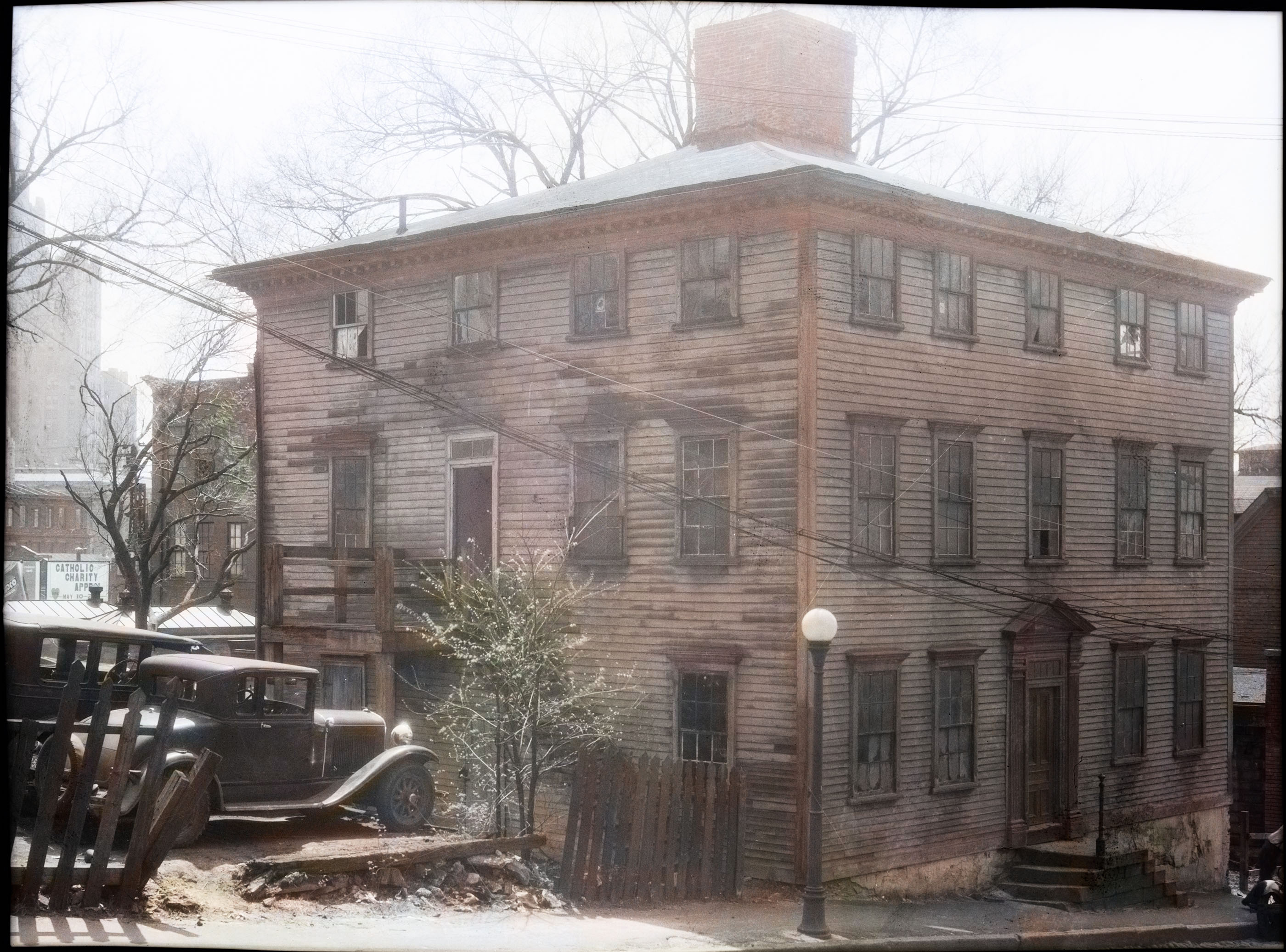
* Page 353. Lovecraft tells Mrs Toldridge… “I pass in sight of the ancient Carter house every time I walk down town — & the neighbourhood is still much as he knew it in 1770 & thereabouts. Across the street an old brick schoolhouse built in 1769 is still serving its original purpose, whilst at the foot of the hill the old Quaker Meeting House ( 1745) still broods beside its deserted wagon­sheds. … John Carter, Providence’s colonial printer, & publisher of the Providence Gazette & Country-Journal before, during, & after the revolution. His old shop & office, the Sign of Shakespeare’s Head, in Gaol-Lane, is still standing in good condition notwithstanding the sinking of the neighbourhood to slumdom. It is a large square house on a steep hill, with fanlighted doorway & the double flight of railed steps so typical of colonial Providence.”

The John Carter house is at “21 Meeting Street”, an address which unlocks the Library of Congress. Here is the house as Lovecraft would have known it circa 1933-35. The Industrial Trust building can be seen behind on the left. Modern photos show a currently ‘restored’ colour that can range from neon-red to coconut-shell brown, so I’m not sure how to colour it. Here it’s sort of ‘faded creosote’, in keeping with its decrepit slum state.

Collected works in Japanese

08 Wednesday Jun 2022

Posted by asdjfdlkf in Odd scratchings

≈ Leave a comment

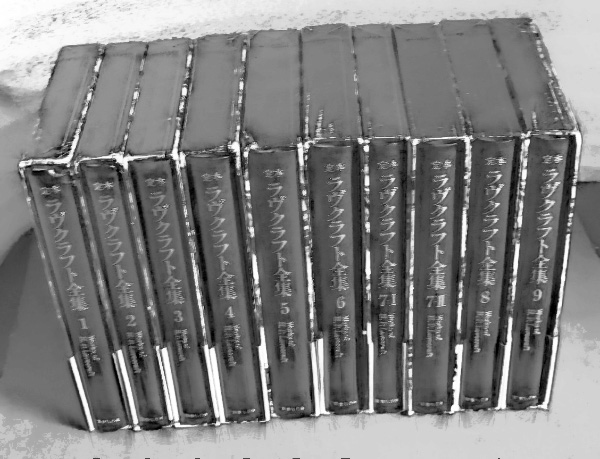
Lovecraft would surely have been chuffed to have his collected works in Japanese. This is what the set looks like, though apparently there was one further uniform volume produced after the boxed set. A bad blurred Abe picture, and the set anyway looks it’s spent some years in the hold of a Kushiro squid-jigger, so I’ve here filtered it a bit.

Peter Lamborn Wilson

06 Monday Jun 2022

Posted by asdjfdlkf in Odd scratchings

≈ Leave a comment

I hear that Peter Lamborn Wilson is now with the angels.

Doubtless some thumping great 650-page biography will, one day, proffer a paragraph that draws strange parallels between P.L. Wilson and H.P. Lovecraft. For instance, living as-if back in 1911, quitting New York City for the rural Hudson Valley, engaging playfully with the weird Fourier-ist backwoods of American history, dreaming of wandering mad Arab visionaries and Sufi dream-voyagers, seeking traces of lost Egyptian desert utopias, musing on the hermetic ‘will to power as disappearance’ in the service of eventual re-emergence and re-discovery in other places and at other times.

But for now I plant a few quick signposts-in-the-sand, following a quick catch-up survey of where his post-2001 work might be found.

His latest book appears to be Peacock Angel: The Esoteric Tradition of the Yezidis (2022). Which should help clear up any misconceptions gained about them in Lovecraft’s “Red Hook”. This follows on from his Cauda Pavonis: Esoteric Antinomianism in the Yezidi Tradition (2019).

His The Temple of Perseus at Panopolis is a 400-page table-trembler which imaginatively and poetically… “aims to give a thick impression of a single Egyptian city, Akhmim, called by the Greeks Panopolis or ‘city of Pan’. As a time-machine, this book will take the reader back to the 5th century AD, when the last champions of Paganism were battling against the coming triumph of Christianity.” Sounds interesting. A little later on his heavier book False Messiah: Crypto-Xtian Tracts and Fragments (2022) is said to prod at the various esoteric encrustations that have attached themselves to Christianity.

His fantastical fiction is to be found in Night Market Noodles & Other Tales (2017) and his collection of Borgesian and Nabokovian hoax-fictions False Documents (2015). I can’t find any other such collections. I’ve never read any of it, but it’s on the list now.

Riverpeople (2014) is his “epic” mixed poetry and prose text, which appears to be akin to Moon’s PrairyErth but shorter. It’s on the landscapes and people of his adopted home-place in the Hudson Valley, above New York City. The Esopus River, to be exact, which it appears Lovecraft knew in the form of his cherished “Esopus grist mills”. Riverpeople is flanked by a book of essays arising from his interest in early American weird-history, The American Revolution as a Gigantic Real Estate Scam: And Other Essays in Lost/Found History (2019). Another sentiment with which Lovecraft might have nodded in agreement, if not quite agreeing with the romantic anarchist politics (the ponderous and un-readable fellow anarchist Murray Bookchin frowned on Wilson too, which I consider to be a Good Sign). Wilson’s related essays, such as “Back to 1911: Temporal Autonomous Zones” and “Caliban’s Masque: Spiritual Anarchy and the Wild Man in Colonial America”, are to be found in the miscellaneous clear-out collection Anarchist Ephemera (2016). Which, since it’s Creative Commons, is on Archive.org as a PDF.

Like Lovecraft he was also a poet. I can find three chunky volumes of selected poems published in 2018, Lucky Shadows and Vanished Signs and Thibault or the Secrets of the Sea. Said by Autonomedia to have all been selected from his “1999–2014” poetry, and then split into books distributed among three different publishers. A note on Vanished Signs suggests a chunk of that volume is from his earlier Ec(o)logues (2011), which was apparently an evocation of “anarcho-surrealist” bucolic ruralism. Sounds like News from Nowhere for the Terrance McKenna generation. After that the poetry seems to swing a little darker with the final(?) School of Nite (2015) which was a 60-page photobook with sombre photos and poems.

His essay collection New Nihilism (2018) collected essays on comics-and-freedom (said to be excellent), evading the corporate media, and his enduring love of Celtic culture and history (not the cringe New Age gift-shoppe variety) among other topics. Sadly he does not appear to have ever engaged with Lovecraft in essay form. That would have been an interesting long essay. But it’s one that we shall now never have.

“I don’t think I shall miss such social activities as I have had”

02 Thursday Jun 2022

Posted by asdjfdlkf in Odd scratchings

≈ Leave a comment

I see that The Silver Key (blogger-scholar and author or Flame and Crimson: A History of Sword-and-Sorcery) is also off Facebook, and has a few observations…

passive scrolling, and ‘likes’, which is what Facebook / Instagram / TikTok, etc. encourages, eats up your time in an insidious fashion, far more than you know.

He’s now powering into LinkedIn though, which I guess is kind of Facebook for the business crowd. I’m not on LinkedIn either. Or Instagram or Twitter. In my case, my departure from Facebook (abruptly blocked for the cryptic reason of having the “potential to reach too many people”) has seen me continue to post all the useful localist information that I used to fillet-and-post. But instead of on my Facebook Groups, all that’s now at a WordPress-powered hyperlocal called The Potteries Post.

What was new on Tentaclii in May

01 Wednesday Jun 2022

Posted by asdjfdlkf in Odd scratchings

≈ Leave a comment

Time for another monthly round-up of items miscellaneously Tentaclii-fied.

In my regular Friday ‘Picture Postals’ posts I completed my photographic stroll around Lovecraft’s beloved Japanese Garden at the Brooklyn Botanical Gardens, discovering among other things that it was far larger than imagined and also had vast hot-houses. A possible partial inspiration of “The Shadow out of Time”, and definitely inspiring for his friend Belknap Long’s later wartime Curator of the Interplanetary Gardens series for boys. I looked into where the Eddy Jr. tale “Black Noon” might be found today, which spurred a ‘Picture Postals’ post on both the Dark Swamp and the adjacent Durfee Hill, with a new composite map and a side-trip (as Lovecraft did) into Pascoag and pointing up its “Red Hook” connection. One small new discovery was made, indicating why Morton might have wanted to visit Durfee Hill.

In other pictures, a picture was found of the 132 Wickenden Street branch of Lovecraft favoured “Jake’s”, and I mused on if he might have ever set foot in this branch. Faig Jr. suggests not, and it certainly looks like there’s no evidence. But I pointed out the proximity to the New York boat docks. Rather usefully, I also found the opening times for both this and the main branch. The ferreting away at “Jake’s” then led me to discover a very nice picture of the main site at 9 Canal St. Providence, and not just an exterior either. A superb interior with customers and owners, which I promptly cleaned and colourised. To top this discovery, later in the month I found the very elusive “John’s” in Brooklyn, though sadly not as an interior. Also “Bickford’s”, another Brooklyn favourite. This formed a quartet of posts — Bickford’s, Johns, pictures of John’s, and then ‘who John was’. With many new discoveries and pictures along the way. Now we at last have the addresses and names it’s possible that other Lovecraftians, especially those who know the history of New York City and have access to paid U.S. newspaper databases and city archives, will be able to find more in the future.

In scholarly work, there was news via S.T. Joshi of the two new volumes Miscellaneous Letters and Letters to Woodburn Harris and Others, set for August 2022. The Spanish edition of Joshi’s I Am Providence is out. The German Lovecraftians reported the imminence of their scholarly volume on the “cultural interplay between H.P. Lovecraft and Germany”. Which I assume will be issued in German, though hopefully someone will be translating it soon. Leslie Klinger’s annotated The Call of Cthulhu and Other Stories appeared, an affordable cut-down one-volume paperback version of the previous volumes. The selection and ordering looks very suitable for beginners, and I believe he used the Joshi texts.

In my reading and note-taking on the Selected Letters I got as far as ‘Notes on Selected Letters II – part one’. The concluding part two is coming soon. I made the seemingly new discover about the strong likelihood that his reading of New Lands by Charles Fort influenced “The Colour Out of Space”. If he read it before and not after March 1927, that is.

In matters relating to historical context, I linked to useful blog post elsewhere about William Dean Howells, musing on which added to my knowledge about censorship in Lovecraft’s era. A PulpFest post also had me thinking about Lovecraft’s role in networking the productive end of early SF fandom, and thus ultimately in the exploration of space (via SF’s influence on the Space Race). I also spotted a scholarly book on Theosophy’s wider cultural impact, which I assume must include Weird Tales, Lovecraft and some of the circle.

In open archival material, I grabbed and rectified a nice new eBay scan of the Old Brick Row in Providence. A useful simplified map of Providence was found. The newly online archives of the Year Book of the American Society of Bookplate Collectors and Designers, 1923-1931 may also hold some as-yet undiscovered treasures. I also discounted the notion that Lovecraft might have known the novel The Mummy! A Tale of the Twenty-Second Century, but along the way discovered a very interesting bit of proto-sci-fi.

As for the Lovecraft Circle, I noted the new Collected Letters of Robert E. Howard: Volume 2, and that J. Vernon Shea’s late memoir of Lovecraft is online as printed in Fantasy & Science Fiction (May 1966) with interesting surrounding context. Fritz Leiber’s collected and collectable science-fiction cat stories, Gummitch and friends, turned up to “borrow” as a scan on Archive.org. I did some digging re: the facts on an obscure and as yet untranslated 1980s mythos anthology from Spain.

Not much in the arts this month, though I don’t track the waves of videogames and Lovecraftian films. But I see there’s a “Quest of Iranon” opera production set for the stage in June 2022. Tanabe’s Innsmouth No Kage manga graphic-novel is to be published by Dark Horse later in the year. The overlooked ‘Lovecraft as character’ novel, Martian Falcon (2015) was discovered and it looks rather fun.

The only podcast this month was in the form of the welcome return of Robert M. Price’s The Lovecraft Geek — and with a cracker of an episode.

In scholarly software, PDF Index Generator 3.2 looks well worth having. The AI auto-coloriser DeOldify can now be run without Internet access, via a Windows installer. Also rather handy for some, you can block the drop-down suggestions on Google Scholar. These block lines are what I cooked up for uBlock Origin and they currently work on Scholar…

Also handy is a Web browser UserScript to Display the total time for a YouTube playlist. The old one had stopped working, but this one works for now. Try it with the new ‘best of’ Tom Shippey on Tolkien playlist.

As usual, please consider becoming my patron on Patreon, as these days every little helps. Despite Prime Minister Boris firing various “big bazookas” of money at the public over the last three years, not a penny of it has yet reached me. So the monthly Patreon is very useful. Thankfully there have been almost no departures of patrons due to Tentaclii’s recent domain change-over. Mentioning and linking to Tentaclii is also useful, and costs nothing except a moment’s time.

Many thanks, and stay clear of the Monkey Pox!

Jaroslav Foglar exhibition

31 Tuesday May 2022

Posted by asdjfdlkf in Odd scratchings

≈ Leave a comment

I’d never heard of Jaroslav Foglar before, but the writer has an exhibition on in Prague until 4th September 2022, “The City As A Phantom: Prague inspirations of Jaroslav Foglar”.

Foglar’s lived and worked in Prague as a young child, eagerly absorbing the atmosphere of the places where he lived, worked or met with friends. Then he transformed it into the mysterious city of his novels. Foglar elevated the seemingly mundane urban scenery into a mystical and mysterious labyrinth, connecting many time-layers, each living their own lives and fascinating and enticing to explore. Such an image of the city [based on Prague] opens up to the reader in many of the author’s novels, most notably in his most famous trilogy, which motivated a whole generation of readers to search for the original motifs and locations of the book.

So he sounds like a mix of an authentic (rather than ersatz modern ‘young adult’) ‘urban fantasy’ and the typical Scouting-type boy-adventures of the 1930-40s. Although written for boys his novels have apparently… “left a deep trace in Czech popular culture”, despite his work being banned under first the Nazis and then communism from 1950 – circa 1968. With a brief respite in the early 1960s when he seems to have been permitted to work on a newspaper comic-strip. One biography of growing up under communism states that boys would avidly seek out his ‘banned’ books in the city’s second-hand bookshops.

A 2017 article, on his concurrent strong influence in Eastern Europe on outdoors education, notes he is… “mostly unknown to the international audience” either as a writer or educator. It also offers a useful one-line summary of his themes…

Foglar’s specific outdoor adventure characteristics include timelessness, place, romance, mystery and challenge, and traditions with rituals.

From what I can tell after a quick scoot-around he also appears to have influenced comics too. There was a 2018 comics tribute to his work and characters…

For the ‘Amazing New Adventures’, dozens of contemporary authors and illustrators from the Czech Republic and Slovakia came up with 50 different visions of how to continue the tales. Some of the authors were even born after the original series ended, and only know it in retrospect, while others lived in the 1960s and even 1950s. These new adventures range from stories set back in the 1940s with the same basic look and lettering as the original series to very modern takes on the themes, with science fiction, horror or comic aspects and freestyle illustrations reflecting new trends in graphic novels.

Sounds interesting… but his fiction and comics have never been translated into English if Amazon is anything to go by. I’m guessing the original books don’t work well outside of Eastern Europe and perhaps their “mystical and mysterious” aspects may not have aged well?

The Mummy! A Tale of the Twenty-Second Century

31 Tuesday May 2022

Posted by asdjfdlkf in Kipling, Odd scratchings, Scholarly works

≈ Leave a comment

Online Books recently catalogued The Mummy! A Tale of the Twenty-Second Century, which it had spotted in a nice clean .TXT version at Gutenberg. A fascinating curiosity, it seems, is Mrs. Loudon’s The Mummy! A Tale of the Twenty-Second Century (1827). A lively proto-steampunk and partly aerial adventure by all accounts, albeit stretching over three volumes. And perhaps thus a possibility for adaptation to expand Kipling’s Aerial Board of Control (“With the Night Mail”) universe, on which Tentaclii has had several posts.

Three volumes is a bit daunting though. Has it been abridged? Yes, it has, “The only modern edition is abridged” says L.W. Currey, but doesn’t name the edition. Amazon reveals this as a “University of Michigan Press; Abridged edition (1995)”, aka “Ann Arbour”. Google Books reveals it was a paperback and also “illustrated”.

The SF Encyclopedia has “one of the very earliest Proto SF texts … a somewhat melodramatic plot”. Sounds great, and apparently lots of early sci-fi inventiveness too.

The SF Encyclopedia perhaps usefully comments on the University of Michigan edition is a “much cut bowdlerization”, basing this on one negative review. Some 100 pages cut and touches of new smoothing added at the joins, it seems. I’m fine with that, for reading enjoyment rather than scholarship. If the feminists who claim her (very much ‘in passing’) want to produce a sumptuous critical edition of the three volume table-trembler, then go ahead.

It looks like the abridged University of Michigan edition sells for £30 on eBay, and would be tricky to get via Amazon. Since there’s Amazon’s usual utter confusion on editions, and you might end up buying some public domain shovelware you could get free elsewhere.

Archive.org refuses a search for “The Mummy! A Tale of the Twenty-Second Century”, presumably because of the ! mark, and has “No results matched your criteria” for “A Tale of the Twenty-Second Century” in the title. So it’s difficult to compare editions there. But eventually, via Google and then an author search, deep down the Archive.org results (she wrote a lot about gardening after her marriage to a botanist) one finds the University of Michigan Press edition is available to borrow.

Also there is an 1828 second edition of the three-volume work: I, II, and III. But Gutenberg’s clean .TXT compilation of all three volumes will be preferred for some e-ink devices such as the original Kindle 3. This, together with judicious skimming, is perhaps the best option for reading.

I should also note the 18 hour LibriVox recording, which again is a bit daunting.

It never seems to have been adapted for media or comics.

I’m not alone in only just hearing about this novel. A 2018 blog post by Gothic Wanderer (not linked due to absolutely massive plot spoilers) remarks that she is vastly superior to Mary Shelley. And, yet despite being claimed by feminists…

The novel has received almost no critical attention. I have spent twenty years reading and studying Gothic fiction and yet I only learned of the novel’s existence in the last year. It is time for it to be studied more.

S.T. Joshi observes, in his weighty survey Icons of Horror and the Supernatural, that Loudon does not share Shelley’s radical politics — which may perhaps explain some of the neglect. Joshi also points up a few of the horror passages, before passing on to Poe in his survey of early mummies.

It seems that Lovecraft and his circle did not know the novel.

PDF Index Generator 3.2

24 Tuesday May 2022

Posted by asdjfdlkf in Odd scratchings, Scholarly works

≈ Leave a comment

PDF Index Generator 3.2 has been released today, the first update for a year. It’s the best relatively easy and affordable back-of-the-book index creator, and thus useful for scholars who may produce two or three books a year requiring an index. Note the coupon-code…

Gummitch and friends

17 Tuesday May 2022

Posted by asdjfdlkf in Kittee Tuesday, Odd scratchings

≈ 1 Comment

Fritz Leiber’s collected science-fiction cat stories, Gummitch and friends, newly available on Archive.org to borrow. Being cats + science-fiction this now commands quite high prices in hardback, starting at £50 and up. I see from eBay that there was also a slip-cased edition.

Vamps in Whitby

15 Sunday May 2022

Posted by asdjfdlkf in Odd scratchings

≈ Leave a comment

The 13th century gothic Whitby Abbey in northern England plans to break… “the world record for the largest gathering of people dressed as a vampire”. Shoes are apparently vital. Past attempts in America have failed, due to too many turning up in training-shoes rather than black winkle-pickers. It’s hoped that some 1,200 vampires will be flitting around on the evening of 26th May 2022.

‘D.I. Joshi and the Adventure of the Missing Cover’

08 Sunday May 2022

Posted by asdjfdlkf in Odd scratchings

≈ Leave a comment

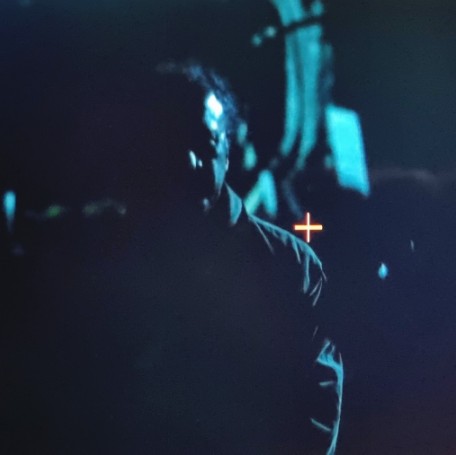
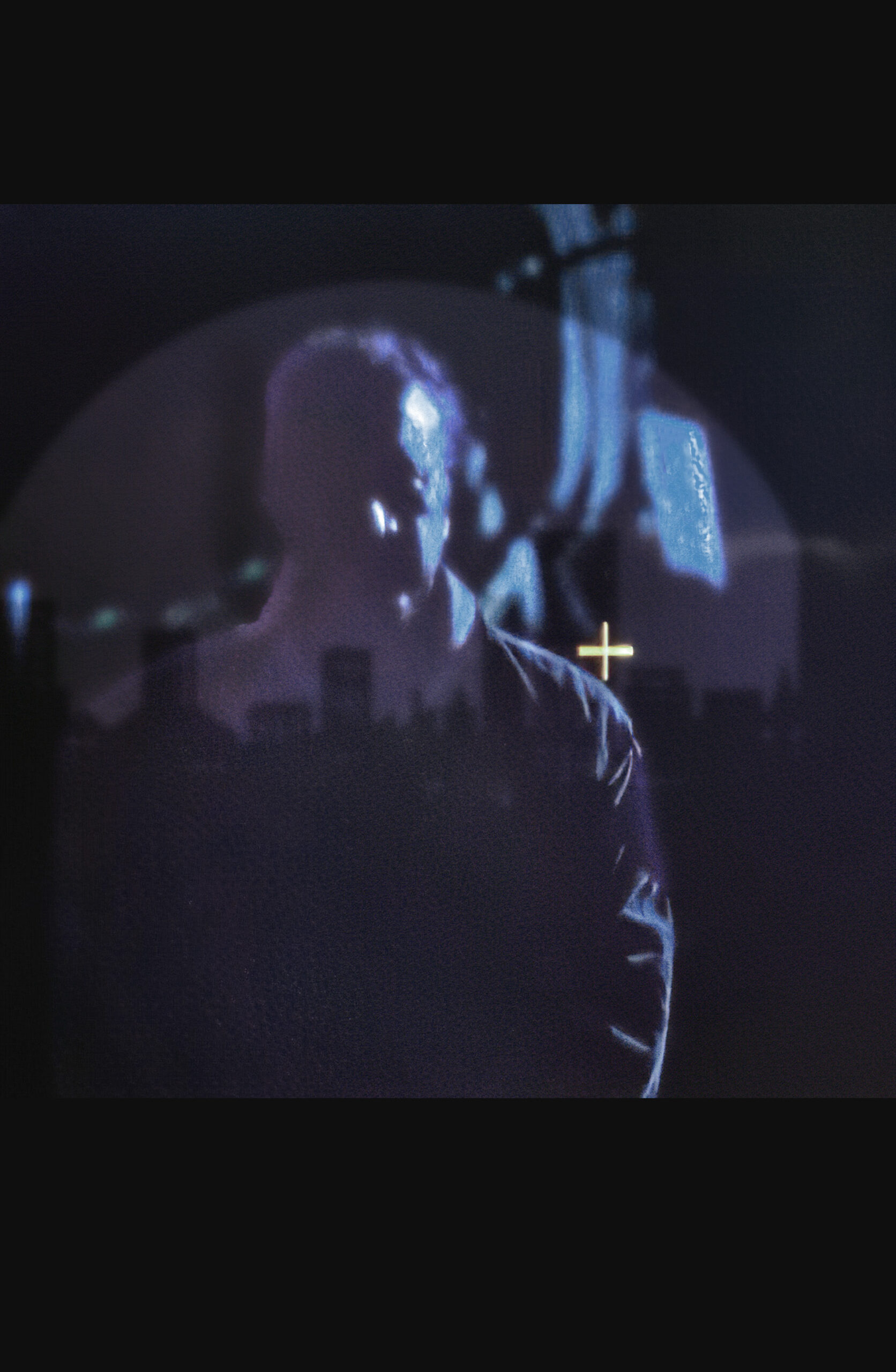
S.T. Joshi blogged that he liked the “1940s private detective” look of this recent night-picture of him, snapped in Providence. He regretted it could not be used a book cover for one of his mystery novels. There’s admittedly not a great deal that can be done with such a poor tiny 450-pixel night picture with the face in shadow, but I’ve had a quick go…

Original:

Makeover for a book cover, sized up for a Lulu print-on-demand paperback:

How well it would reproduce on paper I don’t know, though Lulu covers are usually quite good. But it should do for an ebook, with some nice typography added.

Another version, de-blued and with the distracting ‘helicopter wing mirror’ panel-thing gone, and the cloud shmushed to give the slightest subliminal hint of a tentacle…

← Older posts
Newer posts →


Please become my patron at www.patreon.com/davehaden to help this blog survive and thrive.

Or donate via PayPal — any amount is welcome! Donations total at Easter 2025, since 2015: $390.

Archives

  • November 2026
  • October 2026
  • September 2026
  • August 2026
  • July 2026
  • June 2026
  • May 2026
  • April 2026
  • March 2026
  • February 2026
  • January 2026
  • December 2025
  • November 2025
  • October 2025
  • September 2025
  • August 2025
  • July 2025
  • June 2025
  • May 2025
  • April 2025
  • March 2025
  • February 2025
  • January 2025
  • December 2024
  • November 2024
  • October 2024
  • September 2024
  • August 2024
  • July 2024
  • June 2024
  • May 2024
  • April 2024
  • March 2024
  • February 2024
  • January 2024
  • December 2023
  • November 2023
  • October 2023
  • September 2023
  • August 2023
  • July 2023
  • June 2023
  • May 2023
  • April 2023
  • March 2023
  • February 2023
  • January 2023
  • December 2022
  • November 2022
  • October 2022
  • September 2022
  • August 2022
  • July 2022
  • June 2022
  • May 2022
  • April 2022
  • March 2022
  • February 2022
  • January 2022
  • December 2021
  • November 2021
  • October 2021
  • September 2021
  • August 2021
  • July 2021
  • June 2021
  • May 2021
  • April 2021
  • March 2021
  • February 2021
  • January 2021
  • December 2020
  • November 2020
  • October 2020
  • September 2020
  • August 2020
  • July 2020
  • June 2020
  • May 2020
  • April 2020
  • March 2020
  • February 2020
  • January 2020
  • December 2019
  • November 2019
  • October 2019
  • September 2019
  • August 2019
  • July 2019
  • June 2019
  • May 2019
  • April 2019
  • March 2019
  • February 2019
  • January 2019
  • December 2018
  • November 2018
  • October 2018
  • September 2018
  • August 2018
  • August 2015
  • July 2015
  • March 2015
  • February 2015
  • January 2015
  • December 2014
  • November 2014
  • October 2014
  • September 2014
  • August 2014
  • July 2014
  • June 2014
  • May 2014
  • March 2014
  • February 2014
  • January 2014
  • December 2013
  • November 2013
  • October 2013
  • September 2013
  • August 2013
  • July 2013
  • June 2013
  • May 2013
  • April 2013
  • March 2013
  • February 2013
  • January 2013
  • December 2012
  • November 2012
  • October 2012
  • September 2012
  • August 2012
  • July 2012
  • June 2012
  • May 2012
  • April 2012
  • March 2012
  • February 2012
  • January 2012
  • December 2011
  • November 2011
  • October 2011
  • September 2011
  • August 2011
  • July 2011
  • June 2011
  • May 2011
  • April 2011
  • March 2011
  • February 2011
  • January 2011
  • December 2010
  • November 2010
  • October 2010
  • September 2010
  • August 2010
  • July 2010

Categories

  • 3D (14)
  • AI (74)
  • Astronomy (70)
  • Censorship (14)
  • de Camp (7)
  • Doyle (7)
  • Films & trailers (101)
  • Fonts (9)
  • Guest posts (3)
  • Historical context (1,096)
  • Housekeeping (91)
  • HPLinks (109)
  • Kipling (11)
  • Kittee Tuesday (92)
  • Lovecraft as character (59)
  • Lovecraftian arts (1,652)
  • Lovecraftian places (19)
  • Maps (73)
  • NecronomiCon 2013 (40)
  • NecronomiCon 2015 (21)
  • New books (982)
  • New discoveries (167)
  • Night in Providence (17)
  • Odd scratchings (986)
  • Picture postals (278)
  • Podcasts etc. (434)
  • REH (190)
  • Scholarly works (1,488)
  • Summer School (31)
  • Unnamable (87)

Get this blog in your newsreader:
 
RSS Feed — Posts
RSS Feed — Comments

H.P. Lovecraft's Poster Collection - 17 retro travel posters for $18. Print ready, and available to buy — the proceeds help to support the work of Tentaclii.

Proudly powered by WordPress Theme: Chateau by Ignacio Ricci.