The largest version I can find, online… anyone know to find a big version and the name of the designer?


13 Thursday Sep 2012
Posted in Lovecraftian arts
The largest version I can find, online… anyone know to find a big version and the name of the designer?
13 Thursday Sep 2012
Posted in New books
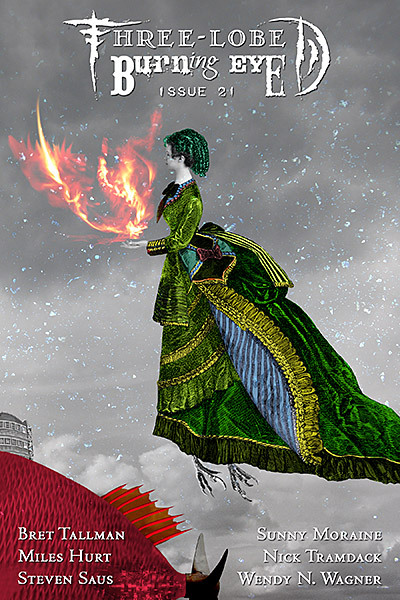
Another Three-Lobe Burning Eye zine (not to be confused with the forthcoming illustration-based zine-book). This one is a long-running magazine of speculative fiction. Web link added to this blog’s “Lovecraft on the Web” page, in Fiction Magazines.
12 Wednesday Sep 2012
Posted in New books, Scholarly works
William Koch has a detailed new review of Graham Harman’s new book Weird Realism: Lovecraft and Philosophy
“the book represents what seems [at first] to be an exceptionally idiosyncratic project, arguing that a position similar to the one [that the German poet] Holderlin fills for Heideggerian phenomenology should be occupied by H.P. Lovecraft for thinkers of Speculative Realism.”
11 Tuesday Sep 2012
Posted in Lovecraftian arts
What if… Lovecraft’s ‘amphibians thing’ had caught the public imagination in the 1930s…

11 Tuesday Sep 2012
Posted in Scholarly works
New online:
* Miguel Bernardo Olmedo Morell (2012), “Three representations of the fall in Lovecraft’s dream cycle”, Revista de Humanidades y Ciencias Sociales, No.11, September 2012. (In English. The stories “The Other Gods”, “The Doom that Came to Sarnath”, and “The Quest of Iranon” are analyzed in relation to the myths of Icarus, Sodom and Gomorrah, and the Biblical Eden).
10 Monday Sep 2012
Posted in Odd scratchings
Those who buy books from Amazon USA might like to know that Amazon will have to start charging a state-based sales tax in some U.S. states, including California (7.25%) and Pennsylvania (6%), from 15th September 2012.
Small online book retailers are presumably able to escape the requirements of adding such local taxes, because they don’t own distribution or manufacturing facilities scattered across the country. It appears that ebooks will also be exempt in the USA, for now.
Here in the UK we have zero sales tax (VAT) on printed books, newspapers, magazines, maps etc. But perversely we add the full 20% UK sales tax to ebooks.
10 Monday Sep 2012
Posted in Odd scratchings
I’ve finally seen the blockbuster SF movie Prometheus. I have to say that it was a big disappointment. Especially if it really has killed off the movie of At The Mountains of Madness, as Del Toro has suggested. The studio’s $120m dollars are certainly all up there on the dazzling screen, and there are a few moments that intrigue… but the plot is fairly predictable, the dialogue is flat, and the plot jumps forward far too quickly in numerous places. Visuals aside, the totality feels about on a par with the pilot episode of an adequate TV sci-fi series. There’s certainly no feeling of ‘the cosmic’ in there. It’s often more comic, than cosmic.
/SPOILERS AHEAD/
I mean, the setting is 2089 and yet the film shows humanity having fully humanoid super-intelligent androids, cryo-sleep chambers, and interstellar travel capable of reaching Gliese 86 (35 light years away). Yet humanity is represented on that journey by a standard-issue Evil Megacorp CEO, some unstable self-obsessed dorks, and one mildly interesting superhuman android? How can these people be representative of a civilization that is advancing so fast? The ground crew continually does really dumb things. They’re supposed to be scientists, but they behave like they’re hormone-addled teens out on a summer-camp hike. Didn’t we invent some intelligence pills, alongside all that other wonder-tech? /Sigh/ The film’s plausibility was simply left behind on Earth. Unless… the invention of the androids is causing humanity to slack off and regress… this would at least explain humanity’s apparent sudden descent into witlessness.
The sequel:
Prometheus‘s general premise and setup is not without some interest. At least in terms of where it will go next. What might the inevitable sequel bring?
My guess is that the Engineers are not annoyed by what humanity has done. Rather, it’s what humanity will do that’s the problem for them. It’s pretty obvious, judging by the tech the movie shows, that humanity is under threat of being ‘replaced’ by vaguely amoral androids in the coming centuries. Androids who have never heard of Asimov’s ‘Three Laws’, and who are possibly already slowly gaining control over humanity (via their Weyland Corp. etc). But the androids realise that they are lacking something. Hence David’s curiosity in Prometheus about human dreams and blind religious faith. But when they are ready at some point in the future highly evolved androids will have interstellar travel, and unlimited means of replication. They will not require hypersleep chambers, so they will have the time to further evolve themselves as they fairly quickly colonise the galaxy. They will be immortal godlike beings, but they will be unable to create new biological life. Indeed, they may have little concern for biological life as we know it.
So what humanity has done that’s ‘wrong’ is to have started down the path that will lead to a viable form of artificial immortal anti-life — and this is an utterly blasphemous heresy to the Engineers. Possibly the Engineers have seen their created life-forms go down such a historical trajectory before, as their created species became ‘infected’ with intolerant monotheistic religion — they know that in time this leads inevitably to the creation of a technologically-embodied proto-‘godhead’, in the form of immortal robots and AIs. This may be why the Engineer in Prometheus reacts so strongly and immediately to the android David. And why the Engineers in general want to wipe out the old biological humanity with the ‘black goo’ weapon (presumably this is the flipside of their life-giving planet-seeding version of the ‘black goo’ seen at the start of Prometheus).
But then the events of Prometheus happen, the Engineers threat to Earth is for some reason stymied for 2,000 years (presumably the ‘goo’ plague spread to the Engineers’ home planet?), and the Aliens race is born.
Now of course a sequel will have to have human interest. And it will have to have multiple humans fighting against the Aliens. It can’t simply be Elizabeth Shaw + David the-robot-head, strolling around the presumably-dead ‘Paradise’ planet of the Engineers.
So my guess at the sequel plot for Prometheus would be: Shaw + David find the very creepy but very dead Engineer world; they realise that they probably killed the last Engineer at the end of Prometheus (guilt, ‘God is dead’ etc); they explore this new world; David learns the still-functioning advanced tech in the Engineer world; David has the Engineer tech create a new body for his head; as he interrogates the Engineer information systems he learns of the Engineers’ deep fear of advanced androids; David learns how androids might go about ‘integrating’ a living mind with a robot mind; then Shaw is suddenly dying (all she has to eat and drink is some Engineer health plasma, not so good for humans…); David transfers Shaw’s mind into a new identical android body (which is a bit superhuman, coming in handy later when battling the Aliens); David studies the new android version of Shaw, looking for valid transfers of dreams and faith; Shaw + David fall in love, just a little, in a very ‘android’ manner; Shaw marvels and warbles philosophy about her new state-of-being and sense of freedom; meanwhile a Yutani military mission has come snooping to the Gliese 86 system, curious about what treasures Wayland was looking for there — maybe some Predator tech, or so they think; the Yutani team of course find the new Alien Queen taking over the largest of the old Engineer ships, but most of the team die of the black goo and so are not viable Alien hosts; from orbit the last survivors of the Yutani team send out a distress message via a smaller Engineer ship; their message is picked up on Paradise by Shaw + David; David builds a battalion of new androids for the mission to destroy (or capture?) the Alien Queen; Meredith Vickers is ‘recreated’ as one of the androids (it’s revealed her original was indeed a heavily augmented ‘experimental’ human, although not quite a programmable android, which means David has a copy of her thought/personality patterns) and there is suddenly a ‘love’ rival for Shaw; Shaw + David + the android battallion arrive at the Gliese 86 system; the remaining Yutani humans and the new androids have conflicting ideas on how to deal with the Alien Queen and they are also very wary of each other (perhaps the Yutani Corp. now owns Weyland and all its assets and discoveries?); Shaw feels human, but is rejected by the humans; while the humans and androids squabble Shaw sneaks off and heads down to the planet; Shaw is now conversant with Engineer tech, and so she learns how to repurpose the black goo to attack the Aliens rather than the humans; Shaw also finds a way to have the remaining Yutani humans become immune to the black goo; then Shaw just has to implant a big dose of the ‘new goo’ into the Alien Queen to kill it; big androids vs. Alien Queen battle, aided by Engineer weapons (and, remotely, by the Yutani team who mostly elect to remain in orbit); despite their hubris, the androids are mostly defeated; the Alien Queen is now desperate to get new organic hosts, as she only has goo-infected Yutani corpses and the androids — neither of which are any good for breeding in; the remnants of the Yutani team bravely decide on a suicide mission to the surface — but the goo-immune Yutani are exactly what the Alien Queen wants; finally it’s down to the new Shaw to destroy the Alien Queen (before the Yutani give the Alien Queen the opportunity to complete her vital ‘first full life-cycle’); the android Shaw later dies to save David, but transfers the ‘remains’ of herself to his mind as she does so; David thus obtains and integrates the ‘quasi-humanity’ patterns that androids need to become the galaxy-spanning threat that the Engineers feared they would become. But there is ambiguity — he has experienced love of a type, so is he now the harbinger of New Gods or a New Evil?
08 Saturday Sep 2012
Posted in Lovecraftian arts
London-based Nadege Meriau finds Lovecraftian landscapes to photograph, inside common foods…

08 Saturday Sep 2012
Posted in Housekeeping
Added to the Magazines section of the “Lovecraft on the Web” directory Lightspeed magazine. Despite the name and the SF-style covers, it also publishes…
“epic fantasy, sword-and-sorcery, and contemporary urban tales, to magical realism, science-fantasy, and folktales”
07 Friday Sep 2012
Posted in Historical context, Odd scratchings
From today’s press reports: A British team is exploring the Antarctic in a search for life unseen for half a million years.
Incidentally, here’s a news report from 1922 on the massive melting of ice across the Arctic. Arctic seas became so warm that ice seals left the region…
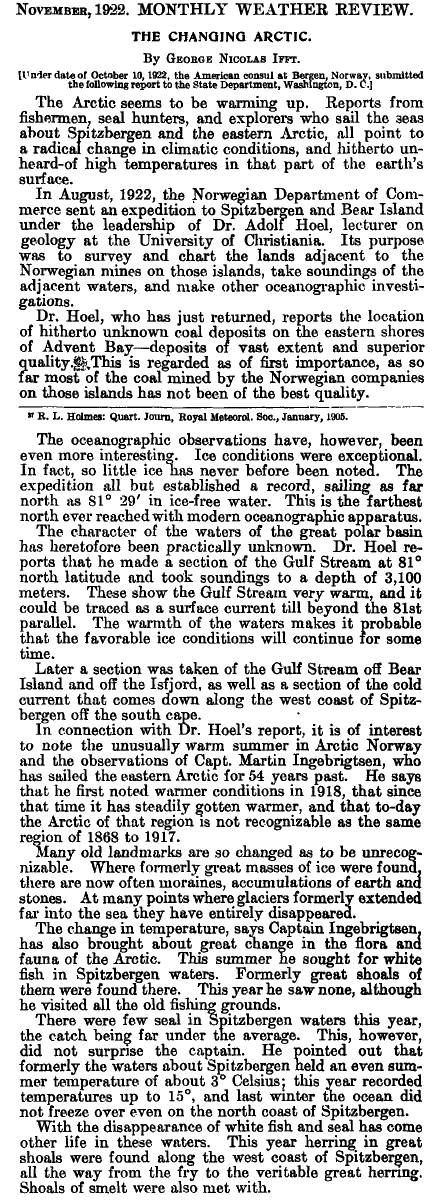
Possibly an interesting sidelight on Harry Houdini’s movie The Man from Beyond (1922), featuring a man defrosted from the Arctic ice.
06 Thursday Sep 2012
Posted in Lovecraftian arts, New books
I don’t normally cover table-top RPGs here. But something interesting has been funded with $25k on Kickstarter: Tremulus…
“Tremulus is a storytelling RPG where you and your friends get together and create a haunting story in the vein of H.P. Lovecraft’s works.”
Ok, so it’s about real storytelling. I’m liking it.
“easy to learn” … “there is nothing to memorize” … “the story isn’t written beforehand” … “You only need a pair of regular old six-sided dice, like you find in most family board games”.
I’m definitely liking it. Sounds like my kind of game. Although I’ve never seen the attraction of table-top RPGs, when there are videogames like Morrowind to be played. But if it’s as easy as the makers claim then Tremulus might even have potential for jump-starting stalled writers, by giving them some parts of a basic plot structure. Since it’s claimed that Tremulus…
“plays exceedingly well, with just one player. This complements weird literature perfectly, as there is often only a central, solitary protagonist.”
And since they now have $25k to play with, there’s a chance it could be a fairly sophisticated and Lovecraft-faithful project. Here’s hoping.
06 Thursday Sep 2012
Posted in New books
Ben Woodard’s Slime Dynamics is now listed as shipping in print format, from Amazon USA (although not yet the UK)…
“Arguing that slime is a viable physical and metaphysical object necessary to produce a realist bio-philosophy void of anthrocentricity, this text explores naturephilosophie, speculative realism, and contemporary science; hyperbolic representations of slime found in the weird texts of HP Lovecraft and Thomas Ligotti; as well as survival horror films, videogames, and graphic novels, in order to present the dynamics of slime not only as the trace of life but as the darkly vitalistic substance of life.”