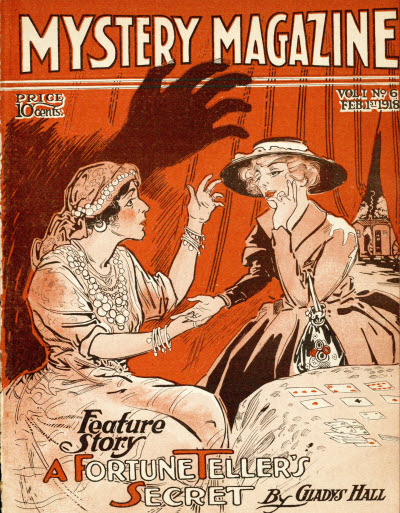
I’m looking for a scan of a work by Everett McNeil, Lovecraft’s friend in New York and Kalem Club member:
* “A Student of Psychology”, short story in The White Elephant Sep 1897, reprinted Mystery Magazine 1st Feb 1918.

19 Wednesday Jun 2013
Posted in Odd scratchings
I’m looking for a scan of a work by Everett McNeil, Lovecraft’s friend in New York and Kalem Club member:
* “A Student of Psychology”, short story in The White Elephant Sep 1897, reprinted Mystery Magazine 1st Feb 1918.
18 Tuesday Jun 2013
Posted in Historical context
More on Lovecraft’s good New York friend and Kalem Club anchor member Everett McNeil, specifically his career as a movie scriptwriter in New York circa 1912-1917, before the movie industry shipped out to California. I previously briefly identified this possibility in my book Walking with Cthulhu.
Moving Picture World credited him as writer with Selig Polyscope Co. 1913; and Eclair Film Co., Inc, 1914; and also has an article by him on “How to Write a Photo-Play” (i.e.: a cinema script) in July 1911 which a contemporary book on movie history called a “prescient” anticipation of the later film-writing manuals. The date of this suggests he may have had a career in the movies that began before 1912. This appears to be confirmed by a comment about the length of his career in The Writer’s Monthly (Jan 1916)…
“For an example of careful work in scenario writing — resulting in the director’s following each scene almost exactly as written — I should like photoplay fans and photoplaywrights to keep an eye open for the forthcoming Heine-Edison five-reel feature drama, “The Crucifixion of Philip Strong.” [aka The Martyrdom of Philip Strong, a Paramount feature-film] It is founded on the well-known novel of that name by Rev. Charles M. Sheldon, and is what I call a thoroughly well prepared script. Through an error, credit for the screen adaptation was given to Francis M. Neilson. Full credit for the screen version is due to Everett McNeil, a photoplaywright and fiction writer of long experience, who has been selected by Mr. L. W. McChesney to devote himself exclusively to the production of adaptations and original stories for director Richard Ridgely.” [my emphasis]
This led me to find what has now become a fairly full listing for Everett McNeil’s movie credits on IMDB, which I’m pretty sure wasn’t there when I was writing Walking with Cthulhu:
1917 A Lucky Slip (short) (scenario)
1917 Builders of Castles (picturizer)
1917 The Master Passion (scenario / as Everett MacNeil)
1916 The Martyrdom of Philip Strong (story)
1916 When Hooligan and Dooligan Ran for Mayor (short) (story)
1915 The Making Over of Geoffrey Manning (story)
1914 The Price Paid (short) (story)
1913 The Beaded Buckskin Bag (short) (writer)
1912 A Messenger to Kearney (short) (story)
1912 When the Heart Rules (short) (story “The Sealskin Overcoat”)
1912 A Cowboy’s Best Girl (short) (scenario)
So when Lovecraft knew him in New York, McNeil was less than ten years away from a fairly long movie career. Which, one assumes, ended (just as McNeil was about to break into regular features work) due to the effects of the First World War and/or the move of the New York movie industry out to California?
18 Tuesday Jun 2013
Posted in Historical context, Lovecraftian arts
I argued recently — in an essay in my book Walking with Cthulhu (free as a PDF) — that New York itself was the metaphorical ‘alchemical base’ from which Lovecraft imaginatively transmuted his conception of the city of R’lyeh. Sadly I hadn’t then stumbled on the following superb quote from the Selected Letters (III, p.122), which would have served as further good evidence. To Moe in 1930, Lovecraft remembers the New York he had seen when first being guided around it by Everett McNeil, seemingly an expert in negotiating the slum and rough areas (probably due to his contact with the boy-life of the city, especially around Hell’s Kitchen). Here, for Lovecraft, is the city seemingly poised between his first Dunsanian dream-vision of it, and the darkly monstrous fever-dream of alienage that it later became for him…
“… Cyclopean phantom-pinnacles flowering in violet mist, surging vortices of alien life coursing from wonder-hidden springs in Samarcand and Carthage and Babylon and Ægyptus, breathless sunset vistas of weird architecture and unknown landscape glimpsed from bizarrely balustraded plazas and tiers of titan terraces, glittering twilights that thickened into cryptic ceilings of darkness pressing low over lanes and vaults of unearthly phosphorescence, and the vast, low-lying flat lands and salt marshes […] winds stirred the sedges along sluggish inlets brooding gray and shadowy and out of reach of the long red rays of hazy setting suns. […] Morbid nightmare aisles of odorous Abaddon-labyrinths and Phlegethontic shores — accursed hashish-dreams of endless brick walls budging and bursting with viscous abominations and staring insanely with bleared, geometrical patterns of windows — confused rivers of elemental, simian life with half-Nordic faces twisted and grotesque in the evil flare of bonfires set to signal the nameless gods of dark stars — sinister pigeon-breeders on the flat roofs of unclean teocallis, sending out birds of space with blasphemous messages for the black, elder gods of the cosmic void — death and menace behind furtive doors […] fumes of hellish brews concocted in obscene crypts …” (Selected Letters III, p.122)


Above, from top: Joseph Pennell (1858-1926), “The Bay, New York”; “Night lights of Manhattan”; “Towers at Night”; “From Cortlandt Street Ferry”, “The Things that Tower” (New Yorker earlier version of “From Cortlandt Street Ferry”); “Brooklyn Bridge at Night”.
18 Tuesday Jun 2013
Posted in Lovecraftian arts
Poster for the H.P. Lovecraft Film Festival in Los Angeles 27th-29th September 2013 at the Warner Grand Theater in San Pedro. Riffing off Lovecraft’s job in a ticket-booth, via Miyazaki’s Spirited Away.

Artist: Jason Thompson. [ Hat-tip to D. Bethel, in regards to identification of the poster artist. The festival really should have allowed him a signature on the poster. ]
18 Tuesday Jun 2013
Posted in Historical context
Lovecaft’s uncle Edward F. Gamwell, describing the weird exotics in the Harvard Botanical Garden, in an article by him on the gardens in the Cambridge Chronicle Magazine 1898…

Slightly more exotic was this farm-landed meteor, described in Edward F. Gamwell’s own newspaper in 1909…


from The Cambridge Tribune 9th October 1909 and 23rd October 1909 respectively.
The meteor was later written up in Science, in a report which called it… “entirely different from any meteor on record”.


There was a later letter to Science, questioning if Prof. Very had been duped by a hoax using a standard glacial erratic stone. In March 1910 Very followed up his description with a further article outlining the probability of fraud — albeit by presenting a hypothesis that the purchasing dime museum had found the rock elsewhere, possibly in a swamp, heated it until red hot, and then transported it to the site, then set off several firework rockets to fall in the correct direction and thus be seen by the locals.
Nevertheless the reports of the meteor would have interested Lovecraft, then deep in his astronomy phase. And his imagination may have been sparked by the idea of it being “entirely different from any meteor on record”.
17 Monday Jun 2013
Posted in Scholarly works
A funded Phd in the UK, which might appeal to some readers here, looking at early and contemporary fan-cultures around Sherlock Holmes.
17 Monday Jun 2013
Posted in Historical context, New discoveries
I’ve found another two appearances of Lovecraft’s elegy for his adored cousin Phillips Gamwell, who died young. Lovecraftian sources have the poem appearing in the Providence Evening News on 5th January 1917. But here it is in The Cambridge Chronicle, 6th January 1917, possibly with new biographical details in the introduction…


The same poem appeared again in The Cambridge Tribune on 13th January 1917, under the simple title “Phillips Gamwell”, this time with a fine photograph of cousin Phillips…
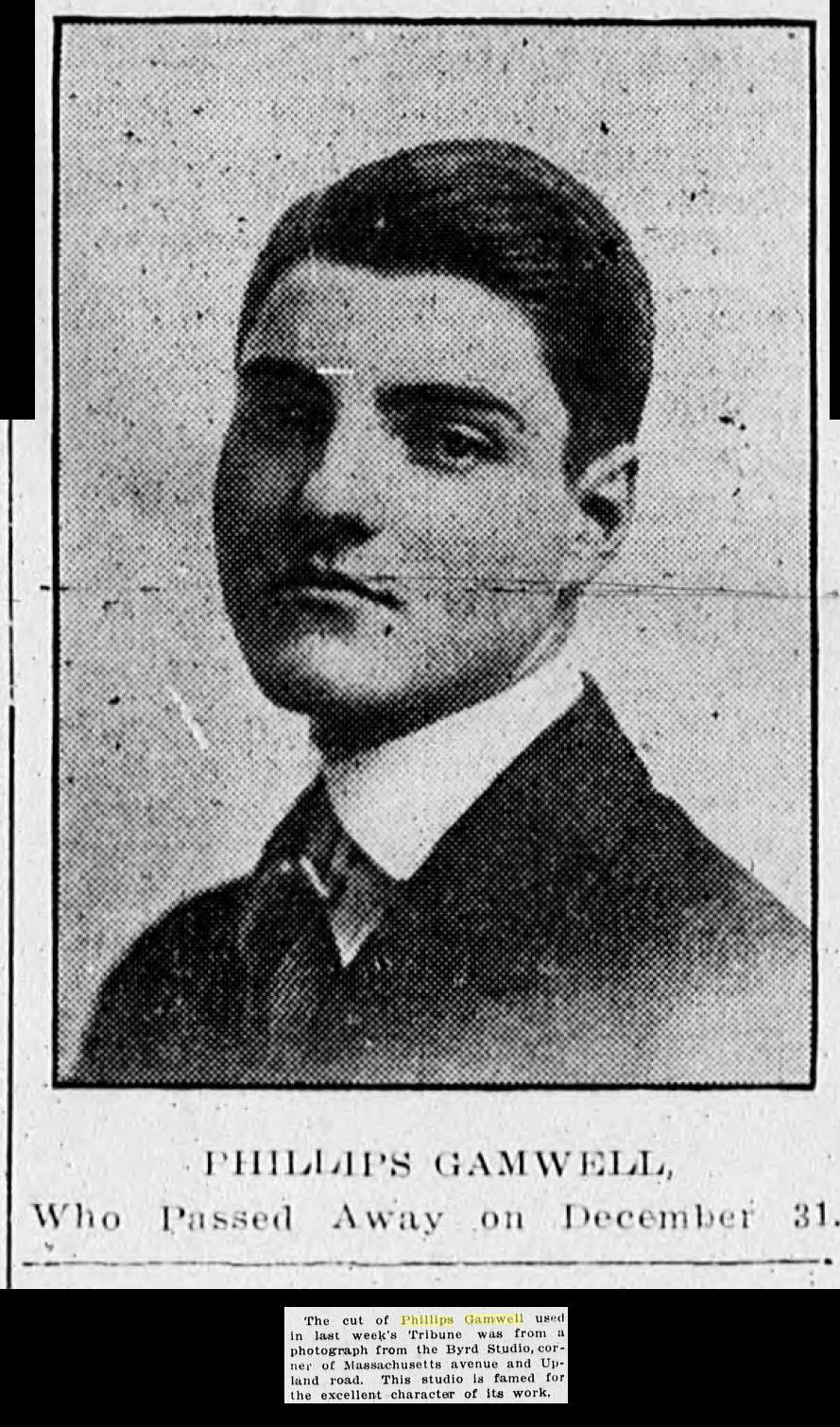
… and the following week there was also an addendum on the photographer.
We’re also informed by The Cambridge Tribune of 2nd January 1904 that Phillips Gamwell was visiting Providence. Lovecraft then age 13, Phillips aged around 6. Here is Phillips Gamwell aged six in 1904 in The Cambridge Chronicle…
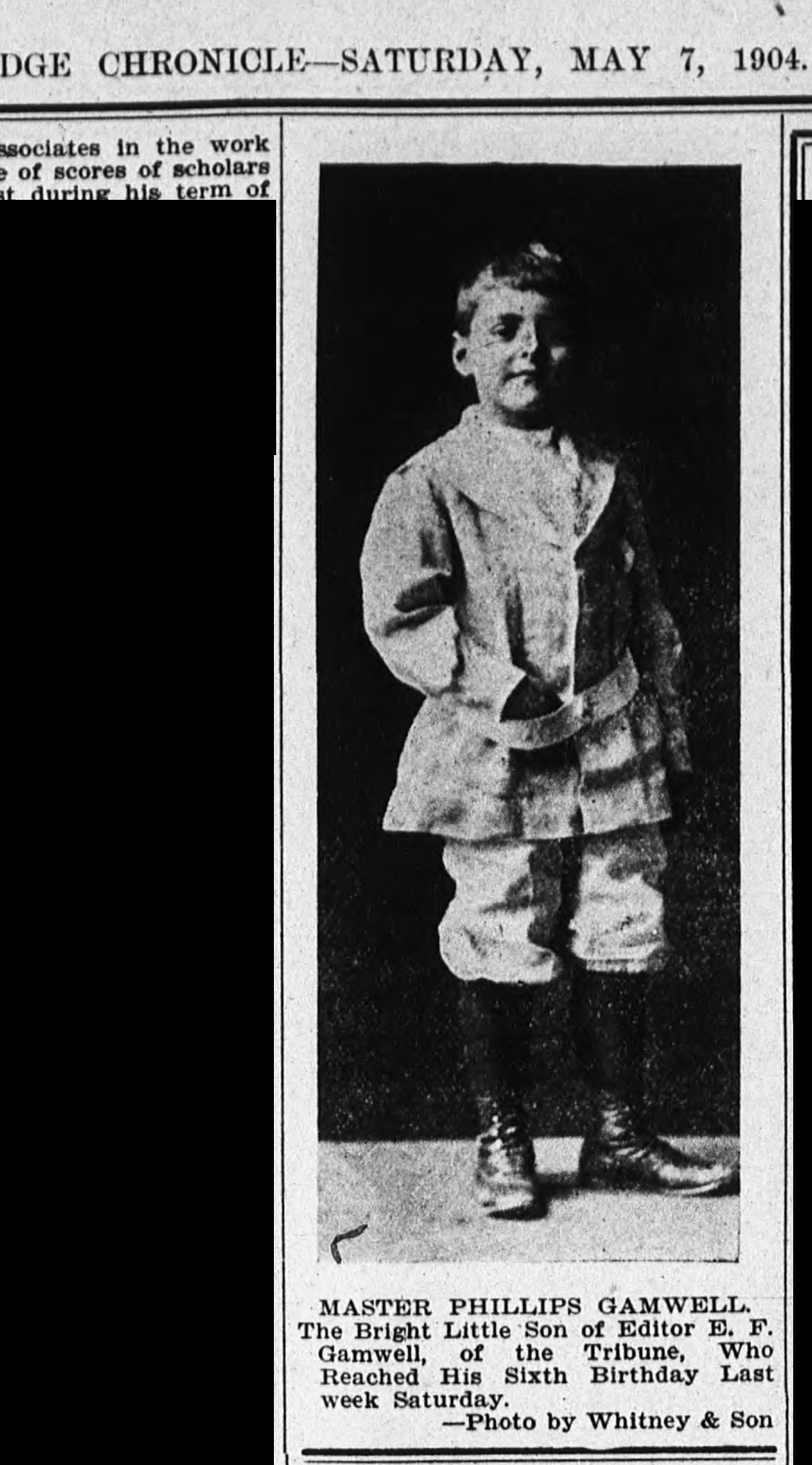
Resembles the young Lovecraft, wouldn’t you say?
15 Saturday Jun 2013
Posted in Lovecraftian arts
The New York Review of Science Fiction has published a Web and English-language version of “A photographic exploration of the world of H. P. Lovecraft”, by Lomig Perrotin. The series was displayed in November 2012 at Galerie 154: at 154 rue Oberkampf, 75011, Paris.
“There is resistance, opposition, even rebellion in the author’s inability to testify about the cosmic horrors that seem to watch humanity from beyond. To convey this resistance, I needed to explore the limits of the photographic medium. So I used cliché-verre, a technique of etching photographic material to create a mixed negative, blending the realistic aspect of photography with the graphic effects of drawing. Neither photographs alone nor illustration could reproduce this particular blend of horror and oneirism that characterizes the work of the master of Providence.”


Looks great, even on a digital screen. They must look very fine when printed matt at perhaps 8″ x 8″ and placed in glass-less frames. ‘Photography meets woodcuts, via rough etchings’ seems a very fitting style for illustrating Lovecraft. And I’m pleased to hear a few of the series will be hopping across the pond to showing up at NecronomiCon 2013…
“Mr. Perrotin’s work will be presented at the Providence Art Club from August 13 to September 6 as part of NecronomiCon in Providence, RI. Mr. Perrotin will also be attending the convention in person in late August.”
13 Thursday Jun 2013
Posted in New books
Just released, Lovecraft’s long essay on “Cats and Dogs” — translated into Greek!

Coming soon, the LOLcat edition! 😉
12 Wednesday Jun 2013
Posted in Scholarly works
Lots of additions to the Open Lovecraft page on this blog.
12 Wednesday Jun 2013
Posted in Scholarly works
New long blog post from Jason Colavito on H.P. Lovecraft and Megalithic New England…
“H.P. Lovecraft almost certainly never visited Mystery Hill, which was not a tourist attraction at the time Lovecraft lived. It was private land in those days. The site did not open to the public until 1937, when William Goodwin purchased it, rebuilt it to resemble a European megalithic site, and gave it its longtime name.”
“It should be fairly obvious from their description, usage, and placement that Lovecraft’s stone circles [in “The Dunwich Horror”] were modeled on Old World examples”
11 Tuesday Jun 2013
Posted in Odd scratchings
New Alan Moore interview in the June 2013 The Believer. No new news on the 1919 Lovecraft graphic novel. But he’s writing a 600,000 word…
“noir crime narrative based upon the Northampton pastor James Hervey [1714-1758], whom I believe was the father of the entire Gothic movement”