Used Linkbot to do a double-pass check and repair of all Web links on this blog’s Lovecraft on the Web directory.
Links fixed on ‘Lovecraft on the Web’ directory
04 Thursday Jul 2013
Posted in Unnamable

04 Thursday Jul 2013
Posted in Unnamable
Used Linkbot to do a double-pass check and repair of all Web links on this blog’s Lovecraft on the Web directory.
04 Thursday Jul 2013
Posted in Scholarly works
Used Linkbot to do a double-pass check and repair of all Web links on this blog’s Open Lovecraft page.
04 Thursday Jul 2013
Posted in Scholarly works
Interesting conference location in 2014. the Island Dynamics academic network presents Folk Belief and Traditions of the Supernatural: Experience, Place, Ritual, and Narrative, set for late March 2014 in… “remote and windswept cottages on the island of Unst” in the Shetland Islands, in the bleak far north of Britain. It’s followed by the probably-slightly-more-comfy The Supernatural in Literature and Film conference from 29th—31st March 2014, in Lerwick, the capital of the Shetland Islands. Yes, they have broadband — a new £8m undersea fibre-optic cable linked them to the mainland in late 2012.
04 Thursday Jul 2013
Posted in Historical context
Snagged from an eBay auction just ended at $495… a Lovecraft postcard from New Orleans, on 6th June 1932, to Walter J. Coates of The Driftwind Press…
“Greetings! At the far end of one of my annual travel outbursts, & enjoying every minute of it! Shenandoah Valley…. Tennessee…. old Father Mississippi (seen by me for the first time)…. Vicksburg…. Natchez…. & now ancient New Orleans, paradise of the architect and antiquarian. Right in the same class with Charleston & Quebec! Here for over a week, then Mobile, Ala. Have a very faint hope of getting to Charleston. Regards — & hope that spring is getting around to the arctic regions at last! HPL”


03 Wednesday Jul 2013
Posted in Scholarly works
Added to the Open Lovecraft page:
* Fabian Luduena (2013), “Astrophobos o la in-harmonia mundi: glosas a la obra poetica de H.P. Lovecraft”, Revista Landa, Vol.1, No.2, 2013. (In Spanish. Rough translation: “Astrophobos” and the inharmonious world: thoughts on the poetry of H.P. Lovecraft. By a philosopher at the Instituto Gino Germani, University of Buenos Aires).
03 Wednesday Jul 2013
Posted in Lovecraftian arts, New books
Interesting new work of fiction, due in October. The Natural Dissolution of Fleeting-Improvised-Men: The Last Letter of H.P. Lovecraft by Gabriel Blackwell. Seems to be inspired by Lovecraft’s stream-of-consciousness style sections sometimes to be found in the Letters, usually in a reverie over a particular landscape he’s experienced. Only Blackwell pins the style to performative delvings into the nature of the self. The new book is 194 pages, complete with faux annotations and precise typographical design. Sounds like a fascinating little fabulation.
“I found myself no longer at my desk and without my body, sprung whole from the womb of human existence and cast out into the shrieking wilds of the barren, ghoulish fifth dimension once more… Instead of unconsciousness, it was now a purer sort of consciousness, I thought, the roaming of a dreaming brain without any of the snares set by the nerves, so that I felt as though I had no body, as though my vision had no connection to the eye.”

[ Hat-tip for quote: Whimsy of Creation ]
03 Wednesday Jul 2013
Posted in Scholarly works
Added to the Open Lovecraft page…
* Tristan Garcia (2013), “Crossing Ways of Thinking: on Graham Harman’s system and my own”, Parrhesia : a journal of critical philosophy, No.16, 2013, pp.14-25. (Tristan Garcia responds to Harman’s recent book Weird Realism: Lovecraft And Philosophy, recognising its multiple levels of usefulness for philosophy. Harman responds in his follow-on article “Tristan Garcia and the Thing-in-Itself”).
Also found a long abstract for a Masters dissertation, An examination of contributive narrative: A look at the Lovecraft Circle and the expansion of the Cthulhu Mythos…
“The Lovecraft Circle [i.e. the early use of his mythos in fiction by others] stands as a hybrid example of a controlled Fanfic [fan fiction] that expands a fictional world using techniques from contributive narrative, publication, and acknowledgment. With the support of literary theories and research from accredited Lovecraft scholars, there is concrete evidence that the Lovecraft Circle can be classified as a true literary circle that stands apart from postmodern writing circles.”
And an abstract for the paywalled “Music Against Horror: H.P. Lovecraft and Schopenhauer’s Aesthetics”…
“…it is possible to position “The Music of Erich Zann” as a distillation of Lovecraft’s reading of Schopenhauer into a nuanced and effective dramatic narrative. A reading of Lovecraft that incorporates Schopenhauerian aesthetics, in this instance specifically related to music, can illuminate Lovecraft’s fiction and resonate with both Lovecraft’s and Schopenhauer’s world views.”
02 Tuesday Jul 2013
Posted in Maps, Scholarly works
List of Critical Works on Fantasy Maps, a nice little list on the newly reorganised Fantasy Maps website.

02 Tuesday Jul 2013
Posted in New books
A new doorstopper $40 art book from Taschen, Magic: 1400s-1950s
“the history of magic as a performing art from the 1400s to the 1950s” seen in “1,000 rarely seen vintage posters, photographs, handbills, and engravings as well as paintings.

02 Tuesday Jul 2013
Posted in Scholarly works
Now printing, the first 200-page issue of Sargasso: journal of William Hope Hodgson Studies, which will premiere at NecronomiCon 2013. I can’t say Hodgson is my cup-of-tea, though I read him in the 80s, but it’s great to see another scholarly journal in the field — and one not afraid to slap on a deliciously retro cover which evokes the alt-zines of yore.

$25 to the UK including shipping.
02 Tuesday Jul 2013
Posted in Lovecraftian arts
NecronomiCon Providence 2013, the poster…

01 Monday Jul 2013
Posted in Historical context, Lovecraftian arts, New books, Scholarly works, Summer School
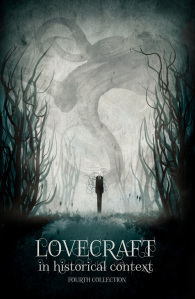
Available now in paperback… my latest book collection of essays:
Lovecraft in Historical Context: fourth collection.
A book of essays is now an annual tradition with me, and this year’s volume weighs in at 304 pages, 76,000 words. Contains many expanded and footnoted versions of blog posts which first appeared here — for instance the essay “The terribly nice old ladies” zooms up to 12,000 words as I delve into the source landscape of “The Dunwich Horror”. Long-time Lovecraft researchers may be especially interested in 4,000 words of highly detailed scholarship which lays out the complete circus/theatrical and movie executive career of Arthur Leeds prior to the Kalem Club, accompanied by the first known photograph of him and a newly discovered Leeds short story that is an obvious inspiration for “Cool Air”.
Enjoy!
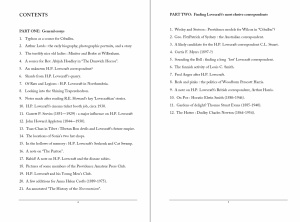
PART ONE: General essays
1. Typhon as a source for Cthulhu.
2. Arthur Leeds : the early biography, photographic portraits, and a story.
3. The terribly nice old ladies : Miniter and Beebe at Wilbraham.
4. A source for Rev. Abijah Hoadley in “The Dunwich Horror”.
5. An unknown H.P. Lovecraft correspondent?
6. Shards from H.P. Lovecraft’s quarry.
7. Of Rats and Legions : H.P. Lovecraft in Northumbria.
8. Looking into the Shining Trapezohedron.
9. Notes made after reading R.E. Howard’s key ‘Lovecraftian’ stories.
10. H.P. Lovecraft’s cinema ticket booth job, circa 1930.
11. Garrett P. Serviss (1851—1929) : a major influence on H.P. Lovecraft.
12. John Howard Appleton (1844—1930).
13. Tsan-Chan in Tibet : Tibetan Bon devils and Lovecraft’s future empire.
14. The locations of Sonia’s two hat shops.
15. In the hollows of memory : H.P. Lovecraft’s Seekonk and Cat Swamp.
16. A note on “The Paxton”.
17. Rabid! A note on H.P. Lovecraft and the disease rabies.
18. Pictures of some members of the Providence Amateur Press Club.
19. H.P. Lovecraft and his Young Men’s Club.
20. A few additions for Anna Helen Crofts (1889-1975).
21. An annotated “The History of the Necronomicon”. — sample
PART TWO: Finding Lovecraft’s most elusive correspondents
1. Wesley and Stetson : Providence models for Wilcox in “Cthulhu”?
2. Geo. FitzPatrick of Sydney : the Australian correspondent.
3. A likely candidate for the H.P. Lovecraft correspondent C.L. Stuart.
4. Curtis F. Myers (1897-?)
5. Sounding the Bell : finding a long ‘lost’ Lovecraft correspondent.
6. The fannish activity of Louis C. Smith.
7. Fred Anger after H.P. Lovecraft.
8. Reds and pinks : the politics of Woodburn Prescott Harris.
9. A note on H.P. Lovecraft’s British correspondent, Arthur Harris.
10. On Poe : Horatio Elwin Smith (1886-1946).
11. Gardens of delight? Thomas Stuart Evans (1885-1940).
12. The Hatter : Dudley Charles Newton (1864-1954).
Thanks for the cover art to Cotton Valent and Apolonis Aphrodisia.