The Levi Goodenough Farm 1783

Added to the Open Lovecraft page, a mostly well-researched new (June 2013) local history article on the Arthur Goodenough farmhouse, “The Levi Goodenough Farm 1783” with lots of new pictures of the site. Although the short section discussing “The Whisperer in Darkness” is bizarre. The farmhouse was the home of Arthur H. Goodenough, the elderly amateur press man and friend of Lovecraft living near Brattleboro. His home was in part the inspiration for the setting of Lovecraft’s “The Whisperer in Darkness”. Interesting to learn that it’s set directly back into the hillside, like the house in “The Dunwich Horror”…

   “his house — a spacious, peak-roofed affair whose rear end was buried entirely in the rocky hillside” (“The Dunwich Horror”).


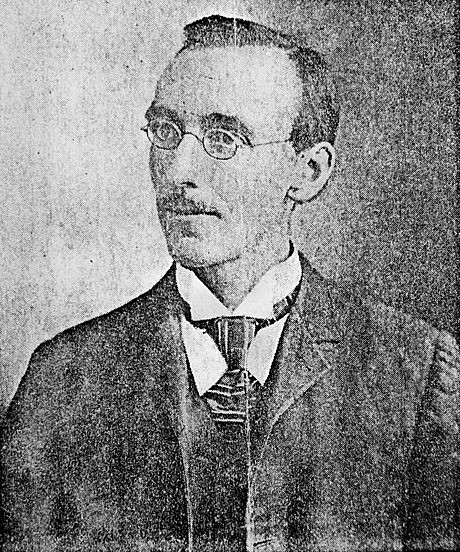
Mr. Arthur Goodenough, as a younger man.

Investors are currently being sought to help keep the historic site open for visitors.

Photos of Morton, Miniter, Cook, Houtain, Cole

Some of Lovecraft’s friends, Paul Cook; Edith Dowe Miniter; a young James Ferdinand Morton Jr.; George J. Houtain. Mrs Miniter I’ve seen before, although this is perhaps a better scan than some faded ones online. From the book Ex-presidents of the National Amateur Press Association : sketches published by Paul Cook from Athol, 1919. Which also has potted biographies: did you know Cook wrote much fiction, under a pseudonym? That he was a story writer is not a fact not found in the Lovecraft Encyclopedia entry for Cook. Although it seems a limited-edition book of his stories has been collected as Willis T. Crossman’s Vermont: Stories (2005).

cook

houtain

miniter

morton

cole

And Edward H. Cole of Boston, who Lovecraft visited frequently in the 1920s and 30s.

Shipping now: a new book on a key Kalem member

Available and shipping now, my new book Good Old Mac: Henry Everett McNeil, 1862—1929.

frontcover-sm

“It does seem hard to imagine the gang without good old Mac somewhere in the background as a high spot of its general setting — for he was one of the founders [of the Kalem Club]; and his naive, individual note formed one of the most characteristic contributions to the entire symphony. At any rate, he will have a kind of modest and affectionate immortality in our reminiscent folklore — as well as in the memory of the thousands of boys who have read his tales.” — H.P. Lovecraft.

The ‘ground zero’ of modern horror was in the notorious slum of Hell’s Kitchen, New York, in the 1920s. There H.P. Lovecraft and his Kalem circle met regularly, in the room of the apparently simple old bachelor who had brought them together. This curious boy-man was Henry Everett McNeil, and “good old Mac” was Lovecraft’s close friend. In his walking tours of New York’s secret slums, McNeil opened new doors in Lovecraft’s macabre imagination and may have been the model for “He”. A year later he fatefully told Lovecraft about a new magazine…

“McNeil tipped me off to that Weird Stories thing [Weird Tales], which he says is published out of Chi[cago], but I ain’t saw it yet. I’ll tip it a wink the next time I lamp [see] a news stand.” — Lovecraft letter to Morton, 29th March 1923, in Letters to James F. Morton, 2011.

This new book is the first scholarly account of McNeil and his career. An in-depth biographical essay of 13,000 words uncovers for the first time: his origins and war record; the details of McNeil’s work as a scriptwriter for the earliest western genre movies; his work with screen cowboy Tom Mix; his work as a staff movie writer for Vitagraph — and then for Edison’s movie studio with fellow Kalem Club member Arthur Leeds; and his turbulent book publishing career. The book also tries to answer the riddle of why McNeil was apparently so poor, when he was a best-selling children’s author and a reviewer of books for The New York Times.

The footnoted essay is followed by a selection from McNeil’s works: a long macabre revenge story not published since 1900; two horror tales of wolf attacks; a Revolutionary War ghost story; the tale of a grey-haired bachelor who falls for a girl of sixteen; two of his best fantasy stories, and his own account of how he writes for his audience. The volume also contains his original movie ‘photoplay’ story for the feature-film Geoffrey Manning, and McNeil’s seminal 1911 article on how to write for the silent cinema. There is a complete annotated checklist of his known work, including the movies. Also a survey of McNeil’s various fictional appearances in weird fiction.

This new illustrated book will interest Lovecraft scholars, children’s book collectors, and silent-era movie historians alike. It contains the first known photograph of McNeil, a fine publicity picture in which he is seen seated in his room with his books around him.

Order it now!

Conference: Presence de Lovecraft : l’illustration en question

I just heard about a French conference: Presence de Lovecraft : l’illustration en question (trans.: The presence of Lovecraft: a question of illustration”), which happened in France on 13th-14th June 2013…

“Lovecraft’s works entertain an essential relationship to the very notion of illustration, for various reasons. … Lovecraft consistently managed to include in his short stories blank spaces [Such as the Necronomicon] that seem to call for continuation or illustration of his texts. [There are also many videogames, comics, films to discuss, and wider topics in adaptation of literary works …]”

Participants and programme papers, with my approximate translations…

Denis Mellier (Universite de Poitiers): “Nouvelles notes a distance 1995-2012: sur la poetique de l’exces chez Lovecraft et de quelques solutions graphiques qui lui furent appliquees” [New notes for the period 1995-2012: the poetics of Lovecraftian excess and some of the graphics solutions applied to it]

Christopher Robinson (HEC Paris): “From Necronomicon to Alien“. [Presumably about the influence of Lovecraft on Giger?]

Pierre Jailloux (Paris 8): “Presence de l’indicible: found footage et poetique Lovecraftienne”. [The presence of the unspeakable: found footage and Lovecraftian poetics]

Philippe Met (University of Pennsylvania, USA): “H.P. Lovecraft revu et corrige par Lucio Fulci”. [H.P. Lovecraft revised and corrected by Lucio Fulci]

Isabelle Perier: “Adaptation et transmedialite: Kadath, la Cite Inconnue”. [Adaptation and transmediality: Kadath the Unknown City]

Jerome Dutel (Universite Jean Monnet): “Dessiner celui qui est d’ailleurs: The Outsider (2004) de Gou Tanabe et L’atranger (1999) de Horacio Lalia”. [Drawing that which is elsewhere: on two French comics adaptations by Lalia]

Eric Lysoe (Universite Blaise Pascal): “”The strange and disturbing Asian paintings of Nicholas Roerich”: le referent pictural et ses fonctions dans At the Mountains of Madness“. [“The strange and disturbing Asian paintings of Nicholas Roerich”: the pictorial references and their function in At the Mountains of Madness“]

Julien Schuh (Universite Reims Champagne-Ardenne): “L’empreinte : reproduction, transposition, adaptation chez Lovecraft”. [The footprint: transferring and adapting Lovecraft]

Remi Cayatte (Universite de Lorraine): “H.P. Lovecraft: acteur majeur de la culture populaire moderne”. [H.P. Lovecraft: a major figure in modern popular culture]

Roger Bozetto (Universite de Provence): “De l’imagine a l’inimaginable”. [To imagine the unimaginable]

Karen Vergnol-Remont (Universite Blaise Pascal): “Howard Philips Lovecraft: un auteur dont le génie inspire”. [Howard Philips Lovecraft: an author inspired by genius]

Arnaud Moussart (Universite Jean Monnet): “Night Gaunts de Brett Rutherford: entre illustration et (re)creation”. [The Night Gaunts of Brett Rutherford: between illustration and (re)creation]

Round-table discussion with Nicolas Fructus, Gilles Francescano and Philippe Jozelon.

Fine and Dandy in Hell’s Kitchen

Old-style dandyism is thriving in a new shop not far from the main Kalem Club meeting room at 543 West 49th Street, Hell’s Kitchen (the alley that leads to the 543 door is still there, surprisingly un-photographed). Should you be down that way doing a spot of Lovecraftian tourism, pop into Fine and Dandy, a cool menswear accessories shop for the older man or the young fogey. Located at 445 West 49th Street, NYC.

Could be a useful stop off on your way to NeconomiCon Providence 2013, to ensure you don’t present too disheveled an appearance at the con… 😉

wine

Eric 051713

Adam 062813

Complete with accessories such as Lovecraft-style vintage typewriters…

Fine and Dandy

Lovecraft and Moby Dick

Lovecraft did read Moby Dick, it seems, in the spring of 1925. I had assumed Lovecraft had never read the book, since it isn’t listed in S.T. Joshi’s Lovecraft’s Library (2nd ed.). But here is Lovecraft in a letter (Letters from New York, p.122) stating that he was about to read the book…

   [Lovecraft about to depart for Washington, 11th April 1925] “Kleiner and Loveman will wave tear-stain’d handkerchiefs after the tail-lights of the [train] coach that bears Kirk & me away. I shall probably wear my light overcoat, checking it at the Union Station in Washington, where I shall also check the book which is to beguile my hours of idleness — “Moby Dick, or the White Whale”, by Herman Melville”.

In “Suggestions for a Reading Guide” (intended as the final chapter of Lovecraft’s revisory work Well Bred Speech, 1936) he notes… “Of Herman Melville at least Moby Dick deserves a hearing.”

His almost-certain reading of Moby Dick seems fairly interestingly timed, given its ocean monster theme: four months later he wrote out the plot of “The Call of Cthulhu”.

Moby Dick was apparently deemed an obscure and rather neglected work until the Melville centenary in 1919 — and it wasn’t until 1920 that Melville’s own unexpurgated text of the work finally reached a modern audience and triggered “the Melville Revival”. This new text of the book was swiftly followed by the biography Herman Melville, mariner and mystic (1921) and Carl Van Doren’s chapter on Melville in The American Novel (1921). The following year saw publication of Melville’s letters. This scholarly interest led in time to a wider public interest, generated especially by the major Warner Brothers silent film of Moby in January 1926, titled The Sea Beast and starring John Barrymore. Predictably the movie makers managed to add a love interest, as seen in the lavish stills which illustrated Warner’s cash-in reprint of the novel of the book titled “Moby Dick Photoplay”. But this movie tie-in reprint cannot have been the edition Lovecraft took to Washington, since it was released 17th December 1925 according to Catalog of Copyright Entries.

The edition of Moby Dick that Lovecraft intended to read in Washington may instead have been borrowed stock from Kirk’s bookshop, and was presumably one of the early 1920s single-volume unexpurgated editions.

Spore Lovecraft

Lovecraft creatures recreated in the Creature Creator module of the videogame Spore

[youtube=http://www.youtube.com/watch?v=wm9GGHuMI8c&w=420&h=315]

[youtube=http://www.youtube.com/watch?v=ZPwXRnMf_uY&w=420&h=315]

[youtube=http://www.youtube.com/watch?v=kno04MhCVcw&w=420&h=315]

[youtube=http://www.youtube.com/watch?v=oyD9vFS1b9A&w=420&h=315]

To Mary of the Movies

Rheinhart Kleiner, with a New York address of 444 Evergreen Av, Brooklyn, in the mainstream Motion Picture magazine for May 1915…

kleiner1915

This is an appearance three months earlier than the commonly cited “Piper for September 1915″ for this poem. Lovecraft replied to “To Mary…” with “To Charlie of the Comics” (Providence Amateur, February 1916) which started a sort of poetic jousting between the two.