Design Observer looks at the new vogue among the trenderati for vintage typewriters.
Although perhaps more interesting, in terms of fine art, is their potential for prototyping of the future Giant Beetle Race…



01 Sunday Jun 2014
Posted in Lovecraftian arts
Design Observer looks at the new vogue among the trenderati for vintage typewriters.
Although perhaps more interesting, in terms of fine art, is their potential for prototyping of the future Giant Beetle Race…
01 Sunday Jun 2014
Posted in Lovecraftian arts
Video preview for the major new exhibition “Tentacles: The Astounding Lives of Octopuses, Squid and Cuttlefishes”, on now in California.
[youtube https://www.youtube.com/watch?v=qRgWo9M8y0Y?rel=0&w=560&h=315]
And a “Making of…” that examines the automata and animatronics…
[youtube https://www.youtube.com/watch?v=Z-szwHKPo6g?rel=0&w=560&h=315]
31 Saturday May 2014
Posted in Lovecraftian places
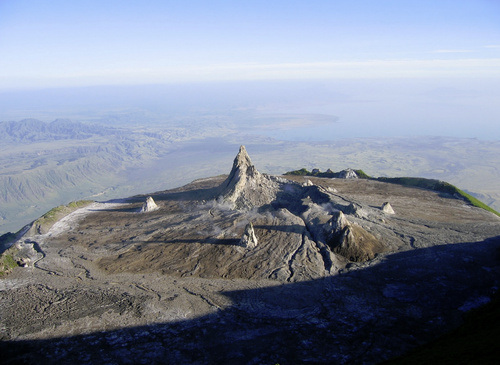
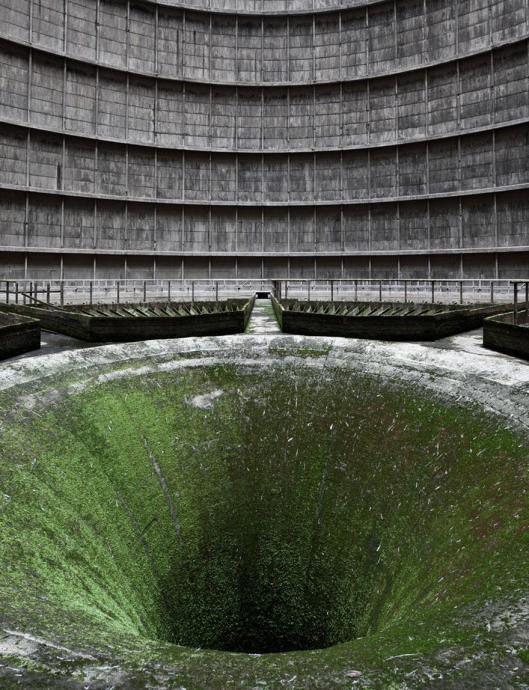
Even more Lovecraftian places that really exist…
Abandoned organ room, Eastern Europe.

Ani, medieval ghost town in Armenia.

Library at Chateau de Groussay, France.

Abandoned Soviet power plant, with ‘eye’ dome.

Abandoned prison, Ross Island, India.

Hotel Salto del Tequendama, Columbia.

Wreck of the S.S. America (1940), Canary Islands.

Abandoned tunnel under New York.

Abandoned mine, Arctic circle.

Mirny mine, Siberia.

Ol Doinyo Lengai, Rift Valley, Africa.
Abandoned power station, Belgium.
30 Friday May 2014
Posted in Scholarly works
2014 Conference of The Northeast Popular Culture/American Culture Association (NEPCA). To be held at Providence College in Providence, Rhode Island, on Friday 24th October and Saturday 25th October 2014.
“Given the conference location in Rhode Island, we would also be very much interested in organizing at least one session on H.P. Lovecraft…”
30 Friday May 2014
Posted in Scholarly works
* Anthony Christopher Camara (2013), Dark Matter : British Weird Fiction and the Substance of Horror, 1880-1927. (PhD thesis for UCLA. Examines Lovecraft’s predecessors in British fiction — Vernon Lee, Machen, Blackwood, Hodgson — and asks how they departed from the Gothic romance and the Victorian ghost story. Seems to lack a proper conclusion, but has a short coda survey article on later developments in British weird fiction)
* Arthur Jorge Dias de Morais Coelho (2013), “Os Mitos de H.P. Lovecraft e a cultura juvenil”, Anais : Semana de Historia, Vol. XIX, 2013. (In Spanish. “Of youth culture and the mythology of H.P. Lovecraft”. Asks how the mythos came to be such a key part of youth culture).
* Frederic Sayer (2004), “Horreur des villes maudites dans l’oeuvre de H.P. Lovecraft”, Belphegor : Litterature Populaire et Culture Mediatique, 3.2, 2004. (In French. Explores… “the combination of attraction and repulsion that these elements [architecture, degenerates, ancient cults] produce for the hero, who is a true double of the reader”)
* Sean Braune (2013), “How to Analyze Texts that Were Burned, Lost, Fragmented, or Never Written”, Symploke, Vol. 21, No. 1-2, 2013.
30 Friday May 2014
Posted in Lovecraftian arts, Podcasts etc.
Now on pre-order, Dark Adventure Radio Theatre’s “The Dreams in the Witch House”, done as a 74 minute audio adaptation.

29 Thursday May 2014
Posted in Odd scratchings
Alternative careers of H.P. Lovecraft:
* Paid research assistant to Harry Houdini: journalistic debunker of Spiritualism and other nonsense.
* Editor of Weird Tales magazine.
* New York advertising man, specialising in copywriting.
* Architectural historian, conservator and building restoration consultant.
* Astronomy assistant at Brown University.
* Paid researcher and writer for hire, for ‘our town’s history’ books.
* Travel writer, of practical guidebooks leavened with personal anecdote and curious local folklore.
* Part-time book cataloguer for Kirk’s expanding bookshop chain.
* Head press publicist for Sonia’s successful chain of New York hat shops.
* Archaeologist in the American southwest.
* Writer of a radio comedy-horror show.
* Purveyor of small boxed mineral and rock crystal samples, via the back pages ads of Popular Science (he owned a quarry).
* Inventor of a means of typing a story without actually typing.
* Populariser of the Patent Lovecraft Reducing Diet program.
* Dangerous Sea Life specialist of the U.S. Navy Archives at Boston Navy Yard.
28 Wednesday May 2014
Posted in Lovecraftian arts
28 Wednesday May 2014
Posted in Lovecraftian arts
28 Wednesday May 2014
Posted in Lovecraftian arts
The monster accompanying the letter “A”, in Jan Chrystian Bierpfaff and Jeremiasz Falck’s monstrous alphabet, 1656.

Hat-tip: BibliOdyssey.
28 Wednesday May 2014
Posted in Historical context, New discoveries
I’ve found a picture of Gordon Hatfield, albeit turned from the camera. This is from circa the mid 1940s, some twenty years after Lovecraft had first met him…

In 1922 Hatfield, along with Lovecraft, was an attendee of what appear to have been predominantly (but discreetly) gay parties hosted in Cleveland by Hart Crane and Samuel Loveman. Lovecraft listed Hatfield as one of the Cleveland “intelligentsia” in one of his poems which recalled these parties.
As a composer Hatfield is now so obscure that I can’t even find birth/death dates for him. I can find mention of his music for: “I Love Thee; words from the Russian of Pushkin”, 1920; “Ye Songs of Mine: poems from the Russian of Mekrassow”, 1920; “Cycle of Wistful Songs (after Goethe)”, 1921; and his music for a major stage comedy musical Wappin’ Wharf: A Frightful Comedy of Pirates, 1922 (“The time is remote, and ships of forgotten build stand out from Bristol in full sail for the mines of India…”). Whatever he did while in New York in the mid 1920s, it left no trace. He obviously returned to Cleveland, and in the 1940s had become… “professional [stage] director, Gordon W. Hatfield of the Cleveland Playhouse” (Theatre Arts magazine, 1955). He obviously also acted as there is a photo of him in full costume on stage in 1948.
Lovecraft might (my speculation) have encountered Hatfield at New York parties in the mid 1920s, since he and Hatfield were both loosely (Hatfield apparently feuded with Crane, Crane was indifferent to Lovecraft) orbiting around the Crane/Loveman circle there. But judging by his 1924 letters Lovecraft was obviously disturbed by Hatfield’s open effeminacy in 1922, so they would doubtless have avoided each other even if they had attended the same parties or visited the Double-R (a bohemian/gay cafe) in the mid 1920s. There’s no entry for Hatfield in the index to Letters from New York.
While Lovecraft’s letters often express a very attentive and delighting admiration of the handsome looks of his latest adolescent friend, Lovecraft couldn’t abide any effeminacy in males — even while having perhaps just a touch of that same manner in himself (Hart Crane once refered to him in a letter as “piping-voiced”). Hatfield appears to have been an openly effeminate gay man, almost certainly the first Lovecraft had ever encountered. Some eighteen months after meeting Hatfield in 1922, Frank Belknap Long told Lovecraft that he had met Hatfield in New York. Lovecraft responded, and recalled…
“To be sure, I recall him! Dear, dear! how he used to sit cross-legged on the floor at Eglin’s, little sailor’s cap tucked gracefully under one arm, sport shirt open at the neck, gazing soulfully up at Samuelus [Samuel Loveman] and discoursing of arts and harmonies of life! I’m afraid he thought me a very crude, stupid, commonplace, masculine sort of person” (Selected Letters I, p.281).
In a letter to Morton, Lovecraft was rather more crude in his description of Hatfield…
“And say! Have you seen that precious sissy Gordon Hatfield, that I met in Cleveland? Belknap [Frank Belknap Long] says he’s hit the big town [New York], & that he’s had some conversation with him. When I saw that marcelled what is it I didn’t know whether to kiss it or kill it! It used to sit cross-legged on the floor at Elgin’s & gaze soulfully upward at [Samuel] Loveman. It didn’t like me & [Alfred] Galpin — we was too horrid, rough & mannish for it!” (to James Ferdinand Morton, 8th January 1924).
27 Tuesday May 2014
Posted in Lovecraftian arts
Those interested in digital sketching tools may be interested in following my brand new blog on the popular software Autodesk Sketchbook Pro.
Here’s my very first try with this software, a Lovecraftian take on ‘verdant springtime emergence’…


