The Abbey frescoes of Boston

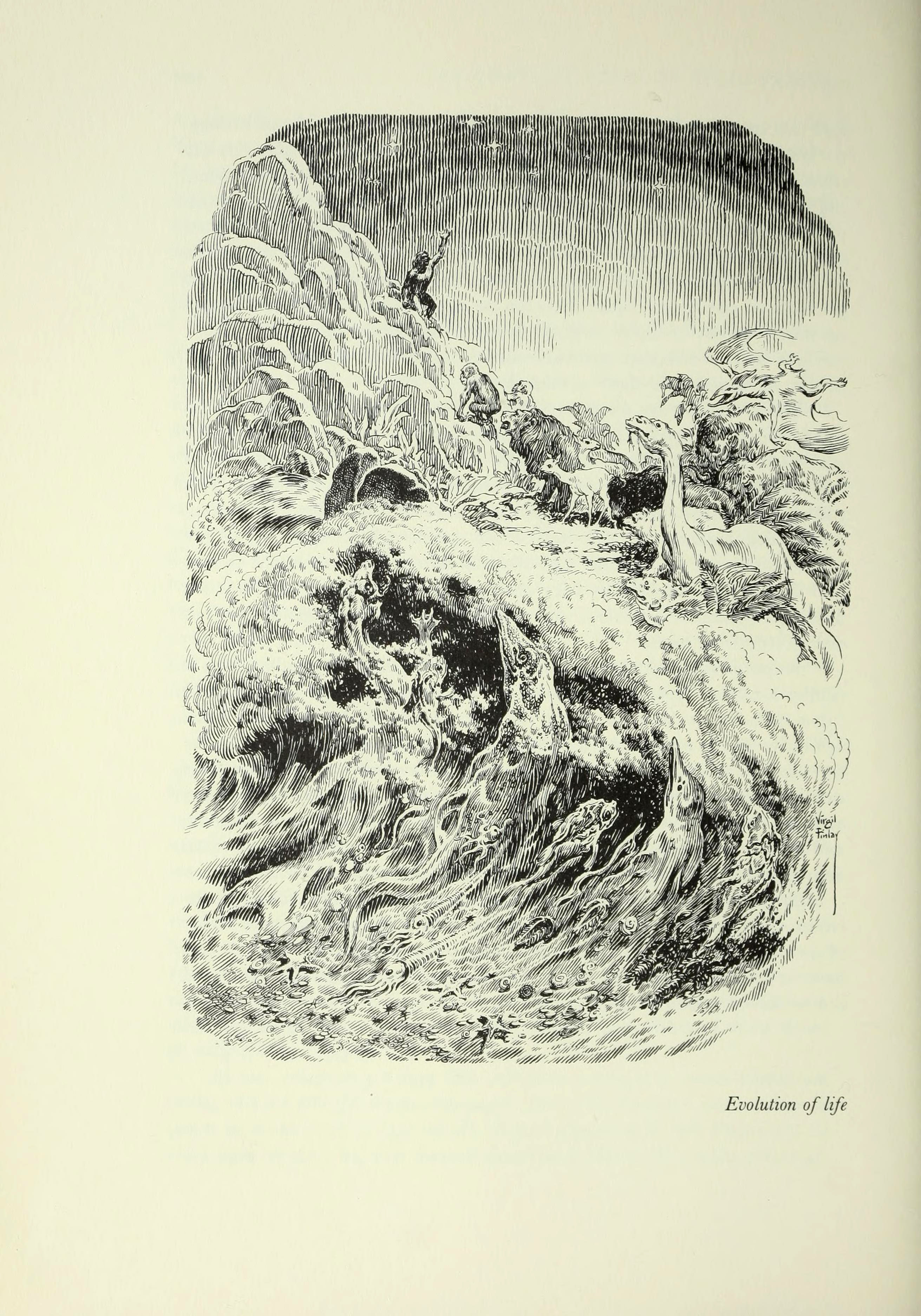
“As for Abbey — you ought to see his Holy Grail frescoes in the Boston Public Library!” — H.P. Lovecraft to August Derleth.

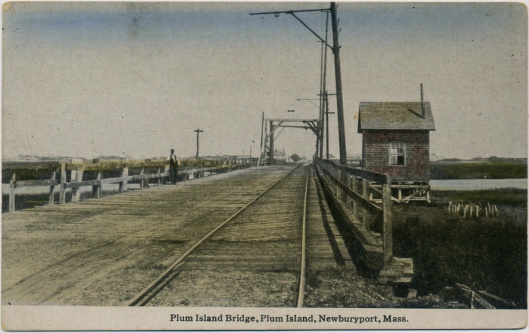
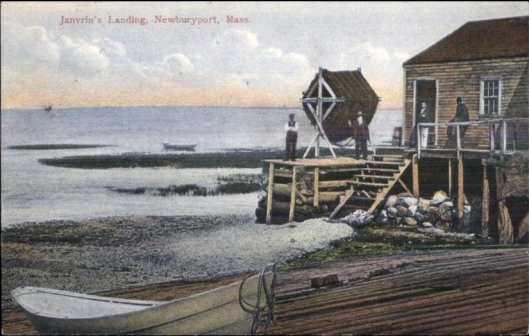
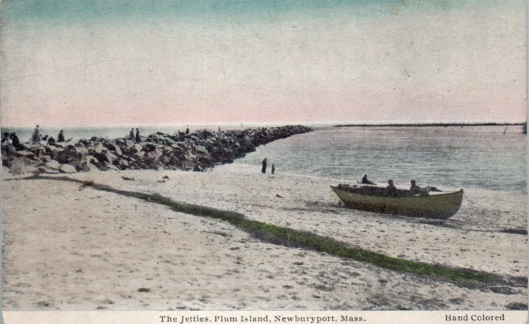
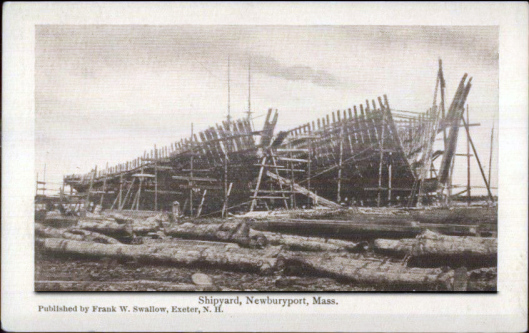
One imagines that Lovecraft or his aunts might have once owned a set of these postcards. Today good pictures can be seen online here.

The Library definitely seems to have been a place Lovecraft would have enjoyed for its creepy atmosphere…

“Cats and Dogs” as an automatic audiobook

A small experiment, to demonstrate and pin down a workflow for a state-of-the-art ‘expressive audiobook’ reading in 2018, done by affordable consumer text-to-speech software and voice.

Result: The final audio file (42 minutes).

Input text: a difficult one, the complex essay “Cats and Dogs” (1926) by H.P. Lovecraft. Pulp fiction, with simple-sentences and obvious words, might work far better. But this was a stress-test.

Voice used: Ivona ‘Brian’ (British English, 22hz, about $50). ‘Brian’ does not flow across words as smoothly and blandly as the default Windows 8 Microsoft Zira does. As a result Brian sometimes has occasional mis-emphasis of words and a slight slurring, yet is far more expressive in an audiobook than Zira.

1. The text was read by ‘Brian’ in the text-to-speech software TextAloud 4, with the text read out to a standard MP3 file.

* Speed: Normal.
* Pitch: -5 (to deepen the voice slightly).
* Volume: 100% (perhaps too high, you might also try 70%).
* Pauses between sentences: 0.7 seconds (default in TextAloud is 0.5).
* Pauses between paragraphs: two seconds.

(Why not use the free Balabolka reader? Because it doesn’t offer pause adjustment Update: it now offers markup to add pauses and pitch shifts. Further update: Now you can also set universal pauses).

2. I loaded the resulting MP3 output file into the free audio editor Audacity. An Equalisation filter was run to try to cut the 5Khz – 7Khz sibilance. The same preset tried to slightly boost 1KHz – 5KHz, for overall speech intelligibility.

3. The simple free Spitfish De-esser was then run inside Audacity, to further reduce sibilance. (Select All | Effect | Spitfish | Apply | Close). This runs far more quickly than Audacity’s native de-essing filter, as well as being simpler to control. You may have problems seeing the download button so here is a direct .ZIP download.

4. Ran the Effects | Limiter, using its default ‘Soft Limit’ preset.

5. Added Reverb filter, with its default ‘Voice I’ preset.

6. Ran the Spitfish De-esser again, to make a final attempt to reduce the remaining sibilance. Same settings as before.

7. Saved as an MP3, 320bk/s quality, resulting in a 50Mb file for a 42 minute reading.

Incidentally, it’s apparently possible to “chain” these steps (like a Photoshop Action) in Audacity, as a preset, and then play them back automatically. I couldn’t find that option in my Audacity, but that’s perhaps because I have an older version.

Results:

The results were fairly listenable, and (once the raspy ‘synthetic voice sibilance’ was reduced) definitely seems like an advance on previous robo-voices. But the test result was certainly not ideal, due to the ‘Brian’ voice’s unnatural unexpected stresses placed on certain words and the slurring of others. It’s rather like listening to a ‘sticky’/’wobbly’ old cassette tape from the 1980s, and becomes rather wearing after a while. It can result in an aural equivalent of the motion-sickness that one encounters in many videogames.

Perhaps there may be some search-and-replace script that automatically tweaks a text so that ‘Brian’ reads it better, but I couldn’t find one. Simple and immediate global fixes are:

* Change Mr. and Mrs. to Mister and Misses.
* Change capitalised acronyms such as NASA to Nasser, or they will be said ‘En-Ay-Ess-Ay’.
* Change crunched up hyphenation, such as and “then-as you all know-he did something” to “then – as you all know – he did something”.

It also helps to have a good Text Cleaner software running when you copy-paste your text into TextAloud, which will fix line-wrapping and other problems.

There are of course various machine-learning services, such as Amazon Parrot, which claim to offer smoother reading voices for text-to-speech. But they appear to be for big-budget developers, are Cloud-based, and it seems unlikely that owners such as Amazon will ever allow them to be unleashed on the making of long audiobooks (which would compete with Audible). What’s being tested above are the tools available to consumers for less than $100 total.

“Out of the Aeons” in audiobook

A full reading of the 10,000 word “Out of the Aeons” by H. P. Lovecraft, one of his best ghost-written tales and with the best reader that I could find offering it for free online. It’s a May 2018 reading by Ian Gordon.

The first half is Lovecraft doing Lovecraft-by-numbers for a revision client, but the second half is excellent. To fully enjoy the story, it helps to know the historical context. While today archaeology is rarely a topic for newspapers, and thus all the press palaver in “Out of the Aeons” may seem jarringly absurd to the modern reader, in the 1930s archaeology was front-page news.

The reading is delivered rather too fast for me, and is also a bit sibilant in high-response headphones. As an MP3 download, in the AIMP player a slower speed of O.92 is ideal. This speed setting also deepens the voice, moving the reading rather nicely from ‘peeved professor’ toward ‘Wayne June’ and the Bass-Boost slider can also increase this effect a little. The graphic equaliser settings for removing the sibilance are…

Eddie Jones

I’ve extracted the best Eddie Jones interior art from the run of Vision of Tomorrow, a short-lived 1969/70 British attempt at a high-quality science fiction magazine which featured occasional cosmic horror.

That’s how you do spreads when you only have black-and-white to work with. Very nice work.

There’s a fine in-progress biography of Eddie Jones, which is so comprehensive that it even tells me that I have a slight tangential connection — he did the covers of the Novacon convention programme booklet a couple of years before I did. Though the biography lacks the wider economic context. He produced a huge amount of painted covers for the German sci-fi paperbacks, a few for Sphere in the UK, and later some covers for the Star Trek paperbacks. But, like many in the UK, he was hit very hard by the 1978-1983 period of economic chaos, collapse and grinding recovery. He never had a book collection.

There was one fairly brief interview with him, in the short-lived British magazine Vortex (#5, 1977).

Wormwood #31

Wormwood #31 has been published by Tartarus at £10.

Likely to be of most interest to readers of this blog is “The Dark and Decadent Dreams of Doctor Doyle” by Paul M. Chapman, on Conan Doyle’s non-Holmes tales in which… “His work often echoed Poe’s ‘love for the grotesque and the terrible’”.

Looking back over other issues of the last few years, I also see that #26 had a similar survey essay for Kipling, “The Strange and the Supernatural in the Short Stories of Rudyard Kipling” by Colin Insole.

The Thing from the Vaults

The original has been found for John W. Campbell’s famous story “Who Goes There?”, a 1938 Lovecraft-alike tale about a team of scientists in Antarctica and their horrifying encounter with a shape-shifting alien entity. Campbell’s unpublished draft for that, known as “Frozen Hell”, had 45 pages of unused material. The original is now set to be published in 2019 by Wildside.

Science Fantasy Review for Spring 1950 lists “Frozen Hell” as part of a forthcoming Campbell collection, but it seems that book never made it to print. The work was recently discovered by Alec Nevala-Lee, just sitting un-regarded in an archive box, while he was doing research for his new book on the history of the famous Astounding magazine.

“A Bit Of The Dark World” in audio

For the 500th episode of Pseudopod, a complete audio reading of Fritz Leiber’s story “A Bit Of The Dark World” (Fantastic, February 1962). He had written some early stories that drew somewhat on Lovecraft, back in the 1930s and 40s, but without pastiching the master. Today I think of him as a sword & sorcery author linked with the post-Howard Conan series, but here the mature Leiber attempts a tale of cosmic horror fit for the know-it-all world of the early 1960s.

Leiber had been musing about the nature of writing in changing times for some years, such as in his rip-roaring sci-fi comedy-satire “The Silver Eggheads” (1959, expanded as a novel in 1962). This features an A.I. science fiction setting in which ‘novel writers’ are machines with names such as the ‘Fiction House Fantasizer’ with Fingertip Credibility Control!). It’s also a little Lovecrafty, as it riffs on the idea of still-living “genetically-enhanced brains taken from the skulls of once-living writers”.

Sadly there’s no audiobook version of what appears to be a sci-fi comedy classic, and the OCR on the 1959 novelette version at Archive.org isn’t good enough for text-to-speech. Though the novel is, at least, newly available for the Kindle.

Lovecraft Country

Here’s an elegant map, which might make a useful folded bookmark or paste-in for Lovecraft scholars. Especially those reading through the ever-increasing number of shelf-strainers that contain Lovecraft’s Letters and Essays, and who are trying to follow the old gent as he zig-zags through the coastal summerlands and backwaters of New England to alight on the doorsteps of fellow amateurs, correspondents and antiquarian museums. The map is from the 1922 edition of The geography of New England.

300dpi, in a 3Mb .jpg file. It’s not a fold-out, so there’s not much I could do about the gutter when aligning the two pages in Photoshop.

Also useful, for following Lovecraft’s more local walks into the city-centre, is a 1907 street-map of central Providence. Hand-drawn by a local, it was intended for use as part of a city-wide ‘open day’. As such it shows the hopping off points for the tram lines that Lovecraft would have used to get out and about, and it usefully highlights and has a fine-grained local awareness of which stores and buildings are worthy of notice. Again, there was not much I could do about the map’s gutter, as it wasn’t a fold-out map.

Lovecraft’s essays – in Spanish

Lovecraft’s essays are now available in a new Spanish translation by Oscar Mariscal, as the book Confesiones de un incredulo: y otros ensayos escogidos (El Paseo, Oct 2018). The publisher’s blurb states that the works have previously been untranslated in Spanish, and also hints that the Letters were drawn on for their essay-like material. The translator’s selection is followed by a tabulation of the stories that Lovecraft noted or remarked on in his works and letters. Amazon Spain suggests the book has 300 pages, but the publisher suggests 240 pages.

A new Lovecraft poem?

I think I may have found another new poem by Lovecraft. Not a macabre one this time, but rather a bit of early juvenilia. It’s the “Fore-worde” to his Hope Street High School yearbook for summer 1907, The Blue & White.

This “Fore-worde” is a poem of suspiciously archaic language, and also has a characteristic Lovecraft touch in the coining of the neo-archaism “strange-froughte”. Who else but Lovecraft would write such a poem in the style of an ancient wit, or insert such a phrase?

Neither the title or first line of the poem is in the latest edition of The Ancient Track. Nor is it in the Ancient Track‘s “Chronology”.

If the poem is a very early one by Lovecraft then it’s also interesting for implying that the author was on “ye humbell Boarde of Editours” in early summer 1907, which then leads one to wonder if he influenced the design on the cover. In which the tentacular flame seems to evoke (if you look at it right) a rather Lovecraftian version of a jinn to accompany the surrounding Aladdin’s lamps. If one knows that Lovecraft wore glasses at this time, the central ‘face’ could almost be a self-portrait.

Obtaining a full copy of the Yearbook would show if Lovecraft was on the “Boarde of Editours” for 1907. If he wasn’t, then the poem would be less likely to have been written by him.

He also appears as “H.P.L.” in the text of a humorous playlet in the Yearbook, titled a “Merry Drama of Hope”. At the plangent end of which he might be trying, in vain, to interest a passing fresher in the concept of meteoritic flight-paths…


Act IV, Scene 1.

The Corridor after school (snatches of conversation heard.)

[…]

“H. P. L. (Sophomorite:) “Well, the only definite theory advanced as to the cause of the meteoric path being hyperbolic or elliptic, is —”

Giddy Freshite (giggling hysterically:) “— And then he said —”

    (Corridor gradually becomes vacant)


Lovecraft was a freshman (fresher) at Hope Street High in 1904-05, but left in November 1905 and did not return until September 1906. He formally left on 10th June 1908, without a High School diploma — as he had only taken a few full classes in his final year.

According to a comment by Chris Perridas there may be a photo of Lovecraft in the next yearbook, 1908. But Chris had not been able to see either 1907 or 1908, and they’re still not scanned and online. Possibly it’s a photo that’s already well-known, though there’s nothing from 1908 here.

The small page-scans above are from a long-lost eBay listing, the data for which was snagged and kept online (just about) by a Web traffic-funnelling autobot.