Call for articles on ‘Fantasy flora / Flore imaginaire’, for a special issue of the journal Fantasy Art and Studies. Deadline: 10th June 2024.
Call: Fantasy flora
31 Sunday Mar 2024
Posted in Scholarly works

31 Sunday Mar 2024
Posted in Scholarly works
Call for articles on ‘Fantasy flora / Flore imaginaire’, for a special issue of the journal Fantasy Art and Studies. Deadline: 10th June 2024.
30 Saturday Mar 2024
Posted in New books, Scholarly works
Fabula reports the publication of Selection de lettres (1927-1929) in France. 86 Lovecraft letters newly translated into French for the first time, in a volume of over 400 pages. The Amazon UK listing has it as published with 600 pages and a hundred letters. So I’m guessing there may have been a truncation of the volume, so as to meet publishing schedules? Anyway, a vital chunk of Lovecraft’s letters, now available in French.

AI cover illustration, by the look of it, with no-one bothering to Photoshop it a little to remove the tall-tale signs. I’ve nothing against well-done AI images, but part of the process really should be a final pass by a human with Photoshop.
I assume these 82 letters don’t overlap with those in a book by another translator, Lettres de 1929: Juillet a Decembre published in 2021…
This collection offers us, in a quality translation, a selection of thirty letters written between July and December 1929, absolutely unpublished in French. Together with a very useful “glossary” of almost 50 pages, to help the French reader understand the numerous references found in these letters.
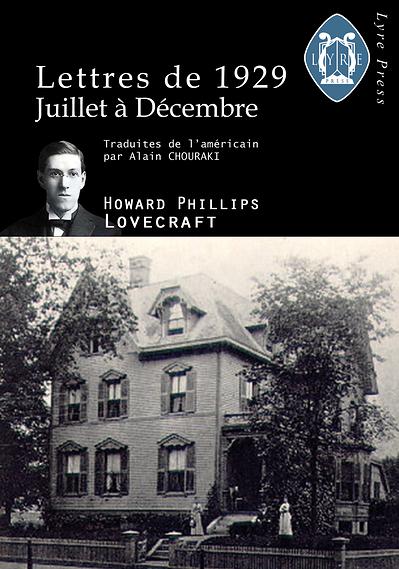
Incidentally, I believe Lovecraft’s translated tales first appeared in French in 1954? Which would make 2024 the 70th anniversary of the French discovery of Lovecraft.
29 Friday Mar 2024
Posted in Picture postals
Rhode Island School of Design’s Pendleton Museum was a prime spot on the 1930s ‘Lovecraft tour’ of Providence, given to visiting members of the Lovecraft circle by Lovecraft himself. The Pendleton was an annexe to its main art galleries, one dedicated to colonial life as it had been lived, and it was thus a favourite Providence spot for Lovecraft.
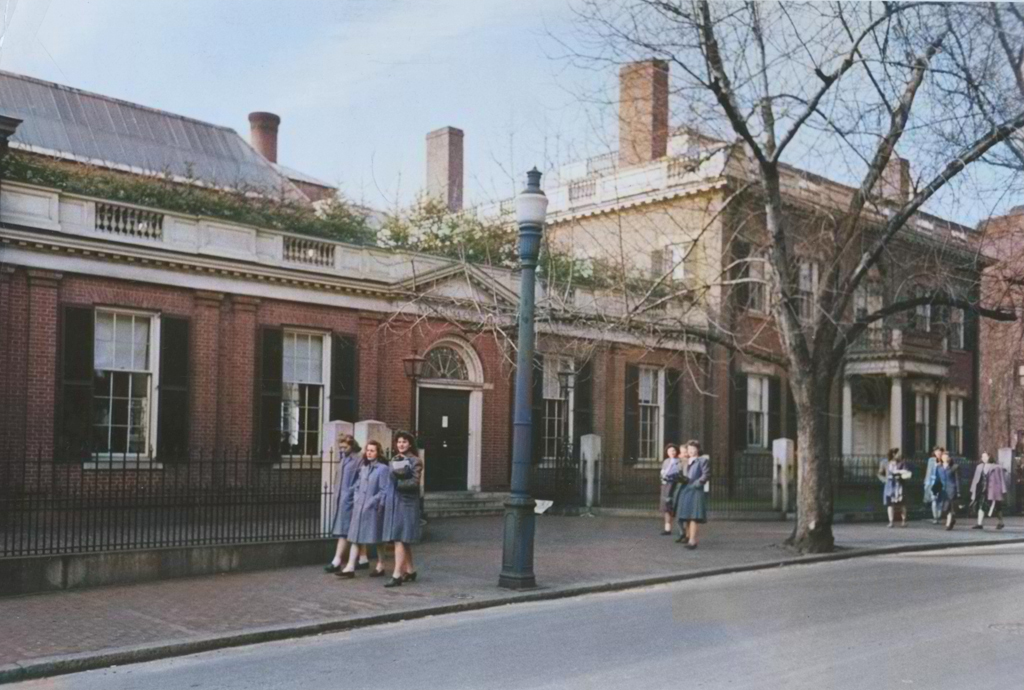
Benefit Street, with the back end of the School of Art Museum and Pendleton House nestled alongside it on the right of the picture.
Pendleton Museum (or ‘Pendleton House’) was on Benefit Street but apparently had long had its public ‘entrance through Waterman St.’, rather than its own front entrance on Benefit. Here we see the arrangement on an early map. The map does not show the museum’s extension, present during Lovecraft’s life, which curved along the steep hillside and around Pendleton…
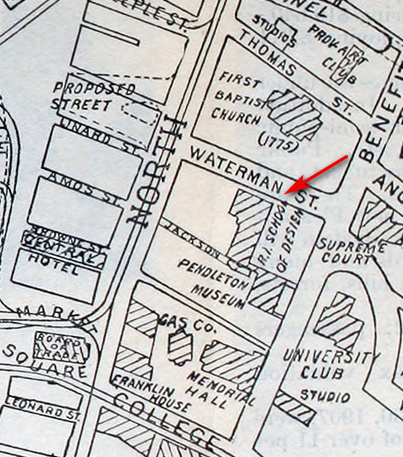
Public visitors would thus have had to walk through the Rhode Island School of Design galleries in order to reach the House. In “1897-8-9” the RISD entrance gallery at Waterman Street had been “an enchanted world” for the boy Lovecraft, due to the array of Greek and Roman reproduction sculpture.
In 1936, at the other end of his life, Lovecraft appears to have preferred the other end of the walk. Lovecraft told Galpin that he found the Pendleton Museum… “a perfect reproduction of a colonial mansion, containing the finest collection of American colonial furniture in the world.” There appears to them have been a connector in Lovecraft’s time, from the House to the newer art galleries on the slope below…
Attached to the north side of Pendleton House is a tiny arched, columned hexagonal adjunct no larger than a gazebo, with an interior dome. Exquisitely designed in the Neo-Renaissance manner, it provides the vestibule (out of the Pendleton House dining room) for Charles Platt’s stairway connector down the slope, through a (subsequently revamped) corridor gallery, also designed by Platt, to link the house with the so-called Waterman Galleries below.” (Society of Architectural Historians)
There were further additions. The Pendleton Museum was set to be matched with a long-anticipated new Colonial style courtyard garden, the Radeke Memorial Garden, but the project was delayed again and again until finally the plans for it were drawn up in 1933, and the Garden was not eventually realised until 1934. It was the sort of event and project that Lovecraft would have been on hand to support, and he had attended the opening of the Radeke museum extension in late April 1926. But I’m uncertain if he was also invited to the opening event for the garden. I have a vague recollection that he was there for the opening and he remarked that the garden was a little sparse in its initial planting (the opening event was sans plants but they were soon added). But I could be mis-remembering, and I can’t re-find the item.
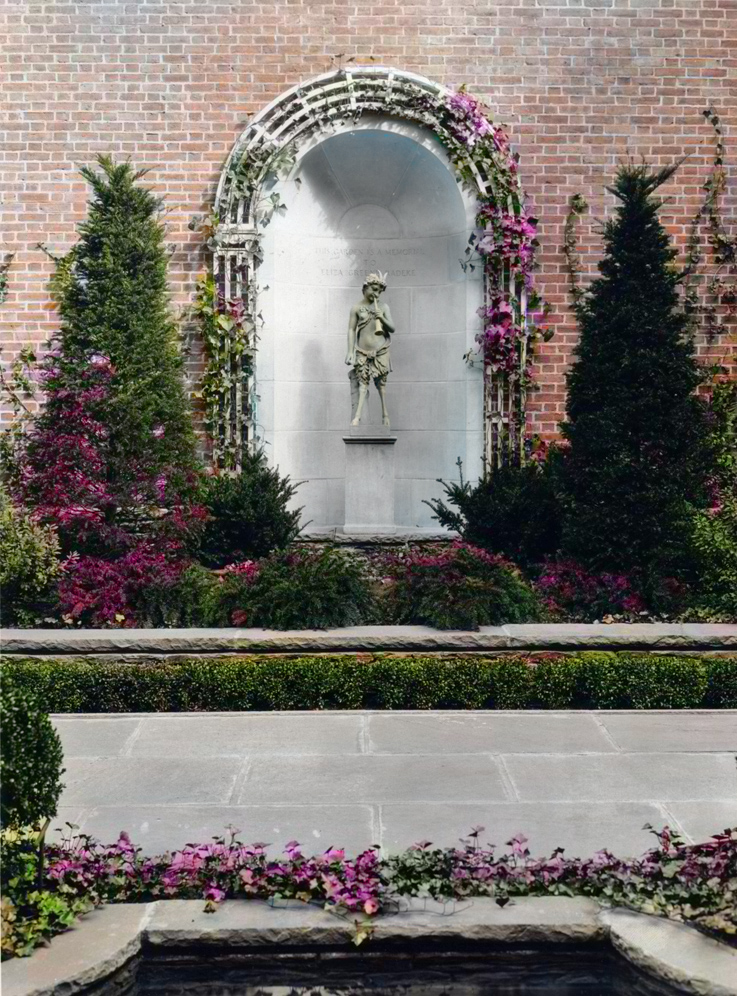
I’ve now found good pictures of this garden, as Lovecraft would have experienced it in the years before his death as he took friends around the house, and presumably also the new garden. Though the 1934-37 planting was perhaps a little less established than seen in these newly colourised pictures. With thanks to the RISD Archive.
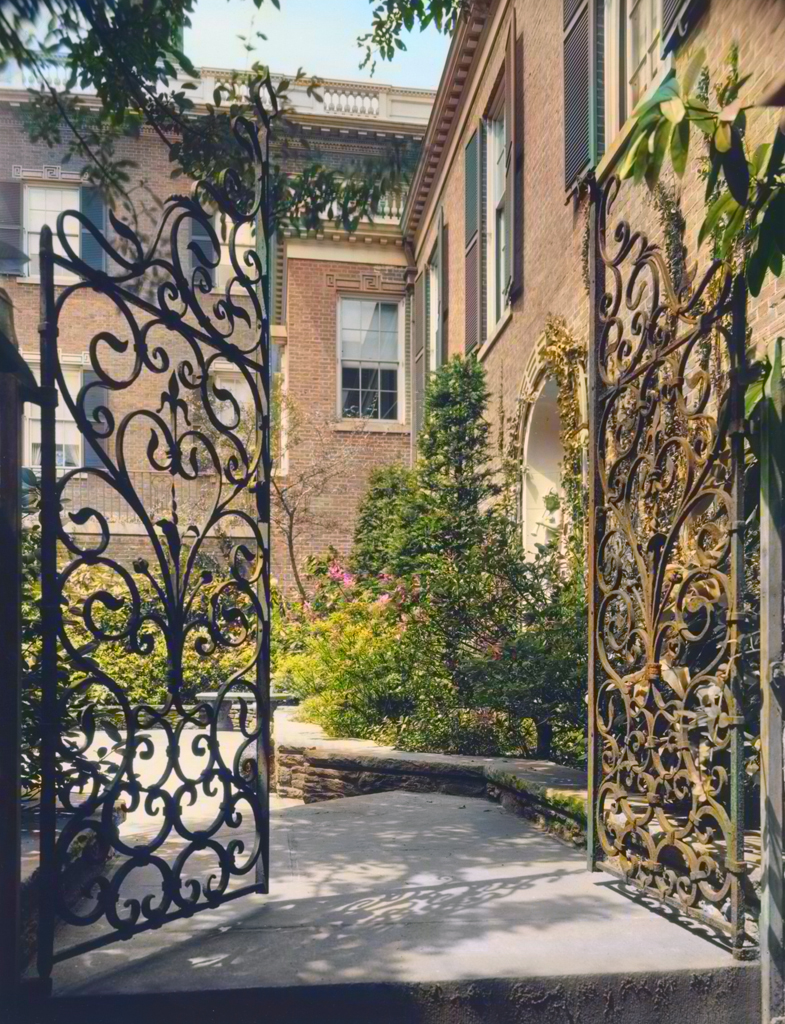
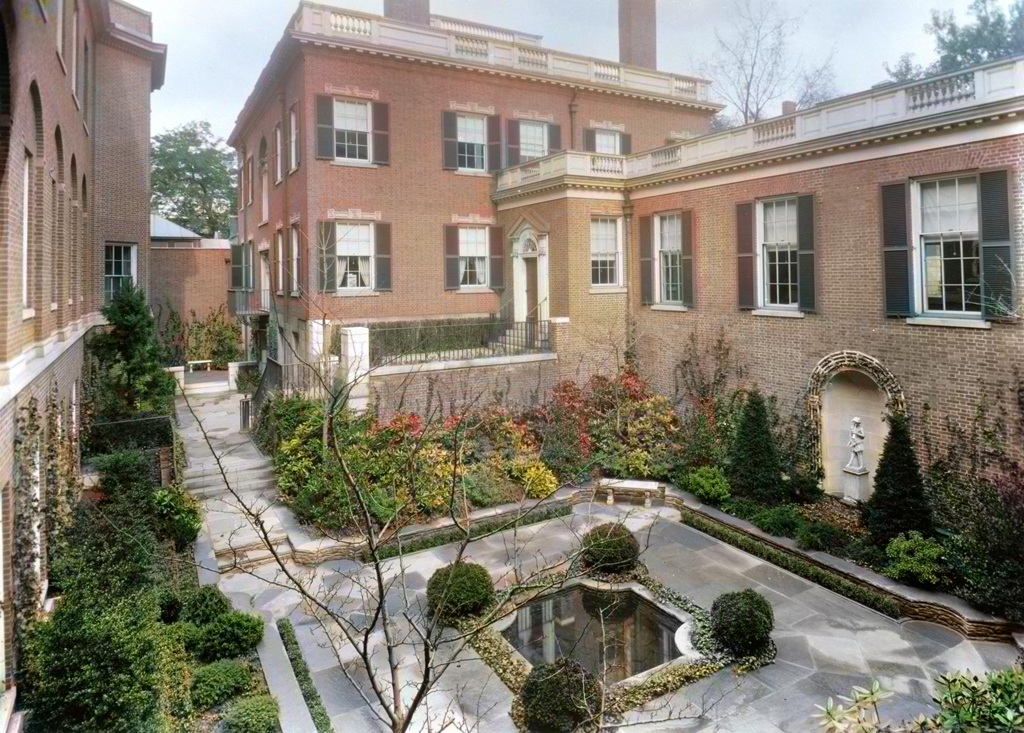
The statue in the niche is Pan depicted as a boy, woolly-shanked, cloven-hoofed and playing pipes. Lovecraft would surely have approved, and recalled his own sylvan boyhood shrines to Pan.
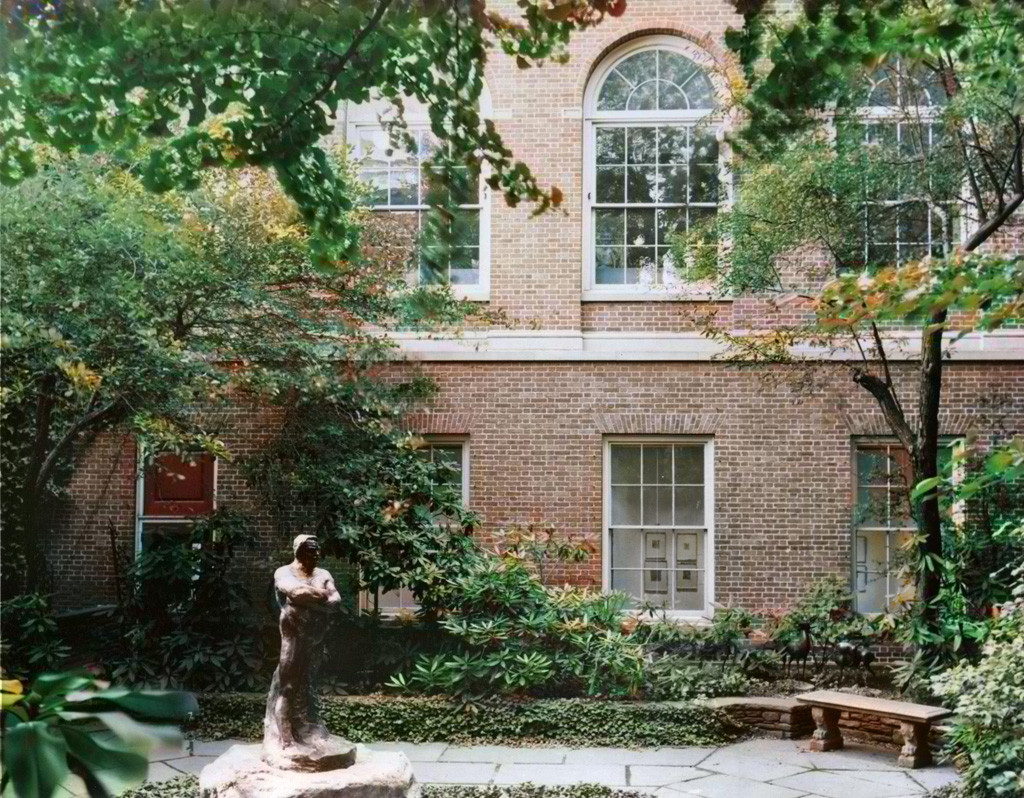
“There were in that Street many trees; elms and oaks and maples of dignity; so that in the summer the scene was all soft verdure and twittering bird-song. And behind the houses were walled rose-gardens with hedged paths and sundials, where at evening the moon and stars would shine bewitchingly while fragrant blossoms glistened with dew.” (Lovecraft, “The Street”)
The Radeke garden was restored to its original white scheme in the 1980s. It appears to be open to the public today (though may be found to be rented for weddings at weekends), and thus could be included on a Lovecraft-related tour of the city.
28 Thursday Mar 2024
Posted in New books
SP Books (‘Editions des Saint Peres’) has spotted a niche for high-quality reproductions of author manuscripts. One of their latest is “At The Mountains of Madness” in an edition of 1,000. With an introduction by S.T. Joshi.

February 1931. During a cold winter night that brings a hush to Providence, Rhode Island, one man is wide awake. Leaning over his desk, he covers page after page with writing – sometimes in ink, sometimes in pencil for revisions – as the pile of sheets stacks up. Shadows dance around him from the glow of his candle, which flickers with the slightest breath.
He had nearly finished it by the end of April, and then typed it himself. Possibly because no-one else would be able to decipher the maddening scrawl.

If you don’t have the £170 for the hardback, you can also view the same pages free at the Brown Digital Repository.
27 Wednesday Mar 2024
Posted in Lovecraftian arts, Maps
is a complete guide to the city of Arkham and the neighboring towns of Dunwich, Innsmouth and Kingsport, detailing 115 fabled locations and featuring more than 500 illustrations.
Appears to be new and a companion to the Arkham Horror board-game, but may also be of interest to Mythos writers. There no hint that it’s a politically-tweaked and polished-up reprint of an older book, as often appears to be the case with Chaosium. I assume there must be maps, but they’re not specified in the description.

Free to read online as a flipbook, so you can see what it looks like inside. Though… my browser couldn’t get past the flipbook’s cookies blocking-notice.
26 Tuesday Mar 2024
Posted in AI
You wait ages for new Lovecraft-ish LORAs to come along, then two come along on the same day. As usual these are for local generation of AI images with SD 1.5, and are free.
* Classic Film Noir (Concept) – v1.0. “This LORA is designed to reproduce the feeling of classic noir aesthetics. The clothing, the people, the lighting, the camera work and the time period.” And it’s not censored for the ubiquitous smoking of the era, either.

* Marine Biology v1.0 LORA.

* Also a most useful helper today, Vertical View Angle Slider LECO – v1.0. A LECO just goes in the LORA folder and acts the same. Use with From_Above or From_Below or (from below) placed early in the prompt, and then tweak the slider a bit for precise and reliable camera-angle control.
26 Tuesday Mar 2024
Posted in Lovecraftian arts
New to me, Lovecraft Quest – A Comix Game (2018). A $2.99 interactive horror game with comic-book art.

Available on Itch.io, and if it’s your first time signing up there then you may also want to look at the acclaimed Anchorhead Lovecraft interactive-fiction. And if you know any young readers, then also pick up the name-your-own-price Call of the Sentinel PDF set for them.
25 Monday Mar 2024
Posted in Scholarly works
Voegelin has a new review of the relatively new book Theology and Lovecraft (2022)…
to say that Lovecraft was a man of his times is an understatement and deflection. He was more a man out of time, living firmly in a romanticized past and fantasizing about a dangerous future. This was a religious endeavor – which is to say, a mission of devotion and worship – even for a staunch atheist like Lovecraft.
See also the 2020 open-access article Altar Call of Cthulhu: Religion and Millennialism in H.P. Lovecraft’s Cthulhu Mythos. Which, incidentally, is under full Creative Commons Attribution.
This article offers a close analysis of millennialism within Lovecraft’s thought” as seen in three tales.
And in the latest Aeon magazine, H.P. Lovecraft, philosopher.
24 Sunday Mar 2024
Posted in Odd scratchings
New on Archive.org, a good clean scan of the British hardback anthology Switch On The Light (1931). This was one of a series bundled the better Weird Tales stories for the British market, and the volume gave Lovecraft a hardcover wrapping for “The Rats in the Walls” and also his ghost-written tale “The Curse of Yig”.

Incidentally, I see that facsimile dustjackets are available for the series.
Also new on Archive.org, a scan of The hermaphrodite; a poem by Loveman.
23 Saturday Mar 2024
Posted in Scholarly works
New in Dissections: Journal of Contemporary Horror, a long review of What Is Anything: Memoirs of a Life in Lovecraft and also of Joshi’s Journals: 1974–1987.
22 Friday Mar 2024
Posted in Picture postals
A fine picture of 257-267 Benefit Street, Providence, perhaps 1940s or 50s? Here I’ve newly colourised the picture. It gives a flavour of the street as Lovecraft knew it. With the NecronomiCon convention and Henry Armitage Symposium set to visit Providence again later this year, I thought a few posts on the sights (such as they can be seen on Google StreetView and old pictures) would be in order,

This was perhaps Lovecraft’s most cherished street, after his birthplace. We see here a better section, just past the Athenaeum and the College Street ‘crossroads’ with Benefit Street. The homes are still there today, although the street is marred by parked cars (sadly the AI that removes parked cars from street photos has not yet been invented)…

The pillared porches are now a painted a dull brown, presumably to hide the staining from the vehicle pollution. The once-fashionable cladding of living vines has been torn down from the brickwork.
By the look of it on the map, this would be the way that Lovecraft would have taken to walk from No. 66 down to the passenger-docks. There to meet Loveman or Morton — or anyone else who preferred to visit by the New York boat rather than by the railway.
A large part of the north section of Benefit Street was becoming slum-like in his time, with weedy and refuse-strewn gardens around rented houses, and tight shutters on un-let houses. Lovecraft would remark on…
northern Benefit street, whose appealing old houses and romantic topography merit a better fate than the slumdom now overtaking them.
This half of the street having been allowed to decay, in 1959 the city and Brown swooped in with plans to bulldoze the top of the hill, including Benefit Street. In favour of grim 1960s modernist tower-blocks. Thankfully the scheme failed. Thus some Lovecraft sites remain.
F.E. Seagrave had kept a substantial astronomical observatory at 119 Benefit Street in Lovecraft’s youth…
Mr. Seagrave, who is connected with the astronomical department of Harvard University, and who is one of the foremost astronomers of the present time, formerly had an observatory on Benefit Street in this city.” (Lovecraft, 1914)
And this was where Lovecraft would have moved into, later in his life. Had the opportunity to rent 66 College Street not arisen, he would have spent his last years alone in a rented room in…
the old Seagrave mansion where the noted astronomer F.E. Seagrave dwelt & had his private observatory until 1914
Instead, from his window at 66 College Street, the treetops of Benefit Street rimmed the sunset views of his city with the darkening cosmos above it.
Possibly Lovecraft had the worrying decline of this northern section of Benefit Street in mind when writing the political fairy-tale “The Street” in 1919. At 135 Benefit Street was “The Shunned House”, also the inspiration for his poem “The House”.
The decline continued, after his death. By the early 1940s the real-life street harboured a “vice palace”, raided by the FBI. A depressing novel of the time, set in a seedy boarding-house in the northern part of the street, provoked While Benefit street was young (1943) and The pageant of Benefit street down through the years (1945), publications which defended the street against the impression that all of its mile length was now a slum. By the 1960s restoration work on the supposedly ‘beyond repair’ houses in the northern section had begun, brick sidewalks were renewed by craftsmen along with the addition of more in-keeping lamp-posts.
Further along the street again, Ken Faig Jr. has Lovecraft’s uncle living and working as a doctor at 186 Benefit Street. Lovecraft’s funeral service was held opposite, at 187 Benefit Street. The grim irony of a funeral parlour facing a doctor’s house would not have escaped the young Lovecraft. What appears to be a city Armory would have been alongside the doctor’s house, adding another layer of irony. Aka the Benefit Street Arsenal, or the Marine Corp Armory. Not to be confused, it seems, with the much bigger State Armory which was also in Providence.
Judging by Google Street View, 186 Benefit Street is now a car-park, but 187 remains…

The Poe-haunted St. John’s Churchyard could be accessed off Benefit Street. His beloved Pendleton House (‘Colonial House’) and the neighbouring RISD Museum were at 224 Benefit Street (on which more next week).
21 Thursday Mar 2024
Posted in Lovecraftian arts, New books
New from PS Publishing in 2024, The Dagon Collection: An Auction Catalogue of Items Recovered in the Federal Raid on Innsmouth, Mass. (January 2024).

Also, the previous Starry Wisdom Library catalogue is newly listed. Presumably back in print?