Graham Plowman’s Lovecraftian classical music

A new classical music piece from Graham Plowman, evoking Lovecraft’s “The Horror at Red Hook”. I see that in 2017 he also released an album, The Great Old Ones and Other Beings which is available on YouTube.

“For non-commercial projects no license is required” for re-used of his music, unless tagged with his publisher’s name “CD Baby”. Best to check with him and get permission in writing though, as YouTube and other postings are only “likely be tagged by my publisher CD Baby” — and “likely” implies it may not always be so tagged.

More Howard Days 2019 videos

More new videos from Howard Days 2019, kindly made and posted by Ben Friberg.

1. “What’s new with REH”

“Carney and Emmelhainz talking about their new role as editors of The Dark Man, the journal of Robert E. Howard studies” and new developments. The journal is being put on a regular schedule, and will be expanded in range to include papers on other Howard-era pulp topics. After this presentation there’s some news about the circa 2020 (affordable paperback) publication of Howard letters and poems, with all the known poems in perhaps three volumes. Then the session ends with an update on the ongoing Conan commercialisations, such as comics and games, in which the audience learns that Conan has now joined Marvel’s Avengers team of superheroes.

2. “The History of Project Pride”, on the locally-led and increasingly successful 30-year project to preserve Howard’s legacy in Cross Plains. A great listen, and you’ll learn a whole lot about the town and its spirit.

The Glenn Lord Symposium videos are also being posted, short presentations from scholars from the symposium element of the Days, but I’ll do a linking post on those once they’re all up.

The trailer, keynote speech and a major panel were all posted a few days ago.

Added to Open Lovecraft

Newly added to my Open Lovecraft page, of public open access scholarship:

* G. Parkinson, “We Are Property: The ‘Great Invisibles’ Considered Alongside ‘Weird’ and Science Fiction in America, 1919–1943”, The Space Between: Literature and Culture, 1914-1945, Vol. 14, 2018. (Discusses the early reception of H.P. Lovecraft in France via VVV during 1942-43, and the possible influence on Andre Breton. Also the wider reception of U.S. pulp writers and Charles Fort in continental Europe).

* From The Vaults of Yoh-Vombis: An Important and Valuable Collection of Books by Clark Ashton Smith, Thompson Rare Books, Catalogue No. 50, Fall 2018. (Illustrated scholarly bookseller catalogue for a collection of CAS rarities).

* A.M. McGee, “Haitian Vodou and Voodoo: Imagined Religion and Popular Culture”, Studies in Religion, Vol. 41, 2012. (Opens with a very brief discussion of Lovecraft’s Call of Cthulhu and sees… “his work as a prototype for many later presentations of voodoo”. Appears to be unaware of Henry S. Whitehead’s influence on the pulp idea of voodoo).

Future City

The Lovecraftian Murray Ewing has a new sci-fi soundtrack, Future City, inspired by the Terran Trade Authority (TTA) books of the 1970s. Judging by the samples the music might be described as ‘upbeat synthwave, but without many of the trance-ier overtones’.

Here’s a spread from the free Digital Art Live magazine’s issue 13 which had a mini-feature on the Terran Trade Authority, and which showed covers from all the books. TTA took science-fiction paperback covers of the 1970s, and re-purposed them to illustrate the timeline of an imagined space-faring future.

Howard Day 2019 – the first videos

The first of the video recordings are up for the Howard Days 2019, the major annual event which celebrates the life, work and home-town of Robert E. Howard…

1. Scene-setter, event trailer:

[youtube https://www.youtube.com/watch?v=nIXQ1XhF458&w=560&h=315]


2. Keynote Speech by Guest of Honor, author David C. Smith:

[youtube https://www.youtube.com/watch?v=4O0sGBUKlgU?start=234&w=560&h=315]


3. One-hour panel: “Kull, Conan, Kane or Bran: The Original Sword and Sorcery Characters”.

Houellebecq reprinted

The paperback of Michel Houellebecq’s H.P. Lovecraft: Against the World, Against Life (1991 in French) can be had for a few pounds/dollars in its 2000s Gollancz English edition, the 100-page essay being here heavily padded by the publisher to 256 pages with a couple of stories and a friendly fannish-looking cover added.

But the original 150-page English-translation hardback seems well out-of-print and has ascended to Collector-land…

Now, newly-listed for pre-order is a new 150-page hardback edition from Cernunnos, set for 3rd September 2019 and with a new cover. When the paperback is still widely available and cheap, why a reprint? My guess is they’re catering for continuing demand from university libraries, who want stout hardbacks on their shelves.

For those unfamiliar with the glittering catacombs of French intellectualism, I should note that Houellebecq can’t be thought of as a political philosopher or even a straight critic in the refined French style. He’s more what one what might call a gloomily poetic and provocative observer of his depressive times, and presumably in France he goes down well among those infected with their curious strain of gloomily nihilistic and largely gestural intellectualism. That said, the Lovecraft book was his first, and his breakthrough. It was written at the behest of the editor of Nouvelle Revue de Paris, to be one of the editor’s series of books for the high-end publisher Le Rocher. Thus Houellebecq had something to prove to a stern French literary establishment, the most perceptive of whose members knew a thing or three about Lovecraft by the late 1980s. I’ve read Against the World, Against Life in the unofficial Mackay translation. Houellebecq gets the broad biographical detail right, and weaves it with the fiction in an entertaining manner, and as such an undergraduate would definitely benefit from the essay as a short introduction which makes a dozen or more stimulating debating points. One can see why universities might deem the book suitable for degree courses.

But, despite this presumed need for rigour in writing a first ‘breakthrough’ book circa 1989/90, there appears to have also been a certain level of speed involved. In the text Houellebecq admits in passing that he doesn’t have access to the Letters, and seems to be working from memory in places. The Miskatonic Debating Club & Literary Society review usefully checks the book’s endnotes and finds them lacking…

… for all his assertions that he was forced by the constraints of the essay format to check his facts and cite his sources, he actually doesn’t. Most of what he says is supported by citations but some of it isn’t. Reading his Notes in the back of the book, the translator Dorna Khazeni lists many instances where throwaway references within the text attributed to HPL or others cannot be located, even after cross-checking with S.T. Joshi, who seems to have all of Lovecraft at his fingertips.


Update: the reprint just keeps getting pushed back and back, and at Jan 2020 is now well into 2020. I assume the expected library orders have not been flooding in…

New CD: Sonnets of the Midnight Hours

News of the new Sonnets of the Midnight Hours, a Fedogan & Bremer audio CD. Graham Plowman provides the musical score, underpinning theatrical readings of a cycle of 47 poems from Donald Wandrei. Who H.P. Lovecraft held in very high regard, along with the artist brother Howard. The poems arise from circa-1927, with Wandrei under the influence of both Lovecraft and Clark Ashton Smith.

This is a type of fantastic that mixed both science and fantasy, and that was common with the Lovecraft circle. You don’t get this sort of imagery after the Campbellian science fiction take over in the late 1930s. … His sonnet cycle is what probably sent H. P. Lovecraft off to create the “Fungi from Yuggoth” cycle that started appearing in Weird Tales in September 1930. Robert E. Howard produced his “Sonnets out of Bedlam” probably influenced either by Wandrei or Lovecraft or both.

[Picture: Howard Wandrei’s cover band illustration (front) for a 1964 collection of his brother’s poems.]

For modern print, Sanctity and Sin: The Collected Poems And Prose Poems Of Donald Wandrei (2008) seems the book to get, and can still be had at an affordable price in paperback.

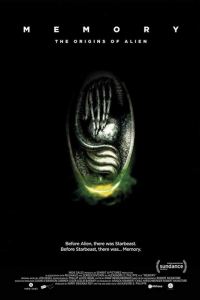
New documentary: “Memory: Origins of Alien”

Alexandre Philippe’s new feature-length documentary, Memory: Origins of Alien (2019, 94 mins) is currently doing the rounds of film festivals and related gallery shows…

On the eve of Alien’s 40th Anniversary, Memory (the title of the script’s first draft) unearths the largely untold origin story behind Ridley Scott’s cinematic masterpiece: its roots in Greek and Egyptian mythology, underground comics, parasitology, H.P. Lovecraft, the art of Francis Bacon, and the symbiotic genius of Dan O’Bannon and H.R. Giger.

Sundance reviews say it tries to take an intellectual angle, but is a bit wobbly in terms of achieving that. Also that it’s about the original 1979 Alien, rather than the later world-building and cash-ins.

The documentary is currently on pre-order on Amazon, with a “student grant-money cow-catcher” release-date of 2nd September 2019.

Whose work is entering the public domain in 2020?

As we wing toward the middle of 2019, it’s time for a survey of interesting texts set to enter the public domain in early 2020. Here I first look at nations, such as the UK, which follow “the 70 year rule”, the author having died in 1949. Then I look at the 50-year rule nations. Then I note some material in the forthcoming “published 1924 in the U.S.” release.

70-year rule:

* H. Bedford-Jones. Prolific pulp writer for the ‘slicks’, mainly historical adventure stories, but he also wrote for Farnsworth Wright’s Oriental Stories. I see that at least one anthology of his work has been published in recent years, The House of Skulls and other Tales from the Pulps (2006), so I assume he’s still a good read.

* Hervey Allen. Author of the filmed novel Anthony Adverse, and several colonial-era novels, all probably no longer to modern tastes. However he also wrote Israfel, a 1926 biography of Poe.

* Dame Una Constance Pope-Hennessy, British author of Edgar Allan Poe, 1809–1849: A Critical Biography (1934). Spliced with Hervey Allen’s Poe biography (above) and with the two heavily abridged, one might have for the text for a new graphic novel on Poe’s life?

* Tod Robbins. A writer of accomplished and ghoulish horror stories, including the story said to have inspired the movie Freaks (1932).

* Arthur Leo Zagat. He seems to have been a prolific crank-’em-out pulp writer, including some stories that appeared in science-fiction pulps such as Thrilling Wonder Stories and Astounding.

* Jessie Douglas Kerruish. British Manx author of a ‘psychic/occult detective’ meets werewolf book, The Undying Monster (1922). Set in Sussex (the south of England) in modern times, but laced with northern lore and antiquarian touches. Later filmed as a 1942 war-time quota movie with John Howard, in what the veteran movie critic Halliwell calls a… “Silly but well-photographed and directed minor horror on wolf-man lines”. S.T. Joshi considered the novel worthy and said it… “is one of the more elaborate werewolf tales of the early twentieth century and shows the inventive extremes to which writers were resorting in their effort to revitalize a classic horror theme.” Kerruish had three stories in the Not At Night horror anthologies of the 1930s (“Gold Of Hermodike”, “Wonderful Tune”, “The Seven-Locked Room”), and my digging into the copyright registrations reveals a story “‘Twelve miles above the earth’, in John o’ London’s weekly, Nov. 1, 1930″ which could be science fiction or one of the wave of ‘future air-power’ stories that emerged at this time. Also “The Making of a Martyr”, seemingly a story about a very slow poisoning over many years. The last work was Babylonian Nights’ Entertainments (1932), in which a dozen of the best stories from all over the most Ancient world are collected for the entertainment of an insomniac Babylonian king, and re-told for him (via Kerruish) — a Theosophist review considered that most of these re-tellings had “spirit and life” and that Kerruish had done well to “capture the spirit of the ancient Near East”.

* Norbert Davis. American detective fiction author of the 1930s and 40s. Said to be a fun and non-realist writer of detective fiction, and sometimes he ventured into outright detective-comedy. Overshadowed today by the cynical ‘hardboiled’ detective writers preferred by post-1960s critics of the genre.

* Sir Malcolm Fraser. His 1911 story collection The Trail of the Dead was said to be “ingeniously constructed” and The Bookman hailed it as “full of thrilling incident and exciting adventure”. Seems to be vaguely in the Sherlock Holmes mould? Sounds like something that the RPG gamer crowd might consider using, today? The book can possibly be had as a $20 reprint here.

* Rex. E. Beach. Several conventional but stirring adventure novels set in Alaska, later filmed as American movies with big stars.

* Richard Connell. Known for the castaway man-hunter story “The Most Dangerous Game”, aka “The Hounds of Zaroff”, which was filmed several times.

* William Price Drury. A substantial British historical novelist who seems to have stuck to military and naval themes.

* Will Cuppy, satirical humourist and prolific reviewer. Author of humour books such as How to Tell Your Friends from the Apes, and How to Be a Hermit, done in the ‘snappy patter’ style which appealed to the New Yorkers of the 1920s — but which is difficult to appreciate today.

* Hugh Kingsmill. Compiled two anthologies of invective and verbal abuse. Wrote some early and rather creaky-sounding British science-fiction novels of the ‘lost race’ type. His collection The English Genius: a survey of the English achievement and character (1938) was only as editor, so won’t be out of copyright.

* Joseph Charles Mardrus, French translator of the Arabian Nights. The modern book The Arabian Nights: A Companion called it… “a portrait of a fantasy Orient, compounded of opium reveries, jewelled dissipation, lost paradises, melancholy opulence”. “Hailed as a triumph” by literary men such as Gide, but quickly quibbled over by scholars. Sounds great, but it’s in French only.

* Robert Ripley, of “Ripley’s Believe it or Not” fame. I’d assume that he wrote his books with a team, so they may not be coming out of copyright. The estate may also try to tie up the valuable name in legal knots.


50-year rule:

Places with a 50 year copyright term get; Richmal Crompton (the Just William books about a rascally English schoolboy); Jack Kerouac (the near-unreadable Beat Generation stream-of-consciousness novel On the Road); John Wyndham (Day of the Triffids and other classic British science-fiction); and… the pulp-ageddon that is the release of the works of the most popular Weird Tales writer, one Seabury Quinn. If you can be content with a nation-limited release, Quinn’s story Roads is probably the most likely to make a satisfactory graphic novel or animation.


The “1924” release:

In the USA, everything published in the U.S. in 1924 will enter the public domain. Frank Belknap Long’s first story “The Desert Lich” appeared November 1924, so that should become available for desert-themed anthologies and dramatised audio readings. Perhaps paired with Lovecraft’s “Nameless City”, which has a somewhat similar desert setting. S.T. Joshi summarises “Lich” as… “a non-supernatural conte cruel in which a man who had sold an unfaithful wife is forced to lie in a sarcophagus with her corpse.”

Lowell Thomas’s With Lawrence in Arabia (1924) sounds like it might make the basis of a new graphic novel of Lawrence of Arabia.

Yevgeny Zamyatin’s science-fiction dystopia We, in its first English translation.

Also Herman Melville’s Billy Budd, and Edgar Rice Burroughs’s Tarzan and the Ant Men.

As for Lovecraft, 1924 brought publication of: “The Shunned House”; “The Rats in the Walls”, the notorious Eddy necrophilia collaboration “The Loved Dead”; and the ghost-written Houdini tale “Imprisoned with the Pharaohs”. The 1924 date may spring the lock on re-publication via automated copyright-checking systems such as Amazon, for the latter two collaborations.


New: George Laswell, a pen and ink artist with the fine picture book titled Corners and Characters of Rhode Island (1924).

Fall, or Dodge in Hell

Great news, another 900-page slab from Neal Stephenson (Snow Crash, Anathem) has landed on the bookstore shelves. Any new book by Stephenson is always an event. And with Stephenson, unlike other authors, you know that the book’s not that’s big because it’s been padded with blah.

At the meta level Fall, or Dodge in Hell is reported to be a sci-fi / fantasy mash-up, which I have no problem with, but even today such books do have a tendency to raise the hackles of defensive reviewers on ‘both sides’ of fandom. More mainstream readers may hanker for an abridged version, in these busy days. But, skimming the reviews, it seems that those who like it find it an enjoyable romp and not a slog despite the length.

From what I can gather from the initial reviews, by lightly skimming the plot mentions… a Seattle-based multi-billionare dies and is cryogenically frozen. He later ‘wakes’ to find the freezing paid off and he’s been uploaded to a digi-world of eternal digi-life. But, rather than a glittering post-human techno-topia that’s ‘The Present Re-made, Shinier and Sexier’… he apparently finds that the new world inevitably falls out along ingrained mythic high-fantasy lines, akin to Tolkien and Milton.

There are several covers for the book. The main one makes it look like one of those generic serial-killer horror books, and has a clipart crow and humdrum typography to boot. What were the publishers thinking of, there, as a cover for such a major author? But the ebook has an absolutely superb cover, one of the best I’ve seen in the last few years…

I very rarely “read in ebook and also skim”, and I certainly wouldn’t for a fine book like Stephenson’s earlier Anathem. But given the length here, and ‘virtual world’ themes that I don’t personally find all that alluring, I’m thinking that skimming may be a preferable alternative to what is going to be a very long audiobook.

A Youth in Wayland Square

This weekend, the 39th Festival of Historic Houses of Providence, Rhode Island…

Sunday will appeal to horror fiction fans. The new guided walking tours will visit the birthplace and childhood neighborhood of writer H.P. Lovecraft. “We’ll also be doing a tour of Gladys Potter Park and tours of the Blackstone Conservation District to highlight the cultural landscape of the neighborhood: the origins, the history, how it’s evolved, what’s being done today to protect some of the great open spaces there,” adds Brent.

Booking.