A reminder that Lovecraft’s 129th birthday is coming soon, one month away on 20th August 2019.
Lovecraft’s birthday
20 Saturday Jul 2019
Posted in Odd scratchings

20 Saturday Jul 2019
Posted in Odd scratchings
A reminder that Lovecraft’s 129th birthday is coming soon, one month away on 20th August 2019.
19 Friday Jul 2019
Posted in Lovecraftian arts
Ghost Tree has just completed its four-issue run, and together these form a fine short graphic-novel of about 84 pages of story. With superb art by Simon Gane. Definitely worth your time, and also worth spending time slowly perusing rather than rushing through it. For those who have a nice 10″ HD Kindle, or a similar tablet that can do justice to digital comics, the four digital issues run to £8 in the UK or $10 in the USA.

Gane has scans of original inked pages on his website.

And a Cthulhu beer label he did recently for a British brewery…

19 Friday Jul 2019
Posted in Historical context, Picture postals
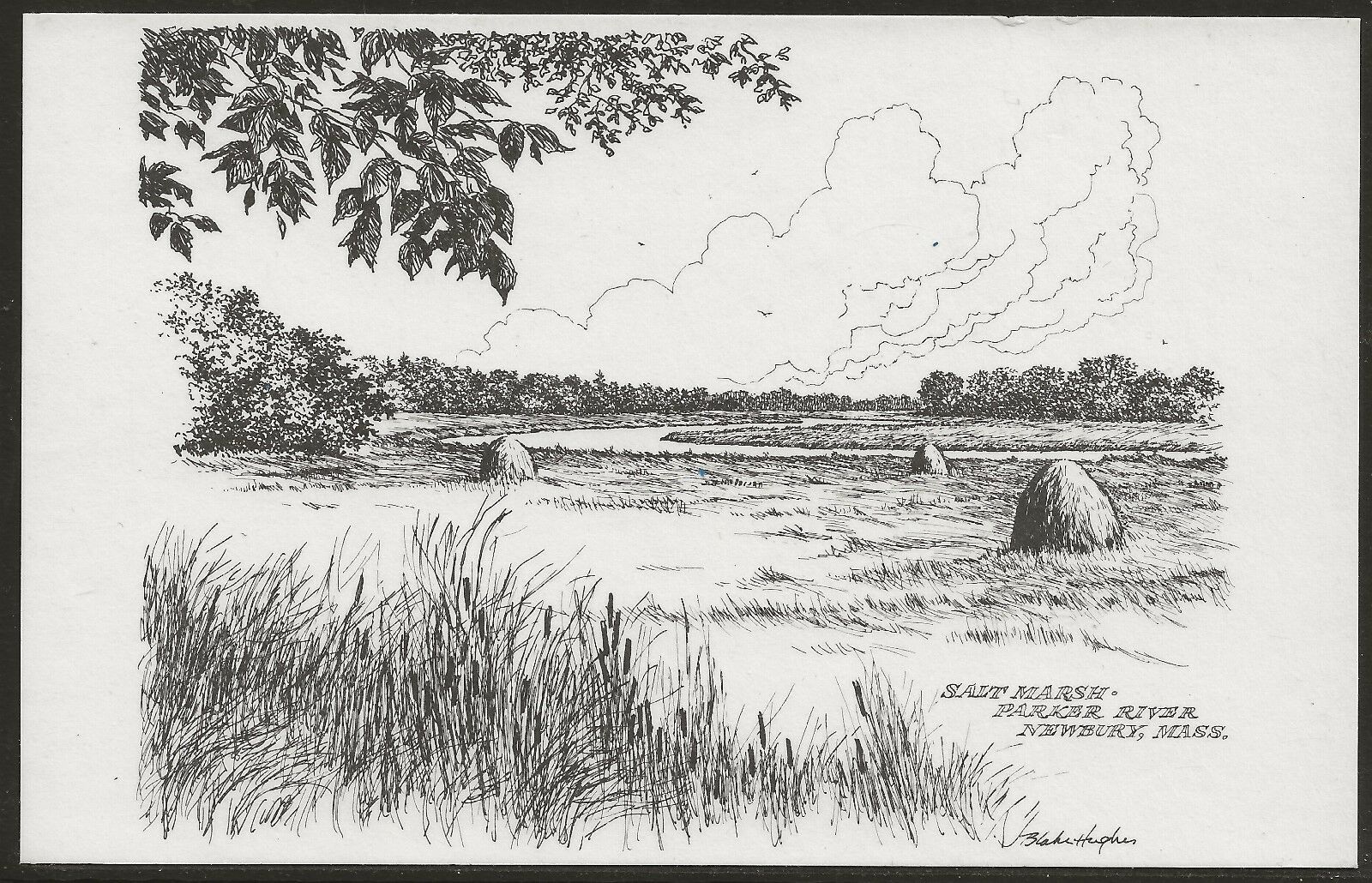
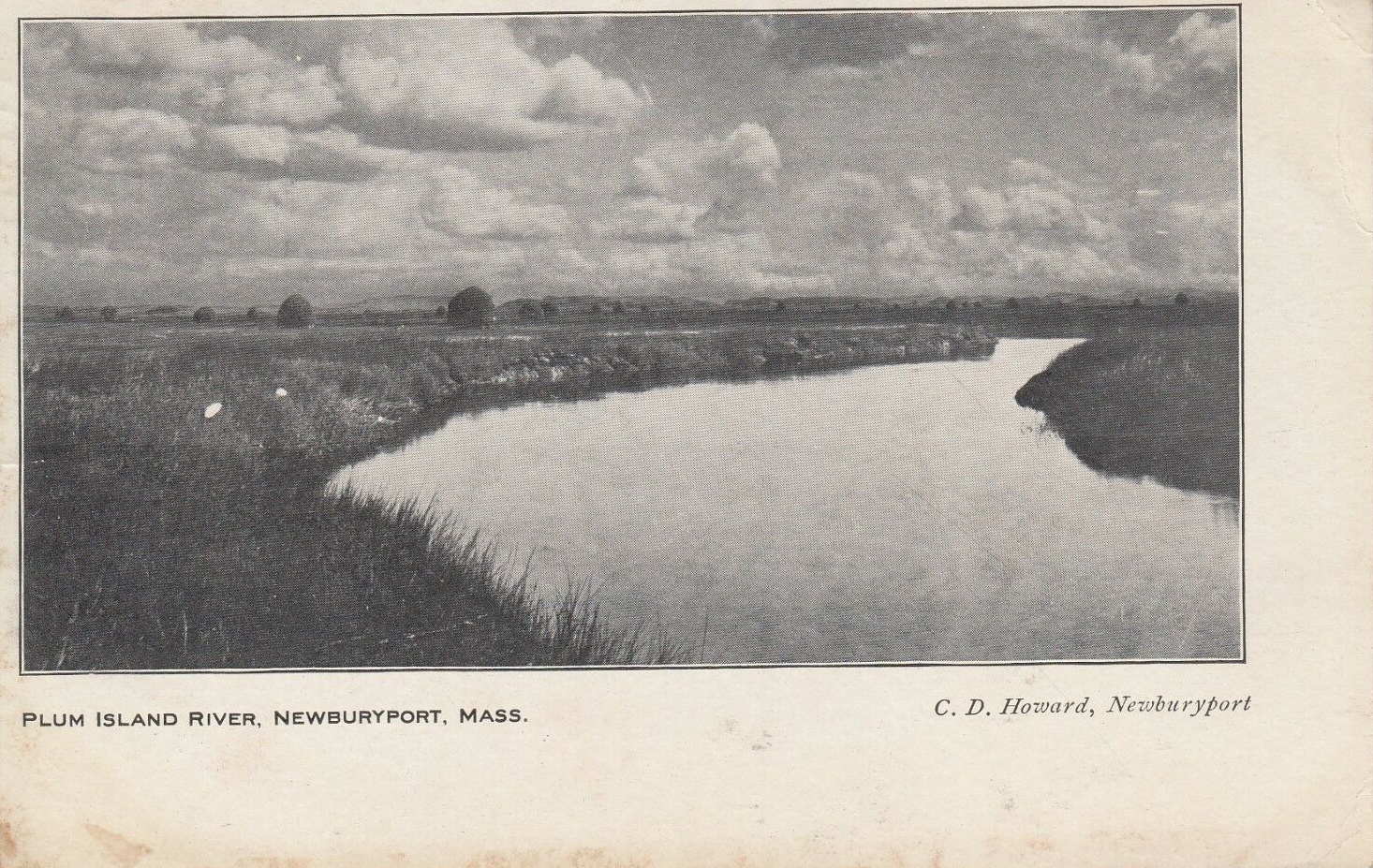
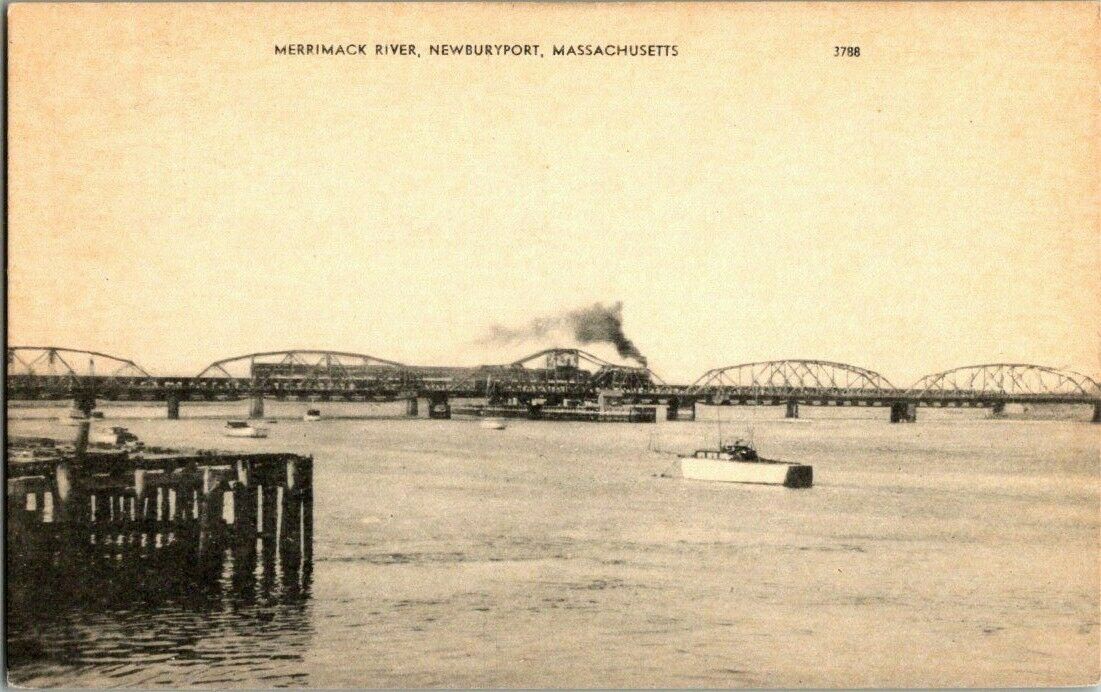
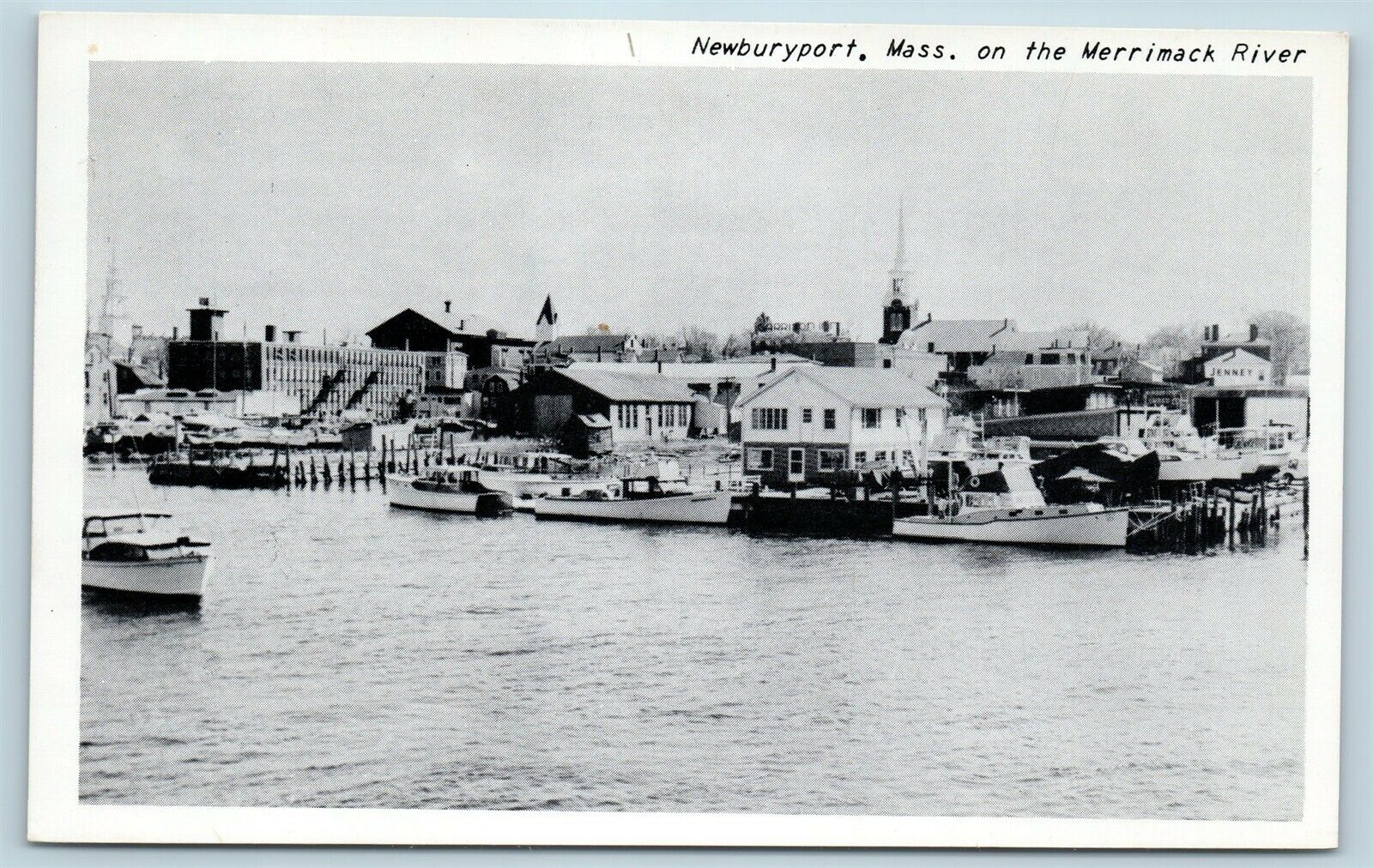
This week… back to Newburyport. Which was Lovecraft’s key model for Innsmouth.
Below are postcards not seen before in posts on this blog. I’ve previously collected such cards in posts such as Along the Innsmouth shoreline. But those below are additional cards.
The marshes on Plum Island, and the river:


The river and working boats:

Locomotive gone off a bridge or swept away in a flood. Said by the seller to be Newburyport, but I’m not 100% sure.
Next week: the town and Joppa.
18 Thursday Jul 2019
Posted in Guest posts, Historical context
Alban, of innsmouthmania.blogspot.com, has kindly sent in a translation of three articles and letters he published in French between 2013 and in 2015. These appeared in his “former blog dedicated to Innsmouth”. They’re published here at Tentaclii as a Guest Post, with my tidying of his translation and factual expansion of a couple of footnotes.
Lovecraft, alive in Paris! An American re-discovery?
In 1970 a young American student from Providence, Paul R. Michaud, travelled to Europe. On walking the streets of the French capital city of Paris Michaud was amazed to discover that a totally unknown American writer of the 1930s, a writer from Michaud’s own hometown no less, was on display in every bookshop. Moreover, this unknown ‘Mr. Lovecraft’ was enjoying an unprecedented posthumous success among the French. Michaud swiftly sent an article to his home town newspaper, the Providence Evening Bulletin, and this duly appeared there on 29th December 1970 under the title of: “In Paris, Lovecraft lives”. What follows is his text:—
“Paris —— Howard Phillips Lovecraft’s strangely accurate description of the sounds and smells of a little-known Paris street prompted a friend to ask him if he had ever been to France. “Yes,” Lovecraft replied, “in a dream with Poe. (1) Except for a few trips to Boston and a trip to the deep south, H.P. Lovecraft never left his home [the last address of which was] on College Hill, Providence. He was a loner who refused contact with the outside world. (2) Despite never having been to Paris, Lovecraft [has now] found a home in the French capital that had long been denied him in Rhode Island and the rest of the United States. Although considered dead to most of his compatriots, Lovecraft is alive and well and lives in Paris.
He is so alive in Paris that it is difficult to walk down the street without seeing his name either in a bookstore window or on a movie [house] front[age]. Just mention to a French student that you are from Providence and most often the name Lovecraft is automatically mentioned — often causing embarrassment to many Rhode Islander who have never heard of him.
Lovecraft is particularly revered by French students, many of whom carry his works in their pockets. For them, Lovecraft is as much a cultural hero as Albert Camus and Jean-Paul Sartre were in the past. Lovecraft’s translated works are in such high demand in Paris that most bookstores hold large stocks of several titles. Many of them even go so far as to devote entire showcases to them.

Roger Corman’s The Curse of Arkham, a film adaptation of a Lovecraft story, was so popular in the Latin Quarter that it ran continuously in at least two theatres for several months. One of the cinemas dedicated an entire outdoor display wall to Lovecraft.
Lovecraft’s first French translation appeared in 1954 and, in the following two years, most of his work was published. Since then, Lovecraft’s works have seen several editions and already more than 300,000 pocket[-book] copies have been sold in Paris alone.
Jacques Bergier, the man who spent 20 years trying to get Lovecraft published in French, is the kind of person H.P. Lovecraft would have become if he were still alive today. He is one of the most widely read science fiction authors in France, and recently published Le Matin des Magiciens [Morning of the Magicians, 1960] which has been sold in large print runs in its French and American editions, and is editor of the science fiction magazine Planète (*), he devoted his summer issue to a study of Ho Chi Minh, one of Bergier’s heroes. (3)
A chemical engineer by profession, Bergier has a long list of important discoveries to his credit, as well as the notoriety of having planned the destruction of the German missile base at Peenemünde as a Resistance fighter during the Second World War (4). Today, he is considering accepting an appointment at the University of California at Berkeley, as he plans to move to the United States in the near future.
If Lovecraft was so well received by the French, Bergier points out, it is because he was a writer who protested against the absurdity of a scientific civilization that was rapidly encroaching on man. Since 1940, the French have fought continuously, losing military battles on their own soil and abroad. While Lovecraft’s message was significant to them, it was only very recently accepted by his own country because Americans as a whole realized the absurdity of technology wars only in the mid-1960s, with the increase in American engagement in Vietnam. If Lovecraft’s condemnation of scientific civilization was well received by the French students known to Bergier it is because, like them, he is a “contender”, one who contests or questions the very basis of the society in which he lives. (5)
That Lovecraft is as popular as he is in Paris is very surprising, says Bergier, especially since the American author died more than 30 years ago. Lovecraft sold very well in Paris, despite not being there to promote his books. But, says Bergier, if Lovecraft were alive today, he would probably have avoided any contact with his reading public. This author from Rhode Island was a very shy man, and but for a small circle of friends he was very contemptuous of the human race. If Lovecraft acted in this way, says Bergier, it is because, as a child, he was repeatedly verbally castigated by his mother who told him that he was very mediocre and would never succeed at anything (6). The prediction proved true in Lovecraft’s daily life, as he was never able to earn more than $15 a week from his science fiction writings (7).
Arkham House has published a large number of works by Lovecraft, but in very limited editions. A recent spot-check of the Providence and Boston bookstores led me to find only two copies of Lovecraft’s paperback books — curiously in Fremont Street at a pawn shop. I didn’t find any in Providence. Because Lovecraft had no contact with the outside world, he wrote as if he had lived on another planet, says Bergier. One Lovecraft translation was quite rightly entitled: “Je suis d’ailleurs” (I Come from Elsewhere) (8).
But over the past thirty years, parts of this world that once exiled Lovecraft have begun to resemble very closely the world he wrote about. Little understood during his life as well as in his own country, Lovecraft, like many writers of his decade, became an expatriate, but an expatriate who never had to leave his hometown and country.
Note on the text: Once he returned home to the USA, the excited Paul R. Michaud sought the financial help of his parents to found a small publishing house in 1977. This was the Necronomicon Press, which he then passed on to his younger brother Marc R. Michaud. The aim was to publish works by Lovecraft, but also to discuss matters around and about his work, through publications such as Lovecraft Studies and Crypt of Cthulhu, and to provide a place where people like Will Murray, Kenneth Faig Jr., S.T. Joshi, Robert M. Price, and many others, who through their actions, would finally bring the prodigal child of Providence back home.
FOOTNOTES:
Italics = my additions.
(1) A beautiful but false story that Bergier liked to tell, because it was invented by him. Lovecraft did however, receive copious descriptive letters from Galpin during his time as a student in Paris, and also talked for hours in New York with Galpin’s French wife when she was ‘fresh off the boat’ from Paris.
(*) Planète ran 1961 to 1972. To call it a science-fiction magazine (in the British/American 1960s/70s sense) is somewhat misleading. It sometimes ran fiction by Asimov, Arthur C. Clarke, Ray Bradbury, and Asimov gave it a good interview in 1965. But by 1970 it seems it mainly… “explored esoteric ideas. Bergier was interested in the possibilities of extraterrestrial life and explored reported sightings of UFOs.” Evidently it was also an occasional organ of doctrinaire Marxist-Leninist communism in 1970.
The current Simon & Schuster blurb for the book Morning of the Magicians calls it… “The first book to explore in depth the Nazi fascination with the occult, Pauwels and Bergier also broke new ground with their study of pyramidology, alchemy and its close kinship with atomic energy, and the possibility of a widespread mutation of humanity that would herald the dawn of a new age for the earth.”
(2) False, except for a period when a young man. HPL as we now know, without being an actual ‘backpacking hiker’, took to travelling extensively during his adult years. Although even this was usually seasonal — a reclusive winter hermitage, then a sallying forth on travels during the late spring and through the summer.
(3) Paris had been deeply rattled by the failed revolutionary student uprisings of May 1968, while America was in the middle of the Vietnam War which was likewise rattling the nation’s sense of itself. Paris in 1970 was still in extreme political ferment, and the ideas of its intellectual salons and pamphlets were inspiring those who would soon unleash waves of armed leftist terrorism in Europe throughout the 1970s. “Ho Chi Minh” was one the many names of the Vietnamese Communist leader, a man responsible for spreading communist regimes across Vietnam, Cambodia and Laos. Minh was ultimately responsible for the deaths of around 4 million people, and the long misery of many subsequent generations in that region.
(4) He was part of the underground ‘Marco Polo network’ which warned London that the Nazis had carried out successful tests with long-range cross-Channel ‘V’ attack rockets. These messages, addressed to Colonel Remy, caught the attention of the British command — which took the threat into consideration and successfully launched an action to sabotage the base.
(5) In the swirl of post-’68 leftist politics in Paris, HPL was evidently deemed a fellow Marxist-Leninist and protestor! But there we feel that Bergier is speaking, and also suspect that Michaud, as an American, later became aware that HPL would surely have approved of the anti-communist aims of the Vietnam War.
(6) Psychoanalytical theory, such as it was in 1970, was commonly hazily understood among leftist intellectual circles to be ‘parent-blaming’, and this fitted well with the generational politics of the period. As for HPL, we now know that the facts of his misanthropy and his relationship with his mother was a little subtler than that.
(7) “Writings of weird fantasy” would have been more appropriate, but at that point in time few in America would have remembered what “the weird” once was.
(8) In fact: “The Outsider”, in the original title.
Paul Michaud, who actually lives in France, has written to us to give us more information:
“What you discovered, and ‘resurrected’ is only a small part of the original story [of ‘the news from France’ in 1970], acquired first by Jann Wenner of Rolling Stone magazine and later by the New York Times book reviewer — who lost the negatives I had sent them — and who ultimately did not publish it. Later it was August Derleth who, if I remember correctly, used some photos that I had the good idea to have printed before sending the negatives.
What was published in the Evening Bulletin is only a pale reflection of my original article, which contained, among other things, a larger part of the interview I had obtained from Jacques Bergier, who spent hours with me in his office on the Champs-Elysées during the month of August 1970.
Moreover there was a point years later, when Louis Pauwels (Bergier’s literary executor) also became a friend, and when he handed over Bergier’s archives to the Saint-Germain-en-Laye public library… then I noticed that the envelope marked by Bergier as containing his “correspondence with Lovecraft”, was… Empty! As for “completing” the version of my story, there was then no technical way to memorize or copy his writings, apart from using carbon paper on a typewriter, which unfortunately I did not do at the time.
I don’t remember the original [typescript] very well, the one that was typed for the Evening Bulletin. I had been their correspondent when I was in high school, alongside such luminaries as novelist Lesley Horwitz, or actor James Wood, and I knew they would take everything I had been unable to sell in the big newspaper markets. It is possible that my brother Marc Michaud, who took over the torch from Necronomicon Press in the late 1970s, has these good things to print in his archives, but given his constant travel, floods and other disasters, which he has faced in recent years, I doubt that he knows where the original article and my notes are located.
Moreover, my only contact with Lovecraft — until my first visit to Paris in 1970 — was through Ted Klein, whom I succeeded in 1969 as editor-in-chief of the Brown Daily Herald, the student newspaper of Brown University (Providence), and who had written a magnificent Lovecraftian piece titled “The Events at Poroth Farm” which Necromicon Press later reprinted, and which appeared at the time in one of Fantasy’s annual collections of ‘best writing’.
Ted during his last years in Brown lived with nine roommates in an apartment on Thomas Street, Providence, in the place which is featured prominently in an HPL tale (“The Call of Cthulhu”). It was also thanks to Ted that I was able to meet a very young writer who was also very influenced by Lovecraft, and not yet published at the time: Stephen King. He and Ted, conscientious objectors [to ‘the draft’ for the Vietnam war], taught English together in a school in Maine, in order to avoid being sent to Vietnam – an opportunity for them.
A further note, on Paul Michaud, HPL and Houellebecq in Biarritz.
In August 1979, Paul Michaud gave a lecture in Biarritz [expensive resort in the south of France] on Lovecraft in front of an audience of retirees, who had fallen soundly asleep under the overwhelming heat of the season. They woke only when he showed his slideshow of Weird Tales covers – those concerning the first publications of HPL – in which delicious nearly-bare pin-up girls fight against gelatinous or bestial semi-human monsters.
At the end of the presentation, a young man introduces himself. He says he is fascinated by the presentation, and asks for some references by which he might learn more about Lovecraft. As a gift, he offers the number [issue?] of the Que Sais-je collection on the ancient Gnostics, whose reading he had just completed. He tells the speaker that he is studying agricultural engineering and gives his address in Paris, near the Place de l’Odéon, not far from where Paul Michaud also lives — and finally gives his name: Michel Thomas.
It was only several years after this event Paul realized that this young man, passionate about Gnostics and Lovecraft, was none other than Michel Houellebecq and that undoubtedly, without really having sought it, Paul had helped him a little bit to “launch” his later literary career. Since in 1991 Houellebecq became the author of one of the first critical books in France on HPL.
Original Web links and some related pictures can be found here :
http://innsmouthmania.blogspot.com/2013/07/a-paris-lovecraft-vit.html
http://innsmouthmania.blogspot.com/2014/10/a-paris-lovecraft-vit-une-redecouverte.html
http://innsmouthmania.blogspot.com/2015/01/paul-michaud-hpl-et-houellebecq-sont.html
18 Thursday Jul 2019
Posted in Lovecraftian arts
Dark Adventure Radio Theatre: Mad Science. Four sizzling mad-lab Lovecraft tales, presented in the full-cast old-time radio style. Pre-ordering now and due for release on 20th August 2019.

18 Thursday Jul 2019
H. P. Lovecraft: Selected Essays. Due for shipping 1st August 2019 from Necronomicon Press and pre-ordering now. “His best and most representative essays” in 300 pages. Assembled by S.T. Joshi, but there’s no mention of annotations or expanded annotations by him. The Collected Essays set from 2005 does have annotations.

I think the cover art is meant to look distorted, and its strange stretching upwards is meant to convey ‘weirdness’? Because if I try to fix it in Photoshop, the type is squished and stretched in turn and the background elements don’t look right.
Also new and shipping on the same date, a 66-page booklet, Ex Libris Miskatonici: A Catalogue of Selected Items from the Special Collections in the Miskatonic University Library. A guide to the Library’s special collections and details of each of the key books.
17 Wednesday Jul 2019
Posted in Lovecraftian arts
Excellent, I see there’s even more quality Lovecraft videogaming set to ooze up from the depths…

Gibbous is a Lovecraftian videogame done in a “traditional 2D animation style” and runs to some 60 hand-painted traditionally-animated scenes of the city of Darkham with 70 “fully voiced” characters. Including a talking kitteh who has been zapped by the Necronomicon. A tome which various cultists in Darkham would very much like to obtain.
The game looks great, and sounds like fun. It seems to be a sort of LucasArts Day of the Tentacle, as if art-directed by junior illustrators at Disney and written by Lovecraft operating in self-parody humour-mode.
Though it remains to be seen if it’s as laugh-out-loud funny as Tentacle, as smoothly animated as old-school Disney, and can avoid the sort of game-stopping head-banging puzzles that so often break story-flow in such games. But the game has been in development for many years, has produced a demo, and it looks like quality. It’s due on Steam for the PC on 7th August 2019, and may be one for Lovecraftians to play along with young relatives who enjoy the likes of Gravity Falls.

Release: 7th August 2019 on Steam.
Update: 16th August and it’s getting very good reviews all round. A classic?
The general approach and cat-character makes me think vaguely of a more glo-paint-coloured Inkscaped version of the Ghostworld title, a game that Microsoft had in development in circa 2013/14 but which they squished while it was still in development.


16 Tuesday Jul 2019
Posted in Historical context, New discoveries
A small unsolved mystery has long lurked in the text of “The Dunwich Horror”. The name “Buzrael” is used by the Rev. Abijah Hoadley when evoking the source of one of the “cursed Voices”. These Voices having been heard coming from under the ground near Dunwich Village, and thus preached against by Hoadley in a fateful sermon of 1747.
Joshi’s Annotated Lovecraft deems the name invented, and his Penguin Classics edition of Lovecraft states the same. Klinger follows, stating “unknown”.
I can now reveal that the name was invented, but not by Lovecraft. He took the daemonic name “Buzrael” from the satirical squit “The Funeral of Benedict Arnold” (Anon, 7th Oct 1780), in which the devil is deemed to have written a letter to congratulate his daemon emissary Buzrael (this being the infamous traitor Benedict Arnold) for subverting America. This letter was deemed to have been plucked from Arnold’s dying hand before the flames took it, and duly published as a public duty in the Pennsylvania Packet.
Lovecraft would have known this satiric letter from reprints in one of several standard early American history books, such as A Short History of the American Revolution. The earliest I can find it reprinted is in the collection Diary of the American Revolution: from newspapers and original documents (1860).
The name of course evokes ‘Buz—’ as in ‘buzzing’, thus lending itself easily to the idea of ‘strange noises’. The real Hoadley was the intellectual spark who lit the flame which led to the armed revolution in New England, and a man vehemently written against by Pope and Swift — as I reveal in my fourth book of Lovecraft in Historical Context essays. I can see no further connection between the real Hoadley and the real Arnold, although in this transitional period of Lovecraft’s writing the idea of linking the devil and the American Revolution was obviously on Lovecraft’s mind. For instance, as S.T. Joshi has noted of “Dexter Ward” (written 1927)…
the threat of Curwen and his unholy alliance with the devil becomes, according to Lovecraft’s retelling, the first spark of the American Revolution.
16 Tuesday Jul 2019
Posted in Kittee Tuesday
Celebrating H.P. Lovecraft’s interest in our fascinating felines.
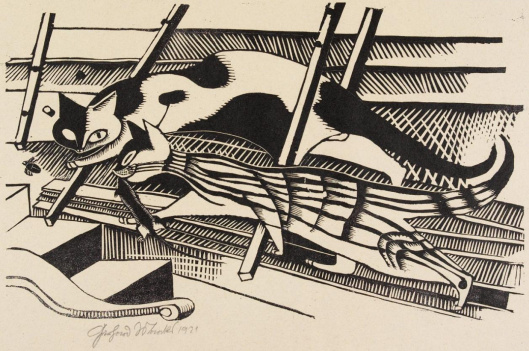
German ship-cats by Gerhard Marcks, a 1921 signed print. At this point in time Marcks was starting a six-year employment in a “teaching position at the Bauhaus school in Weimar”.
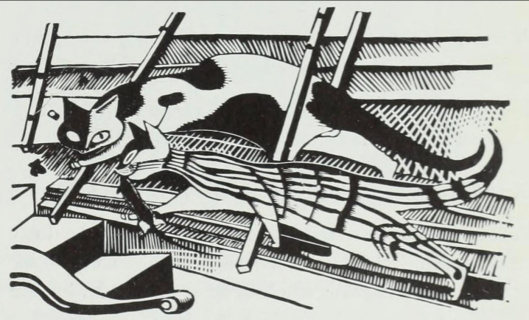
A later book reprint, with far less fidelity than the signed print and also illustrating how digitising scans of books can further degrade fine detail…
16 Tuesday Jul 2019
Posted in Historical context, Odd scratchings, REH
Newly on Archive.org for the first time, a good crisp scan of Oriental Stories for Winter 1932, Farnsworth Wright at the helm of this Weird Tales clone, and Robert E. Howard providing “The Sowers of the Thunder”.


The letters page has mention of The Cross Plains Review in Howard’s home town. A title obviously well known to Howard scholars, but it’s new to me. Howard thus appears to have had a strong local friend in the form of the town’s newspaper editor, something I hadn’t known before. It led me to find that there are now digitized scans of this newspaper online in PDF from a university, albeit the 1920s and 1940s and not the 1930s.

I also found a rather nice painting of The Cross Plains Review editorial building as it would have been…

15 Monday Jul 2019
Posted in New books, Odd scratchings, Podcasts etc., Scholarly works
S.T. Joshi is back from his Australian tour and his blog has just updated.
He’s wittled his Lovecraft biography down to a mere 8,000 words and has committed the results to a vinyl LP record! This is due for release shortly, with music — and I assume also with graphic design and sleeve-notes of the sort that will please the vinyl collectors.
Joshi also notes an Italian translation of the first volume of I Am Providence is due for October 2019, with the dust-jacket sporting an affordable “29 Euro” tag. The second volume of the German language translation is less certain on the date, but is reported as likely to appear at around the same time.

News also of a new Joshi editorship, of …
a new magazine to be published next summer by Hippocampus Press: Penumbra. This will be an annual magazine, consisting of up to 100,000 words, chiefly devoted to criticism and scholarship of weird fiction (exclusive of Lovecraft), but it will also include a small amount of original fiction (about 30,000 words in each issue).
Submissions are invited.
15 Monday Jul 2019
Posted in Scholarly works
≈ Enter your password to view comments.