Meanwhile, down on the farm…

The new feature-length movie adaptation of Lovecraft’s “The Colour Out of Space” appears to have been a success, both critically and in terms of being picked up for cinema distribution in the USA. Here in the UK it opens in London in early October. The movie seems to have had to get through a ‘double-hate’, with early negative reviews not only from haters of Lovecraft but also from haters of the lead actor Nic Cage. But it appears to have moved past those with ease.

On the back of a renewed interest in pastoral/rural science-fiction, Clifford D. Simak’s best novel Way Station has been picked up for a TV movie adaptation. Matt Reeves (Cloverfield, two of the new Planet of the Apes reboots) is to adapt it as a “large-scale sci-fi thriller”. It’ll be a single TV movie, apparently, rather than a mini-series. Let’s hope he doesn’t bring the Cloverfield found-footage look (camera so shaky and unsteady as to make the movie unwatchable) to Way Station. As usual with anything ‘Simak’, be very careful what you read about his work — blurb writers for Simak seem to delight in giving huge plot-spoilers.

One suspects that, inevitably, some modern political correctness will get slipped into the script. Perhaps in the 2020s the political equivalent of the Christian movie-snippers will arise, if they haven’t already done so. Those old-school snippers would deftly edit or blip out all the profanity and nudity and gore in a movie and produce a ‘clean version’.

On Waterman Street: the Paxton/Arsdale

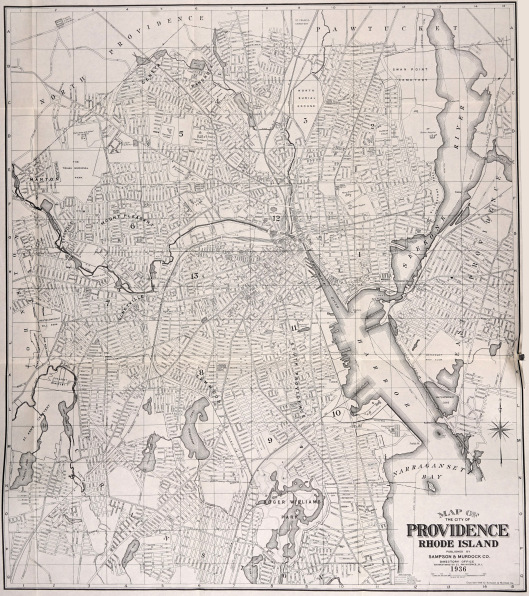
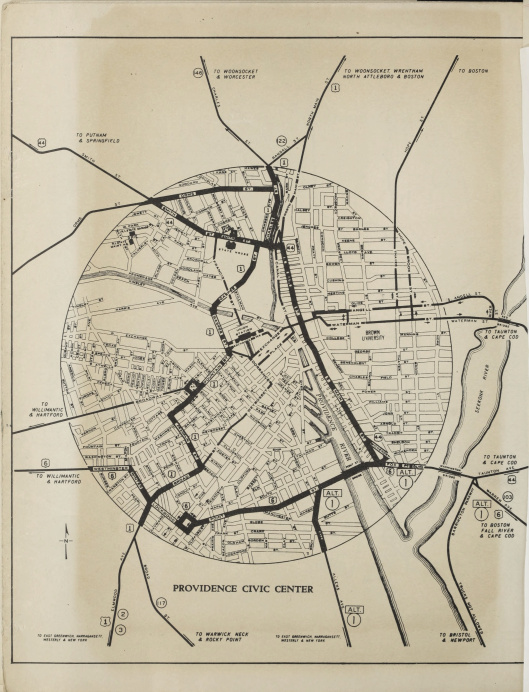
I’ve found a picture of the Paxton/Arsdale frontage. First, here’s the map oriented to the same viewpoint as the photographer…

Here we see the Waterman Street approach to the Brown University campus at the top of the hill, with the clock-tower in the distance. It’s 1909.

The twin pale buildings in the centre of the picture are the Paxton frontage. They have different roofs because they were once separate buildings, before being joined and painted alike. The resulting large boarding house was later called the Arsdale, then re-named again from 1946 as the male dormitory ‘Hopkins House’ housing some of the many Brown students returning from service in the Second World War. (My thanks to Ken Faig and David Schultz for discovering the later names of the place). Lovecraft lived at the back of this boarding-house and shared a courtyard garden and cats with it. His aunt ate either her main or midday meals here, and it seems that Lovecraft accompanied his aunt to festive meals here if he wasn’t in New York with the Long family. He may also have taken some meals here in the depths of winter. This was also the home of two of his late correspondents including Marion F. Bonner (for the letters see Lovecraft Annual 2015).

It’s also possible that Lovecraft would telephone from this building — there are two 1934 memoirs of Lovecraft in Lovecraft Remembered. In one, Kenneth Sterling discovers Lovecraft has no phone at home, in the other Dorothy C. Walter is telephoned twice by Lovecraft. Both are recalling 1934 at 66 College Street. In the Dorothy C. Walter instance Lovecraft was certainly at home, and would not have gone more than a few yards out of his door due to the bitter cold and ice outside. This suggests he may have made outgoing phone calls at the Arsdale, just across the garden court from 66 — unless perhaps the downstairs tenant at 66 had a phone that could be used. At the old address of 10 Barnes he had used his landlady’s phone for calls.

Update: my thanks to David Schultz for pointing out that the C.A. Smith letters indicate that Lovecraft’s aunt had a phone in her section/apartment of 66 College St.


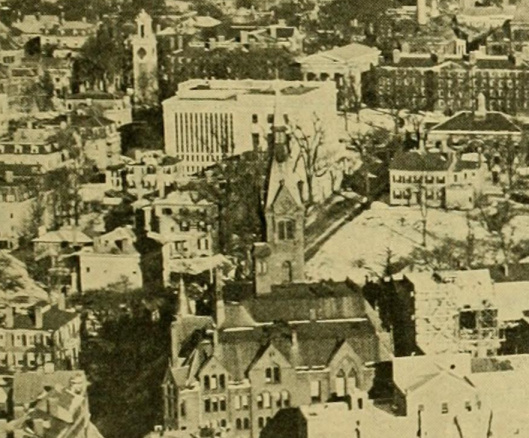
Here we seen a long view from the tall Industrial Trust building. It’s late January 1929 and we can just make out the back of the Paxton/Arsdale. One can just about make out the garden space between Lovecraft’s house and the boarding-house.

College Hill from above

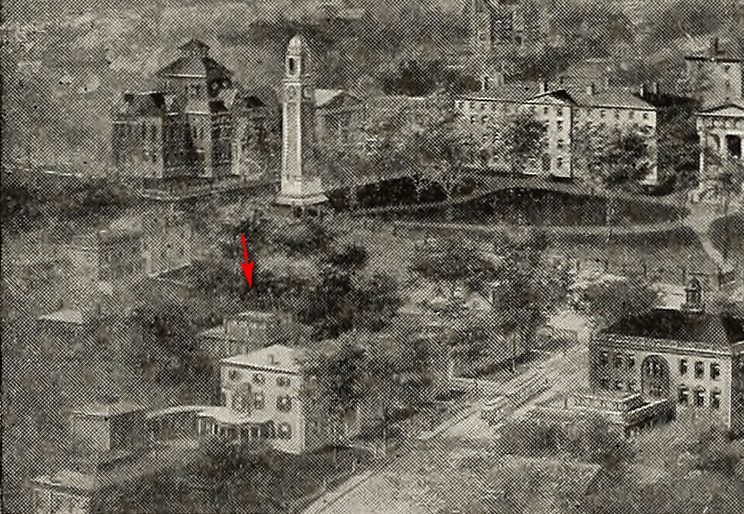
Here is a bird’s-eye engraved view of Lovecraft’s 66 College Street in 1908, before the building of the Library on the corner. From the book Memories of Brown (1909). The house is set back from College Street in a garden court.

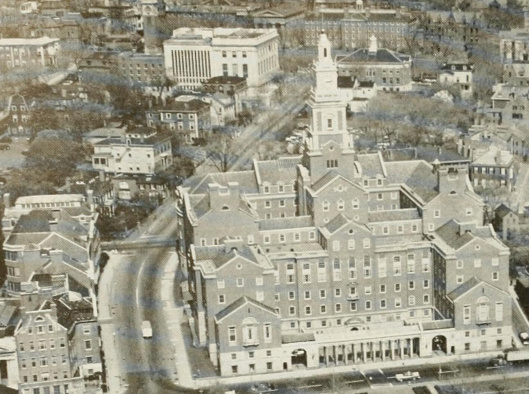
The John Hay Library is the large white squarish building see in this newly-found a view of College Hill in summer 1959. Lovecraft’s house just visible in original position next to the Library…

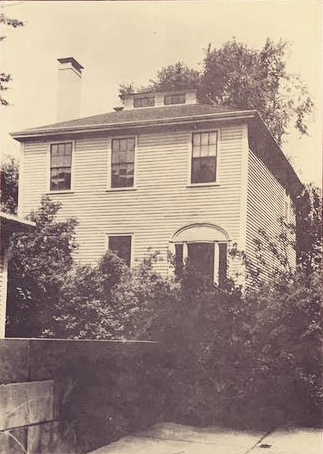
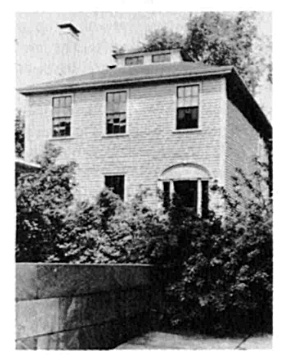
Compare with 66 College Street seen from the ground…

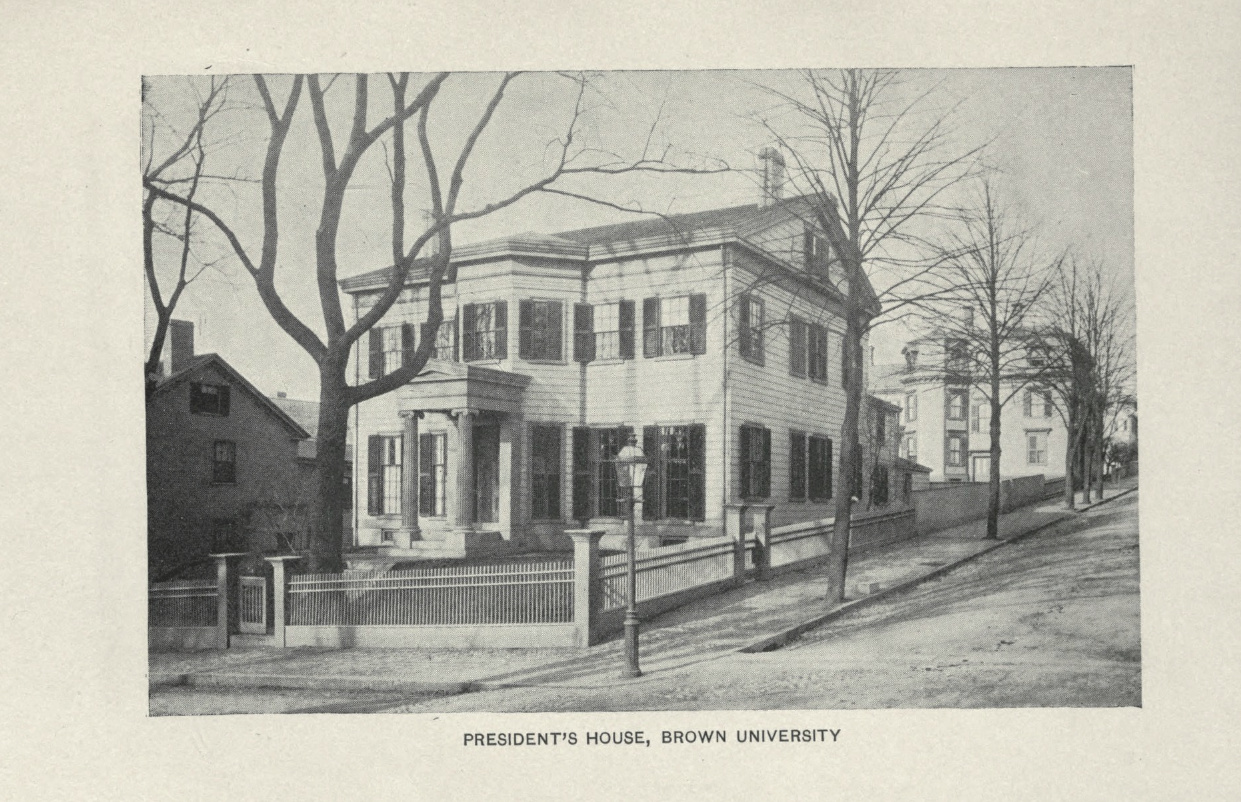
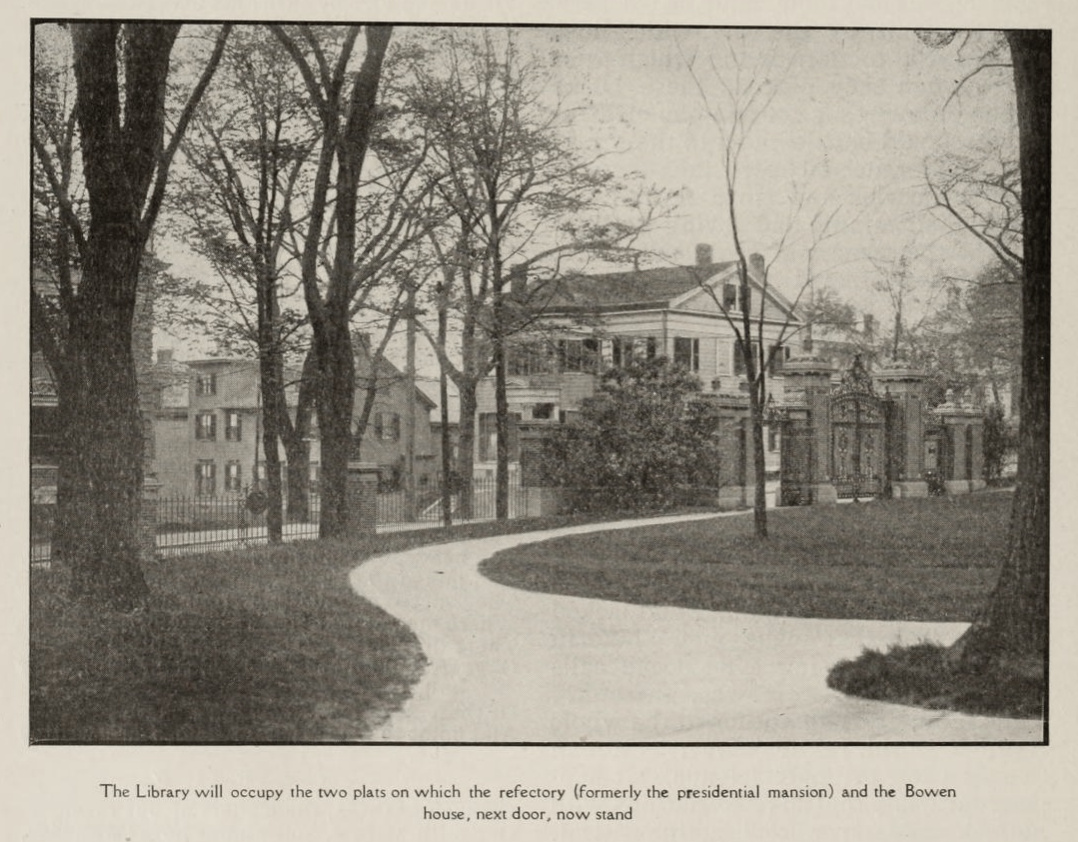
The John Hay Library would be built on the corner seen to the right of Lovecraft’s house in the 1908 picture, the Library rising where this former “President’s House” had stood…

The house next to it was also taken for the Library.


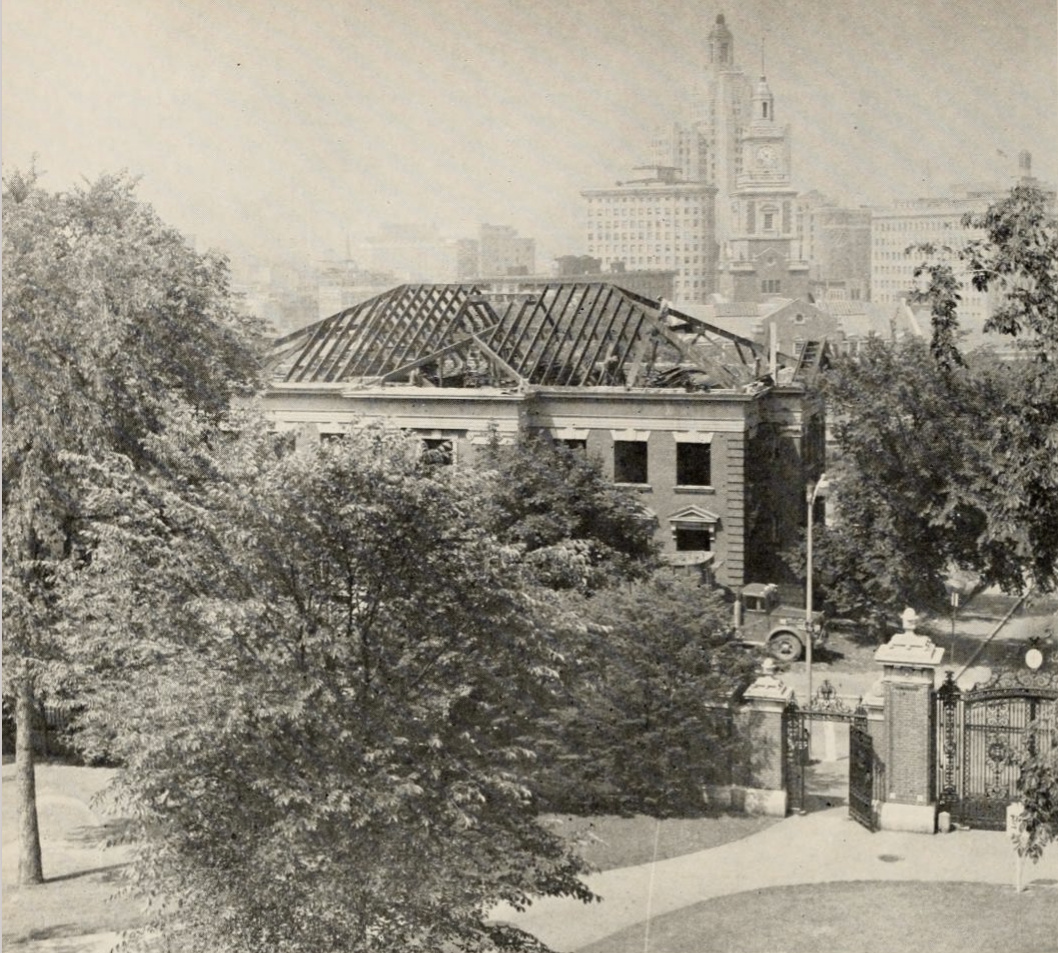
Below is the bird’s-eye scene seen the other way, looking at the vantage point from which the above 1959 telephoto picture was made. Here it’s 1962 and the building being torn down is opposite the Van Wickle gate and on the opposite corner to the John Hay Library (top of College St.).

This 1946 view, looking west from a similar spot at the top of College Hill but this time looking through the elm trees, is also indicative. The roof of the John Hay Library is seen on the right of the picture, and the Industrial Trust building can just be seen in the distance on the left.

And here the Industrial Trust building (the main slim tower seen in both pictures above) looks back again, in a telephoto view down on Lovecraft’s house in late January 1929.

I’m uncertain what the two long white marks are. They may be damage, as there appears to be a patch of damage below them with a small ‘x’ on it. Update: by referencing against the 1959 picture, it can be determined that the long white streaks are very tall thin chimneys emerging from the rear section of an adjacent house.


There are also a number of bonus pictures, for my Patreon patrons, showing the site of Lovecraft’s house and garden after it was removed but before the Brown arts block was built on it.

Friday ‘Picture Postals’ from Lovecraft: College Street

Two weeks ago, Tentaclii’s Friday ‘Picture Postal’ post was of Lovecraft’s lane-end at night, or near enough. This Friday, much the same view and direction down College Street — only this time the camera is in front of the Gates, and it’s daytime in September 1911.
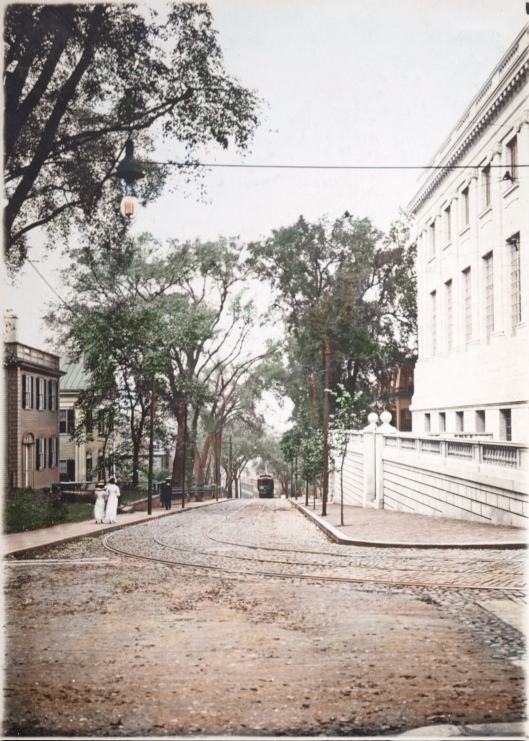
The entrance to Lovecraft’s Ely’s Lane is about 20 yards away on the centre-right. Find the far corner-end of Library’s white wall and you’ve found the start of the lane. The lane then ran down behind the high wall to reach 66 College Street and its garden court. The brown house seen through the trees is the house in front of Lovecraft’s house.

The pictures below are of the same scene prior to the building of the Library, with the street’s elm trees in their prime. The second one is behind what became the Gates. Photos such as this led to the realisation in the late 1940s that College Street’s old elms were then fading and failing. This led to a robust programme of restoration and replanting in 1949, enabled by a $2,500 gift from the class of ’24.
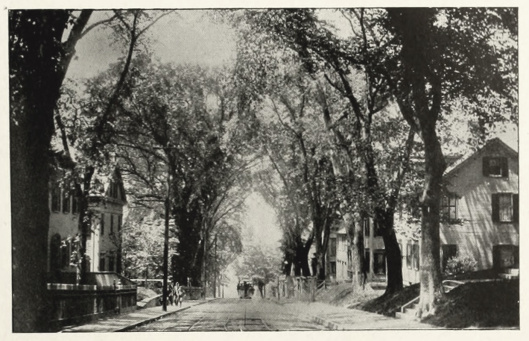
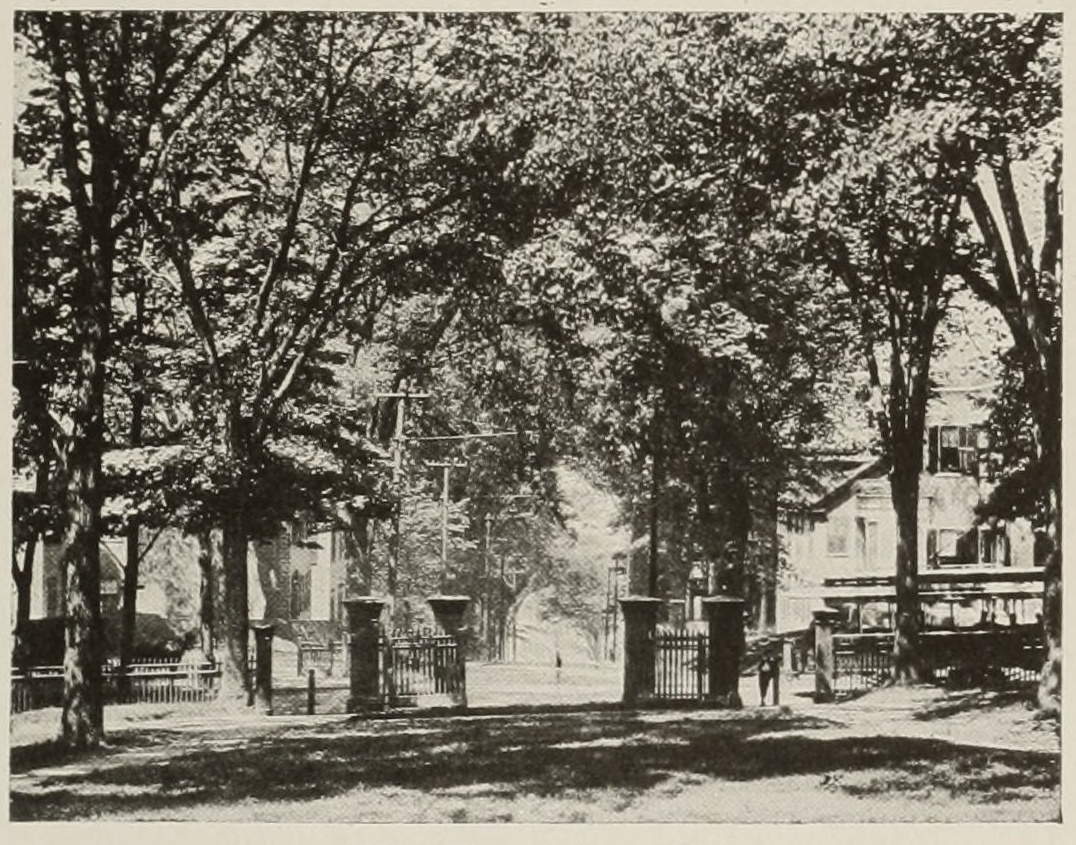
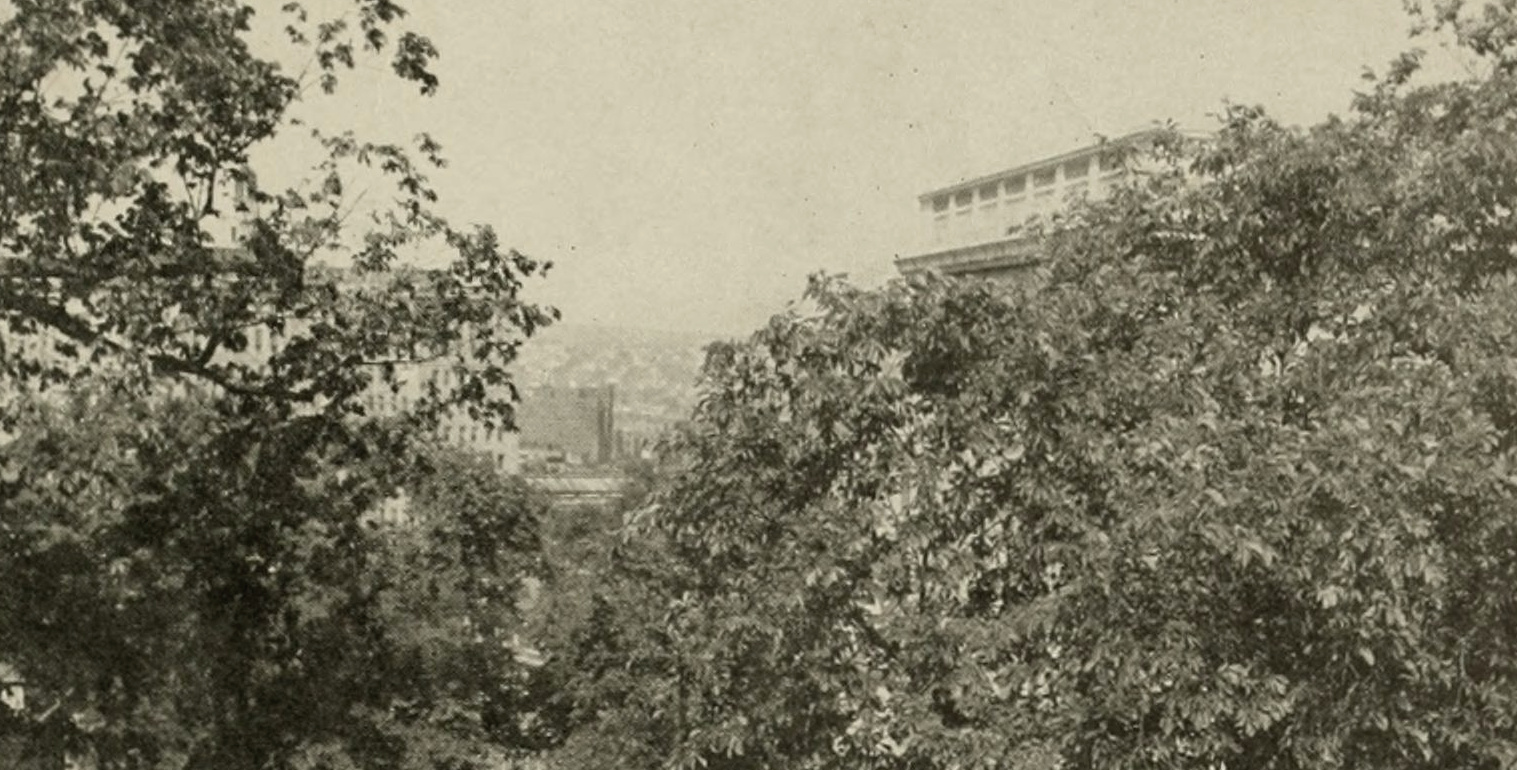
I’ve also made a new discovery of a picture of the same lane-end, seen below. The lane-end is seen on the far left of the picture. The cameraman was in the end house-garden opposite and a little further down the hill than the lane-end. The viewer peeps through the trees to see the rear wall of the lane at the corner of the Library.
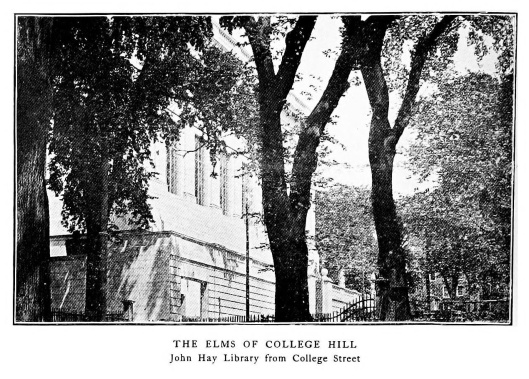
From this vantage point and in this season one might have seen Lovecraft come walking down his shady lane in a light suit and summer straw-hat, to then turn and stroll down to the town.

Sadly the above scan is harsh and no-one has the booklet online as a better scan. The ‘ink-drawn effect’, only noticed when seen up-close, is probably an unintentional effect arising from the harsh scanning. The picture’s booklet is simply titled “Brown University” and appears to be a little campus-history guide, probably given out to visiting parents and relatives of students. It appears to be erroneously dated in its record to c. 1900, and does have a flavour of that era about it — yet the Library wall wasn’t up until 1911. Incidentally, you can tell that we’re looking at the correct side of the Library here… because we can see the two tall columns with the bobbles on top.

A further large picture has been found, that does look deeper down Lovecraft’s lane, but this is only available to my Patreon patrons.


I’ve also discovered that in 1929-30 this ‘bobble’ side entrance was… “the Alumni Office, John Hay Library (College Street entrance)” for the University. Also noted in Brown documents was the college rule that… “freshmen [at Brown] shall not walk on the south side of College street” although I don’t know if this was still observed in Lovecraft’s time. Freshmen is the American term for first-year students on a multi-year course.

Here we see the College Street side of the John Hay Library from above the Van Winkle Gate, during a summer parade, indicating that there was a small lawn above and to one side of the Alumni office gate entrance…
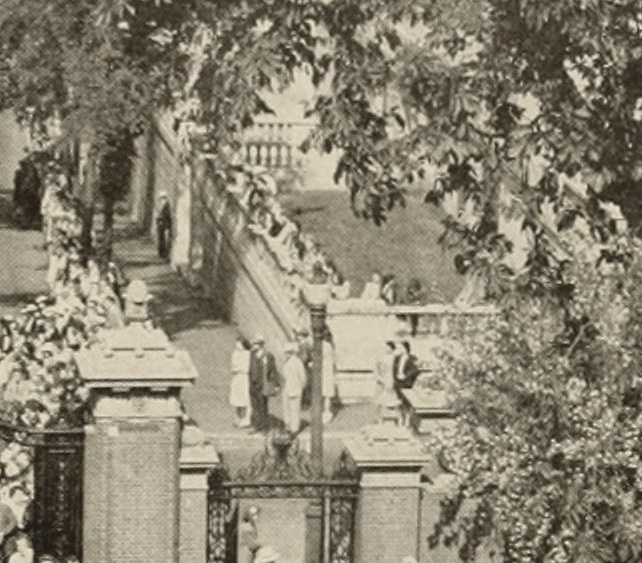
By 1942 it was still a lawn, but by the 1960s the lawn had become a dense shrubbery. Presumably as part of the general and successful attempt to re-plant and re-green the street.

Marvel buckles its swash with Solomon Kane

Hot on the heels of the success of the 17th century videogame Greedfall, Marvel has just announced they will add Robert E. Howard’s Solomon Kane to the comics line-up alongside Conan. Let’s hope he doesn’t end up joining The Avengers superhero-team and wielding a machine-gun — which is the sorry fate of Conan this month, under Marvel.

Judging by the fair-minded reviews, Greedfall is probably the closest thing to a game Lovecraft would like. Although he might tut at the authenticity of bits of it, and hope for a makeover mod that would steer it more toward the 18th century.

Probably best described as Skyrim meets Assassin’s Creed in 17th century America, via the pirate island of the excellent first Risen game + some mystical Witcher-like backwoods monsters.

Major Moebius retrospective

The Max Ernst Museum in Germany is to host a major retrospective of the art of Moebius. Opening 15th September and running until February 2020, with reasonably-priced tickets. The show will feature 450 works covering his whole range, plus a full catalogue.

The museum is about four miles south of the outskirts of the German city of Cologne. Cologne is about 120 miles east of Calais, or about 100 miles SE of Amsterdam, and is well connected by rail.

For a total comics-arts-o-rama visit, note that it usefully overlaps at the end of January with the huge Angouleme 2020 in France (opens 30th January 2020).

William Deminoff

One of the last to live in Lovecraft’s house at 66 College Street, before it was removed in 1959, was a Lovecraft fan writing his dissertation at Brown. William Deminoff (class of 1954) appears to have been an assistant professor at Brown in 1957 (Ken Faig Jr. found a tenancy record for that year, but not that Deminoff was a Lovecraftian) and had gone on to be active in early Lovecraft fandom. The cutting below is from March 1965. This raises the possibility that Deminoff made photographs of the house in situ in its garden court, that may still exist? The name “Deminoff” is not found in Joshi’s comprehensive bibliography, which suggests that his final dissertation was not on Lovecraft.

Storm on the Seekonk, 1938

I had thought that no-one had gone out to Lovecraft’s beloved Seekonk with a camera in the great storm of 1938, but here’s the university boathouse half submerged…

The same boathouse earlier in the same year…

The great storm also downed old elm trees on College St., which had stood in front of the fraternity house that Lovecraft could see the back of from his study window at No. 66. The reporting of this news revealed a snippet of the street’s lore that Lovecraft probably knew of. The trees on the street were thought to have been brought from England in the clipper ship era. The storm probably weakened them and they were naturally failing anyway after so long, and thus in the late 1940s the Brown alumni began a robust programme of revivification and replanting of the elms.

“Lovecraft mythos” in 1976/77

Two very early uses of the term “the Lovecraft mythos”. The first leaves it open — was Robert Anton Wilson actually talking about the Derleth mythos or the original Lovecraft Mythos? We may never know, unless someone can dig up an interview which touches on the topic. The second use is from the critic Jeffrey P. Miller, and is very clear-cut.

1977: Robert Anton Wilson, Cosmic Trigger: Final Secret of the Illuminati. “I had already incorporated into Illuminatus a variation on the Lovecraft mythos” … which he states means a Cthulhu Cult -like group helping alien entities.

1976: Jeffrey P. Miller, in a scourging review of a new Arkham Press anthology, reviewed in Science Fiction Review for May 1976. “No Arkham anthology would be complete without a few stories in August Derleth’s Cthulhu Mythos (in which the good gods and the bad gods play macrocosmic cowboys and indians, as opposed to the Lovecraft Mythos, seldom used these days, in which mankind stands alone against unknown and extra—moral forces)”.

That’s as far back as the online archives can take me, though the Masterplots annuals for 1969 and 1971 do each appear to have a bare noting of items as belonging to “Lovecraft’s mythos”. Presumably this was on their plot summaries for Derleth-approved work which had recently appeared.

Can anyone find more substantial pre-1976 uses? Uses that are not just late Derleth in letters or newsletters, trying to lay a cloaking glamour over his own ‘collaborations’?