My, how time flies at Tentaclii Towers. Tired by my new job but also sated by newly-abundant supplies of ginger beer and rhubarb crumble, I see I have let things slip. I thus need a round-up post for both March and April. Here is.
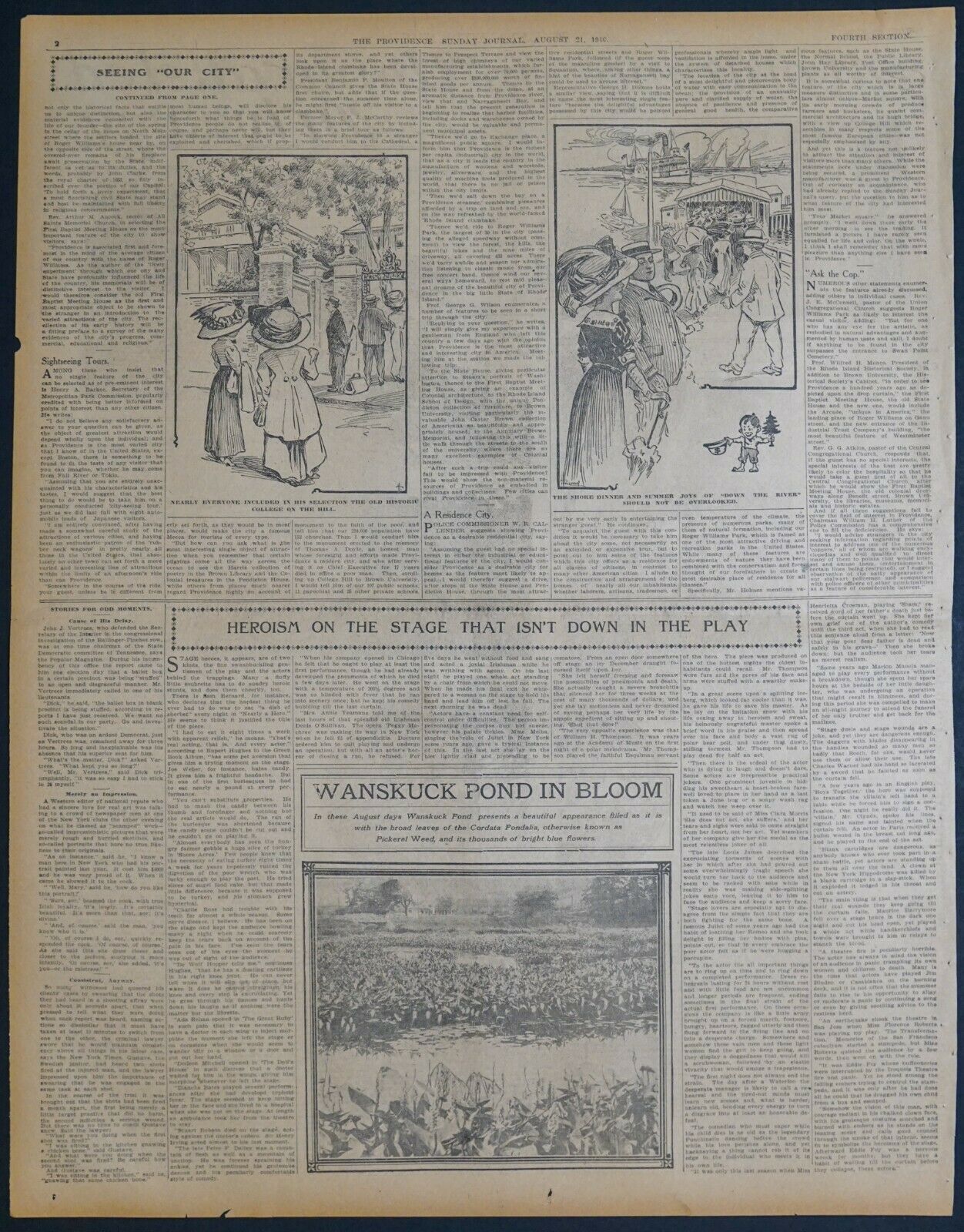
In my weekly ‘Picture Postals’ posts: I strolled around the Pendleton House courtyard; I had a close look at the The Providence Journal both as a building and as Lovecraft’s daily reading matter; continuing the newspaper theme I look in depth at Lovecraft’s possible reading of Krazy Kat; I peered into the thick ivy on Edwardian-era buildings and noted its occurrence in Lovecraft’s work and letters; I looked again at Providence’s Marketplace with the aid of a new-found vintage panorama picture; I added more items to my earlier look at Lovecraft’s marriage church, St. Paul’s Chapel in NYC; I looked briefly at his Grandpa Whipple’s school, the East Greenwich Academy; and I peered more intensively along Benefit Street and in doing so discovered that…
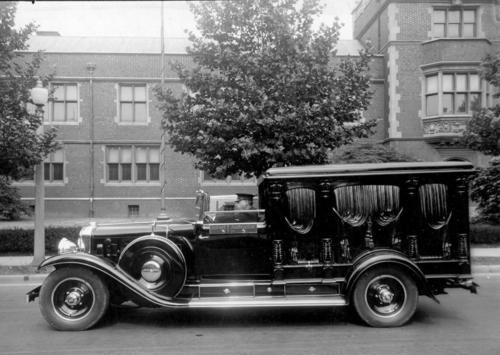
Ken Faig Jr. has Lovecraft’s uncle living and working as a doctor at 186 Benefit Street. Lovecraft’s funeral service was held opposite, at 187 Benefit Street. The grim irony of a funeral parlour facing a doctor’s house would not have escaped the young Lovecraft.
Also in pictures, I found a fan-visitor picture that offered a peep at the Barlow family house in Florida, and I turned up Utpatel’s original illustration board for Innsmouth.
Discovering a long-ago report on a talk by Thomas Honegger I took a long look at the similarities between Tolkien and Lovecraft. I failed to note there that Tolkien has his key ‘evil one’, Morgoth (master of Sauron) entering into Middle-earth like a walking mountain… “as a mountain that wades in the sea”. This was from the early 1950s, more than 20 years after Lovecraft’s “The Call of Cthulhu” had described Cthulhu similarly.
On Archive.org, scans of two of the early British anthologies appeared, Switch On The Light (1931) and Not At Night (1937) which had included Lovecraft. The first of these gave Lovecraft a hardcover wrapping for “The Rats in the Walls”.
Recent or forthcoming books include H.P. Lovecraft: Midnight Studies (June 2024); When Chaugnar Wakes: The Collected Poetry and Other Works of Frank Belknap Long; The Dagon Collection: An Auction Catalogue of Items Recovered in the Federal Raid on Innsmouth, Mass.; and a dead-tree facsimile edition of the “At The Mountains of Madness” manuscript. The French had a new chunky volume of translated Lovecraft letters. Coming soon from Hippocampus, a new expanded edition of Lovecraft’s Library and a new volume of Ken Faig Jr. essays on Lovecraft’s life.
In republished books, I was pleased to find the memoirs “Ah, Sweet Idiocy!” (1948), memoirs of a key early Lovecraft fan and publisher, in both the original and their free 2019 enhanced edition published in aid of the TAFF fund. I also spotted that a new edition of ‘the Eddys remember Lovecraft’ book The Gentleman From Angell Street had been funded on Kickstarter.
In journals, Zothique #17 appeared as a R.E. Howard special.
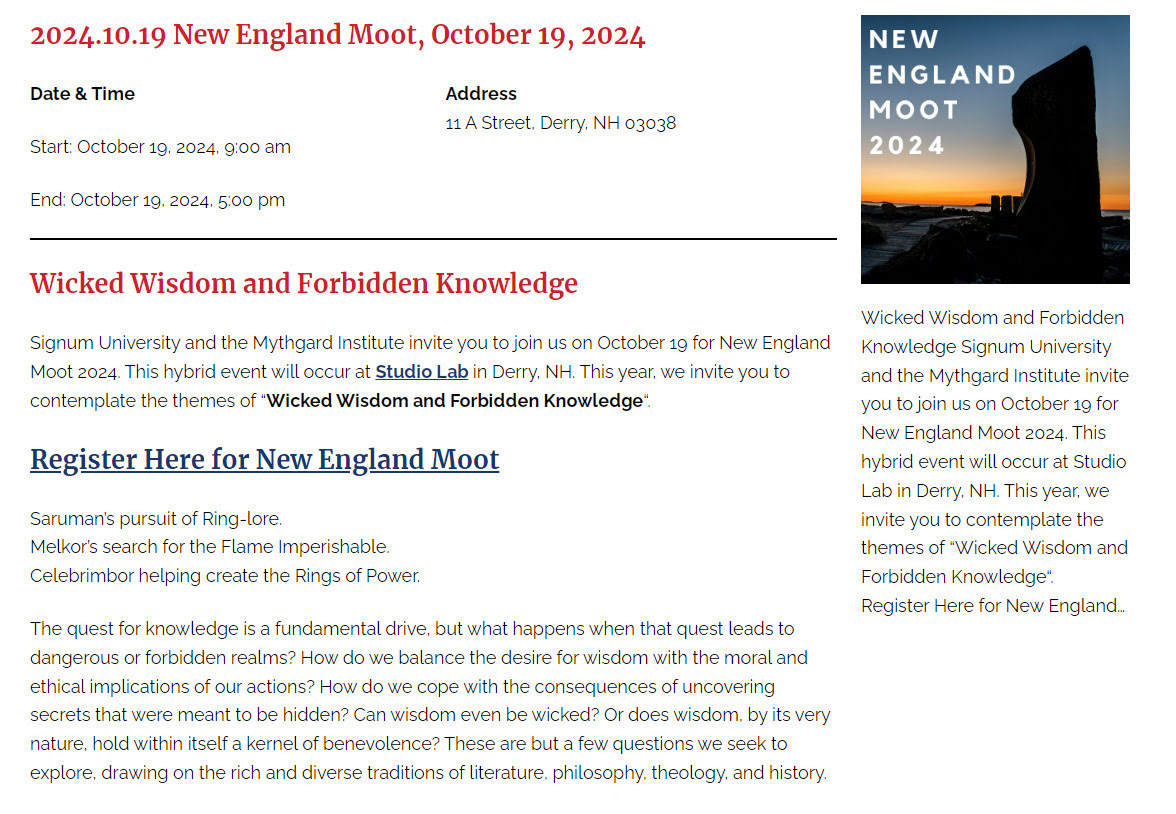
There was a call for contributions to the Dr. Henry Armitage Memorial Scholarship Symposium (still open, deadline 24th May); the journal Fantasy Art and Studies called for articles for a ‘Fantasy Flora’ issue (deadline: 10th June 2024);
Scampering around the dim tunnels of academia, I unearthed and linked a few papers, dissertations and more. With religion and philosophy prominent. Though there was one very interesting one from architecture, on “Visualizing Innsmouth” in 3D. One find was also fannish, “E.P. Berglund: Bibliographer of the Old Ones”. I even found some more far-out items, such as H.P. Lovecraft’s Megaliths: The Unknown In Plain Sight; and Theory of multidreams: a cosmic-dream investigation by H.P. Lovecraft.
In events, the NecronomiCon 2024 passes went on sale. I also found news of an interesting event at Lovecraft’s graveside, which I’m guessing is likely to be repeated around the time of NecronomiCon.
I was pleased to add another ‘Lovecraft as character’ book to the list, Shadows Bend: a novel of the fantastic and unspeakable (2006).
A game-based reference book Welcome to Arkham looked of interest and use to Mythos writers. Similarly useful, and also for steampunk writers, the old Monograph #319: Miskatonic University – The Gaslight Equipment Catalogue appeared on Archive.org.
In Mythos tales, I found that the Robert M. Price edited anthology The Exham Cycle had actually appeared in 2020 (at long last, after years of waiting). Sources and sequels to Lovecraft’s “The Rats in the Walls”.
In movies, the German movie ‘The Dreamlands’ (i.e. Lovecraft’s Dreamlands) has been funded and appears to be filming. The director previously made the highly acclaimed Die Farbe.
In comics, Randolph Carter appears as a French ‘BD’ graphic novel in June. An unknown quality at present.
In videogames I dug up the links for the Lovecraft mods for the famous early shooter videogame DOOM II.
In focused and researched podcasts there was one on Robert Bloch and the Cthulhu Mythos, and another on The Ocean in “The Call of Cthulhu”.
In the fine arts, I was pleased to discover Alfredo Baon of Spain, who has just begun a new series “Lovecraft’s Journeys”. I admired Abutova’s new “Colour Out of Space” digital paintings’ series.
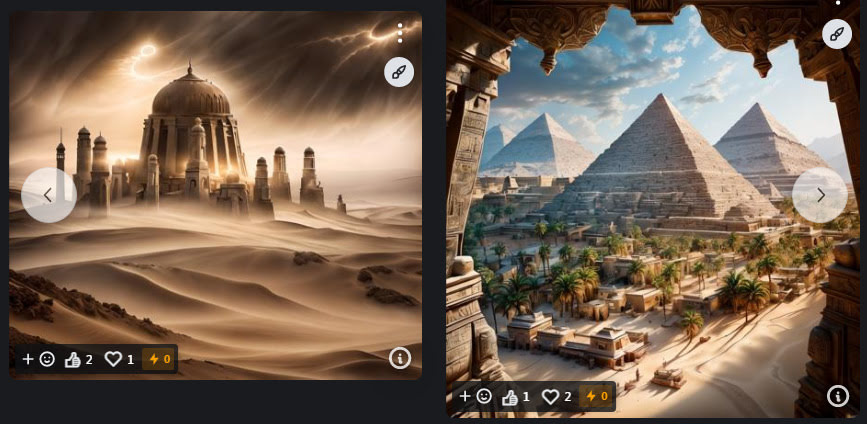
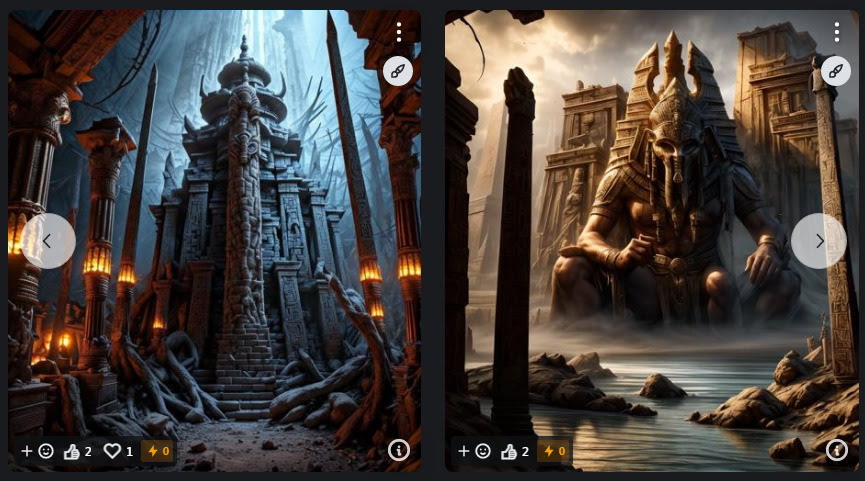
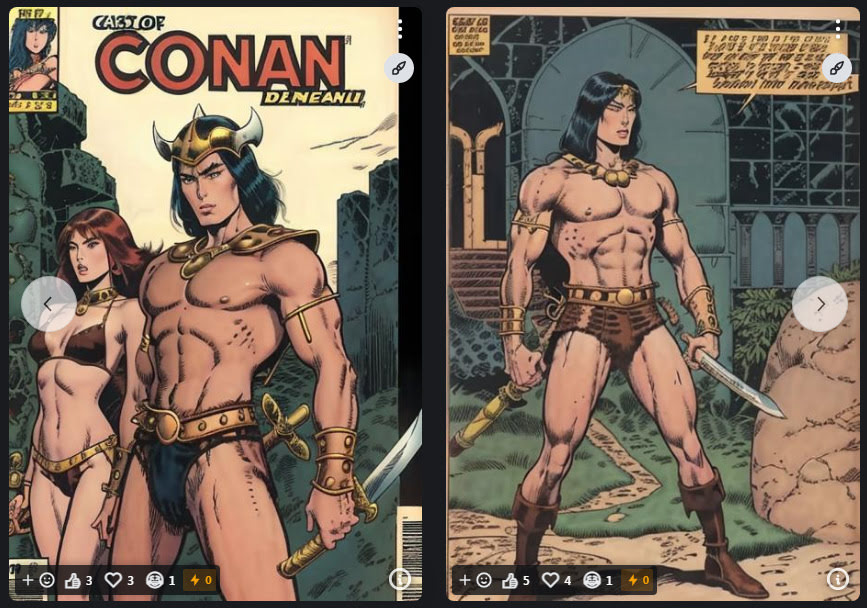
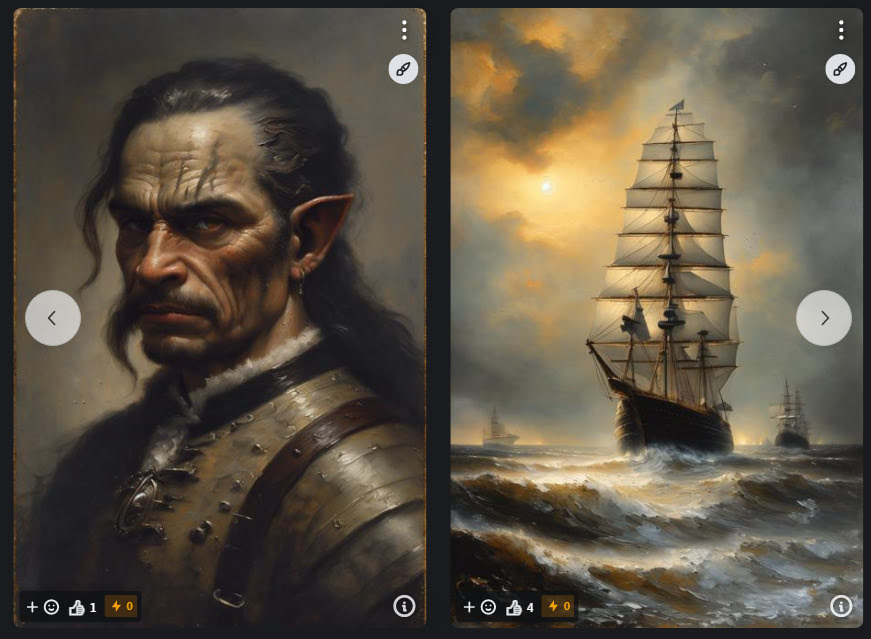
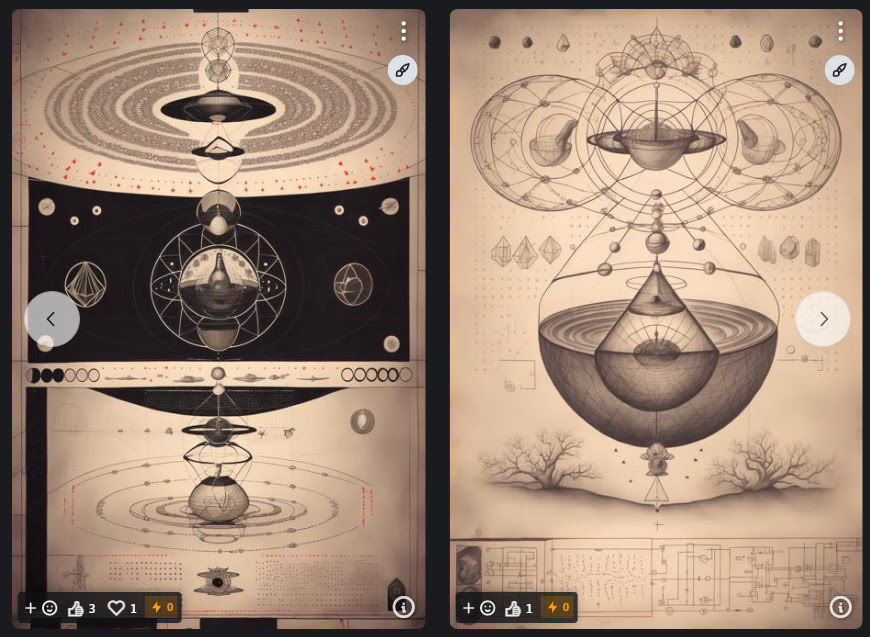
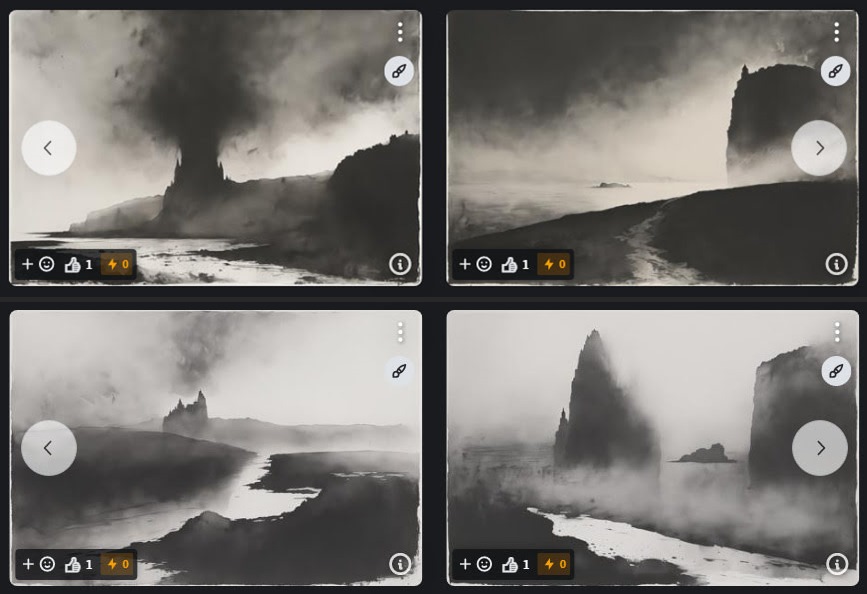
In the artificial arts, I linked a number of free LORA plug-ins for free AI image-generator Stable Diffusion 1.5. I showed the results of text-generating AI (‘not quite ready for prime-time yet’, I thought) in the form of a Lovecraft poster. In April amazing AI auto-songs became possible, for free via Suno AI. Not perfect, but hugely impressive to see a listenable two-minute song pop out in seconds. Of course we’ve had quite passable no-lyrics generative music (e.g. Sonic Fire and its Smartsound modules) for a decade or more now, but… think what the new AI song / music / voice-cloning tools will be able to do in a few years time.
In Amazon bargains I spotted the hardback Mysteries of Time and Spirit for £27, and the second volume of the R.E. Howard letters in paperback for a mere £2. And offered them up to readers as links. Sadly it seems no-one wants either, as they’re still to be had.
Ok, that’s it for now. More soon.