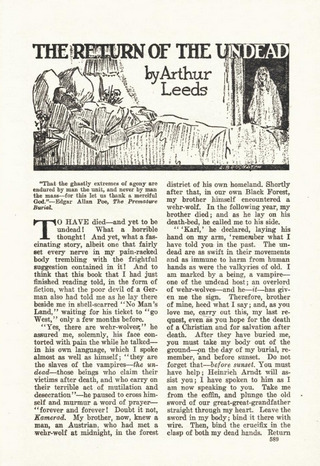
“The door of the Marsh retail office was open…”

A few discounts of likely interest to the books-and-publishing crowd…

* The latest PDF Index Generator, for making back-of-the-book indexes, 30% off with the BF30 coupon code. The best such budget-priced indexer, in my view.

* Serif currently has 30% off everything in its budget-priced Affinity range of software. Including their DTP software. I’ve never used it, knowing instead InDesign and Microsoft Publisher, but it gets good reviews.

* DxO Viewpoint 3 is deeply discounted. If you’re a researcher who makes lots of architectural photos on trips, it automatically straightens verticals and horizontals. Far more than just another ‘lens distortion fixer’ plugin, and recommended.

* Topaz GigaPixel AI can currently be had for $75 (25% off), for up-scaling pictures. It can’t work miracles all the time, but most of the time it does.

No discounts yet on Docfetcher Pro (full-text desktop search), or Booksorber (quickly digitize books).

Happy Thanksgiving

Happy Thanksgiving to American readers of Tentaclii.

For some reason S.T. Joshi does not index ‘Thanksgiving’, this lack possibly being an indexer’s convention. But I’ve picked out a few examples in which Lovecraft mentions it. First, here again is Lovecraft’s celebration of a Thanksgiving meal made by Sonia in New York City…

Enchanted soup — apotheosised roast turkey with dressing of chestnuts & all the rare spices & savoury herbs that camel-caravans with tinkling bells bring secretly from forgotten orients of eternal spring across the deserts beyond the Oxus — cauliflower with cryptical creaming — cranberry sauce with the soul of Rhode Island bogs in it — salads that emperors have dreamed into reality — sweet potatoes with visions of pillar’d Virginia plantation-houses — gravy for which Apicius strove & Lucullus sigh’d in vain — plum pudding such as Irving never tasted at Bracebridge Hall — & to crown the feast, a gorgeous mince pie fairly articulate with memories of New-England fireplaces & cold-cellars. All the glory of earth sublimated in one transcendent repast — one divides one’s life into periods of before & after having consumed — or even smelled or dream’d of — such a meal!

Later, as if to celebrate 18 months of safe ensconcement in Providence following his New York nightmare, Lovecraft feasted mightily in November 1927. As he wrote to Donald Wandrei…

To parallel your Morphean [Morpheus, god of sleep] achievement of last Sunday, I can cite my own performance of last night – when, gorged with a Thanksgiving feast of the utmost peril to my 140-lb standard, I was overcome by drowsiness at 5p.m … & continu’d in a somnolent state till ten this morning! My dreams occasionally approach’d the phantastical in character. tho’ falling somewhat short of coherence.

In an April 1928 letter to Talman (presumably begun in 1927 and then added to slowly) he revealed…

our whole family had a Thanksgiving dinner with the Brennans this year

… by which he presumably refers to November 1927, so the blow-out must have been there. They appear, from his following accent in the letter, to have been of Irish descent. At a guess they may have been childhood friends from the Blackstone Band days, or neighbours. They don’t appear in the index of Letters to Family.

In November 1932 he told Robert E. Howard…

My really favourite meal is the regular old New England turkey dinner, with highly seasoned dressing, cranberry sauce, onions, etc., and mince pie for dessert.

And in 1934 he achieved a long-held Thanksgiving hope, though he doesn’t say exactly where or with whom…

[This] Thanksgiving I did something I have been wanting to do all my life — consumed the traditional feast on this historic soil of ancient Plymouth (less than 40 miles from here), where the whole custom started 312 years ago.

So far as I know he knew no writer or relations in Plymouth, but it’s not impossible that he had fallen into conversation with antiquarians while exploring the place, had expressed his wish and been invited.

Enchanted

Spiked! reviews the new book Enchanted: A History of Fantasy Illustration which accompanied the major shows at the Norman Rockwell Museum, Mass.

It often requires [in the fantasy artist] a high degree of verisimilitude because the characters, objects and places depicted are unfamiliar and the eye needs to be treated to persuasive and descriptive content. The requisite fidelity, research and diligence is often alien to contemporary fine artists [of the white-walled ‘contemporary gallery’ sort], who consider themselves above such considerations.” Yet, consider that this popular art “is a living tradition” with deep and demanding working connections to young and old alike. As such… “It may be that the most talented artists in the world today are not in the [‘contemporary’] fine arts and on the red carpet at biennales.

The Theaters of Providence

Small State, Big History has a long introductory article “The Theaters of Providence, Part 1 – The Early Years”. Not especially focused on the key ‘Lovecraft period’ of 1894-1924, since there is much to say about Providence theatre before that, but at the end there is survey of key sources. Which may interest some new Lovecraftian researchers looking into Lovecraft’s theatre connections and theatre and cinema-going …

The next publication of note was an article that appeared in the Providence Magazine in October 1916. “Popular Amusements – The Drama in Providence” was a fifteen-page account of the theaters of the capitol city [both ancient and modern]. What differentiates this article from both the Blake and Willard books is that it focused less on the performances and the actors and more on the theaters themselves. Numerous pictures of the theaters were displayed. Also much had changed since the printing of Willard’s book in 1891 [History of the Providence Stage, 1762 – 1891] and the appearance of the magazine article in 1916 — drama now shared the stage with vaudeville and some theaters like the Modern on Westminster Street were built more for movies than live performances. [Then] In 1976 Roger Brett wrote Temples of Illusion: The Golden Age of Theaters in an American City. This account brings the story of the theaters of Providence up to the late 1940s and is most useful.

The latter book does not appear to be online, but the 1916 article is online at Hathi and with UK access.

There are a good number of pictures of frontages, but it only gives the modern Opera House a paragraph. The place is especially important because that was where the young Lovecraft had “slung from the stage” great slabs of Shakespeare, and he once recalled…

What a second home the old Opera House used to be to me!” — Lovecraft in Letters to Family.

The details of the Opera House acoustics are then interesting, if only to give a small additional bit of new data about Lovecraft’s performance there.

He would have had perfect acoustics. The remarkable building-time is also notable. Who could build a large opera house with perfect acoustics in 90 days, these days, which could then stand for 60 years and ably serve a city as its best theatre throughout that period? Yet that was what they did in 1871. Today such a project would no doubt take decades to grind through committees, planning offices, obstructionists and red-tape.

Early years of the Providence Opera House.

Researchers should also note that the Keith-Albee Collection is now fully transcribed and publicly searchable. This has the precise manager reports about exactly what was playing at key Providence theatres each week across the early ‘Lovecraft years’ when he was frequenting these theatres, and even how it was received and by which sections of the audience. Entries go along the lines of…

WORMWOOD’S DOGS. 20 mts. Full Stage. Eight monkeys and ten dogs from Great Dane to the tinest poodle, and all well trained. The comedy work of the monkeys got constant laughter. An act for children that could not be surpassed. The finish with the bicycle-riding monkeys and dog race is a scream. KINETOGRAPH [short early cinema film]. A Family of Cats. Rather interesting for the women and children.

These being the openers for a summer vaudeville show at Keith’s in the hot summer of 1908, Lovecraft aged about 17.

The Living Age

H.P. Lovecraft to Kliener, February 1920…

“McD. has just sent me a card calling my attention to an article on him [H. Rider Haggard] in The Living Age.

The Living Age 1844-1941 is being newly uploaded to Archive.org from microfilm, and has just reached 1921 complete. Thus this perceptive and poetic article can be located in the March 1920 issue. It notes a cosmic touch in Haggard…

He has, indeed, an epic sense which would transcend the limits of our mundane vision and open out perspectives of some super-terrestrial landscape. There is about it a curious, indefinable quality, something of the twilight, more perhaps of the night: a night when summer lightning is abroad, when the stars seem alternately to approach and to recede from the atmosphere of earth. For it conveys, to me at least, a peculiar sense of the Infinite.

The Living Age was presumably a title Lovecraft had access to via the Providence Public Library, but at time of writing he had not yet browsed the very latest issue there.

In the same month Lovecraft’s friend…

Cook has also been kind, outlining a reading course in Haggard. I shall not tackle the gentleman in question till I am through with Algernon Blackwood, whose rather mediocre fantasies I am absorbing one after another. When I do read [Haggard’s] “She”, I will report my critical impressions in detail. (February 1920)

He is not known to have actually got around to reading the famous She until 1926, in order to write his survey Supernatural Literature. It might be interesting to speculate why, with all this prompting, Lovecraft did not read Haggard’s central work at that time. Was Cook’s tour of Haggard so arduous and roundabout, such a tall stack of books, that Lovecraft never got around to She? Or did he, and we simply don’t have a record of the matter until 1926?

New books: R. E. Howard

Among the tidal-wave of fiction and comics adapting / related to Robert E. Howard’s works, there are two new non-fiction books which may interest Tentaclii readers.

The first is Robert E. Howard Changed My Life (June 2021). A chunky 338 pages of reminiscences about individual discovery and appreciation of Howard’s work and life, and how he changed lives. Every copy sold supports the Howard Museum at Cross Plains, Texas, and by extension the Howard Days that take place there. There’s also a £7 (about $10) Kindle ebook edition. It might be nice to see something similar done for H. P. Lovecraft, ferreting out a range of ‘Lovecraft changed my life’ historical items from old fanzines and letters pages, and pairing them with similar from living Lovecraftians. I don’t know of any such collection.

The second is a ‘journal-book’ The Robert E. Howard Collector Volume One: Illustrating Robert E. Howard (September 2021). It appears to be only available as wood-pulp from Lulu as a £30 paperback…

This book is a collection of articles about the early history of the art and the illustrators who made the works of Robert E. Howard come to life. Contents include: A heavily illustrated article on some of the best artists who worked for Weird Tales by Frank Coffman. A look at Roy G. Krenkel’s work for Donald M. Grant by Dennis McHaney. A reference guide to Roy G. Krenkel’s work for Amra by Dennis McHaney. A look at Frank Frazetta’s work on The Ultimate Triumph by Robert E. Howard. A Tribute to Jeffrey Catherine Jones by Bill Cavalier. An overview of Stephen E. Fabian’s work for the works of Robert E. Howard by Damon Sasser. The book is 8 1/2 X 11, softcover, color.

AIMP 5 and how to bookmark

The fine free audio player AIMP has been released in version 5.

One big change is the location of the bookmarking, which is of course especially useful for audiobooks and a combo of desktop PC / wi-fi headphones combo.

AIMP has a new dedicated Bookmarks tab, but it is now very difficult to actually find how to bookmark. Also a little tricky to use at first. Here’s my guide…

1. Right-click in the waveform, at the point you want to bookmark. Add bookmark. This gives you the expected minutes/seconds bookmark. (You can also bookmark by right-clicking a file in the playlist as it is playing).

2. Double-clicking on the Bookmark starts the file at 0:00. Not good, and this may be confusing a lot of people. What you actually need to do is right-click and choose “Play selected files”, and then it starts at the timestamp you selected in the waveform. This might better be renamed ‘Play from Bookmark timestamp’ in future.

3. Right-clicking a set bookmark also lets you edit the timestamp to finesse it exactly.

You also need to flick the ‘repeat’ button off, when switching from repeating music to an audiobook in multiple files.

None of this is ideal, but I don’t know of any better bookmarking audiobook player for .MP3 files.

The Harry Houdini Collection

The Harry Houdini Collection, with 779 items made public and searchable. Magic, both stage conjuring and occult. Also stagecraft, selected folklore (e.g. Cornwall) and myth, and more.

More recently on Archive.org, the Illustrated London News 1842-2003 is still being loaded, albeit from microfilm so the pictures are not great. But they’re not too bad, and it is thus made easily and quickly searchable. A possible source of portraits of 1920s writers, and various historical snippets about the British Isles. So far as I recall, the run is paywalled in the UK.

New book: essays for Gianfranco de Turris

Axis Mundi brings news of a new festschrift in Italian, a book of essays celebrating 60 years of work by the scholar Gianfranco de Turris. He has written extensively on the fantastic, and has so far won the Italian Prize for Science Fiction eleven times. Among other essays in the new volume, note the long one on de Turris and Lovecraft, and another one surveying the reception of Arthur Machen in Italy.

Possibly of interest to someone wishing to translate to English, for their own journal. He has also been an anthologist of a major two-volume collection of Italian Mythos fiction, Return of the Old Ones.