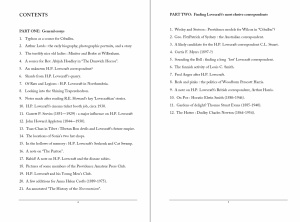
A peep at the contents page of Todd B. Vick’s Renegades and Rogues: The Life and Legacy of Robert E. Howard, due in early January 2021 from the University of Texas Press — but now on Google Books early and with some preview pages.


03 Tuesday Nov 2020
Posted in New books, REH, Scholarly works
A peep at the contents page of Todd B. Vick’s Renegades and Rogues: The Life and Legacy of Robert E. Howard, due in early January 2021 from the University of Texas Press — but now on Google Books early and with some preview pages.
02 Monday Nov 2020
Posted in Scholarly works
A call for shorter papers on Neo-medievalism Media in the New Millennium, with a deadline of 28th February 2021. The editor sees neo-medievalism as mainstreaming with the Lord of the Rings movies, and flowing into key popular media such as Elder Scrolls: Skyrim, The Witcher, Game of Thrones, etc. He seems to envisage a sort of primer, with short chapters introducing and positioning specific titles for academics. No mention of the resulting book being Open Access.
The list of suggested media made me aware there was a Marco Polo TV series in 2014. I remember I enjoyed the lavish 1982 Marco Polo 10-hour series, one of the best of the 1980s and pre-PC. But according to the Hollywood Reporter the 2014 Netflix series had “dismal reviews” and was a “mess”. Oh well.
02 Monday Nov 2020
Posted in Odd scratchings, Scholarly works
New on Archive.org in open access On The Track Of Unknown Animals (1970), in its abridged 1962 edition for the general public. One of the Paladin paperback series in which British publisher Granada published all sorts of weird and wonderful non-fiction books, from British earth-mysteries to the 1970s crazes for ‘talking to plants’ and ESP.
One has to remember that this is from a time when there was barely colour TV, and long before the wildlife documentarians brought the world’s wildlife to our screens.
01 Sunday Nov 2020
Posted in Podcasts etc., Scholarly works
A 50 minute talk from David Goudsward and Buttonwoods Museum on “Lovecraft in the Merrimack Valley”. Apparently a Halloween treat, and thus only online at YouTube until 15th November 2020.
30 Friday Oct 2020
Posted in New books, Scholarly works
Now listing on both Amazon and Hippocampus for 31st Oct 2020, Eccentric, Impractical Devils: The Letters of Clark Ashton Smith and August Derleth. 602 pages from Hippocampus Press, edited and annotated by David E. Schultz and S. T. Joshi.

Additional information is found in a March 2019 blog post by S.T. Joshi…
Recently a previously unknown batch of Derleth’s letters to Smith came to light, causing us to refashion the book almost in its totality — and forcing me to re-index nearly the whole of the book. Gawd, what a nightmarish task! But the job is done at last, and I hope the book will emerge soon — along with the huge Clark Ashton Smith bibliography that Scott Connors, David E. Schultz, and I have edited.
Ouch, it sounds like he indexes by hand. Someone tell him about the automated PDF Index Generator, which would at least take care of much of the heavy-lifting of index-building.
29 Thursday Oct 2020
Posted in Lovecraftian arts, Scholarly works
Providence’s Brown University has a fully-funded PhD opportunity in Music and Multimedia Composition, which may be of interest to those making Lovecraftian music or sonic environments…
Students have access to the department’s Multimedia and Electronic Music Experiments (MEME) studios, and the university’s Granoff Center for the Creative Arts. These specialized research facilities house recording studios, electronics shops, project studios, exhibition and performance spaces. … faculty specialties in technoculture, sound studies, copyright, improvisation and timbre.
26 Monday Oct 2020
Posted in New books, Scholarly works
A new Italian book, Mitologi, mitografi e mitomani (Mythologists, Mythographers and Mythomaniacs: traces of myth through the centuries). Many medieval chapters, but the book concludes with Alessandro Fambrini’s “Howard Phillips Lovecraft e Friedrich Nietzsche: sogni di dei e di superuomini”…
Lovecraft read Nietzsche and quoted him repeatedly. This article attempts to investigate the influence and consequences of the German philosopher’s thought in Lovecraftian fiction.

25 Sunday Oct 2020
Posted in Scholarly works
New on Archive.org to borrow, Greenwood’s 1977 book The H.P. Lovecraft Companion, which I described here a while back as a first…
“‘high pass’ over Lovecraft’s work, written by a Sherlock Holmes fan and newspaper book-critic.”

With what must have then been a useful try at a map of the Dreamlands…

24 Saturday Oct 2020
Posted in Scholarly works
S. T. Joshi’s blog notes that his new journal Penumbra: A Journal of Weird Fiction and Criticism has landed on the doorstep. Now available from Hippocampus. Non-fiction items of interest include…
* The Cosmic Scale of Elfland.
* The Idea of the North in the Fiction of Simon Strantzas.
* Finding Sherlock Holmes in Weird Fiction.
* “The Weird Dominions of the Infinite”: Edgar Allan Poe and the Scientific Gothic.
18 Sunday Oct 2020
Posted in New books, Scholarly works
The S.T. Joshi-edited collected Autobiographical Writings by Arthur Machen appears to be ordering, for November shipping.
15 Thursday Oct 2020
Posted in Lovecraftian arts, New books, Scholarly works
A new book, seemingly coming from an occultist perspective, Dark Magic: H.P. Lovecraft, Starry Wisdom and the Contagion of Fear…
explores the contagious qualities of Lovecraft’s tales, with their embedded sense of dread and their dismantling of human reason, and how they have propagated in the near century after his death … the infectious qualities of Lovecraft’s ideas are seen to parallel virology, mass infection, and the fraying state of the human psyche during times of pandemic.

Which blurb leads me to coin the new word “cultifectious”:— the quality had by a certain type of culture that is highly infectious and communicable, but not mere mass-market pop-fluff or some passing propaganda of-the-moment. It carries within it a complex nexus of elements that organically connect things usually divided — low and high culture, the deep past and the cosmic future, or ancient and modern science. Its infectiousness thus comes partly from being connected to ‘the genuine’ at both ends of one of those divisions, and by bringing these lightly into play with each other. Because it has something genuine woven through it, it may be difficult to make into a mass audience commodity unless brutally shorn of many of its intrinsic qualities. Instead it persists and spreads among initiates as a potent ‘cultic’ form of culture. It does not usually, however, gather about it the more oppressive hierarchical apparatus of ‘a cult’ in the religious sense. It naturally fascinates, rather than ponderously recruits.
12 Monday Oct 2020
Posted in Lovecraftian arts, Scholarly works
Call for papers: Religion and Horror Comics. Deadline for abstracts: 1st December 2020. For a volume of the Religion and Comics academic book series, published by Claremont Press. The planned book appears not to be open-access.
