Now listed on Hippocampus, Songs from Lovecraft and Others by S.T. Joshi. Sheet music with audio download code.
Songs from Lovecraft
13 Wednesday Jul 2022
Posted in New books, Podcasts etc., Scholarly works
13 Wednesday Jul 2022
Posted in New books, Podcasts etc., Scholarly works
Now listed on Hippocampus, Songs from Lovecraft and Others by S.T. Joshi. Sheet music with audio download code.
10 Sunday Jul 2022
Posted in Historical context, Lovecraftian arts, Scholarly works
My thanks to Gregory for letting me know that Meade and Penny Frierson’s HPL ‘zine (1972-74) is now free and public on Fanac.org. 144 pages, plus three supplements together totalling around 170 pages. Supp. #1 is letters, in response to HPL.
It’s rich stuff, with HPL #1 fronted with memoirs as well as having fiction in the back. There’s also “HPL and Films” by Shea. Here are just a few biographical highlights:
Interview with Frank Belknap Long:
SCHIFF: What was your impression of him when you met him?
LONG: Well, he was sitting on the stoop outside Sonia’s apartment. He was very stout at that time. He became stout briefly for about 2 or 3 years. He looked much older than he was – he was only about 32 at that time, but he looked 40 or more. I knew it was Lovecraft as I approached and he was very glad to see me and we went inside and I met Sonia for the first time. As I recall, we spent a very pleasant afternoon. … But he was not much given to relaxing, and being casually human or jolly. Back-thumping and a bone-crushing handclasp were alien to his nature he had a very good voice for reading supernatural horror stories. You see, a horror story could hardly be read by a Babbitt or a guy who’s a Rotarian. His voice was that of a cultivated New Englander and it went very well with the stories. [On viewing old towns and sites, such as in Newport and Providence in summer] what a wonderful guide Howard was [when] touring these ancient by-ways. [Impressions of HPL] Every individual has qualities that are lost forever when he dies. You can’t bring them back by just describing them. I don’t think I’d attempt to — I’d simply say you get to know him best by reading his letters and his stories. He had the qualities that you usually associate with a man of genius.
Long’s letter in Supp. #3 adds a little more…
I can no more picture him so much as bending and tracing a Cabbalistic circle on the floor with a piece of chalk, even whimsically and half in jest, than I can imagine him draped across a bar in the last stages of alcoholic stupor.
[HPL]”Wasn’t as prudish as is commonly assumed. In fact, he wasn’t prudish at all. But he was puritanic, which in many ways is quite a different thing. The early New England Puritans were the opposite of prudes – could be candid, even coarse, in the realm of sex. Prudery as we know it today, largely, came in with the Victorians. It constituted a Victorian hang-up and Howard loathed everything Victorian.
I’m sure old Mrs. Brundage’s drawings [for the later covers of Weird Tales] merely caused him to chuckle with wry amusement. He thought them commercially shoddy and flamboyant, but he never would have dreamed of tearing off the covers of WT.
Price has a long “Astrological Analysis” which should not be overlooked due to its esoteric nature. In his earlier 1949 “Stars” version of this Price had slipped in many perceptive biographical observations of HPL, among with the astrological flummery.
Followed by “Reminiscences” of HPL by Price, as transcribed from a 1971 convention panel which was sadly cut very short. An earlier speaker had been allowed to over-run and the convention lunch was looming. Not in Lovecraft Remembered.
The Puritan [HPL] was as much at home with the Vieux Carre crowd as he was in his sedate native Providence. One would have thought that he had spent all his life with wine-bibbers and people addicted to riotous living. Some say that he was at ease because he drank spiked punch, not realizing that it was spiked. This is error! We never served punch in the Vieux Carre. HPL needed no grog. The guests gathered about HPL. He held them fascinated. It was beautiful to see how he was charming them. They did not know who he was. He didn’t bother to tell them. His presence was enough.
Price makes it clear that at that time the New Orleans district was a mix of long-time residents as well as artists and writers, and it was far from being gentrified and thus un-liveable for ordinary “every-day standard folk”. He also distinguishes his area from the neighbouring district of brothels.
Supp. #3 has a letter from Price, but nothing is added. #3 also has the long “A MEMOIR OF JACK GRILL By George T. Wetzel”, Grill being a key early Lovecraft collector.
Also of interest at Fanac.org, Howard Phillips Lovecraft – Memoirs, Critiques and Bibliographies (1955).

07 Thursday Jul 2022
Posted in Lovecraftian arts, New books, Scholarly works
The German Lovecraftian society has posted their June update.
* In German books… “BookRix has published Selected Essays on H.P. Lovecraft by S.T. Joshi as an eBook. A print edition is expected to follow in August.”
* They anticipate starting their own podcast in the near future, which may interest German-speaking readers of Tentaclii.
* On 18th and 19th June, the Lovecraftian live horror radio play “Off the Ancient Track” was performed at the Galli Theater in Frankfurt. Next performances 6th and 7th August. Booking now.
30 Thursday Jun 2022
Posted in Scholarly works
“More on Tolkien and Bingo”. Which, quite possibly, at last answers the scholarly question of: “Why did Tolkien have Frodo named as ‘Bingo’ throughout the early drafts of The Lord of the Rings?”
27 Monday Jun 2022
Posted in Historical context, Scholarly works
Online for free, The Letters of Edgar Allan Poe in the revised two volume Gordian Press edition: Vol. 1 and Vol. 2 (both 1966).
Also, from the same worthy press and site, Poe’s collected Imaginary Voyages (1994). This is also on Archive.org “to borrow”, but here it’s free in full-text.
21 Tuesday Jun 2022
Posted in New books, Scholarly works
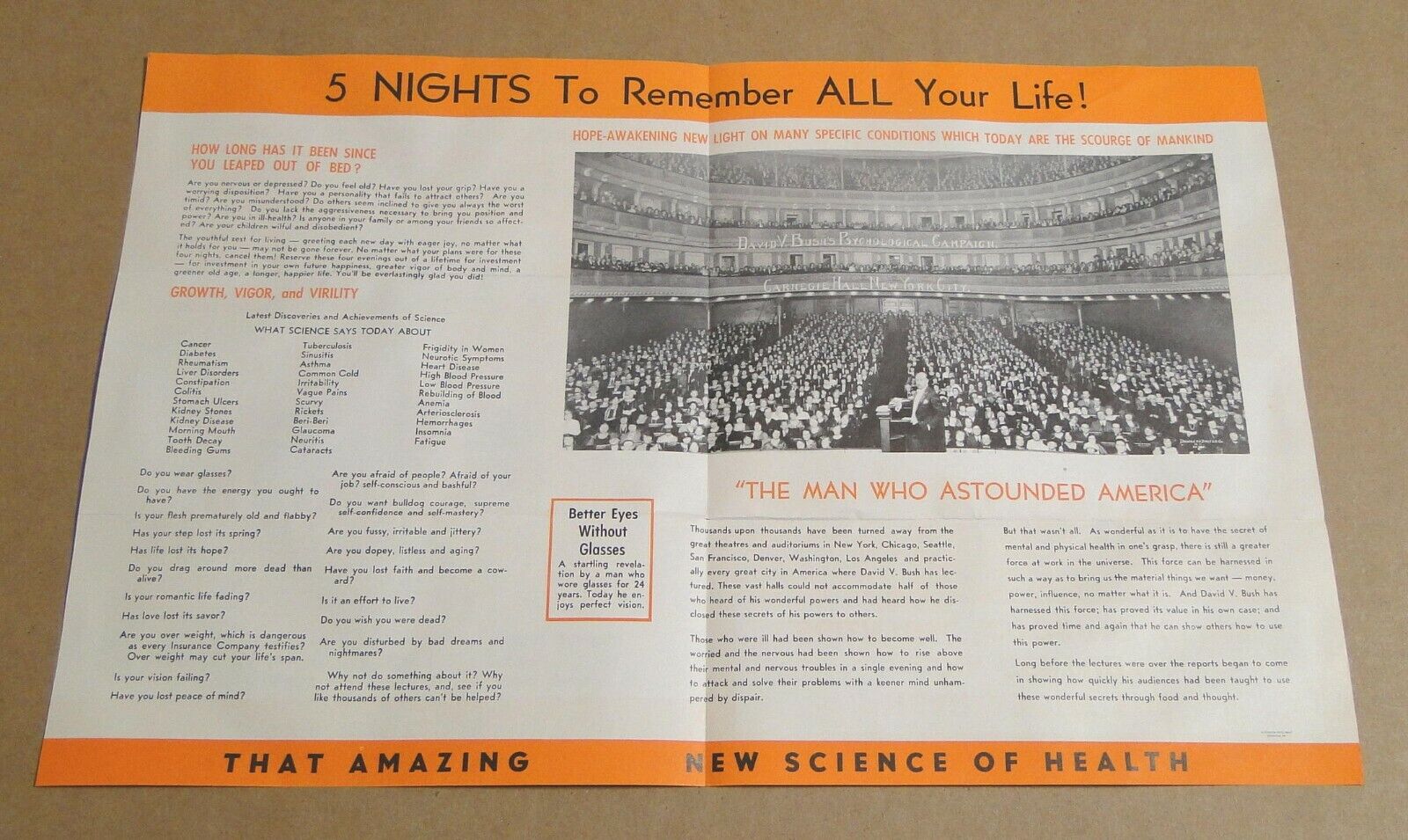
S.T. Joshi’s blog brings news of a new book by Ken Faig Jr, in the form of Pike’s Peak or Bust: The Life and Works of David V. Bush (Sarnath Press, June 2022). Available now in paper, or as a budget Kindle ebook.
The new book is described by the blurb as an “exhaustive biography of Bush … a dynamic salesman with boundless self-confidence who was part guru and part charlatan”, and typical of a type that emerged in the 1920s.
He had his poetry and some of his booklets revised by H.P. Lovecraft. Bush gave Lovecraft steady revision work in the 1920s, which helped Lovecraft to get through that decade. Bush was also an early promoter of ‘marital advice’ sex books as I recall, some of which Lovecraft may have perused before his marriage. So far as we know he never ghosted any of the sex material, though he is said to have done whole chapters of Bush’s homespun popular psychology booklets. No doubt Ken Faig Jr. has all the details on that.
Archive.org’s search has become as flaky and unreliable as Amazon, and is no longer trustworthy as a guide to what an author has in there. But here are the Bush-isms I could find there after some digging and round-the-houses trips.
What to Eat (1924)
Psychology of Sex : how to make love and marry (1924)
Affirmations and how to use them (1923)
Character Analysis (1923)
Applied Psychology and Scientific Living (1923)
Psycho-analysis, kinks in the mind : how to analyze yourself and others for health and prosperity (1923)
Poems of Mastery and Love Verse (1922)
Grit and Gumption (1921)
The Silence: What It Is, How To Use It (unknown date, audiobook version only)
Inspirational poems (1921)
Humorous verse on current events and other topics (1916)
Soul poems, and other verse (1916)
Peace poems and sausages (1916)
eBay shows he was still trying to pack them in to his lectures, by then for ‘health foods’, in 1950…
15 Wednesday Jun 2022
Posted in Historical context, Scholarly works
Back in March I noted that the journal Old-time New England was freely available to 1925.
Hathi now has a few more into 1926, though the issues from 1926/27 onward are in a pointless copyright lockdown.
You won’t find them at Archive.org via the title search-box, curiously. But Google sees them there, and reveals that Archive.org now has them (from microfilm) all the way to 1981, as Old-Time New England 1910-1981.
11 Saturday Jun 2022
Posted in New books, Scholarly works
S.T. Joshi’s blog announces his new book The Parameters of the Weird Tale, which includes “old bibliographical articles from the New Lovecraft Collector (1993–99)” among other items. I don’t see the Lovecraft items in his World in Transition collection, and the old Lovecraft Collector is not on Archive.org.
The contents include, among others…
* An Annotated List of Lovecraft’s Juvenile Manuscripts in the John Hay Library.
* Lovecraft’s Earliest Writings.
* Lovecraft’s Amateur Pamphlets.
* The Sense of Place in Lovecraft’s Early Tales.
Parameters can be had on the Kindle as an ebook, or in paper.
06 Monday Jun 2022
Posted in New books, Scholarly works
Newly listed on Hippocampus, Ellen J. Greenham’s book Cosmicism and Neocosmicism in H. P. Lovecraft, Philip K. Dick, Robert A. Heinlein, and Frank Herbert…
In Greenham’s analysis, Lovecraft’s cosmicism offers human beings limited options in madness or death as responses to the inescapable revelation of their own insignificance and ephemerality in the universe. The neocosmicism of Dick, Heinlein, and Herbert offers another pathway in the framework for how humans might respond when facing engulfment. Rather than yielding to despair, neocosmicism offers an experience that leads to the revitalisation of the human’s relationship with the universe it inhabits.
03 Friday Jun 2022
Posted in Lovecraftian places, Maps, Scholarly works
Along with the forthcoming mega-index to the completed volumes of Letters, it struck me that we could also use a companion volume containing maps. ‘Orienting’ maps, in outline but still somewhat detailed. Map that quickly tell readers where one place was in relation to another. I’d suggest the following:
1. Lovecraft’s Providence (the topography and places known as a boy)
2. Lovecraft’s Providence (post-1914).
3. Lovecraft’s College Hill and Marketplace (including tunnels).
4. ” Places near Providence (Dark Swamp etc).
5. ” Brooklyn.
6. ” New York City.
7. ” New England coastline.
8. ” Dots-on-the-map. A general ‘dot-map’ of Lovecraft’s excursion and trip destinations east of the Mississippi and up into Canada.
9. ” Florida and his southern excursions.
10. ” Circle locations (their origins, places).
11. ” Far-flung Empire (his interest in particular far-flung places, places used in fiction etc).
Appendix: Map and mapping sources known to have been owned, used, consulted by Lovecraft.
Appendix: Bibliography of maps known to exist, relating to the original Lovecraft material (i.e. not the wider and later Mythos).
Appendix: List of important addresses in Lovecraft’s life.
Might be done in a suitable period style…
31 Tuesday May 2022
Posted in Kipling, Odd scratchings, Scholarly works
Online Books recently catalogued The Mummy! A Tale of the Twenty-Second Century, which it had spotted in a nice clean .TXT version at Gutenberg. A fascinating curiosity, it seems, is Mrs. Loudon’s The Mummy! A Tale of the Twenty-Second Century (1827). A lively proto-steampunk and partly aerial adventure by all accounts, albeit stretching over three volumes. And perhaps thus a possibility for adaptation to expand Kipling’s Aerial Board of Control (“With the Night Mail”) universe, on which Tentaclii has had several posts.
Three volumes is a bit daunting though. Has it been abridged? Yes, it has, “The only modern edition is abridged” says L.W. Currey, but doesn’t name the edition. Amazon reveals this as a “University of Michigan Press; Abridged edition (1995)”, aka “Ann Arbour”. Google Books reveals it was a paperback and also “illustrated”.
The SF Encyclopedia has “one of the very earliest Proto SF texts … a somewhat melodramatic plot”. Sounds great, and apparently lots of early sci-fi inventiveness too.
The SF Encyclopedia perhaps usefully comments on the University of Michigan edition is a “much cut bowdlerization”, basing this on one negative review. Some 100 pages cut and touches of new smoothing added at the joins, it seems. I’m fine with that, for reading enjoyment rather than scholarship. If the feminists who claim her (very much ‘in passing’) want to produce a sumptuous critical edition of the three volume table-trembler, then go ahead.
It looks like the abridged University of Michigan edition sells for £30 on eBay, and would be tricky to get via Amazon. Since there’s Amazon’s usual utter confusion on editions, and you might end up buying some public domain shovelware you could get free elsewhere.
Archive.org refuses a search for “The Mummy! A Tale of the Twenty-Second Century”, presumably because of the ! mark, and has “No results matched your criteria” for “A Tale of the Twenty-Second Century” in the title. So it’s difficult to compare editions there. But eventually, via Google and then an author search, deep down the Archive.org results (she wrote a lot about gardening after her marriage to a botanist) one finds the University of Michigan Press edition is available to borrow.
Also there is an 1828 second edition of the three-volume work: I, II, and III. But Gutenberg’s clean .TXT compilation of all three volumes will be preferred for some e-ink devices such as the original Kindle 3. This, together with judicious skimming, is perhaps the best option for reading.
I should also note the 18 hour LibriVox recording, which again is a bit daunting.
It never seems to have been adapted for media or comics.
I’m not alone in only just hearing about this novel. A 2018 blog post by Gothic Wanderer (not linked due to absolutely massive plot spoilers) remarks that she is vastly superior to Mary Shelley. And, yet despite being claimed by feminists…
The novel has received almost no critical attention. I have spent twenty years reading and studying Gothic fiction and yet I only learned of the novel’s existence in the last year. It is time for it to be studied more.
S.T. Joshi observes, in his weighty survey Icons of Horror and the Supernatural, that Loudon does not share Shelley’s radical politics — which may perhaps explain some of the neglect. Joshi also points up a few of the horror passages, before passing on to Poe in his survey of early mummies.
It seems that Lovecraft and his circle did not know the novel.
24 Tuesday May 2022
Posted in Odd scratchings, Scholarly works