Added to the Open Lovecraft page:
* S.T. Joshi (2012), “Poe, Lovecraft, and the Revolution in Weird Fiction”. (Transcript of a lecture given at the Ninth Annual Commemoration Program of the Poe Society, 7th October 2012).

06 Saturday Jul 2013
Posted in Scholarly works
Added to the Open Lovecraft page:
* S.T. Joshi (2012), “Poe, Lovecraft, and the Revolution in Weird Fiction”. (Transcript of a lecture given at the Ninth Annual Commemoration Program of the Poe Society, 7th October 2012).
06 Saturday Jul 2013
Posted in Podcasts etc., Scholarly works
A conference paper as-mp3 by David Farnell, “Unlikely Utopians: Ecotopian Dreaming in H.P. Lovecraft’s “The Shadow over Innsmouth” and Octavia Butler’s Lilith’s Brood”, delivered at the 2010 ‘Utopia, Dystopia and Catastrophe’ conference in Australia.
All the .mp3 files of talks from this conference are online. One that caught my eye was: Geographies of Hope: The Desire for Place in Californian Science Fiction which might be of interest to those researching weird fiction in California.
04 Thursday Jul 2013
Posted in Scholarly works
Used Linkbot to do a double-pass check and repair of all Web links on this blog’s Open Lovecraft page.
04 Thursday Jul 2013
Posted in Scholarly works
Interesting conference location in 2014. the Island Dynamics academic network presents Folk Belief and Traditions of the Supernatural: Experience, Place, Ritual, and Narrative, set for late March 2014 in… “remote and windswept cottages on the island of Unst” in the Shetland Islands, in the bleak far north of Britain. It’s followed by the probably-slightly-more-comfy The Supernatural in Literature and Film conference from 29th—31st March 2014, in Lerwick, the capital of the Shetland Islands. Yes, they have broadband — a new £8m undersea fibre-optic cable linked them to the mainland in late 2012.
03 Wednesday Jul 2013
Posted in Scholarly works
Added to the Open Lovecraft page:
* Fabian Luduena (2013), “Astrophobos o la in-harmonia mundi: glosas a la obra poetica de H.P. Lovecraft”, Revista Landa, Vol.1, No.2, 2013. (In Spanish. Rough translation: “Astrophobos” and the inharmonious world: thoughts on the poetry of H.P. Lovecraft. By a philosopher at the Instituto Gino Germani, University of Buenos Aires).
03 Wednesday Jul 2013
Posted in Scholarly works
Added to the Open Lovecraft page…
* Tristan Garcia (2013), “Crossing Ways of Thinking: on Graham Harman’s system and my own”, Parrhesia : a journal of critical philosophy, No.16, 2013, pp.14-25. (Tristan Garcia responds to Harman’s recent book Weird Realism: Lovecraft And Philosophy, recognising its multiple levels of usefulness for philosophy. Harman responds in his follow-on article “Tristan Garcia and the Thing-in-Itself”).
Also found a long abstract for a Masters dissertation, An examination of contributive narrative: A look at the Lovecraft Circle and the expansion of the Cthulhu Mythos…
“The Lovecraft Circle [i.e. the early use of his mythos in fiction by others] stands as a hybrid example of a controlled Fanfic [fan fiction] that expands a fictional world using techniques from contributive narrative, publication, and acknowledgment. With the support of literary theories and research from accredited Lovecraft scholars, there is concrete evidence that the Lovecraft Circle can be classified as a true literary circle that stands apart from postmodern writing circles.”
And an abstract for the paywalled “Music Against Horror: H.P. Lovecraft and Schopenhauer’s Aesthetics”…
“…it is possible to position “The Music of Erich Zann” as a distillation of Lovecraft’s reading of Schopenhauer into a nuanced and effective dramatic narrative. A reading of Lovecraft that incorporates Schopenhauerian aesthetics, in this instance specifically related to music, can illuminate Lovecraft’s fiction and resonate with both Lovecraft’s and Schopenhauer’s world views.”
02 Tuesday Jul 2013
Posted in Maps, Scholarly works
List of Critical Works on Fantasy Maps, a nice little list on the newly reorganised Fantasy Maps website.

02 Tuesday Jul 2013
Posted in Scholarly works
Now printing, the first 200-page issue of Sargasso: journal of William Hope Hodgson Studies, which will premiere at NecronomiCon 2013. I can’t say Hodgson is my cup-of-tea, though I read him in the 80s, but it’s great to see another scholarly journal in the field — and one not afraid to slap on a deliciously retro cover which evokes the alt-zines of yore.

$25 to the UK including shipping.
01 Monday Jul 2013
Posted in Historical context, Lovecraftian arts, New books, Scholarly works, Summer School
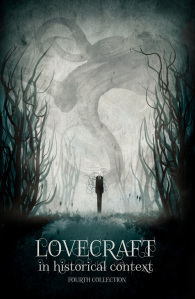
Available now in paperback… my latest book collection of essays:
Lovecraft in Historical Context: fourth collection.
A book of essays is now an annual tradition with me, and this year’s volume weighs in at 304 pages, 76,000 words. Contains many expanded and footnoted versions of blog posts which first appeared here — for instance the essay “The terribly nice old ladies” zooms up to 12,000 words as I delve into the source landscape of “The Dunwich Horror”. Long-time Lovecraft researchers may be especially interested in 4,000 words of highly detailed scholarship which lays out the complete circus/theatrical and movie executive career of Arthur Leeds prior to the Kalem Club, accompanied by the first known photograph of him and a newly discovered Leeds short story that is an obvious inspiration for “Cool Air”.
Enjoy!
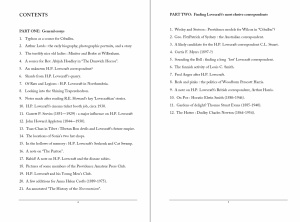
PART ONE: General essays
1. Typhon as a source for Cthulhu.
2. Arthur Leeds : the early biography, photographic portraits, and a story.
3. The terribly nice old ladies : Miniter and Beebe at Wilbraham.
4. A source for Rev. Abijah Hoadley in “The Dunwich Horror”.
5. An unknown H.P. Lovecraft correspondent?
6. Shards from H.P. Lovecraft’s quarry.
7. Of Rats and Legions : H.P. Lovecraft in Northumbria.
8. Looking into the Shining Trapezohedron.
9. Notes made after reading R.E. Howard’s key ‘Lovecraftian’ stories.
10. H.P. Lovecraft’s cinema ticket booth job, circa 1930.
11. Garrett P. Serviss (1851—1929) : a major influence on H.P. Lovecraft.
12. John Howard Appleton (1844—1930).
13. Tsan-Chan in Tibet : Tibetan Bon devils and Lovecraft’s future empire.
14. The locations of Sonia’s two hat shops.
15. In the hollows of memory : H.P. Lovecraft’s Seekonk and Cat Swamp.
16. A note on “The Paxton”.
17. Rabid! A note on H.P. Lovecraft and the disease rabies.
18. Pictures of some members of the Providence Amateur Press Club.
19. H.P. Lovecraft and his Young Men’s Club.
20. A few additions for Anna Helen Crofts (1889-1975).
21. An annotated “The History of the Necronomicon”. — sample
PART TWO: Finding Lovecraft’s most elusive correspondents
1. Wesley and Stetson : Providence models for Wilcox in “Cthulhu”?
2. Geo. FitzPatrick of Sydney : the Australian correspondent.
3. A likely candidate for the H.P. Lovecraft correspondent C.L. Stuart.
4. Curtis F. Myers (1897-?)
5. Sounding the Bell : finding a long ‘lost’ Lovecraft correspondent.
6. The fannish activity of Louis C. Smith.
7. Fred Anger after H.P. Lovecraft.
8. Reds and pinks : the politics of Woodburn Prescott Harris.
9. A note on H.P. Lovecraft’s British correspondent, Arthur Harris.
10. On Poe : Horatio Elwin Smith (1886-1946).
11. Gardens of delight? Thomas Stuart Evans (1885-1940).
12. The Hatter : Dudley Charles Newton (1864-1954).
Thanks for the cover art to Cotton Valent and Apolonis Aphrodisia.
30 Sunday Jun 2013
Posted in Historical context, Scholarly works, Summer School
Last month Mark Bauerlein peeked into the padded cell of the contemporary university English Dept. His article, in The Chronicle of Higher Education, took a look at exactly what gets taught in first-year English classes…
The fundamentals of the tradition (Shakespeare, Milton, Romantic poets, modernist poets) are missing [from the basic introductory English courses in universities], and so are the fundamentals of literary reading (prosody, rhetoric, figurative language, structure, genre, etc.) Here we see the internal destruction of English as a field. […] Unlike other disciplines, English no longer distinguishes degrees of difficulty and significance. It turns an introductory course into something else — a hasty acquaintance with complex ideas such as différance [Derrida], a quick indoctrination in complex identity matters, a hip involvement with edgy novels — and most students who receive it, I would guess, discern the decadence of the enterprise.
I’ve noted in passing the strange insularity that this vanguardist approach seems to have caused in the Gothic Studies wing of English Literature. Wilum Pugmire wrassled a few days ago with the crude Invasion of the Body Snatchers-style pointing-and-screaming about race, which sometimes results from such courses…
I am searching this book of 468 pages [Lovecraft Remembered], which is made up mostly of memoirs of H.P. Lovecraft by people who knew him as personal friend or correspondent, for mention of his racism. I am grown tired of this new dreary fixation of commentary on Lovecraft that identifies him primarily as a racist writer. I find such emphasis misguided to the point of perversity. Lovecraft’s racism was grotesque and ignorant, and it echoes indeed throughout his fiction; but there is much more to Lovecraft’s genius that is far more vital and interesting. This new school of judgmental critics, who emphasis first and foremost that Lovecraft was racist, and then follow this up to explain why he was “a good bad writer,” shews the absurdity and ineffectiveness of much [mainstream academic] modern Lovecraft critique, critique that reveals far more ignorance regarding Lovecraft and his work than anything else.
In defence of mainstream academia, there is a steady flow of sound dissertations and theses each year (though only sometimes from straight Eng Lit departments, and then usually from outside America). And now a small crop of Lovecraft course module-documents are available online, mostly for one-semester courses being taught mostly in American universities. I occasionally come across these course documents while searching the Web, and they seem encouraging. Most seem well designed and at least minimally aware of the historical context (if only the context of the genre’s tradition). Though I’d imagine that more than a few of these are the products of enthusiastic hourly-paid visitor or adjunct lecturers, rather than cautious faculty. How well they play in the classroom I have no idea. I guess they encounter people lacking in a historical framework and fundamentally unequipped in actual techniques of doing in-depth historical scholarship, something that seems to me implicitly required to adequately study the political dimensions of historical texts and authors. If a student or even their teacher has no idea of the actual historical structures and trajectories of the racial categories and regrettable racisms of Lovecraft’s time, then the default politically-acceptable ‘year zero’ approach will be the only one available to them.
Seems to me that this is part of a wider erasure of history from the study and understanding of creativity — something evidenced by the shrinkage or closure of art history depts, and an increasing ‘the history doesn’t matter much’ approach in other departments teaching creative students. That’s bound to have a snowball effect, as graduates of these courses move up the career chain, being less likely to value the history side of teaching because they lack a real grounding in it themselves. And management doesn’t push history, because the students don’t like being asked to do historical essays and forcing them to do it increases the student drop-out and failure-rate in the department. The rise of joint Masters degrees (History and English, etc) may help somewhat, but some radical bunker-busting among the disciplines would probably be needed to help such courses make a useful combined impact on a student in the nine months available to a one-year Masters course.
These various factors make it highly unlikely that a young mainstream academic of today will invest the time and expense needed to even begin to become a fair Lovecraft scholar (several years of close reading, of books and journals that could cost $2,000 or more to amass). In a system dominated by career advancement and management strictures, mainstream academics tend to need ‘quick wins’ that ‘tick the boxes’ and add ‘impact’ to the key assessments on which departmental funding depends.
These and other barriers seem destined to further bifurcate the field into: i) long-standing independent Lovecraft scholars and philosophers, operating mostly outside the academy, and ii) mainstream academic ‘dabblers’ who dip into Lovecraft either to make a quick buck for their publisher or to make their slim young C.V. a little more hip — but who consequently get basic things wrong and thus are chuckled at and ignored or scourged by the Lovecraftians. That said, I recognise that I started as a ‘dabbler’ myself, and know that — if one keeps at it — then it can lead to better things.
What is to be done? In the age of the virtual classroom, video lectures and Skype, one wonders… could Lovecraft scholars start a self-funding online ‘Lovecraft University 101’ summer school, for say six weeks or so each year? Perhaps with the aid of the likes of the turn-key infrastructure on offer at Coursera or Udacity or edX. I’ll contribute a headmaster’s mortar-board for Robert Price.
29 Saturday Jun 2013
Posted in New books, Scholarly works
Newly announced from Scarecrow Press… Lord Dunsany, H.P. Lovecraft, and Ray Bradbury: Spectral Journeys by William F. Touponce.
“examines what these three masters of weird fiction reveal about modernity and the condition of being modern in their tales. In this study, Touponce confirms that these three authors viewed storytelling as a kind of journey into the spectral.”
Sadly out of my reach at a whopping $75 🙁

27 Thursday Jun 2013
Posted in Scholarly works
W.H. Pugmire article in Nightmare Magazine, spring-boarding from the receipt of…
“the current issue of Famous Monsters of Filmland [#267], which I ordered because S.T. Joshi wrote two articles for it. The issue amazed me, because none of the articles cover film adaptations of Lovecraft’s Works. Two articles (“Lovecraft’s Acolytes,” by Robert M. Price and “The New Mythos Writers,” by S. T. Joshi) discuss those writers who were influenced by his fiction and have written tales therein, from the time that Lovecraft was alive to the present day; and one article (“The Language of Lovecraft,” by Holly Interlandi) looks at Lovecraft’s prose style and sentence structure!”