• About
  • Directory
  • Free stuff
  • Lovecraft for beginners
  • My Books
  • Open Lovecraft
  • Reviews
  • Travel Posters
  • SALTES

Tentaclii

~ News & scholarship on H.P. Lovecraft

Tentaclii

Category Archives: New discoveries

David V. Bush’s war poetry

04 Friday Jul 2014

Posted by asdjfdlkf in Historical context, New discoveries

≈ 2 Comments

I’ve been looking at some David V. Bush poetry, Poetry of Mastery and Love Verse (1922). Probably largely ghosted by Lovecraft, who had been doing extensive ghosting of poetry and prose for Bush since 1920.


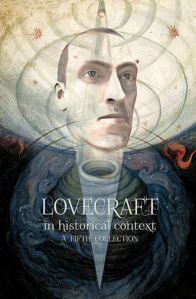
This essay has been replaced by my new book of revised, expanded, and footnoted versions of my recent Tentaclii essays, Lovecraft in Historical Context: fifth collection.

cover_front_600px

Lovecraft and the Order of Bookfellows

29 Sunday Jun 2014

Posted by asdjfdlkf in Historical context, New discoveries

≈ Leave a comment

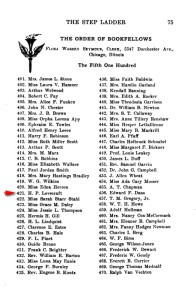
My thanks to Carsten Flaake for pointing out The Step ladder journal online, which lists H.P. Lovecraft as a member of the Order of Bookfellows. Flaake notes Lovecraft is in the membership lists for 1920 (p.75), as well as for 1921 (p.48). I note that Lovecraft is joined in his Bookfellows membership by his friends and correspondents Renshaw and Daas. Later editions of The Step ladder are unavailable online due to copyright, so Lovecraft’s continuing membership can’t be determined. As far as I can tell he doesn’t mention the Bookfellows in his letters. I can find no accessible scholarly source that has noted Lovecraft’s membership of the Bookfellows. Perhaps the recent collection of letters between Lovecraft and Renshaw might throw some light on how Lovecraft came to be a member of the Bookfellows?

bookfellows

bookfellows1921

The Bookfellows was a Chicago based literary society, seemingly devoted to poetry, book collecting, and the publishing of its members. It was established by the auditing accountant and poet George S. Seymour (1878-1945). It appears to have started to publish in 1919, with an address of 4917 Blackstone Avenue, Chicago. Seymour and his lawyer wife were avid collectors of materials and letters from “various political and royal figures in France” as well as “items from authors, scientists, American Presidents, politicians and other historical figures”, and they amassed a large collection of historic autographs and letters. They possibly also dabbled in Eastern mysticism…

“A reception at the twilight hour followed at Bookfellow Lodge, the center for the Order of Bookfellows, Mr. and Mrs. George S. Seymour being the hosts. Here the Swami [Paramananda] read from “The Vigil” and “Soul’s Secret Door,” and answered carefully…” (Message of the East, Vol.13, 1924. p.144)

The Bookfellows also published two or three books per year, and the May 1927 issue of The Step ladder was devoted to the poetry of Clark Ashton Smith (thanks to Scott Connors for this information).

The Order of Bookfellows reach seems to have been national, since it was elsewhere refered to as the “Nat’l Order of the bookfellows” and the 1920 and 1921 membership lists show a wide reach. Pearl K. Merritt — later to marry Lovecraft’s friend Morton — and her sister Ella were relatively early members.

Poetry from the journal was collected in the books The Poet’s Pack (1921, 500 copies — no Lovecraft included) and Songs From The Step Ladder (1927, 285 copies) and they issued A Bookfellow anthology from 1925 through 1936 (Lovecraft’s friend Frank Belknap Long was in the 1925 collection), and The Bookfellow poetry annual from c.1938 onwards. But presumably Lovecraft didn’t publish there, or else such titles would be in Joshi’s monumental Lovecraft Bibliography. My vague guess would then be that Lovecraft found his poetry was too antiquarian for The Step Ladder, and thus his hopes of finding an outlet for his cherished poetry were dashed — so he allowed his membership to lapse circa 1922? On the other hand, perhaps he hung on with his membership until penury came knocking, in the slim hope that he might one day get a small book published with them?

Lovecraft’s new library, 1900

29 Sunday Jun 2014

Posted by asdjfdlkf in Historical context, New discoveries

≈ 1 Comment

Full details in the 1900 Annual Report of the Children’s Library in the Providence Public Library, at its opening in mid March 1900. It was on the second floor, had well over 4,000 volumes, open 10am-9pm and 2pm-9pm on Sundays. At the opening H. P. Lovecraft was aged nine and a half years, and no doubt revelling in his amazing new library…

“No portion of all the building has apparently given more pleasure to adult visitors, as well as to the young people themselves, than this attractive room with its growing plants in the windows, its open book-cases extending around the room, its choice photographs on the walls, its picture bulletins, its low tables, its flood of sunshine, and the smiling faces of the children themselves. On the shelves are 2,602 volumes of juvenile fiction, 1,941 volumes of non-fiction, and 175 volumes of juvenile periodicals, bound, making a total of 4,718 volumes. […] Two of the gratifying achievements of the year have been the reclassifying of the juvenile fiction, so as to give it an alphabetical arrangement, on the shelves, and the completion of a card-catalogue for the use of this room, with a low table, near by, on which to use the drawers. This catalogue, and the books of reference in the room, are by no means the only instructive and civilizing influences by which the children are affected. Habits of order inculcated in returning the books to the shelves; of neatness, in keeping hands and books spotlessly clean, and of taste, in making the acquaintance of the literary and art treasures which the library has to offer [the third floor offered a dedicated art library, and the main Lecture Room exhibitions on the second floor had opened with the inaugural “Photographs of Rome” exhibition, repeated there in October 1901] are of no little moment.”

“Personal contact of the child with the Children’s Librarian [Mrs. Mary E. Root, with Miss Lilla R. Burge in the evenings] has been the aim kept in view throughout, and it has been abundantly realized. The study of pictures, an hour of story-telling; an evening of lantern-slide pictures; a consultation in regard to summer trips; confidences in regard to the child’s own natural bent, as for instance, mechanical ingenuity, or amateur photography, are some of the phases of this admiral intimacy between the child and his library friend. […] The equipment and resources of the Children’s Library have repeatedly been put to practical use in connection with the teaching of nature, of literature, of history, of art, and of geography. The two-book system, already mentioned above, has been of constant service, in supplying an additional book for use in connection with school work. The Class Room, adjoining the Children’s Reading Room, has been utilised by teachers, with classes, for the study of such subjects as King Arthur, and has also been used for posting picture exhibits. The interest in this room, on the part of the public, has shown itself in repeated and most cordial gifts from those who have witnessed the plan of work in this room. […] One prime object of work in a [Class R]oom like this is to introduce the children to books which are not “children’s books.”

A footnote to this 1900 Annual Report is interesting, since Lovecraft was about to break into the adventurous phase of middle-childhood, and he became in his own words “a veritable bicycle centaur”, exploring for miles around on the bicycle…

“At the beginning of the summer [1900], a map of the vicinity of Providence, showing the routes favourable for cycling, trolley, or walking trip, together with about twenty views of attractive places in the vicinity, were posted in the Class Room.”

A few weeks later Lovecraft was given his first bicycle, on his tenth birthday. He cycled relatively short distances until 1908. Due to ill health he thereafter probably only cycled sporadically thereafter until 1913 when he gave it up entirely.

Additional details from Proceedings of the Montreal conference of the American Library Association, 1900, pp.63-64…

“Into this children’s library, with its 4000 books on open shelves, were turned loose on the opening day some two or three hundred children, who had never before had access to open shelves in this way. Their interest was intense…” [after an initial struggle to get the children to understand the need for accurate re-shelving…] “Often our boys are seen going to shelves and straightening out rows of books which some less careful child had displaced.” […] “We desire that these few pictures [shown] on the walls shall be old friends; and so we allow every League child to select his favourite from among them, in the shape of a “Perry picture,” [mass reproductions of art works as very cheap paper prints] which he may take home and mount, and thus have for his own. […] Not only have there been no disturbances or disorder, even on days when the rooms were crowded with almost twice as many children as there were accommodations for, but there has been only the very slightest tendency to disorder on any occasion.”

The Children’s Library issued the Maxton Bookmark with each book, which contained guidance on care for the book…
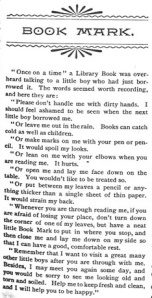
maxbook

Elsewhere in the 1900 Report (p.23) the account of the new 1900 library notes a “Library League”, on which the Montreal conference conference paper adds that this was for those children who were not yet grown to be “large boys or girls”. The League’s inaugural helper members were treated to an evening lantern slide show on Sept 12th 1900, although the subject of the slides shown is not given. Having established itself, the League later expanded to a membership of hundreds.

There was also The Short Story Club which had a lecture on “The Islands of the Pacific” on 27th December 1900, by a Mrs E.S. Colcleugh, who had evidently visited Tahiti and photographed there. One wonders if the young Lovecraft might have been a member of one or both of these clubs, since he was at that time both an avid book-hound and a budding short story writer.

Also noted (p.58) in the 1900 Report are details of the series of 1900 interior photographs, and who made them…

“A set of 20 photographs of the building, and its exterior and interior details, by Mr. A. L. Bodwell, was suitably mounted, and exhibited in the American Library Exhibit [presumably at the Montreal conference of the ALA, June 1900], at the Paris Exposition of 1900 [World’s Fair, April-November 1900], and afterwards at the Pan-American Exposition of 1901. Other views have been published and are for sale by the Providence Albertype Company and Abraham Mendenhall, Providence. Any of the above may be ordered through the library.”

So if I am correct in identifying the 9½ year old H.P. Lovecraft in an 1900 interior photograph, then the picture would have been made by a Mr. A. L. Bodwell and Lovecraft’s young face might once have been seen in Paris. The picture would then most likely have been taken mid to late March 1900, in the week or so after the new library opened, so as to be ready for shipping to the opening of the Paris Exposition in April.

The following 1901 Report noted of the Children’s Library…

“The larger of the two rooms, the Children’s Reading Room, has repeatedly been full, to overflowing. In such instances the overflow is, very naturally, into the next room,—the Class Room,— or into the Lecture Room, on the same floor. […] The habits of order and cleanliness which are so firmly and successfully inculcated in this department (and yet without in the least impairing the perfect spirit of freedom, everywhere manifest), are most impressive; and are undoubtedly closely connected with the fact that the “Library League” formed among the children themselves now numbers nearly 1,000. Some progress has been made towards facilitating the “graduation” of young readers from this department into the other departments of the library.”

By 1901 a Sarah E. Albro was the evening librarian at the Children’s Library, replaced by Harriet A. Tourtellot in 1903. The amount of users had necessitated the appointment of a day assistant to the Children’s Librarian, and by 1902 a further assistant was needed but not yet appointed. The 1901 Report also mentions a Library Art Club. 2,820 volumes were in the third-floor Art Library by 1902, one floor above the Children’s Library.

In 1902 Mrs. Mary E. Root, Children’s Librarian, gave a large number of lectures to its users on the methods of accessing and using any library. One presumes that the young Lovecraft attended one or more of these.

The 1902 Report mentions an Alfred M. Williams Collection of Folk Lore, then standing at a massive 1,909 volumes, and recently catalogued. The name strikes me as being somewhat similar to Lovecraft’s fictional “Albert N. Wilmarth”, professor of literature and folk lore at Miskatonic University. The Annual Report of 1922 confirms its ongoing presence there. Rhode Island Heritage has a biography online for Williams. It appears his collection was and is especially strong on Irish folklore. Williams’s books are scanned and on Hathi Trust, including The Poets and poetry of Ireland and Studies in folk-song and popular poetry.

The Library issued a public reading list on “Arctic exploration” in 4th October 1902, perhaps co-inciding with strong interest on the topic among the boys? Lovecraft was obsessed with polar exploration, but this interest pre-dated the 1902 list. And by 1902 he was newly entranced by the Antarctic, in preference to the Arctic.

So, all in all, it appears that from the vital years from 9½ to 12 Lovecraft had access to a really superb new local library, perhaps one of the finest the USA has ever seen. Not only that, but the Library was also uniquely one that gave its child users ‘free reign’, in exchange for their good conduct.

“Lonely bleak islands off N.E. coast.”

18 Wednesday Jun 2014

Posted by asdjfdlkf in Historical context, Maps, New discoveries

≈ 2 Comments

“168  Lonely bleak islands off N.E. [New England] coast. Horrors they harbour—outpost of cosmic influences. (H.P. Lovecraft, story idea #168 in the “Commonplace Book”)

“There was a lone southward-sailing ship, and far out the eye could barely discern the misty suggestion of the half-fabulous Isles of Shoals [four miles off the coast from Portsmouth]. I had not seen the ocean before for six years—the glimpses one gets in harbours are nothing.” (H.P. Lovecraft, June 1922, Selected Letters I, p.185.)

“the low, black reef lay a full mile and a half out from Innsmouth Harbour.” … “Far out beyond the breakwater was the dim, dark line of Devil Reef, and as I glimpsed it I could not help thinking of all the hideous legends I had heard in the last twenty-four hours—legends which portrayed this ragged rock as a veritable gateway to realms of unfathomed horror and inconceivable abnormality.” (H.P. Lovecraft, “The Shadow Out of Innsmouth”)

Lovecraft had visited Portsmouth just one month before writing “The Shadow over Innsmouth”.

“They are supposed to have been so called, not because the ragged reefs run out beneath the water in all directions, ready to wreck and destroy, but because of the “shoaling,” or “schooling,” of fish about them, which, in the mackerel and herring seasons, is remarkable.” (Atlantic Monthly, 1869)

“the abundance of fish was certainly almost uncanny” … “Queer how fish are always thick off Innsmouth Harbour” (H.P. Lovecraft, “The Shadow out of Innsmouth”)

“As he [‘King’ Haley] turned over a stone one day [on his Haley Island, part of the ‘Isles of Shoals’] he found three bars of solid silver [and with that mysterious treasure built a sea-wall and a wharf]” (real-life story in “The Isles of Shoals”, Harper’s Weekly)

“always been a kind of mystery where the Marshes get the gold they refine … Others thought and still think he’d found an old pirate cache out on Devil Reef” (H.P. Lovecraft, “The Shadow out of Innsmouth”)

Of course Lovecraft probably never visited those particularly barren and low-lying Isles, only spied them from the coast and read of them. A visit entailed a full day-trip on a steamer from Portsmouth in the 1920s. The steamer landed passengers at the main Star Island, where the Oceanic Hotel was a church-run establishment and any cafes likely served quite expensive refreshments to a captive audience of trippers. So it’s more likely he just read up on them, then imagined that the most bleak of the Isles — such as the barren northern Duck Island and its ragged reefs and ledges — might be transplanted elsewhere, and brought closer in so that it would be clearly visible from a hideous old town.

duck-shoals

txu-pclmaps-topo-nh-portsmouth-1917Above: ‘The Isles of Shoals’ seen in relation to Portsmouth, 1917 topographic map. The map’s marking of “Town of Kittery” and “Town of Rye” across the islands indicates legal jurisdiction, not that the islands had towns on them. The hotel on Appledore island had burned down in 1914.

Curiously, given the supposedly ‘ever-rising sea levels’ that are supposed to soon inundate the nearby New York City, global warming has left completely untouched the coastline of these lowest of low-lying islands.

Unknown Friends of H. P. Lovecraft: No.1, Chester Alwyn Mowry

11 Wednesday Jun 2014

Posted by asdjfdlkf in Historical context, New discoveries, Scholarly works

≈ 3 Comments

I’m very pleased that the legendary Lovecraft researcher Randy Everts has chosen Tentaclii to help publish an important new essay on Lovecraft in Providence. His essay reveals, for the first time, one of Lovecraft’s previously unknown local friends — Chester Alywn Mowry (1898-1945).

With his permission I have slightly tweaked the essay, formatted it with my usual book style, and added my footnotes plus a few extra pictures. My thanks to Randy for this great opportunity.

   “Yeh—keep it up [meaning, the use of new American slang and twang], & you’ll have even Mowry rolling his rrr … ’s in mid-western style yet!” (Letter from Lovecraft to James F. Morton of January 1928).

Download: Randy Everts, “Unknown Friends of H. P. Lovecraft: No.1, Chester Alwyn Mowry”. (PDF, formatted for 6″ x 9″ print, 8,000 words inc. footnotes).

The Supremacy of Life

11 Wednesday Jun 2014

Posted by asdjfdlkf in Historical context, New discoveries

≈ Leave a comment

Thanks to Randy Everts for telling me that an early Lovecraft revision is now scanned and online, “The Supremacy of Life” (1917)…

In one of the letters to [David V.] Bush dated 20th January 1918 HPL mentions the book he edited (re-wrote) for the Rev. W.S. Harrison of Starkville, Miss., a “long Miltonic epic in blank verse”

ex2

ex1

I wonder if the revision / ghost writing for this work may have prompted Lovecraft to muse upon the possibility of his lost “Life and Death” story (c. 1920). We know of one such instance: apparently working on a Bush revision had, in part, been a prompt for the dream that led to “Nyarlathotep”.

The Lovecraft family bible

05 Thursday Jun 2014

Posted by asdjfdlkf in Historical context, New discoveries

≈ 7 Comments

The Lovecraft family bible, found?

cert

Gordon Hatfield, composer and stage director

28 Wednesday May 2014

Posted by asdjfdlkf in Historical context, New discoveries

≈ Leave a comment

I’ve found a picture of Gordon Hatfield, albeit turned from the camera. This is from circa the mid 1940s, some twenty years after Lovecraft had first met him…

gordonhatfield

In 1922 Hatfield, along with Lovecraft, was an attendee of what appear to have been predominantly (but discreetly) gay parties hosted in Cleveland by Hart Crane and Samuel Loveman. Lovecraft listed Hatfield as one of the Cleveland “intelligentsia” in one of his poems which recalled these parties.

As a composer Hatfield is now so obscure that I can’t even find birth/death dates for him. I can find mention of his music for: “I Love Thee; words from the Russian of Pushkin”, 1920; “Ye Songs of Mine: poems from the Russian of Mekrassow”, 1920; “Cycle of Wistful Songs (after Goethe)”, 1921; and his music for a major stage comedy musical Wappin’ Wharf: A Frightful Comedy of Pirates, 1922 (“The time is remote, and ships of forgotten build stand out from Bristol in full sail for the mines of India…”). Whatever he did while in New York in the mid 1920s, it left no trace. He obviously returned to Cleveland, and in the 1940s had become… “professional [stage] director, Gordon W. Hatfield of the Cleveland Playhouse” (Theatre Arts magazine, 1955). He obviously also acted as there is a photo of him in full costume on stage in 1948.

Lovecraft might (my speculation) have encountered Hatfield at New York parties in the mid 1920s, since he and Hatfield were both loosely (Hatfield apparently feuded with Crane, Crane was indifferent to Lovecraft) orbiting around the Crane/Loveman circle there. But judging by his 1924 letters Lovecraft was obviously disturbed by Hatfield’s open effeminacy in 1922, so they would doubtless have avoided each other even if they had attended the same parties or visited the Double-R (a bohemian/gay cafe) in the mid 1920s. There’s no entry for Hatfield in the index to Letters from New York.

While Lovecraft’s letters often express a very attentive and delighting admiration of the handsome looks of his latest adolescent friend, Lovecraft couldn’t abide any effeminacy in males — even while having perhaps just a touch of that same manner in himself (Hart Crane once refered to him in a letter as “piping-voiced”). Hatfield appears to have been an openly effeminate gay man, almost certainly the first Lovecraft had ever encountered. Some eighteen months after meeting Hatfield in 1922, Frank Belknap Long told Lovecraft that he had met Hatfield in New York. Lovecraft responded, and recalled…

   “To be sure, I recall him! Dear, dear! how he used to sit cross-legged on the floor at Eglin’s, little sailor’s cap tucked gracefully under one arm, sport shirt open at the neck, gazing soulfully up at Samuelus [Samuel Loveman] and discoursing of arts and harmonies of life! I’m afraid he thought me a very crude, stupid, commonplace, masculine sort of person” (Selected Letters I, p.281).

In a letter to Morton, Lovecraft was rather more crude in his description of Hatfield…

   “And say! Have you seen that precious sissy Gordon Hatfield, that I met in Cleveland? Belknap [Frank Belknap Long] says he’s hit the big town [New York], & that he’s had some conversation with him. When I saw that marcelled what is it I didn’t know whether to kiss it or kill it! It used to sit cross-legged on the floor at Elgin’s & gaze soulfully upward at [Samuel] Loveman. It didn’t like me & [Alfred] Galpin — we was too horrid, rough & mannish for it!” (to James Ferdinand Morton, 8th January 1924).

The Other Mr. Lovecraft

17 Tuesday Sep 2013

Posted by asdjfdlkf in Historical context, New books, New discoveries

≈ 3 Comments

New on the Kindle store at Amazon, David Acord’s The Other Mr. Lovecraft: A True Story of Tragedy and the Supernatural From H.P. Lovecraft’s Family Tree

“In this original [10,000 word] non-fiction monograph, author David Acord (When Mars Attacked: Orson Welles, The War of the Worlds and The Radio Broadcast That Changed America Forever) shines a light on a forgotten aspect of Lovecraft’s family tree: the troubled life of his [father’s] cousin Frederick [1850-1893], a once-prosperous businessman in 1890s New York City. When Frederick committed suicide in [6th Oct] 1893, it caused a sensation, with wall-to-wall coverage in all of the major papers, including The New York Times. His death triggered a pitched battle over his estate and revealed a secret romance with one of the most beautiful actresses in America [May Brooklyn], who took her life several months later. After her death, a tragic story of grief, spiritualism and obsession with the supernatural was revealed.”

I haven’t yet seen this new work, but the blurb seems factually correct. Although I suspect any spiritualist aspect of the case may be a new discovery(?). How much H.P. Lovecraft knew of the truth of the case is not known, or even if he knew of it at all. Those were the pre-microfilm and pre-Web days when even yesterday’s newspapers were hard to get hold of, still less the newspapers from twenty years before. But there may well have been family stories around the event.

Frederick Lovecraft was a treasurer of Palmer’s theater in New York, and May Brooklyn was its leading lady. Shortly before his death he had lost around $100,000 in…

“numerous schemes which loaded him down with worthless stocks” … “Day by day he grew worse and was finally seized with nervous prostration. Mr. Lovecraft’s delusion was that all his money was gone and that he was a poor man. Col. Kearney went over his friend’s fund account and found $60,000 of his fortune remained, but it was impossible to get Lovecraft to believe this.” (Evening Star, October 27 1893).

Possibly this $100k was the bulk of money he had in the jewellery trade, as he was also… “a partner in the firm of Williamson & Co., 26 Union Square, and a director in the Essex Watch Co.” (Jewelers’ Circular and Horological Review, 1893). The New York Times stated that “he owned outright” Williamson & Co. which was a “jewelry manufacturing concern”. Perhaps he also felt he had let down, or even ruined, other men involved in one or more of these jewellery businesses? Was his cousin, Winfield — Lovecraft’s father — perhaps even one of those men, since there was a vague memory that he had once worked in jewellery? Winfield had gone mad in April 1893, six months before Frederick Lovecraft’s suicide.

His 1894 probate hearing concurred with the diagnosis of acute depression…

“He seemed to be in a very depressed condition,” said Dr. Robertson. “He took no interest apparently in anything that was transpiring, when spoken to, he answered in monosyllables, He was exceedingly pale, and complained of insomnia and nervousness. He said he was hardly able to attend to his business.” Dr Robertson said that Lovecraft was “suffering from melancholia, following delusions.

“What was the condition of his eyes?” asked a lawyer. “Were they vacant or full of life as in ordinary men?”

“I couldn’t tell. I could hardly induce him to look up. He kept his head bowed down. Everything indicated acute melancholia.”

I wonder if the author of this new monograph has discovered that Frederick Lovecraft’s “warm personal friend” in the theatre, Mr. W.B. Palmer, also committed suicide by the same method as Frederick, two years later in early September 1895?

wbpalmer

New earthquake-raised island in the Pacific in 1925

01 Sunday Sep 2013

Posted by asdjfdlkf in Historical context, New discoveries

≈ 6 Comments

The earthquake in “The Call of Cthulhu” was purportedly what brought R’lyeh to the surface, as if a new island. But it was also an earthquake which really happened, striking the north-east of North America on 28th February 1925, followed by 55 aftershocks…

image061

It’s an interesting example of ‘real-world intertextuality’ for the reader, in that in February 1928 his young readers would have remembered reports of the real quake three years earlier.

The more studious among his readers may also have remembered the earthquake-raised island that had been found in the Pacific by the famous explorer-biologist William Beebe [1877-1962] in early summer 1925…

“Beebe Discovers a New Island in the Pacific.

ABOARD THE S.S. ARCTURUS, May 2. — Mount Williams and Mount Whiton, the two volcanoes on Albemarle Island, Galapagos group, which broke out in violent eruption on April 10 while this deep-sea expedition of the New York Zoological Society was near by…” (New York Times, 3rd May 1925).

“William Beebe, a scientific investigator, is now on the Pacific Ocean in his good ship Arcturus. He reports the discovery of a new island in the Pacific. It was probably thrown out of the waves by the recent earthquake which shook Japan.” (wire report in Jefferson County Journal, 20th May 1925).

“He had discovered a new island and named it after Prof. Henry Fairfield Osborn, President of the American Museum of Natural History. He had caught, among other curious denizens of the deep, a fish with long, jointed, lighted rods issuing from its head.” (Time magazine, 11th May 1925).

The expedition was seeking things with tentacles, too. Which was probably why Ernest B. Schoedsack, co-director of the movie King Kong, was aboard for the duration with movie-camera in hand. The Arcturus was… “a properly fitted-out scientific research vessel that possessed the ability to dredge [deep-sea] animals from beneath the ocean”. It was meant to explore the depths beneath the Sargasso Sea — and Beebe told a newspaperman that he was especially keen that…

“We will go out to get a specimen of the giant squid,” he explained. “Nothing is known about these fearsome beasts except that whales have been seen fighting with them, engaging in terrific struggles that churned the water and dyed it red. A few remains of these octopi’ have been found in the stomaches of captured whales. In one case there is a record of finding an arm, or sucking tentacle, of one of these creatures 27 feet in length. This would indicate that the monster, whose limb it was, measured at least 58 feet across.” (Daily Princetonian, 16th February 1925).

But the expedition just couldn’t find the vast Sargasso (a 700 x 2,000-mile mass of surface-floating weed that moves around), and so while waiting for its return they appear to have repeated a previous Beebe expedition of 1923 which had been recorded in the book Galapagos: World’s End (1924), a book which became a long-standing best-seller. Due to copyright the book is sadly not scanned and online for free, but The Spectator review highlighted its incident of… “the terrible walking over the lava [on a volcanic island]— a mass of sliding, jagged fragments” — which seems rather similar to the treacherous geometry of R’lyeh. The Spectator review also noted that in the book was…

“[a] photograph which I have no hesitation in saying is one of the two or three most amazing I have ever seen in the field of Natural History — of acres of lava covered with thousands upon thousands of these great reptiles. In the foreground is a fissure, up which crawls a huge crab: it is a picture of a new circle in hell.”

Beebe’s later Arcturus expedition was chronicled in the book The Arcturus Adventure (1926), but that book was published too late to have influenced the conception of “The Call of Cthulhu” (which was plotted in the summer of 1925).

20th Aug 2013: Lovecraft’s 123rd Birthday

20 Tuesday Aug 2013

Posted by asdjfdlkf in Lovecraftian arts, New discoveries, Podcasts etc., Scholarly works

≈ 4 Comments

Happy Birthday, Mr. Lovecraft! Some of the presents, so far, that have been given away for Lovecraft’s 123rd Birthday:

* Axel in Germany has today launched the ArkhamInsiders podcast. It’s a new German-language Lovecraft podcast (first edition here) which…

“in the future [plans] to do interviews with international Lovecraft scholars, writers and so on.”

* My own birthday gift is a new The annotated “The Lurking Fear” as a free PDF, with 8,000 words of new scholarly annotations. The PDF is set up so it can be printed as a 46-page booklet on a home laser printer (use the likes of the FinePrint software to print a PDF as booklet-sheets).

* Fangoria has an interview with Bryan Moore, the maker of the Lovecraft Bronze Bust set to be unveiled at NecronomiCon Providence 2013.

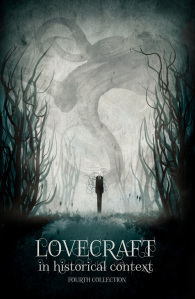
New ebook: Lovecraft in Historical Context: a fourth collection

19 Monday Aug 2013

Posted by asdjfdlkf in Historical context, NecronomiCon 2013, New books, New discoveries, Scholarly works

≈ Leave a comment

Available now, and just in time for your flight to NecronomiCon 2013. The Amazon Kindle ebook of my latest Lovecraft in Historical Context: a fourth collection. Buy the book on Amazon USA or on Amazon UK, or the other national Amazon websites. It has a linked table-of-contents, and a fully-linked “round trip” endnotes system.

cont4cover

Please note: I’ve had to remove the Arthur Leeds story from this ebook version, since Leeds has no firm death-date. Which means Leeds might still be in copyright, and so Amazon’s caution on copyrights would have prevented publication.

To compensate for the loss of the Leeds story, buyers of the ebook version instead get Lovecraft’s story “The Lurking Fear” — annotated by me with 8,000 words of new scholarly annotations.

You can also obtain my new book by mail as a paperback.

← Older posts
Newer posts →


Please become my patron at www.patreon.com/davehaden to help this blog survive and thrive.

Or donate via PayPal — any amount is welcome! Donations total at Easter 2025, since 2015: $390.

Archives

  • February 2026
  • January 2026
  • December 2025
  • November 2025
  • October 2025
  • September 2025
  • August 2025
  • July 2025
  • June 2025
  • May 2025
  • April 2025
  • March 2025
  • February 2025
  • January 2025
  • December 2024
  • November 2024
  • October 2024
  • September 2024
  • August 2024
  • July 2024
  • June 2024
  • May 2024
  • April 2024
  • March 2024
  • February 2024
  • January 2024
  • December 2023
  • November 2023
  • October 2023
  • September 2023
  • August 2023
  • July 2023
  • June 2023
  • May 2023
  • April 2023
  • March 2023
  • February 2023
  • January 2023
  • December 2022
  • November 2022
  • October 2022
  • September 2022
  • August 2022
  • July 2022
  • June 2022
  • May 2022
  • April 2022
  • March 2022
  • February 2022
  • January 2022
  • December 2021
  • November 2021
  • October 2021
  • September 2021
  • August 2021
  • July 2021
  • June 2021
  • May 2021
  • April 2021
  • March 2021
  • February 2021
  • January 2021
  • December 2020
  • November 2020
  • October 2020
  • September 2020
  • August 2020
  • July 2020
  • June 2020
  • May 2020
  • April 2020
  • March 2020
  • February 2020
  • January 2020
  • December 2019
  • November 2019
  • October 2019
  • September 2019
  • August 2019
  • July 2019
  • June 2019
  • May 2019
  • April 2019
  • March 2019
  • February 2019
  • January 2019
  • December 2018
  • November 2018
  • October 2018
  • September 2018
  • August 2018
  • August 2015
  • July 2015
  • April 2015
  • March 2015
  • February 2015
  • January 2015
  • December 2014
  • November 2014
  • October 2014
  • September 2014
  • August 2014
  • July 2014
  • June 2014
  • May 2014
  • March 2014
  • February 2014
  • January 2014
  • December 2013
  • November 2013
  • October 2013
  • September 2013
  • August 2013
  • July 2013
  • June 2013
  • May 2013
  • April 2013
  • March 2013
  • February 2013
  • January 2013
  • December 2012
  • November 2012
  • October 2012
  • September 2012
  • August 2012
  • July 2012
  • June 2012
  • May 2012
  • April 2012
  • March 2012
  • February 2012
  • January 2012
  • December 2011
  • November 2011
  • October 2011
  • September 2011
  • August 2011
  • July 2011
  • June 2011
  • May 2011
  • April 2011
  • March 2011
  • February 2011
  • January 2011
  • December 2010
  • November 2010
  • October 2010
  • September 2010
  • August 2010
  • July 2010

Categories

  • 3D (14)
  • AI (70)
  • Astronomy (70)
  • Censorship (14)
  • de Camp (7)
  • Doyle (7)
  • Films & trailers (101)
  • Fonts (9)
  • Guest posts (2)
  • Historical context (1,095)
  • Housekeeping (91)
  • HPLinks (73)
  • Kipling (11)
  • Kittee Tuesday (92)
  • Lovecraft as character (58)
  • Lovecraftian arts (1,625)
  • Lovecraftian places (19)
  • Maps (70)
  • NecronomiCon 2013 (40)
  • NecronomiCon 2015 (22)
  • New books (966)
  • New discoveries (165)
  • Night in Providence (17)
  • Odd scratchings (984)
  • Picture postals (276)
  • Podcasts etc. (430)
  • REH (184)
  • Scholarly works (1,468)
  • Summer School (31)
  • Unnamable (87)

Get this blog in your newsreader:
 
RSS Feed — Posts
RSS Feed — Comments

H.P. Lovecraft's Poster Collection - 17 retro travel posters for $18. Print ready, and available to buy — the proceeds help to support the work of Tentaclii.

Proudly powered by WordPress Theme: Chateau by Ignacio Ricci.