• About
  • Directory
  • Free stuff
  • Lovecraft for beginners
  • My Books
  • Open Lovecraft
  • Reviews
  • Travel Posters
  • SALTES

Tentaclii

~ News & scholarship on H.P. Lovecraft

Tentaclii

Category Archives: Lovecraftian arts

Ernest La Touche Hancock

03 Saturday Apr 2021

Posted by asdjfdlkf in Lovecraftian arts

≈ Leave a comment

I now have a full version of the caricature of Lovecraft’s New York friend and correspondent Ernest La Touche Hancock (1857-1926). It was only available previously as a tiny thumbnail, back in 2013.

The name on the donkey appears to be “Pegasus” (the immortal winged horse of myth), and the lettering on the tiny toon tableau in the bottom-right corner cannot be read. The figure in the Union Flag waistcoat is “John Bull”, the archetypal beef-fed 18th century British squire. Hancock wears a small ‘mortar board’ hat, which once symbolised a teacher. The only thing that can be fathomed today is “John Bull” — like Lovecraft, Hancock was an ardent Anglophile.

Hancock was familiar with many cartoonists of the 1890-1925 period and his long survey article “The American Comic and Caricature Art” (the American The Bookman, Nov 1902), he praised the young Herriman of Krazy Kat fame: “Art combined with poetry is the characteristic of George Herriman. Were his drawings not so well known one would think he had mistaken his vocation.” It’s thus not impossible that Hancock, knowing of Lovecraft’s liking for cats, might have mentioned the poetick Kat in a letter.

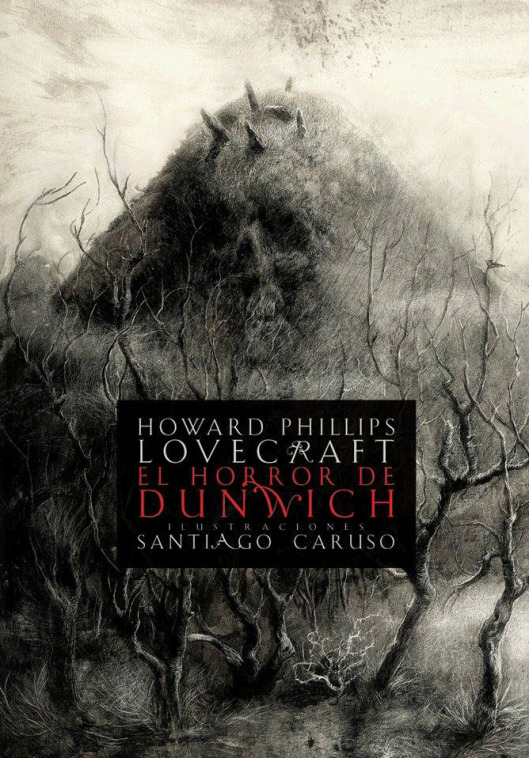
Santiago Caruso interview

31 Wednesday Mar 2021

Posted by asdjfdlkf in Lovecraftian arts

≈ Leave a comment

A new short interview with the Lovecraft illustrator Santiago Caruso, in a journal under Creative Commons Attribution. Which means it might be translated for your small press journal or similar.

New book: The Last Oblivion

30 Tuesday Mar 2021

Posted by asdjfdlkf in Lovecraftian arts, New books

≈ Leave a comment

New to me, The Last Oblivion: Best Fantastic Poems of Clark Ashton Smith, now in a second affordable paperback edition (January 2021) and with a handsome cover re-design. Also listed on Amazon.

Lovecraft, mon amour

29 Monday Mar 2021

Posted by asdjfdlkf in Lovecraft as character, Lovecraftian arts

≈ Leave a comment

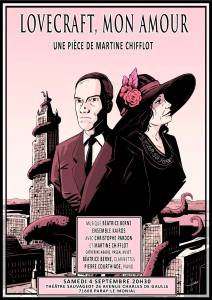
Martine Chifflot’s Lovecraft-Sonia stage play “Lovecraft, mon amour” will be staged in Burgundy, France, in September 2021…

It appears to have premiered(? on Zoom?) in March in Clermont-Ferrand, which is smack in the middle of France about 40 miles west of Lyon…

A fantastic theatrical and musical biopic, written for the centenary (1921-2021) of the meeting of H.P. Lovecraft and Sofia Greene Davis, his only wife. The play immerses the audience in American popular music from the years 1920-47. It opens in 1947 when Sonia learns of the passing of her husband H.P. Lovecraft, ten years after his death. This news upsets her and causes memories to flood back. But then a strange feeling grows — Howard is here [to speak to]. From recollections to confidences, these two people reconstruct the course of their thwarted love, so extraordinary and overwhelming. Will Sonia understand Howard [at last]? Is love stronger than death?

The book version of the play appeared in 2018, and was acclaimed by S.T. Joshi…

Update: Apparently there was a “Vichy” date also, now “postponed to 2022”. A first-try “movie of the play” is also being made and said to be “online soon”.

Ian Miller

28 Sunday Mar 2021

Posted by asdjfdlkf in Lovecraftian arts

≈ Leave a comment

Ian Miller, cover artist for the British Panther paperback Lovecraft editions, has a new original on sale, “Ghast, dissected” along with a variety of similar pen sketches including Poe illustrations.

Two of the Panther Lovecraft book covers can also be had as large fine-art prints.

The “Haunter” art had to be recreated and is not quite the same as the lost original…

There are also several collectable books…

“Creepily insistent rhythms…”

25 Thursday Mar 2021

Posted by asdjfdlkf in Lovecraftian arts, Podcasts etc.

≈ Leave a comment

The Swamp In June and The Frog Pond. Both field recordings from Rhode Island, once issued in vinyl form by the Droll Yankees label and now on Archive.org — since they appear to have been abandoned by whoever may have inherited the rights in the 1970s.

“… there are stretches of marshland that one instinctively dislikes, and indeed almost fears at evening when unseen whippoorwills chatter and the fireflies come out in abnormal profusion to dance to the raucous, creepily insistent rhythms of stridently piping bull-frogs.” — “The Dunwich Horror”.

Droll Yankees was a two-man enthusiast record-label devoted in the 1960s to collecting and releasing “the sounds of New England” before they vanished. There was also a seaport series, including “steamboat leaving Newport on a foggy morning”. There’s probably potential here for a new compilation of the most Lovecraftian of the recordings, perhaps interwoven with some of Lovecraft’s topographical weird poems of New England and travel letters.

Cthulhu idol in 3D

23 Tuesday Mar 2021

Posted by asdjfdlkf in Lovecraftian arts

≈ Leave a comment

New on Archive.org, “Cthulhu from Lovecraft’s sketch” in .STL 3D model form, by Perry Engel. Under Creative Commons Non-Commercial. My render…

Also a “Lovecraft bust” by Philipp Franck. Again as a 3D-printable .STL file. The eyes lack detail, but you might do something with it if you can get it into ZBrush.

Archive.org has newly uploaded a million such Thingiverse items. Mostly .STL, mostly under some form of Creative Commons. At present the thingiverse.com site is unreachable.

The Crossroads

22 Monday Mar 2021

Posted by asdjfdlkf in Lovecraft as character, Lovecraftian arts

≈ 1 Comment

The Crossroads, a new comic featuring Lovecraft in Red Hook, albeit at a hefty $17 in paper (board?) for 24 pages. I’ve never heard of Eventeny, the service listing it, and it seems a strange place to put it. One would have expected it to be on Itch.io’s comics section or IndieGoGo or suchlike. Still, the premise appeals…

New York, 1925. … H.P. Lovecraft, wandering south from Clinton Street into Red Hook. He finds himself standing at water’s edge, face-to-face with Yog-Sothoth … Another night terror… Or just a severe case of writer’s block? … he’ll do just about anything to write the line that unlocks the last barrier …

El sonador de Providence: El legado literario de H. P. Lovecraft y su presencia en los videojuegos (2018)

21 Sunday Mar 2021

Posted by asdjfdlkf in Lovecraftian arts, New books, Scholarly works

≈ 1 Comment

I find I had overlooked a work from 2018, the Spanish book El sonador de Providence: El legado literario de H. P. Lovecraft y su presencia en los videojuegos (‘The Dreamer of Providence: on the literary legacy of H.P. Lovecraft and his influence on videogames’). Published from Seville by Heroes de Papel.

Said when it appeared to be “a detailed review of videogames inspired by Lovecraft’s work, that have appeared since the 1970s.” However the book runs to 320 pages, and seems to be about more than the publisher’s initial “it’s-for-gamers” marketeering might have suggested. The blurb, in approximate translation, gives a fuller picture…

For many the author H.P. Lovecraft (1890-1937) represents the definitive point of connection between the gothic terror tale that culminated in Edgar Allan Poe, and the new weird literature and modern science fiction. We all know his creations such as Cthulhu that have now seeped deep into the culture, thanks in part to their powerful impact on fans. But he also raised important points about the place of mankind in the cosmos, the fear of the possible existence of creatures older than Earth, and the discovery of the absence of gods and protective spirits. Aesthetics also meet philosophy in his work and, when woven into innovative narratives, this admixture allures readers with its dreamlike glitter. The Dreamer of Providence is a detailed study drawing on the latest works on Lovecraft, and also a journey through the works of his own masters and his many correspondents. The aim is to build a new and fuller picture of the author for Spanish readers. The book also analyses the influence his creations have had on the language and mechanics used in videogames, and also board or role-playing games. The book especially considers some of the most important videogames, ones that draw most deeply on his philosophy and aesthetic vision.

A Spanish gamer’s recent review indicates that the videogames take a back seat in the first half, and he comments on the clarity of the writing and the clear conveying of a wealth of new-to-the-Spanish information about Lovecraft and his circle. This half also touches on Lovecraft’s distorted Derleth-ian afterlife. It’s in the second half that the games are considered. Apparently Everybody’s Gone to the Rapture is a Lovecraftian videogame? Well… maybe. It seemed more like a distillation of about 20 old 1970s British sci-fi TV series, to me, with a dash of evangelical Christianity. Some Spanish games are also said to be considered, ones that are rarely if ever considered in the Anglosphere.

Poe’s cottage

18 Thursday Mar 2021

Posted by asdjfdlkf in Lovecraftian arts

≈ Leave a comment

Poe’s cottage in the Bronx, on a windswept night. Poe’s dates and moves are very complex, but said to have been his home from 1844 to 1849.

Lovecraft knew it well, though it was a bit ‘tricked up and touristy’ — having been physically moved and re-landscaped by the 1920s. He came to prefer another Poe place as feeling more authentic to the day-visitor, and also relished Poe’s Richmond when he visited. However, he did write of the cottage… “In that shrine of America’s greatest literary artist, a brooding atmosphere lingers, and unseen wings seem to brush the cheek of the worshipper” — H.P. Lovecraft.

Gou Tanabe’s “The Haunter of the Dark”

16 Tuesday Mar 2021

Posted by asdjfdlkf in Lovecraftian arts

≈ Leave a comment

Gou Tanabe’s 160-page comics adaptation of Lovecraft’s “The Haunter of the Dark” has just reached the French market, having been published in serial form in Japan back in 2016.

Beware Amazon’s apparent link to a Kindle ebook, on the same page. This turns out to be a get-rich-quick shovel-ware edition of Lovecraft that has nothing to do with Tanabe, and is just the usual dodgy link being added by Amazon’s indiscriminate dumb-bots. You would have thought that a huge, rich, and AI-savvy corporation like Amazon would have cracked this mis-selling problem by now. But no.

‘Picture Postals’ from Lovecraft: Tentacles over Brooklyn

12 Friday Mar 2021

Posted by asdjfdlkf in Historical context, Lovecraftian arts, New discoveries, Picture postals

≈ 2 Comments

Tentacles in the Brooklyn Museum, 1931. Found while flipping through Science and Invention magazine for March 1931, newly on Archive.org. An initial search suggested there was also a giant squid, as the modern book Brooklyn Museum of Art: Building for the Future talks of their having once been natural history galleries and a specific section for… “Invertebrates housing not only display cases of specimens but also large models of a squid and an octopus suspended overhead”.

The first hall, moved wholesale to another hall and re-opened by 1928. This is as Lovecraft would have known it until c. 1927.

The first question was, did H.P. Lovecraft know the Museum from 1922 onward? Yes, of course he did. He saw it as a tourist first, and then ‘did it’ systematically and thoroughly later in 1922. Its galleries and the adjacent Japanese Gardens became a regular haunt when he was in New York. Another question was, was it always the “Brooklyn Museum” or did it have another or formal name? Indeed it did, being also known as the Brooklyn Institute. Pictures? Yes, here is a rare eye-level card showing it about a decade earlier. Most of the other cards are later, gaudily coloured and vigorously airbrushed.

Were there other attractions there? Well, a big attraction was the cost. Entry was free on most days, and the place was also open in the evening on Thursdays. By circa 1930 he probably knew the place well, but he was also well aware of the new items being accessioned. He did the Museum solo in May 1930, seeing the new ‘Colonial furniture and interiors’ wing which newly offered complete rooms arranged for Lovecraft’s lingering delight. In 1933 he “…did the Brooklyn Museum with Sonny” — Lovecraft letter to Morton, 12th January 1933, when they focussed on the “Dutch” section. I would suspect that this may also have been new.

But what of the tentacles, and the “Cthulhu” period? Regrettably there appears to be a lack of vintage postcards from the Museum, showing the interior, still less the Invertebrates section. Still there is one negative of a record-picture of the Hall of Invertebrates in 1928. Below I have newly enlarged and colorised it. The picture makes the room appear smaller than it was. The cabinets are man-high, not at child-level as they might be today.

1928, after removal from the second floor, east wing, to the first floor, west wing.

The hanging giant octopus was there before “Call of Cthulhu” was written, as confirmed by the book Guide to the Nature Treasures of New York City (1917). Also the giant squid…

Models of the octopus and squid occupy the last wall case at this end of the hall and should be compared with the giant octopus and squid suspended from the center ceiling and the marine painting above.

Thus it would be plausible to suggest that this (and the squid) could have played into Lovecraft’s conception of Cthulhu… “The cephalopod head was bent forward, so that the ends of the facial feelers brushed the backs…”.

1920 saw the addition of a ‘Pacific case’, a fine diorama with glass models. Possibly these were in the closed wooden cases seen at the back of the 1928 photo above. As such the picture below exemplifies the sort of detailed and accurate ‘undersea’ scene available in this Hall.

Here is the full description of what Lovecraft would have seen there circa 1922. This also notes the microscope views and many glass re-creations…

“… invertebrates and plants in the eastern galleries [on the “second floor” until 1927, the on the “first floor, west wing” after that]… the Hall of Invertebrates of the Brooklyn Museum (Room 7 on plan) is next entered, where the sponges and corals, worms, mollusks, crustaceans and other types of animals lacking a backbone (invertebrates) are exhibited.

Among this invertebrates are the sponges and corals, from all parts of the world, are systematically arranged in wall cases on the west, north and south sides of the hall, and in various floor cases special groupings have been made of sponges and corals of particular beauty or interest or of unusual size.

Other invertebrates are specimens of the Protozoa, or one-celled animals, the simplest forms of animal life, are shown in the first floor case on the left (north) side of the hall, by the aid of micro-scopes, and also by enlarged glass models. The sponges are the simplest forms of animals whose bodies consist of more than one cell, for the cells, although arranged in two layers, act each independently. Varieties of lime sponges, glass or silicious sponges and horny sponges are shown, as well as fresh-water, deep-sea and boring sponges, and sponge spicules under the microscope.

Models of coral, showing the anatomy of the polyps and their relation to one another, are seen in the second floor case on the left, which contains also models of the freshwater polyp hydra and other related forms. In the adjacent wall cases, specimens of mushroom, staghorn and brain coral and other forms are shown. A very large specimen of brain coral from the Bahamas and a specimen of staghorn coral, one of the largest pieces of branching coral ever collected, are exhibited in floor cases in the center of the hall.

Among the mural paintings in this hall of the Brooklyn Museum, representing some of the more striking invertebrates as they appear in life, is one depicting a coral reef in a tropical sea, and on the south wall in the center of the hall a large window group shows a coral reef close at hand and the animals that frequent it. Other mural paintings show an octopus at home, the formation of a mangrove swamp and other typical shore scenes of the Atlantic coast. Proceeding down the left side of the hall, the starfish and sea urchin families occupy the next case, and the development and anatomy of starfishes and sea urchins are illustrated by drawings, dissections, models and specimens of various ages. Abnormal specimens and specimens showing regeneration of rays in a starfish also are shown. The various types of sea urchins occupy the eastern side of the case. The worms in the next cases include the serpulid worm of the sea, the horsehair worm and a model enlarged and dissected; the branchiopods, related to both worms and mollusks, are shown here.

Crustaceans, in the next case of invertebrates, are represented by some one hundred species, including the crayfish with an enlarged model of dissection to show the anatomy, and a section of mud from a river bank showing a crayfish group at home, together with crabs, lobsters, shrimps, barnacles, horseshoe crabs and others. In the wall case at this point, the giant spider crab and the locust lobster of Japan, the largest species of living crustaceans, are shown.

The systematic series of shells, which includes characteristic examples of the principal divisions of mollusks and gives a general impression and synopsis of this group of animals at the Brooklyn Museum, is arranged in two floor cases on the right (southern) side of the hall at this (western) end. The largest specimens are in the upper part of the case, and the extensive study collections are arranged systematically in drawers below. Fine specimens of the nautilus and argonaut, representing the higher mollusks, may be seen, also the paper nautilus of Japan; a particularly interesting specimen is the naked mollusk from Naples, which appears to have no shell because the shell is internal.

An exhibit of land snails and of shells from Lake Tanganyika occupies a position in the systematic series of shells and shows specimens of the eggs of marine mollusks. The ship-boring bivalve teredo and its work in destroying ship bottoms are exhibited in the case next on the east; sections of wood show the damage done and method of work, and photographs show the anatomy of the animal. Other boring mollusks are exhibited here also, and in the upper part of the case are habitat groups of the edible snails of southern Europe. An exhibit of pearl shells from the pearl fisheries …

The marine animals of the coast of Long Island and New England, from high tide to a depth of 7,200 feet, form an interesting exhibit in the last floor case on this side. Among the specimens may be mentioned the oyster drill, showing the drilled shells, egg cocoons and stages of growth of the animal, and mounted specimens of the pipefish, sand flea and other shore creatures. Models of the octopus and squid occupy the last wall case at this end of the hall and should be compared with the giant octopus and squid suspended from the center ceiling and the marine painting above.

Passing into the Insect Hall (Room 8 on plan) …”

Ah, the Insect Hall. What monstrous wonders might he have seen through microscopes in there…?

← Older posts
Newer posts →


Please become my patron at www.patreon.com/davehaden to help this blog survive and thrive.

Or donate via PayPal — any amount is welcome! Donations total at Easter 2025, since 2015: $390.

Archives

  • February 2026
  • January 2026
  • December 2025
  • November 2025
  • October 2025
  • September 2025
  • August 2025
  • July 2025
  • June 2025
  • May 2025
  • April 2025
  • March 2025
  • February 2025
  • January 2025
  • December 2024
  • November 2024
  • October 2024
  • September 2024
  • August 2024
  • July 2024
  • June 2024
  • May 2024
  • April 2024
  • March 2024
  • February 2024
  • January 2024
  • December 2023
  • November 2023
  • October 2023
  • September 2023
  • August 2023
  • July 2023
  • June 2023
  • May 2023
  • April 2023
  • March 2023
  • February 2023
  • January 2023
  • December 2022
  • November 2022
  • October 2022
  • September 2022
  • August 2022
  • July 2022
  • June 2022
  • May 2022
  • April 2022
  • March 2022
  • February 2022
  • January 2022
  • December 2021
  • November 2021
  • October 2021
  • September 2021
  • August 2021
  • July 2021
  • June 2021
  • May 2021
  • April 2021
  • March 2021
  • February 2021
  • January 2021
  • December 2020
  • November 2020
  • October 2020
  • September 2020
  • August 2020
  • July 2020
  • June 2020
  • May 2020
  • April 2020
  • March 2020
  • February 2020
  • January 2020
  • December 2019
  • November 2019
  • October 2019
  • September 2019
  • August 2019
  • July 2019
  • June 2019
  • May 2019
  • April 2019
  • March 2019
  • February 2019
  • January 2019
  • December 2018
  • November 2018
  • October 2018
  • September 2018
  • August 2018
  • August 2015
  • July 2015
  • April 2015
  • March 2015
  • February 2015
  • January 2015
  • December 2014
  • November 2014
  • October 2014
  • September 2014
  • August 2014
  • July 2014
  • June 2014
  • May 2014
  • March 2014
  • February 2014
  • January 2014
  • December 2013
  • November 2013
  • October 2013
  • September 2013
  • August 2013
  • July 2013
  • June 2013
  • May 2013
  • April 2013
  • March 2013
  • February 2013
  • January 2013
  • December 2012
  • November 2012
  • October 2012
  • September 2012
  • August 2012
  • July 2012
  • June 2012
  • May 2012
  • April 2012
  • March 2012
  • February 2012
  • January 2012
  • December 2011
  • November 2011
  • October 2011
  • September 2011
  • August 2011
  • July 2011
  • June 2011
  • May 2011
  • April 2011
  • March 2011
  • February 2011
  • January 2011
  • December 2010
  • November 2010
  • October 2010
  • September 2010
  • August 2010
  • July 2010

Categories

  • 3D (14)
  • AI (70)
  • Astronomy (70)
  • Censorship (14)
  • de Camp (7)
  • Doyle (7)
  • Films & trailers (101)
  • Fonts (9)
  • Guest posts (2)
  • Historical context (1,095)
  • Housekeeping (91)
  • HPLinks (74)
  • Kipling (11)
  • Kittee Tuesday (92)
  • Lovecraft as character (58)
  • Lovecraftian arts (1,626)
  • Lovecraftian places (19)
  • Maps (70)
  • NecronomiCon 2013 (40)
  • NecronomiCon 2015 (22)
  • New books (966)
  • New discoveries (165)
  • Night in Providence (17)
  • Odd scratchings (984)
  • Picture postals (276)
  • Podcasts etc. (431)
  • REH (184)
  • Scholarly works (1,469)
  • Summer School (31)
  • Unnamable (87)

Get this blog in your newsreader:
 
RSS Feed — Posts
RSS Feed — Comments

H.P. Lovecraft's Poster Collection - 17 retro travel posters for $18. Print ready, and available to buy — the proceeds help to support the work of Tentaclii.

Proudly powered by WordPress Theme: Chateau by Ignacio Ricci.