A new crowdfunding campaign on IndieGoGo, The Call of Lovecraft…
“an augmented reality walking tour of Providence inspired by the vision of H.P. Lovecraft, with historical, literary, and fantasy layers.”


14 Sunday Jul 2013
Posted in Lovecraftian arts
A new crowdfunding campaign on IndieGoGo, The Call of Lovecraft…
“an augmented reality walking tour of Providence inspired by the vision of H.P. Lovecraft, with historical, literary, and fantasy layers.”
14 Sunday Jul 2013
Posted in 3D, Lovecraftian arts
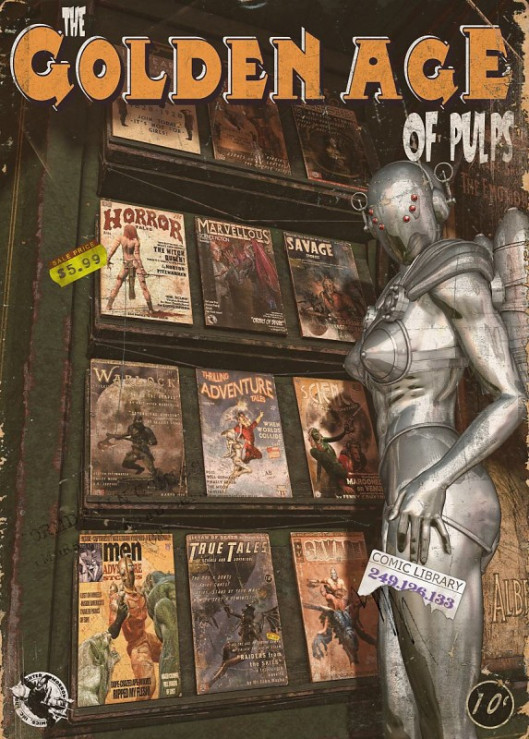
Super faux pulp cover by Paul Francis, showing his other faux covers, all made with Poser Pro and Photoshop.
03 Wednesday Jul 2013
Posted in Lovecraftian arts, New books
Interesting new work of fiction, due in October. The Natural Dissolution of Fleeting-Improvised-Men: The Last Letter of H.P. Lovecraft by Gabriel Blackwell. Seems to be inspired by Lovecraft’s stream-of-consciousness style sections sometimes to be found in the Letters, usually in a reverie over a particular landscape he’s experienced. Only Blackwell pins the style to performative delvings into the nature of the self. The new book is 194 pages, complete with faux annotations and precise typographical design. Sounds like a fascinating little fabulation.
“I found myself no longer at my desk and without my body, sprung whole from the womb of human existence and cast out into the shrieking wilds of the barren, ghoulish fifth dimension once more… Instead of unconsciousness, it was now a purer sort of consciousness, I thought, the roaming of a dreaming brain without any of the snares set by the nerves, so that I felt as though I had no body, as though my vision had no connection to the eye.”

[ Hat-tip for quote: Whimsy of Creation ]
02 Tuesday Jul 2013
Posted in Lovecraftian arts
NecronomiCon Providence 2013, the poster…

01 Monday Jul 2013
Posted in Historical context, Lovecraftian arts, New books, Scholarly works, Summer School
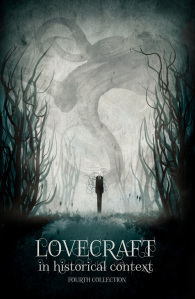
Available now in paperback… my latest book collection of essays:
Lovecraft in Historical Context: fourth collection.
A book of essays is now an annual tradition with me, and this year’s volume weighs in at 304 pages, 76,000 words. Contains many expanded and footnoted versions of blog posts which first appeared here — for instance the essay “The terribly nice old ladies” zooms up to 12,000 words as I delve into the source landscape of “The Dunwich Horror”. Long-time Lovecraft researchers may be especially interested in 4,000 words of highly detailed scholarship which lays out the complete circus/theatrical and movie executive career of Arthur Leeds prior to the Kalem Club, accompanied by the first known photograph of him and a newly discovered Leeds short story that is an obvious inspiration for “Cool Air”.
Enjoy!
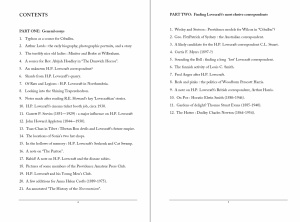
PART ONE: General essays
1. Typhon as a source for Cthulhu.
2. Arthur Leeds : the early biography, photographic portraits, and a story.
3. The terribly nice old ladies : Miniter and Beebe at Wilbraham.
4. A source for Rev. Abijah Hoadley in “The Dunwich Horror”.
5. An unknown H.P. Lovecraft correspondent?
6. Shards from H.P. Lovecraft’s quarry.
7. Of Rats and Legions : H.P. Lovecraft in Northumbria.
8. Looking into the Shining Trapezohedron.
9. Notes made after reading R.E. Howard’s key ‘Lovecraftian’ stories.
10. H.P. Lovecraft’s cinema ticket booth job, circa 1930.
11. Garrett P. Serviss (1851—1929) : a major influence on H.P. Lovecraft.
12. John Howard Appleton (1844—1930).
13. Tsan-Chan in Tibet : Tibetan Bon devils and Lovecraft’s future empire.
14. The locations of Sonia’s two hat shops.
15. In the hollows of memory : H.P. Lovecraft’s Seekonk and Cat Swamp.
16. A note on “The Paxton”.
17. Rabid! A note on H.P. Lovecraft and the disease rabies.
18. Pictures of some members of the Providence Amateur Press Club.
19. H.P. Lovecraft and his Young Men’s Club.
20. A few additions for Anna Helen Crofts (1889-1975).
21. An annotated “The History of the Necronomicon”. — sample
PART TWO: Finding Lovecraft’s most elusive correspondents
1. Wesley and Stetson : Providence models for Wilcox in “Cthulhu”?
2. Geo. FitzPatrick of Sydney : the Australian correspondent.
3. A likely candidate for the H.P. Lovecraft correspondent C.L. Stuart.
4. Curtis F. Myers (1897-?)
5. Sounding the Bell : finding a long ‘lost’ Lovecraft correspondent.
6. The fannish activity of Louis C. Smith.
7. Fred Anger after H.P. Lovecraft.
8. Reds and pinks : the politics of Woodburn Prescott Harris.
9. A note on H.P. Lovecraft’s British correspondent, Arthur Harris.
10. On Poe : Horatio Elwin Smith (1886-1946).
11. Gardens of delight? Thomas Stuart Evans (1885-1940).
12. The Hatter : Dudley Charles Newton (1864-1954).
Thanks for the cover art to Cotton Valent and Apolonis Aphrodisia.
24 Monday Jun 2013
Posted in Lovecraftian arts, Odd scratchings
A comment from Robert, here at this blog, which I think deserves to be worked up as little guest post…
Robert of Innsmouth Mania in France, writes:—
Here is a Web link to details of a very strange event which occurred in France over a decade ago, in 2001. The article is at http://clefargent.free.fr/wb_7rev.php. It is in French, but I will summarize it for you. It’s about an email which circulated on the Web for a few weeks, accompanied by a picture (which you can see on the website). This email said:
“Mail to all Lovecraft fans. It has been discovered recently in a Parisian bookseller, a copy of an unknown novel of Lovecraft, translated in French! This is the cover. Translation was made by Gabriel Lautrec, correspondent of R.H. Barlow, who has translated it at the end of the 1930’s. You will find the entirety of the text soon, on our website, which is under construction at the moment. The address will be given to you in another email soon.”
And then there was silence…
The title was the Club of 7 Dreamers, a book that Lovecraft thought of writing at some point (S.T. Joshi and others have noted it), but which he never did it. Gabriel Lautrec really existed and was indeed a known translator. The deep analysis of the cover showed that it was not a cut-and-paste made in Photoshop — it seems that the guy really printed the cover. But there was no trace of any such book in the catalog of the editor, nor in the archives of the French National Library, which is the equivalent of your British Library or Library of Congress.
It’s a fake, but a really good one, since in those days it would have taken months for people to search and get all the information, and then eventually conclude it was a prank. But during this time France had produced an unknown book by HPL! Like the title, we dreamed…

18 Tuesday Jun 2013
Posted in Historical context, Lovecraftian arts
I argued recently — in an essay in my book Walking with Cthulhu (free as a PDF) — that New York itself was the metaphorical ‘alchemical base’ from which Lovecraft imaginatively transmuted his conception of the city of R’lyeh. Sadly I hadn’t then stumbled on the following superb quote from the Selected Letters (III, p.122), which would have served as further good evidence. To Moe in 1930, Lovecraft remembers the New York he had seen when first being guided around it by Everett McNeil, seemingly an expert in negotiating the slum and rough areas (probably due to his contact with the boy-life of the city, especially around Hell’s Kitchen). Here, for Lovecraft, is the city seemingly poised between his first Dunsanian dream-vision of it, and the darkly monstrous fever-dream of alienage that it later became for him…
“… Cyclopean phantom-pinnacles flowering in violet mist, surging vortices of alien life coursing from wonder-hidden springs in Samarcand and Carthage and Babylon and Ægyptus, breathless sunset vistas of weird architecture and unknown landscape glimpsed from bizarrely balustraded plazas and tiers of titan terraces, glittering twilights that thickened into cryptic ceilings of darkness pressing low over lanes and vaults of unearthly phosphorescence, and the vast, low-lying flat lands and salt marshes […] winds stirred the sedges along sluggish inlets brooding gray and shadowy and out of reach of the long red rays of hazy setting suns. […] Morbid nightmare aisles of odorous Abaddon-labyrinths and Phlegethontic shores — accursed hashish-dreams of endless brick walls budging and bursting with viscous abominations and staring insanely with bleared, geometrical patterns of windows — confused rivers of elemental, simian life with half-Nordic faces twisted and grotesque in the evil flare of bonfires set to signal the nameless gods of dark stars — sinister pigeon-breeders on the flat roofs of unclean teocallis, sending out birds of space with blasphemous messages for the black, elder gods of the cosmic void — death and menace behind furtive doors […] fumes of hellish brews concocted in obscene crypts …” (Selected Letters III, p.122)


Above, from top: Joseph Pennell (1858-1926), “The Bay, New York”; “Night lights of Manhattan”; “Towers at Night”; “From Cortlandt Street Ferry”, “The Things that Tower” (New Yorker earlier version of “From Cortlandt Street Ferry”); “Brooklyn Bridge at Night”.
18 Tuesday Jun 2013
Posted in Lovecraftian arts
Poster for the H.P. Lovecraft Film Festival in Los Angeles 27th-29th September 2013 at the Warner Grand Theater in San Pedro. Riffing off Lovecraft’s job in a ticket-booth, via Miyazaki’s Spirited Away.

Artist: Jason Thompson. [ Hat-tip to D. Bethel, in regards to identification of the poster artist. The festival really should have allowed him a signature on the poster. ]
15 Saturday Jun 2013
Posted in Lovecraftian arts
The New York Review of Science Fiction has published a Web and English-language version of “A photographic exploration of the world of H. P. Lovecraft”, by Lomig Perrotin. The series was displayed in November 2012 at Galerie 154: at 154 rue Oberkampf, 75011, Paris.
“There is resistance, opposition, even rebellion in the author’s inability to testify about the cosmic horrors that seem to watch humanity from beyond. To convey this resistance, I needed to explore the limits of the photographic medium. So I used cliché-verre, a technique of etching photographic material to create a mixed negative, blending the realistic aspect of photography with the graphic effects of drawing. Neither photographs alone nor illustration could reproduce this particular blend of horror and oneirism that characterizes the work of the master of Providence.”


Looks great, even on a digital screen. They must look very fine when printed matt at perhaps 8″ x 8″ and placed in glass-less frames. ‘Photography meets woodcuts, via rough etchings’ seems a very fitting style for illustrating Lovecraft. And I’m pleased to hear a few of the series will be hopping across the pond to showing up at NecronomiCon 2013…
“Mr. Perrotin’s work will be presented at the Providence Art Club from August 13 to September 6 as part of NecronomiCon in Providence, RI. Mr. Perrotin will also be attending the convention in person in late August.”
31 Friday May 2013
Posted in Lovecraftian arts, New books
Hippocampus has announced the new S.T. Joshi novel starring H.P. Lovecraft, in an imagined plot set in 1914. The Assaults of Chaos: a novel about H.P. Lovecraft is initially in a limited edition of only 500 in hardcover. Let’s hope there’s a later paperback, and even a affordable Kindle edition, to keep it available.

28 Tuesday May 2013
Posted in Lovecraftian arts, Odd scratchings
Proposal for a fairly simple non-RPG gamer’s fun Lovecraft board-game…
The board-game to be based on Lovecraft’s many long night-walks in New York, walks made frequently when he lived in the city for several years in the mid 1920s. Devise a simplified Monopoly-like version of New York City circa 1926, based on appropriate places found on maps and guides to the city at that time, and in the Lovecraft letters etc. The board-game would then have Lovecraft and his New York friends (maybe also a few cats from Ulthar, Detective Malone from “Red Hook”, and the old man from “He”) encountering mysterious atmospheres in NYC locations as they circle the squares at the edge of the board. The “hall of mirrors in Coney Island at night” would be an example of the sort of location to use (Lovecraft visited Coney Island several times), as well as the more obvious graveyards and museums etc. By landing on and answering knowledge questions about these places the players collect cards. When they have a certain combination of cards, this lets them into the tunnels or crypts or abandoned subway stations on the board. All tunnels emerge in the raised centre of the board — where players have a dream-encounter / psychic battle with Cthulhu. Perhaps they have to escape from the dream that Cthulhu is ‘sending’ to them. Perhaps Cthulhu is hanging off the Empire State Building, to which he is gripping King Kong-like. Players can only escape him via answering strange riddles, which would fit with Lovecraft’s concern with unspeakability and madness. The goal of the game would be to complete a tour of the Lovecraftian places in New York at night without going insane from too many Cthulhu dream encounters.
Feel free to take this idea and run with on Kickstarter. Just send me 10% of the take 🙂
26 Sunday May 2013
Posted in Lovecraftian arts

