• About
  • Directory
  • Free stuff
  • Lovecraft for beginners
  • My Books
  • Open Lovecraft
  • Reviews
  • Travel Posters
  • SALTES

Tentaclii

~ News & scholarship on H.P. Lovecraft

Tentaclii

Category Archives: Historical context

Lovecraft University

30 Sunday Jun 2013

Posted by asdjfdlkf in Historical context, Scholarly works, Summer School

≈ Leave a comment

Last month Mark Bauerlein peeked into the padded cell of the contemporary university English Dept. His article, in The Chronicle of Higher Education, took a look at exactly what gets taught in first-year English classes…

The fundamentals of the tradition (Shakespeare, Milton, Romantic poets, modernist poets) are missing [from the basic introductory English courses in universities], and so are the fundamentals of literary reading (prosody, rhetoric, figurative language, structure, genre, etc.) Here we see the internal destruction of English as a field. […] Unlike other disciplines, English no longer distinguishes degrees of difficulty and significance. It turns an introductory course into something else — a hasty acquaintance with complex ideas such as différance [Derrida], a quick indoctrination in complex identity matters, a hip involvement with edgy novels — and most students who receive it, I would guess, discern the decadence of the enterprise.

I’ve noted in passing the strange insularity that this vanguardist approach seems to have caused in the Gothic Studies wing of English Literature. Wilum Pugmire wrassled a few days ago with the crude Invasion of the Body Snatchers-style pointing-and-screaming about race, which sometimes results from such courses…

I am searching this book of 468 pages [Lovecraft Remembered], which is made up mostly of memoirs of H.P. Lovecraft by people who knew him as personal friend or correspondent, for mention of his racism. I am grown tired of this new dreary fixation of commentary on Lovecraft that identifies him primarily as a racist writer. I find such emphasis misguided to the point of perversity. Lovecraft’s racism was grotesque and ignorant, and it echoes indeed throughout his fiction; but there is much more to Lovecraft’s genius that is far more vital and interesting. This new school of judgmental critics, who emphasis first and foremost that Lovecraft was racist, and then follow this up to explain why he was “a good bad writer,” shews the absurdity and ineffectiveness of much [mainstream academic] modern Lovecraft critique, critique that reveals far more ignorance regarding Lovecraft and his work than anything else.

In defence of mainstream academia, there is a steady flow of sound dissertations and theses each year (though only sometimes from straight Eng Lit departments, and then usually from outside America). And now a small crop of Lovecraft course module-documents are available online, mostly for one-semester courses being taught mostly in American universities. I occasionally come across these course documents while searching the Web, and they seem encouraging. Most seem well designed and at least minimally aware of the historical context (if only the context of the genre’s tradition). Though I’d imagine that more than a few of these are the products of enthusiastic hourly-paid visitor or adjunct lecturers, rather than cautious faculty. How well they play in the classroom I have no idea. I guess they encounter people lacking in a historical framework and fundamentally unequipped in actual techniques of doing in-depth historical scholarship, something that seems to me implicitly required to adequately study the political dimensions of historical texts and authors. If a student or even their teacher has no idea of the actual historical structures and trajectories of the racial categories and regrettable racisms of Lovecraft’s time, then the default politically-acceptable ‘year zero’ approach will be the only one available to them.

Seems to me that this is part of a wider erasure of history from the study and understanding of creativity — something evidenced by the shrinkage or closure of art history depts, and an increasing ‘the history doesn’t matter much’ approach in other departments teaching creative students. That’s bound to have a snowball effect, as graduates of these courses move up the career chain, being less likely to value the history side of teaching because they lack a real grounding in it themselves. And management doesn’t push history, because the students don’t like being asked to do historical essays and forcing them to do it increases the student drop-out and failure-rate in the department. The rise of joint Masters degrees (History and English, etc) may help somewhat, but some radical bunker-busting among the disciplines would probably be needed to help such courses make a useful combined impact on a student in the nine months available to a one-year Masters course.

These various factors make it highly unlikely that a young mainstream academic of today will invest the time and expense needed to even begin to become a fair Lovecraft scholar (several years of close reading, of books and journals that could cost $2,000 or more to amass). In a system dominated by career advancement and management strictures, mainstream academics tend to need ‘quick wins’ that ‘tick the boxes’ and add ‘impact’ to the key assessments on which departmental funding depends.

These and other barriers seem destined to further bifurcate the field into: i) long-standing independent Lovecraft scholars and philosophers, operating mostly outside the academy, and ii) mainstream academic ‘dabblers’ who dip into Lovecraft either to make a quick buck for their publisher or to make their slim young C.V. a little more hip — but who consequently get basic things wrong and thus are chuckled at and ignored or scourged by the Lovecraftians. That said, I recognise that I started as a ‘dabbler’ myself, and know that — if one keeps at it — then it can lead to better things.

What is to be done? In the age of the virtual classroom, video lectures and Skype, one wonders… could Lovecraft scholars start a self-funding online ‘Lovecraft University 101’ summer school, for say six weeks or so each year? Perhaps with the aid of the likes of the turn-key infrastructure on offer at Coursera or Udacity or edX. I’ll contribute a headmaster’s mortar-board for Robert Price.

Blue Pencil Club 1916

23 Sunday Jun 2013

Posted by asdjfdlkf in Historical context, New discoveries

≈ 1 Comment

blue-pencil-1916

Many of the Lovecraft’s amateur press friends come together in Brooklyn in February 1916, for an annual dinner. Brooklyn NY Daily Eagle.

Goodenough’s farmhouse in colour

23 Sunday Jun 2013

Posted by asdjfdlkf in Historical context, New discoveries

≈ 3 Comments

A colour painting of the farmhouse of Arthur H. Goodenough, the elderly amateur press man and friend of Lovecraft living near Brattleboro…

From the auctioneer: “D. POWERS: PASTEL PAINTING OF A COLONIAL HOME IN BRATTLEBORO VT (GOODENOUGH FARM)”

lot153

lot153-2

From the same auctioneer: “BERT G. AKLEY, OIL ON ARTISTS BOARD OF AN INDIAN MAIDEN PADDLING A BIRCH BARK CANOE BY MOONLIGHT 1917”. This is by the rustic naif artist-recluse Bert Gilman Akley (1871-1946) who Lovecraft visited at his farm and who gave his name to Akeley in “The Whisperer in Darkness”. Although a local article suggests…

“For Akeley’s home, however, Lovecraft seems to have drawn from his experience visiting another isolated Vermonter, the poet Arthur Henry Goodenough.”

A monstrous Prospect Street

22 Saturday Jun 2013

Posted by asdjfdlkf in Historical context

≈ Leave a comment

A monstrously large scan of a sharp 8″ x 10″ photographic negative showing Prospect Street in 1906, in which you can almost see every pebble and leaf.

4a13603apreview

From the same super-large set, Brown University and the Crawford St. Bridge one the bridges Lovecraft would have crossed from the East Side into the city centre. Anyone know if there are more from this set online?

Chris Perridas has postcard views showing the views of the commercial river from Crawford St. Bridge.

[ Hat-tip: Robert ]


Update: I colorised it…

prospect_st_providence_1906

Update: Postcard version from eBay, also dated 1906 thus confirming the date…

Lovecraft’s librarian

20 Thursday Jun 2013

Posted by asdjfdlkf in Historical context

≈ 2 Comments

Just before his return to Providence from his sojourn in New York City, in discussing his threadbare finances, Lovecraft notes in a letter that his Providence library card is set to expire. He notes that his stacks card (presumably the card that grants him access to the library stacks, meaning the storeroom) for the library has already expired, but that the librarian…

   “good old William E. Foster has been tolerant of lapses before” (Lord of a Visible World, p.286)

The proximity to the discussion of money appears to suggest that a small annual fee was paid for membership of the public library?

There’s a detailed short biography of Lovecraft’s librarian heading the description of the William Eaton Foster Papers collection. It turns out that William Eaton Foster (1851-1930) was the driving force of the Providence Public Library from its inception, and a pioneer in many aspects of the modern library. He once even rivalled Dewey in devising a general classification system. The biography omits that he was also… “an admirer of the Roman poet Horace and collector of his works”, something which would have endeared him to Lovecraft-the-Roman. Foster retired February 1930, the same year as this photograph of him…

William_E_Foster_Providence_1930

And as he may have looked to the young Lovecraft…

His book The first fifty years of the Providence public library, 1878-1928 is now available free online.

Everett McNeil in the movies

18 Tuesday Jun 2013

Posted by asdjfdlkf in Historical context

≈ 2 Comments

More on Lovecraft’s good New York friend and Kalem Club anchor member Everett McNeil, specifically his career as a movie scriptwriter in New York circa 1912-1917, before the movie industry shipped out to California. I previously briefly identified this possibility in my book Walking with Cthulhu.

Moving Picture World credited him as writer with Selig Polyscope Co. 1913; and Eclair Film Co., Inc, 1914; and also has an article by him on “How to Write a Photo-Play” (i.e.: a cinema script) in July 1911 which a contemporary book on movie history called a “prescient” anticipation of the later film-writing manuals. The date of this suggests he may have had a career in the movies that began before 1912. This appears to be confirmed by a comment about the length of his career in The Writer’s Monthly (Jan 1916)…

    “For an example of careful work in scenario writing — resulting in the director’s following each scene almost exactly as written — I should like photoplay fans and photoplaywrights to keep an eye open for the forthcoming Heine-Edison five-reel feature drama, “The Crucifixion of Philip Strong.” [aka The Martyrdom of Philip Strong, a Paramount feature-film] It is founded on the well-known novel of that name by Rev. Charles M. Sheldon, and is what I call a thoroughly well prepared script. Through an error, credit for the screen adaptation was given to Francis M. Neilson. Full credit for the screen version is due to Everett McNeil, a photoplaywright and fiction writer of long experience, who has been selected by Mr. L. W. McChesney to devote himself exclusively to the production of adaptations and original stories for director Richard Ridgely.” [my emphasis]

This led me to find what has now become a fairly full listing for Everett McNeil’s movie credits on IMDB, which I’m pretty sure wasn’t there when I was writing Walking with Cthulhu:

1917 A Lucky Slip (short) (scenario)
1917 Builders of Castles (picturizer)
1917 The Master Passion (scenario / as Everett MacNeil)
1916 The Martyrdom of Philip Strong (story)
1916 When Hooligan and Dooligan Ran for Mayor (short) (story)
1915 The Making Over of Geoffrey Manning (story)
1914 The Price Paid (short) (story)
1913 The Beaded Buckskin Bag (short) (writer)
1912 A Messenger to Kearney (short) (story)
1912 When the Heart Rules (short) (story “The Sealskin Overcoat”)
1912 A Cowboy’s Best Girl (short) (scenario)

So when Lovecraft knew him in New York, McNeil was less than ten years away from a fairly long movie career. Which, one assumes, ended (just as McNeil was about to break into regular features work) due to the effects of the First World War and/or the move of the New York movie industry out to California?

New York and R’lyeh

18 Tuesday Jun 2013

Posted by asdjfdlkf in Historical context, Lovecraftian arts

≈ 1 Comment

I argued recently — in an essay in my book Walking with Cthulhu (free as a PDF) — that New York itself was the metaphorical ‘alchemical base’ from which Lovecraft imaginatively transmuted his conception of the city of R’lyeh. Sadly I hadn’t then stumbled on the following superb quote from the Selected Letters (III, p.122), which would have served as further good evidence. To Moe in 1930, Lovecraft remembers the New York he had seen when first being guided around it by Everett McNeil, seemingly an expert in negotiating the slum and rough areas (probably due to his contact with the boy-life of the city, especially around Hell’s Kitchen). Here, for Lovecraft, is the city seemingly poised between his first Dunsanian dream-vision of it, and the darkly monstrous fever-dream of alienage that it later became for him…

    “… Cyclopean phantom-pinnacles flowering in violet mist, surging vortices of alien life coursing from wonder-hidden springs in Samarcand and Carthage and Babylon and Ægyptus, breathless sunset vistas of weird architecture and unknown landscape glimpsed from bizarrely balustraded plazas and tiers of titan terraces, glittering twilights that thickened into cryptic ceilings of darkness pressing low over lanes and vaults of unearthly phosphorescence, and the vast, low-lying flat lands and salt marshes […] winds stirred the sedges along sluggish inlets brooding gray and shadowy and out of reach of the long red rays of hazy setting suns. […] Morbid nightmare aisles of odorous Abaddon-labyrinths and Phlegethontic shores — accursed hashish-dreams of endless brick walls budging and bursting with viscous abominations and staring insanely with bleared, geometrical patterns of windows — confused rivers of elemental, simian life with half-Nordic faces twisted and grotesque in the evil flare of bonfires set to signal the nameless gods of dark stars — sinister pigeon-breeders on the flat roofs of unclean teocallis, sending out birds of space with blasphemous messages for the black, elder gods of the cosmic void — death and menace behind furtive doors […] fumes of hellish brews concocted in obscene crypts …” (Selected Letters III, p.122)

the-bay-nyc-pennell

pennell-night-lights-nyc

towers_at_night

from_courtland_st._ferry

tumblr_mc6c0zK0EU1rxckino1_500

pennellbbnight

Above, from top: Joseph Pennell (1858-1926), “The Bay, New York”; “Night lights of Manhattan”; “Towers at Night”; “From Cortlandt Street Ferry”, “The Things that Tower” (New Yorker earlier version of “From Cortlandt Street Ferry”); “Brooklyn Bridge at Night”.

Mr Nickerson’s meteor

18 Tuesday Jun 2013

Posted by asdjfdlkf in Historical context

≈ Leave a comment

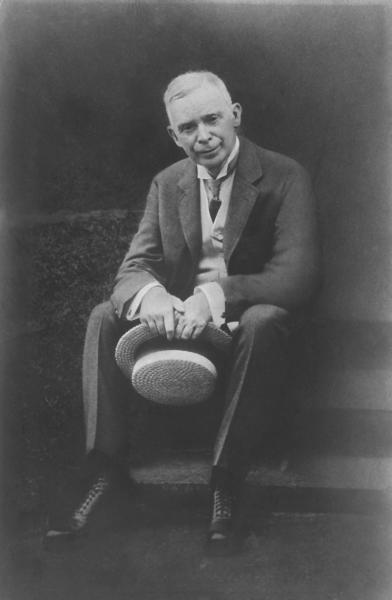
Lovecaft’s uncle Edward F. Gamwell, describing the weird exotics in the Harvard Botanical Garden, in an article by him on the gardens in the Cambridge Chronicle Magazine 1898…

uncle

Slightly more exotic was this farm-landed meteor, described in Edward F. Gamwell’s own newspaper in 1909…

met1909a

mete1909

from The Cambridge Tribune 9th October 1909 and 23rd October 1909 respectively.

The meteor was later written up in Science, in a report which called it… “entirely different from any meteor on record”.

1910

1910a

There was a later letter to Science, questioning if Prof. Very had been duped by a hoax using a standard glacial erratic stone. In March 1910 Very followed up his description with a further article outlining the probability of fraud — albeit by presenting a hypothesis that the purchasing dime museum had found the rock elsewhere, possibly in a swamp, heated it until red hot, and then transported it to the site, then set off several firework rockets to fall in the correct direction and thus be seen by the locals.

Nevertheless the reports of the meteor would have interested Lovecraft, then deep in his astronomy phase. And his imagination may have been sparked by the idea of it being “entirely different from any meteor on record”.

Phillips Gamwell (1898-1916), two photographs

17 Monday Jun 2013

Posted by asdjfdlkf in Historical context, New discoveries

≈ 4 Comments

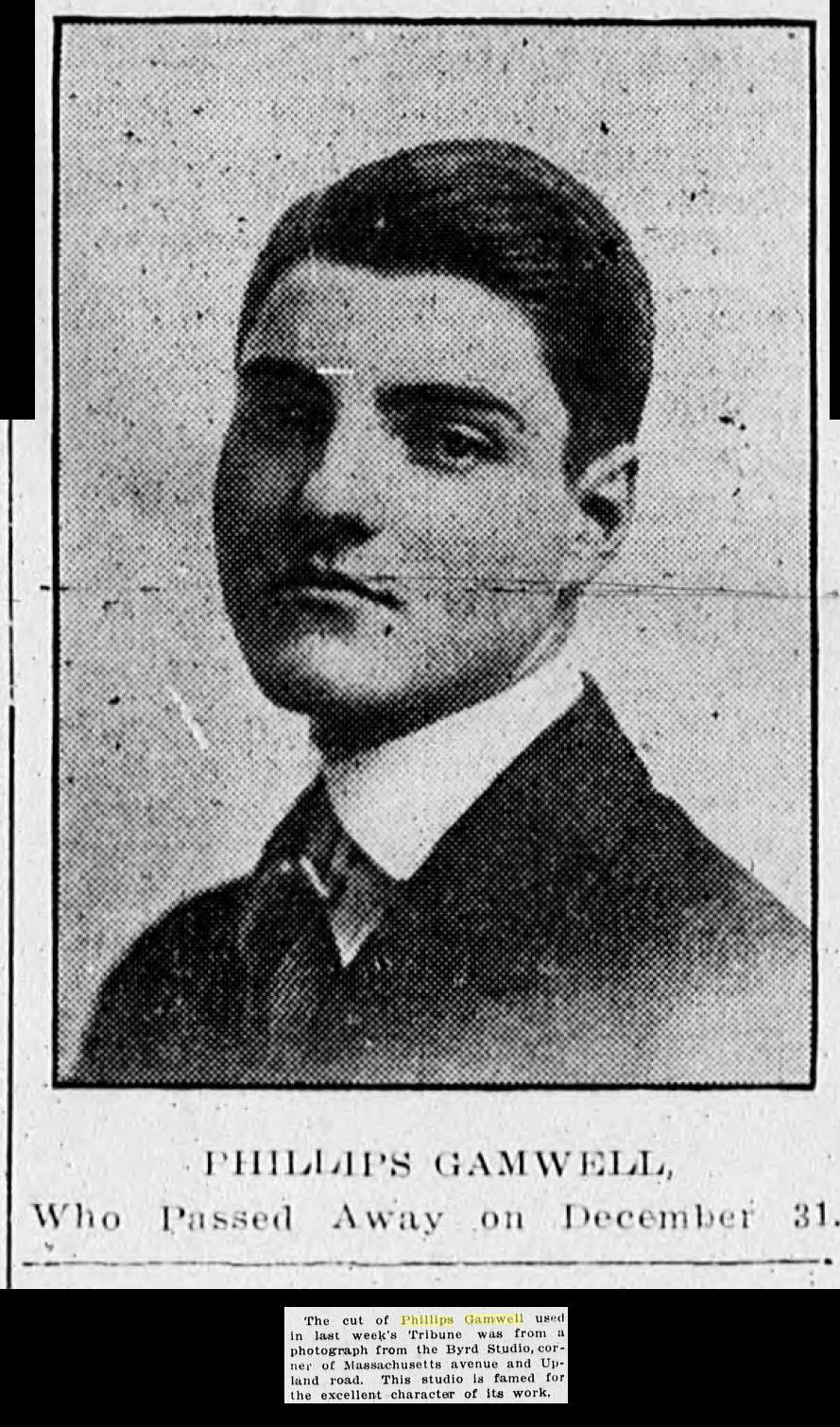
I’ve found another two appearances of Lovecraft’s elegy for his adored cousin Phillips Gamwell, who died young. Lovecraftian sources have the poem appearing in the Providence Evening News on 5th January 1917. But here it is in The Cambridge Chronicle, 6th January 1917, possibly with new biographical details in the introduction…

gamwell1

gamwell2

The same poem appeared again in The Cambridge Tribune on 13th January 1917, under the simple title “Phillips Gamwell”, this time with a fine photograph of cousin Phillips…

phillips_gamwell

… and the following week there was also an addendum on the photographer.

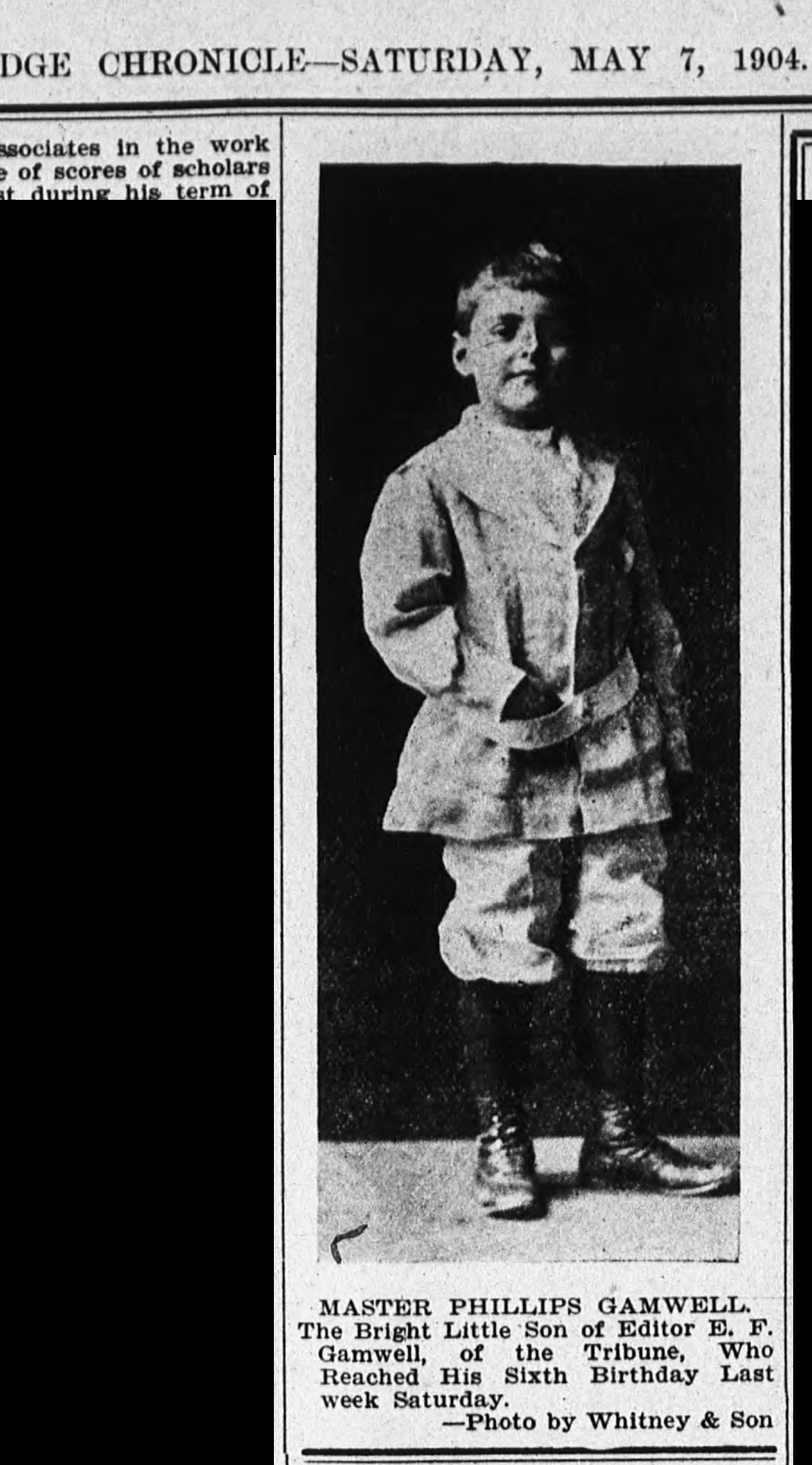
We’re also informed by The Cambridge Tribune of 2nd January 1904 that Phillips Gamwell was visiting Providence. Lovecraft then age 13, Phillips aged around 6. Here is Phillips Gamwell aged six in 1904 in The Cambridge Chronicle…

phillips_gamwell_1904

Resembles the young Lovecraft, wouldn’t you say?

Providence parks in 1903

10 Monday Jun 2013

Posted by asdjfdlkf in Historical context, Maps

≈ 1 Comment

Map of parks and green spaces in Providence that Lovecraft could have known in his boyhood. Providence magazine. v.28, 1916. Map showing situation on City ownership of parks in 1903. Omits the unofficial spaces such as the remains of Cat Swamp.

providence-greenspace-1903

Pleasant places in Rhode Island

10 Monday Jun 2013

Posted by asdjfdlkf in Historical context

≈ 2 Comments

Pleasant places in Rhode Island, and how to reach them, a book from the Providence journal, 1893.

pleasantplaces

Blackstone Park

10 Monday Jun 2013

Posted by asdjfdlkf in Historical context

≈ Leave a comment

I’m looking for an old press article, “Blackstone Park – An Unspoiled Beauty Spot”, Providence Journal, August 4, 1912, sec.5, p.3. Does anyone have a copy I could see?

← Older posts
Newer posts →


Please become my patron at www.patreon.com/davehaden to help this blog survive and thrive.

Or donate via PayPal — any amount is welcome! Donations total at Easter 2025, since 2015: $390.

Archives

  • March 2026
  • February 2026
  • January 2026
  • December 2025
  • November 2025
  • October 2025
  • September 2025
  • August 2025
  • July 2025
  • June 2025
  • May 2025
  • April 2025
  • March 2025
  • February 2025
  • January 2025
  • December 2024
  • November 2024
  • October 2024
  • September 2024
  • August 2024
  • July 2024
  • June 2024
  • May 2024
  • April 2024
  • March 2024
  • February 2024
  • January 2024
  • December 2023
  • November 2023
  • October 2023
  • September 2023
  • August 2023
  • July 2023
  • June 2023
  • May 2023
  • April 2023
  • March 2023
  • February 2023
  • January 2023
  • December 2022
  • November 2022
  • October 2022
  • September 2022
  • August 2022
  • July 2022
  • June 2022
  • May 2022
  • April 2022
  • March 2022
  • February 2022
  • January 2022
  • December 2021
  • November 2021
  • October 2021
  • September 2021
  • August 2021
  • July 2021
  • June 2021
  • May 2021
  • April 2021
  • March 2021
  • February 2021
  • January 2021
  • December 2020
  • November 2020
  • October 2020
  • September 2020
  • August 2020
  • July 2020
  • June 2020
  • May 2020
  • April 2020
  • March 2020
  • February 2020
  • January 2020
  • December 2019
  • November 2019
  • October 2019
  • September 2019
  • August 2019
  • July 2019
  • June 2019
  • May 2019
  • April 2019
  • March 2019
  • February 2019
  • January 2019
  • December 2018
  • November 2018
  • October 2018
  • September 2018
  • August 2018
  • August 2015
  • July 2015
  • April 2015
  • March 2015
  • February 2015
  • January 2015
  • December 2014
  • November 2014
  • October 2014
  • September 2014
  • August 2014
  • July 2014
  • June 2014
  • May 2014
  • March 2014
  • February 2014
  • January 2014
  • December 2013
  • November 2013
  • October 2013
  • September 2013
  • August 2013
  • July 2013
  • June 2013
  • May 2013
  • April 2013
  • March 2013
  • February 2013
  • January 2013
  • December 2012
  • November 2012
  • October 2012
  • September 2012
  • August 2012
  • July 2012
  • June 2012
  • May 2012
  • April 2012
  • March 2012
  • February 2012
  • January 2012
  • December 2011
  • November 2011
  • October 2011
  • September 2011
  • August 2011
  • July 2011
  • June 2011
  • May 2011
  • April 2011
  • March 2011
  • February 2011
  • January 2011
  • December 2010
  • November 2010
  • October 2010
  • September 2010
  • August 2010
  • July 2010

Categories

  • 3D (14)
  • AI (70)
  • Astronomy (70)
  • Censorship (14)
  • de Camp (7)
  • Doyle (7)
  • Films & trailers (101)
  • Fonts (9)
  • Guest posts (2)
  • Historical context (1,096)
  • Housekeeping (91)
  • HPLinks (77)
  • Kipling (11)
  • Kittee Tuesday (92)
  • Lovecraft as character (58)
  • Lovecraftian arts (1,628)
  • Lovecraftian places (19)
  • Maps (70)
  • NecronomiCon 2013 (40)
  • NecronomiCon 2015 (22)
  • New books (966)
  • New discoveries (165)
  • Night in Providence (17)
  • Odd scratchings (984)
  • Picture postals (276)
  • Podcasts etc. (431)
  • REH (184)
  • Scholarly works (1,470)
  • Summer School (31)
  • Unnamable (87)

Get this blog in your newsreader:
 
RSS Feed — Posts
RSS Feed — Comments

H.P. Lovecraft's Poster Collection - 17 retro travel posters for $18. Print ready, and available to buy — the proceeds help to support the work of Tentaclii.

Proudly powered by WordPress Theme: Chateau by Ignacio Ricci.