• About
  • Directory
  • Free stuff
  • Lovecraft for beginners
  • My Books
  • Open Lovecraft
  • Reviews
  • Travel Posters
  • SALTES

Tentaclii

~ News & scholarship on H.P. Lovecraft

Tentaclii

Category Archives: Historical context

Rheinhart Kleiner after Lovecraft’s New York period

29 Thursday Aug 2013

Posted by asdjfdlkf in Historical context

≈ 2 Comments

I’ve been doing a little digging into Rheinhart Kleiner (1892–1949) after Lovecraft’s New York period, spurred by An H.P. Lovecraft Encyclopedia‘s comment that Lovecraft lost touch with Kleiner from the end of Lovecraft’s New York period through to 1936-37 (although Lovecraft did encounter him, as part of groups, on some of his New York visits in the 1930s). I wondered why they lost touch.

One reason might be that Kleiner appears to have been active as a hardline communist in New York during at least the later part of that period, a member of “Unit 36-S” of the New Deal’s Federal Writers’ Project. The New York City FWP was a body set up in 1934/5 and it was swiftly infested with bickering communist and socialist sects (seemingly to the detriment at that time of fellow Kalem member Arthur Leeds — see the chapter on Leeds in my latest book). Perhaps of relevance to this discovery is that fellow Kalem member George Kirk’s Chelsea Book Shop in New York was also cited in the official record as having been one of… “the two official book shops of the Communist party of the United States”.


I also stumbled on another curious mystery of Kleiner’s later years, which is the whereabouts of his c.1946 book Burrowings of an Old Bookworm. This is not currently on any bibliographic databases. Imprimatur (Vol.1, 1-3, p.31) noted of Paul W. Cook’s Vermont little magazine The Ghost…

“The fourth number (July 1946) is entirely devoted to Burrowings of an Old Bookworm by Rheinhart Kleiner.”

Burrowings was apparently… “a long bookish memoir largely devoted to popular fiction he read during his boyhood” (L.W. Currey’s description of The Ghost). Burrowings is also mentioned in Rheinhart Kleiner’s death notice in Wilson Library Bulletin, 1949…

“Rheinhart Kleiner, trade writer; at [222 Demott Avenue, according to New York Times] Clifton, New Jersey; after a long illness; fifty-six. Well known in his field in England and Australia as well as in the United States, his latest book was Burrowings of an Old Bookworm.”

My suspicion would be that Burrowings may have been a circulated typescript memoir in carbon, rather than an actual book? I guess an inspection of The Ghost, currently available from L.W. Currey for $150, could yield more precise details.

An item I did discover is James Guinane’s self-published 46-page mimeographed booklet RK: Rheinhart Kleiner: a Memoir (1951). Guinane was a young Australian amateur journalist (Churingas) on the remote island of Tasmania, and he also presumably(?) corresponded with Kleiner. The booklet is described as…

“American amateurs receiving it can recall nothing to equal it in the artistic use of mimeographing … Forty-six pages of Guinane’s polished prose are divided into nine chapters on various phases of Kleiner’s personality and literary output.” (review in LOC X Collection 1324).

This is not yet scanned and online. There’s currently a cheap copy of it listed on Amazon USA, but sadly they won’t ship it to the UK.

Henry S. Whitehead

27 Tuesday Aug 2013

Posted by asdjfdlkf in Historical context

≈ Leave a comment

I found an online photograph of Lovecraft’s friend and correspondent Henry S. Whitehead…

He looks thin and tired here because he was ill in the later part of his life. Lovecraft remarks that he was immensely fit when well.

I’ve also found out that Whitehead had two aspects of his career which would have interested Lovecraft. 1) He had worked in an area of New York known to Lovecraft, and had there worked with immigrants, and so would have been able to compare experiences with Lovecraft about ‘the pest zone’. 2) He had also been a “chaplain for the Connecticut State Hospital for the Insane”.

I here go through his early church career in chronological order, based on a quick dash through the online archives now available:

His Columbia University alumni news magazine (Vol.13, 1921/1922, p.6) reported…

   [Graduates of 19]”’04 — Henry St. Clair Whitehead, formerly rector of Christ Church of Middletown [South Farms, c.1914-1917], Connecticut, and also chaplain for the Connecticut State Hospital for the Insane, is now located at 28 Brimmer Street, Boston, Massachusetts.”

After Middletown he moved to New York. He was on a list of newly appointed curates 1916-17, his appointment being to St. Mary the Virgin from Nov 1st 1917. The publications of his church show…

   “Rev. Henry S. Whitehead is Pastor of the Children, Church of S. Mary the Virgin, New York City” (The American Church Monthly, Vol.5, Mar-Aug 1919, p.926). “Rev. Henry S. Whitehead is on the staff of the Church of S. Mary the Virgin in New York, and is an authority on pastoral work. In his article on “Work Among Foreigners” he shows why the Episcopal Church is especially well adapted to undertake this work.” (The New American Church Monthly, Vol.4 No.4, Dec 1918, p.274).

In New York he was living at 144 West 47th St. (co-incidentally not that far from Everett McNeil then at 543 West 49th St., and with probably the same predominately Irish population). His connection with St. Mary the Virgin was dissolved sometime between late 1919 and May 1920, according to the Annual Convention journal of his church. He was then attached to the Diocese of Massachusetts, living at 28 Brimmer Street, Boston until he was shipped out to be… “acting archdeacon of the Virgin Islands from 1921 to 1929.” He then went to Florida — a news item reports on a children’s Halloween Party of welcome for the “new rector” at Dunedin (St. Petersberg Times, 10th Nov 1929).

So when had he been… “chaplain for the Connecticut State Hospital for the Insane [at Middleton]”? He started his church career in 1912, after graduating from the Berkeley Divinity School at Middletown. So his stint in the madhouse was either 1912-1914, or else was an additional duty undertaken while serving as rector at South Farms, Middletown. Whitehead later refers in fiction to this period, in his (Lovecraft revision?) story “Bothon”…

“It happened while I was chief intern in the Connecticut State Hospital for the Insane. I served there for two years under Dr. Floyd Haviland before I went into private practice.” (“Bothon”).

In I am Providence (pp.845-846) S.T. Joshi discusses theories that “Bothon” was not written by Whitehead, but by Derleth from a Lovecraft plot outline. But the apparently autobiographical use of the “Connecticut State Hospital for the Insane” may suggest otherwise, as I’m not sure Derleth would have bothered to slip in such an obscure detail from Whitehead’s early career. On the other hand, the setting may have been in the original outline, decided on in consultation with Whitehead.


There has also been some controversy about Whitehead’s claim to have graduated from Harvard. I have found that “Whitehead, Henry S” appears in the Harvard Club of New York City members’ book from 1912 through to 1920. He is listed as of the class of 1904, the same year when — according to his alumni magazine — he also graduated from Columbia. Yet he is listed in the Harvard College Class of 1904 book under Special Students and Affiliated Members, with a ‘b’ next to his name which indicates he withdrew at the end of the Sophmore Year — so I assume he must have transferred to Columbia for his final year? The Harvard College Class of 1904 (first report) book also gives his full name: “Henry St. Clair McMillin Whitehead”. The Harvard College Class of 1904 (second report) book gives his own account of his career from 1904 to undertaking his religious training in 1909…

Some notes on Richard Ely Morse (1909-1986), a later Lovecraft correspondent

26 Monday Aug 2013

Posted by asdjfdlkf in Historical context

≈ 2 Comments

Richard Ely Morse (1909-1986) worked mostly as a librarian at Princeton University. He earned his… “B.L.S. from Columbia University School of Library Service in 1932”, so when Lovecraft first knew him he was a new 23 year-old graduate. In 1968 Deke Quarterly stated that… “In his career he worked at the Princeton University Library, The Library of Congress, and the library of the Cooper Union Museum in New York” [being the Museum Librarian there from c.1936 until he resigned c.1949]”.

He published a volume of poetry titled Winter Garden in 1931, and he inscribed a copy for Lovecraft. The inscription is given in An H.P. Lovecraft Encyclopedia. On noting the volume’s publication, Morse’s fraternity magazine remarked: “He is president of the poetry society and editor in chief of the literary magazine [at Amherst].” Today at nearby Deerfield, which appears to be a feeder school for Amherst College, there is a current… “Richard Ely Morse ’26 Fund. Established in 1992 by Richard E. Morse ’26, this fund supports students who are proficient in music, art or literature.”

Morse was published in the Dial (Sept 1927), in The Best Poems of 1928 (“The Swan”), and his poetry can be found in the little magazines as late as 1967. Here is part of his “The Swan” (original line breaks missing due to OCR)…

   “HIS swan, upon the icy waters of my heart, sails night and day; reflected amid the drift of tarnished wood-leaves, desolate and gray. Bending his plumed, silver-shining neck he seeks in baffled love that shadowed apparition always vanishing from him above. And now he moves his head in spectral bitterness, to assuage his pain darting it beneath the calm of silver that shatters and forms again. There is no escape, only the mocking image of the mirrored swan beneath him sails, under a moon long turned to stone, for ever on….” (from “The Swan”).

An online forum comment mentioned that… “He [Lovecraft] certainly did observe it [homosexuality] in persons he was introduced to by way of Samuel Loveman (e.g. Richard Ely Morse)”. On this see I Am Providence, p.827. Lovecraft and Morse had met face to face, rather than simply by correspondence, and were introduced by Loveman (known to have been a gay man) in May 1932.

Morse’s poem “Mad Dreams (for H.P. Lovecraft)” appeared in Fantasy Commentator Vol.7 No.1 (#41), 1990.

Three of Lovecraft’s letters to Morse are held at the Houghton Library, Harvard College Library. Another is in the British Museum. Letters to Morse are published in the Selected Letters. I have found that Morse had a letter, mentioning Lovecraft by name, published in The American Scholar (1949, Vol.18, p.231) — but I am unable to access more than a snippet via online methods. He contributed a poem to The Acolyte in 1942, “In Memoriam: H. P. Lovecraft” (collected in Marginalia).

Morse served as a corporal in the U.S. Army in 1942-1943. Possibly a search of Army records might reveal a photograph?

His entry in An H.P. Lovecraft Encyclopedia states he published an article “Some Modern Book Illustrations” in The Californian (Spring 1937). While at the Cooper Union Museum (c.1936-c.1949) he had contributed texts to exhibition catalogues such as “The Art and Technique of Modern Glass” and is also credited in the catalogue “Alter Ego: Masks, Their Art and Use”. He has a bibliography titled “Relating to Puppets, Marionettes and Shadow-Plays” in the Cooper Union Museum catalogue for “Small Wonders: Puppets and Marionettes” (c.1949). A few years later he wrote the text for Clowns and Ballerinas: The Circus and Dance in Art (1952), an exhibition catalogue for Princeton University Library. This exhibition may have been partly drawn from his own private collection, as he is said to have… “collected photographs, drawings, and prints relating to the commedia dell’arte and to the dance” (The Princeton University Library Chronicle) which he bequeathed to Princeton on his death. He had already donated “140 dance programs and souvenir booklets” to Princeton in 1966.

Historic New England

24 Saturday Aug 2013

Posted by asdjfdlkf in Historical context, Scholarly works

≈ Leave a comment

Historic New England magazine, online and free from 2000 onwards.

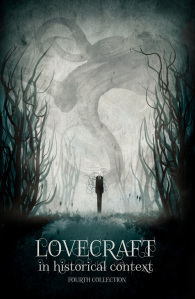
New ebook: Lovecraft in Historical Context: a fourth collection

19 Monday Aug 2013

Posted by asdjfdlkf in Historical context, NecronomiCon 2013, New books, New discoveries, Scholarly works

≈ Leave a comment

Available now, and just in time for your flight to NecronomiCon 2013. The Amazon Kindle ebook of my latest Lovecraft in Historical Context: a fourth collection. Buy the book on Amazon USA or on Amazon UK, or the other national Amazon websites. It has a linked table-of-contents, and a fully-linked “round trip” endnotes system.

cont4cover

Please note: I’ve had to remove the Arthur Leeds story from this ebook version, since Leeds has no firm death-date. Which means Leeds might still be in copyright, and so Amazon’s caution on copyrights would have prevented publication.

To compensate for the loss of the Leeds story, buyers of the ebook version instead get Lovecraft’s story “The Lurking Fear” — annotated by me with 8,000 words of new scholarly annotations.

You can also obtain my new book by mail as a paperback.

Myrta Alice Little

19 Monday Aug 2013

Posted by asdjfdlkf in Historical context, New discoveries

≈ 3 Comments

I’ve found a school yearbook photo and description for Myrta Alice Little, a friend and correspondent of H.P. Lovecraft at the start of the 1920s. She was born c.1888 in the ancestral home at east Hampstead, New Hampshire, a rural area about 5 miles NW of Haverhill. She went to college about sixty miles up the coast from Haverhill, at Colby College in Waterville, Maine. Here is her photo and description from the School Annual 1908 Colby College, Waterville, Maine.

20445

She took a B.A. there. She then went to Radcliffe College (1912) to take a Masters degree, and also took courses at Brown University and Clark University.

Her entry in An H.P. Lovecraft Encyclopedia states that she was a former college lecturer by the time Lovecraft knew her in the Spring and Summer of 1921. Her biography in Career Women of America (1941) states she had taught in two high schools before becoming Head of English at Alfred University in New York from 1912-14. She then taught at the State Normal school in Providence 1914-15, before moving to Wheaton Seminary College, Mass. 1915-16. She then moved to Sacramento, California 1917-19, where she was Education Secretary of the YMCA (possibly this was war work, catering to the young specialist workers who were moved from the east coast to the west to make war materials?). In 1919 she started writing conventional short stories. She then returned to Hampstead, New Hampshire c.1920 and joined the amateur journalism movement, seeking to develop as a mainstream commercial story writer. She usually published in newspapers as “Myrta A. Little”, and about a dozen such conventional homely little stories can be found online in old newspapers by searching Google under that name. One of these, “A Queen Did It”, was anthologised in New England Short Stories.

Judging by her photo and description in the yearbook, she was obviously very tall and rather beautiful, and very intelligent with it. Lovecraft called her “learned and brilliant” in his report “The Haverhill Convention”. She was a keen book collector, and had joined the Brothers of the Book as early as 1913. Only one Lovecraft letter to her survives, given in Lovecraft Studies #26.

Could she have become Mrs Lovecraft? Who knows? She certainly met Lovecraft at a vulnerable moment, very shortly after his mother died, and she seems to have been looking for a husband. But she appears to have briefly been a Catholic in the mid 1910s, then a Seventh-day Baptist shortly thereafter, and a religious streak may have mitigated her other charms in Lovecraft’s eyes. In May 1922, the summer after she met Lovecraft, she married the Rev. Arthur R. Davies who appears to have been a Methodist preacher. After her marriage she contributed to magazines such as the Christian Herald.

Lovecraft’s Providence, on Google Street View

13 Tuesday Aug 2013

Posted by asdjfdlkf in Historical context, Lovecraftian places, Maps, NecronomiCon 2013

≈ Leave a comment

Lovecraft’s Providence, on Google Street View (give it a moment to load the map, then it will switch through to Street View)…

Site of 454 Angell Street. Family home to 1904. House torn down in 1961.

598 Angell Street. Home from 1904 to 1924.

10 Barnes Street. Home from 1926 to May 1933.

Site of 66 College Street. Home to 1937. House moved in 1959 to 65 Prospect Street.

Swan Point Cemetery. Entrance, site of Lovecraft’s gravestone.

Providence Public Library (hideously ugly modern entrance, and the grand old entrance which is no longer in use).

Prospect Terrace. A favorite haunt in young childhood and occasionally in adulthood.

Blackstone Park / the Seekonk River at York Pond. A favorite middle-childhood haunt, and as an adult the site of outdoors summer letter-writing…

“At the present moment I am seated on a wooded bluff above the shining river which my earliest gaze knew & loved—which my infant imagination peopled with fauns & satyrs & dryads—. Whenever possible, I take my writing out in the open in a black leatherette case—.” — H.P. Lovecraft letter, 8th July 1929.

The Ladd Observatory. Site of boyhood astronomy.

Thomas Street. The “Fleur-de-Lys” building and the Providence Art Club.

John Hay Library, Prospect Street. Home of the Brown University Lovecraft collection.

It came from the backwoods…

09 Friday Aug 2013

Posted by asdjfdlkf in Historical context

≈ Leave a comment

Below is The New York Tribune article of April 1919, on the newly-established (formed 1917) rural police for New York State, which inspired Lovecraft to try The Catskills as a setting for horror stories. I’ve highlighted and overlaid the next-page section of the article on Catskill Mountains degenerates (though strictly speaking they’re actually Schoarie Mountains degenerates, a little north of the main Catskill Mountains). The first effect of this article on Lovecraft was to directly inspire his story “Beyond The Wall of Sleep” (written at some point between April-Sept 1919, published October) then “The Lurking Fear” (November 1922)…

lovecraft_inspiration_1919_catskills-NYT

Audio book readers may find it useful to know that the pronunciation of the Slater/Slahter surname should rhyme it with “doubter”.

Incidentally, the following Google search modifiers will give you a speedy way of searching just The New York Tribune digital copies at the Library of Congress website…

site:http://chroniclingamerica.loc.gov/lccn/sn83030214/ keyword or "key phrase"

Pristine pulps

06 Tuesday Aug 2013

Posted by asdjfdlkf in Historical context

≈ Leave a comment

A fine set of archive pictures of pulps sitting pristine on newstands and in tobacco stores. This one from January 1925, showing Argosy All-Story Weekly alongside Snappy Stories, The American Magazine, and others.

image25301

Free book on the early pulps

04 Sunday Aug 2013

Posted by asdjfdlkf in Historical context, Scholarly works

≈ Leave a comment

Now free, Sam Moskowitz’s 1970 book Under the Moons of Mars: A History and Anthology of “The Scientific Romance” in the Munsey Magazines, 1912-1920. On Archive.org, with .ePub and Kindle .mobi versions available.

under

munseys

Put the Munsey magazines in context with SFFAudio’s .mp3 podcast interview with Robert Weinberg about the history of pulps before Amazing. Starts at 5:54.

Lovecraft and ley-lines

01 Thursday Aug 2013

Posted by asdjfdlkf in Historical context, New discoveries

≈ Leave a comment

There’s an interesting early use of the idea of ‘ley lines’ in supernatural fiction, in Lovecraft’s “The Lurking Fear” (written November 1922)…

“Now, in the light of that low moon which cast long weird shadows, it struck me forcibly that the various points and lines of the mound system had a peculiar relation to the summit of Tempest Mountain. That summit was undeniably a centre from which the lines or rows of points radiated indefinitely and irregularly…”

The idea of “the light of that low moon which cast long weird shadows” is also indicative that Lovecraft had some basic knowledge about British archaeological methods. Before modern archaeological tools, detecting ancient earthworks such as small ploughed-out tumuli through fieldwork was something best done in a low-angled light casting long shadows.

So either Lovecraft independently lit upon this wrong-headed but seminal ‘earth mysteries’ concept, or else he must have had it from a review of Alfred Watkins’s book Early British Trackways, Moats, Mounds, Camps and Sites. This book had appeared in early 1922, some nine months before “The Lurking Fear”. It attempted to show that ancient British trackways, evidenced millennia later only by their associated ancient barrow mounds and standing stones, hill-forts and the like, were often constructed onto dead-straight lines. Watkins further suggested that these straight lines radiated from certain key points in the British landscape.

It seems likely that a review of Watkins in the scientific journal Nature (5th August 1922, 110, pp.176-177) would have been Lovecraft’s source for the idea. There Early British Trackways was briefly reviewed without skepticism. The Nature review charitably overlooked the bumbling place-name blunders which had caused howls from British reviewers at The Spectator and The Times Literary Supplement. This oversight at Nature was perhaps due to editorial recall of one Sir Norman Lockyer (founder and first editor of Nature until 1920) and his groundbreaking idea in Stonehenge and Other British Stone Monuments Astronomically Considered (1906, 1909) about the astronomical alignment of early British sacred sites. Findings which implied that a sacred nature might indeed be inferred for straight lines and lines-of-sight in early British cultures, and over a very long period. Lockyer’s work was the start of the broadly-sound (although loon-haunted) research on archeoastronomy. This earliest archeoastronomy was something which Lovecraft may also have become aware of in passing, since he was an astronomer who was also interested in ancient British topography and archaeology. Possibly the Theosophist journals may also have picked up early on Lockyer and Watkins, providing another route by which Lovecraft could have learned of the new ideas before late 1922.

To anyone familiar with the close-packed and topsy-turvy nature of the hilly topography of Watkins’s own English Midlands and Welsh Marches, the ‘ley lines’ idea might have seemed as loopy as the traditionally rambling English road. Yet Watkins found a hearing in some quarters because the Ancient Romans had actually done it, incontrovertibly paving much of Britain with their dead-straight roads. Some of which were indeed founded on or alongside earlier ancient British trackways. Yet most reputable archaeologists were skeptical, and the idea simmered and drifted to the fringes where it became entangled with occultism and UFOs. In the late 1960s and early 1970s ‘leys’ were assiduously researched by mushroom-munching hippies during the British counterculture’s rural retreat from the heroin-blighted cities, but the notion was brought to a juddering halt by the abundant computer power of the late 1970s and early 80s. Long-distance leys were shown to be the result of statistical chance, plus dodgy place-name derivation and the indiscriminate lumping together of disparately-aged points — rather than the result of druids with pointy sticks standing on hilltops.

druids“We’re out of a job, lads! Right, straight down the pub and let’s get at that mistletoe wine…”

Houdini’s 1925/6 anti-spiritualism scrapbook discovered

26 Friday Jul 2013

Posted by asdjfdlkf in Historical context

≈ 5 Comments

It appears that the 1925/6 lost Houdini spiritualism scrapbook has turned up. Possibly a hoax, but the photos look genuine. Lovecraft scholars will remember that Lovecraft was closely involved with Houdini in researching and ghost-writing a book debunking the evils of spiritualism and other fraudulent modern superstitions. The finder reports…

“The majority of the material is from 1925 with a few clippings from early 1926.”

Which is shortly before Lovecraft set to work with Houdini and Eddy on preparing The Cancer of Superstition, although it seems there’s no Lovecraft material in the scrapbook. Interesting to think that Lovecraft might well have once looked through the scrapbook while preparing the book.

houdsp

← Older posts
Newer posts →


Please become my patron at www.patreon.com/davehaden to help this blog survive and thrive.

Or donate via PayPal — any amount is welcome! Donations total at Easter 2025, since 2015: $390.

Archives

  • March 2026
  • February 2026
  • January 2026
  • December 2025
  • November 2025
  • October 2025
  • September 2025
  • August 2025
  • July 2025
  • June 2025
  • May 2025
  • April 2025
  • March 2025
  • February 2025
  • January 2025
  • December 2024
  • November 2024
  • October 2024
  • September 2024
  • August 2024
  • July 2024
  • June 2024
  • May 2024
  • April 2024
  • March 2024
  • February 2024
  • January 2024
  • December 2023
  • November 2023
  • October 2023
  • September 2023
  • August 2023
  • July 2023
  • June 2023
  • May 2023
  • April 2023
  • March 2023
  • February 2023
  • January 2023
  • December 2022
  • November 2022
  • October 2022
  • September 2022
  • August 2022
  • July 2022
  • June 2022
  • May 2022
  • April 2022
  • March 2022
  • February 2022
  • January 2022
  • December 2021
  • November 2021
  • October 2021
  • September 2021
  • August 2021
  • July 2021
  • June 2021
  • May 2021
  • April 2021
  • March 2021
  • February 2021
  • January 2021
  • December 2020
  • November 2020
  • October 2020
  • September 2020
  • August 2020
  • July 2020
  • June 2020
  • May 2020
  • April 2020
  • March 2020
  • February 2020
  • January 2020
  • December 2019
  • November 2019
  • October 2019
  • September 2019
  • August 2019
  • July 2019
  • June 2019
  • May 2019
  • April 2019
  • March 2019
  • February 2019
  • January 2019
  • December 2018
  • November 2018
  • October 2018
  • September 2018
  • August 2018
  • August 2015
  • July 2015
  • April 2015
  • March 2015
  • February 2015
  • January 2015
  • December 2014
  • November 2014
  • October 2014
  • September 2014
  • August 2014
  • July 2014
  • June 2014
  • May 2014
  • March 2014
  • February 2014
  • January 2014
  • December 2013
  • November 2013
  • October 2013
  • September 2013
  • August 2013
  • July 2013
  • June 2013
  • May 2013
  • April 2013
  • March 2013
  • February 2013
  • January 2013
  • December 2012
  • November 2012
  • October 2012
  • September 2012
  • August 2012
  • July 2012
  • June 2012
  • May 2012
  • April 2012
  • March 2012
  • February 2012
  • January 2012
  • December 2011
  • November 2011
  • October 2011
  • September 2011
  • August 2011
  • July 2011
  • June 2011
  • May 2011
  • April 2011
  • March 2011
  • February 2011
  • January 2011
  • December 2010
  • November 2010
  • October 2010
  • September 2010
  • August 2010
  • July 2010

Categories

  • 3D (14)
  • AI (70)
  • Astronomy (70)
  • Censorship (14)
  • de Camp (7)
  • Doyle (7)
  • Films & trailers (101)
  • Fonts (9)
  • Guest posts (2)
  • Historical context (1,096)
  • Housekeeping (91)
  • HPLinks (77)
  • Kipling (11)
  • Kittee Tuesday (92)
  • Lovecraft as character (58)
  • Lovecraftian arts (1,628)
  • Lovecraftian places (19)
  • Maps (70)
  • NecronomiCon 2013 (40)
  • NecronomiCon 2015 (22)
  • New books (966)
  • New discoveries (165)
  • Night in Providence (17)
  • Odd scratchings (984)
  • Picture postals (276)
  • Podcasts etc. (431)
  • REH (184)
  • Scholarly works (1,470)
  • Summer School (31)
  • Unnamable (87)

Get this blog in your newsreader:
 
RSS Feed — Posts
RSS Feed — Comments

H.P. Lovecraft's Poster Collection - 17 retro travel posters for $18. Print ready, and available to buy — the proceeds help to support the work of Tentaclii.

Proudly powered by WordPress Theme: Chateau by Ignacio Ricci.