• About
  • Directory
  • Free stuff
  • Lovecraft for beginners
  • My Books
  • Open Lovecraft
  • Reviews
  • Travel Posters
  • SALTES

Tentaclii

~ News & scholarship on H.P. Lovecraft

Tentaclii

Author Archives: asdjfdlkf

The Dark Brotherhood (1966) and “The Lamp of Alhazred” (1954)

06 Wednesday Jul 2022

Posted by asdjfdlkf in Lovecraft as character

≈ 2 Comments

Don Herron usefully notes an occurrence of Lovecraft-as-character in his new blog post “Two-Gun Bob: In Memoriam?”…

Derleth himself also engaged in the fun, as in “The Dark Brotherhood” from 1966, a masterful parody in which he dropped ‘Arthur Phillips’ for Howard Phillips [Lovecraft] … A tale not openly about Lovecraft.

From the story’s opening…

The police have been beset by the usual number of cranks, purporting to offer information about the matter, none more insistent than Arthur Phillips, the descendant of an old East Side family, long resident on Angell Street

A quick glance at the Archive.org copy shows that much is made by Derleth of Providence at night, and Lovecraft’s night-walking. Not knowing Derleth, except from having read a few in the 1970s Panther paperbacks at around age 14, I hadn’t realised this was a Providence-set Lovecraft-as-character tale. It’s to be found on YouTube in a good 80-minute audio reading from Aaron Strouse.

Robert M. Price in an old copy of Crypt of Cthulhu touches briefly on Lovecraft in Derleth, usefully noting that in Derleth…

‘Ward Phillips’ in “The Lamp of Alhazred” is obviously and transparently Lovecraft.

Sadly “The Lamp of Alhazred” is not on YouTube except in Spanish. The text is however available and The Weird Tales Podcast reading from 2019 has it as an .MP3 download. Downloads are best because the pitch and speed can be shifted in the AIMP player, as well as having the graphic equaliser on the ‘Headphones’ preset. In this case it’s too fast and a little high and thus the speed needs to be slowed and the pitch shifted accordingly.

So there you go, an audio double-bill of ‘HPL as written by Derleth’. Though I have to say that I gave up on the slow and ponderous “The Dark Brotherhood” after three and a half chapters. The character is obviously Lovecraft, in all but name and a Sonia-a-like also appears. But I doubted there would be much more biographical ‘reveals’ as the story progressed moved on into Derleth-land. The much shorter and earlier “The Lamp of Alhazred” is more engaging, and not without some charm at the end.

Incidentally a local search for “The Lamp of Alhazred” (1954) also led me to Reader’s Guide to the Cthulhu Mythos (1973), which briefly noted Bloch and Derleth’s uses and also added that…

HPL appeared in one of Ray Bradbury’s “Martian Chronicles”, indulging in one of his (Lovecraft’s) favourite pastimes, eating ice cream.

I don’t recall that at all, from my fairly complete re-listen to the Martian Chronicles some five or six years ago now. Anyone know which story?

Patrick base mesh, and kitty

05 Tuesday Jul 2022

Posted by asdjfdlkf in Kittee Tuesday, Lovecraftian arts

≈ Leave a comment

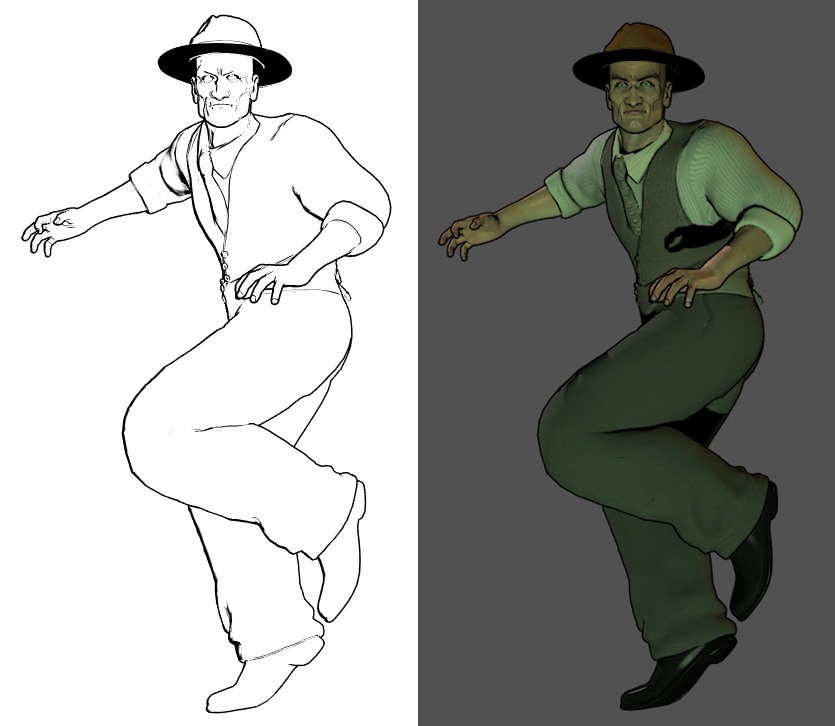
“Patrick base mesh” is new on ArtStation, affordable and with a permissive licence. It shouldn’t take too much work in a 3D package like ZBrush or Blender to turn this into a toon H.P. Lovecraft.

Also a fabulous new contender for an Ulthar kittie, although not toon, in the form of the new Savannah Cat (requires the base Cat Mars) for the 3D software DAZ Studio. Also a contender, via a sci-fi coat re-colour, for one of the “Cats of Saturn” heard about in Dream-quest.

Recordings from Howard Days 2022

04 Monday Jul 2022

Posted by asdjfdlkf in Podcasts etc., REH

≈ Leave a comment

Audio recordings from the 2022 Howard Days sessions are now being posted on the blog of The Cromcast: A Weird Fiction Podcast. Donations for future annual Howard Days events are always welcome, if you enjoy them. Eight so far, as posts:

* The REH Influence on Gaming.

* Robert E. Howard in the year 1932.

* The Glenn Lord Symposium. Three papers and panel.

* Guest of Honour speech at The Robert E. Howard Celebration Banquet.

* Late Night ‘In Conversation’ at the Pavilion, Cross Plains.

* Conan the Barbarian at 40. (Reminiscences of making the first two Conan movies).

* Rusty and Shelly Burke at the Cross Plains Public Library.

* What’s Up with REH? (Latest developments in Howard’s characters, in publishing and entertainment). Wrong media is linked on the post. The required audio is here. Some of the reveals: A “Red Nails” prequel novel by a top writer, The Blood of Serpent, as the first big ‘splash’ release in October 2022 to coincide with the 90th anniversary of Conan. Sounds good, as long as the action sounds like Howard. And a big sumptuous Conan artbook. Also a new monthly Titan Conan comic-book with top talent, to be released around the same back-to-uni time, now that Disney/Marvel has thrown the character overboard.

* A Chat with Matt John of Rogues in the House games podcast

Beware the Creative Commons licences, which are muddled. On the blog posts the audio is all very usefully placed under full Creative Commons Attribution. However, the licence is regrettably different on the Archive.org mirror-copies, adding the show-stopper of “No Derivatives”.

Lots of ‘bathroom’ echo on the main speaker’s audio for “What’s Up with REH?”, so I used it as a test-file for the Izotope RX 7 AI-powered audio repair software — which for months now I have been meaning to get around to installing and testing. Specifically for its ‘Dialogue De-reverb’ module. Works fine. I applied this preset on the standard ‘General Reduction’ preset, and after 25 minutes of re-rendering the audio and three minutes of saving the file I had a much more listenable version. This version is now on Archive.org and, though it’s a ‘derivative’ I’ve assumed the blog’s original CC Attribution licence applies.

Another comics adaptation of Dream-Quest of Unknown Kadath

03 Sunday Jul 2022

Posted by asdjfdlkf in Lovecraftian arts

≈ Leave a comment

Another comics adaptation of Lovecraft’s The Dream-Quest of Unknown Kadath, set to be in the comic-book stores as a #1 ‘floppy pamphlet’ comic-book in mid September 2022. By Florentino Florez, Guillermo Sanna, and Jacques Salomon. No mention of how many issues. The usual run on this sort of thing is five or six. But I’d guess about eight (192 pages) might do it more justice. Nice #1 cover-art, which reminds me a bit of late-1970s Dave Gibbons on 2000AD.

New on Tentaclii in June 2022

02 Saturday Jul 2022

Posted by asdjfdlkf in Historical context

≈ Leave a comment

Time for another monthly round-up for Tentaclii. As always, please try to support me via Patreon or an occasional PayPal donation or even an Amazon Gift Voucher. Also, please note that I may well be looking for additional regular-monthly paid work from September 2022. If anyone can use my talents for $500 a month, please enquire. Digital magazine production and historical research work are a speciality. At present I’m producing Digital Art Live magazine each month, and have been for years now. To contact me, just post a comment on Tentaclii and I’ll see it.

This month on Tentaclii, in ‘Picture Postals’ I took more deep dives into Lovecraft’s New York City: strolling along Willoughby / Fulton Street, Clinton Street, and also popping into Automats pre and post-Deco. In the most recent posts in this series I put the final touches to the discovery of Lovecraft’s favourite cafe and grocery in Brooklyn, with a useful map, the names of businesses and business-men surround the cafe, and new vintage photos of 169 Clinton Street. I think this burst of New York research is pretty much done now. It adds to the story of Lovecraft’s cafes, most of which turn out to have unusual characteristics or unusual characters who ran them.

I also posted research essays on Lovecraft and Haldeman-Julius’s censorship-busting “Little Blue Books” of the 1920s and 30s, and on Lovecraft’s passing adoration of the now-obscure French writer Remy de Gourmont at the end of his ‘decadent phase’. A question from a Patreon patron also resulted in the short essay “Lovecraft and E.E. ‘Doc’ Smith”. E.E. Smith being a contemporary cosmic tale-weaver but of a very different sort.

I linked to a scan of the Lovecraft poem “New England Fallen”, new at the Brown Repository and not in the collected poetry. A new collection of mid 1960s sci-fi convention programmes being posted on Archive.org enabled me to put a face to Lovecraft’s biographer L. Sprague de Camp. I also found a small new 1923 item by Everett McNeil, “oldster” of the Lovecraft Circle, the non-fiction “The Feast of the Dead”.

I posted my lengthy “Notes on Selected Letters II: Part Two”; “Selected Letters III”, and “Selected Letters IV”. I’m now starting on the final Volume V, again making notes as I go. Relating to a recent ‘Picture Postals’ post, I was pleased to find evidence that Lovecraft did see the hothouses at the Brooklyn Botanic Gardens. The Letters also offered more evidence for his early love of florist’s shops and fine ornamental gardens.

New scholarly books noted this month included Ken Faig Jr, Pike’s Peak or Bust: The Life and Works of David V. Bush (Lovecraft’s major revision client in the 1920s); S.T. Joshi published The Parameters of the Weird Tale, with some Lovecraft-related essays not in his recent volume collected essays on Lovecraft; and also Cosmicism and Neocosmicism in H.P. Lovecraft (forthcoming). New in Spanish was H.P. Lovecraft: poesia fantastica completa (‘the complete fantastic poetry’). I suggested the need for a volume of Lovecraft’s maps, alongside the forthcoming mega-index to the volumes of Lovecraft’s Letters, and outlined a contents-list.

In the arts, the opera A Dream at the End of Time, a Lovecraft musical was staged in Los Angeles for a week’s run. Various forthcoming TV and movie adaptations of Lovecraft were noted. A number of new public-domain audio readings were linked, including The Strange World of Harry Houdini from 1920s issues of Weird Tales. The useful typewriter font ‘X Typewriter’ was found and linked.

In terms of free research materials, this month I found a run of the journal Old-Time New England, 1910-1981 on Archive.org. And as for research tools I made a home-brew mouse-gesture to fix the Opera browser’s problem with Google Search + spellcheck (only relevant if your browser can’t do spellcheck on search-terms you type into the Google Search box).

I was ill for two weeks this month, and so my Doctor Who Tom Baker watch or skip list was updated. Some months back I had stalled in my re-watch at the end of Season 14. But now I’ve also seen series 15, 16, 17 and 18 and have updated the watch/skip list accordingly. I’ve now also ferreted out the ‘watch’ list for the subsequent Doctor Who, Peter Davison (1981-84) which totals 11 stories.

That’s it for June, onward to July!

Mythos II

01 Friday Jul 2022

Posted by asdjfdlkf in Odd scratchings

≈ Leave a comment

Possibly of interest to those in East Anglia in the UK, Mythos magazine from Norwich. Currently calling for material, and I’d imagine anything with a local flavour would have more attention than otherwise.

‘Picture Postals’ from Lovecraft: back to the old house…

01 Friday Jul 2022

Posted by asdjfdlkf in Historical context, Picture postals

≈ 2 Comments

This week on ‘Picture Postals’, back to the city of Providence from New York. A restored and colourised 1971 picture of the sad fate of the site of Lovecraft’s final home, the house at 66 College Street. The roadway is just off-camera to the right.

Though it should be said that his house was at least moved and not destroyed, being slowly rolled through the streets of his city like a ominous rumbling monster. And at least the brutalist late-modernist block (the ‘List Building’ aka ‘List Art Building’, ’64 College Street’) seen here was to be used as an Art History building with an incorporated Gallery and studios. The worthy British art historian Kenneth Clark (Civilization) gave the opening address for the building, another factor Lovecraft might have approved of. Further, the building’s elevation and windows serve to preserve something of Lovecraft’s views across Providence to the west when the leaves are off the trees.

On the right one can see the back of the John Hay Library at Brown, with its back-terrace invisible from this angle. Today this holds Lovecraft’s letters and the Lovecraft Collection.

Lovecraft’s house stood about where the central elevated small block is, as seen here. With a back wing (not seen here) going further back…

As can be seen, by 1971 the quiet 1930s courtyard garden is now a two-part car-park divided by a central wall, but some of the trees and large shrubs on the left may have been retained. They may have once formed a border along which the K.A.T. roamed.

The building’s hilltop position, limited $3m budget and narrow plot required compromises. A page on the Brown website now observes that much of the building often has a dark and haunted feel, which seems most suitable for the site of H.P. Lovecraft’s house. It was largely designed for its incongruous external ‘look’, and was presumably deliberately intended to damage the coherence of the sense-of-place on College Hill. As a consequence…

“Room divisions are awkward and classrooms often artificially-lit … Long empty corridors feel abandoned and ghostly…”

Though a dark and spectral feel is perhaps a good thing. University managements have a tendency to turf out friendless and un-trendy humanities subjects like Art History from fine buildings — especially ones surrounded by leafy and westward hilltop views — for re-use as their own office space. I’ve seen it happen myself, at Birmingham. Monstrosity, gloom and strange angles have their uses, as H.P. Lovecraft could have told the current Art History Dept.

Bingo!

30 Thursday Jun 2022

Posted by asdjfdlkf in Scholarly works

≈ Leave a comment

“More on Tolkien and Bingo”. Which, quite possibly, at last answers the scholarly question of: “Why did Tolkien have Frodo named as ‘Bingo’ throughout the early drafts of The Lord of the Rings?”

The final bow

30 Thursday Jun 2022

Posted by asdjfdlkf in Podcasts etc.

≈ Leave a comment

The final Ask Lovecraft, as HPL impersonator Leeman Kessler bows out of the role he has so ably filled for a number of years.

Notes on H.P. Lovecraft’s Selected Letters, Volume 4

29 Wednesday Jun 2022

Posted by asdjfdlkf in Astronomy, Historical context

≈ 2 Comments

Notes on H.P. Lovecraft’s Selected Letters, Volume 4.

The time is the early 1930s.

* As a child, circa 1896-7… “I made my mother take me to all the Oriental curio shops” in Providence. (Page 8).

* “I read French’s [supernatural anthology] Ghosts, Grim & Gentle, & have twice seen the anthologist. He is an old man – must be high in the 70’s – but very vigorous mentally.” The initial meeting was at ‘Uncle’ Eddy’s book shop, and presumably there was also one other meeting there by early 1932. Which suggests that Joseph Lewis French was a Providence resident rather than a visitor. (Page 15).

* “Cram’s ‘Dead Valley’ is great stuff, & makes me wish desperately I could get hold of his other weird stuff. Whitehead knows Cram personally”. This is Ralph Adams Cram, and the story is in his collection Black Spirits & White (1895). Evidently unavailable in the early 1930s even as a loan from Cook or some other weird collector. (Page 15).

* “I’m now helping Whitehead prepare a new ending and background for a story Bates has rejected. … I am having the bruise excite cells of hereditary memory causing the man to hear the destruction and sinking of fabulous Mu 20,000 years ago!” Whitehead’s “Bothon” (1947) carries the storyline in question, but has no trace of incorporation of Lovecraft’s actual language rather than his re-plotting. (Page 37).

* H.P. Lovecraft as a party gatecrasher while visiting New Orleans… at “the celebrated ‘Patio of the Palm’ at 612 Rue Royale, where a titanic Brazilian date-palm springs from the soil of a small court and spreads a strange glamourous green twilight over the whole expanse of flagstones, fountain, and prodigious water-jars. I hung around this place like a thief planning a large-scale cleanup [i.e. burglary], but was finally rewarded when a large party – evidently friends of the inhabitants – called and strolled about the patio and arcade with the gate open!” The implication, discreetly left unstated, is that Lovecraft swiftly tailed them through the gates. This was the Rue Royale, in the French quarter of New Orleans. It’s since been renamed as the less exotic “Royal Street”. No. 612 suffered severe hurricane damage in 1965, which sounds like it would have taken out any large palms. There appears to be no photos of the former garden, only the exterior. No. 612 is now the art gallery ‘Le Jardin’. (Page 46).

* “Stories often result from the oddest & most seemingly irrelevant ideas & glimpses. I am most often moved to composition by vague landscape, atmospheric, & architectural effects – either first-hand or in pictures – though stories, newspaper cuttings, dreams, & all sorts of other things have lain behind many of my efforts”. (Page 84). Harried academics often want a quick fix and hare off to suggest some ‘big name from the canon’ as an influence on the author. But, as Lovecraft says, that’s often not how it works.

* Lovecraft mentions a large public book sale, which might be thought to be the remainder of the stock of Uncle Eddy’s book shop. In October 1932… “Other recent purchases of mine (at an alluring remainder sale) are…”. (Page 90). However, Eddy did not die until April 1933, so that sale can’t be of his stock.

* R.E. “Howard is so used to violence [in Cross Plains] that he can hardly believe it when I tell him that there are no fights on the public streets of the East except in slums & gang-ridden areas.” (Page 125).

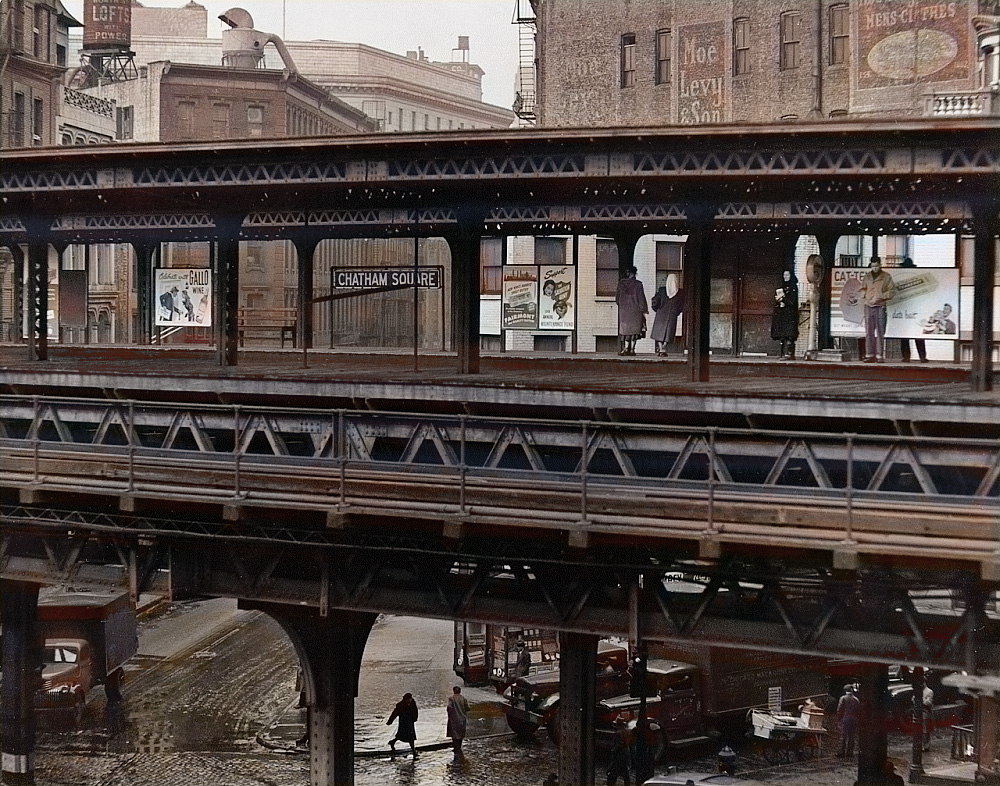
* “Some years ago Long and I attempted to explore the Fulton Fish Market section of New York [Brooklyn’s Fulton Street continues across the river] which is full of quaint scenes and buildings. Ordinarily I have about 50 times the vigour and endurance of young Belknap – but for once he had grandpa at a disadvantage! I don’t know where I left the lunch I had eaten an hour previously – for I was too dizzy to read the street signs! In the end I managed to stagger out of the stench without actually losing consciousness.” (Page 139).

* 1933. “Heard a fine lecture on Spinoza – whose contributions to philosophy I appreciate more & more as I get older – at Brown just before the cold spell. It was delivered under the auspices of the newly founded R.I. Philosophical Society – a thing I may join if I find membership worth the annual dollar. … I shall attend later lectures in the course – all dealing with aspects of philosophy”. (Page 140). Wikipedia has the Society as being founded in 1950. Obviously it was actually founded circa 1933, and then perhaps re-founded in 1950 after the war.

* “I liked [the story] ‘The Green Wildebeest’, & have it noted down for mention in any future edition of my [“Supernatural Literature”] article”. (Page 144) This was the opening tale of John Buchan’s collection of club stories The Runagates Club (1928). Buchan’s hero Richard Hannay recounts a mystical tale from his years on the South African frontier.

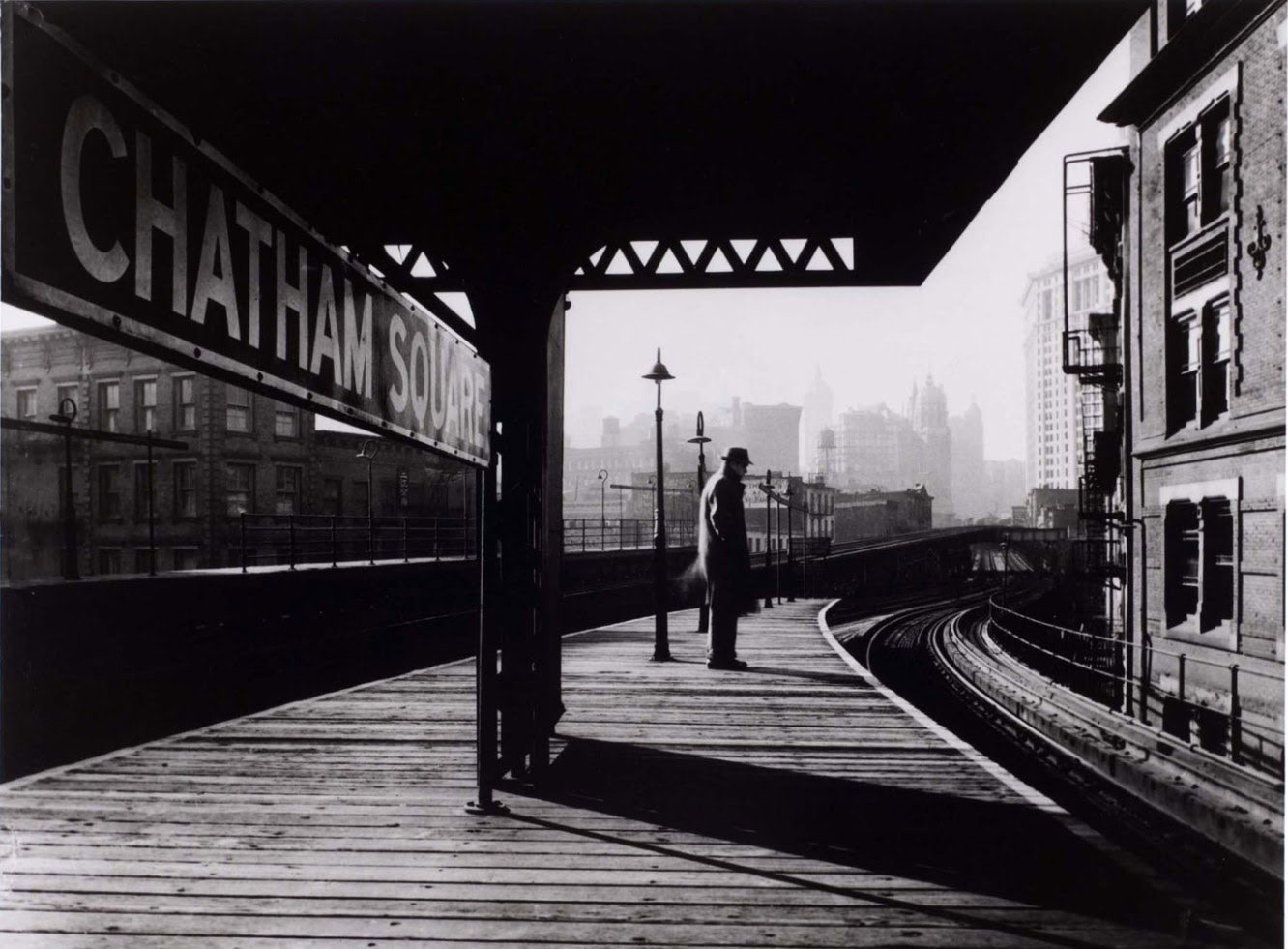
* Lovecraft finds the movie version of Strange Interlude (1932, seen New Year 1933 with the Longs) to be “excellent”. It’s a cut-down of a four-hour play by Eugene O’Neill, apparently a high-pitched drama about family paternity secrets and a neurotic woman. I can’t see any likely influence on “The Thing on the Doorstep”, written August 1933. One of the characters is somewhat of a Lovecraft-alike, at least visually…

* From September 1932 Lovecraft, seeking to economise even further as the Great Depression gripped, started to use the cheap Carter’s Kongo Black ink. It only cost a “dime-per-2 oz.-bottle”. (Page 147).

* [as a youth] “I loved firearms & could scarcely count the endless succession of guns & pistols I’ve owned. I wish even now that I hadn’t given away my last Remington [rifle].” (Page 158).

* “Half the stories I wrote during that research period (when I was 14, 15, and 16) had to do with strange survivals of Roman civilisation in Africa, Asia, the Antarctic, the Amazon Valley, and even pre-Columbian North America.” (Page 336).

* He gives a hint about what his early destroyed stories might have been like, re: “a youthful mystery of my own … involving the name of Afrasiab. You doubtless recall the closing passage of Poe’s [story] “Premature Burial” … ‘but, like the Demons in whose company Afrasiab made his voyage down the Oxus, they must sleep, or they will devour us – they must be suffered to slumber, or we perish.’ … I wove all sorts of hideously fanciful images about that voyage, and made obscure references to it in many of my juvenile tales. … Only after years did I find out somehow that Afrasiab came from [Hakim] Firdousi’s great Persian epic [the Shah-Namah, which he cannot obtain and so] … I am still ignorant of Afrasiab’s frightful adventure with the daemons.”

Poe scholars cannot find this reference in the Shah-Namah, at least in English, and nor can I. Afrasiab is also to be found in Lovecraft’s story “The Nameless City”… “In the darkness there flashed before my mind fragments of my cherished treasury of demoniac lore … I repeated queer extracts, and muttered of Afrasiab and the demons that floated with him down the Oxus”. Also perhaps relevant is the reference to “Turanian-Asiatic magic” magic in “The Horror at Red Hook”, because Afrasiab was a semi-mythical Turianian king and also a deathless and magic-powered ‘super-villain’ of regional folklore. The sands anciently swamped the cities on the west of the river Oxus and — as Afrasiab was also considered a regional ‘drought-bringing demon’ — I guess the idea of his voyaging the Oxus might perhaps be connected with the natural historic drying of this liminal border landscape?

* “my absence of training in economics and sociology is really a deplorable handicap to me in my efforts to understand the trend of these tense times, when so much of the motivation of nations, as well as their internal problems, depends almost wholly on complex economic consideration.” (Page 169). “I myself, for example, am so ignorant of economics, engineering, finance, and other basic governmental essentials, that no really enlightened nation ought to allow me to vote or hold office.” (Page 224).

* “my old principal is in an insane asylum. The one where my young friend Brobst is now a nurse.” (Page 173) “My only exploration of a madhouse was last year”, that year being 1932, with Brobst at his institution. (Page 191). Lovecraft doesn’t say if he encountered his former headmaster on this visit.

* Lovecraft uses his old telescope (last seen being carefully cleaned in Vol. 3) in the summer of 1933… “Had my telescope out last night – pretty fair sky-vista here. Mars and Jupiter were so close together that I could get them into the same telescopic field with a 150-diameter eyepiece.” (Page 203).

* In the secluded St. John’s churchyard in Providence, Lovecraft would have shown visitors… “the impressive altar tomb [of the astronomer] John Merritt, the London merchant who came to Providence in 1750 & had the first coach, first astronomical telescope, & first globes in town.” (Page 276).

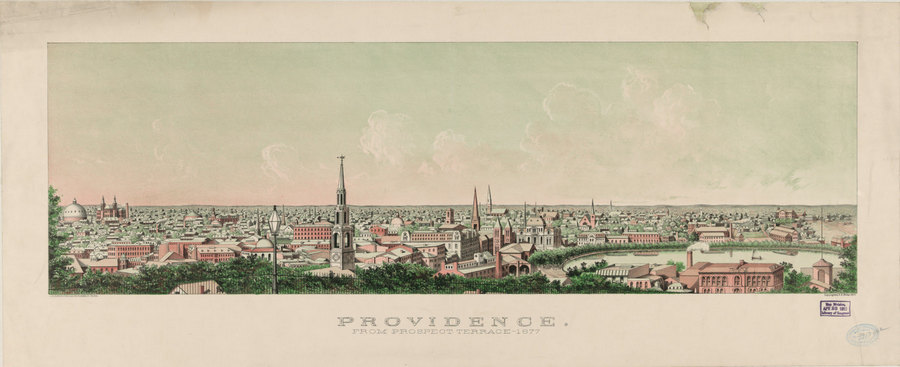
* His beloved Prospect Terrace was… “on my direct route downtown from 10 Barnes St.” (Page 273).

* Lovecraft concedes that religion does at least, behind the veneer of “fictitious heavenly authority”… “embody a vast amount of really useful precept – the massed experience of mankind worked out by trial & error” (Page 278). Yet “It would have been far better if we had kept our classical conception of ethics as a matter of beauty, good sense, & taste … for its survival would not then have been so imperilled by the decline of [the Christian] religion.” (Page 279).

* In the opening weeks of 1934 he reads Weigall’s Wanderings in Roman Britain (1926) and this overturns his previous conceptions of the likely ‘root historicity’ of the mythical King Arthur. Arthur is now deemed by Lovecraft no longer a Welsh “Cymric-speaking tribal chieftain”, but rather ‘the last of the Romans’ alive in the British Isles after the withdrawal of the Legions. (Page 292 onward). This is interesting in terms of its suggesting that Lovecraft had not seen book reviews of Weigall’s reputable book, which went through four editions. Nor it appears had he even heard of the idea being put forward, which might indicate that in the years 1926-1934 he was not really following British archaeology or Dark Ages history. This seem curious for one who had by then been corresponding with R.E. Howard on such topics for three years. Incidentally, note that a recent book on the main root possibility for a ‘Roman King Arthur’, i.e. deriving from a “Celtic-Roman Artorius”, fairly conclusively undermines the evidence for the idea.

* In 1933 he is still using his… “#2 Brownie which I bought 26 years ago – in far-off 1907. A sturdy two dollars’ worth!”. His early Box Brownie was one of the first mass-market ‘snapshot’ cameras.

* “I have for years been thinking of basing a tale on the celebrated Oracle of Trophonius – that yawning cave whose nighted revelations were such that none who had received them ever smiled again.” (Page 325).

* A dream indicates the possible date when Lovecraft discovered that he could see from his room the lads in the neighbouring frat house. This is evidenced in “The Haunter of the Dark” (“Students in the Psi Delta house, whose upper rear windows looked into Blake’s study…”). Lovecraft had moved into No. 66 College St. in May, and thus only in November would the leaves be off the trees to reveal previously concealed neighbouring windows — and views into them in the early evening before curtains were pulled. A November 1933 letter appears to offer confirmation of this view, and the strong impact of its revealing on Lovecraft… “Last week I had a very vivid dream of forming the acquaintance of a group of quiet, well-bred, and apparently wholesome young men, all of whom lived in quasi-bohemian apartments in ancient houses along a hill street in Providence which I had never before discovered”. (Page 235). Later used for the late and rather ponderous Derleth story “The Dark Brotherhood”.

* January 1934… “H.C. Koenig has for some time been lending me books on witchcraft from his remarkably extensive library.” (Page 347) Early in Vol 5. he remarks that he is continuing to get regular batches of such books from Koenig.

* Lovecraft appears to have first met his New York friend la Touche in 1924 and through Henneberger… “I met him in Henneberger’s suite at the Hotel Empire in N.Y. … the old-time wit & columnist La Touche Hancock” (Page 369).


And a little bit from Vol. 5, to go to the end of 1934:

* “No real civilisation wishes to change anyone’s opinion, except through rational arguments designed to make the holders of error see the error of what they have been holding.” (Vol. 5, page 13).

* For his long stay in Nantucket he roomed at the “Overlook”. (Vol. 5, page 25). This is now the ‘Veranda House’ at 3 Step Lane, Nantucket. It was known as the ‘Overlook’ from 1930-45. Named for its… “three spacious verandas on each of the three sides of the house, where patrons may enjoy the benefit of the sea breezes”.

The view.

The hotel. This was the cheapest he could find.

* He finishes 1934 with his aunt’s powerful radio set, as they listen by the Christmas tree to the hour-long British Empire Christmas broadcast of… “Etheric [short-wave radio] conversations between London & the uttermost reaches of our Dominions – Australia, Tasmania, Canada, India, South Africa, & so on – with other area sages from Scotland, Ireland, Liverpool, & a country place in the Cotswolds… & finally an address by the King. I don’t know when I’ve ever had a greater imaginative stimulus.” (Vol. 5, page 84). Live, the hour was an intricately coordinated triumph of radio engineering and clear evidence of the new medium’s global reach. The British Empire then still ruled a quarter of the world’s people, so Lovecraft’s fond cry of “God Save the King!” was no archaism.

Still from the excellent movie “The King’s Speech”.

Arthur Leeds in The Black Cat

28 Tuesday Jun 2022

Posted by asdjfdlkf in Historical context, Kittee Tuesday

≈ Leave a comment

An Arthur Leeds crime one-pager from The Black Cat, March 1920. Newly on Archive.org.

And a longer railway tale in the May issue, “Over the Great Divide”.

The Letters of Edgar Allan Poe

27 Monday Jun 2022

Posted by asdjfdlkf in Historical context, Scholarly works

≈ Leave a comment

Online for free, The Letters of Edgar Allan Poe in the revised two volume Gordian Press edition: Vol. 1 and Vol. 2 (both 1966).

Also, from the same worthy press and site, Poe’s collected Imaginary Voyages (1994). This is also on Archive.org “to borrow”, but here it’s free in full-text.

← Older posts
Newer posts →


Please become my patron at www.patreon.com/davehaden to help this blog survive and thrive.

Or donate via PayPal — any amount is welcome! Donations total at Easter 2025, since 2015: $390.

Archives

  • April 2026
  • March 2026
  • February 2026
  • January 2026
  • December 2025
  • November 2025
  • October 2025
  • September 2025
  • August 2025
  • July 2025
  • June 2025
  • May 2025
  • April 2025
  • March 2025
  • February 2025
  • January 2025
  • December 2024
  • November 2024
  • October 2024
  • September 2024
  • August 2024
  • July 2024
  • June 2024
  • May 2024
  • April 2024
  • March 2024
  • February 2024
  • January 2024
  • December 2023
  • November 2023
  • October 2023
  • September 2023
  • August 2023
  • July 2023
  • June 2023
  • May 2023
  • April 2023
  • March 2023
  • February 2023
  • January 2023
  • December 2022
  • November 2022
  • October 2022
  • September 2022
  • August 2022
  • July 2022
  • June 2022
  • May 2022
  • April 2022
  • March 2022
  • February 2022
  • January 2022
  • December 2021
  • November 2021
  • October 2021
  • September 2021
  • August 2021
  • July 2021
  • June 2021
  • May 2021
  • April 2021
  • March 2021
  • February 2021
  • January 2021
  • December 2020
  • November 2020
  • October 2020
  • September 2020
  • August 2020
  • July 2020
  • June 2020
  • May 2020
  • April 2020
  • March 2020
  • February 2020
  • January 2020
  • December 2019
  • November 2019
  • October 2019
  • September 2019
  • August 2019
  • July 2019
  • June 2019
  • May 2019
  • April 2019
  • March 2019
  • February 2019
  • January 2019
  • December 2018
  • November 2018
  • October 2018
  • September 2018
  • August 2018
  • August 2015
  • July 2015
  • April 2015
  • March 2015
  • February 2015
  • January 2015
  • December 2014
  • November 2014
  • October 2014
  • September 2014
  • August 2014
  • July 2014
  • June 2014
  • May 2014
  • March 2014
  • February 2014
  • January 2014
  • December 2013
  • November 2013
  • October 2013
  • September 2013
  • August 2013
  • July 2013
  • June 2013
  • May 2013
  • April 2013
  • March 2013
  • February 2013
  • January 2013
  • December 2012
  • November 2012
  • October 2012
  • September 2012
  • August 2012
  • July 2012
  • June 2012
  • May 2012
  • April 2012
  • March 2012
  • February 2012
  • January 2012
  • December 2011
  • November 2011
  • October 2011
  • September 2011
  • August 2011
  • July 2011
  • June 2011
  • May 2011
  • April 2011
  • March 2011
  • February 2011
  • January 2011
  • December 2010
  • November 2010
  • October 2010
  • September 2010
  • August 2010
  • July 2010

Categories

  • 3D (14)
  • AI (73)
  • Astronomy (70)
  • Censorship (14)
  • de Camp (7)
  • Doyle (7)
  • Films & trailers (101)
  • Fonts (9)
  • Guest posts (2)
  • Historical context (1,096)
  • Housekeeping (91)
  • HPLinks (81)
  • Kipling (11)
  • Kittee Tuesday (92)
  • Lovecraft as character (58)
  • Lovecraftian arts (1,632)
  • Lovecraftian places (19)
  • Maps (70)
  • NecronomiCon 2013 (40)
  • NecronomiCon 2015 (22)
  • New books (968)
  • New discoveries (165)
  • Night in Providence (17)
  • Odd scratchings (984)
  • Picture postals (276)
  • Podcasts etc. (431)
  • REH (186)
  • Scholarly works (1,473)
  • Summer School (31)
  • Unnamable (87)

Get this blog in your newsreader:
 
RSS Feed — Posts
RSS Feed — Comments

H.P. Lovecraft's Poster Collection - 17 retro travel posters for $18. Print ready, and available to buy — the proceeds help to support the work of Tentaclii.

Proudly powered by WordPress Theme: Chateau by Ignacio Ricci.