• About
  • Directory
  • Free stuff
  • Lovecraft for beginners
  • My Books
  • Open Lovecraft
  • Reviews
  • Travel Posters
  • SALTES

Tentaclii

~ News & scholarship on H.P. Lovecraft
Tentaclii

Author Archives: asdjfdlkf

HPLinks #15 – Zann, R Lovecraft, a new Lovecraft philosophy book, Lovecraft and nostalgia, a new REH letter and more…

28 Thursday Nov 2024

Posted by asdjfdlkf in HPLinks, Lovecraftian arts, REH, Scholarly works

≈ Leave a comment

HPLinks #15.

* In the latest Journal of The Fantastic in the Arts (35.1, 2024), “Beyond Worlds: Music, Literature, and the Fantastical in H.P. Lovecraft and E.T.A Hoffmann” ($ paywall). “Zann” is here compared…

with Hoffmann’s [story] “Ritter Gluck: Eine Erinnerung aus dem Jahre 1809” [ with discussion…] especially concerning the influence of German Romantic notions of music […] In Lovecraft’s tale, the unheimlich (‘uncanny’) is invoked through and by the romantic notions of music that the author utilizes to wrestle with language’s limitations in expressing the abstract, thus showcasing the importance of a musical approach to the fantastical.

* “Vascones, Pompelo and Calagurris in the three Versions of ‘The Very Old Folk’, by H.P. Lovecraft” a new book chapter, archived on Academia.org. In Portuguese. Relates to the previous 2019 article on the same topic, freely online in English, by the same author.

* A new issue of the open-access Journal of Gods and Monsters (Winter 2024).

* LovecraftR 1.2 on GitHub. Being Lovecraft’s stories pre-packaged for computational text-analysis using the R coding language. Regrettably the sources of the texts are not given. Thus, it’s uncertain if these are the gold-standard Joshi-corrected texts or not.

* Now free in open-access (was previously $ paywalled), the broad survey article “‘Awed listening’: H.P. Lovecraft in classic and contemporary audio horror” (2022).

* A new £135 academic philosophy book from Routledge, Reading Lovecraft in the Anthropocene: A New Dark Age, due in early spring 2025. If one looks past the book’s alarmist, tendentious and pseudo-scientific title (perhaps foisted on the German author by the publisher) then the book sounds interesting. The core of the blurb states…

the book traces Lovecraft’s gothic and decadent influences, examines materiality and its transcendence in weird fiction, and considers the posthuman and postsecular dimensions of his narratives. Through this, the study highlights Lovecraft’s role in navigating the challenges of a secular, disenchanted world, offering a ‘dark enchantment’ that echoes current philosophical concerns.

* Psychogeographic Review reviews the forthcoming book Ghost of an Idea: Hauntology, Folk Horror and the Spectre of Nostalgia (2025) which begins with Charles Dickens and then apparently… “closely consider[s] the works of other writers such as H.P. Lovecraft and Alan Moore” in relation to nostalgia.

* Futuramen blog brings news that there’s now a hardback for Lovecraft’s Collected Fiction: A Variorum Edition Volume 4 (Revisions and Collaborations). According to the post, the first three volumes were hardback but this fourth book had only been in paperback until now.

* Miskatonic Books still has copies of Arcana Viridia: An Occult Herbarium (2013) which sounds like a very unusual book of interest to some readers of Tentaclii. Apparently the handsomely-presented and illustrated book is the result of some 25 years of active field and desk research. A possible Christmas present?

* Deep Cuts blog looks at “Her Letters to Clark Ashton Smith: Annie E.P. Gamwell”. This being Lovecraft’s aunt.

* The Pulp Superfan surveys the Lovecraft-Eddy tales and memoir books currently in print from Fenham.

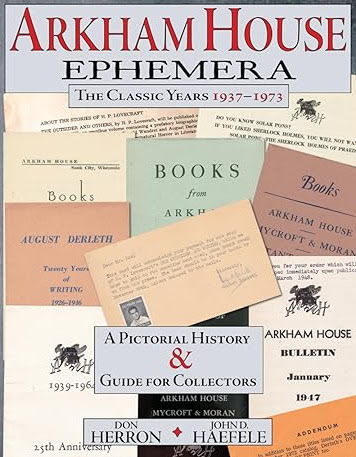
* Wormwoodania blog looks at the new Arkham House Ephemera: The Classic Years 1937-1973: A Pictorial History & Guide for Collectors.

* It seems the HPLHS will visit Australia in 2025, having been picked as International Guests of Honour for Chaosium Con Australia 2025. I assume they will receive travel tickets, a hotel room, and their own personal shoggoth… rather than it being just a virtual visit over the InterWebz.

* The latest issue #49 (November 2024) of The Paperback Fanatic has an article on the “UK Panther editions of Lovecraft” and also a “Guide to Conan Pastiches”. Available now, in paper only.

* A new Robert E. Howard Letter Dated to August 1932 has been discovered. The letter was sent to E. Hoffmann Price. Among other matters, REH discussed a sketch-portrait of Lovecraft.

* A new public-domain one-hour audio reading of “Red Shadows” by Robert E. Howard, at Librivox.

* Another text interview with the creators of the new HPL graphic-novel partial-biography of Lovecraft. In Italian.

* New to me, I find that acclaimed comics artist P. Craig Russell adapted Lovecraft, first published in badly-printed form circa 2003 and then pristine in Murder Mysteries and Other Stories: Gallery Edition (Titan, 2015). Apparently the story was “From Beyond”, though I can’t find any sample pages from the adaptation. The sumptuous 2015 oversized edition is now well out-of-print and is (from the sound of it) highly collectable.

* The new volume Dripping with Fear – Ditko Archives Volume 5 collects Ditko’s mystery-horror comic-book shorts, from 1958 onwards.

* A review of a new videogame at GameSpew. “Blood on the Thames is amateur theatre meets H.P. Lovecraft”, and the game is found by the reviewer to be a “wobbly but oddly appealing adventure”.

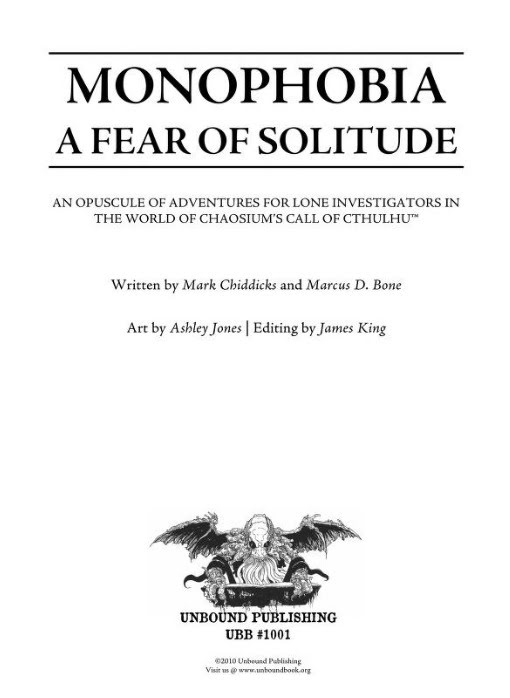
* And finally, Spectre Miniatures, the British maker of 1.1″ RPG miniatures, has released a new ‘machine-gun Mythos’ set along with some game rules…

The Mythos range is Spectre’s first release for ‘Supernatural Horror In Miniature’. Inspired by the works of H. P. Lovecraft, Mythos takes Spectre Operations players back to the weird world of Lovecraft’s 1930s America.


— End-quote —

“My favourite toys were very small ones, which would permit of their arrangement in widely extensive scenes. My mode of play was to devote an entire table-top to a scene, which I would proceed to develop as a broad landscape […] Toy trees — of which I had an infinite number — were used with varying effect to form parts of the landscape […] even forests (or the suggested edges of forests). Certain kinds of blocks made walls & hedges, & I also used blocks in constructing large public buildings. […] My people were mainly of the lead-soldier type [sometimes adapted and re-painted …] My mode of play was to construct some scene as fancy — incited by some story or picture — dictated, & then to act out its life for long periods — sometimes a fortnight — making up events of a highly melodramatic cast as I went. These events would sometimes cover only a brief span — a war or plague or merely a spirited pageant of travel & commerce & incident leading nowhere — but would sometimes involve long aeons, with visible changes in the landscape & buildings. Cities would fall & be forgotten, & new cities would spring up. Forests would fall or be cut down, & rivers (I had some fine bridges) would change their beds. […] Horror-plots were frequent […] There was a kind of intoxication in being lord of a visible world (albeit a miniature one) & determining the flow of its events.” — Lovecraft recalling his time circa 1900 as a boy pioneer of the ‘tabletop RPG’, in a letter of November 1933.


HPLinks #14 – Sonia as researcher, The Temple as radio drama, Tanabe in the Dreamlands, a tentacular takeover, and more…

21 Thursday Nov 2024

Posted by asdjfdlkf in HPLinks, Lovecraftian arts, Scholarly works

≈ Leave a comment

HPLinks #14.

* A long new post on Lovecraft’s wife Sonia as a historical researcher. This was her paid role with the Brooklyn Children’s Museum, undertaken in 1933, and which temporarily brought Lovecraft and Sonia together again. This scholarly post draws on as-yet unpublished archives.

I found an eBay picture of the Museum’s staff entrance seen in 1950, at the same Brower Park site that Sonia would have known.

* Librivox have released a new ghost and horror collection of public domain audio. Includes free and re-usable readings of Lovecraft’s “Cool Air” and “Polaris”, and from the Lovecraft Circle Arthur Leeds’s “The Return of the Undead” and Frank Belknap Long’s “Men Who Walk Upon the Air”. The latter appeared in Weird Tales for May 1925, alongside Lovecraft’s “Erich Zann”. Also available on on Archive.org.

* Now available for purchase and download, the Dark Adventure Radio Theatre full-cast audio adaptation of Lovecraft’s “The Temple”.

* Fumito Logica reviews the new Italian graphic novel of Lovecraft’s life and death…

HPL’s anti-humanism was a desperate faith in the absurd, in a silent and indifferent cosmos, while he lived through an era that clung to habit and the superfluous. […] Yet his desperation gave him the ability to transcend his era, while remaining sitting in a cold room in Providence. He used the power of the word to cross the threshold of eternity, entering dimensions that seek to erase every residue of humanity. [The book] is an imaginative and intimate biography, material and evanescent. Taddei insinuates himself into HPL’s flesh, while Lacavalla paints his darkest nightmares without sparing himself.

Also, Italian paper Il Manifesto has an interview with the writer and artist (spoiler alert). Freely available online.

* Heavy Metal magazine’s blog surveys the Lovecraft Art of John Holmes, the British artist who painted the covers for the early 1970s Ballantine paperbacks.

* New on YouTube, Christian Matzke Interview: Creating H.P. Lovecraft’s Necronomicon, and also with some chat about his Alien Absolution fan-film.

* Newly listed on Amazon UK, the forthcoming book Les Chats d’Ulthar (‘The Cats of Ulthar’) by Gou Tanabe, set for release on 23rd January 2025 in French. Three Lovecraft tales of the Dreamlands are adapted by the Japanese graphic-novel master, “The Other Gods”, “Celephais” and “The Cats of Ulthar”.

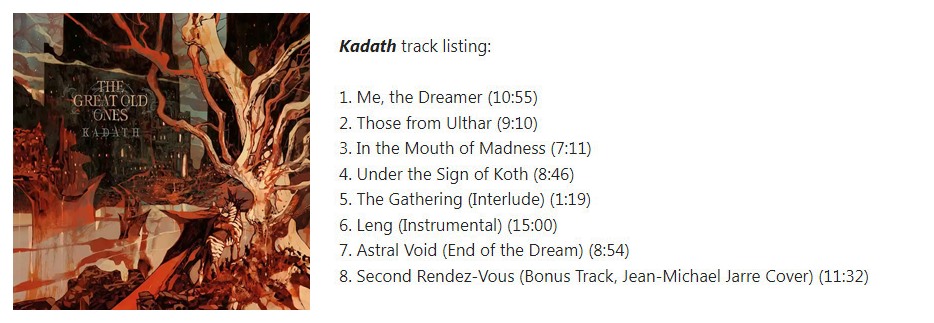
* Metaladdicts brings news that the band “The Great Old Ones Release New Single ‘In The Mouth Of Madness'”, this being… “a haunting precursor to their forthcoming [Dreamlands themed] album, Kadath”. The album is due at the end of January 2025.

* Now published, Chaosium’s latest edition of Cthulhu by Gaslight Investigators’ Guide: Mysteries and Frights in the Victorian Age. This is the 2024 edition, presumably expanded and aligned with the latest core RPG game. I see the first edition was published way back in 1986, and that by 2012 there had been three editions. The book is possibly also useful for Mythos writers unfamiliar with the details of the British Isles in this period.

* From the HPLHS and new to me, The Providence Pack for Lovecraft’s Providence, including a wall-map sized reprint of the College Hill plat map. Again, potentially useful for writers as well as RPG players.

* Paywalled in the new gothic studies book Graveyard Gothic (2024), the chapter “Weirding the Gothic graveyard”. This discusses… “how Lovecraft uses the graveyard in “The Tomb” (1922), “Herbert West – ​Reanimator” (1922) and others”. At the end the author sees the later “The Call of Cthulhu” (1928) as “reshaping [the graveyard] through the prism of a very modernist artistic and scientific sensibility”.

* A forthcoming 1,100+ page hardcover claiming to be The Complete Fiction, Poetry, and Essays of H.P. Lovecraft. Set for publication in early December 2024 at nearly £50. The publisher is Revive Classics, which shovels public-domain classics into slick hardback covers at high prices… and gets disappointed one or two-star reviews. I’d be willing to bet that this isn’t complete. The legit Collected Essays set from Hippocampus runs to five volumes and some 1,500 pages in small type. The legit collected poetry is around 600 pages in a wide oversized book. There’s no way you could cram all that, plus all the fiction, into just over 1,100 9″ x 6″ pages. Buyer beware.

* New on Archive.org for download, Arthur Machen’s late novel The Green Round (1933).

This was a book read by Lovecraft, early in 1934. He found it meandering but was positive…

Have just read Machen’s new book — The Green Round — his first weird production in 17 years. It is really extremely interesting — with something of that persistent sense of unreal worlds impinging on the real world which many imaginative persons possess. In the casualness & unexplainedness of the phenomena represented, it recalls some of Machen’s queer prefaces to his earlier books”. — Lovecraft to Miss Toldridge, March 1934.

* And finally, science seemed to become more weirdly Lovecraftian this week. More so than usual, these days. An Oxford University expert speculated that the octopus species will in time take over the world, should humans somehow die off or leave for the stars. Plus our fledgling quantum computers can, it seems, be reliably powered by weird imaginary cats. A scenario that springs to mind, then: a post-human quantum computer powered by an octopus named Cthulhu, who is dreaming about imaginary cats (possibly from Ulthar). This octo-cat-powered computer is keeping ‘alive’ the AI-reconstructed personality of one HPL, while located in a crypt deep under an Earth that is being burned into its final cinder by the last stages of an expanding sun. Add a few time-travelling humans who suddenly arrive in the crypt, and must extract HPL from the tentacular embrace of Cthulhu before the planet burns. This may perhaps be a Lovecraftian RPG scenario of use to some readers. Or possibly just another crap episode of Doctor Who.


— End-quote —

In March 1934 Lovecraft gave tongue-in-cheek advice to his friend Morton, on the possibilities of writing a weird mystery tale for Morton’s mineralogist colleagues…

“… you could have a great mineralogical curator from Paterson [Morton’s museum in New Jersey] murdered by some spy of the American Museum – the latter institution being jealous of having its pebble section surpass’d. Later it could be discover’d that the assassin had left his photograph imprinted on some obscurely sensitive stone (if none exists, invent one!) that yields up its secrets only under a blend of inframauve light from a special fur-lined vacuum tube. Then, when the murderer has explain’d this away by saying he left the image on some other visit, in stalks Old King Brady the Petrological Pinkerton with a radio-active kind of feldspar or sparkill or solidified argon which restores the life-vibrations of the murder’d man. Up sits the great curator on his bier, and points his finger at the dastard from 79th street. “He done it!” “He done it!” But since the victim ain’t dead no more, the murderer is let off on probation — tho’ the American Museum is forced to transfer most of its treasures to the enlarged marble palace at Summer Street and Broadway [at Paterson]. […] For gawd’s sake don’t have puppet [pseudo-comic names] like Sir Stoneham Pyrites, Capt. Magnetite de Magistris, Prof. Boulder B. Traprock, etc., etc. cluttering up your pages! [As for the follow-on serial…] You could vary your locale and incidents magnificently; having unknown minerals found in crypts under aeon-old deserted cities in the African jungle, and all that. Then there are hellish stony secrets filtering down from the forgotten elder world — think of the Eye of Tsathoggua, hinted at in the Livre d’Eibon, and of the carved primal monstrosity in lavender pyro-jadeite caught up in a Kanaka fisherman’s net off the coast of Ponape! God! Suppose the world knew why Curator Konbifhashi Taximeto of the Wiggiwaga Museum in Kyoto committed hara-kiri after examining the fluorescent emanations of this unholy blasphemy through the differential spectroheliograph!”

In an earlier post at Tentaclii I discovered good evidence that Morton’s collection at Paterson excelled in collecting and exhibiting fluorescent — i.e. glow-in-the-dark — minerals. Hence Lovecraft’s emphasis here on the technology of special light + minerals. So far as I can tell, Lovecraft invented the word “inframauve”. Nice name for a swishy fanzine.


HPLinks #13: the Butler Asylum, sentient trees, a new CAS biography, some curious places on Europa, and more

13 Wednesday Nov 2024

Posted by asdjfdlkf in HPLinks, REH, Scholarly works

≈ Leave a comment

HPLinks #13.

Not much to find this week, between the post-Halloween hangover and Cthulhu actually winning the U.S. Presidency for once (or so one might think, judging by many swivel-eyed reactions). But here it is.

* One of the NecronomiCon’s Armitage Symposium talks has popped up online as a CC-By preprint, “Eldritch Institutions: The Birth of American Asylums, the Founding of Butler Hospital, and a Confrontation with Lovecraft”. Freely available for download.

Standard practices and procedures at the time of Winfield Scott Lovecraft’s and Sarah Susan Lovecraft’s hospitalizations will be showcased. Speculations on the effects of their treatment and death will be presented as they relate to Lovecraft’s fear of doctors and his writings.

Elsewhere, the medical humanities blog-a-zine The Polyphony outlines the ways of “Narrating Anxiety through Lovecraftian Horror”. Freely available online.

* New online via Springer’s website, but paywalled, the new academic book The Sentient Tree in Speculative Fiction.

* A new two-part interview with Tolkien / Lovecraft scholar Dale Nelson part one and part two.

* S.T. Joshi has announced he plans to “devote much of 2025” to writing a Clark Ashton Smith biography. He also links to two recent in-depth interviews on his Lovecraft scholarship, freely available on YouTube.

* Now available in Spanish, a translation of Blood & Thunder: The Life & Art of Robert E. Howard.

* On YouTube, a spin through the Robert E. Howard paperbacks published by Orbit in the UK in the 1970s. I recall I was most envious when I saw that a boyhood neighbour and local tough-lad had a row of these on his shelves.

* The Blasphemous Tome #13 is coming soon… “This new issue will contain a brand-new and gruesome Call of Cthulhu scenario from our own Matt Sanderson, as well as all the usual year-end features.” Available to their $5 Patreon patrons.

* Skulls in the Stars discusses what you might enjoy if you purchased the budget ten-story Book of Iod by Henry Kuttner, a young writer who was a late correspondent with Lovecraft.

* The journal Metal Music Studies ($ paywalled) is inviting… “short retrospectives on foundational and important publications, for the reviews section”. 1,000 to 1,500 words each. I imagine there must be some key ‘Lovecraft meets metal’ scholarship to note? Interested writers should contact either ross.hagen@uvu.edu or edwardbanchs@gmail.com for details.

* My quick survey of what might be entering the public domain in January 2025, drawn from items fitting the categories of ‘author died in 1954’ or ‘published in the U.S. in 1929’.

* Archive.org log-ins were back, last weekend, plus the very useful ability for scholars to ‘search inside’ their books and magazines. And today I see that uploading is once again available.

* During the writing of an article on discovering space images, I happened to have a look at the distant moon Europa (our best chance of finding alien life in the Solar System). I was impressed by the creative naming of the spot on the surface I randomly chose, which seems to simultaneously evoke both Lovecraft tales and the Dreamlands…

* And finally, here in the UK Wales Online bravely and rather hilariously ventures into the other famous Lovecraft, in “Life inside Wales’ last surviving adult shops”. Slightly more scary than “The Beast in The Cave”…


— End-quote —

“… humour is itself but a superficial view of that which is in truth both tragic and terrible — the contrast between human pretence and cosmic mechanical reality. Humour is but the faint terrestrial echo of the hideous laughter of the blind mad gods that squat leeringly and sardonically in caverns beyond the Milky Way. […] the world is indeed comic, but the joke is on mankind”. — Lovecraft in the Transatlantic Circulator, 1921.


Public domain in 2025

03 Sunday Nov 2024

Posted by asdjfdlkf in Odd scratchings

≈ 1 Comment

We’re fast approaching the copyright release season, at the start of 2025. Authors who died in 1954, and books and magazines published in 1929. Here are some items I dug up, which may interest Tentaclii readers. Possibly there may be some I’ve missed, and if so please comment.


Writers who died in 1954:

* Edwin Baird, first editor of Weird Tales. Books included…

The City Of Purple Dreams (anon)
The Heart Of Virginia Keep
Fay
Will-O’-The Wisp

In movies, the writers for The Cabinet of Dr. Caligari and Dr. Mabuse.


Individual unusual books of interest, from authors who died in 1954:

Verse and voice:

Aesop’s Fables Arranged For Voice.
The Poems Of Wales.
The Anthology Of Nonsense Verse.
[Reed, 1925].

Potential for graphic-novel adaptations?:

Herodotus, Father Of History. [Presumably a popular biography].
Birth Of A Spitfire. [How they were made, 1941].
The Psychology & Tradition Of Colour.

Activities that don’t age:

Clog Dancing Made Easy.
Shell Collector’s Handbook.

And a couple of local items only of interest to myself, but I’ll note them anyway. Louis Mellard, whose 1920s books included the intriguingly titled Lost Romances Of The Midlands, Tramp Artist In Derbyshire, and others.


Books and other publications of note from 1929:

Some of these may already be public-domain due to the author’s death-date.

* Aleister Crowley

Moonchild
The Stratagem and Other Stories

* Frank Owen

The Wind That Tramps the World

* Maurice Reynard

The Hands of Orlac

* Sax Rhomer

Book of Fu-Manchu

* M.P. Shiel.

The Purple Cloud (revision)

* William Seabrook

The Magic Island (first-hand book dealing with voodoo zombies, though a recent Lovecraft Annual essay convincingly shows that Lovecraft had invented the modern horror zombie)

* Joseph Gaer

Burning Bush (Jewish fairy tales)

* Richard Tooker

The Day of the Brown Horde (neolithic ‘ancient man’ novel, well-known in its day)

* John Taine

The Greatest Adventure (Antarctic horror-adventure)

* Forrest Reid

Walter De La Mare; A Critical Study.

* A. A. Milne

Toad of Toad Hall (from the world of Wind in the Willows).

* Lynd Ward

Gods’ Man: a novel in woodcuts. (proto graphic-novel)

* Anthologies

I see The Great Weird Stories (Duffield, 1929), and Master Detective Stories (Clode, 1929).


Known to Lovecraft:

* Bertrand Hart

His Providence Journal “The Sideshow” columns for 1929, in which he jousted with Lovecraft and others.

* de Castro (Lovecraft revisionist)

Portrait of Ambrose Bierce (1929, actually revised by Frank Belknap Long).

* Myrta Alice Little

“Sweet Christmas Time” (published poem, 1929).

* Everett McNeil

The Shores of Adventure; or, Exploring in the New World with Jacques Cartier (1929, though some chicanery appears to have kept his later novels locked-down, when they should not be).

* John L. Balderston

Berkeley Square (1929 published play, later made into a time-travel movie greatly admired by Lovecraft).

Also note O’Brien’s The Dance of the Machines: The American Short Story and the Industrial Age (1929), which was a book admired by Lovecraft.


The 1929 run of Weird Tales and other pulp magazines, and their contents. Note F.B. Long’s “The Hounds of Tindalos”. I’m not looking at detectives in this brief survey, but I see Derleth’s first “Solar Pons” detective stories were written in 1929. Apparently they saw print in the same year, along with the first tales of Dashiell Hammett’s Sam Spade character.

In comics, Buck Rogers and Tintin first appeared in 1929. In cartoons, there’s Popeye the Sailor-man, and apparently the Silly Symphonies(?). Though trademark-trolls may still claim the names.


Finally, in 1929 Gernsback first gave the name ‘science fiction’ to a new literary format. The first science-fiction fanzine appeared, Cosmic Stories. The first continuous science-fiction comic strip appeared, an adaptation of a novel. The first spur for modern ‘sword & sorcery’ also appeared, Robert E. Howard’s “The Shadow Kingdom” (Kull, in Weird Tales). The anthology Beware After Dark! (1929) put Lovecraft’s horror “The Call of Cthulhu” between hardcovers, and the volume had wide popular distribution. The rest is history…

HPLinks #12 – Arkham ephemera, Eddys expanded, Lovecraft as intellectual ‘extracosmic magma’, Chaosium in the UK, and more…

02 Saturday Nov 2024

Posted by asdjfdlkf in HPLinks, Lovecraftian arts, Scholarly works

≈ 2 Comments

Welcome to HPLinks #12.


“Little Bobby Barlow, for all his scant 16 years, can remember a world & a phase of civilisation — the feverish, thoughtless, reckless age of the 1920’s — which is today as dead as Tyre & Babylon!” — Lovecraft letter to Toldridge, March 1935.


* Now published, Arkham House Ephemera: The Classic Years 1937–1973 (October 2024)…

The story of [the early Lovecraft publisher] Arkham House told in the ephemera is no less than the personal autobiography of the press. Year by year and sometimes month by month, see plans unfold — always to publish more books to keep readers and collectors coming back. In this ‘Pictorial History and Guide for Collectors’ each individually numbered item spotlights a shot of the cover or distinguishing interior feature. In full color. With additional selected information, so that any item can be recognized easily from any other.

* This week John Coulthart blogged on “Richard Taylor’s Lovecraftiana”, Taylor being the artist Derleth tapped for the dust-jackets of various Arkham House books.

* Talking of covers, I’d never until recently seen the cover of this 1983 Polish translation of Lovecraft. The unknown artist has made a pleasingly loose sans-Cthulhu combination of the broken ground of the risen R’lyeh, the mind-bending portal-door found there, and a cosmic sky-vista.

Unlike many cover artists, it appears he had actually read and considered the story he was illustrating…

… everyone watched the queer recession of the monstrously carven portal. In this phantasy of prismatic distortion it moved anomalously in a diagonal way, so that all the rules of matter and perspective seemed upset. The aperture was black with a darkness almost material. That tenebrousness was indeed a positive quality; for it obscured such parts of the inner walls as ought to have been revealed, and actually burst forth like smoke from its aeon-long imprisonment, visibly darkening the sun as it slunk away…” (“The Call of Cthulhu”).

* New in The European Conservative, the article “Rebuilding R’lyeh: Houellebecq, Lovecraft, and the Meaning of Architecture”. Freely available online.

* A 2023 Brazilian post-graduate thesis, O horror cosmico de H.P. Lovecraft como expressao da barbarie do mundo administrado (‘H.P. Lovecraft’s cosmic horror as an expression of the barbarity of the administered world’). Freely available in PDF here, with an English abstract. The work examines…

relations between the aspects of form and content used by [Lovecraft] and the forms of control and domination of nature marked by technological rationality, barbarism, and fear, characteristic of the living conditions found in the administered [i.e. bureaucratic] society. The main themes [found were] criticism of the occult; of the regression to barbarism in the context of war; the constitution of authoritarianism through patriotism; war neuroses; the disappearance of the intellectual type; the formation of sects and fanaticism; and the notion of imminent threat of the end. [Lovecraft] explores, through fear, the path of regression of society and the submission of its members to disastrous ideas and policies, as well as an attack on narcissism through the exploration of the sublime. In this way his work allows contact with fears that, if brought to consciousness and reflected upon, may reduce their harmful effects on the individual [reader’s psychological] formation process.

* From Spain, the new 2024 multi-author academic book A Traves Del Abysmos: H.P. Lovecraft y el horror ontologico (‘Traversing the Abyss: H.P. Lovecraft and ontological horror’).

This chunky book costs a very reasonable 19 Euros from Amazon Spain. Had this been in English it might have been locked away at £120, by a big academic publisher aiming at a few hundred sales to academic libraries. It’s thus cheap enough to cut off the spine, scan to OCR and then auto-translate, if you needed to see it for your thesis etc. I have the contents pages auto-translated to English (the nice font and typesetting is lost), and here’s a translation from the blurb…

[Lovecraft resists] classification or explanation on a purely theoretical level. [He takes us] beyond the limits of what is human, making his literature a privileged threshold from which the most radical issues of philosophical reflection [can] emerge. The unknown relationships of time, space and matter; contact with extratemporal non-entities; the breakdown of existential certainty; the abyssal descents; the antediluvian languages; scientific revelations incompatible with what is human; the dream materialisations. Lovecraft [becomes] an extracosmic magma that flows though and illuminates the intricate network of the tensions running throughout modernity. Lovecraft’s manifestated ideas have permeated contemporary thought, prompting an important segment of thinkers to reflect on the unthinkable, talk about the unnameable and peer into the radical exteriority that surrounds the human world.

* The National Review magazine on “The Call of Lovecraft” ($ paywall). Possibly just another Halloween clickbait re-hash, of no interest to Lovecraftians? It’s difficult to know without seeing all of the article.

* Helios Press has announced a pre-order for a new expanded edition of The Gentleman from Angell Street. 140 pages in hardcover, compared to 70 pages in the previous paperback. I’m uncertain if it will contain the supposedly extant correspondence between HPL and the Eddys said to date “as early as 1918”, the existence of which was claimed many years ago by one of the Eddy descendants (see Joshi’s I Am Providence, page 465). But which was apparently not even shown to Joshi, and has never since been revealed. The blurb for the new edition does claim it will have new… “correspondence between and related to the Eddys and Lovecraft”. But that sounds to me like it could be letters sent ‘between the Eddys’, plus letters ‘related to Lovecraft’ — such as Clifford Eddy’s 1966 letter about Lovecraft (‘Knew Lovecraft’) which was published in The Providence Journal. That 1966 letter was not in the earlier edition. But all this is just my guess, based on the probability that, if we were to get actual new Lovecraft letters to the Eddys, then a lot more fuss would be being made about it in the blurb. I guess we wait and see. The book is due in 2025.

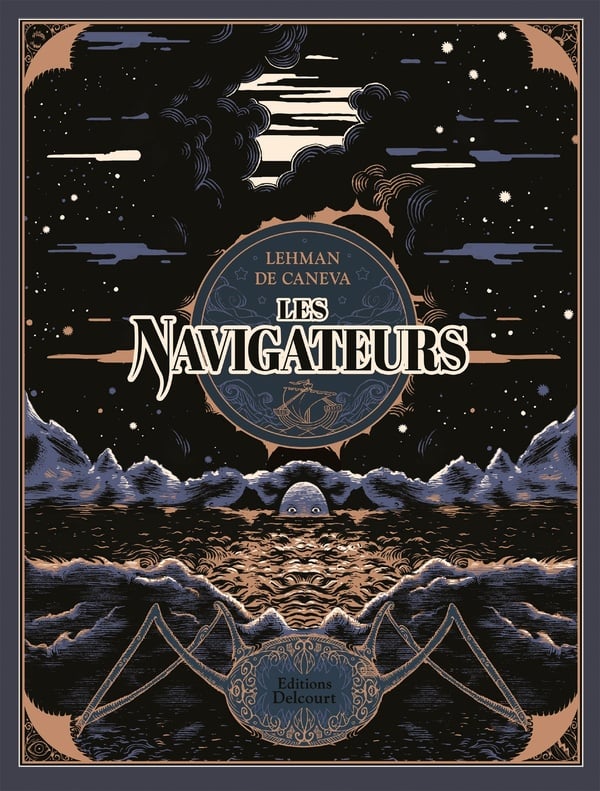
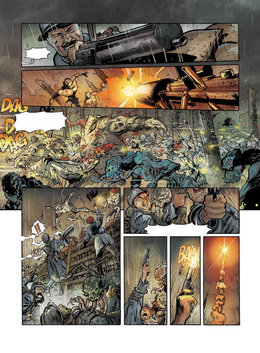
* Les Navigateurs, a new French ‘BD’ graphic novel by Caneva & Lehman. I see some good reviews, and apparently Lehman is a Lovecraftian who has made this book into a ‘Lovecraft in Paris’ tale. At least according to Marianne.net, which describes it as… “Lovecraft meets the waters of the Seine river”.

The preview pages make it look quite gritty-indie. And even less encouraging is the opening multi-page slog through some domestic teen-angst. Yet there is one page which hints the story may become more Lovecraftian later on…

* Veteran European comics publisher Humanoids plans to revive its venerable Metal Hurlant magazine title via a Kickstarter, as an English-language quarterly. The sci-fi comics magazine will aim to be… a “massive 272+page literary experience curated to theme, with all-new content from today’s best and brightest comics creators”, plus rare Moebius reprints. Given the recent big French ‘Lovecraft special’ comics-magazine, the re-launch would likely be Lovecraft-friendly. The crowdfunder is billed as “launching soon”, and currently has over 1,600 followers. Which bodes well.

* Cthulhu is wading over to the British Isles. Chaosium Con is to stage its first Call of Cthulhu RPG convention in the UK. Set for 2025.

* Cthulhu 2025, billed as a “massive” four-day camping and music festival at the start of May, and set to feature… “the best bass music artists in the country”. No nation specified, but I assume the USA and also that there may be a Lovecraft theme of some sort. But there are no further details as yet. Still, it may be of interest to some Lovecraftian creatives seeking an appreciative platform for their large-scale work.

* And finally, my new blog post on the short novel The Greatest Adventure (1929). With a bare-bones plot-summary, and some basic exploration of the unproven and probably-unprovable possibility that Lovecraft read this Antarctica novel before writing “At The Mountains of Madness”.


— End-quote —

“We are not nearly so well equipped for combating a varied environment [i.e. the natural variability of the earth as it moves through the ice-ages etc] as are the articulata; and some climatic revulsion will almost certainly wipe us out some day as the dinosaurs were wiped out — leaving the field free for the rise and dominance of some hardy and persistent insect species — which will in time, no doubt, develop a high specialisation of certain functions of instinct and perception, thus creating a kind of civilisation, albeit one of wholly different perceptions, (when other species view a given object, their ocular [i.e. seen by the eyes] image of it differs — sometimes widely — from ours) emphases, feelings, and goals.” — H.P. Lovecraft in a letter to his friend, the mineralogist and anarchist Morton, 30th October 1929.

The Greatest Adventure (1929)

01 Friday Nov 2024

Posted by asdjfdlkf in Historical context, Scholarly works

≈ 1 Comment

I see that Archive.org has the short novel The Greatest Adventure (February 1929, as reprinted in Famous Fantastic Mysteries for June 1944).

The plot (below) has some resemblance to Lovecraft’s At The Mountains of Madness. Though the only Lovecraftian comment I can find, on this interesting 1920s ‘lost race’ / ‘dinosaur survival’ combo-tale, is in the one-page introduction to its reprint in Price’s The Antarktos Cycle: Horror and Wonder at the Ends of the Earth (2006).

My plot-spoilers follow…

A whaler brings a monstrous lizard-thing to a famous scientist in California. An ice-quake in Antarctica had torn a mysterious and huge petroleum-slicked sea-passage into the heart of the frozen continent. The sailor had followed this passage, and thus found the weird lizard-thing he now shows. He also saw boulders incised with strange lizard-shaped hieroglyphs. The scientist & co. set out for Antarctica, where they find what the sailor has described. Two of the party then fly inland and from above they spy a lush green valley with giant lizard-things in it. The petroleum is partly aflame and has melted the ice, revealing the caverns below. The revealed valley also has an enormous tunnel at one end, into which the explorers fly in their plane… only to be attacked by flying lizard-things from deeper under the earth. Meanwhile, the scientist deciphers the hieroglyphs, and learns that millions of years ago a new form of life was created by an alien race, but that this new life proved impossible to control. Antarctica was then sealed to stop the alien-engineered life from infecting the planet. The boulders with the hieroglyphs were then placed around Antarctica as a ‘warning to the future’. Meanwhile, the plane explorers have blasted open a cave entrance, which has released plant-spores they think are harmless. But in the night these spores become a fast-growing plant which envelops their plane. They extricate the plane with difficulty. Thankfully the plot has provided the leaking raw petroleum (usefully held in a natural dam) which is needed to swamp and kill the noxious alien life-forms. The petroleum flood is released and set on fire, and thus the dangerous plant-spores and lizard-things are utterly destroyed. The explorers escape and the world is saved.

Somewhat similar to Lovecraft… Antarctica as a setting, mysterious stone hieroglyphs to be translated, telling of ancient aliens who artificially create ‘Frankenstein’ life-forms they could not control, but which it turns out are still very real and menacing. However, the 1929 book seems to have passed with hardly a trace. For instance, judging by Google Books the book The Search for E.T. Bell: Also Known as John Taine appears to have been able to note only one review in a California student journal. There was however one New York Times supplement review in March 1929, a review which August Derleth spotted and mentioned in passing to Lovecraft in a letter (“a lost world of horror under the Antarctic ice”) though did not send as a cutting. This aside, and the quality of the review source, would surely have had Lovecraft enquiring at the local library to see if the review could be found in the recent back-copies. However, S.T. Joshi states… “It does not appear that Lovecraft ever read Taine” (Letters to Robert Bloch, page 15). But, I’d suggest it’s not impossible that he read the 3rd March 1929 NYT review. I regret I can locate no free copy of that review, at present.

The 1944 reprint of The Greatest Adventure appeared after Lovecraft’s death, and today it can also be found on Project Gutenberg in handy readable ebook formats.

Halloween LORAs

28 Monday Oct 2024

Posted by asdjfdlkf in AI

≈ Leave a comment

Another small roundup of some of the more Lovecraftastic recent ‘style plugins’ for Stable Diffusion 1.5 AI image-generation. Free, and for use free local desktop software such as InvokeAI 5.x. You will however need a decent gaming graphics-card in your PC, ideally at least an NVIDIA 3060 with 12Gb.

Mostly LORAs this time around, but also one IP-Adapter.

Straight from Ulthar Labs Inc., the new Cat Face Identity IP-Adapter. This is a special kind of plug-in that plugs your cat’s face into each image generation. It’s not just a paste-in, it ‘knows’ what cat faces look like and adapts the source-face to the context. So you could have your favourite domestic kittee go on a trip to Ulthar, etc.

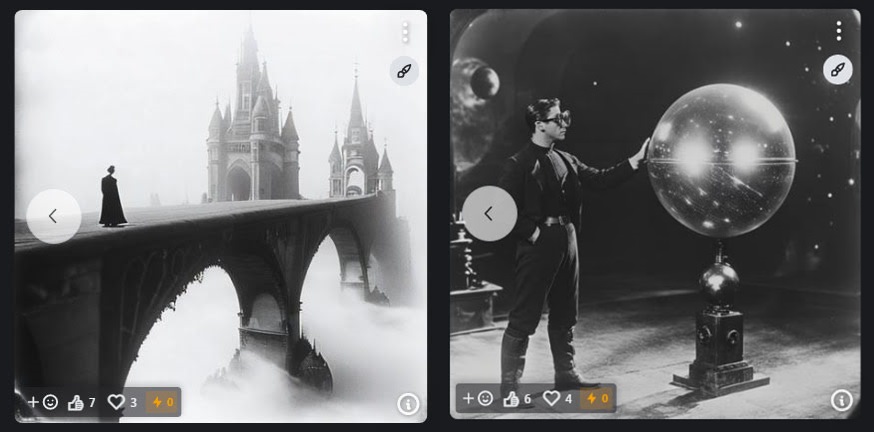
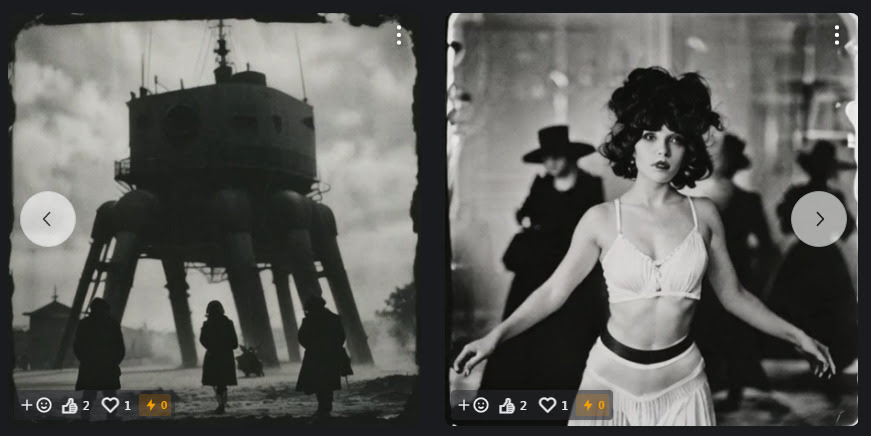
A 20s Silent Movie LORA, trained on scans of good-quality 1920s publicity-stills rather than old scratched celluloid frames, by the look of it. User feedback is good.

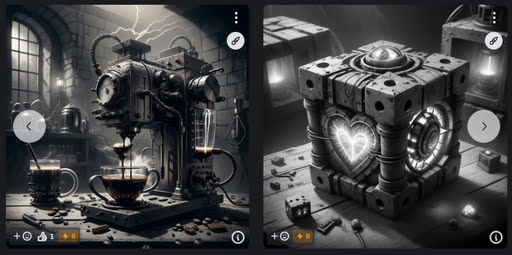
Frankenstein Tech – World Morph LORA. A ‘world morph’ LORA that makes everything you prompt for look like it’s either an interior of Frankie’s lab or else came from it. Also good for images of His Monster.

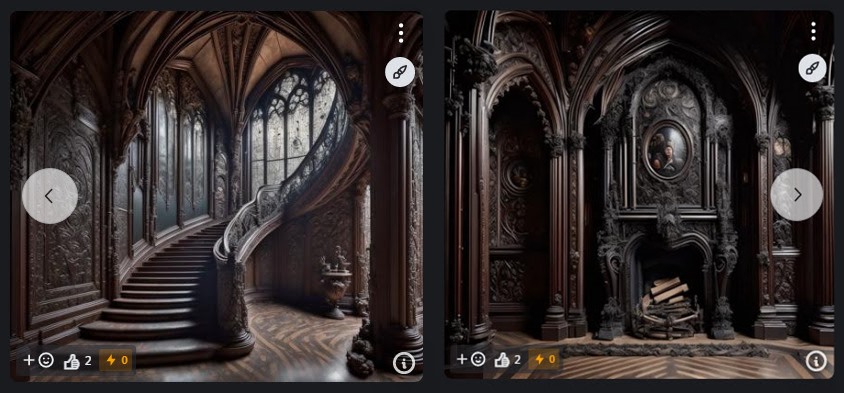
Frankenstein Tech might be combined with also-new Gothic Interiors – v1.1 LORA.

HPLinks #11 – Germans and Germany, meteors on film, flaming politics, roaring music, and more

26 Saturday Oct 2024

Posted by asdjfdlkf in HPLinks, Lovecraftian arts, New books

≈ 2 Comments

HPLinks #11.


“… fat boars we shall tear limb from limb with our hands, and gnaw with our sharp teeth. Great Thor, but this is life! We ask no more! We know the cool of deep woods, and the spell of their gloom and the things void of name that lurk or may lurk in them. Bards sing them to us in the dark with great hoarse voices when the fire burns low and we have drunk our mead.” — Lovecraft empathising with the pre-Christian forest-life of the Germanic tribes, in a Christmas letter to Frank Belknap Long in December 1923. Selected Letters Vol. 1, page 275.


* There’s now a firm date for the forthcoming German book Kulturelle Spiegelungen zwischen H.P. Lovecraft und Deutschland (‘Cultural Reflections: H.P. Lovecraft and Germany’). Amazon UK lists it as 11th November 2024 in hardcover from WGB Academic. It appears to focus around the… “German influences [that] are extremely numerous in the writer’s stories, poems, letters and essays, [plus the] German characters appearing in the tales [and] Lovecraft as influenced by the First World War”. One wonders if it also considers the correspondents and friends who had various links to Germany in the inter-war years?

* In The Cape Cod Chronicle, “Chatham Orpheum Theater To Conjure Up ‘Strange Magick'”. Being an interview with the maker of a new film Strange Magick: A Documentary which reportedly strains to bring Lovecraft and the occultist Aleister Crowley together in history. Though billed as a ‘documentary’, from what I’ve read it seems to be best viewed as a ‘what if’ movie? For instance, the interview notes the source book used for Crowley in the USA, Secret Agent 666, which centres on Crowley in 1914 – 1919. We learn there that Crowley wrote columns for such [pro-German] weekly newspapers as The Fatherland [and in one of these] he is said to have “sowed rationalizations for destroying the Lusitania” (i.e. the notorious sinking of a British passenger ship). A paragraph or two after these apparent facts the reader is also given the name of Crowley’s propagandist… “employer, George Sylvester Viereck”. This combination of published sentiment and infamous paymaster would have made Crowley forever anathema to Lovecraft, even if they had indeed met or corresponded somehow. There is talk by the movie’s makers of “Lovecraft, Crowley’s and Little’s acquaintanceship”, but I’m uncertain as yet if it’s claimed that Crowley and Lovecraft actually met in person or perhaps corresponded.

* A documentary film directed by the German director Werner Herzog, which had escaped my notice, Fireball: Visitors from Darker Worlds (2020). The last film I saw from him was the Cave of Forgotten Dreams (2010, documentary on the mysteries of Europe’s famous prehistoric cave-paintings) and I’m glad to find there’s another like it. His new film takes the topic of flaming meteorites, ‘shooting stars’, deep-impact craters and more. A new open-access paper in the journal RuMoRes draws attention to a possible Lovecraft influence on this film. Since it observes that both men… “use similar settings, such as remote places, frozen lands or volcanic areas, and extreme natural phenomena, such as the fall of meteorites”.

* New to me, Lovecraft et la Politique (2023), in French. A translated selection of his writing on politics and political philosophy, plus the new essay ‘Lovecraft: the Marx of nightmares’. Currently available in paper.

* New in the July 2024 edition of the journal Science Fiction Studies ($ paywall) “The Non-Euclidean Gothic: Weird Expeditions into Higher Dimensions and Hyper-Matter with H.P. Lovecraft”… “The first part of the paper reviews the suite of mathematical and scientific discoveries informing Lovecraft’s treatment of higher-dimensional and Non-Euclidean geometries in his mythos.”

* S.T. Joshi’s blog has a long report on a recent trip to Mexico. During which he bravely battled with our future insect-overlords, in the form of eating a dish of fried grasshoppers (“not terribly appealing”). He also endures a long trek to reach an “immense R.H. Barlow Archive”. There he was able to obtain addresses for, and then to see on Google StreetView, two former Barlow residences in Mexico.

* Joshi also reports that his own ‘Lovecraft as character’ tale “In His Own Handwriting” is now a free and authorised HorrorBabble audiobook on YouTube (36 minutes). It turns out to be a fun combo of the ‘shaggy dog’ / ‘what if?’ tale, written for an audience of learned Lovecraftians. Though with an ending I felt might have had more punch.

* S.T. Joshi’s chunky annual journal Penumbra No. 5 (2024) is now available from Hippocampus Press. Includes, among others, “John C. Tibbetts present[ing] an interview and analysis of the weird work of Brian Aldiss”, the 1960s/70s British science-fiction writer.

* An Interview with Eric Williams, who recently collected the best translations published by the old Weird Tales magazine, in a new book now available called Night Fears: Weird Tales in Translation (2023). In the interview he states…

“Weird Tales continues to dominate pop culture to this day. [Creators] all have Weird Tales in their DNA.

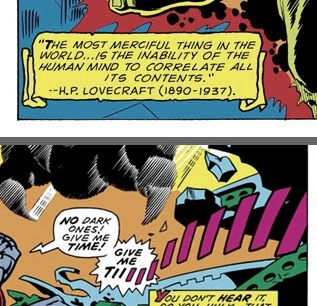
True. And Lovecraft in particular, who is often found to be thoroughly intertwined, once you know what you’re looking for. For instance I recently encountered Harlan Ellison’s two-issue stint with The Incredible Hulk (Avengers #88 crossing over into Incredible Hulk #140), which to my surprise opened with a Lovecraft quote and then went on to gleefully and freely mix several Lovecraft story-ideas (from “Cthulhu” the swamp-bachanal scenes, hideous idols connected across cultures, south Pacific co-ordinates, from “Pyramids” the giant paw, and for good measure Harlan also threw in an evolved-insect ‘space god’ who serves the unseen ‘Dark Ones’. There’s even a 1930s pulp ‘Lost Race tale’ princess).

Most of the nods-to-Lovecraft would have sailed over the heads of most readers at that time, unless they knew their Lovecraft as early as 1971. And I suspect that Harlan dashed off this creaky collage of a story in an hour or two. But it’s fun on the page, and is an example of a nod to Lovecraft in the classic Marvel Comics. I must have read it as a boy, though it seemed new to me in 2024.

* On DeviantArt from the artist, a sample preview page for the first Randolph Carter graphic novel. This made me look again, and I now see a January 2025 publication date for a Vol. 2.

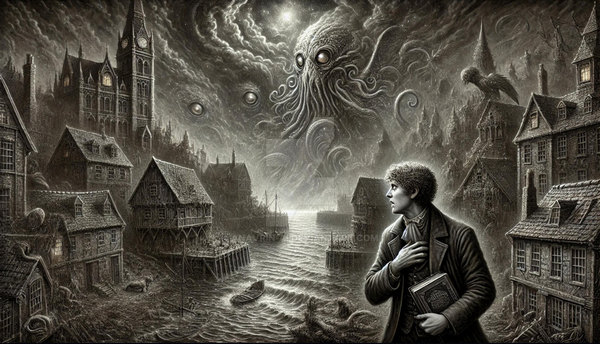
* Also on DeviantArt, an impressive new AI-generated image from Anavrin-ai…

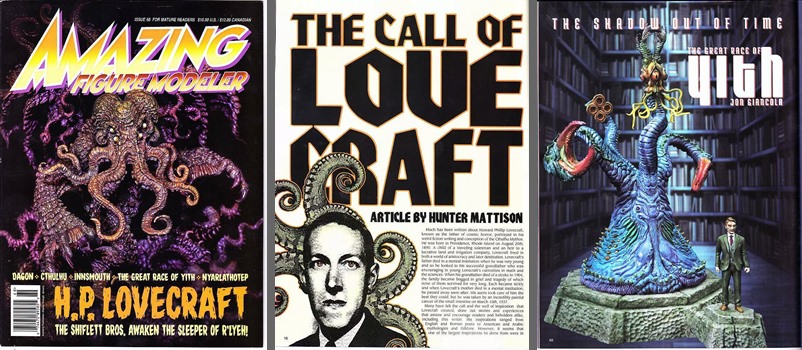
* New to me, Amazing Figure Modeler magazine #68 (2020), which was a Lovecraft special. The issue can still be picked up for a reasonable price on eBay…

* The Great Old Ones to release new studio album Kadath in January 2025. The concept album by the French metal band offers a… “descent into the Dream Cycle [of Lovecraft…] an odyssey through the realms that teeter between fantastical wonder and cosmic dread.” On YouTube there’s already a sample track, “Me, the Dreamer”.

* In the U.S., a university “Music Department hosts an eldritch performance”. This being a 60 minute opera/reading-performance of “The Dunwich Horror”, with an ensemble of classical musicians, no less. Sounds to me like they’re building up to a fully fledged screeching-and-wailing costumed opera performance, at some point in the future.

There were three scenes within the performance, each being about 20 minutes long. Each scene had their own setting and characters, with the performers rotating off of the stage in accordance with their characters in the opera. They also had costumes fitting their unique characters, and acted along with the words being sung.

* The blog Bibliotheque de H.P. Lovecraft looks at The Gamekeeper at Home: Sketches of natural history and rural life (1878), a book owned and presumably read by Lovecraft in the latter part of the 1920s. Though not listed in my old copy of Lovecraft’s Library (update: it’s in the 2024 edition), and one has to wonder if the apparent HPL name inscribed in the book may actually be another example of Loveman’s late penmanship. The book detailed the hunting and shooting life of the English countryside, through the eyes and work of a gamekeeper, in the 1870s. Unmentioned in the blog post, though some readers will recall it, is that Lovecraft had once been a crack shot with a rifle and once had a large collection of guns. Thus the book would have been doubly appealing to the Anglophile Lovecraft.

* Coming soon, a single-volume collection of Two-Gun Bob’s Adventures in Science Fantasy, checked against the original manuscripts and published by the REH Foundation.

* The new Daniel Crouch Rare Books Catalogue XXXIX: “I wisely started with a map…” – a celebration of fictional cartography (2024). £50 in paper, or you can download the sumptiously illustrated PDF for free.

* At Tentaclii this week, I note “Some changes at Amazon”. Where did all those Warehouse Deals on books go? Turns out they’re still there, but hidden and only accessible via a special kind of search. You’re welcome.

* And finally, talking of affordable books for scholars, The Internet Archive is back online. No personal logins at present, so you can’t yet change your password to a new secure one. Or upload new items. Or ‘search inside’ the text of books and magazines. In the meanwhile I’m sure they’d welcome a ‘happy to see you back’ donation.


— End-quote —

“… Cyclopean phantom pinnacles flowering in violet mist, surging vortices of alien life coursing from wonder-hidden springs in Samarcand and Carthage and Babylon and AEgyptus, breathless sunset vistas of weird architecture and unknown landscape glimpsed from bizarrely balustraded plazas and tiers of titan terraces, glittering twilights that thickened into cryptic ceilings of darkness pressing low over lanes and vaults of unearthly phosphorescence…” — H.P. Lovecraft, recalling his early experience of the sunset cityscapes and towers of New York City, in a letter of 18th January 1930.

Some changes at Amazon

26 Saturday Oct 2024

Posted by asdjfdlkf in Odd scratchings, Scholarly works

≈ Leave a comment

Some interesting findings re: using Amazon UK.

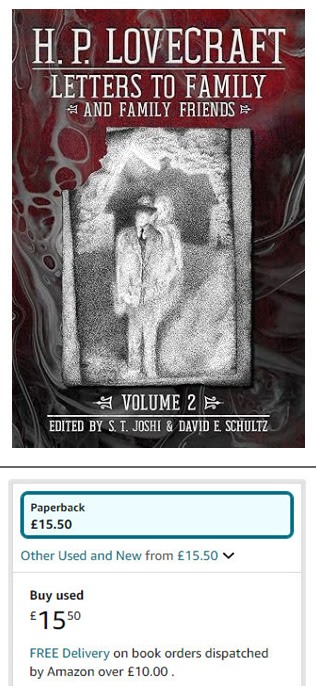
Have you been wondering where all the ‘Warehouse Bargain’ books have gone? I had mused on the possibility that POD printer Lightning Source now had a new printing plant, and so there were no ‘slightly damaged’ POD returns to be had at nice prices. But… I now discover that only by searching in the new Amazon Resale category will you find (for instance, currently) a £15 copy of Lovecraft’s Letters to Family and Family Friends, Volume 2: 1926-⁠1936, sold and shipped by Amazon in ‘acceptable’ condition. Presumably a warehouse return, after a picky purchaser noticed a slight bump or a greasy mark left by a printing-machine? And even then you have to skim through several pages of shovelware drek to find this item. (And if there are no results then it will silently present you with the normal search-results, which is annoying).

This £15 bargain doesn’t show up in the book’s regular page, even in the lower ‘New & Used’ tab. Nor does it show up in your regular ‘sorted by low to high’ search-results.

Another trick is searching Amazon Resale with one word…

HOVSCO Electric will find nothing.

HOVSCO alone will find a heavily discounted HOVSCO Electric bicycle.

But yes, obviously the old ‘Warehouse Bargains’ are there if you know where to look. They can even be shipped to your local Amazon locker. Good to know, though… I guess that by telling readers about this I may lose out on some bargains myself. Oh well, enjoy your slightly-bumped bargains.

Note also that I find that Amazon has started hiding pages-that-exist from search results. For instance, I have Travel and Communication in Tolkien’s Worlds (1996, and reissued in 2020) on my Wish-List, added a year ago. But this no longer shows in search results — not even when using the simplest form of Travel Communication Tolkien as search keywords. Yet the page for it still exists. Amazon is thus no longer comprehensive, and this problem obvious seriously diminishes Amazon’s use as a bibliographic starting-resource for scholars. The problem will also likely push second-hand book-sellers to eBay instead, when they can’t find the page to list their item on.

Sixpenny Marvels

21 Monday Oct 2024

Posted by asdjfdlkf in Odd scratchings

≈ 1 Comment

The Tearoom of Despair bemoans the lack of Marvels in the corner-shop…

you can’t just walk into a shop and buy a new Marvel comic book anywhere. So there is no chance of picking up something random, just because the cover looks aces, because there is nothing there. And they really did use to be everywhere…

Yes, I remember that well. Many small shops in the West Midlands of England had a spinner-rack of usually fairly random-but-recent American monthly imports, often visible from the window and priced for the British in pennies rather than U.S. cents. Sometimes they had a big job-lot of ship-ballast comics (cent-priced, U.S. news-stand returns?)… and then there were huge piles of American dynamite to sort through. And they were not sealed in bags for collectors to salt away unread either. Comics were later pre-bagged in the early dedicated comics-shops which emerged across the UK in the 1980s, and the buyer who wanted to peek inside was often treated as a pest. But in your corner-shops a comic was just cheap six-penny trash, and no-one assumed any lasting value. Which meant you could flip through and check out the art. Was that Incredible Hulk #122 one of the Herb Trimpe classics you had only seen in part in the British B&W Marvel reprint weekly? Or a rush-job where they used a fill-in artist? Nope, it was all Trimpe, and in colour…

I even recall encountering a huge ship-ballast hoard, age 10 in the unlikely spot of the newsagents in a tiny village of Banwell near the holiday resort of Weston-super-Mare. I guess the owner had probably got them dirt-cheap at auction in the port of Bristol or suchlike and hauled them back. The problem was, of course, that even if one could sift out a small run of one title, one lacked the pocket-money to buy them all up.

The British weekly B&W Marvel reprints, however (in which you could sometimes actually follow a story arc across multiple issues), were usually laid and layered on a newsagent’s wide horizontal counter. No spinner-racks, due to the difference in size and paper and the need to accommodate a thick stack of 40 or so. Weekly British comics sold well in those days. Often too well, as that week’s issue was often sold out by the time you arrived. Hence the joy of finding a complete story in an American issue. It wasn’t crudely cut up into three or four weekly parts, one of which you’d missed.

As Tearoom points out, it’s ironic that you can often find the cheesy spin-off Marvel merchandise, but not the actual comics. Still, it’s good that all the pre-PC classics are now easily available, albeit as garishly re-coloured and mummified reprints. For instance, £16 will now get you the Kindle ebook In The Hands Of Hydra, 440 pages of the classic 1968 Roy Thomas / Herb Trimpe Incredible Hulk. Whatever you missed and yearned for when younger, can now be had instantly, and perhaps also shared with interested young relatives. Great for getting boys to keep reading outside of school, I’d imagine. And boys do still read comics, even in an age of abundance with videogames, audiobooks, movies and TV shows galore. A robust National Literary Trust 2023 survey showed that 44% of British boys read comics for pleasure at least once a month, with a modest-but-expected 10% tail-off as they move from age 10 to 17. Sadly the huge survey doesn’t seem to have asked where these comics came from. Nor did they ask about any U.S. superhero / Japanese manga divide in reading tastes.

I would query Tearoom‘s statement that…

there is no chance of picking up something random, just because the cover looks aces, because there is nothing there.

Well, not physically. But if one ventures into the pirate websites, that is the very format. Covers, covers, covers, by date of arrival… and thus mixing new superhero comics, indies, kiddy-humour, and vintage reprints. No walled gardens, no locked-down reader apps. Pretty similar to the old spinner-rack at the corner store, I’d suggest. No sixpences required.

Of course, I’m not condoning piracy here, just pointing out it exists and kids can easily access it. If you have an income to spend, you should be supporting the artists and writers.

HPLinks #10 – Teutonic subs, weird decadents, ancient astronauts, cosmic radios, painted zoogs, a new Bram Stoker tale and more

20 Sunday Oct 2024

Posted by asdjfdlkf in HPLinks, Lovecraftian arts, Scholarly works

≈ Leave a comment

HPLinks #10.


     “… it would be damned improbable if there were any real phenomena existing unknown in space and happening to correspond to these error-born myths” [which assume] “such things as gods, immortality, etc.” — Lovecraft on ‘space gods’, to Robert E. Howard on 16th August 1932.


* The Lovecraft Historical Society have another Dark Adventure Radio Theatre recording due, currently available for pre-order. It’s an adaptation of Lovecraft’s wartime submarine-supernatural “The Temple” (1920). Due to surface from the depths on 24th November 2024.

* A new long post from JonBlackWrites on “Yellow Signs: The Decadent Movement and its Influence on Weird Fiction”…

“If one considers the poetry of two of the most celebrated practitioners from each movement, Charles Baudelaire and H.P. Lovecraft, there are lines of their poetry which, ripped out of context, would be almost impossible to identify as the work of one creator or the other.”

* Jordan M. Poss has “Further notes on aliens and the gothic and makes a short but convincing case that UFO lore and the literary gothic have a lot of strands in common. One can see at a glance how much of Lovecraft’s mythos corresponds in much the same way. I don’t recall of any book or article showing a heavy overlap between the post-1950s UFOs-are-aliens crowd and Lovecraft, but perhaps it’s an area worthy of a little historical study. I guess the ‘ancient astronauts’ angle would come closest to overlap (ably dealt with in the book: The Cult of Alien Gods: H.P. Lovecraft And Extraterrestrial Pop Culture, 2005). And, ah yes… there was also that definite early influence of Lovecraft on Terence McKenna, who later became a big name among the mystical-trippy UFO crowd.

* Talking of “ancient astronauts”, Deep Cuts this week takes a deep-dive…

“into the history of one of the most contentious affairs in pulp science fiction in the 1940s, the Shaver Mystery, and its interactions with H. P. Lovecraft’s Mythos”.

* The Papers of Sonia H. Davis has been blogging extensively over the summer, and now on into the autumn with a long new post on Lovecraft’s daughter by marriage. Especially note the long research-heavy posts “Dear Mrs. Greene” Part I and Part II, on Galpin’s letters to Sonia.

* A 2023 Philology degree dissertation “Images of the Living Dead in Lovecraft’s Oeuvre in the Light of the Aesthetic of Ugliness”. Just a firm abstract, in English. One wonders if the author was able to also draw on Lovecraft’s various remarks about his own ugliness and sense of facial disfigurement. But there’s no PDF available.

* Corbeyran’s Classic Fantastic book of comics adaptations of fantasy classics, now 89% funded on French crowdfunding platform Ulule.

* The TransAtlantic Fan Fund (TAFF) now has the Work For Hire book for free download, being a book of essays by Dave Langford… “written for sf, fantasy and horror reference works published long ago from 1996 to 2007. These do not include the Encyclopedia of Fantasy and Encyclopedia of Science Fiction, both freely available online.” Authors discussed include Rudyard Kipling, Brian Stableford and Colin Wilson, among many others. The Fan Fund helps send British science fiction fans to conventions in the USA, and will welcome a donation if you enjoy the book.

* Last week John Coulthart surveyed the covers for “Lovecraft at Ballantine” in the mid 1970s. The covers are shown and there’s an eyebrow-raising amount of dragons and similar.

It then occurred to me that in 1976 dragons were ‘hot’ (remember Anne McCaffrey and all that best-selling dragon-riders stuff?). Perhaps that’s why a cynical publisher wanted to suggest that Lovecraft wrote about dragons and dragon-like sea-serpents? But if so, Ballantine also made some unfortunate choices in the cheap-looking artwork and questionable graphic-design for the framing. Compare these editions with the vastly better work on the Panther paperback covers, appearing around the same time here in the UK.

* Via Chaosium, watch the panels from this year’s Miskatonic Repository Con, online. Including one on writing Mythos scenarios, and another on how to intertwingle real-world history into your Mythos setting.

* Reviews from R’lyeh has a long new review of the 1920s Gumshoe-based game The Terror Beneath: An Investigative Roleplaying Game of Weird Folk Horror…

There are elements of folk horror here, but also eldritch horror, such that Machen’s work is seen as a precursor to and influence upon the works of H.P. Lovecraft. The latter is important in The Terror Beneath in several ways. [The setting is not rural Wales, but rather among the] communities of London’s docks and veterans of the Great War [i.e. the First World War]”.

Nice to see a British working-class 1920s setting. The game is currently pre-ordering and is due for publication on 24th October 2024.

* In the Portland Press Herald local newspaper (accessible from the UK, no ‘EU cookies’ nonsense), a new exhibition review titled “Discover a quirky Vermont college that you’ll wish had really existed”. The show offered relics from “St. Amelia’s College of Speculative Timbre”, where among other things…

“Professor Samuel Drexler built odd musical contraptions taken from literary works, such as ‘the Detestable Electrical Machine’ H.P. Lovecraft wrote about”

The “electrical machine” (un-capitalised) is found in Lovecraft’s tale “From Beyond” (1920).

* At DeviantArt, a set of eight finely painted section-illustrations for The Dream-Quest of Unknown Kadath. Also, by the same artist, Zoogs.

* Also at DeviantArt, a new Halloween photo-set, as-if from 1970s experiments in Providence which sought to enter the Dreamlands of HPL via ‘cosmic radios’.

* And finally, the National Library of Ireland reports “Hidden Bram Stoker Story Unearthed in Irish Archives”. An amateur researcher has found the lost “Gibbet Hill”…

“in an 1890 Christmas supplement of the Daily Express Dublin Edition. The story was unknown even to Stoker biographers and literary scholars for over 130 years.”

The tale’s setting, Gibbet Hill. A gibbet being where criminals were hanged and then left for display.

Which just shows that there may even still be an unknown Lovecraft item lurking somewhere, perhaps in some amateur journal or old newspaper.


— End-quote —

“Around the All-Hallows period I unearthed a highly picturesque district on the city’s very rim — Fruit Hill, from one point of which I caught a view of almost incredible loveliness which included a twilight-clad descent of walled meadows (with a wood and glimpses of a sunset-litten river at the bottom), dim violet hills against an orange-gold west, a steepled village in a northward valley, and over the rocky eastward ridge a great round Hunter’s Moon preparing to flood the scene with spectral light.” — H.P. Lovecraft, to Richard Ely Morse, 14th November 1933.

The Cosmic ‘Radio’

15 Tuesday Oct 2024

Posted by asdjfdlkf in AI, Lovecraftian arts

≈ Leave a comment

[The narrator is an intern in a Catskill Mountains insane asylum]. I placed… “upon his head and mine the two ends of my cosmic ‘radio’; hoping against hope for a first and last message from the dream-world in the brief time remaining. In the cell with us was one nurse…” — “Beyond The Wall of Sleep” (1919).

Stable Diffusion 1.5.

← Older posts
Newer posts →


Please become my patron at www.patreon.com/davehaden to help this blog survive and thrive.

Or donate via PayPal — any amount is welcome! Donations total at Easter 2025, since 2015: $390.

Archives

  • February 2026
  • January 2026
  • December 2025
  • November 2025
  • October 2025
  • September 2025
  • August 2025
  • July 2025
  • June 2025
  • May 2025
  • April 2025
  • March 2025
  • February 2025
  • January 2025
  • December 2024
  • November 2024
  • October 2024
  • September 2024
  • August 2024
  • July 2024
  • June 2024
  • May 2024
  • April 2024
  • March 2024
  • February 2024
  • January 2024
  • December 2023
  • November 2023
  • October 2023
  • September 2023
  • August 2023
  • July 2023
  • June 2023
  • May 2023
  • April 2023
  • March 2023
  • February 2023
  • January 2023
  • December 2022
  • November 2022
  • October 2022
  • September 2022
  • August 2022
  • July 2022
  • June 2022
  • May 2022
  • April 2022
  • March 2022
  • February 2022
  • January 2022
  • December 2021
  • November 2021
  • October 2021
  • September 2021
  • August 2021
  • July 2021
  • June 2021
  • May 2021
  • April 2021
  • March 2021
  • February 2021
  • January 2021
  • December 2020
  • November 2020
  • October 2020
  • September 2020
  • August 2020
  • July 2020
  • June 2020
  • May 2020
  • April 2020
  • March 2020
  • February 2020
  • January 2020
  • December 2019
  • November 2019
  • October 2019
  • September 2019
  • August 2019
  • July 2019
  • June 2019
  • May 2019
  • April 2019
  • March 2019
  • February 2019
  • January 2019
  • December 2018
  • November 2018
  • October 2018
  • September 2018
  • August 2018
  • August 2015
  • July 2015
  • April 2015
  • March 2015
  • February 2015
  • January 2015
  • December 2014
  • November 2014
  • October 2014
  • September 2014
  • August 2014
  • July 2014
  • June 2014
  • May 2014
  • March 2014
  • February 2014
  • January 2014
  • December 2013
  • November 2013
  • October 2013
  • September 2013
  • August 2013
  • July 2013
  • June 2013
  • May 2013
  • April 2013
  • March 2013
  • February 2013
  • January 2013
  • December 2012
  • November 2012
  • October 2012
  • September 2012
  • August 2012
  • July 2012
  • June 2012
  • May 2012
  • April 2012
  • March 2012
  • February 2012
  • January 2012
  • December 2011
  • November 2011
  • October 2011
  • September 2011
  • August 2011
  • July 2011
  • June 2011
  • May 2011
  • April 2011
  • March 2011
  • February 2011
  • January 2011
  • December 2010
  • November 2010
  • October 2010
  • September 2010
  • August 2010
  • July 2010

Categories

  • 3D (14)
  • AI (70)
  • Astronomy (70)
  • Censorship (14)
  • de Camp (7)
  • Doyle (7)
  • Films & trailers (101)
  • Fonts (9)
  • Guest posts (2)
  • Historical context (1,095)
  • Housekeeping (91)
  • HPLinks (74)
  • Kipling (11)
  • Kittee Tuesday (92)
  • Lovecraft as character (58)
  • Lovecraftian arts (1,626)
  • Lovecraftian places (19)
  • Maps (70)
  • NecronomiCon 2013 (40)
  • NecronomiCon 2015 (22)
  • New books (966)
  • New discoveries (165)
  • Night in Providence (17)
  • Odd scratchings (984)
  • Picture postals (276)
  • Podcasts etc. (431)
  • REH (184)
  • Scholarly works (1,469)
  • Summer School (31)
  • Unnamable (87)

Get this blog in your newsreader:
 
RSS Feed — Posts
RSS Feed — Comments

H.P. Lovecraft's Poster Collection - 17 retro travel posters for $18. Print ready, and available to buy — the proceeds help to support the work of Tentaclii.

Proudly powered by WordPress Theme: Chateau by Ignacio Ricci.