• About
  • Directory
  • Free stuff
  • Lovecraft for beginners
  • My Books
  • Open Lovecraft
  • Reviews
  • Travel Posters
  • SALTES

Tentaclii

~ News & scholarship on H.P. Lovecraft

Tentaclii

Author Archives: asdjfdlkf

Tolkien and Lovecraft

05 Friday Apr 2024

Posted by asdjfdlkf in Scholarly works

≈ 3 Comments

Reading through the back-issues of the Tolkien Society members-journal Amon Hen, in #272 I came across a report of a conference in Italy titled “Tolkien and the literature of the Fourth Age”, which took place just before Christmas 2017. Some big names were there, including Tom Shippey and Thomas Honegger. The latter presented “Tolkien and Lovecraft”, and the report summarised some of the talk’s main points…

– both worked within frameworks of myth and to an extent dream;

– both were interested in changes in language over large time-scales;

– both were interested in “worlds in decay” which nevertheless contain decaying “monuments of fallen grandeur”;

– both loved the mystery of ancient things, ancient landscapes;

– Tolkien’s late “Smith of Wootton Major” tale as comparable to Lovecraft “The Silver Key” and parts of “Dream-Quest”;

– both wrote foundational “theoretical texts” which shaped the work of those who came after them (“On Fairy Stories”, and “Supernatural Literature”).

– both inspired many imitators, continuators, borrowers, and also a wealth of illustrators;

– August Derleth as being in a somewhat similar situation as Christopher Tolkien, as ‘posthumous editor’ and ‘re-shaper’.


To which I would add…

– both gave ‘creative house-room’ to notions of a sort of personal racial memory, and past lives;

– both were interested in time-travel, as the idea then stood;

– both had a very rich store of knowledge about the classical world / the wild North;

– both wrote tales set within the framing of ‘recovered but partial’ scholarly knowledge (often by amateurs);

– both were anti-Freud and his acolytes, and more generally anti-modernist;

– both went ‘over the heads’ of the literary establishment, and appealed direct to the masses;

– both used a literary technique and style deemed ‘outmoded’ for the era;

– the depiction of evil was a key focus for both authors;

– both were aware of the power of ‘un-named creatures’ to evoke fear (though Tolkien uses these with a very light touch);

– both had ‘broadcast telepathy’ by the evil one, e.g. in Tolkien the evil Sauron mentally sends out his Cthulhu-like ‘call’ to all evil things;

– both greatly valued poetry and the oral tradition;

– both were deeply English in outlook and heritage, although Lovecraft was ‘at one remove’ in New England;

– they both deeply valued the physical fabric/landscape and traditions and people of their ‘local place’, for Lovecraft New England and 18th-century England, and for Tolkien mediaeval ‘old England’ and its later survivals.

– both were keen genealogists, though Tolkien’s family-trees were fictional.

– both were keen walkers, in different ways (‘dawdling vs. darting’ might sum it up), though both had a keen eye for traces of the past of a place;

– neither was afraid to offer readers long loving descriptions of a landscape in its season, adding strong doses of ‘travel writing’ to their fiction;

– both valued the imagery of the sea and the coast, in a romantic way;

– both were keen to correctly depict astronomical observations in their fiction;

– both were fatherless and were raised by kindly men who nurtured their talents;

– both were very open to collaborating with and mentoring / working equally with intelligent women;

– both greatly valued the simple Epicurean consolations of life in their personal everyday, though each in their different ways;

– both had a robust and deep-rooted conservative outlook, and could draw (if needed) on robust intellectual support for that outlook;

– neither man expected his tales would make him world-famous for centuries to come, with not only wide public readership but also many attentive scholars and historians.

– many trenchant early critics claimed to have read their writing(s), but quite evidently had not done so (or, at best, as Tom Shippey says… “had not read them with any attention”). At the same time, both were often reviled as arch conservatives.

– the work of both men inspired a wealth of popular music after their deaths, first in various forms of heavy-metal music and now more widely.


‘Were the 2017 proceedings published?’ I wondered. I tracked them down to the first issue of the Italian journal I Quaderni di Arda (2020). Sadly the papers given in English are there translated, and the Lovecraft talk becomes “Re-incantare un mondo dis-incantato: Tolkien e Lovecraft (1890-1937)”.

I see the English PDF used to be on the journal’s iquadernidiarda.it website, but that domain and site have now lapsed. Then I found that the English paper had since been deposited as “Re-enchanting a Dis-enchanted World: Tolkien (1892-1973) and Lovecraft (1890-1937)”. For non Academia.edu members, this can be had by searching for “Re-enchanting a Dis-enchanted World” on Google Scholar. Scholar has an arrangement with Academia.edu for many (but not all) papers re: easy no-membership downloads.

Were there any points in the PDF to add to the list given by the conference report? Just a few…

– both often suggested an “indissoluble connection between language and identity”;

– both “subscribe to the general principle of phonaesthetics”, for example with evil speech sounding ugly and jarring;

– neither was afraid to use dialect on the page.

Honegger published on Lovecraft in English a little later, in the journal Fastitocalon #9, 1 & 2: ‘Fantastic Languages / The Language of the Fantastic (2020). This had his essay “Language, Historical Depth, and the Fantastic in the Work of H.P. Lovecraft”.

Both journal volumes are still available, in paper, for now.

And finally, I would be remiss if I didn’t also note the new book in Italian, Tolkien e Lovecraft (2023). This is now at least on Amazon.co.uk and can be added to a personal List, but cannot be shipped to the UK. I can’t read Italian and haven’t seen it, nor any review for it.


The Gentleman From Angell Street

05 Friday Apr 2024

Posted by asdjfdlkf in New books

≈ Leave a comment

A new edition of ‘the Eddys remember Lovecraft’ book The Gentleman From Angell Street has been funded on Kickstarter. This will offer…

significant new material, an all-new layout and design

13 days to go.

Eclipse in Providence

05 Friday Apr 2024

Posted by asdjfdlkf in Astronomy, Picture postals

≈ Leave a comment

Lovecraft’s home city of Providence will see a not-quite total solar eclipse on 8th April 2024, if the heavens oblige and sweep the April rain-clouds away. Not quite ‘full’, as it appears that a sliver of a ‘Cheshire Cat’ grin will be left smiling out at Providence. I’ve covered Lovecraft’s eclipses before on Tentaclii, at length, and there’s not much more to say or illustrate.

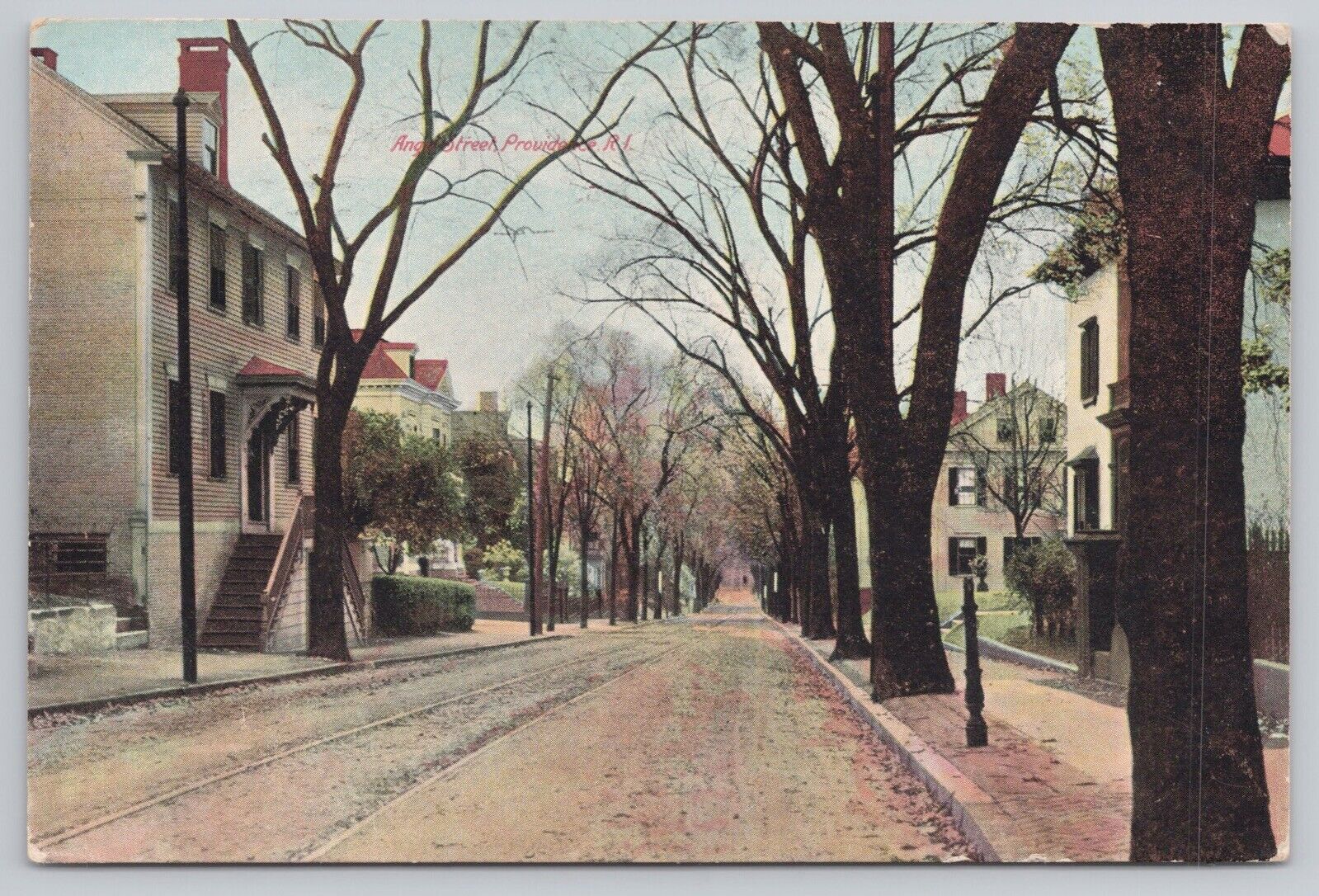
So anyway, no time for a full ‘Picture Postals’ post today, and certainly not an eclipse special. But here’s an equally timely picture of Lovecraft’s beloved Angell Street in the early springtime. It’s a quality scan, recently found, and much better / larger than the tiny blurry one seen in last year’s Winter and spring post.

Another three Stable Diffusion add-ons

04 Thursday Apr 2024

Posted by asdjfdlkf in AI, Lovecraftian arts

≈ Leave a comment

More new(ish) LORAs which may appeal to Tentaclii readers. LORAs being free plugins that ‘guide’ the AI images made with your local install of Stable Diffusion 1.5.

* New this week is the somewhat Solomon Kane-ish Witch Hunters, which by the look of it was also trained with some over-the-top corporate card-art. Still, you can stack LORAs, thus you could blend it with another such as James Purefoy (Solomon Kane) which was trained on movie stills.

* One I missed, from a year ago, CthulhuTECH. Every image, no matter what the subject, becomes somewhat Cthuloid. This one is a LYCORIS, but is used in the same way as a LORA. CthulhuTECH is very well documented, so make sure to click “Show more” and then save a .MHTML page alongside your download.

Also has a cthulhuTECH books add-on as a LORA.

* Looking at the CthulhuTECH maker’s other stuff, I see I also missed his Pulp Ladies – In Spaaaaace. Again, it’s a LYCORIS but could still be combined with a LORA to give the image output a more ‘aged pulp cover’ feel.

New audiobook: Drug Themes in Science Fiction

03 Wednesday Apr 2024

Posted by asdjfdlkf in Podcasts etc., Scholarly works

≈ Leave a comment

New on Librivox, SF author Robert Silverberg’s survey booklet Drug Themes in Science Fiction (1974) as a free audiobook. Also available as a scan on Archive.org.

Also noted in audio, a new podcast on the theme of “The Ocean in The Call of Cthulhu”, and a reading of A Letter from H.P. Lovecraft to the editors of Weird Tales.

New book: Selected Correspondence of Ray Bradbury

02 Tuesday Apr 2024

Posted by asdjfdlkf in New books, Scholarly works

≈ 1 Comment

Rememberance: Selected Correspondence of Ray Bradbury (November 2023), begins with letters from the year of Lovecraft’s death 1937 and ends in 1957. The letters are presented in themed and clustered sections, and mostly face towards his contemporaries during that period. The book is substantial, but is said to be merely a taster for around 14,000 letters so far traced by the Center for Ray Bradbury Studies.

The hardback is available (though Amazon UK can’t ship it to me, so there may be region restrictions), but the paperback has yet to appear. Amazon UK says it’s due in November 2024.

Round the bend with Lovecraft

01 Monday Apr 2024

Posted by asdjfdlkf in Lovecraft as character

≈ Leave a comment

Two unusual items on Archive.org, Theory of multidreams: a cosmic-dream investigation by H.P. Lovecraft (2017), and Shadows Bend: a novel of the fantastic and unspeakable (2006) featuring Lovecraft as a leading character.

C.S. Lewis likely read Lovecraft

31 Sunday Mar 2024

Posted by asdjfdlkf in Scholarly works

≈ 1 Comment

On ploughing through the Tolkien fan-journal Mallorn, from #53-64 (current) I discovered that January 1934 was the likely date when C.S. Lewis (the Narnia books, and he was also the midwife for The Lord of the Rings) started paying regular attention to American pulp magazines. This appears to mean Astounding magazine, which would mean that he read the magazine’s chopped-about versions of Lovecraft’s “At the Mountains of Madness” and “The Shadow Out of Time”. He may also have read Lovecraft in better form in at least one British book collection, but we can’t be sure. The problem being that his books became jumbled up with those of his SF-loving live-in girlfriend.

“… ivy so dense that one cannot but imagine it accursed or corpse-fed”

31 Sunday Mar 2024

Posted by asdjfdlkf in Scholarly works

≈ Leave a comment

“Kuranes came very suddenly upon his old world of childhood. He had been dreaming of the house where he was born; the great stone house covered with ivy, where thirteen generations of his ancestors had lived” (“Celephaïs”)

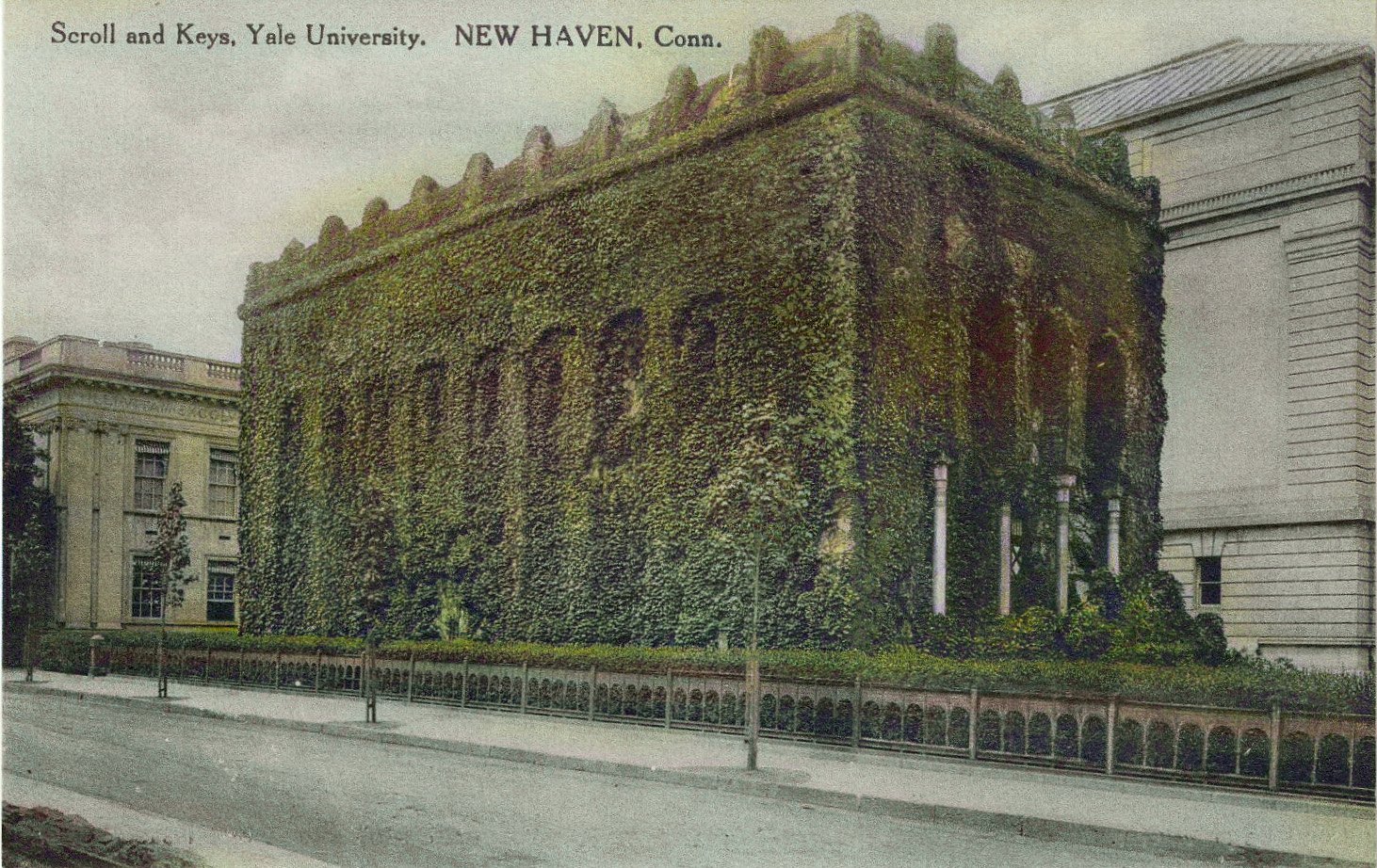
The buildings Lovecraft strolled past and visited were often substantially covered in greenery, usually ivy, often to an extent that seems incredible today. Such as this…

Tolkien also lived in the same sort of environment, with the venerable Country Life magazine going so far as to chide his College for their “excessive” love of greenery, at a time when such greenery was everywhere rampant in England.

The bareness of brick often seen today is a legacy of the post-war ‘ivy removal’ fad, which by the 1960s and 70s had run as rampant as the ivy it condemned. Ivy removals worked alongside the fetish of the average modernist for bare everything, including brickwork and concrete. And perhaps alongside the interests of modernism-demented city authorities, with their passion for the sight of any visible decay which might justify demolishing swathes of old buildings. The economic depressions of the 1970s probably didn’t help — easier to tear the ivy down, than pay a man to trim it back every two years.

Yet it now turns out that ivy removal was the result of a false consensus, one with no basis in either building science or home economics. I was interested to learn of a recent major UK study by the Royal Horticultural Society and the University of Reading. An ivy covering reduces surface temperature swings on new brickwork, thus preventing flaking and cracking from developing over time. Damp was not ‘trapped’, as was commonly said by the ivy-haters, and the humidity was actually stabilised by the ivy covering and rain was kept off. Again, this stability helps to preserve the brick surface. Frost, salts, and vehicle pollution are all protected against, far outweighing any micro-damage done by the tiny adhesion points of the climbing ivy stems.

There appears to be a big energy benefit. The study found indoor summer temperatures cooler by up to 7.2 degrees. Given the UK’s usual dismal summer temperatures, this may not actually be a good thing, and might involve the inhabitants donning pullovers and hats. But the finding may interest places such as Lovecraft’s Providence, which endure much more steamy summers. Less air conditioning would be needed. The test houses also lost less heat in winter (costing less to heat, by as much as 20%), which would have been of much more use in the British climate.

That saving would of course have to be weighed against the cost of trimming back the ivy every two years. But likely the house owner could come out on top financially, especially given the soaring cost of energy. Also, I wonder if some sort of ivy-trimming flying drone might not yet be invented, with an AI camera to detect young and easily cut-able shoots? Consider also the ivy’s likely deterrence of the sort of graffiti scrawls which devalue one’s house, and also the entire street, through deterring possible house buyers.

The new UK study confirms earlier work which asked “Is Ivy Good or Bad for Historic Walls?”. Another recent study in Toronto suggested the easy-grow big-leafed Boston Ivy (Parthenocissus tricuspidata) as the ideal for restoring cities on the East Coast of the USA and Canada.

“… the ivy was climbing slowly over the restored walls as it had climbed so many centuries ago, and how the peasants blessed him for bringing back the old days” (“The Moon-Bog”).

And perhaps not only restoring. Those who laugh at the Syd Mead-like visions of a ‘solarpunk’ future, pointing to the unlikely abundance of greenery hanging from the gleaming white buildings, perhaps overlook both the likely advances in materials bio-science (building materials ‘grown’ from fungi) and in the tools (drones and robots) needed to control vegetation. Possibly also an advanced form of drip-feed irrigation. Future white-walled towns built from fungi and clad with gothic ivy, perhaps. Lovecraft would surely approve of that.


Ivy is rarely a notable feature of Lovecraft’s work, other than the two instances above where it is linked with an ancestral home. Since such greenery was at that time a commonplace which was all around him. As he states in Dexter Ward, speaking of this lack of interest in what one knows and sees everyday…

The odd thing was that Ward seemed no longer interested in the antiquities he knew so well. He had, it appears, lost his regard for them through sheer familiarity; and all his final efforts were obviously bent toward mastering those common facts of the modern world

He did make one early venture into plant horror, “The Tree”, but that was not a very successful tale.

But his protege Belknap Long, an inhabitant of the largely greenery-starved New York City, would create a wartime series for boys featuring monster plants (John Carstairs). For a high-rise apartment dweller such as Long, plants were a more unusual thing, and thus might be monster-ized following the lead given by various earlier pulp tales.

There are however some instances in Lovecraft’s letters, such as this from 1923 in which an ivy clad house elides with brief horror…

The coach ride [to the old Salem-Village] was delightful, giving frequent glimpses of ancient houses in a fashion to stimulate the antiquarian soul. Suddenly, at a graceful and shady village corner which the coach was about to turn, I beheld the tall chimneys and ivy’d walls of a splendid brick house of later Colonial design [… Asking to alight from the coach, and going around the back of the house] I loudly sounded the knocker […] My summons was answer’d simultaneously by two of the most pitiful and decrepit-looking persons imaginable — hideous old women more sinister than the witches of 1692, and certainly not under 80. For a moment I believ’d them to be Salem witches in truth…

Call: Fantasy flora

31 Sunday Mar 2024

Posted by asdjfdlkf in Scholarly works

≈ Leave a comment

Call for articles on ‘Fantasy flora / Flore imaginaire’, for a special issue of the journal Fantasy Art and Studies. Deadline: 10th June 2024.

New book: Selection de lettres (1927-1929)

30 Saturday Mar 2024

Posted by asdjfdlkf in New books, Scholarly works

≈ Leave a comment

Fabula reports the publication of Selection de lettres (1927-1929) in France. 86 Lovecraft letters newly translated into French for the first time, in a volume of over 400 pages. The Amazon UK listing has it as published with 600 pages and a hundred letters. So I’m guessing there may have been a truncation of the volume, so as to meet publishing schedules? Anyway, a vital chunk of Lovecraft’s letters, now available in French.

AI cover illustration, by the look of it, with no-one bothering to Photoshop it a little to remove the tall-tale signs. I’ve nothing against well-done AI images, but part of the process really should be a final pass by a human with Photoshop.

I assume these 82 letters don’t overlap with those in a book by another translator, Lettres de 1929: Juillet a Decembre published in 2021…

This collection offers us, in a quality translation, a selection of thirty letters written between July and December 1929, absolutely unpublished in French. Together with a very useful “glossary” of almost 50 pages, to help the French reader understand the numerous references found in these letters.

Incidentally, I believe Lovecraft’s translated tales first appeared in French in 1954? Which would make 2024 the 70th anniversary of the French discovery of Lovecraft.

In Pendleton courtyard

29 Friday Mar 2024

Posted by asdjfdlkf in Picture postals

≈ Leave a comment

Rhode Island School of Design’s Pendleton Museum was a prime spot on the 1930s ‘Lovecraft tour’ of Providence, given to visiting members of the Lovecraft circle by Lovecraft himself. The Pendleton was an annexe to its main art galleries, one dedicated to colonial life as it had been lived, and it was thus a favourite Providence spot for Lovecraft.

Benefit Street, with the back end of the School of Art Museum and Pendleton House nestled alongside it on the right of the picture.

Pendleton Museum (or ‘Pendleton House’) was on Benefit Street but apparently had long had its public ‘entrance through Waterman St.’, rather than its own front entrance on Benefit. Here we see the arrangement on an early map. The map does not show the museum’s extension, present during Lovecraft’s life, which curved along the steep hillside and around Pendleton…

Public visitors would thus have had to walk through the Rhode Island School of Design galleries in order to reach the House. In “1897-8-9” the RISD entrance gallery at Waterman Street had been “an enchanted world” for the boy Lovecraft, due to the array of Greek and Roman reproduction sculpture.

In 1936, at the other end of his life, Lovecraft appears to have preferred the other end of the walk. Lovecraft told Galpin that he found the Pendleton Museum… “a perfect reproduction of a colonial mansion, containing the finest collection of American colonial furniture in the world.” There appears to them have been a connector in Lovecraft’s time, from the House to the newer art galleries on the slope below…

Attached to the north side of Pendleton House is a tiny arched, columned hexagonal adjunct no larger than a gazebo, with an interior dome. Exquisitely designed in the Neo-Renaissance manner, it provides the vestibule (out of the Pendleton House dining room) for Charles Platt’s stairway connector down the slope, through a (subsequently revamped) corridor gallery, also designed by Platt, to link the house with the so-called Waterman Galleries below.” (Society of Architectural Historians)

There were further additions. The Pendleton Museum was set to be matched with a long-anticipated new Colonial style courtyard garden, the Radeke Memorial Garden, but the project was delayed again and again until finally the plans for it were drawn up in 1933, and the Garden was not eventually realised until 1934. It was the sort of event and project that Lovecraft would have been on hand to support, and he had attended the opening of the Radeke museum extension in late April 1926. But I’m uncertain if he was also invited to the opening event for the garden. I have a vague recollection that he was there for the opening and he remarked that the garden was a little sparse in its initial planting (the opening event was sans plants but they were soon added). But I could be mis-remembering, and I can’t re-find the item.

I’ve now found good pictures of this garden, as Lovecraft would have experienced it in the years before his death as he took friends around the house, and presumably also the new garden. Though the 1934-37 planting was perhaps a little less established than seen in these newly colourised pictures. With thanks to the RISD Archive.

The statue in the niche is Pan depicted as a boy, woolly-shanked, cloven-hoofed and playing pipes. Lovecraft would surely have approved, and recalled his own sylvan boyhood shrines to Pan.

“There were in that Street many trees; elms and oaks and maples of dignity; so that in the summer the scene was all soft verdure and twittering bird-song. And behind the houses were walled rose-gardens with hedged paths and sundials, where at evening the moon and stars would shine bewitchingly while fragrant blossoms glistened with dew.” (Lovecraft, “The Street”)

The Radeke garden was restored to its original white scheme in the 1980s. It appears to be open to the public today (though may be found to be rented for weddings at weekends), and thus could be included on a Lovecraft-related tour of the city.

← Older posts
Newer posts →


Please become my patron at www.patreon.com/davehaden to help this blog survive and thrive.

Or donate via PayPal — any amount is welcome! Donations total at Easter 2025, since 2015: $390.

Archives

  • March 2026
  • February 2026
  • January 2026
  • December 2025
  • November 2025
  • October 2025
  • September 2025
  • August 2025
  • July 2025
  • June 2025
  • May 2025
  • April 2025
  • March 2025
  • February 2025
  • January 2025
  • December 2024
  • November 2024
  • October 2024
  • September 2024
  • August 2024
  • July 2024
  • June 2024
  • May 2024
  • April 2024
  • March 2024
  • February 2024
  • January 2024
  • December 2023
  • November 2023
  • October 2023
  • September 2023
  • August 2023
  • July 2023
  • June 2023
  • May 2023
  • April 2023
  • March 2023
  • February 2023
  • January 2023
  • December 2022
  • November 2022
  • October 2022
  • September 2022
  • August 2022
  • July 2022
  • June 2022
  • May 2022
  • April 2022
  • March 2022
  • February 2022
  • January 2022
  • December 2021
  • November 2021
  • October 2021
  • September 2021
  • August 2021
  • July 2021
  • June 2021
  • May 2021
  • April 2021
  • March 2021
  • February 2021
  • January 2021
  • December 2020
  • November 2020
  • October 2020
  • September 2020
  • August 2020
  • July 2020
  • June 2020
  • May 2020
  • April 2020
  • March 2020
  • February 2020
  • January 2020
  • December 2019
  • November 2019
  • October 2019
  • September 2019
  • August 2019
  • July 2019
  • June 2019
  • May 2019
  • April 2019
  • March 2019
  • February 2019
  • January 2019
  • December 2018
  • November 2018
  • October 2018
  • September 2018
  • August 2018
  • August 2015
  • July 2015
  • April 2015
  • March 2015
  • February 2015
  • January 2015
  • December 2014
  • November 2014
  • October 2014
  • September 2014
  • August 2014
  • July 2014
  • June 2014
  • May 2014
  • March 2014
  • February 2014
  • January 2014
  • December 2013
  • November 2013
  • October 2013
  • September 2013
  • August 2013
  • July 2013
  • June 2013
  • May 2013
  • April 2013
  • March 2013
  • February 2013
  • January 2013
  • December 2012
  • November 2012
  • October 2012
  • September 2012
  • August 2012
  • July 2012
  • June 2012
  • May 2012
  • April 2012
  • March 2012
  • February 2012
  • January 2012
  • December 2011
  • November 2011
  • October 2011
  • September 2011
  • August 2011
  • July 2011
  • June 2011
  • May 2011
  • April 2011
  • March 2011
  • February 2011
  • January 2011
  • December 2010
  • November 2010
  • October 2010
  • September 2010
  • August 2010
  • July 2010

Categories

  • 3D (14)
  • AI (70)
  • Astronomy (70)
  • Censorship (14)
  • de Camp (7)
  • Doyle (7)
  • Films & trailers (101)
  • Fonts (9)
  • Guest posts (2)
  • Historical context (1,095)
  • Housekeeping (91)
  • HPLinks (75)
  • Kipling (11)
  • Kittee Tuesday (92)
  • Lovecraft as character (58)
  • Lovecraftian arts (1,627)
  • Lovecraftian places (19)
  • Maps (70)
  • NecronomiCon 2013 (40)
  • NecronomiCon 2015 (22)
  • New books (966)
  • New discoveries (165)
  • Night in Providence (17)
  • Odd scratchings (984)
  • Picture postals (276)
  • Podcasts etc. (431)
  • REH (184)
  • Scholarly works (1,469)
  • Summer School (31)
  • Unnamable (87)

Get this blog in your newsreader:
 
RSS Feed — Posts
RSS Feed — Comments

H.P. Lovecraft's Poster Collection - 17 retro travel posters for $18. Print ready, and available to buy — the proceeds help to support the work of Tentaclii.

Proudly powered by WordPress Theme: Chateau by Ignacio Ricci.