• About
  • Directory
  • Free stuff
  • Lovecraft for beginners
  • My Books
  • Open Lovecraft
  • Reviews
  • Travel Posters
  • SALTES

Tentaclii

~ News & scholarship on H.P. Lovecraft

Tentaclii

Author Archives: asdjfdlkf

More new instances of ‘Lovecraft as character’

15 Monday Jun 2020

Posted by asdjfdlkf in Historical context, Lovecraft as character

≈ 2 Comments

Toward the close of the Bloch section of the Letters to Robert Bloch book, a mention of two early ‘Lovecraft as character’ stories…

Not long ago Kuttner showed me a new story — “Hydra” — in which all three of us figure … & are disposed of” … Shea has also slain me in a recent tale.

I’d not known about these before now. I was initially not quite sure what the Shea item is. The endnote for the mention is “RB 66”, this refers not to page 66 of the Bloch letters, but to letter #66. At first I thought it might refer to Shea’s “The Snouted Thing”, to be found his In Search of Lovecraft (1991), which appears to be its first publication. But a little further digging revealed that Lovecraft must have been referring to Shea’s tale “The Necronomicon”.

Kuttner’s “Hydra” eventually appeared, perhaps revised since Lovecraft had seen it, in the April 1939 issue of Weird Tales, later collected in The Watcher at the Door: The Early Kuttner, Volume Two.

 
At 2,500 words in clean text, I was interested in using the Shea tale as an AI audio test-text, and went looking to see if there’s any ‘sounds like a real human’ AI-shaped text-to-speech services or desktop software. Nope, it seems not — it’s still ‘if you have to ask the price, you can’t afford it’ offers of chatbot-focused API services which claim to do deep learning. Who uses chatbots enough that people want to invest in them?

Anyway, it seems we might have ‘just about good enough’ story-reading AI voices in the European languages by 2025. But for now ordinary mortals are still stuck with the TTS robo-voices, albeit with a few of them being vastly improved since the 2000s and with a new range of local accents. But I guess I should just stop being cheap, lugubriate the voice-box and do it myself.

Update: easy2reading.com Free online Text To Speech TTS and freetts.com Text to Speech Converter were found to be the best in April 2021, with either using Google’s excellent male GB-Standard-D, though lacking in emotional colouring. The latter costs $6 per 1m characters, but has the advantage of using TTS markup for pauses and emphasis.


I’ve started a new Lovecraft as character tag on this blog, and gone back and retrospectively tagged. It’s limited to just the early appearances or recognisable versions of him. I’ve also found another new one, but that will appear here tomorrow in the Kittee Tuesday feature.

Lovecraft at Gallery Nucleus

14 Sunday Jun 2020

Posted by asdjfdlkf in Lovecraftian arts

≈ Leave a comment

Gallery Nucleus in Los Angeles staged a 20-artist show, “At the Mountains of Madness: A Tribute to the Writings of H.P. Lovecraft”.

There’s a set of pictures from the launch, artist list and details.

Documentary: The Rise and Fall of Penn Station

13 Saturday Jun 2020

Posted by asdjfdlkf in Films & trailers, Historical context

≈ Leave a comment

Back in summer 2011, I blogged here about the architecture of H.P. Lovecraft’s entrance into New York City. This being the Pennsylvania Station…

When Mr. H.P. Lovecraft stepped down onto the platform of the Pennsylvania Station, on his first ever visit to New York in April 1922, he was surrounded by the neo-gothic imagination in the very architecture of the place.

I now see that a 60-minute PBS documentary film appeared a few years later, American Experience: The Rise and Fall of Penn Station, being added to what appears to have become a cottage-industry of books about the station. The documentary seems very well reviewed by critics and buyers alike, and is now on Amazon Prime at $3. Though only in America. In the UK we have to get Prime and then buy a monthly subscription to PBS.

‘Picture postals’ from Lovecraft: the Hayden Planetarium

12 Friday Jun 2020

Posted by asdjfdlkf in Astronomy, Historical context, Picture postals

≈ 1 Comment

H.P. Lovecraft spent Christmas and New Year 1935/36 visiting New York City and, as he told Robert Bloch in a letter, his “high point” stop was the new Hayden Planetarium. This was a just-opened New York marvel, built and fitted out in double-quick time with the aid of the philanthropist Charles Hayden. It had opened on the 2nd October 1935. Those were the days when one could go from drawing-board to opening day in 18 months, even in New York City.

The above leaflet describes the institution as it was in the 1940s, and is just about readable. The top postcard shows a charcoal drawing by Walter Favreau.

The Planetarium had a huge 700+ seat circular projection chamber, and permanent/temporary exhibition galleries on the history of astronomy and the solar system. It was far more than a planetarium, being creatively masterminded throughout by the pioneering cosmic artist and multi-media designer Walter Favreau. As such it was far more than a quick 90-minute in-and-out popcorn show for Lovecraft. It had several giant meteorites on display, and was the sort of place a keen astronomer and science-fiction writer might spend a day and an evening. Lovecraft went twice, and probably lingered. His comment that it “seems to be crowded at all hours” might suggest that at least one of his visits was in the evening.

His fiction writing days were over by this point, having written “The Haunter of the Dark”, but the Hayden Planetarium went on to inspire many others of genius. As Lovecraft told Bloch, the institute was “the most impressive educational device I had ever encountered”. Over the subsequent years and decades it became a vital place for interesting new generations in outer space and the stars, and also provided work for many early space artists. By 1952 it had seen about five million visitors.

Here is Lovecraft in a letter to Galpin of January 1936, describing his two visits…

On two occasions — once with Sonny [Belknap Long] & once with Sonny & Wandrei — I visited the new Hayden Planetarium of the Am.[erican] Museum, & found it a highly impressive device. It consists of a round domed building of 2 storeys. On the lower floor is a circular hall whose ceiling is a gigantick orrery — shewing the planets revolving around the sun at their proper relative speeds. Above it is another circular hall whose roof is the great dome, & whose edge is made to represent the horizon of N.Y. as seen from Central Park.

In the centre of this upper hall is a curious projector which casts on the concave dome a perfect image of the sky — capable of duplicating the natural apparent motions of the celestial vault, & of depicting the heavens as seen at any hour, in any season, from any latitude, & at any period of history.

Other parts of the projector can cast suitably moveable images of the sun, moon, & planets, & diagrammatick arrows & circles for explanatory purposes. The effect is infinitely lifelike — as if one were outdoors beneath the sky. Lectures — different each month (I heard both Dec. & Jan. ones) — are given in connexion with this apparatus.

In the corridors on each floor are niches containing typical astronomical instruments of all ages — telescopes, transits, celestial globes, armillary spheres, &c. — & cases to display books, meteorites, & other miscellany. Astronomical pictures line the walls, &c; at the desk may be obtained useful pamphlets, books, planispheres, &c.

The institution holds classes in elementary astronomy, & sponsors clubs of amateur observers. Altogether, it is the most complete & active popular astronomical centre imaginable. It seems to be crowded at all hours — attracting a publick interest in astronomy which did not exist when I was young.

One of the backlit displays of the 1950s.

Doubtless Lovecraft would have thought of how much his grandmother Robie (Rhoby) would have admired such a place…

My maternal grandmother, who died when I was six, was a devoted lover of astronomy, having made that a specialty at Lapham Seminary, where she was educated.

As a boy he inherited her astronomy books and, it seems, some of her equipment.


Lovecraft does not mention the giant hallway paintings, indicating only that “Astronomical pictures line the walls”. One might imagine dull diagrams. But it seems that many were either quite visionary or were early imaginative ‘space art’ in the Chesley Bonestell manner, and by the noted dinosaur and prehistoric artist Charles R. Knight who was here branching out into star mythology. Here we get an idea of the scale of the visionary hallway art, which was apparently also boxed and backlit for added effect.

On the right, scientific director of the Hayden Planetarium, Dr. Clyde Fisher. On the left, probably the artist and designer Walter Favreau.

There were apparently others. Lovecraft might have especially relished a large-scale hallway painting made from this 1934 pre-production miniature by Walter Favreau of the ‘Destruction of New York’. The place’s lead designer and artist Favreau was especially interested in presenting cosmic catastrophe, and his planetarium sky-show apparently ended by illustrating five different ways the earth might one day perish. One ending featured a gigantic alien moon hurting toward the earth.

The idea that the sun would suddenly engulf our earth became a replacement for a previous doomsday scenario well-known in Lovecraft’s youth and young manhood. Here is H. G. Wells in 1931, remembering the way that this false scientific consensus be-numbed and hobbled the optimism of the late Victorians and early Edwardians, and indeed the world…

… the geologists and astronomers of that time told us dreadful lies about the “inevitable” freezing up of the world — and of life and mankind with it. There was no escape it seemed. The whole game of life would be over in a million years or less. They impressed this upon us with the full weight of their authority, while now Sir James Jeans in his smiling [book] Universe Around Us waves us on to millions of millions of years. Given as much as that man will be able to do anything and go anywhere, and the only trace of pessimism left in the human prospect today is a faint flavour of regret that one was born so soon.

This is from his 1931 preface to a new edition of his famous book The Time Machine (1895). Wells refers to the idea that the Sun only had a limited store of material to burn, and must inevitably cool as it would use this up before another million years had gone by — and with its depletion the Earth was also forever cooling and would relatively soon become inhospitable to life. Here is the Wells of 1894, noting the consensus of his day…

On the supposition, accepted by all scientific men, that the earth is undergoing a steady process of cooling …” (“Another Basis for Life”, Saturday Review, 22nd December 1894).

Possibly Lovecraft was influenced by this gloomy theory as late as early 1918, as he wrote to Kleiner then that… “In a few million years there will be no human race at all”.

Back home in Providence in the Autumn of 1936 the impoverished and increasingly ill Lovecraft was being misled in a different but no less calamitous way. He laboured at his desk not on new cosmic fiction, but on ‘Suggestions for a Reading Guide’. This being a long and involved general survey which was set to be the concluding chapter of Anne Tillery Renshaw’s Well Bred Speech — Lovecraft was effectively ghost-writing the book from her short chapter outlines for this textbook guide to English usage. He broke his health to get it finished, staying awake for 60 hours at a stretch and eating out of ancient tins unearthed from the back of his pantry. His ‘Suggestions’ chapter was discarded by Renshaw. But he slipped in one paragraph on the need for basic books on astronomy, mentioning the need to own a good star-atlas and planisphere…

The best contemporary star-atlas is Upton’s, but a quicker working knowledge of the constellations can be obtained by the use of a small revolving planisphere, such as is sold for a quarter at the new Hayden Planetarium in New York.

This one is from the Hayden in the 1950s, but they had looked much the same a decade or so earlier…

S.T. Joshi notes in I Am Providence…

Lovecraft bought two 25¢ planispheres [at the Hayden] and charitably gave them to [Belknap] Long and Donald Wandrei, so that they would make fewer mistakes in citing the constellations in their stories.

Finally here is the first scientific director of the Hayden Planetarium, Dr. Clyde Fisher. He was also the put-upon general manager for the first two years, but then a professional house manager was brought in and he was given the happier job of Curator of Astronomy. His portrait has since taken on a most Lovecraftian cast. Seemingly through natural decay in the archives, rather than the creeping invasion of cosmic outer entities, but you never know…


Further reading:

* “The Man Who Plays God”, a 1950 Mechanix Illustrated profile of the pioneering artist and designer Walter Favreau who masterminded the creative and presentational aspects of the Hayden Planetarium, including designing the sky-shows.

* More can also be found at the Hayden Planetarium website. It still exists, and welcomes donations in these difficult times. They might also welcome funding to locate and digitise their Sky: Magazine of Cosmic News, which began November 1936. It evidently featured a range of artists, not always purely astronomical. Here is a 1938 edition of Sky responding to the famous War of the Worlds broadcast…

* The current magazine of their parent Museum is Rotunda, which might welcome a good scholarly article on Walter Favreau. Favreau has evidently been utterly forgotten, even by the many assiduous historians of the space arts, space education and early multimedia. He appears to have begun his career as a toy-maker and tinkerer-inventor in New York City in the early 1910s, had a studio in the late 1920s at 20 East 41st Street making scale-models for architects, and was still being referred to as the creative director of the Planetarium in 1952 — when he was busy constructing a 32-foot scale-model of a von Braun moon rocket. One would expect to find him being at least mentioned in the substantial recent history of the form, Theaters of Time and Space: American Planetaria 1930-1970 (Rutgers University Press, 1987, 2005), whose author had a Doctoral Student Grant-in-Aid of Research for sustained work in the Hayden archives. Rather surprisingly this book has no mention of the USA’s leading planetarium artist of the period, though does find space for several sections on ‘planetariums and gender’.

“The Elder Pharos”

11 Thursday Jun 2020

Posted by asdjfdlkf in Films & trailers, Lovecraftian arts

≈ Leave a comment

The Lone Animator is back to blogging, with a fine ‘making of’ blog post.

This one is about his new adaptation of Lovecraft’s “The Elder Pharos”, part of the Fungi From Yuggoth cycle. The animation was released on YouTube a few weeks before the virus hit.

New book: EC Covers Artist’s Edition

10 Wednesday Jun 2020

Posted by asdjfdlkf in New books

≈ Leave a comment

EC Covers Artist’s Edition, due soon. 120 covers carefully photographed from the original art, and printed at 22 inches, with the book having 160 pages in total for $150. I presume there’s also a gallery of the as-printed cover and historical details.

Kittee Tuesday: The Game of Rat and Dragon

09 Tuesday Jun 2020

Posted by asdjfdlkf in Lovecraftian arts

≈ Leave a comment

Celebrating H.P. Lovecraft’s keen interest in cats.

One of the best science-fiction stories of 1955/56… “The Game of Rat and Dragon”, from Galaxy for September 1955.

New Graham Plowman album

08 Monday Jun 2020

Posted by asdjfdlkf in Lovecraftian arts

≈ Leave a comment

Graham Plowman has released a new soundtrack to an “unmade film” adaptation of H.P. Lovecraft’s At the Mountains of Madness.

Available now as free samples and as an $8 download.

To the Core!

07 Sunday Jun 2020

Posted by asdjfdlkf in Podcasts etc.

≈ Leave a comment

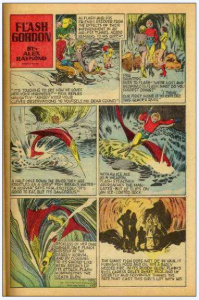
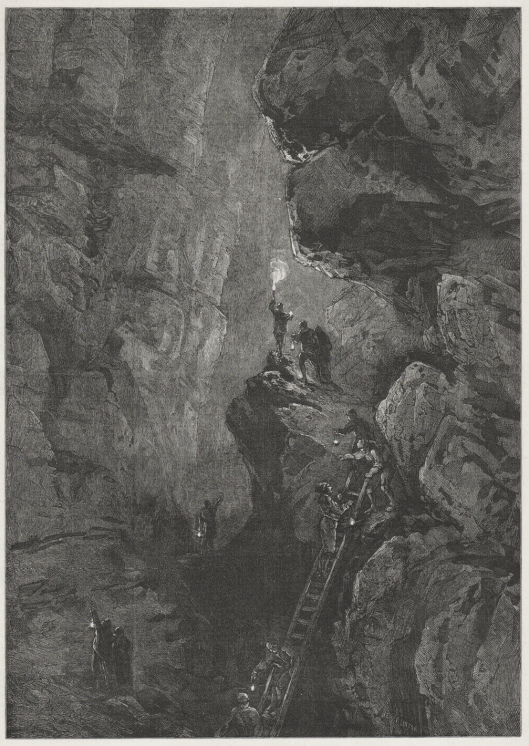
The slick and focussed Stuff To Blow Your Mind podcast returns with the new “Subterrenes: Like Submarines but Underground”. The episode examines…

The notion of a subterrene, or underground drilling vehicle, is well established within the realm of science fiction, but what are the real-world possibilities for vehicles that drill or melt their way through the subterranean world.

Start at 9:20 minutes to skip the intros.

One might at first think ‘steampunk, Jules Verne, Mole Man from Fantastic Four‘, but these days we have to start thinking ‘nuclear-powered Boring Company mega-driller with Elon Musk at the controls’.

“To the Core” by Binoched

Lovecraftians may also be interested in the March 2020 Stuff To Blow Your Mind “The Invention of the Book”, a two-parter on the early history of book technologies.

Old Gods Rising

07 Sunday Jun 2020

Posted by asdjfdlkf in Lovecraftian arts

≈ Leave a comment

Just released, an interesting labour-of-love videogame from a former BioWare developer. Old Gods Rising is a single-player Windows game…

Old Gods Rising is a first-person adventure mystery. Duvall describes it as “what would have happened if H.P. Lovecraft had been running the Firewatch team.

In which you wander around an eerily deserted university campus and grounds. As you do, these days. I’ve no idea what Firewatch is but Old Gods sounds like it’s in the mould of the British game of a few years ago called Everyone’s Gone to the Rapture, but here with a scholarly and Lovecraftian layer. Old Gods is said to take about four hours for hardened three-games-a-week puzzler gamers, or perhaps three evenings for those who only play three games a year.

As with all large new PC games, it may be advisable to wait for a few bugfix patches before playing.

How to centre text using the old WordPress editor

06 Saturday Jun 2020

Posted by asdjfdlkf in Odd scratchings

≈ Leave a comment

Hurrah, I found out how to centre text in the old ‘original flavor’ blog post editor on a free WordPress blog. Yes, I know that’s easy to do on the fancy new one, but I still use the old one. And the old HTML center tag has never been supported, because it messes up template themes.

What you do is you get a snippet paster for your browser (try ‘Paste email’ for Chrome browsers, or ‘Paste Email Plus’ for Pale Moon) and set it to paste…

No need to add the end p tag. Here there are also Italics tags. I’m assuming you want a centred picture-title, in italics to clearly distinguish it from the body text.

Demo:

Cats in space!

Lovecraft as a character in Bloch’s “The Ultimate Ultimatum”

06 Saturday Jun 2020

Posted by asdjfdlkf in Historical context, Lovecraft as character, Lovecraftian arts

≈ 1 Comment

I’ve found another early appearance of ‘Lovecraft as character’. It was mentioned in the Bloch letters, and takes the form of a three-page spoof story/sketch. Robert Bloch’s humorous “The Ultimate Ultimatum” appeared in Fantasy Magazine for August 1935. This purported to be an account, over three pages, of a very large convention of writers and fans. Supposedly having taken place recently in a large crypt, the ‘event’ clearly anticipated the form of ‘the large science-fiction convention’ as it later emerged — none had actually happened at that point, though regional ‘conventions’ were a thing in amateur journalism.

The relevant issue of Fantasy Magazine is not online, and nor is the item itself, but here is a taster dug out of a later magazine article on Bloch…

It was a big convention. Lovecraft was there. So was Clark Ashton Smith, August Derleth, and Otto Binder. Ray Palmer was present, and Stanley Weinbaum. Also there was I, thrilled and proud at attending this gathering of masterminds.

In his letter to Bloch, Lovecraft commented on Bloch’s “The Shambler from the Stars” story in which he had also featured as a character. He added… “the spoof also is extremely clever — I can recognise myself except for the pipe”.

An endnote for the letter adds a little more text from “The Ultimate Ultimatum”…

Howard Cthulhu Lovecraft … sat in the corner, puffing furiously at a skull-shaped pipe.

So far as I can tell the spoof has never been collected, and the Fantasy Magazine for August 1935 has its only appearance. It’s unknown if there were illustrations, but probably there weren’t. It might make for an interesting 1960s Mad magazine -style comics adaptation, today, by a good caricaturist.

← Older posts
Newer posts →


Please become my patron at www.patreon.com/davehaden to help this blog survive and thrive.

Or donate via PayPal — any amount is welcome! Donations total at Easter 2025, since 2015: $390.

Archives

  • May 2026
  • April 2026
  • March 2026
  • February 2026
  • January 2026
  • December 2025
  • November 2025
  • October 2025
  • September 2025
  • August 2025
  • July 2025
  • June 2025
  • May 2025
  • April 2025
  • March 2025
  • February 2025
  • January 2025
  • December 2024
  • November 2024
  • October 2024
  • September 2024
  • August 2024
  • July 2024
  • June 2024
  • May 2024
  • April 2024
  • March 2024
  • February 2024
  • January 2024
  • December 2023
  • November 2023
  • October 2023
  • September 2023
  • August 2023
  • July 2023
  • June 2023
  • May 2023
  • April 2023
  • March 2023
  • February 2023
  • January 2023
  • December 2022
  • November 2022
  • October 2022
  • September 2022
  • August 2022
  • July 2022
  • June 2022
  • May 2022
  • April 2022
  • March 2022
  • February 2022
  • January 2022
  • December 2021
  • November 2021
  • October 2021
  • September 2021
  • August 2021
  • July 2021
  • June 2021
  • May 2021
  • April 2021
  • March 2021
  • February 2021
  • January 2021
  • December 2020
  • November 2020
  • October 2020
  • September 2020
  • August 2020
  • July 2020
  • June 2020
  • May 2020
  • April 2020
  • March 2020
  • February 2020
  • January 2020
  • December 2019
  • November 2019
  • October 2019
  • September 2019
  • August 2019
  • July 2019
  • June 2019
  • May 2019
  • April 2019
  • March 2019
  • February 2019
  • January 2019
  • December 2018
  • November 2018
  • October 2018
  • September 2018
  • August 2018
  • August 2015
  • July 2015
  • April 2015
  • March 2015
  • February 2015
  • January 2015
  • December 2014
  • November 2014
  • October 2014
  • September 2014
  • August 2014
  • July 2014
  • June 2014
  • May 2014
  • March 2014
  • February 2014
  • January 2014
  • December 2013
  • November 2013
  • October 2013
  • September 2013
  • August 2013
  • July 2013
  • June 2013
  • May 2013
  • April 2013
  • March 2013
  • February 2013
  • January 2013
  • December 2012
  • November 2012
  • October 2012
  • September 2012
  • August 2012
  • July 2012
  • June 2012
  • May 2012
  • April 2012
  • March 2012
  • February 2012
  • January 2012
  • December 2011
  • November 2011
  • October 2011
  • September 2011
  • August 2011
  • July 2011
  • June 2011
  • May 2011
  • April 2011
  • March 2011
  • February 2011
  • January 2011
  • December 2010
  • November 2010
  • October 2010
  • September 2010
  • August 2010
  • July 2010

Categories

  • 3D (14)
  • AI (73)
  • Astronomy (70)
  • Censorship (14)
  • de Camp (7)
  • Doyle (7)
  • Films & trailers (101)
  • Fonts (9)
  • Guest posts (2)
  • Historical context (1,096)
  • Housekeeping (91)
  • HPLinks (82)
  • Kipling (11)
  • Kittee Tuesday (92)
  • Lovecraft as character (58)
  • Lovecraftian arts (1,633)
  • Lovecraftian places (19)
  • Maps (70)
  • NecronomiCon 2013 (40)
  • NecronomiCon 2015 (22)
  • New books (969)
  • New discoveries (165)
  • Night in Providence (17)
  • Odd scratchings (984)
  • Picture postals (276)
  • Podcasts etc. (431)
  • REH (186)
  • Scholarly works (1,474)
  • Summer School (31)
  • Unnamable (87)

Get this blog in your newsreader:
 
RSS Feed — Posts
RSS Feed — Comments

H.P. Lovecraft's Poster Collection - 17 retro travel posters for $18. Print ready, and available to buy — the proceeds help to support the work of Tentaclii.

Proudly powered by WordPress Theme: Chateau by Ignacio Ricci.