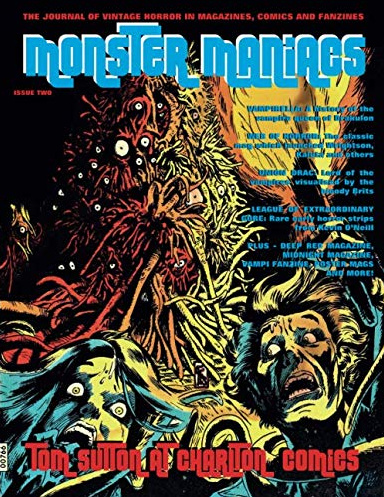
Monster Maniacs #2, now available in paper, being “the journal of vintage horror in magazines, comics and fanzines.”

05 Sunday Jul 2020
Posted in New books, Scholarly works
Monster Maniacs #2, now available in paper, being “the journal of vintage horror in magazines, comics and fanzines.”
04 Saturday Jul 2020
Posted in Lovecraftian arts
Primitive Organism 2 by Erika Kaniwa of Japan, one of a recent digital art series.

04 Saturday Jul 2020
Posted in Lovecraftian arts, New books, Scholarly works
Last noted here just before Christmas 2018, Grimscribe Press’s Vastarien journal has since produced six more issues.

Assuming you already have (or have previously noted the contents of) issue one, then the following is the scholarly non-fiction you’d have missed in the later issues…
Objects of Desire and Dreams of Objectification in Thomas Ligotti’s Short Stories.
Thomas Lovell Beddoes: Marginalia in a Cadaveric Atlas.
H. P. Lovecraft and H. R. Giger: The Maestros and Their Muses.
Expansion, Psychogeography, and the Living City in Andrei Bely’s Petersburg.
Interview with T. E. D. Klein.
The Atmospheric Machines of Poe and Ligotti.
Polanski’s Apartment Trilogy: Perceptual Crisis, Identity, and the Rented Flat.
Visions of the Gothic Body in Thomas Ligotti’s Short Stories.
The Dark Passions of Mark Samuels.
The Power of Individuality in the Work of Charlotte Perkins Gilman.
Richard Gavin: The Nature of Horror.
The Ghosts of Their Guns: Magical Realism in the Fiction of Nadia Bulkin.
Bequeathing the World to Insects [possible survey of post-human beetle-races etc, in fiction??]
Lacan on Lynch: Viewing Twin Peaks through a Psychoanalytic Lens.
03 Friday Jul 2020
Posted in Odd scratchings
Who knew? Roy Thomas and Gil Kane produced a faithful and polished comics adaptation of Wagner’s grand opera cycle The Ring of the Nibelung (DC in four parts from 1989-1991, then a hardback collection in 2002), sans the music. Which may be a blessing, if your ears are averse to screeching Rhine-maidens.
If you want to know the story that Tolkien and Lovecraft knew, this is an accessible way to get it. 200 pages of fine brisk comics cram in 16 hours of opera, but since Roy Thomas is at the helm it’s done very deftly. His translation is fairly straight and not an attempt at “modern and slangy”. The art was by Gil Kane in his prime, doing full-on ‘costume-opera meets superhero’, and he was paired with a top colourist.

Not to be confused with the later 500-page adaptation of the operas by P. Craig Russell. Incidentally, P. Craig Russell’s very lacklustre Jewels of Gawahiar Conan adaptation (seemingly meant to entice dim-witted 10 years old boys into reading) had made me wary of such things, and in researching the worth of the Thomas/Kane Ring of the Nibelung I discovered that Archive.org has once again expanded the scope of the “Borrow” books. Researchers can now ‘nip in and out’ for an hour on a “Borrow” book…

03 Friday Jul 2020
Posted in New books, Podcasts etc.
I’m pleased to see that Interstellar Patrol: Federation of Humanity is now out, providing a new 17-hour audiobook for Christopher Anvil’s late 1960s Interstellar Patrol series. Which is not to be confused with the Hamilton Interstellar Patrol of the late 1920s and 1930s in Weird Tales, the one-plot wonder that Lovecraft was so tepid about. I’ve blogged here previously about the later and different Christoper Anvil and the Interstellar Patrol series if you want to know more.
A follow-up audiobook, Interstellar Patrol II, is set for September 2020.
Regrettably we’re not told which stories are included, or in what order they’re presented. Is this a complete reading of all the stories? I assume the audiobooks are straight readings of two print/ebook collections, the first titled Interstellar Patrol (2003), and the second Interstellar Patrol II: The Federation of Humanity (2005). These collected all the stories. But the potential listener might like a little more reassurance on that point, before they crack open their Paypal for £18 per.
03 Friday Jul 2020
Posted in Housekeeping
I’ve gone through the ‘Lovecraft on the Web’ Link Directory on this blog by hand, rather than the Linkbot check it had last time (that was late 2018, I think). The links list has been pruned, repaired and fixed.
03 Friday Jul 2020
Posted in Historical context, New discoveries, Picture postals
H.P. Lovecraft lived at 10 Barnes St., Providence, from 1926 to May 1933. Since the mid 1890s, Barnes Street had a large 75 million gallon reservoir looming up at the back of it. Even if Lovecraft had become habituated to the sight and vicinity of this reservoir, he cannot have been unaware of it when writing “The Colour out of Space” in March 1927. You’ll recall the story involves a planned reservoir, and potential contamination of the urban water-supply. The story was written about a year after he had moved to 10 Barnes St.


Hope St. reservoir and pumping station.
Was the reservoir still full at that time? Probably partly full, but possibly no longer being pumped with fresh water — and thus emitting a certain invisible miasma over the neighbouring streets by early spring 1927. Because according to a Providence magazine of early 1928 the reservoir was then being decommissioned and its slow drainage was well underway… it “is not yet dry, but it will soon be; the city may make use of the site of the big pool for school purposes”. It may have been used as a school sports area, but other reports indicate it remained undeveloped at Lovecraft’s death. The pumping station/house was decommissioned in July 1928.

Lovecraft lived a little off the left of this picture-map, which shows the reservoir and Barnes Street. Looking at another map, it appears that Lovecraft’s high school directly faced the reservoir. He must surely have been familiar with its existence, even if he never walked up there and peered down into its fishy depths.

It would take work at the local archives to discover more, and the exact dates at which the slow drainage started. I assume it takes a year or so to slowly drain something like that, as rapid drainage could cause landslips and catastrophic spillage etc. But from the dates we do have it appears we can be fairly sure that Lovecraft would have taken note of the city’s plans to drain the reservoir, and possibly the start of the drainage, at about the time of the writing of “The Colour out of Space”. If the two were connected or not is now lost in the mists of time.
Update:
Thanks to Tom Douglass, local historian, who writes…
“I believe you are right about the connection you draw between the two, and perhaps more directly than you stated. … When Scituate’s water treatment facility came online in 1926, the Hope pumping station was decommissioned.”
So it’s interesting that the two events – draining Hope and filling Scituate – should be so closely connected. Lovecraft later recalled in a letter that the filling of Scituate was the key inspiration.
02 Thursday Jul 2020
Posted in Lovecraftian arts
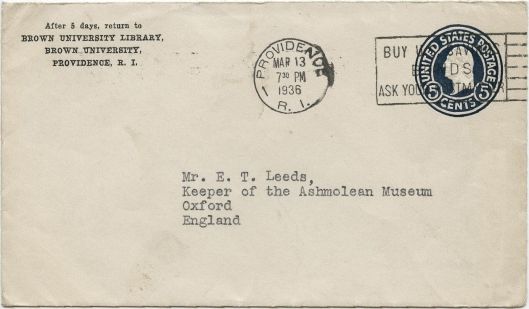
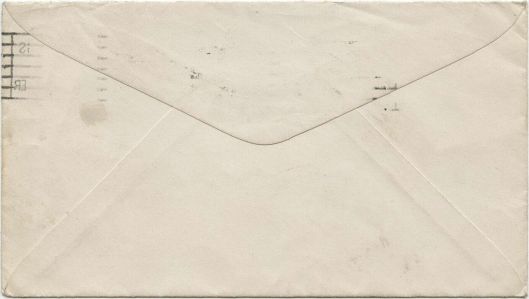
Brown to the Ashmolean, in 1936. If up-sized via AI, printed and glued, it could potentially be a nice prompt for a Lovecraftian RPG game.
01 Wednesday Jul 2020
Posted in Odd scratchings
Here at Tentaclii Towers the month of June proved to be a curious in-between sort of thing, partly because the UK continues to wrestle with the flapping and tattered vestiges of lockdown. Somewhere, distantly, there were the unseen howlings of midsummer rites. But here at the Towers the only ceremony was that of the tentacular air-conditioner being wheeled out of its lair for the annual five-day thrumming. Now the Towers loom silent amid a curiously grey and chilly interregnum, as the UK awaits the long-awaited 4th of July — when the pubs and much else will finally re-open.
New or recent books noted here at Tentaclii included: a new essay collection from S.T. Joshi, The Advance of the Weird Tale; a new book in Spanish translation containing Lovecraft’s selected essays on literature, Ensayos Literarios; and a three-volume set of Russian translations of Clark Ashton Smith. I also found a huge free PDF book on Underground Rivers, and noted that Brian Murphy’s well-reviewed book on the history of sword and sorcery is now available in a £5 Kindle ebook edition.
Several magazine-journals were noted, either new or with new issues: The Digest Enthusiast; Occult Detective Magazine; and the new British magazine Hellebore. These were noted because they include non-fiction essays. I don’t normally note magazines if they’re fiction-only.
June saw links to scholarly work and reviews, including: a substantial four-part instructional series on how to do Natural Language Processing, using the Lovecraft fiction corpus as the test set; a call for chapters from the editors of the forthcoming academic book The Medial Afterlives of H.P. Lovecraft; and a possible call for papers for Mythcon 51 in 2021. I was pleased to see Bobby Derie revisit The Private Life of H.P. Lovecraft (1985), this being a memoir booklet by Lovecraft’s wife Sonia H. Davis, and to see Derie draw on some dates to place a question-mark over the very late and uncorroborated claim that Lovecraft had once read Mein Kampf. Derie’s slightly earlier blog post on Kthulhu Reich (2019) also coincided with my reading the relevant bits of the Bloch letters, and I then usefully correlated the timelines on exactly what Lovecraft would have known of Hitler and the Nazis when writing to Bloch of such things.
I further found a new snippet of data in the Bloch letters which helped me fill a gap in my biography of Kalem member Arthur Leeds. I also became more aware of how Bloch effectively became a sort of ‘substitute Lovecraft’ for a while. I’d welcome a professionally-read audiobook of these ‘in the style of Lovecraft’ early Bloch stories, but there doesn’t appear to be one. In fact, Bloch seems to be singularly ill-served in audio, unless you want Psycho.
My Friday feature ‘Picture Postals from Lovecraft’ made substantial visits to the Hayden Planetarium, and to the Silver River. Less substantial, but still evocative, peeps were take into Mammoth Cave and Red Hook. My ‘Kittee Tuesday’ blog feature also found enough material to keep the whiskers twitching. One of these kittee posts, on Bloch’s early story “Bubastis”, arose from my reading of the Bloch letters and led me to find yet another early appearance of ‘Lovecraft as character’. I now have so many of these that I’ve started a new ‘Lovecraft as character’ tag on this blog, and I will eventually get around to a neat tabulation of such stories in date order.
In audio, I spotted a new Graham Plowman album; two new and relevant editions of the venerable Stuff To Blow Your Mind podcast; a new Lovecraft Geek podcast; and in video the acclaimed documentary The Rise and Fall of Penn Station (the place Lovecraft alighted when he first entered New York City). Also in audio, I was pleased to learn that VLC can handle a ‘playlist edit’ and I coded a VLC Playlist Edit Maker 1.0 to help make such a thing. Basically, you can edit audio and video without having to wrassle it into and out of editing software. The playlist does it for you, in a mere snippet of text. At present, only VLC does this, but it’s a feature other players should copy.
I’ve also just finished an in-depth interview with Lovecraft illustrator and graphic novelist Jason Thompson (‘Mockman’), for the forthcoming VisNews #11. The next issue of the free Digital Art Live magazine (due any day now) will also have my in-depth review of the PhotoLine software, in which I effectively document how I switched from Photoshop to PhotoLine in June.
Please encourage the continuation of Tentaclii by becoming my patron at Patreon. The monthly total now stands at $65. $1 a month is all it takes, and every extra $1 (or three) is always an encouragement.
01 Wednesday Jul 2020
Posted in Historical context, Odd scratchings
Old Marblehead was a well-loved haunt of H.P. Lovecraft. Two books are freely available online which show something of what he saw in the place.
Uploaded to Archive.org in 2019, An Artist’s Sketch Book of old Marblehead, with very fine pen and ink sketches of the town and its environs.

Also on Archive.org is Old Marblehead: A Camera Impression, although sadly it’s one of thousands of Public Library of India scans in which the pictures are ruined by incredibly harsh contrast.

Still, one can see what the completist Lovecraftian would be getting, if the book were to be picked up in paper for a private library.

30 Tuesday Jun 2020
Posted in Kittee Tuesday, New books, Scholarly works
New to me, there’s now an Occult Detective Magazine which has just reached #7. The title includes articles and reviews as well as fiction. For instance, the new Spring 2020 edition features Bobby Derie’s “Conan and Carnacki: Robert E. Howard and William Hope Hodgson”.

It appears to be an offshoot from and continuation of the late Sam Gafford’s Occult Detective Quarterly.
Also new and carrying non-fiction articles, the stylish British magazine Hellebore, devoted to the British ‘folk horror’ subgenre and nice typography.

30 Tuesday Jun 2020
Posted in Kittee Tuesday, New books
Celebrating H.P. Lovecraft’s keen interest in our feline friends.
A 420-page graphic novel about cats in a giant old museum, Cats of the Louvre (Sept 2019). Nice. Can’t think how I missed the appearance of this book in English, last year, but I did. Well-reviewed, it’s apparently a well-told and subtly ‘surreal’ tale, and not a twee shelf-filler for the Museum’s shop.

