
HPLinks #87.
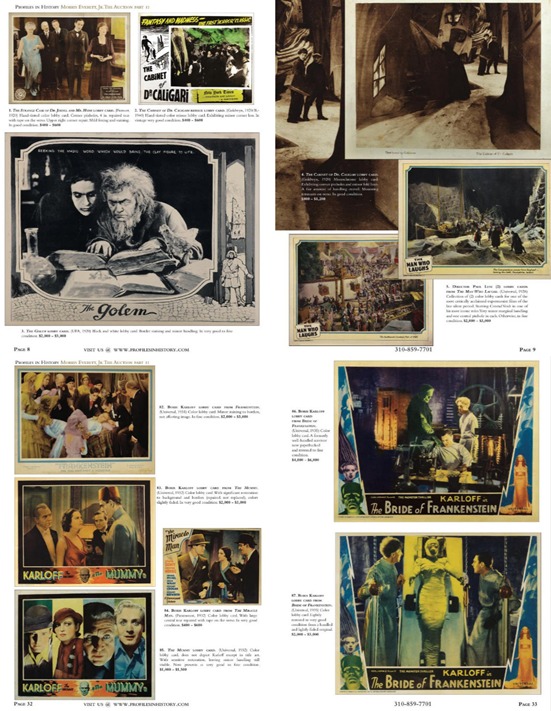
* The Morris Everett Collection Part Two, free on Archive.org as a 391-page PDF catalogue.
* A call-for-papers for The Playful Monster. Set for September 2026 on the south coast of England. Deadline: 31st July 2026.
The Playful Monster is a conference hosted by Winchester School of Art, University of Southampton. It looks at how monsters are made playful, and how the monstrous appears in playful ways across games, media, and everyday culture.
* A call-for-papers for Esotericism in the Comics of Alan Moore. Deadline: 1st July 2026…
This proposed collection of essays will seek to deepen the awareness and importance of esotericism in the work of Alan Moore. It is time for a volume on the topic
* A journal from the University of Oviedo, Spain, plans a special issue themed around ‘Lands of Fear: Gothic and Horror in Literature, Art, and Culture’. The Journal of Artistic Creation and Literary Research now has a call for papers, and proposals for interviews, artworks and book reviews are also welcomed. Deadline: 31st October 2026.
* Wormwoodiana announces a new print journal in English, A Weird Occasional.
* A new Spanish journal invites papers for the forthcoming Legendaria: Revista de estudios sobre el mito y lo fantastico (‘Legendaria: the journal of studies on myth and the fantastic’). The publisher Legendaria Ediciones is a notable publisher of Tolkien scholarship in Spanish, but their new double-blind peer-reviewed journal will evidently range beyond Tolkien. The first issue is planned for later in 2026.
* In 2024 I see that the Mexican journal Historias had a profile of Robert Barlow… “Perhaps this is one of the first profiles of the literary executor of H.P. Lovecraft and editor of Tlalocan magazine.”
* SFcrowsnest reviews The Mind Parasites by Colin Wilson.
* Dread Central reappraises a Lovecraft screen adaptation, 25 Years Later: Revisiting the Lovecraftian The Resurrected…
The Resurrected is a completely mistreated and underseen gem. The film is an adaptation of the H.P. Lovecraft novella “The Case of Charles Dexter Ward”, and is an electric combination of slow-burn noir and supernatural horror. The film is also incredibly silly, and paired with the enthralling mystery, goopy gore, and southern gothic imagery, it truly feels like a singular creative piece.
* Up and Down These Mean Streets has Rediscovered: Ex Libris Virgil Finlay, with an image of a finely penned Finlay signature.
* An unusual item in Italian, the book Il Mistero di Lovecraft & Lovering (2026)….
In the early 1930s stories appeared in Amazing Stories magazine signed as P.H. Lovering, and with the note that it was the same author as The Color Out of Space. Journal error or deliberate choice? And if it were true, is P.H. Lovering actually one of H.P. Lovecraft’s pseudonyms? This essay, part of the Arkham Myths series, explores in depth this mystery […] through rigorous and exciting research, providing essential reading keys for scholars and enthusiasts of the “Providence Dreamer”. With the texts of the two stories for the first time in Italian in a single book.
Lovering was dialogue-heavy 1930s pulp with a love interest, so it seems unlikely. Also Lovecraft appears to have denied it to Hoffman Price in 1933…
Belknap slipped up un one thing — for he was absolutely and unqualifiedly wrong in believing that I have published non-weird fiction under a pseudonym. I not only have never done so, but have certainly never said anything from which such a mistaken inference could legitimately be made. That’s the kid’s one trouble — his imagination flies off on a tangent, and now and then goes beyond the plain facts.
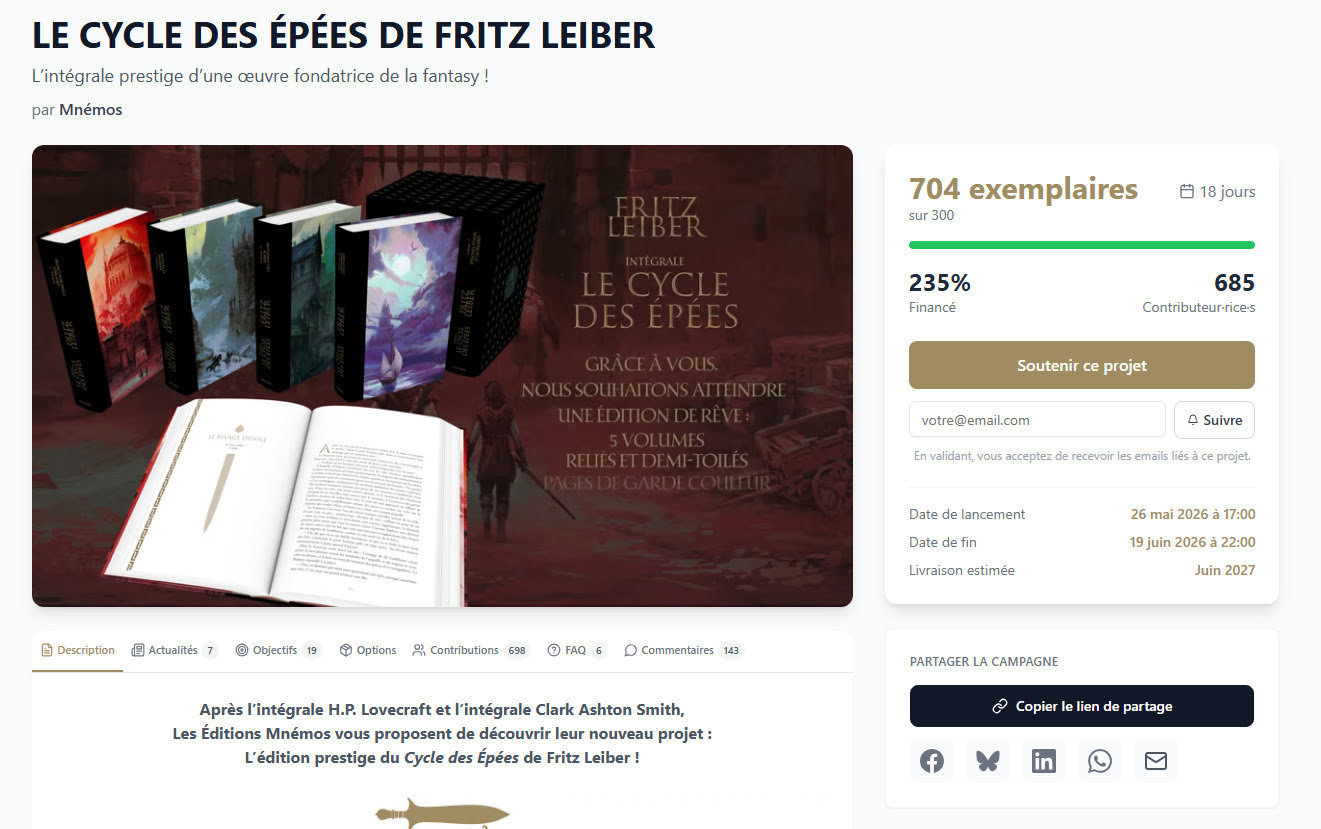
* Now crowdfunded, a French…
edition of the official complete Cycle of Swords — all the short stories, all the novels by Fritz Leiber, in chronological order of the adventures, enriched with Adept’s Gambit with the notes of H. P. Lovecraft presented by S.T. Joshi — in a prestige edition.
* The latest History Today magazine has the article “H.P. Lovecraft: Haunted by History”…
Portrait of the Author as a Historian. H.P. Lovecraft asked us to imagine a much deeper past than modern comforts and science allow us to perceive — and the monsters that might dwell there.
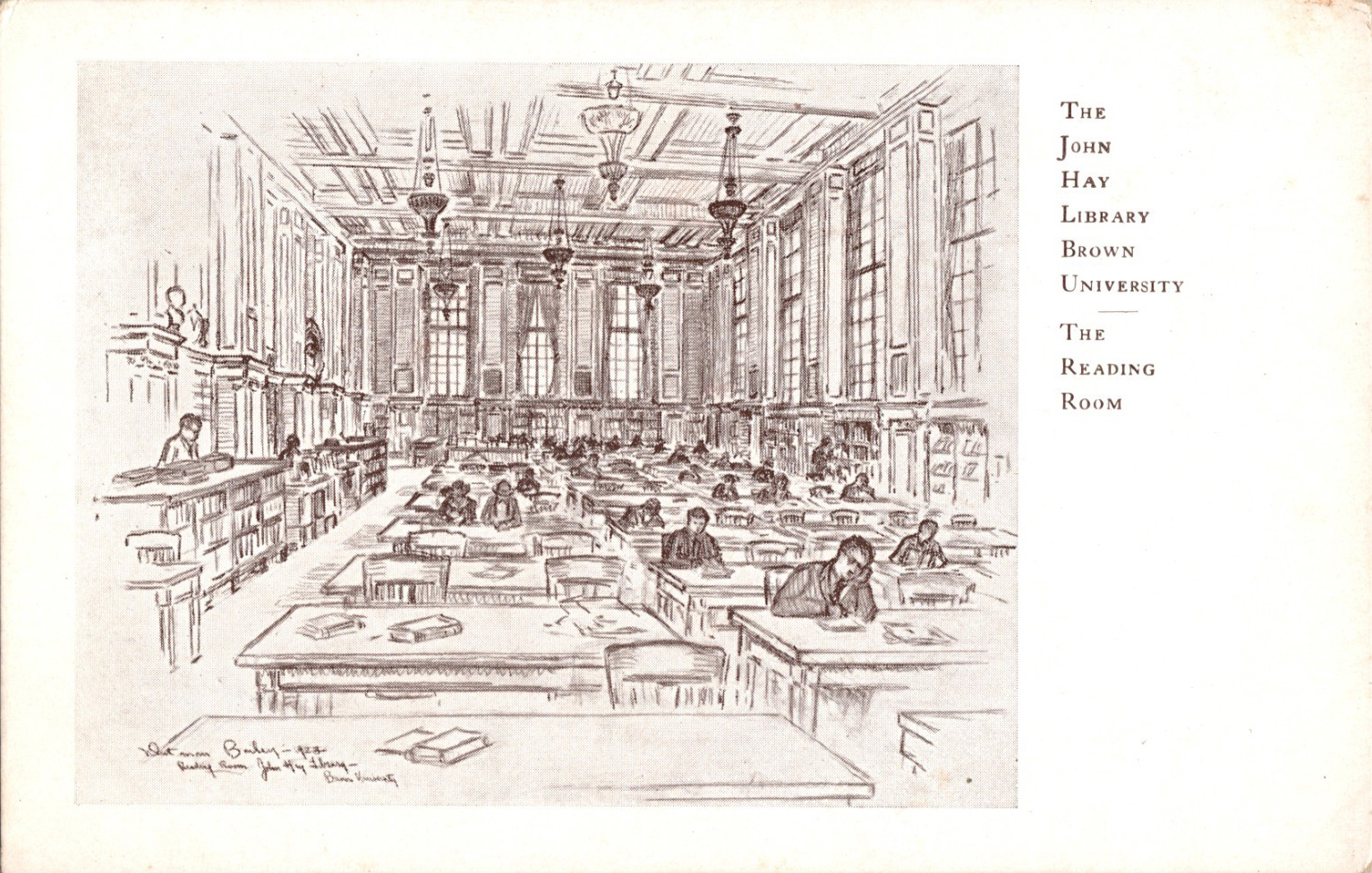
* New on eBay, a pleasing sketch of the John Hay Reading Room at Brown University, in 1923…
* Advance notice that 16th July 2027 will be the 100th anniversary of the ‘escape from Innsmouth’…
It was I who fled frantically out of Innsmouth in the early morning hours of July 16, 1927, and whose frightened appeals for government inquiry and action brought on the whole reported episode.
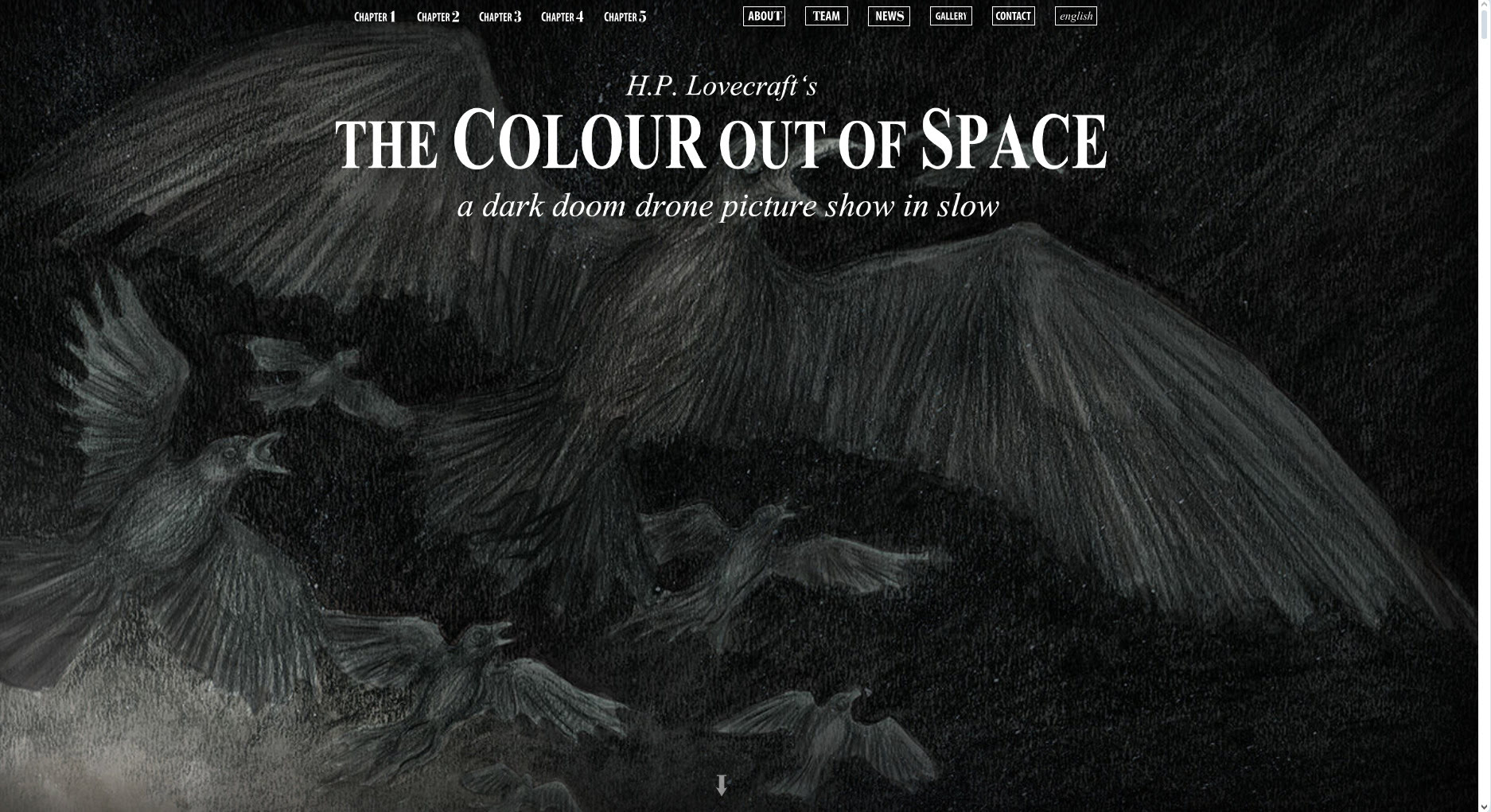
* Germany’s theatrical/audio-visual show Die Farbe aus dem All now has an online version…
* And finally, ArchiScene profiles Summer on Mars, a long profile/interview featuring the professional designers who recently created a ‘Martian interior’ for a big Milan expo…
The exhibition was presented during Milan Design Week. […] Especially for the exhibition, I designed the Lovecraft chaise lounge – an organic form that looked almost as if it was walking across the surface of the red planet. For me, it was also a playful experiment with form and convention. It is technically a piece of furniture, but at the same time it feels slightly alive, as if it wanted to escape or came from another dimension. [… it] came from my fascination with the stories of H.P. Lovecraft and the atmosphere of cosmic horror. There was also a sense of humor behind it, this idea that on Mars, even objects designed for rest might look as if they want to escape from us. I wanted the piece to feel slightly inaccessible, almost like an alien organism or a futuristic algae form. You can still recognize soft surfaces and shapes that invite the body to sit or recline, but at the same time there is something unfamiliar and unsettling about it. That contrast was intentional. I was interested in creating a kind of grotesque tension between comfort and discomfort, familiarity and otherness.
— End-quotes —
[pulp SF readers…] “want their conventional best-seller values and motives kept paramount throughout the abysses of apocalyptic vision and extra-Einsteinian chaos, and would not deem an “interplanetary” tale in the least interesting if it did not have its Martian (or Jovian or Venerian or Saturnian) heroine fall in love with the young voyager from Earth, and thereby incur the jealousy of the inevitable Prince Kongros (or Zeelar or Hoshgosh or Norkog) who at once proceeds to usurp the throne etc.; [and add] something disagreeable and Semitic for the villain. Now I couldn’t grind out that sort of junk if my life depended on it. If I were writing an ‘interplanetary’ tale it would deal with beings organised very differently from mundane mammalia, and obeying motives wholly alien to anything we know upon Earth — the exact degree of alienage depending, of course, on the scene of the tale; whether laid in the solar system, the visible galactic universe outside the solar system, or the utterly un plumbed gulfs still farther out — the nameless vortices of never-dreamed-of strangeness, where form and symmetry, light and heat, even matter and energy themselves, may be unthinkably metamorphosed or totally wanting” — Lovecraft to Farnsworth Wright, July 1927.
[When depicting] “events on the alien planet [one’s fiction] must be in strict accord with the known or assumed nature of the orb in question — surface gravity, axial inclination, length of day and year, aspect of sky, etc. — and the atmosphere must be built up with significant details conducing to verisimilitude and realism. Hoary stock devices connected with the reception of the voyagers by the planet’s inhabitants ought to be ruled rigidly out. Thus we should have no overfacile language-learning; no telepathic communication; no worship of the travellers as deities; no participation in the affairs of pseudo-human kingdoms, or in conventional wars between factions of inhabitants; no weddings with beautiful anthropomorphic princesses; no stereotyped Armageddons with ray-guns and space-ships; no court intrigues and jealous magicians; no peril from hairy ape-men of the polar caps; and so on, and so on. […] What must always be present in superlative degree is a deep, pervasive sense of strangeness — the utter, incomprehensible strangeness of a world holding nothing in common with ours.” — Lovecraft, “Some Notes on Interplanetary Fiction”.
“If a story’s weirdness be due to scientific imagination voyages to other planets by mechanical means, creation of metal men, &c. instead of downright supernaturalism, it has at least a half-chance with the “scientifiction” magazines — Amazing, Astounding, & Wonder Stories. Clark Ashton Smith is now ‘going over big’ with Wonder Stories, & has been asked to write a whole series of tales (interplanetary voyaging in an atomic-energy spaceship) for it. If anyone has a knack at this kind of thing, there is really an excellent & increasing market open to him. I fear I’m not much in this line myself, but nevertheless believe I’ll try a few specimens & see how they are regarded by editors.” — Lovecraft to Miss Toldridge, October 1930.