HPLinks #85.
* Antiques & Arts reports that the lacklustre and error-riddled amateur Innsmouth book produced in Lovecraft’s lifetime has fetched $11,875 at auction. I’d guess, from the price, that it’s probably not the same as the signed Heritage Auctions copy I featured last week in HPLinks. The Antiques & Arts report also gives the prices for other Lovecraft books sold at the same PBA Galleries auction.
* Wormwoodiana discovers a trove of unknown fantasy books from Lovecraft’s era, in “Reading Fantasy in 1928-29: Part One”. They appear to have been well outside the orbit of Weird Tales.
* DMR surveys Weird Architecture Part I: Our World and Time and Weird Architecture Part II: Other Worlds and Times.
* Taskerland this week has considered remarks On “Through the Gates of the Silver Key”.
* In Spanish from Chile, the survey article La Antartica en la Literatura Fantastica (2017) (‘The Antarctic in Fantastic Literature’). Freely, and seemingly newly, available online.
* Deep Cuts this week considers and reprints the short 1936 local memoir “Robert E. Howard as a Boy”.
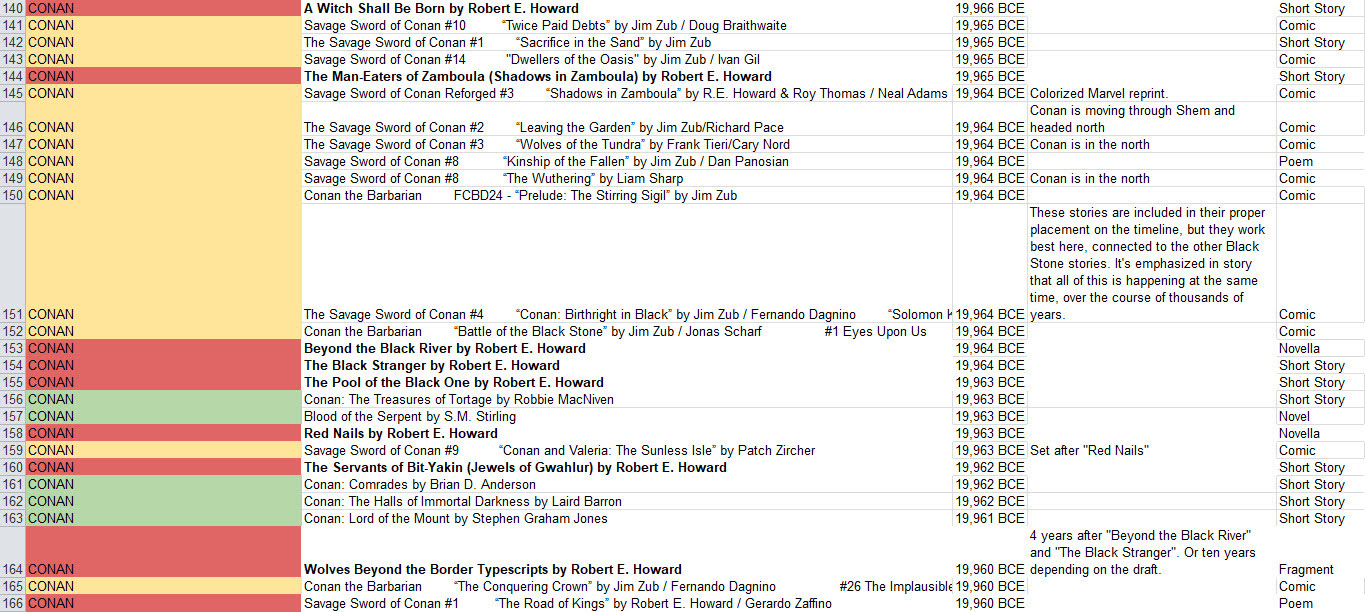
* Useful for Mythos writers and others, a new Howard / Conan Comics / Lovecraft / CAS mega-combo in-world timeline as a free spreadsheet, Titan/Heroic Signatures Howardverse Timeline V1.
* Possibly also of use as reference for Mythos writers, The Online Review of Rhode Island History has faithfully transcribed the local guide A Survey of Rhode Island in 1789 as a HTML page.
* The worthy local Windows freeware Everything is so useful for scholars and picture archivists that it has to be mentioned here. Now in a new 1.5 beta (May 2026). The beta adds drag-and-drop from search-results to other software, tagging, Boolean search, and more. It’s also incredibly fast. Very useful for local search on your PC, in combination with the free AnyTXT Searcher. To enable Boolean: Top menu | Tools | Options | Search | ‘Allow Literal Operators’. NOT is then a search operator, as well as AND, OR.
* New and sinister Lovecraftian goings on along England’s sedate Somerset coastline…
“The Apocalypse Players’ […] latest full adventure, As The Waters Cover The Sea, begins with a walking trip in the Quantock Hills and soon spirals into a strange and terrifying tale involving cricket, crustaceans, cults and Alfoxton House. […] the county and its people somehow feel more authentically in touch with the past than other parts of England […] feels like a place where ghosts could walk, cults gather, and fae creatures dance by moonlight”.
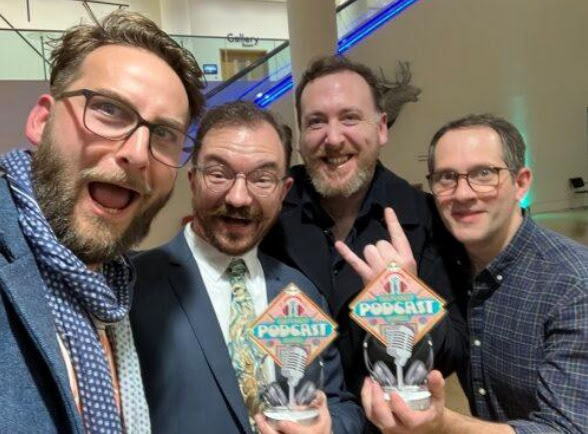
Their performance of As The Waters Cover The Sea has 23(!) podcast parts and has just concluded. All the parts are now on YouTube.
* Ages of Madness is a forthcoming ‘Lovecraft animated’ anthology of animated shorts. According to the trade journal Animation Magazine the European project is a serious venture now attracting big names in auteur animation, and it will… “serve as a prelude to the feature-film Ages of Madness: The Howling of the Jinn”. Which, at a guess from the title and also the prelude anthology’s format, may weave a episodic tale around the history of The Necronomicon?
* A big-screen indie reboot of Lovecraft’s Herbert West: Reanimator is apparently moving ahead. Starburst magazine has Malcolm McDowell (Clockwork Orange) signing on to appear, with… “cameras expected to begin rolling next month [June 2026] in the river town of Alton.” Not Bolton.
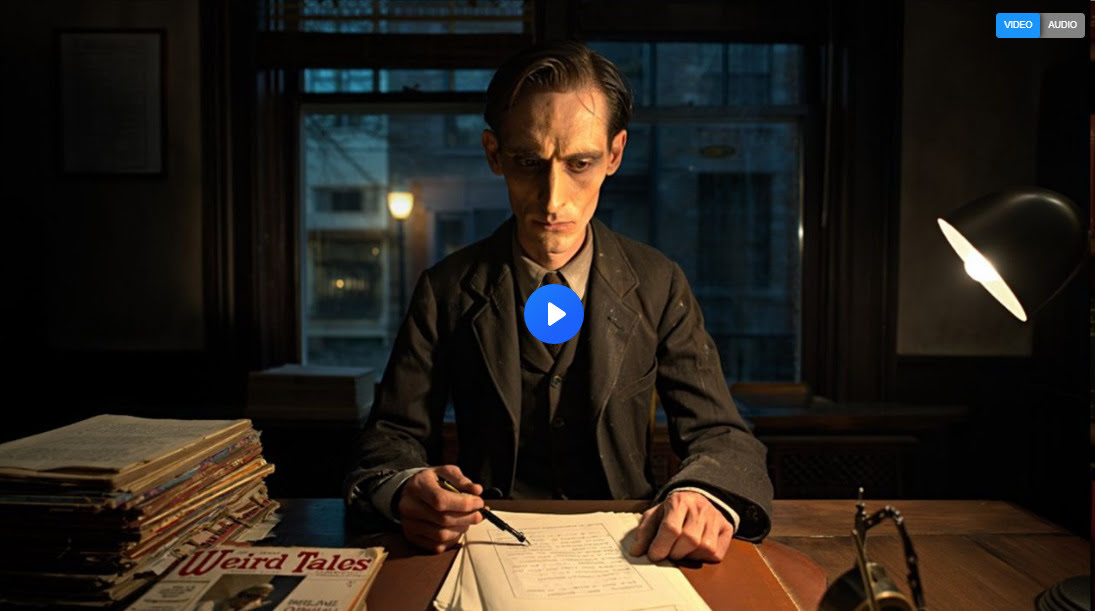
* And finally, newly on Archive.org is the short 2:30 minutes film The Life of H.P. Lovecraft which showcases the current (horrific to some) state-of-the-art of AI video generation. Sadly not under Creative Commons, or else stills from it might be re-styled/re-drawn to make a comic-book version.
— End-quotes —
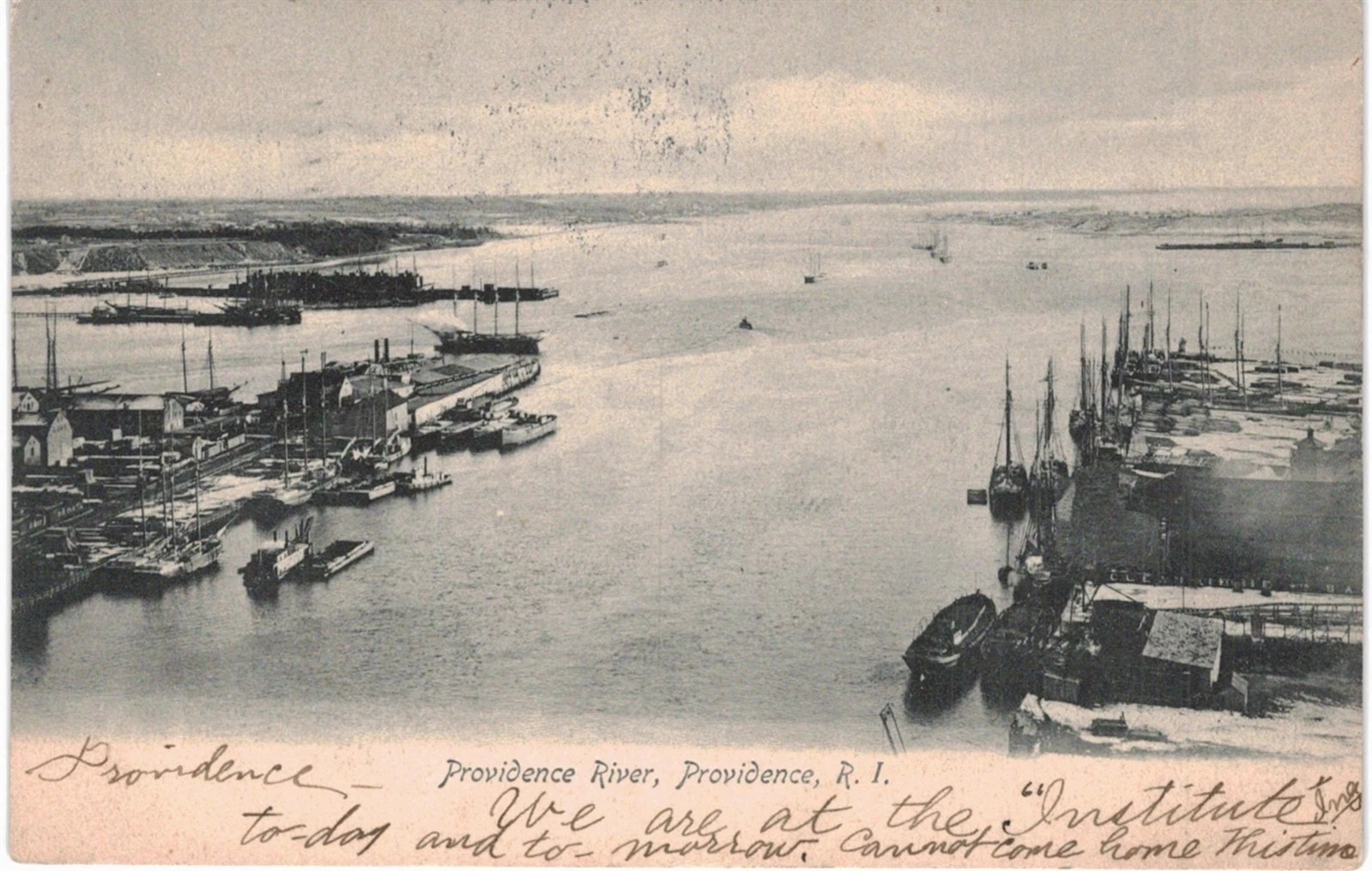
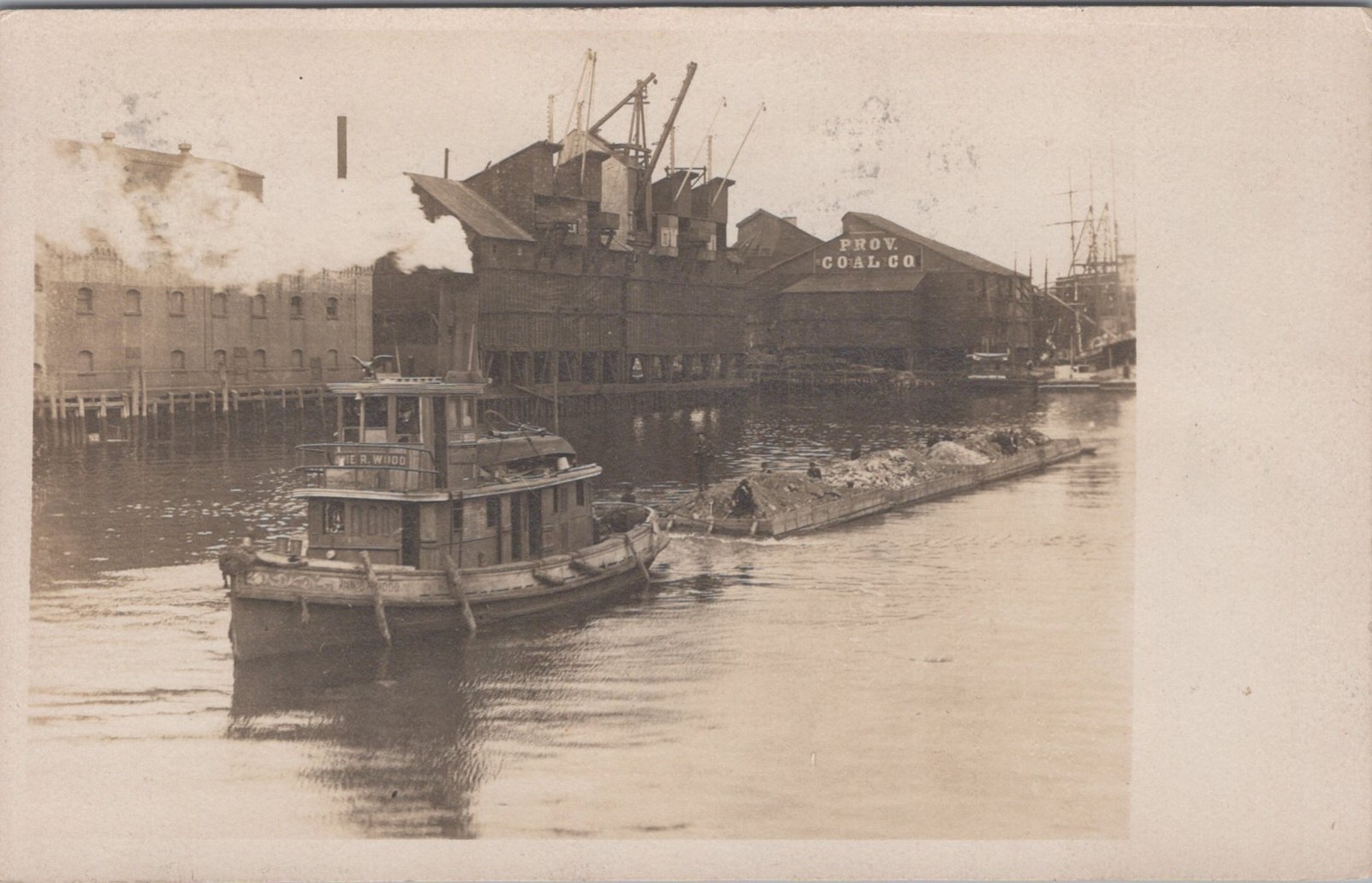
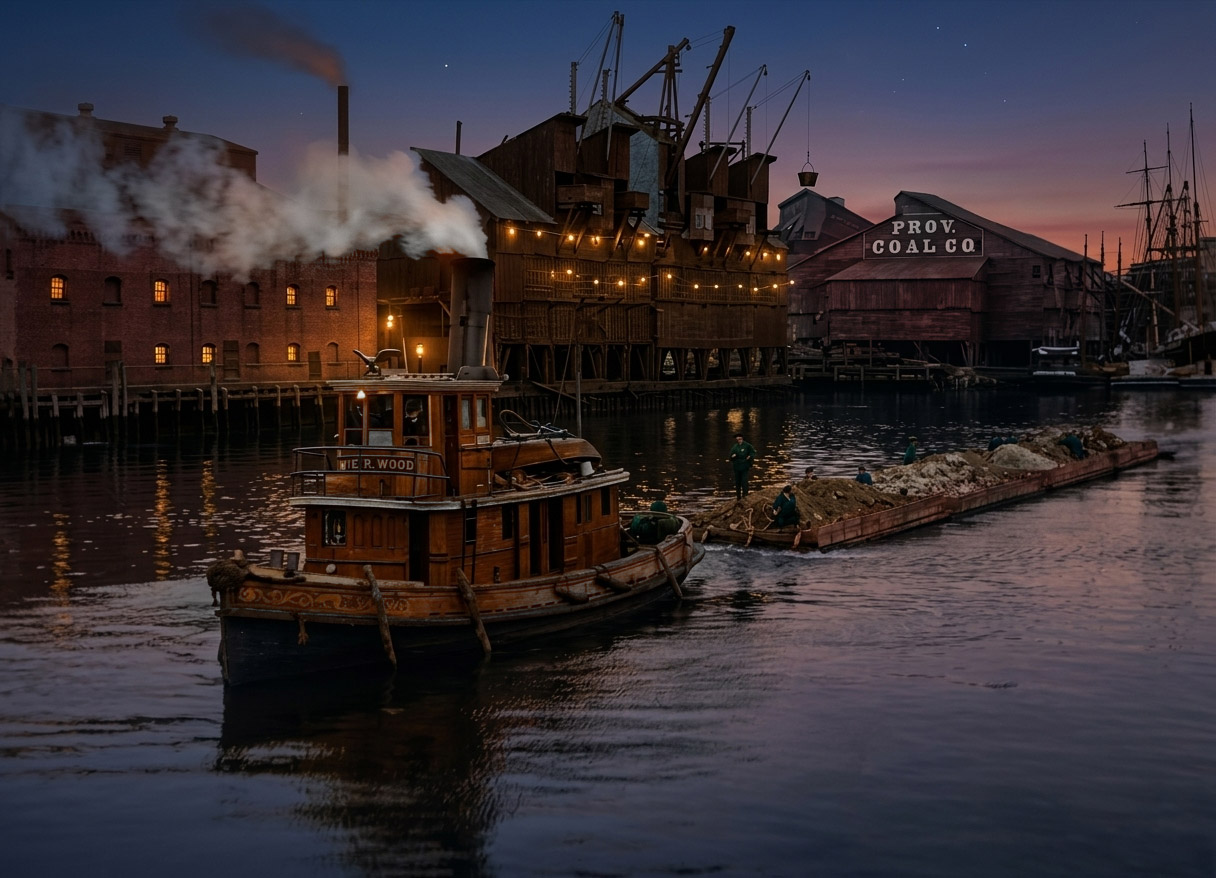
New on eBay, I found a 1907 low view of the industrial side of the Providence river-front, with a working tug. A card made by someone who knew the tug’s pilot, seen at the wheelhouse. Plus my Photoshopped Nano Banana makeover, giving the picture a slightly more Lovecraftian feel. Note the old sailing-ship masts on the far-right, which Lovecraft knew and which he would have glimpsed while coming down the lanes onto the other river-front.
[Lovecraft returns home to Providence after a long trip…] “A fresh salt wind came up from the harbour, over the roofs of the centuried warehouses and the Old Market House of 1773; and down the narrow, curving line of the old town street by the shoar I glimpsed the chimneys and gambrel roofs of mouldering houses known to ancient captains and tarry West Indian seamen. I was home again — in the old New-England seaport that is not quite like any other New-England seaport; in the old maritime New-England that is so different in its soul from [the inland towns …] green-leaved, hill-crowning Providence — Providence, of the old brick sidewalks and the Georgian spires and the curving lanes of the hill, and the salt winds from over mouldering wharves where strange-cargoed ships of eld have swung at anchor.” — Lovecraft in Observations on Several Parts of America (1928).
“Southward you will glimpse the harbour, once a forest of masts, & even now a port of prominence. In September 1815, Market Square was temporarily transformed to a raging sea — the terrible gale of that month driving large full-rigged ships high over the bridge. A good-sized brig was left stranded on Westminster Street when the mad waters subsided.” — Lovecraft to Kleiner, June 1918.
“Into this bay used to come the shipping of all the world, and about a century ago it was a veritable forest of masts.” — Lovecraft to Galpin, September 1919.
“I can see clearly that the French have a profounder culture than we have — that their intellectual perspective is infinitely clearer than ours, & that their tastes are infinitely farther removed from animal simplicity. [Yet still] I shout at every French prize [captured ship] that Capt. Abraham Whipple (my collateral ancestor) brings to Providence harbour & delivers to His Majesty’s prize court of Admiralty at Newport” — Lovecraft to Woodburn Harris, November 1929.
[Lovecraft explores the industrial side of the Providence river-front in 1928, finding behind it…] “a squalid colonial labyrinth in which I moved as an utter stranger, each moment wondering whether I were indeed in my native town or in some leprous, distorted witch-Salem […] there was a fog, & out of it & into it again mov’d dark monstrous diseas’d shapes […] narrow exotick streets and alleys […] grotesque lines of gambrel roofs with drunken eaves and idiotick tottering chimneys […] and toward the southeast, a stark silhouette of hoary, unhallowed black chimneys and bleak ridgepoles against a mist that is white and blank and saline — the venerable, the immemorial sea”. — Lovecraft to Morton, December 1923.
“The effect of night, of any flowing water, of the peep of day, of ships, of the open ocean, calls up in the mind an army of anonymous desires and pleasures. Something, we feel, should happen; we know not what, yet we proceed in quest of it.” — R.L. Stevenson, noted by Lovecraft as entry No. 222 in his Commonplace Book of story ideas. He had found it quoted in John Buchan’s The Runagates Club (1928). It was to be his last entry in his Commonplace Book.