
HPLinks #107.
* A new scholarly book, due in a few weeks in German, H.P. Lovecraft und die dunkle Seite der klassischen Antike: Asthetizismus, historische Identitat und Fiktion (‘H.P. Lovecraft and the Dark Side of Classical Antiquity: Aestheticism, historical identity, and fiction’). A hefty 347 pages, and a hefty price of 99 euros.

… his intensive engagement with classical antiquity has received little attention. Based on extensive source material, Lovecraft emerges as an outstanding example of the non-academic reception of antiquity in the United States around 1900. His methodological approach to antiquity, as well as its significance for his identity and worldview, can be traced in detail. The analysis of selected stories [also] reveals how Lovecraft adapted classical content for his fiction.
* An academic book Lovecraft in the New Millennium (2026) has just been published. A £25 paperback book of chapters by different authors, it appears to be largely a survey of ‘Lovecraftian’ media since the year 2000 — plus some introductory biographical chapters. From what I can glean by search, one or two of the chapters appear to have originated as graduate-student conference papers.
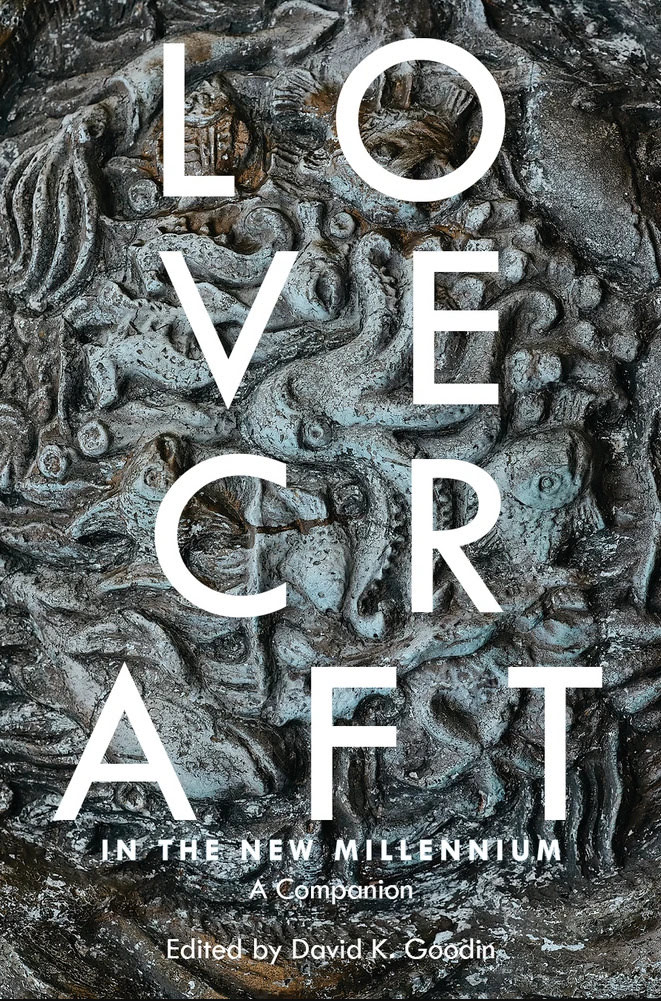
chapters on Lovecraft himself, his intellectual formation and marriage, [and] adaptations of his classic works in musicals, operas, indie rock, videogames, and more, as well as homages to Lovecraft in film, [TV], novels, and even comics.
* The lead article in the latest issue of the open-access journal North Carolina Libraries is a welcome addition to the small literature on librarians and information specialists in imaginative genre fiction. “Guardians of Lore: Knowledge-Keepers, Libraries, and the Moral Work of Information in Genre Fiction” (2026) is freely available online. “Genre” here = “fantasy, science fiction, horror, dystopian, and historical traditions”.
* Imagining the Impossible: International Journal for the Fantastic in Contemporary Media has a call-for-papers for a special issue on “Immersion and Emergence in the Fantastic”.
* A new academic book on the major British fantasy author, Alan Garner and the work of time (2026).
* On YouTube, “Tolkien and Lovecraft: How Nodens Transformed From a Forgotten Roman God Into a Cosmic Hunter”. Tolkien relates to the widely disseminated news of the 1928-29 excavations of the Temple of Nodens at Lydney in Gloucestershire, published in book form in 1932. Lovecraft’s “High House” was written in 1926, two years before the dig, and his Nodens came from Machen.
* The fossil blog Paleonerdish’s ‘Letters from Gondwana’ has a “Halloween Special XIV: The fossils that haunted Lovecraft”.
* A Lovecraft Halloween post from the Civitas Institute at the University of Texas, “H.P. Lovecraft’s Scientific Horror”.
* An R.E. Howard Halloween post from DMR, “Robert E. Howard: Songs of Death and Images of Night”.
* Mete’s Personal Blog ponders “The Paradox of Thomas Ligotti: Why Pessimistic Philosophy is Spiritually Comforting”.
* PorPor Books Blog reviews the Darrell Schweitzer edited anthology Cthulhu’s Reign.
* The latest issue of The Incredible Nineteenth Century: Science Fiction, Fantasy, and Fairy Tale is a review special on Guillermo del Toro’s Frankenstein (2025).
* New on Archive.org, Startling Stories Vol 16 Number 3 [January 1948]. The lengthy letters pages section (‘The Ether Vibrates’) printed a number of examples of the ‘we love/hate Lovecraft’ fan tussle that continued long after his death. e.g. “I’ve noticed that the Editor gnashes his teeth, tears his hair, etc. every time someone praises Lovecraft. Tell me, Editor, ol boy, just what do you have against the late H.P.?”
* In videogames, an obscure Japanese Lovecraftian RPG finally has an English fan-translation…
Released exclusively in Japan more than 26 years ago, Ningyo no Rakuin is a Lovecraft-inspired tactical RPG that most Western players have never experienced. A dedicated group of fan translators is finally changing that, with an entirely human-made English patch arriving just in time for Halloween.
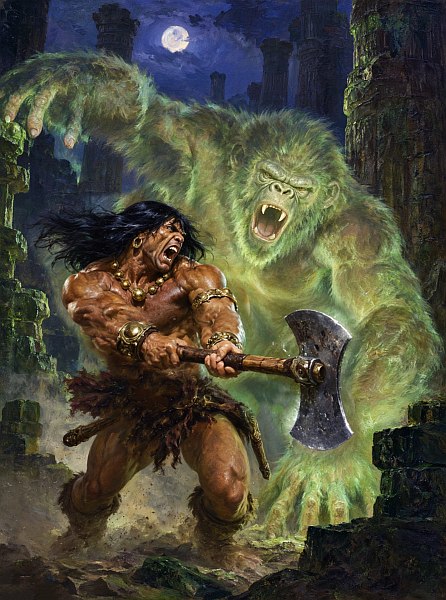
* The new and open MOSS-Image local model is the first to be almost flawless at rendering text, and it now has a free LoRA trained on eight northern European handwriting samples from the 17th to the 19th century. This is possibly of interest re: using ComfyUI and Photoshop to cook up ‘Necronomicon pages’ or printed RPG game items such as letters and lists. For images, it might be combined with the Moss Medieval Illuminations LoRA for MOSS-Image. Also, a demo of its amazing image-making capabilities, featuring a hypothetical paperback cover-painting of Conan in the “Maze of the Wizard-Beasts”.
* The organisers of PulpFest have a call to contribute to The Pulpster 36, the publication of the 2027 event. It sounds to me like they’d especially welcome articles which discuss pulp characters in the context of broadcast radio, and possibly also any vintage spoken-word recordings which may have appeared in the 1950s-1970s?
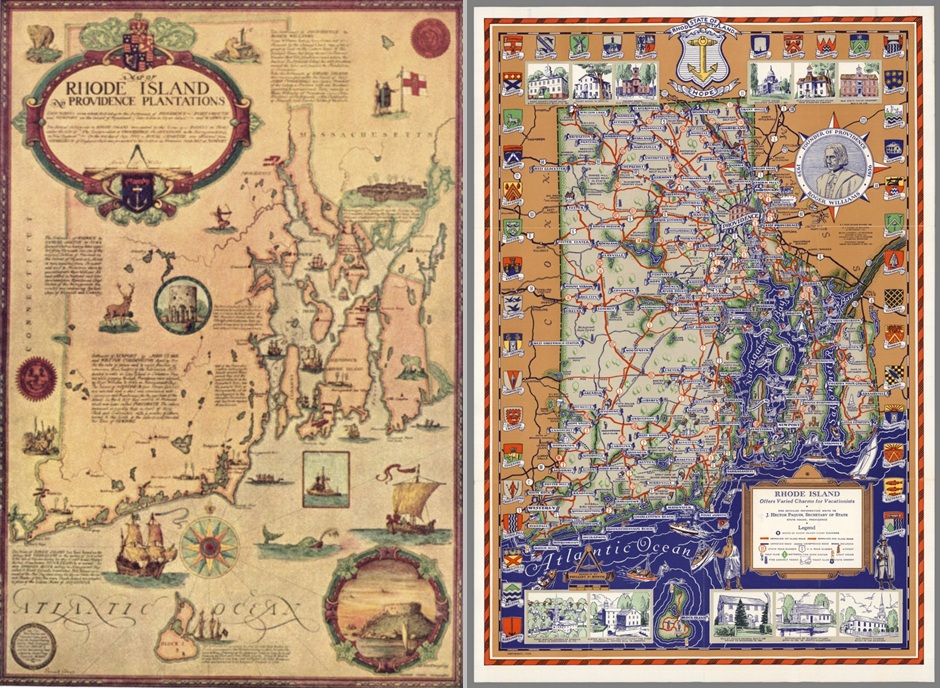
* And finally, I don’t recall seeing these two maps before. On Archive.org, a Lovecraft-era Map of Rhode Island and Providence Plantations (1925), and Rhode Island Offers Varied Charms for Vacationists (1939).
— End-quotes —
From eBay, an evocative postcard view of the rural East Greenwich Academy, which had been attended by Lovecraft’s grandfather Whipple Van Buren Phillips (1833–1904) back when it was called the Providence Conference Seminary.
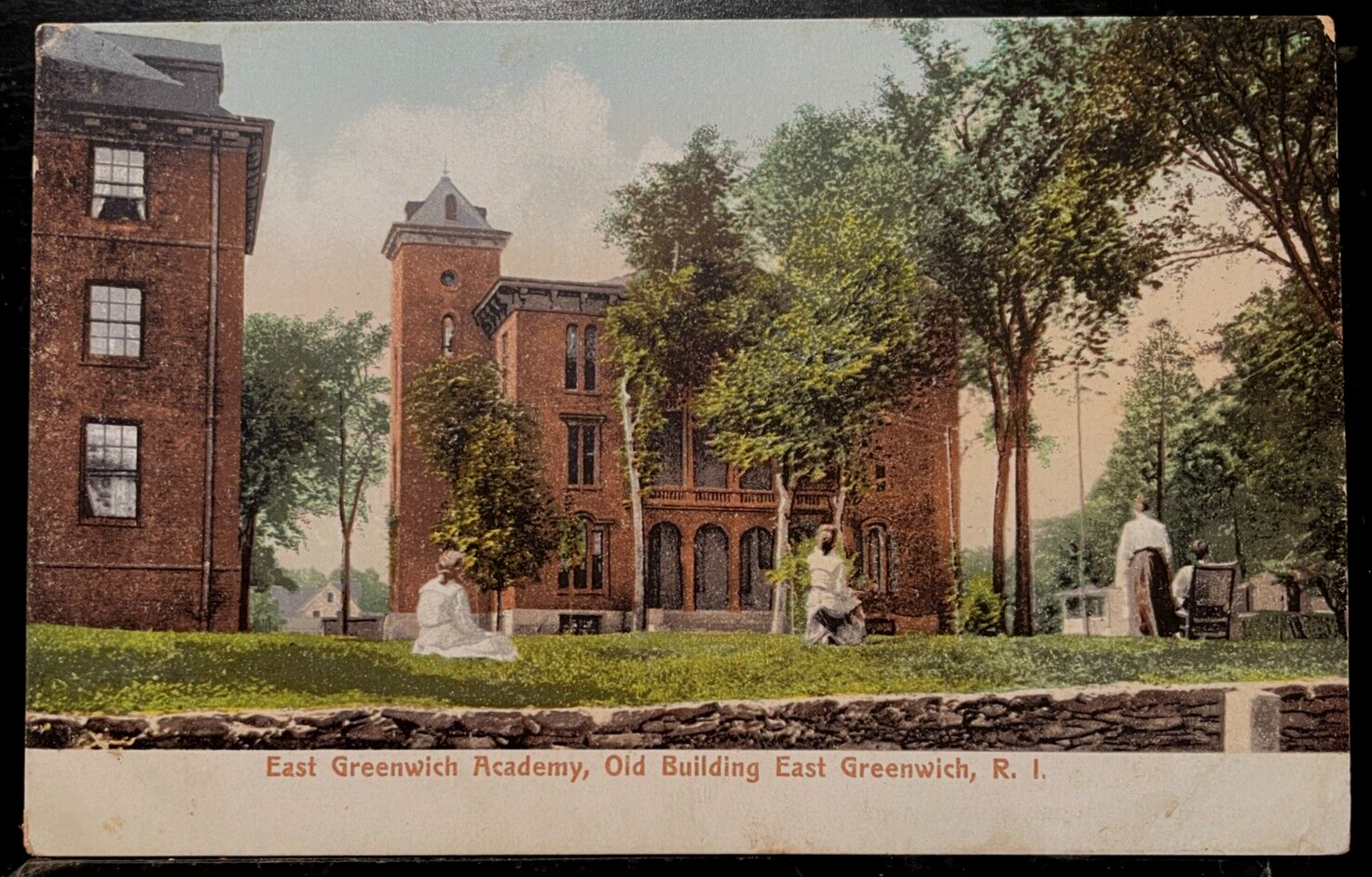
From what Lovecraft says of an old book he found in the attic as a boy, the same place had also educated his great-great-grandfather…
“I had always had an ear for rhythm, and had very early got hold of an old book on “Composition, Rhetorick, and Poetick Numbers” printed in 1797 and used by my great-great-grandfather at the East Greenwich Academy about 1805.”
So the attic books were not simply the older items in his grandfather’s library, but included books far older which his grandfather and other family members had inherited.
“I discovered the very ancient books of the family library in a dark attic room, I read them more than any others. That is how I came to be so familiar with the different sorts of old-fashioned typography. Everything mysterious & fantastic also impressed me — I loved to hear fairy-tales & ghost & witch stories — which latter my grandfather used to tell me.” — Lovecraft to Lee Baldwin, February 1934.
“I never heard oral weird tales except from my grandfather — who, observing my tastes in reading, used to devise all sorts of impromptu original yarns about black woods, unfathomed caves, winged horrors … old witches with sinister cauldrons, and ‘deep, low moaning sounds….’ He was the only other person I knew — young or old — who cared for macabre and horrific fiction.” — Lovecraft to J. Vernon Shea, February 1934.
“In infancy I was afraid of the dark. which I peopled with all sorts of things; but my grandfather cured me of that by daring me to walk through certain dark parts of the house when I was 3 or 4 years old. After that, dark places held a certain fascination for me.” — Lovecraft to Harry O. Fischer, February 1937.