I see that the Lovecraft Arts & Sciences 2023 Winter Fundraiser is nearly at their $20k crowdfunder goal…


14 Friday Apr 2023
Posted in Odd scratchings
I see that the Lovecraft Arts & Sciences 2023 Winter Fundraiser is nearly at their $20k crowdfunder goal…
13 Thursday Apr 2023
Posted in Scholarly works
Gary Romeo usefully takes a comparative look at The Weird Tales Story in its three editions, including the “expanded and enhanced” third edition of 2021. This is then reviewed, and the new additions and omissions noted.
It seems the third edition is still only available in paperback, at present. No ebook, at least not on Amazon UK.
The Dark Man journal also has an online review of the latest edition.
12 Wednesday Apr 2023
Posted in Lovecraftian arts
Newly released on Bandcamp, Music from the H.P. Lovecraft Literary Podcast – Volume Three (2023)…
Music used in episodes of The H.P. Lovecraft Literary Podcast (hppodcraft.com), including material from the feature audio production The Colossus. Recorded in Santa Monica, CA.
Volumes One (2009) and Two (2011) are also available.
12 Wednesday Apr 2023
Posted in Lovecraftian arts
Norwegian black metal has a major exhibition at the National Library of Norway…
Once feared and frowned upon, Norwegian black metal has finally come in from the cold. Norwegian black metal bands are enjoying considerable success with good record sales, sold-out tours and mainstream awards. The exhibition tells the story of this journey in the form of media coverage of 30 years of Norwegian black metal.
Runs until the 16th September 2023, at the National Museum in the capital Oslo. Free entry.
11 Tuesday Apr 2023
Posted in Podcasts etc.
New on Librivox, Ben Tucker’s 70-minute public-domain audio reading of “The Call from Beyond” by Clifford D. Simak.
Back in 2016 Michael May appreciated “The Call from Beyond” for its Lovecraft derived ideas and links…
The May 1950 issue of Super Science Stories has a Simak story called “The Call From Beyond.” The very title rings of Lovecraft’s “From Beyond” and “The Call of Cthulhu.” […] He obviously had a lot of fun with the Lovecraftian elements, though they made the story unsellable to John W. Campbell at Astounding. Thus [it appeared in] Super Science Stories, a crappy low-pay mag.
Although be warned of May’s huge plot-spoilers. He recounts the entire plot including the finale.

Despite its super illustrations, the story is not one of Simak’s best. But it was written in the late 1940s and at that point he was only a few years into writing some good and enduring SF tales. It’s thus interesting to see him leaning on Lovecraft to keep his writing moving forward.
10 Monday Apr 2023
Posted in AI, Lovecraftian arts
A more painterly output from Dream by Wombo, compared to the previous post. The hair probably needs to be fixed. It’s too dark, ‘shoe-polish’ black. But imagine it’s 1922 and Lovecraft is “waiting for Loveman” at a rooftop cafe in Cleveland…
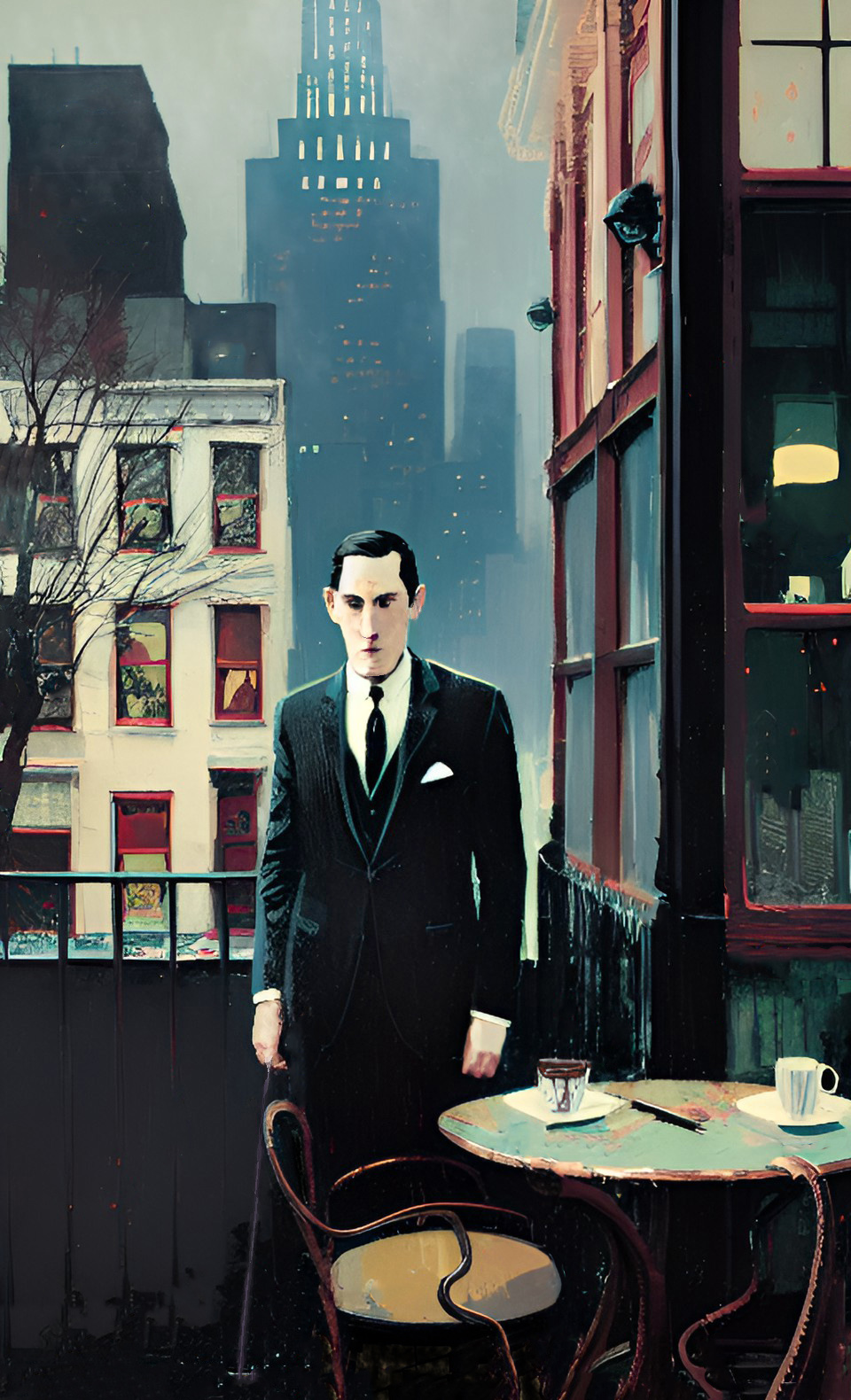
“Waiting for Loveman”
10 Monday Apr 2023
Posted in AI, Astronomy, Lovecraftian arts
What might have been… a well-fed and hairpiece-augmented Lovecraft imagined at age 65, at the end of a career as the venerable and respected astronomer who discovered the planet Pluto.

In this alt. history picture one might imagine that it’s 1956 and his retirement portrait is to adorn the newly-built hallways of NASA. As a writer, in his youth he published a few classic Dunsanian fantasy tales, but then fell silent in fiction. Yet he has just published a slim volume expounding a curious new ‘cosmic’ philosophy, a work said to be exciting some keen interest among European intellectuals.
The picture is more ‘Nick Cage plays Lovecraft’ than Lovecraft, perhaps, but that’s one of the tendencies that Wombo veers towards. The other is Buster Keaton. An AI isn’t making visual distinctions, it just knows a certain set of facial images are associated with the keywords 1920s (Keaton) and with Lovecraft (Cage). There are three ways I know of to control that. One is luck and a good text prompt. The other is a knockout word presented as $Buster$ and the other is to upload a ‘seed’ image of the real Lovecraft.
Thanks to the Dream by Wombo AI and Photoshop. I know I said I’d keep AI generated images off Tentaclii, but it’s getting so good now…
09 Sunday Apr 2023
Posted in Scholarly works
My Tolkien Gleanings issue 3 is now available. A free 48-page ‘zine for Tolkien scholars, collectors, and others.
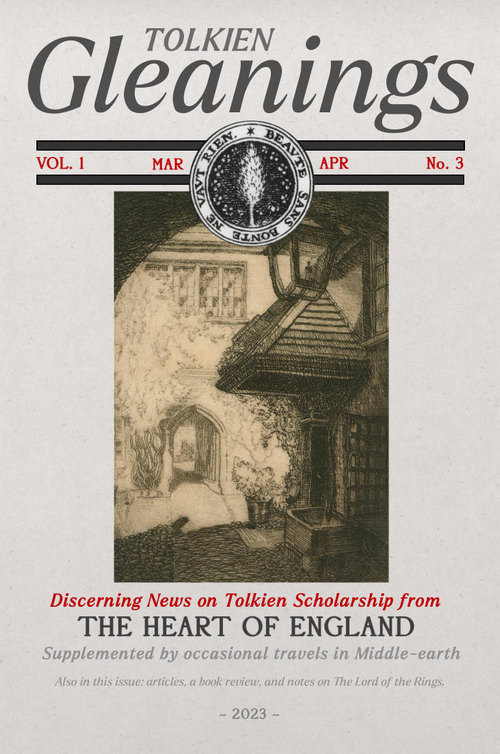
Collecting my January-April 2023 ‘Tolkien Gleanings’ blog posts into one handy PDF. The clickable Web links are retained in the PDF. Also articles, reviews, and a gallery of vintage material.
Also available via Gumroad, if you care to make a donation for it.
Happy Easter.
09 Sunday Apr 2023
Posted in New books, Scholarly works
Hurrah, I see that Ken Faig’s Lovecraftian People and Places (April 2022) now has a Kindle ebook edition, published before Christmas 2022. The table-of-contents is available at Hippocampus. There you’ll also find details of his print books Lovecraftian Voyages (effectively his biography of Lovecraft), his other book of essays The Unknown Lovecraft, and three books presenting the life and work of Lovecraft’s friend Edith Miniter.
08 Saturday Apr 2023
Posted in Scholarly works
The latest issue of the UK’s open-access Rosetta Journal (Summer 2022) leads with the article “Ancient Astronauts and Sumerian Aliens: The Fourth Kind as a Pseudo-Archaeological Narrative”. Later in the same issue there’s a review of the new Oxford University Press book The Werewolf in the Ancient World.
07 Friday Apr 2023
Posted in Historical context, Picture postals
This week for my regular ‘Picture Postals from Lovecraft’ post, a look at the place where (in the eyes of the New England doctors) Lovecraft’s character of Dexter Ward veered into the occult and went mad…
… he had begun his junior year at the Moses Brown School, which lies very near his home […] The beginning of Ward’s madness is a matter of dispute among alienists [i.e. psychiatrists]. Dr. Lyman, the eminent Boston authority, places it in 1919 or 1920, during the boy’s last year at the Moses Brown School, when he suddenly turned from the study of the past to the study of the occult, and refused to qualify for college [i.e. university] on the ground that he had individual researches of much greater importance to make.
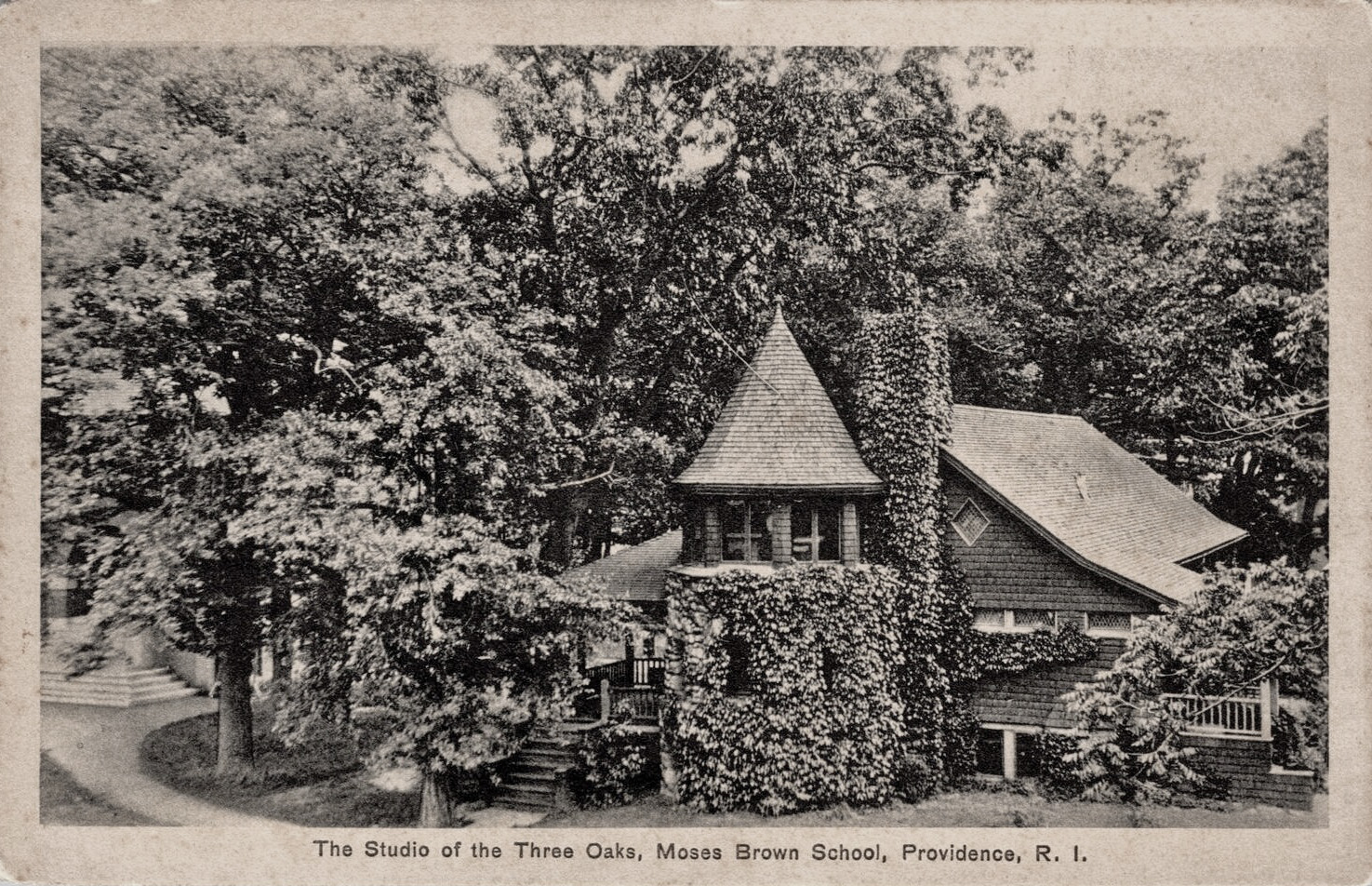
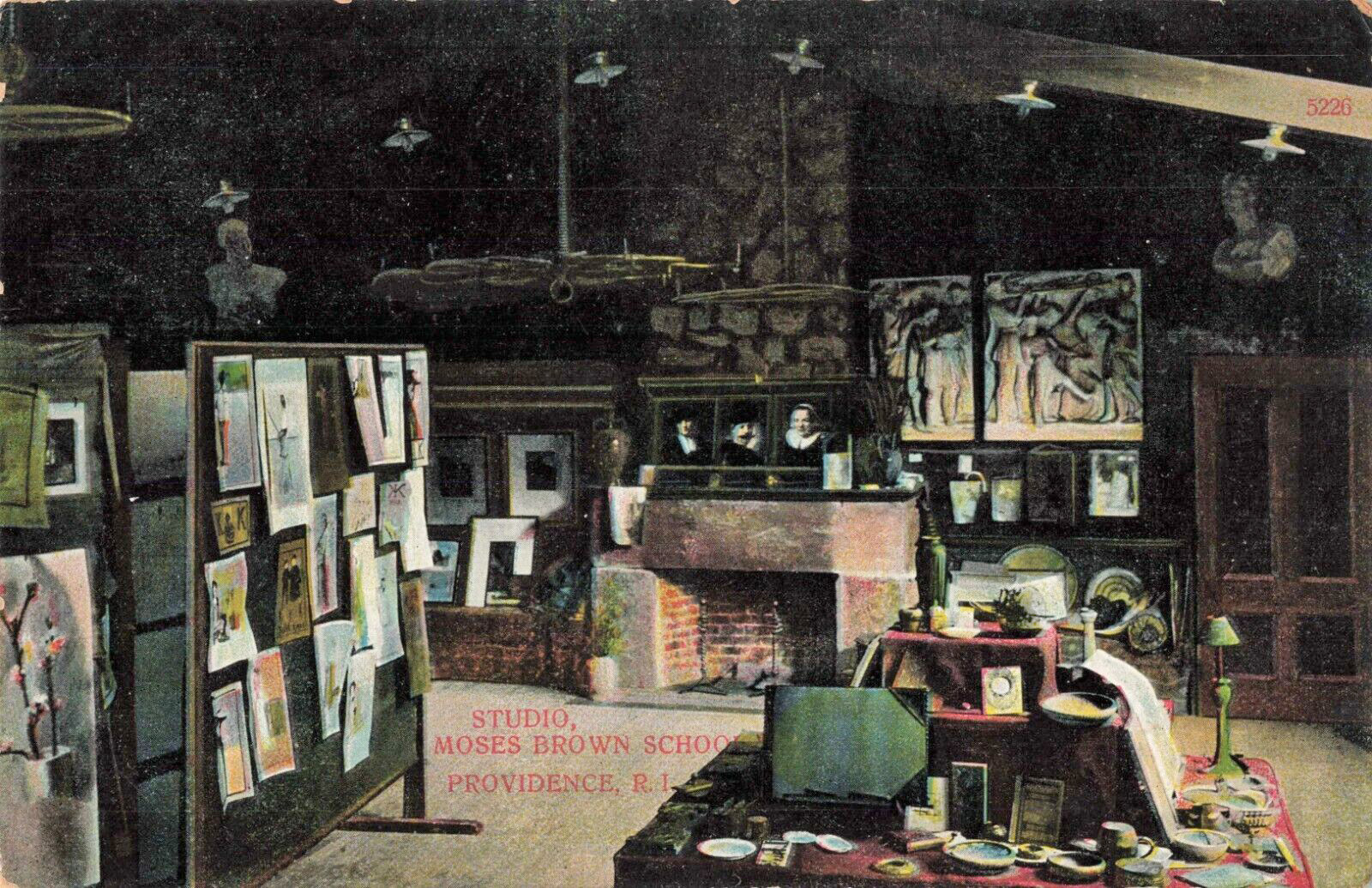
It’s not stated in the novel that Dexter Ward frequented the school’s Art Studio, seen here in both a rare exterior and an interior view. But it seems likely there were at least lessons there, and also that his initial burst of “zest in the military training of the period” only lasted a few months at the school. The burst being in August 1918 — and quite understandable in the context of what we now know to have been the final three months of the First World War and the possibility of a lad shipping out to France and seeing some action. This of course reflects Lovecraft’s own short-lived zeal for such.

06 Thursday Apr 2023
Posted in Odd scratchings
A Covid-like two-week cold, still persisting even now as an annoying cough, prevented Tentaclii from operating as full tilt this month. But a lot was done, even so. The regular ‘Picture Postals’ post was the main item to get a bit lacklustre. I tracked down some of the 1940s/50s Rhode Island drawings of James Francis Murray, and found three or four that were evocative of Innsmouth. I newly found some fine old picture of places I had previously considered, such as the Providence Library steps, the Handicraft Club on College Street (Lovecraft’s aunt lived there for a while), and Pascoag and Chepachet (“The Horror at Red Hook”).
I began an occasional series looking at Lovecraft’s publication The Conservative, and in March I tracked through his first two issues. Among other things I discovered what the “Wet Hen” was, and more about the Lovecraft-admired writer and macabre poet John Henry Fowler (1861-1932).
Also in biography I did initial research on who the early Lovecraftian and Weird Tales story writer David H. Keller was, since he’s now all but forgotten even by Lovecraftians. I linked to his available weird/fantasy collections and more, and was pleased to find had had a series of historical-fantasy tales set in Cornwall, England. Elsewhere Deep Cuts had a long article on “Hart Crane, Loveman and Lovecraft”, and I linked this and added three additional relevant quotes on Loveman.
In new books, S.T. Joshi reported the arrival of Robert Barlow’s greatly expanded collection Eyes of the God. The German Fungi von Yuggoth edition proved to be a handsome volume and also earned the coveted Joshi stamp-of-approval. The team now move on to translating Lovecraft’s essays into German. In France, the huge multi-volume new French translation from Mnemos completed and shipped.
The journal Dead Reckonings No. 32 (Fall/Autumn 2022) has also shipped, again according to S.T. Joshi. On Archive.org, I noted a partial run of Reader and Collector, the worthy fanzine of H.C. Koenig. Some other curiosities popped up on Archive.org, such as the one-off Necronomicon Ilustrado and a timely cutting on Lovecraft from the Chicago Daily Tribune, April 1945. Sadly the big publishers won the first round their law-suit against Archive.org on “books to borrow”, but the initial ruling is being appealed and I guess it may even go all the way to the Supreme Court.
Various audio readings and podcasts were noted. Sadly it looks like Voluminous, which beautifully reads Lovecraft’s letters, has finished its long run.
The well-reviewed 1930s Lovecraftian mystery-puzzler videogame Call of the Sea (2020) was released for free. Not covered by Tentaclii, the usual tidal-wave of Lovecraftian games were released, both videogames and RPGs. The ocean-going Dredge is a Lovecraftian game now being heavily promoted.
In free or low-cost software, I was pleased to find that the unique $47 desktop writing assistant CQuill Writer has a free sci-fi module trained “on 1950s sci-fi authors”. Also of note was OpenChatKit, the first of what will hopefully be many open and genuinely free AI text services. In image generating AI, Dream by Wombo just keeps getting better and can now do hands with reasonable fidelity. Now if only Wombo would provide any kind of ‘landscape’ as a well as their one-size ‘portrait’ output. In the meantime, Playground AI is has a range of output sizes and also genuinely free.
In comics, Dark Horse has finally dated Gou Tanabe’s mammoth adaptation “The Shadow Over Innsmouth” in English. Why Japanese graphic-novels and French BDs can’t be translated into English more quickly is beyond me. You’d think there would be a small industry in quick translation and sales by now, pushing books through to the large and lucrative English market simultaneously with their release in French, Italian or Japanese. Instead, English translations can take years to arrive, if ever.
Over in Tolkien-land, I released my third and probably final edition of the ebook for The Cracks of Doom: Untold Tales in Middle-earth, which now also covers the events of The Hobbit. The third issue of my free occasional PDF ‘zine for Tolkien scholars, Tolkien Gleanings, is also progressing nicely and should be available soon.
That’s it for March. My thanks to my Patreon patrons for sticking with me during this difficult time. And don’t forget… if anyone also wants a substantial monthly PDF magazine produced on their favourite topic, then it would only cost $700 a month to make that happen with myself as Editor.