Lovecraft’s Coast, pictures from Devon, England (home of Lovecraft’s ancestors), made by Marcin Bera…
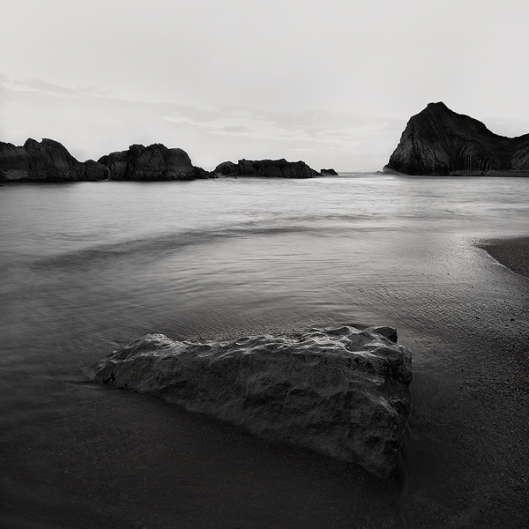


More, and larger, at the artist’s website.

25 Saturday Feb 2012
Posted in Lovecraftian arts
Lovecraft’s Coast, pictures from Devon, England (home of Lovecraft’s ancestors), made by Marcin Bera…
More, and larger, at the artist’s website.
25 Saturday Feb 2012
Posted in Lovecraftian arts, Odd scratchings
Enter the Call of Cthulhu Competition, and win a copy of Astounding Stories from March 1936 featuring H.P. Lovecraft (contains part 2 of At the Mountains of Madness).
To enter, “rewrite the text of an existing review of [the game] Call of Cthulhu: The Wasted Land in the style of H.P. Lovecraft”.

Interesting to see quite how small Astounding was. I had gained the impression that most pulps were big tabloid-newspaper -sized things.
24 Friday Feb 2012
Posted in Lovecraftian arts
Super cover by Santiago Caruso, for a Czech edition of Lovecraft…

23 Thursday Feb 2012
Posted in Lovecraftian arts
Here’s a tasty new “concept montage” trailer for the animated Lovecraftian movie Ages of Madness (eta 2014). A Lovecraftian animated short, “Helen”, will act as a prelude to the film this coming September…
[youtube http://www.youtube.com/watch?v=SC0uLJpnl6s&w=640&h=360]
22 Wednesday Feb 2012
Posted in Lovecraftian arts
A 3D H.P. Lovecraft figure is available for $13…
 Above: rendered in iClone.
22 Wednesday Feb 2012
Posted in Historical context
New article by Karl Beech, Lyonesse and ‘The Foundered Town’ in Romance and Fantasy of the Nineteenth and Early Twentieth Centuries. Lovecraft was aware of the myth, since it is Cornish and his ancestors were more or less from that part of the British Isles (he believed that, as he wrote in one letter, “Cornwall & Devon are pretty much a unit”).
Sam Llewellyn also has a short survey of the monsters and dangerous animals that were said to dwell in that land sunken below the sea…
“When historians write about Lyonesse, they are inclined to concentrate on the exotic monstrosities that rise from the land’s bottomless wells. The original animals were curious in their own way…”
21 Tuesday Feb 2012
Posted in Lovecraftian arts
21 Tuesday Feb 2012
Posted in Odd scratchings
Echoing the idea of Lovecraft’s At The Mountains of Madness, an ancient flowering plant has this month been brought back to life from seeds buried by a squirrel more than 30,000 years ago. The seeds were dug out of the fossilised and frozen burrows of ancient Arctic ground-squirrels in Siberia.
“The breakthrough means some early lifeforms, which ‘have long since vanished from the earth’s surface’, could still be held in the frozen wastes. It also suggests that dormant life found on Mars or other icy planets could be revived.”
20 Monday Feb 2012
Posted in Lovecraftian arts
What if… Disney were to make a Lovecraft movie…

19 Sunday Feb 2012
Posted in Odd scratchings
An original copy of the 1924 issue of Weird Tales edition that published Lovecraft/Houdini’s long story “Imprisoned With The Pharaohs”, has been flogged on eBay for $680.

19 Sunday Feb 2012
Posted in Films & trailers
A quick round-up of a few of the recent reviews I’ve spotted for the excellent feature-length adaptation of Lovecraft’s “The Whisperer in Darkness”:
[youtube http://www.youtube.com/watch?v=A_ee9K9hXtw&w=640&h=360]
18 Saturday Feb 2012
Posted in Odd scratchings
I was recently asked by a student the meaning of H.P. Lovecraft’s famous couplet, which he attributes to Alhazred…
“That is not dead which can eternal lie.
And with strange aeons even death may die.”
I answered that Lovecraft was presenting these lines as having been written in The Necronomicon by a mad 6th century Arab poet called Abdul Alhazred. Lovecraft states that The Necronomicon was originally written in Arabic, then translated into Greek, then Low Latin — and finally this fragment is rendered into English by the narrator of the short story “The Nameless City” (1921) in which the lines appear. That’s what Lovecraft would have the reader believe, and the fact that it is meant to be ‘a translation of a translation of a translation of a translation’ might explain why Lovecraft has his narrator call the couplet “unexplainable”. Yet, in typical Lovecraftian fashion, it is then partly explained: the narrator says the lines are related to a dream of Alhazred’s of “the nameless city” depicted in the story. How he knows this fact is not explained.
This aspect of the couplet’s apparent meaning was later picked up in Lovecraft’s “The Call of Cthulhu”. In this masterpiece the same couplet gets a repeat outing, with the same wording. In that later and more famous story the reader is clearly meant to understand couplet as being a prophesy — of the awakening of Cthulhu from the sunken city of R’lyeh. So once again it is meant to refer, obliquely, to a mysterious forgotten city. Those few fans who remembered the earlier “The Nameless City” story (published in the obscure The Wolverine) while reading “Cthulhu” were thus presumably meant to think that the narrator of that earlier tale was somewhat astray in his understanding of the couplet. For more precise understanding of how the couplet might relate to the idea of immortal beings, sunken cities lying in the deeps of the sea, and the nature of the sleeping Cthulhu, read the famous story itself.
