Moore Lovecraft

New on Archive.org, an academic book on Alan Moore: Out from the Underground (2018), one of the Palgrave series which discussed comics and graphic novels.

Has little to say about Lovecraft, but does show that the Lovecraft influence was strongly present as early as 1969…

Having met the young Dave Womack at the second British comics convention in 1969, he [Moore] sent him some illustrations and an article on Lovecraft, the latter of which featured in the first issue of his dual comics fanzine/adzine Utopia/Valhalla in February 1970.

And adds one more item to the list of early Lovecraft as character appearances…

Moore’s “Breakdown” in Embryo 4 [circa 1971?] had similar Orwellian themes (‘Cold terminal eyes in the control chamber fingerbutton proseflash’) and ends with a conversation between Orwell, Lovecraft, and Ray Bradbury.

Embryo #4 is a zine that doesn’t appear to be on Archive.org.

On the news stand

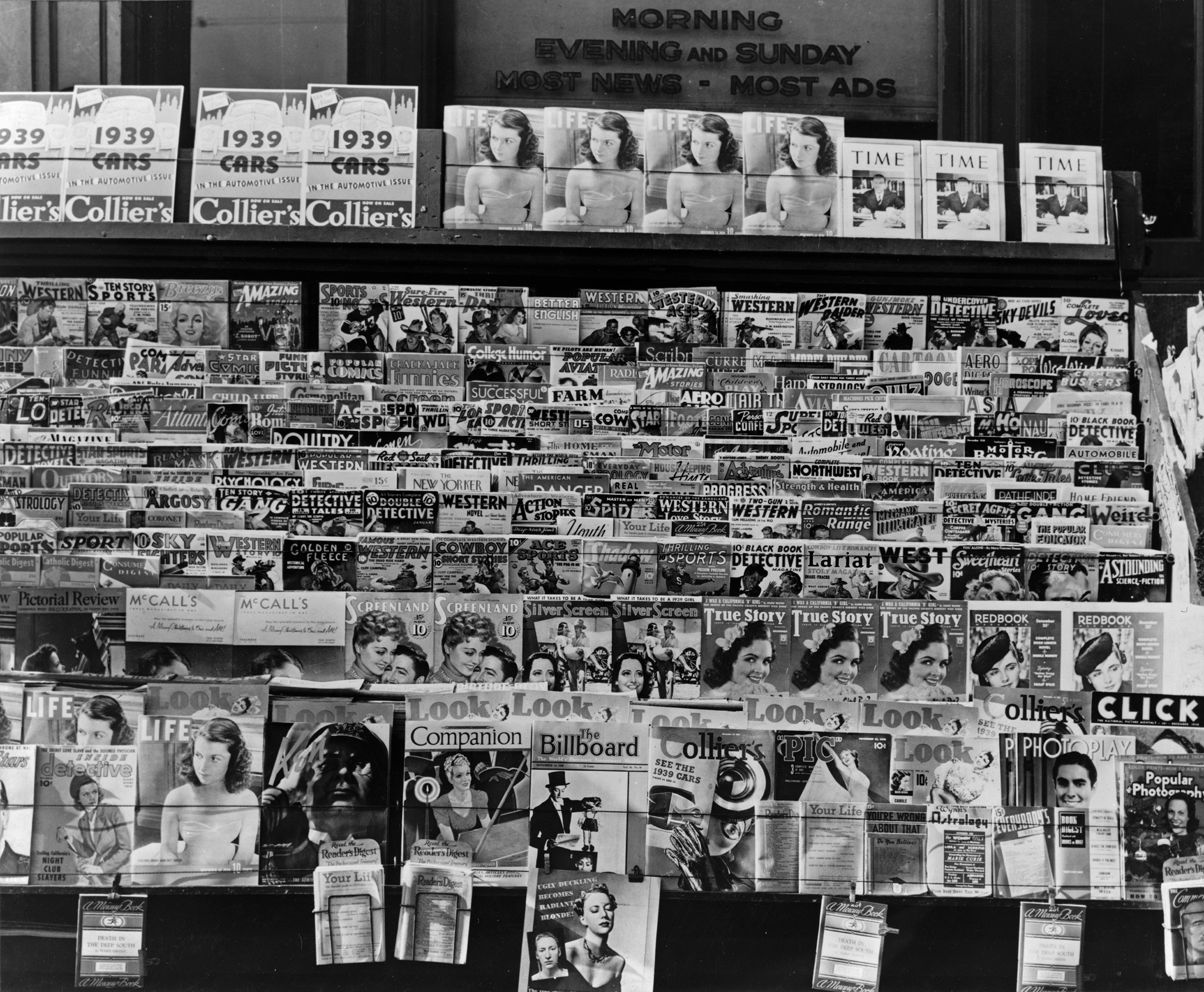
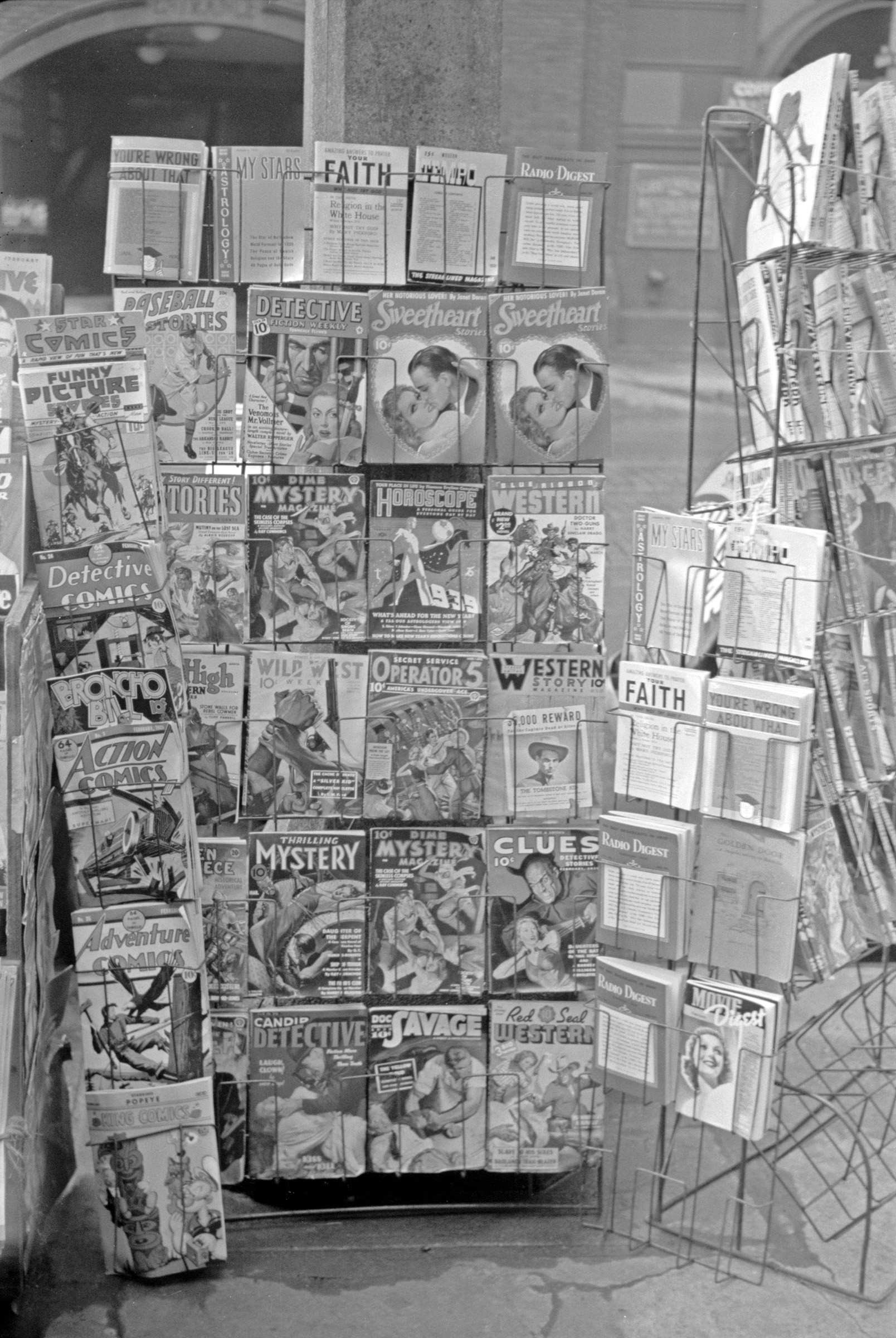
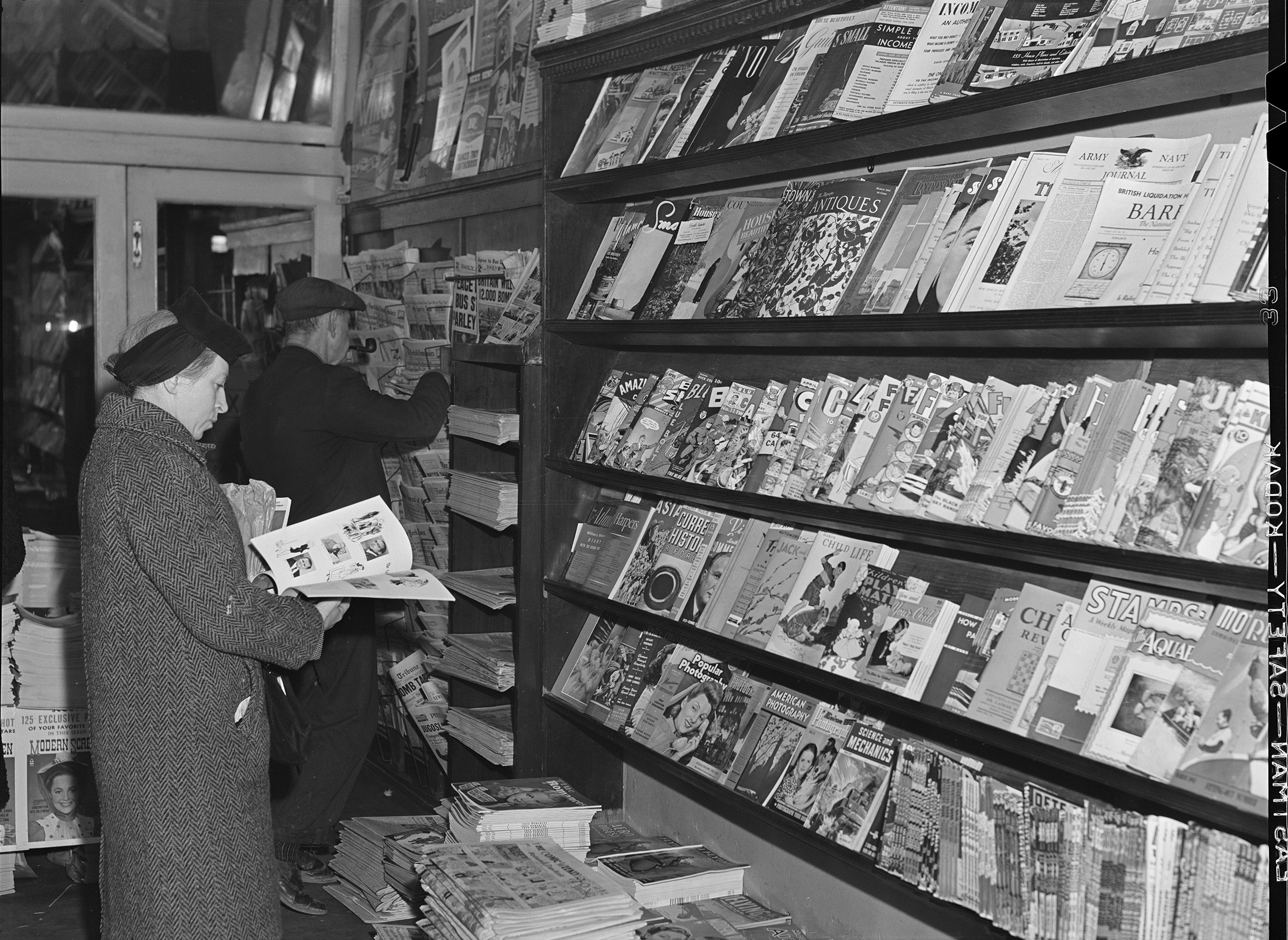
This week on ‘picture postals’, news-stands of the 1930s and 40s, via the best images to be found at the Library of Congress. Here cropped, contrast-adjusted and reduced to a manageable-but-still-big size from the huge .TIF files.

It’s interesting to see how they were purveyed. Upside down, in one picture.

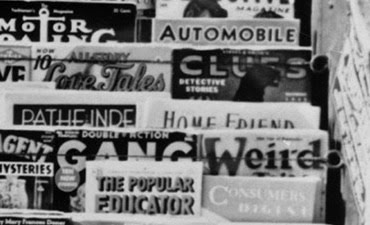
And quite mixed in another picture from 1939, where Sky Devils can end up right next to Complete Love, and Weird Tales is jammed between Home Friend and Consumers Digest

Perhaps the war made them more organised, so that they could be more easily given the once-over for seditious material during wartime?

Lovecraft’s internal mythos networks

In the latest Journal of Popular Culture, one of those single-author corpus text-mining / digital humanities papers, “The ‘Cthulhu network’: The process by which the popular myth was made”. This only examines Lovecraft’s works. The many cross-references and allusions found in works by members of the Lovecraft Circle, and also ideas and names shared by letters, are also mentioned. But that aspect of the growth of the Mythos is suggested as needing “further research”.

Freely available, under full Creative Commons Attribution.

AIs know Lovecraft

I love that nearly all indie generative AI models know what Lovecraft looked like (‘indie’ because those of Adobe etc are quite obviously censored). And, increasingly, can also generate cats. Cats being a tricky creature, due to their natural camouflage and near-infinite contorting combinations of outline-shape.

Here’s an example from a new AI which makes retro pixel-style images…

HPL returns from the mailbox with his daily haul of letters, ‘zines, books and kittens.

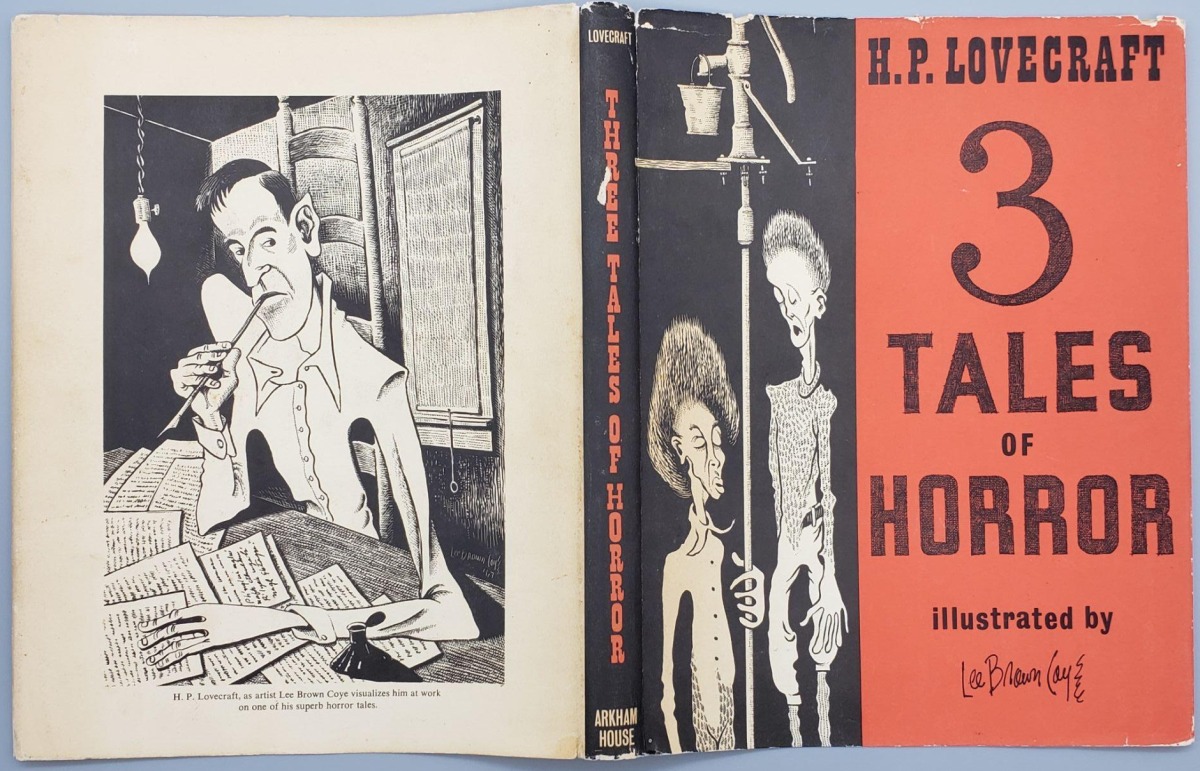
A Lee Brown Coye Retrospective

The exhibition Tales of Terra: A Lee Brown Coye Retrospective. Running until 2nd March 2024 in Hamilton, New York, at the Picker Art Gallery / Dana Arts Center.

Lee Brown Coye (1907–1981), recognized mostly for his unsettling illustrations in horror anthologies and pulp magazines. His creations for popular pulps such as Weird Tales and stories by the likes of H.P. Lovecraft, Ray Bradbury, and Manly Wade Wellman earned him a place in American illustration history. Featuring examples from Picker Art Gallery’s vast collection of artwork by Coye, along with loans from other regional museums and private collections, Tales of Terra brings into focus the less gruesome side of Coye’s artistic output and puts these works in dialogue with his published illustrations. This retrospective exhibition includes artworks that span Coye’s lifetime, examining his regionalist roots, his fascination with architecture, and his relationship to the places he lived, all of which found a place in his unique takes on the grotesque.


I found two quotes from Those Who Were There…

“In the middle and late forties, Weird Tales had one superior artist, Lee Brown Coye. Coye’s best work featured degenerate and warped humans, who fitted well with the weird inhabitants of Dunwich and Arkham. His illustrations for “The Whippoorwills in the Hills” by Derleth and “The Will of Claude Ashur” by Thompson were masterpieces.” (Reader’s Guide to the Cthulhu Mythos, 1973).

“Karl Edward Wagner’s masterful tale “Sticks” (Whispers, March 1974) was an homage to the artist Lee Brown Coye, who illustrated several Lovecraft editions from Arkham House in the 1960s. Making use of the stick-lattice figures that Coye made his signature, “Sticks” speaks of these figures as glyphs designed to summon the Great Old Ones.” (Icons of Horror and the Supernatural, Joshi).


Coye’s depiction of Lovecraft writing…

The venue for this (probably one-time) retrospective looks rather remote, and potentially wintery from now on. A glance at the map suggest you’d go from New York City up the Hudson Valley to Albany, then strike west for about 100 miles.

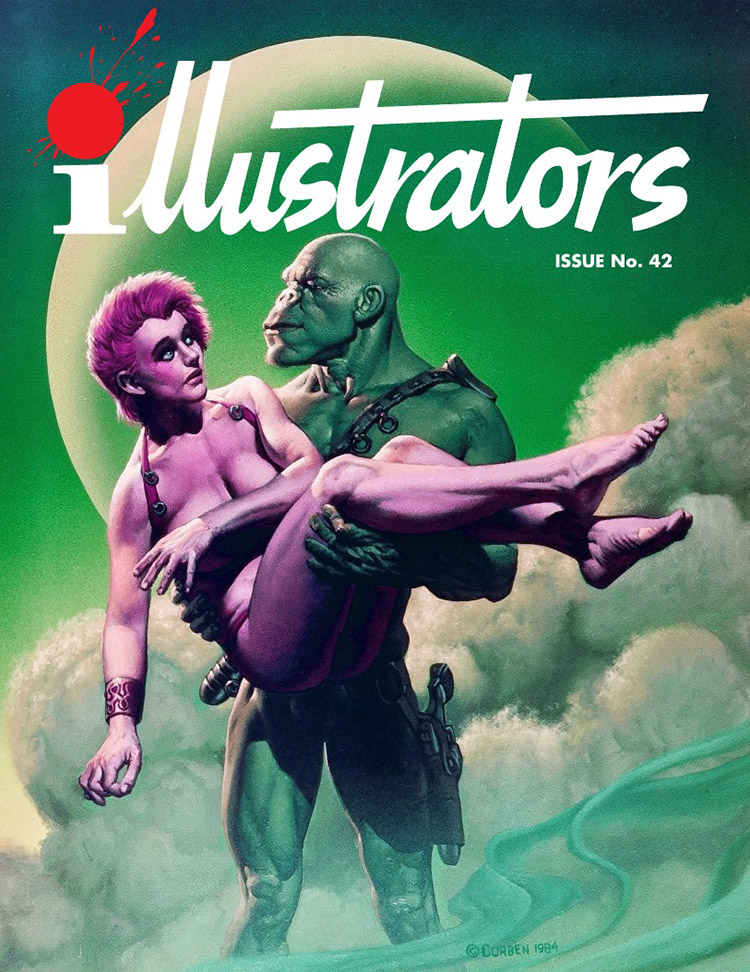
The Recluse, 1927

New on Archive.org, a good scan of Paul W. Cook’s The Recluse. This 1927 issue has Lovecraft’s ground-breaking “Supernatural Literature”…

Imagine a copy of this plomping down on the doormat in 1927, and opening it to find Lovecraft had laid it all out for you.

From the Lovecraft circle, the issue also has a dream-tale by Donald Wandrei and a poem by Clark Ashton Smith. Plus a cover drawn by Vrest Orton. Even a somewhat supernatural poem by Arthur Goodenough, among others.

Incredible Adventures

New on Librivox, for free and public domain, the audiobook for Incredible Adventures (1914) by Algernon Blackwood.

A scanned copy of Incredible Adventures is already available.

A British thesis holds a New Age review of the period, in passing…

[New Age, 6 July (1911), IX: 10, page 2. The New Age magazine discussed] the poetic failure to do justice to mystical subject matter [and stated it was] a symptom of all ‘transitional’ literature attempting to capture and represent the essence of the unseen. A review primarily of Algernon Blackwood’s Incredible Adventures (1914), but drawing on other comparable writers articulates the problem that the world created by Blackwood’s fiction is in constant flux: it is an ‘incalculable world’ such as the ‘logical mind of man, the mind of words, can have no intelligent contact’. Blackwood’s world remains alien to the reviewer of his fiction because no language, and by implication genre, has been found by which to adequately express the significance and substance of the unseen world. Hitherto a fantasy or metaphorical space in fiction, the unseen world was now being charted and co-opted by, for example, the life sciences and the sciences of the mind and a medical language being expanded with which to describe its structures and their meanings. In light of science’s demystification of occult psychical space, Blackwood’s magical composition is too vague for the modern reader and can carry therefore no weight of narrative meaning; the reliance for narrative drive on the tension between ‘white or black’ magic is further made irrelevant by the popular view of psychiatry as having triumphed over demonology.

Lovecraft, however, fully approved of the book’s subtlety and atmosphere…

In the volume titled Incredible Adventures occur some of the finest tales which the author has yet produced, leading the fancy to wild rites on nocturnal hills, to secret and terrible aspects lurking behind stolid scenes, and to unimaginable vaults of mystery below the sands and pyramids of Egypt; all with a serious finesse and delicacy that convince where a cruder or lighter treatment would merely amuse. Some of these accounts are hardly stories at all, but rather studies in elusive impressions and half-remembered snatches of dream. Plot is everywhere negligible, and atmosphere reigns untrammelled.” (Lovecraft, “Supernatural Horror in Literature”, Collected Essays)

If Blackwood’s story “A Descent into Egypt” interests you, but you find the plot “negligible”, then there’s a more jut-jawed Egyptian audio adventure from Dark Adventure Radio Theatre. They’re currently taking pre-orders for their new The Temple of Jupiter Ammon recording…

an original tale of two-fisted archaeology and adventure … expected to be released around December.

Favorite Haunts

Currently up for sale at honest Abe’s site, Favorite Haunts: A Journey Thro’ H.P. Lovecraft’s Providence (video cassette from Darkhive Associates, 1990). Not sure I’ve ever heard of this one…

Reviewed in Lovecraft Studies No. 24, but that’s not one of the online issues.

No sign of Favorite Haunts on YouTube or Archive.org.