Puffed Shoggoths, Lovecraftian artzine/book due for premiere at the Toronto Comics Arts Festival 2013.


31 Friday Aug 2012
Posted in Lovecraftian arts
Puffed Shoggoths, Lovecraftian artzine/book due for premiere at the Toronto Comics Arts Festival 2013.
30 Thursday Aug 2012
Posted in Scholarly works
A thesis, newly deposited online:
Rodolfo Munoz Casado (2000), Los mitos de Cthulhu como movimiento literario, Ph.D. thesis. Madrid, deposited online 2012. In Spanish.
“analyses the so-called Cthulhu Mythos as a true literary movement […] the Cthulhu Mythos fiction has a fundamental unity and a prominence within a literary genre, and it is not commercial work to be considered as lower in quality or importance.”
30 Thursday Aug 2012
Posted in Scholarly works
New addition to the Open Lovecraft page…
* Hannah Spencer (2011), “Semantic Prosody in Literary Analysis: a corpus based stylistic study of H.P. Lovecraft’s stories”, Masters dissertation, University of Huddersfield, UK.
“uncovers linguistic aspects of Lovecraft’s stories that could not be detected intuitively, and provides a firm basis for some subjective literary assumptions.”
28 Tuesday Aug 2012
Posted in Historical context, New discoveries
An amusing little bit of additional evidence, re: my recent essay that uncovers a key source for “The Rats in the Walls”. ‘Viscount Ratcliff’ was one of the titles belonging to Dilston, and Ratcliffe was the family name of James Ratcliffe, Earl of Derwentwater…

— from William Berr’s Encyclopaedia heraldica or complete dictionary of heraldry, Volume 2 (1828)

— from Stephen Whatley’s England’s Gazetteer (1751)

— from Thomas Rose’s Westmorland, Cumberland, Durham, and Northumberland (1832)
There is also a tantalising note from Notes and Queries of 1914, perhaps relevant to the idea of some long-absent descendant coming to claim Exham Priory, but I am unable to get more…
“the following extracts from The Times and contemporary journals:— ” Great excitement was caused at Hexham and the western parts of Northumberland on Tuesday by a lady who claims to be a descendant of Ratcliffe … The lady first appeared upon the scene … in 1865, and a year or so later took possession of Dilston more or … to be a descendant of Ratcliffe, the last Earl of Derwentwater, taking possession of Dilston Castle, about three miles from Hexham, and claiming all the estates once belonging to that unfortunate [Earl]”
28 Tuesday Aug 2012
Posted in Lovecraftian arts
I have fond memories of a few of the best of the isometric-view strategy videogames, and once greatly enjoyed Sid Meier’s Civilisation II and later his Railroads and others. Also Titan Quest [review], although that was more Diablo-like. So the new PC Gamer magazine’s pre-release coverage of the moddable PC game Clockwork Empires sounds very interesting. Especially as it’s apparently a…
“Lovecraft-laden steampunk city-builder” [in which the player is a Civilisation-style] colony-builder amid the grand idealism of Victorian discovery [but] with horrors, madness, wild species, and volatile science.”
Sounds awesome, but sadly it’s all very much “under development”. It looks like we’ll have to wait until around Sept/Oct 2013 before we can play it.

28 Tuesday Aug 2012
Posted in Lovecraftian arts, New books
A new IndieGoGo campaign to raise funds for a Sword and Mythos print anthology from Innsmouth Free Press, combining Conan-style romps with
Lovecraft’s mythos. Due Oct 2013.

Above: Conan encounters a shoggoth, Conan the Savage comic, No.4.
28 Tuesday Aug 2012
Posted in Lovecraftian arts, Podcasts etc.
The latest SFFaudio podcast has a free full reading of “The Outsider”. Read by the outstanding reader of Lovecraft, Wayne June.

Illustration: cropped and coloured from Dore’s “Idylls of the King”.
27 Monday Aug 2012
Posted in New books
Completely unlisted on Amazon USA or UK, and almost unknown to Google Search, so possibly a new book: The Lovecraft Circle and Others — as I Remember Them by Jack Koblas. $30.
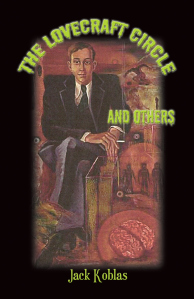
Update: well-reviewed by Joshi in the Lovecraft Annual.
26 Sunday Aug 2012
Posted in Historical context, Scholarly works
Now available in my book Lovecraft in Historical Context #4.

25 Saturday Aug 2012
Posted in Lovecraftian arts, Lovecraftian places
Further Lovecraftian places that really exist:

Eye of Africa (the Richat Structure), Mauritania.

‘Sentinels of the Arctic’ (wind/snow formations, Finnish Lapland) — picture by Niccola Bonfadini.
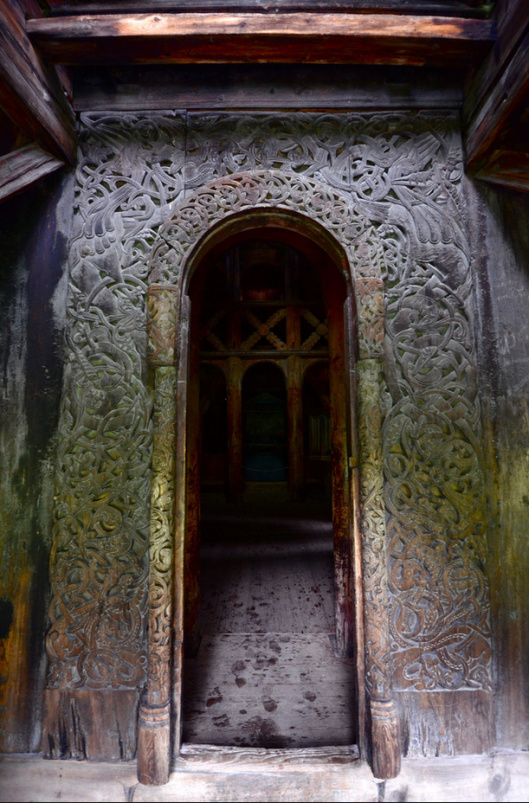
Entrance to the Borgund Stave Church, Norway — picture by Lightbender.

Catholic convent catacombs, Lima in Peru.

Basalt cave entrance, Akun Island — picture by Steve Hillebrand, U.S. Fish and Wildlife Service.

Stephen Whitney crypt entrance, Greenwood Cemetery (Lovecraft visited this cemetery while in New York).
25 Saturday Aug 2012
Posted in Scholarly works
* Ronald St. Pierre (2004), “Never Fully Realize”: Birth of a Mythos, H.P. Lovecraft’s “Dagon”, Shoin Literary Review, No.37, pp.15-36. (Literary journal of Kobe Shoin Women’s University, Japan).
24 Friday Aug 2012
Posted in Scholarly works
Added to the Open Lovecraft page:
* Marek Wilczynski (2008), “Secret passage through Poe: the transatlantic affinities of H.P. Lovecraft and Stefan Grabinski”, Studia Anglica Posnaniensia, 44, 2008.
* David Farnell (2007), “In a mirror, darkly”: finding ourselves reflected in the aliens of Melville, Lovecraft, Dick, and Butler”, Fukuoka University Review of Literature & Humanities, Vol.39, 1, 2007, pp.105-127.
* Malotcsy Kalman (2004), “The Innsmouth “Thing”: Monstrous Androgyny in H.P. Lovecraft’s “The Thing on the Doorstep”, Gender Studies, Vol.1, No.3, 2004.