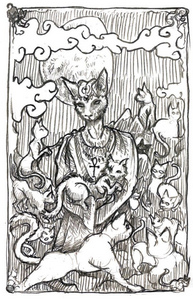
A typeface made of cats…

11 Saturday May 2013
Posted in Fonts, Lovecraftian arts, Unnamable
A typeface made of cats…
11 Saturday May 2013
Posted in New books
It seems that Amazon UK is shipping the Oxford University Press collection of Lovecraft tales now, even though the OUP Press website says June 2013. The Classic Horror Stories

11 Saturday May 2013
Posted in Historical context
13th Dec 1906, Providence… a deadly insanity-causing disease stalks Providence, in the form of rabid mad dogs. Lovecraft then 16 years old.

Poe may, perhaps, have died of rabies. But that may just be a scholar attempting to grab some headlines.
11 Saturday May 2013
Posted in Scholarly works
New bi-annual scholarly and intellectual journal, The Green Book: writings on Irish gothic, supernatural, and fantastic literature. Issue one out now.
11 Saturday May 2013
Posted in Lovecraftian arts
11 Saturday May 2013
Posted in Scholarly works
The Italian Lovecraftians have reprinted the scholarly journal Studi Lovecraftiani No. 1 (Dagon Press, new edition 2013, in Italian). My translation of the contents list…
Editorial
Introduction to Lovecraftian Studies, S.T. Joshi.
Guide to reading Lovecraft, Fabrizio Claudio Marcon.
The “Copernican revolution” of the dreamer from Providence, Massimo Berruti.
H.P. Lovecraft In Italy: a special dossier.
The disciples of Erich Zann: Lovecraft and the music of Bruno Gargano, Elvezio Sciallis and Andrea Bonazzi.
[The Theosophist] Scott-Elliott : Inspiring Lovecraft, by Gianluca Formwork.
The Library of R’lyeh : a review of literature.
Necronomibooks : a review of news and overview of new Lovecraftian developments.
“This is a reprint, re-edited and corrected, the no. 1 of SL, released in small editions [60 copies] in 2005 and immediately sold out. In addition to new graphics, new material is added to the original content.”
11 Saturday May 2013
Posted in Lovecraftian arts
10 Friday May 2013
Posted in Odd scratchings, Scholarly works
What exactly was the providence that gave Lovecraft’s Providence its name? There’s a book on that, Providence in Early Modern England — which has a chapter on mysterious signs and portents associated with providence… “‘Tongues of Heaven’: Prodigies, Portents, and Prophets”.
Update: it was a free chapter when I linked it, but now seems to be paywalled! Sorry about that. But it’s mostly available free on Google Books: search “Prodigies, Portents, and Prophets”.

The first fanzine for weird tales? Strange fearful & true newes, London 1606.

They loved their weird giant tentacle monsters, even way back. The discription of a rare or rather most monstrous fishe, London 1566.
10 Friday May 2013
Posted in Historical context, New discoveries
Photos from 1912 of some of the members of the Providence Amateur Press Club 1914-1916, of which H.P. Lovecraft was a member…

Victor L. Basinet.


Caroline Miller.


John T. Dunn.

Eugenie M. Kern.

Frederick A. Byland.
09 Thursday May 2013
Posted in Historical context, Scholarly works
There’s a new article from Roger Lockhurst at the Oxford Dictionaries, ahead of the Oxford University Press edition of Lovecraft, on “H.P. Lovecraft and the Northern Gothic Tongue”…
“There is a very specific language of Gothic and horror literature that has its roots buried deep in the history of English: doom has been around since Old English; dread carries over from Middle English; eerie, that sense of vague superstitious uneasiness, enters Middle English through Scottish. The adjectives are harsh and guttural: moons are always gibbous, the trees eldritch.”
08 Wednesday May 2013
Posted in Odd scratchings, Podcasts etc.
Got an audio book where someone talks too fast? The excellent Impulse Media Player has just hit version 3.0. It’s freeware that gives you a crackle-free real-time speed change. It works perfectly. You can also change pitch, deepening a voice. I found settings of pitch -6 and speed -12 perfect for a more lugubrious reading of “Dreams in the Witch House”.
08 Wednesday May 2013
Posted in Podcasts etc.
At last, a new audio book reading (.mp3 link) of Lovecraft’s “The Dreams in the Witch House”. Free, courtesy of reader Julie Hoverson and 19 Nocturne Boulevard.

“Gilman’s room” by Heizel87.


