Bob Fowke art exhibition

British Lovecraftians of a certain age will fondly recall the Panther paperback editions. The cover-artist for two of these is having a exhibition of his 1970s covers, in his home town. Bob Fowke did the covers for the books The Horror in the Burying Ground and The Horror in the Museum.

Also for Poul Anderson’s A Midsummer Tempest, one of Poul Anderson’s English and northern fantasies. I had wondered who did that cover, and thought it might have been one of the Ruralists.

His “exhibition of 70s sci-fi art” runs for three days only, part of the Open Studios in the town of Bishop’s Castle, Shropshire, on the border between England and Wales and about 40 miles west of Birmingham. The dates are 16th, 17th & 18th February 2024.

January 1925

A suitably seasonal ‘picture postals from Lovecraft’ post this week. Lovecraft moved into his under-heated “dismal hovel” of a room at 169 Clinton Street on the edge of Red Hook, on the 31st December (he was then “half moved”) – 1st January 1925 (“moved final load”). In that he was lucky, for if only a little later he would have run smack into the first of the “Worst Snowstorms In New York History”, beginning with two days of “howling gusts” though the city’s canyons on 2rd-3rd…

“New York City was the unwelcome recipient of 27.4 inches of snow [in the month], the most ever recorded for any January up to that time. … A relentless snowstorm that lasted two days occurred from January 2rd-3rd [and landed 12 inches on the city]. On January 12th the city required 12,000 shovelmen to tackle another snowstorm that clogged the streets. January 20th New York City was hit with two blizzards in one day. January 27th more snow fell and then the coup de grace; the giant storm on January 30th that affected the metropolitan area.

Lovecraft’s letter home, his first in January, seems all but oblivious to this. Though his 1925 Diary laconically has “snowstorm” on the 2nd. But possibly he did not wish to alarm his aunts. Also, he was well used to the severe New England winters of the time, and knew how to wrap up if he had to go out. On the 3rd he was out meeting Kirk and the gang at a cafeteria.

Atlantic Avenue, a few blocks east along from the Atlantic Avenue – Clinton St. intersection where his favoured grocery was. But nevertheless the picture evokes Lovecraft venturing out to “send express package” which he did first thing on 5th January.

After all, despite the duration and windiness of the great storm, its 12 inches of snow was a trifle by the weather standards of the period. And it would have been drifted and banked heavily by the extreme winds.

More curious is the 12th January, re: the above “On January 12th the city required 12,000 shovelmen to tackle another snowstorm that clogged the streets”. Lovecraft’s letters mention this date and “to Loveman’s over the icy pavement”, and his Diary has himself “visit[ing] SL [Loveman] in ice storm” and then… he goes strolling over the frozen Brooklyn Bridge with Kirk!

After leaving SL at his airy domicile, and starting on a walk over the Brooklyn Bridge & up through Chinatown, Kirk and I decided to surprise Loveman with a birthday gift…

Not impossible I guess, if thousands of “shovelmen” had been at work at clearing it since 5am, the pedestrian walkways had been gritted, and the storm had just passed leaving a sparkling day and few people to crowd the bridge and obstruct strolling. According to the Diary he reaches and “walk[s] Chinatown” with Kirk. Not bad, for a cold-averse old gent!

Brooklyn Bridge in snow, by Max Kuehne.

And finally here is a picture by Lena Gurr of Brooklyn, possibly made in the 1920s (she was was roughly the same age as Lovecraft), evoking the more salubrious snowy side-streets of Brooklyn once they were made walkable again…

Again, the picture evokes Lovecraft, this time with one of ‘the gang’.
Three new articles

Three new articles from overseas.

A new open-access article on sanity in Lovecraft’s “Dagon”, although the article is in Portuguse.

The videogame Bloodbourne is commonly said to be very Lovecraftian, almost in an exemplary manner. Andrii Isakov tests that claim in his new open-access article in a Ukrainian journal. More musing on the topic at “Bloodborne through the lenses of Todorov’s theory of equilibrium”.

In a Russian journal, a new article examining ancestral roots and the re-positioning of sacred symbolism in Lovecraft’s “Innsmouth”.

The Author & Journalist 1916-1969

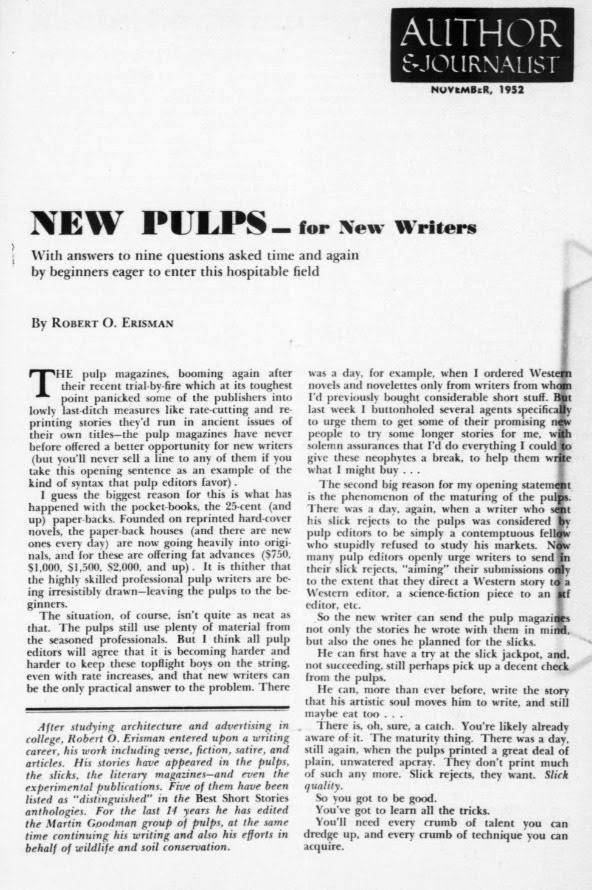
New on Archive.org, a microfilm run of The Author & Journalist 1916-1969 magazine (initially The Student Writer, to 1923). November 1952 has one of a series giving August Derleth’s memories of “Becoming a writer”. In the same issue “New Pulps”…

“The pulp magazines, booming again [after the post-war shortages and disruption, and] … science-fiction is hot”

There are also short summary articles on the trade, such as “The Pulp Situation” in March 1941, which writes… “The terror and horror mystery period is over” due to the war.

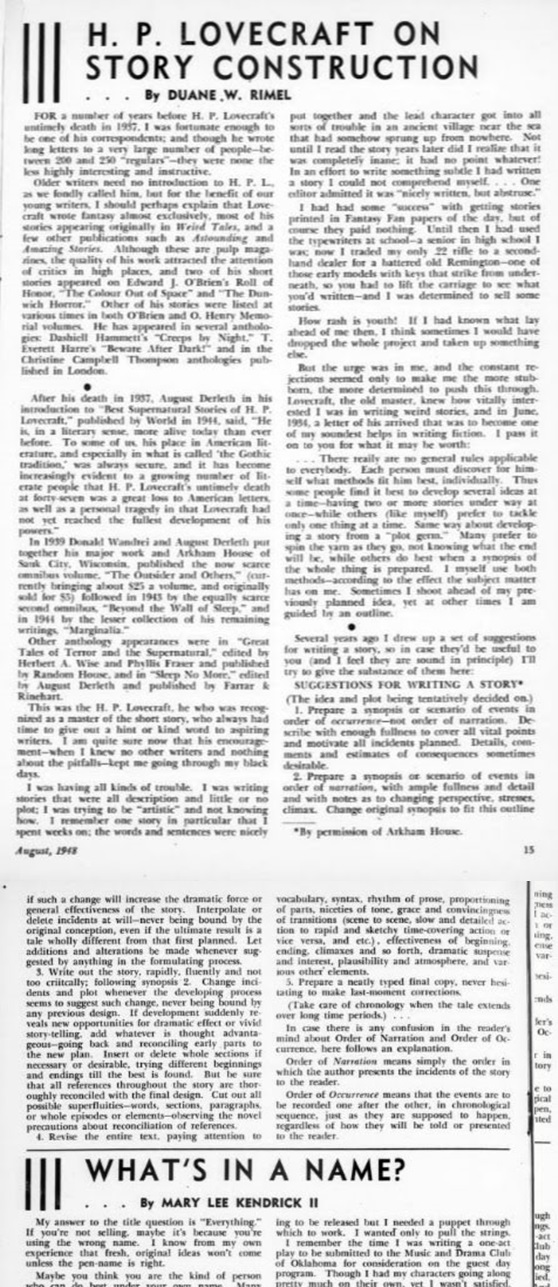
Includes the 1948 “Lovecraft on Story Construction”, via Rimel.

Doubtless there’s more to be found in such a long run, and one can search across the full-text. The run is “to borrow” only.


Popping rather more fully into public availability… the entire digitized copyright-expired artwork of the British Isles. A UK Court of Appeal ruling… “confirms that museums do not have valid copyright in photographs of (two-dimensional) works which are themselves out of copyright. It means these photographs are in the public domain, and free to use.” Feel free to use for book covers, AI training, t-shirts, etc.

New book: L’Affaire Barlow

Newly spotted, L’Affaire Barlow: H.P. Lovecraft and the Battle for His Literary Legacy (November 2023), with a foreword by Ken Faig Jr.

In L’Affaire Barlow, the author examines primary source material in detail never attempted before, clearly explaining how dangerously close Lovecraft’s work was to being litigated into obscurity. Bruised egos, personal vendettas, and Machiavellian plots abound, making control of the Lovecraft literary estate read like a tale from one of the pulp magazines. Lovecraft designated Robert Barlow as his literary executor. Barlow created the Lovecraft archives at Brown University even as a campaign was waged to wrest control of Lovecraft’s work from him. Barlow’s reputation was destroyed among the Lovecraft circle. It was only after his premature death that his unyielding guardianship of Lovecraft’s legacy was fully understood despite the plot against him. L’Affaire Barlow is the story of Robert Barlow’s quest to preserve the Old Gent from Providence for the ages.

Deluxe Madness, Sinking rises…

Dark Horse Comics has announced a ‘Deluxe Edition’ of Lovecraft’s At The Mountains Of Madness as adapted at great length by famous Japanese manga artist Gou Tanabe. Apparently set for the end of June 2024, the new and possibly oversize edition of the graphic novel will…

“also include eight full color illustrations, a tip-in title page with silver ink, a sewn-in bookmark ribbon, wraparound cover art, and soft touch lamination with spot gloss.”

In other popcult news, I see that the Ukrainian developer Frogwares has reportedly won its legal battle over its acclaimed Lovecraftian detective videogame The Sinking City. The game hasn’t been sunk, and will become available again soon. Possibly even with some upgrades. I rounded-up the early glowing reviews here.

Frogwares will also release The Sinking City 2 in 2025, this time visiting an open-world Arkham after a major flood. The Unreal Engine 5 game will offer more of a survival horror / equipment / puzzler experience and this time the investigations will be optional extras. And, I would guess, paid DLCs.

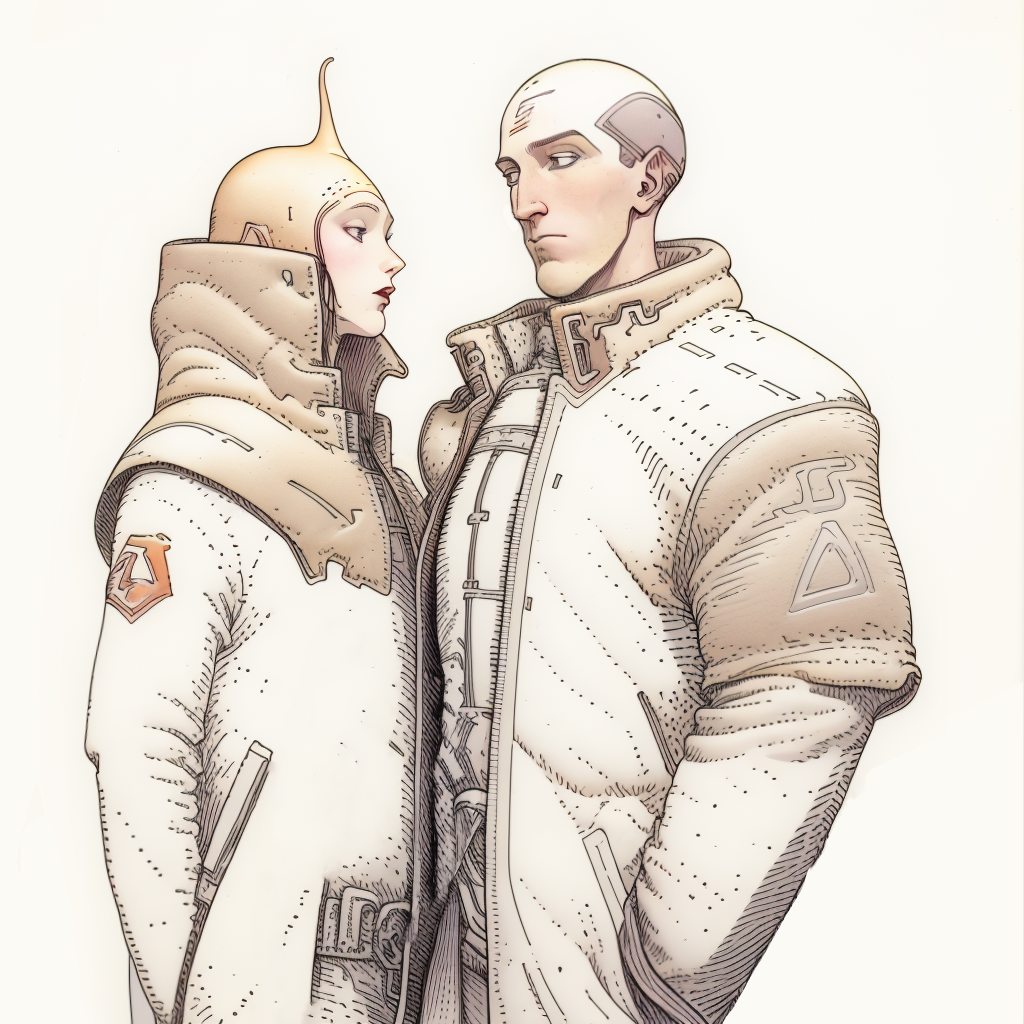
HPL and Sonia in the year 3000

I’ve found time to wrangle with the ‘Moebius emulating’ bits of Stable Diffusion 1.5. Getting near a formula takes quite a bit of time, as there are so many factors to balance and there’s no textbook for this stuff. But I think I’m getting there. ‘HPL and Sonia in the year 3000’, as-if by Moebius…

A straight text-prompt + LORA, there’s no Img2Img here from a real Moebius drawing.

Providence, 1896

I’d not seen this one before, and it gives a pleasing sense of the oceanic nature of Lovecraft’s city. By M.D. Mason, dated and issued in 1896, it shows the layout of central Providence as it was when Lovecraft was about six years old. Lovecraft’s College Hill is just out of sight, off the left hand side of the picture.

Finding it on eBay led me to the same picture plastered with watermarks at the stock-shovel site Alamy. This at least gave me the proper title “View of the city of Providence as seen from the dome of the new State House”. From there I found the inevitable Library of Congress public-domain source. It turns out it was issued as a supplement to the local newspaper, and thus the young Lovecraft almost certainly saw and perused it closely. Thus imbuing an early sense of his city as closely connected to the illimitable ocean.

He may even have seen the same view later, from the State House.

New in the public domain

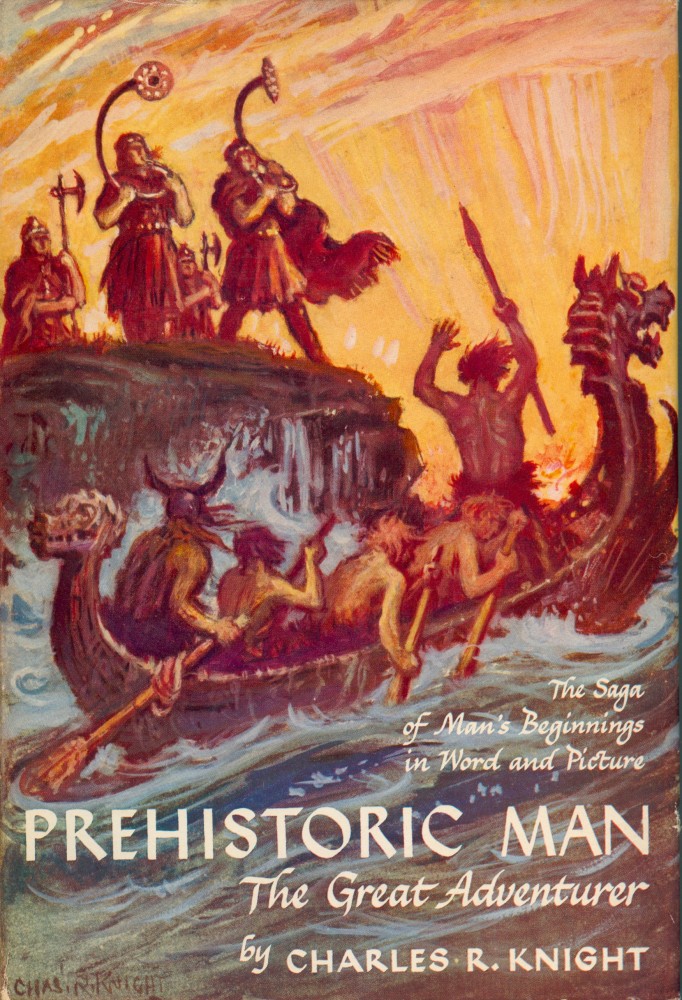
In my previous survey of what’s in the public domain as of 1st January, I noted Charles R. Knight, a fine prehistoric artist, whose works are now in the public domain as of 1st January 2024. I had the impression he was a dinosaur artist. He was, and Google Images very firmly gives the impression he was a dinosaur artist. But he was also an artist of prehistoric man, which brings his work into the realm of potential sources for later fantasy art styles. I note for instance his 336-page book Prehistoric Man: The Great Adventurer (1949) is billed as “The saga of man’s beginnings in word and pictures”, by which the Stone Age is meant and apparently depicted in 25 plates.

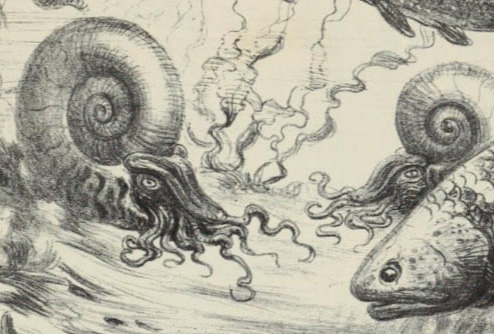
This is not on Archive.org, and all they have is his Life through the ages in B&W pencil-work, which covers the earliest ocean life through to the cave bears of the Stone Age. In the book one will also find some deliciously malign looking shellfish…

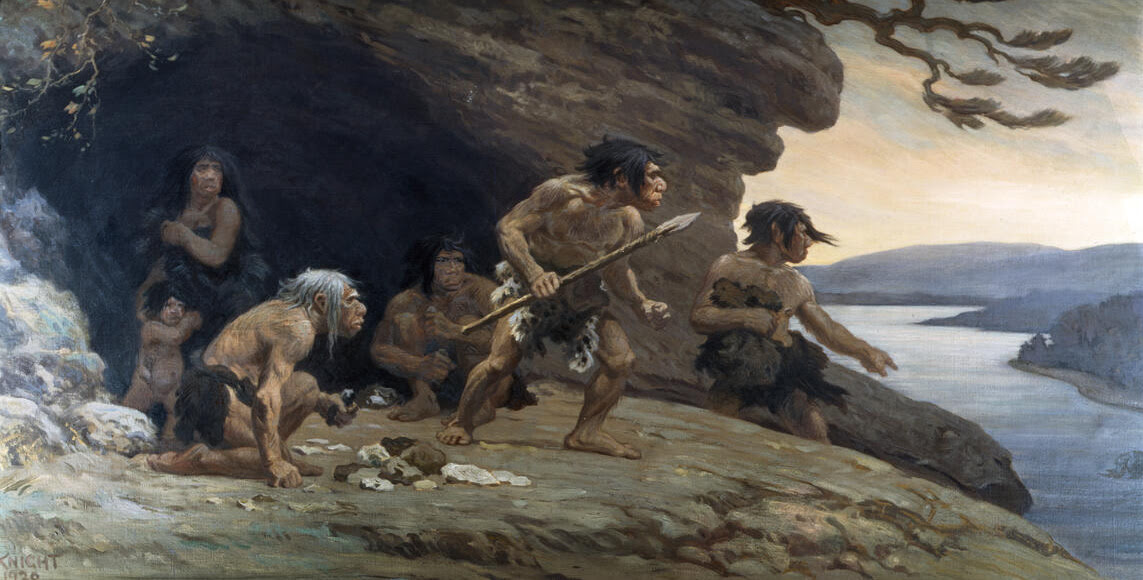
The depiction of some of his early prehistoric hunters, obviously not very popular today (but accessible via a museum site), reminds me of the style of Frazetta…

Earlier work reminds me of the Brothers Hildebrant.

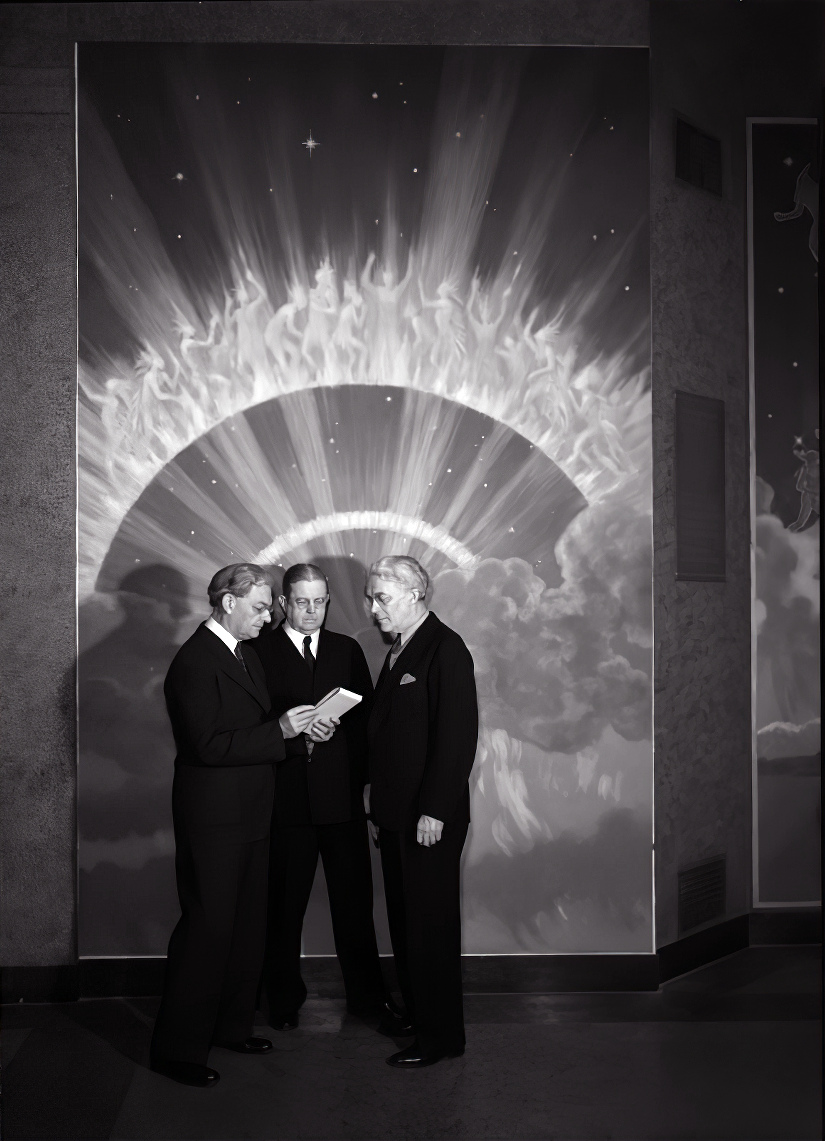
Turns out he was also the artist who did some of the astronomical hallway murals for New York City’s major Hayden Planetarium, which Lovecraft enjoyed late in his life.


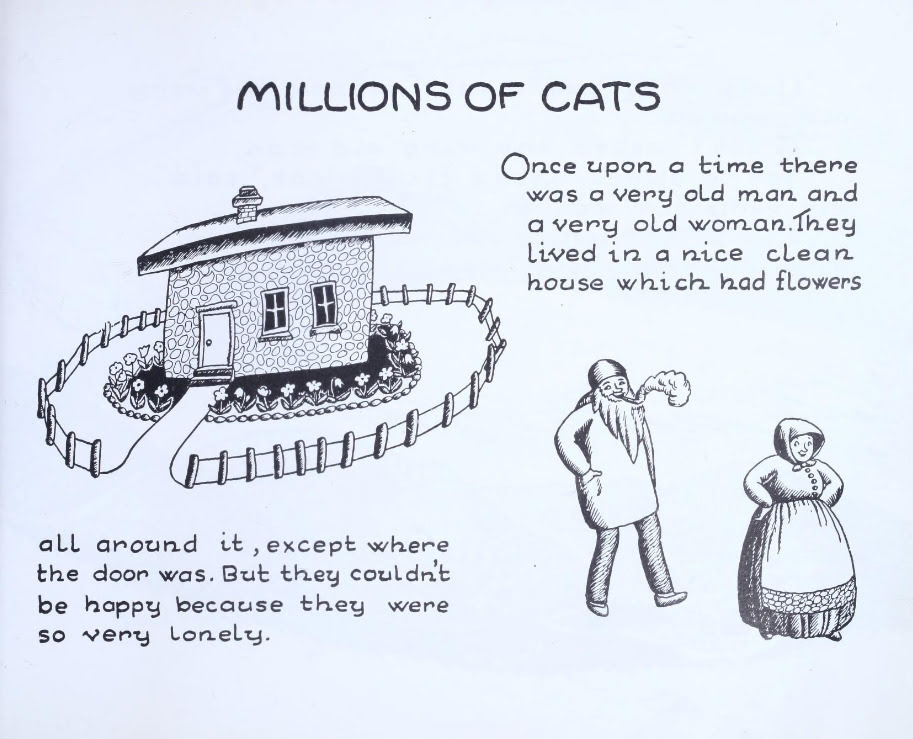
Also now in the public domain, and which I was unaware of before, the early American children’s storybook Millions of cats (1928). Interestingly it shares some features with Lovecraft’s tales of Ulthar’s cats… namely the old cotter and his wife, and the encounter with a massed army of ‘cats’.

One wonders if Lovecraft ever saw it? The dating is right, and he must at least have seen reviews in the 1928 magazines.